
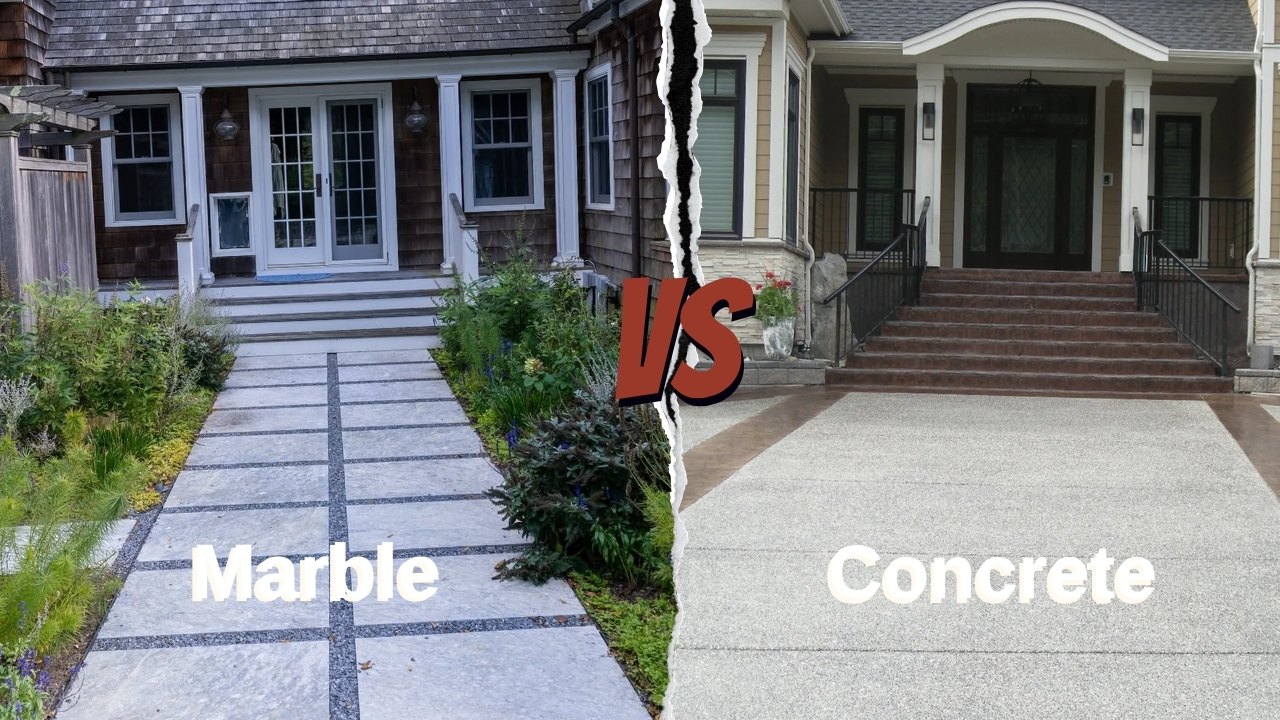
When it comes to paving material, two of the most common options are marble pavers and concrete pavers. Both offer distinct features, appearance, functions, and pricing. However, often homeowners wonder about the marble pavers vs concrete pavers, what sets them apart. Both materials offer the same functionality but perform differently and long term value.
Marble forms through natural geological processes, while concrete comes from engineered mixtures. Each option offers benefits depending on climate, budget, maintenance expectations, and design goals. Learn about marble pavers vs concrete pavers before selecting the pavers and starting your project.
Marble Pavers vs Concrete Pavers: Key Comparison Table
Before we start any further, here are the key factors of marble pavers vs concrete pavers. Take a look at the table below to learn about the differences.
| Feature | Marble Pavers | Concrete Pavers |
| Material Type | Natural stone formed from metamorphosed limestone | Manufactured product made from cement, sand, aggregates, and pigments |
| Appearance | Natural veining and mineral variation create unique patterns | Uniform shapes and colors are produced through molds |
| Color Stability | Natural mineral color resists fading from UV exposure | Surface pigments may fade gradually with sun exposure |
| Surface Temperature | Reflects sunlight and stays cooler underfoot | Absorbs more heat, especially in darker colors |
| Durability | Dense natural stone has a long lifespan when properly installed | Strong engineered material designed for structural loads |
| Maintenance Needs | Occasional sealing and gentle cleaning with stone-safe products | Periodic resealing, joint sand replacement, and surface cleaning |
| Installation Complexity | Requires careful stone handling and precise installation | The modular system allows faster installation due to uniform sizes |
| Design Flexibility | Natural tones and textures with limited shape variations | Wide range of shapes, colors, and patterns available |
| Typical Applications | Pool decks, patios, courtyards, and outdoor entertainment areas | Driveways, walkways, large patios, and commercial hardscapes |
| Longevity | It can last several decades with proper maintenance | Long lifespan, but may show color wear over time |
| Cost Range | Higher upfront investment due to natural stone sourcing | Lower initial cost due to mass manufacturing |
| Environmental Impact | Minimal processing and long lifecycle | Cement production contributes to higher carbon emissions |
Marble Pavers vs Concrete Pavers: The Materials
Starting the comparison with the basic material. The origin of each paving material shows its durability, appearance, and long-term performance in an outdoor project.
Marble Pavers: Natural Stone Formed Over Time
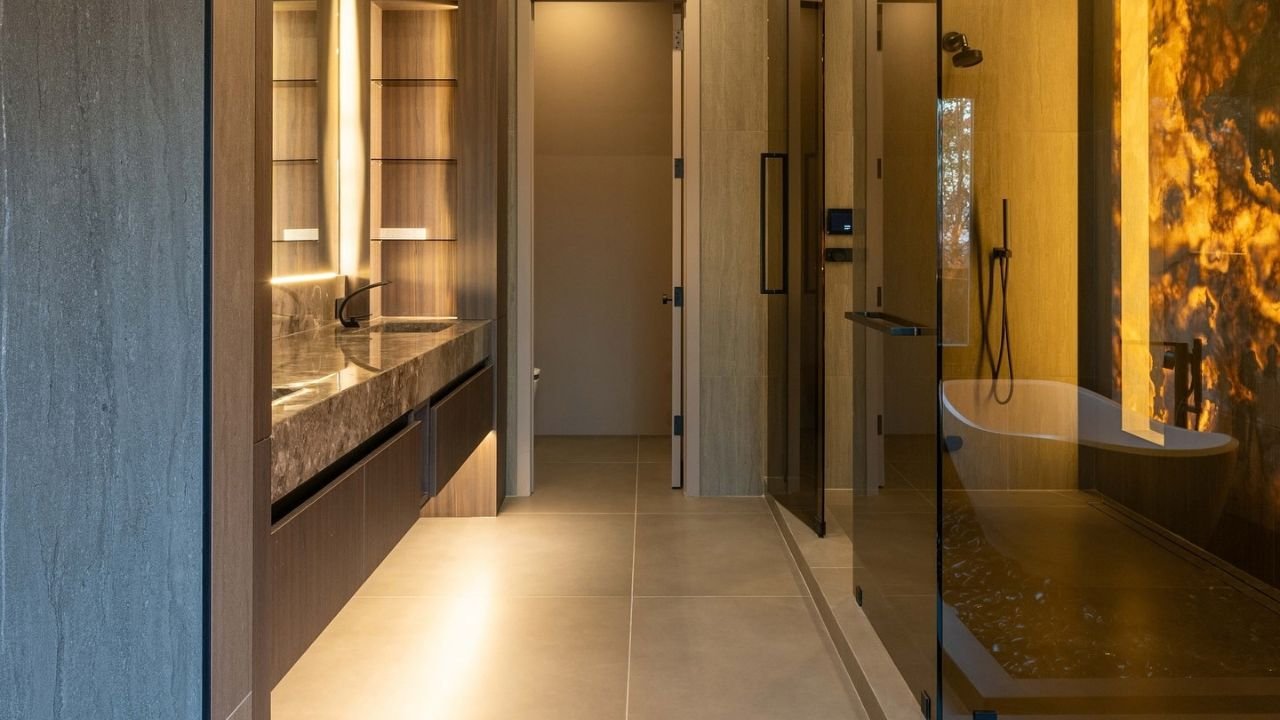
Marble pavers are crafted with natural stone. Marble is a metamorphic limestone that is formed under intense heat and pressure. It transforms calcium carbonate into dense crystalline stone. The result is a durable natural surface with subtle veining and mineral variation.
Marble is formed naturally, and no two marble slabs are the same. This organic variation creates depth and character throughout patios or walkways.
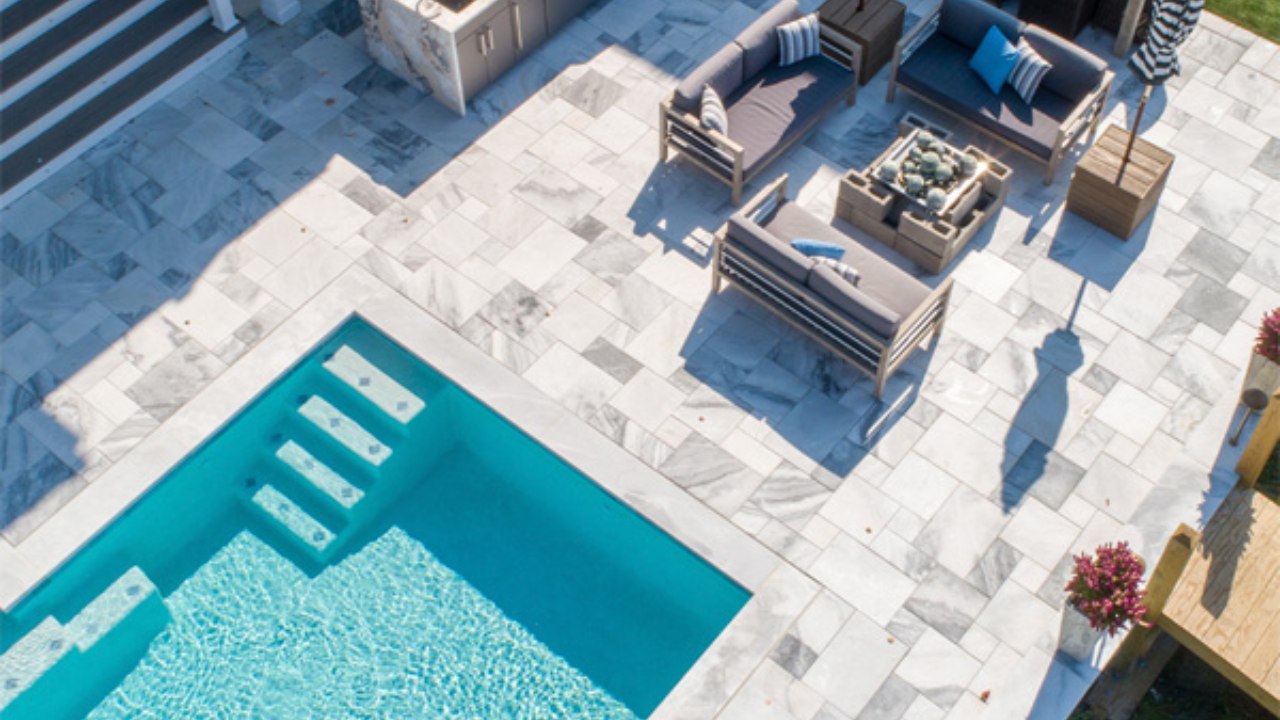
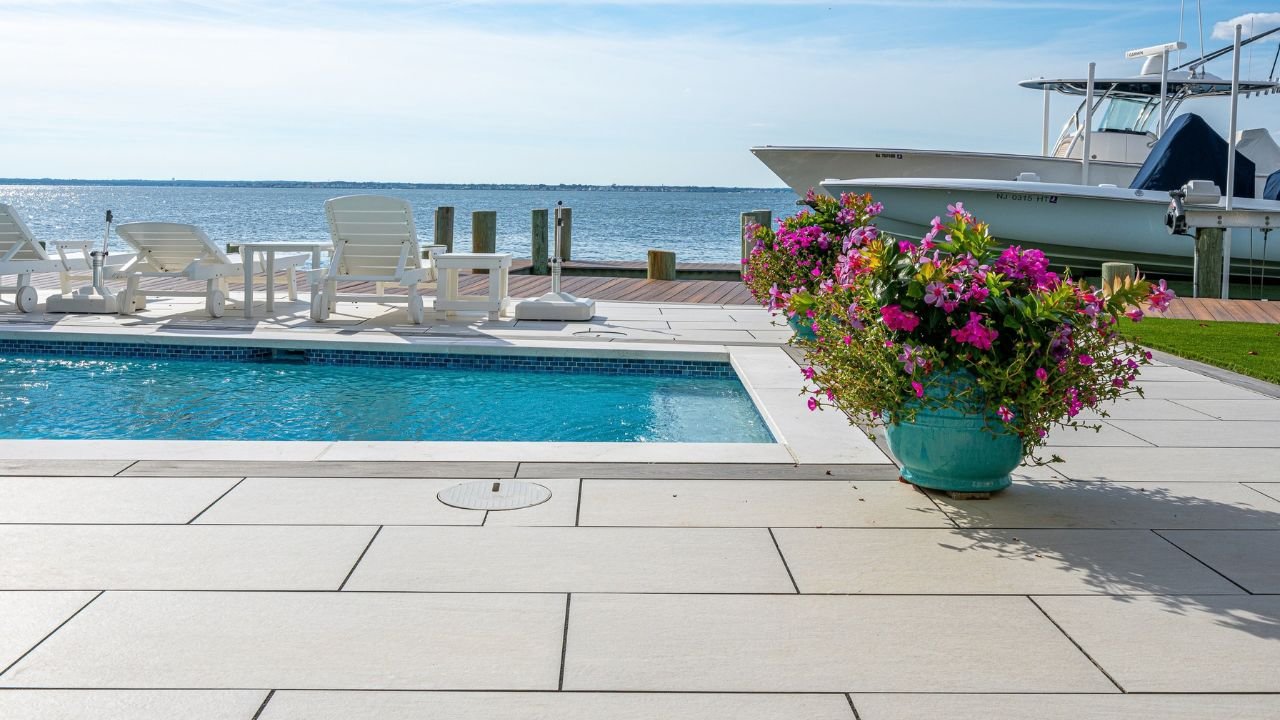
Homeowners usually choose marble for spaces where they want unique aesthetics, including sandblasted marble pool decks, outdoor seating areas, and courtyards. Marble also features reflective sunlight, which keeps the surface cooler in warm climates. When discussing Marble Pavers vs Concrete Pavers, marble stands out for its natural origin and timeless aesthetic.
Concrete Pavers: Engineered for Structural Flexibility
Concrete pavers, just like porcelain pavers, are engineered. They are manufactured from a mixture of cement, sand, aggregates, and pigments. Manufacturers compress this mixture in molds under high pressure. The resulting paving unit is dense, designed for strength and uniform shape.
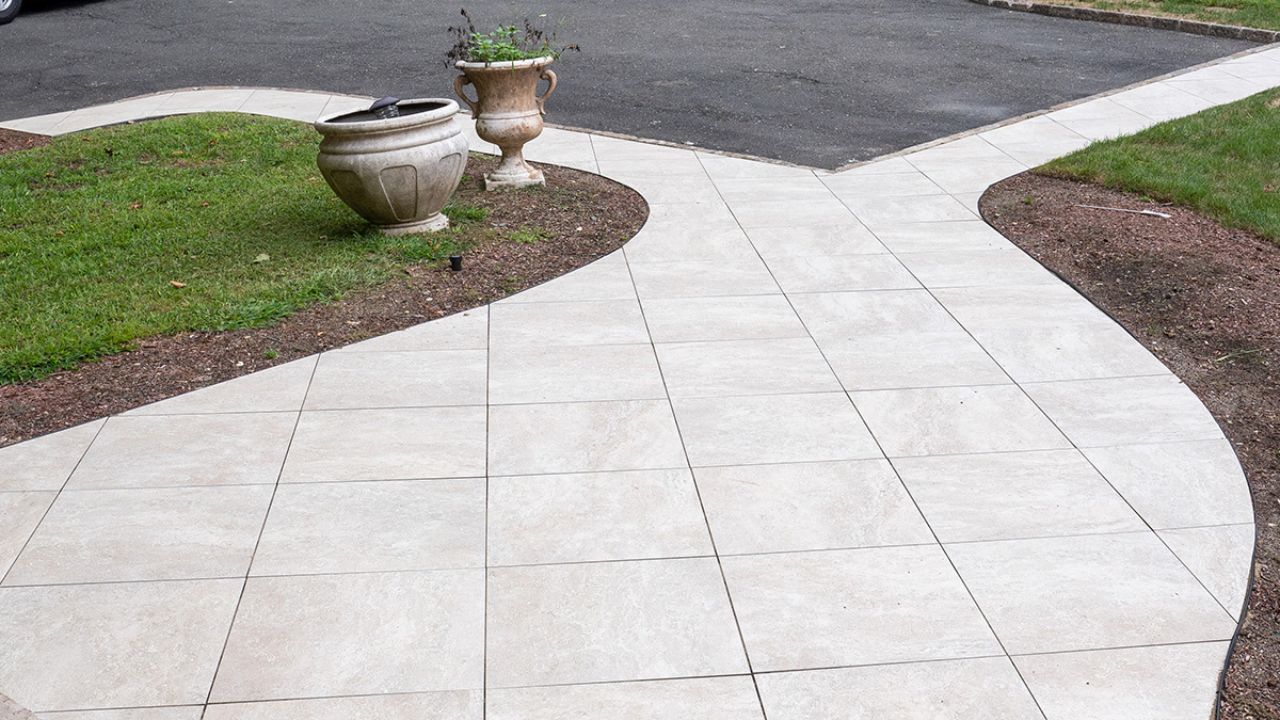
During manufacturing, concrete pavers come in many colors, textures, and shapes. Concrete pavers also feature the stone, brick, or slate patterns. This controlled production provides consistent thickness and dimension, which simplifies installation.
In the Marble Pavers vs Concrete Pavers comparison, concrete represents a manufactured alternative that focuses on versatility and cost control.
Appearance and Design Options
Visual impact is another key difference in outdoor design. Patios and walkways usually act as a focal point in landscape architecture.
Natural Charm of Marble
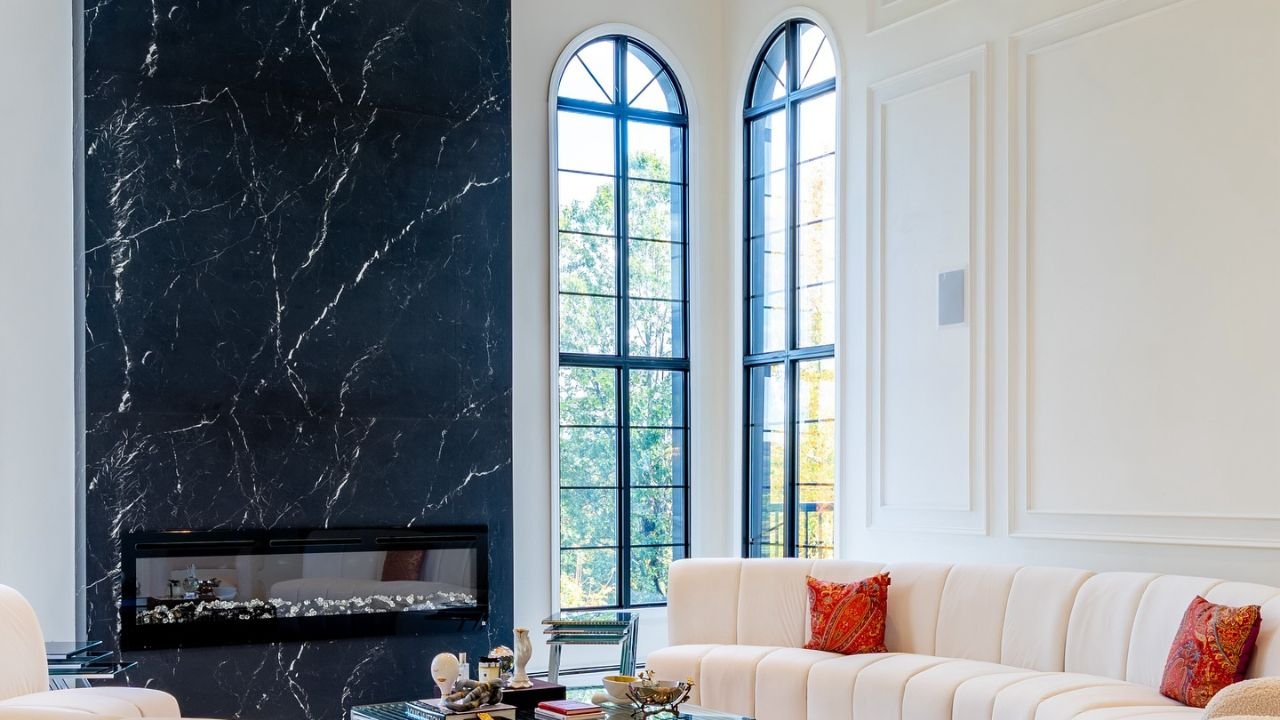
Marble features an organic pattern that is created by mineral deposits during formation. The subtle veins and color variations provide a refined look that homeowners associate with luxury design.
Common marble paving colors include ivory, beige, Light gray, and Cream tones. These tones pair well with modern architecture, Mediterranean homes, and coastal landscape styles. The surface features a stumbled or sandblasted finish, which improves traction while retaining the stone’s natural appearance.
However, homeowners will have to rely on natural variations only. In the discussion of Marble Pavers vs Concrete Pavers, marble provides a more authentic and natural visual character.
Design Flexibility with Concrete
Concrete paving slabs offer a wide range of designs because manufacturers adjust color pigments, surface textures, and mold shapes. Popular concrete paver styles include brick-style rectangles, large modern slabs, interlocking shapes, and textured stone-look surfaces.
Homeowners can mix colors or create borders and patterns using multiple shapes. Though modern manufacturing has improved realism, a closer look often shows the engineered texture and natural stone. For homeowners prioritizing layout flexibility, Marble vs Concrete Pavers often opt for concrete due to customization options.

Durability and Structural Performance
Outdoor pavers have to face harsh weather conditions. This is why they need to be durable and resistant to moisture, foot traffic, and heavy loads.
Strength of Natural Marble
Marble is a dense natural stone pavers with strong compressive strength. Properly installed marble pavers can resist cracking and maintain structural integrity for decades. This natural stone can also withstand UV exposure without fading because color occurs naturally within the mineral composition.
This makes it the best choice for warm climates as marble remains stable under intense sunlight. This stability contributes to its popularity in pool decks and outdoor patios. Within the Stone Pavers vs Concrete Pavers comparison, marble often performs better in terms of natural longevity.
Engineered Strength of Concrete
Concrete paving slabs also offer strong load capacity. Interlocking systems distribute weight throughout the surface, which makes them suitable for driveways and high-traffic areas. However, concrete can experience gradual color fading due to UV exposure. Pigments sit near the surface layer rather than throughout the material.
Freeze-thaw cycles will also affect concrete surfaces in colder climates if water penetrates small pores and expands. When evaluating Marble Pavers vs Concrete , concrete provides solid structural performance but may require more maintenance over time.
Heat Resistance and Comfort Underfoot
Surface temperature impacts the usability in warm regions.
Marble Stays Cooler
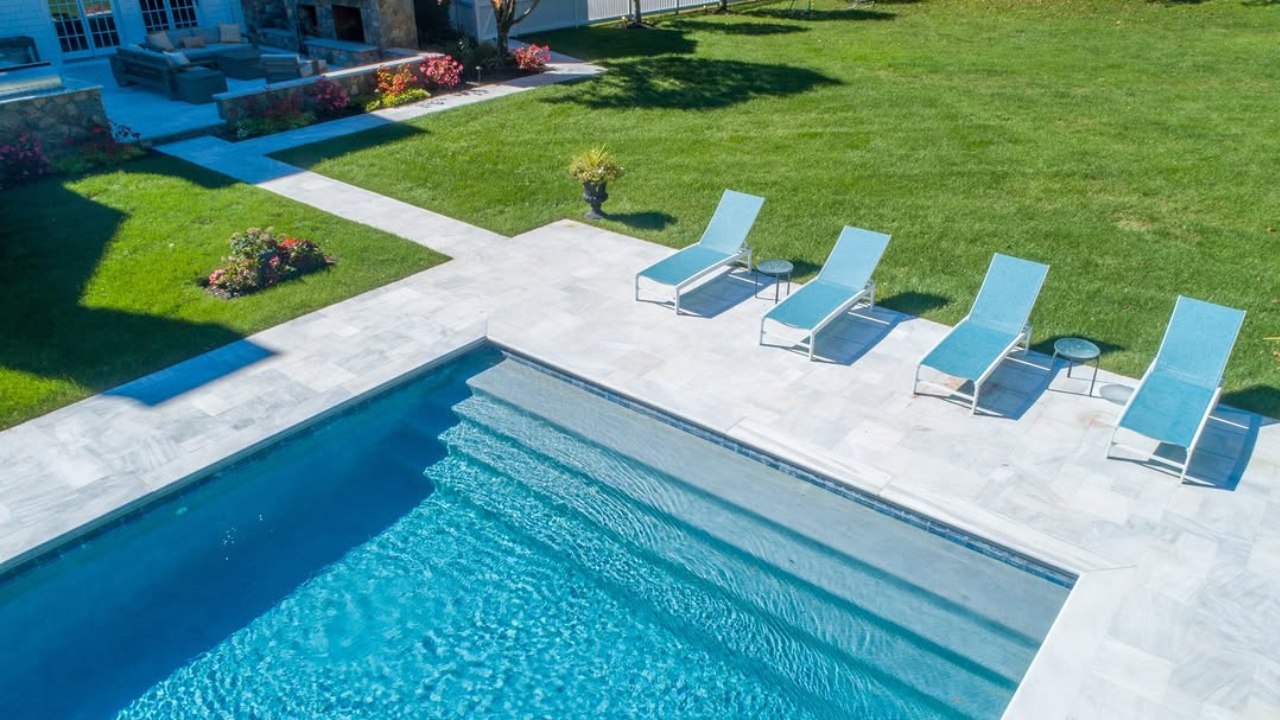
Marble reflects sunlight instead of absorbing heat. The lighter surface of the stone and mineral structure keeps the surfaces cooler even in hot weather. Honed Marble is usually a preferred choice for pool decks or patios exposed to full sun compared to other paving materials. The cooling properties play a major role in the marble pavers vs concrete pavers decision for homeowners in warm climates.

Concrete Absorbs More Heat
Concrete pavers tend to absorb and retain heat due to their cement composition and darker pigment options. Darker shades become especially warm under strong sunlight. While surface finishes and lighter colors can reduce heat absorption, concrete rarely matches marble’s natural cooling behavior.
Therefore, in Marble Pavers vs Concrete Pavers, marble often provides greater comfort for barefoot walking areas.
Maintenance and Long-Term Care
Maintenance affects both appearance and lifespan.
Caring for Marble Pavers
Natural stone takes advantage of periodic sealing. Sealants reduce moisture absorption and help protect the surface from stains.

Maintaining Concrete Pavers
Concrete pavers also require maintenance. Common maintenance includes replacing joint sand, pressure washing surfaces, and resealing color-enhanced finishes. Over time, the surface pigments may fade, which is why homeowners will have to apply the sealer.
When reviewing Marble Pavers vs Concrete Pavers, marble tends to maintain its appearance longer with fewer cosmetic changes.
Cost Comparison
Budget is another serious comparison factor between marble pavers vs concrete pavers, especially when homeowners ask how much does a 20×20 paver patio cost. The total cost depends on material choice, installation complexity, and site conditions, with marble typically requiring a higher upfront investment compared to concrete.
Marble Paver Cost
Marble is generally associated with luxurious looks and feel. This is why it has a higher upfront cost, which also involves quarry extraction, cutting, and finishing. Natural stone transportation also affects pricing depending on quarry location. However, marble’s long lifespan can accommodate the initial investment over time.
Concrete Paver Cost
Concrete pavers generally cost less at the start. Mass production reduces manufacturing expense. Lower material cost makes concrete a common choice for large driveways or extensive patios.
Yet maintenance and color fading may lead to additional long-term costs. When homeowners assess Marble Pavers vs Concrete Pavers, cost differences often influence the final choice.
Environmental Considerations
Sustainability has become a major consideration in construction decisions. Natural marble is extracted by quarrying, but it involves minimal chemical processing. The stone remains fully recyclable and reusable in landscaping.
On the other hand, concrete production relies on cement manufacturing. It generates carbon emissions during production. It requires frequent repairing and replacement after a few years, especially in busy spaces. Marble lasts longer, which reduces replacement demand.
For environmentally conscious homeowners, the Marble Pavers vs Concrete Pavers discussion may include sustainability and material lifespan.
Marble Pavers vs Concrete Pavers: Applications
Each material is well-suited for different outdoor applications. Here are the applications for each paver.
| Feature | Marble Pavers | Concrete Pavers |
| Best Application Areas | Pool decks, luxury patios, courtyards, and outdoor entertainment areas | Driveways, large patios with tight budgets, walkways, and areas requiring modular layouts |
| Primary Advantage | Elegant natural appearance with premium aesthetic value | Cost-effective with strong structural performance |
| Surface Comfort | Naturally cool underfoot, making it ideal for barefoot areas such as pool decks. | Can retain more heat depending on color and surface finish |
| Design Character | Unique natural veining and color variations create a high-end look | Highly uniform shapes and sizes allow precise modular patterns |
| Durability | Long-lasting natural stone when properly installed and maintained | Engineered for strength and consistent load-bearing performance |
| Typical Project Type | Luxury outdoor living spaces and resort-style landscaping | Functional hardscape features such as driveways and large patios |
| Industry Recommendation | Often recommended by premium stone suppliers such as NT Pavers when aesthetics and comfort are priorities. | Widely used where budget control and structural reliability are the main concerns. |
Understanding these applications will help homeowners compare marble pavers vs concrete pavers based on real project requirements.
Marble Pavers vs Concrete Pavers (FAQs)
Let’s answer your questions about Marble Pavers vs Concrete Pavers.
Are marble pavers better than concrete pavers?
Marble has natural beauty, cooler surface temperatures, and a long lifespan, while concrete provides lower upfront cost and wider design flexibility.
Do marble pavers last longer than concrete?
Yes. When installed and sealed properly, they can last several decades because natural stone resists fading and structural breakdown.
Are concrete pavers stronger than marble?
Yes. Concrete pavers generally handle heavy loads better in interlocking driveway systems, while both materials offer strong compressive strength.
Do marble pavers require sealing?
Yes. Sealing reduces moisture absorption in marble and maintains surface appearance.
Which paver type is better for pool decks?
Marble paver works great for pool decks because it reflects sunlight and stays cooler underfoot.
Bottom Line
When it comes to marble pavers vs concrete pavers, it is hard to say who is the winner. Both materials offer distinct appearances, surfaces, and performances. However, the right choice depends on budget, design goals, and climate conditions. Concrete pavers are an affordable choice with flexible design layouts and uniform shapes. Marble is a natural stone with luxurious beauty, cooling performance, and long-lasting beauty.
Homeowners planning pool decks or luxury patios usually favor marble, while large driveways or budget-friendly projects opt for concrete pavers. A thoughtful comparison of marble pavers vs concrete pavers will assure you the final outdoor space balance, appearance, and long-term value.