
Grout fills the joints between tiles, supports edges, creates a finished surface, and is crucial to tile installation. Choosing the right grout for tile helps protect tile joints and makes the finished surface easier to maintain. The selection matters for places such as kitchens, showers, patios, and any installations that include natural stone or marble.
What Are the Main Types of Grout?
There are four chemistries, plus pre-mixed types of grout as a supplied form of grout. The main types are traditional cement grout, polymer-modified cement grout, epoxy grout, single-component grout, and pre-mixed grout. Different types of grout act differently in terms of water absorption, stain resistance, application, and cost.
What Is Cement Grout?
A cement grout is the oldest type of grout that uses cement, fillers, pigments, and other additives to fill tile joints. You can get it in sanded and unsanded formulas. Standard cement grout is economical and widely available, but it has a porous structure. It can absorb moisture and stains, so most cement grouts require a compatible grout sealer. Remove cement residue from compatible porcelain surfaces with an appropriate cement remover, following the product instructions.
What Is Polymer-Modified Cement Grout?
A polymer-modified cement grout contains polymers that improve properties like adhesion, flexibility, and stain resistance. Some of these grouts offer reduced water absorption and more consistent color. However, the performance depends on the formulation. That is why you should check the technical data sheet rather than assume every polymer-modified grout offers the same protection.
What Is Epoxy Grout?
Epoxy grout mixes the epoxy resin, a hardener, and fillers that create a dense, stain-resistant joint. Some formulations contain 100% solids, meaning the product doesn’t feature any volatile solvent or water component. Epoxy grout is ideal for demanding installations, but you should consider its working time and cleanup requirements as well. Clean epoxy grout residue promptly, using a compatible epoxy cleaner when recommended by the product manufacturer.
What Is Single-Component Grout?
Single-component grout comes ready to use or requires minimal preparation, depending on the selected product. Its binder may differ from traditional cement, and some formulas offer strong stain resistance without sealing. Check whether the product permits use on floors, outdoors, or in continuously wet areas.
What Is Pre-Mixed Grout?
You can find this grout type in a container that doesn’t require any mixing. The name of this grout explains its supplied form and not its chemical composition. Before buying, confirm the manufacturer’s restrictions for shower floors, immersion, exterior installations, and joint width.
| Type | Joint width | Water absorption | Sealing | Relative cost | DIY difficulty |
| Cement | Product-specific | Generally higher | Usually recommended | Low | Low to moderate |
| Polymer-modified cement | Product-specific | Varies; often reduced | Product-dependent | Low to medium | Moderate |
| Epoxy | Product-specific; often 1/16–1/2 in. | Very low | Not normally needed | High | High |
| Single-component | Product-specific | Varies | Usually unnecessary for approved products | Medium to high | Low to moderate |
| Pre-mixed | Product-specific | Varies by chemistry | Product-dependent | Medium | Low to moderate |
Which Grout Is Best for Each Room?
Different tile installation projects require different grout because of the installation environment. Shower floor tile should withstand regular moisture and cleaning, while a kitchen backsplash needs strong stain resistance. Outdoor patios require grout rated for exterior conditions and expected movement. Match the grout to the tile, joint width, and installation environment rather than choosing one product for every room.
| Room
or area |
Best
Grout |
Best
Alternative |
What To
Consider |
What To
Avoid |
| Shower walls | Polymer-modified cement or epoxy | Single-component | Moisture and cleaning | Grout unsuitable for wet areas |
| Shower floor | Epoxy or suitable high-performance cement grout | Approved single-component | Drainage, traction, and frequent water exposure | Assuming grout replaces waterproofing |
| Kitchen backsplash | Cement or single-component | Epoxy | Cooking grease and food splashes | Grout that stains easily |
| Kitchen floor | Polymer-modified cement or epoxy | Single-component | Foot traffic and spills | Unrated indoor-only products outdoors |
| Outdoor patio | Exterior-rated cement grout | Approved exterior system | Weather, drainage, and movement | Interior grout not rated for exterior use |
| Swimming pool | Pool-rated epoxy or specified pool grout | Approved cementitious system | Pool chemistry and continuous immersion | Standard grout without pool approval |
| Heated floor | Compatible cement or epoxy grout | Approved single-component | Temperature changes and movement joints | Rigid grout across movement joints |
| Garage | High-performance cement or chemical-resistant epoxy | Product-specific system | Vehicle traffic, oil, and chemicals | Ordinary grout for demanding exposure |
| Natural stone | Stone-compatible cement or epoxy | Unsanded grout where specified | Porosity, scratching, and discoloration | Untested dark grout on pale marble |
These considerations are helpful when you start searching for grout for tile, but don’t treat them as universal specifications. For pools, heated floors, garages, and natural stone, make sure that the grout manufacturer approves the full installation system.
How to Choose the Best Grout for Tile
Choosing the right grout for tile helps protect tile joints and makes the finished surface easier to maintain. Consider the tile type, joint width, and installation location before selecting a product.
- Start by measuring the joint width. Use unsanded grout under ⅛ inch and sanded grout at 1/8 inch and wider.
- Understand your selected tile. Glass and softer stone surfaces like polished marble require a non-abrasive, non-staining product. Check the grout first on a small, non-visible area.
- Check the exposure; areas with constant water and chemicals (pool areas) need epoxy or an approved high-performance grout.
- Outdoor and heated floors need an exterior-rated or approved product and movement joints.
- Grout color should be your last consideration. Test a dried sample because tile grout may look darker or lighter when wet.
- Verify the data sheet. Confirm the standard (A118.6, A118.7, or A118.3), the joint range, and the permitted locations.
What Is Tile Grout Used For?
The grout is used to fill the joints between porcelain, ceramic, and natural stone tiles. It supports tile edges, limits debris buildup, and creates a finished surface that is easier to clean. Grout can also resist stains and moisture according to its formulation. However, do not assume grout is a replacement for waterproofing membranes or joint movement. Common uses of tile grout include:
- Fills the joints and closes the gaps between floor, wall, backsplash, and shower tiles.
- Prevents debris accumulation between joints by reducing dirt collection.
- It improves stain resistance; especially epoxy and other high-performance grouts resist stains in kitchens, bathrooms, and commercial spaces.
- It complements marble, travertine, and other stone tiles when the grout is compatible with the stone’s porosity and finish.
- It helps set outdoor paving by filling the joints in approved patio and exterior tile systems.
When grout matches the weather exposure and expected movement, it increases the efficiency of outdoor paving.
Sanded or Unsanded Grout: Which Should You Use?
The unsanded grout is ideal for joints under 1/8 inch and sanded grout for up 1/8 inches or wider. Sanded grout features fine aggregate that resists shrinkage in wide joints, but it can scratch polished marble and glass.
Choose unsanded grout for polished marble and scratch-prone surfaces and sanded grout to reduce shrinkage in wider joints. Check the selected grout’s approved joint width and test delicate tile before grouting.
- Sanded grout contains fine sand or aggregate, which is generally suitable for joints ⅛ inch or wider. Its abrasive texture can scratch polished marble, glass, and some soft tile finishes.
- Unsanded grout has a smooth texture and is ideal for narrower joints under ⅛ inch. It may shrink or crack when used in joints wider than the product permits.
Expert tip: We recommend not choosing the grout according to wall or floor placement alone. Match the joint width to the grout, tile finish, and manufacturer’s specifications.
Do You Need to Seal Grout?
Traditional cement grout requires a compatible penetrating sealer, while epoxy and many single-component grouts do not require sealing. Check the product instructions before applying sealer and wait for it to cure for the specified period. A penetrating sealer reduces absorption and helps resist stains, but it doesn’t make a tile installation waterproof.
Once the recommended curing period is completed, place a few drops of tile cleaner for porcelain pavers on the clean, dry cement grout. If the water absorbs quickly, the grout will need to be sealed. However, you will still need to follow the manufacturer’s instructions.
For routine maintenance, use a cleaner suitable for your grout and tile material. Learn more about choosing the right grout cleaner to remove dirt and stains without damaging the surrounding surface.
Which Grout Works for Natural Stone, Glass, and Large-Format Tile?
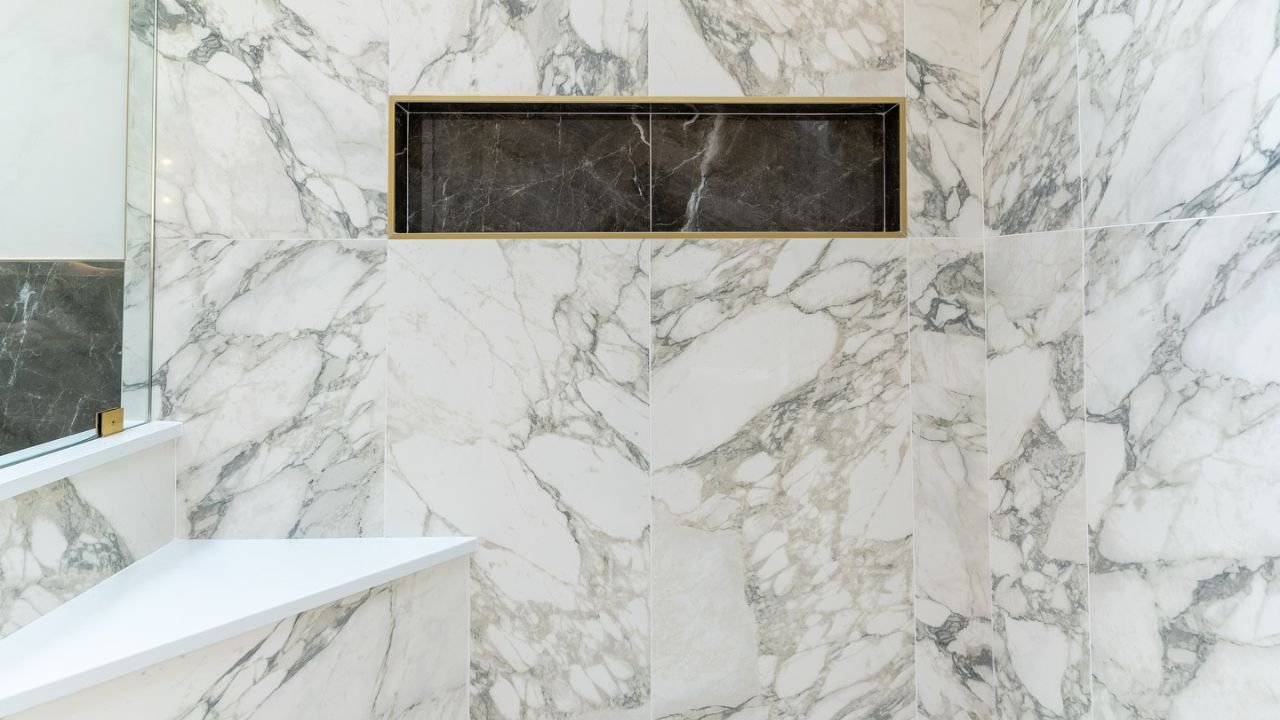
You should select the grout that is well suited to the stone tile’s finish, porosity, and joint dimensions. Travertine and marble tiles are prone to staining or etching when exposed to unsuitable products. Glass can also be scratched while grouting, while large-format tiles often use narrow joints with compatible grout.
- For marble and travertine tiles, test the grout in small areas for staining and use a pH-neutral cleaner approved for calcium-based stone. Do not use a cleaner with abrasive or acidic substances, which can etch these surfaces.
- For glass tiles, check the glass manufacturer’s grout recommendations. Abrasive aggregate can scratch some delicate finishes, and dark pigments can affect the appearance of translucent glass.
Follow the tile and grout manufacturer’s joint-width requirements. You may opt for narrow joints for rectified edges, but grout shouldn’t be used to cover any uneven installation. It shouldn’t be considered a replacement for movement joints.
Why Does Grout Crack, Stain, or Turn Moldy?
Grout failures like cracks, stains, or mold are often the result of substrate movement, incorrect mixing, moisture, or poor maintenance. You should repair the main reason first before replacing the grout, or the same problem will keep happening.
| Problem | Likely cause | Recommended response |
| Cracking | Movement or incorrect application | Correct the cause and regrout |
| Uneven color | Excess water or inconsistent washing | Clean or recolor if appropriate |
| Staining | Dirt, grease, or moisture | Use a compatible cleaner |
| Mold or mildew | Persistent moisture and residue | Clean and improve ventilation |
| White deposits | Moisture carrying salts to the surface | Address moisture and use a suitable treatment |
| Crumbling | Poor curing or unsuitable grout | Remove failed grout and replace it |
When you have changed the plan or at the corners, using a compatible flexible sealant is usually required instead of rigid grout. In showers, persistent dampness may signal drainage or waterproofing problems that surface cleaning cannot solve.
Frequently Asked Questions About Tile Grout
Common questions about the grout
What is the best grout for shower tile?
Epoxy grout is the best grout for shower tile and wet installation because of its strong stain resistance. A suitable cement grout can also perform well. Select a product approved for the shower’s tile and overall exposed conditions.
Is epoxy grout worth the extra cost?
Yes. Epoxy grout may have a higher upfront cost, but it performs well in installations prone to stains and requires frequent cleaning.
Can you use wall grout on floors?
If the manufacturer’s instructions approve it for floor application and the required joint width. Some wall grouts are unsuitable for floor traffic.
How long does grout take to cure before you can walk on it?
Generally, a grout can take up to 24 hours to cure before one can walk, but some products may take longer. Check the manufacturer’s curing instructions.
Do you need to seal epoxy grout?
Most epoxy grouts don’t require sealing because of their low water absorption. Checking the product instructions before applying and treating is crucial.
What grout color hides dirt best?
Beige and medium gray usually hide dirt better than most whites. It is better to select a shade that complements the tile and is well suited to the room’s cleaning routine.
Bottom Line
When selecting the best grout for tile, consider the joint width, tile material, moisture exposure, stains, and movement. Cement grout is ideal for many standard installations, while the epoxy offers greater stain resistance. Working with delicate surfaces like glass, natural stone, shower tiles, and outdoor paving installations requires product compatibility verification. Proper preparation, curing, and maintenance help protect the finished surface. Follow this approach to shop for the best grout like a pro.