
A walk-in shower needs tile that can withstand water, regular cleaning, and foot traffic without creating a slippery surface. Most homeowners prefer porcelain tile because of its all-around performance. However, the “best tile” choice can be different between the floor and walls. Large porcelain tiles work well on walls because of their minimal grout joints. Smaller mosaic tiles often work better on floors because they follow the shower slope and provide more grout lines underfoot. Natural stone can also work, but a tile floor needs more care and the right finish. The goal is not to choose one tile for the whole bathroom design. It is to match the tile to the job. Here is more to know.
| Shower Area | Recommended Tile | Why |
| Shower floor | Small-format porcelain or mosaic | Easier to follow the shower slope and provides more grout joints |
| Shower walls | Large-format porcelain | Fewer grout joints and a cleaner visual appearance |
| Wet floor | Matte or textured tile rated for wet-floor use | Better suited to wet-floor conditions |
| Design-focused wall | Porcelain or ceramic | Wide range of colors, patterns, and finishes |
| Natural-stone shower | Suitable stone with appropriate finish | Can work well but generally requires more maintenance |
The Best Tile for a Shower Floor
The shower floor deserves more attention than the walls because of its usage, and it is where slip resistance matters most.
- Small-format porcelain and mosaic tiles are often excellent choices. Their many grout joints create additional texture underfoot. Smaller pieces also make it easier for the installer to follow the slope toward the drain without forcing large tiles to bend or rock.
- A 1-inch, 2-inch, or similar mosaic can work well, but there is no single required tile sizes for every shower. The shower design, drain location, slope, tile shape, and installation system all affect the choice.
- Looking for a product that has manufacturer’s ratings for wet flooring is also a good choice. Check the ANSI A326.3 rating as it provides a standardized method for measuring dynamic coefficient of friction (DCOF), which helps compare hard-surface flooring products. TCNA’s current guidance also identifies Interior, Wet (IW) as a product-use classification associated with wet-floor performance.
One important distinction to consider is that a DCOF number should not be treated as a guarantee that someone cannot slip. TCNA specifically notes that many factors affect slip risk.

Porcelain vs Ceramic: Which Is Better?
Both porcelain and ceramic tile are suitable for bathrooms, but porcelain usually makes the choice convenient as walk-in shower tile.
| Feature | Porcelain Tile | Ceramic Tile |
| Water absorption | ≤0.5% under the porcelain classification | Typically higher than porcelain |
| Density | Denser, more compact body | Less dense body |
| Walk-in shower walls | Excellent choice | Excellent choice when rated for wet areas |
| Walk-in shower floor | Excellent choice when rated for wet flooring | Can be suitable when specifically rated for floor use |
| Water resistance | Excellent | Good to excellent, depending on product |
| Durability | High | Good to high |
| Scratch resistance | Generally higher | Generally lower |
| Chipping resistance | Strong, but edges can still chip | More prone to edge damage |
| Slip resistance | Depends on surface finish and product rating | Depends on surface finish and product rating |
| Matte/textured options | Widely available | Widely available |
| Large-format options | Widely available | Available, but more limited |
| Mosaic options | Widely available | Widely available |
| Best shower-floor format | Small-format or mosaic | Small-format or mosaic |
| Best shower-wall format | Large-format or standard sizes | Standard or large-format |
| Cutting & installation | Harder to cut; requires suitable tools | Easier to cut and handle |
| Maintenance | Low | Low |
| Sealing | Tile itself generally does not require sealing | Tile itself generally does not require sealing |
| Grout | Still requires appropriate grout and joint design | Still requires appropriate grout and joint design |
| Design options | Stone, marble, concrete, wood, and many other looks | Broad range of colors, patterns, and finishes |
| Natural stone appearance | Excellent range of realistic stone-look products | Available, though product range varies |
| Typical cost | Often higher | Often lower |
| Weight | Generally heavier | Generally lighter |
| Best for homeowners who want | Maximum durability and low water absorption | Design flexibility and potentially lower material cost |
| Overall shower choice | Best all-around option | Good option when properly specified |
Porcelain is relatively denser with lower water absorption. It also offers strong durability for floors and walls while resisting water spots. Ceramic can still be a practical and budget-friendly choice, especially for shower walls. It offers many colors, patterns, and decorative options and can cost less than some porcelain products.
The important point is that the word ceramic does not automatically mean unsuitable for a shower. Tile selection should follow the manufacturer’s intended application and performance information. For a homeowner who wants one straightforward material across the shower floor tile, porcelain gives a strong balance of water resistance, durability, design flexibility, and maintenance.
Is Porcelain the Best Tile for a Walk-In Shower?
For most homeowners, yes. Porcelain is one of the best all-around choices. Porcelain tile is dense and has very low water absorption. Homeowners can get it in a wide range of colors, stone looks, textures, and sizes. That gives homeowners plenty of design options for tiles for shower floors without requiring the maintenance that some natural stones need.
Also, porcelain performs especially well when you want the shower to have a clean, consistent look. Large-format porcelain offers reduced joints on the walls. Smaller formats can provide the flexibility needed for a sloped shower floor. However, not every porcelain tile is well suited for a shower floor. Check the manufacturer’s product-use information and wet-floor rating before choosing it. Currently, the industry guidance focuses on emphasizing the product classification and appropriate installation for wet areas. The 2026 TCNA Handbook includes product selection guidance and wet-area installation details.
Why Large-Format Tile Works Better on Shower Walls?
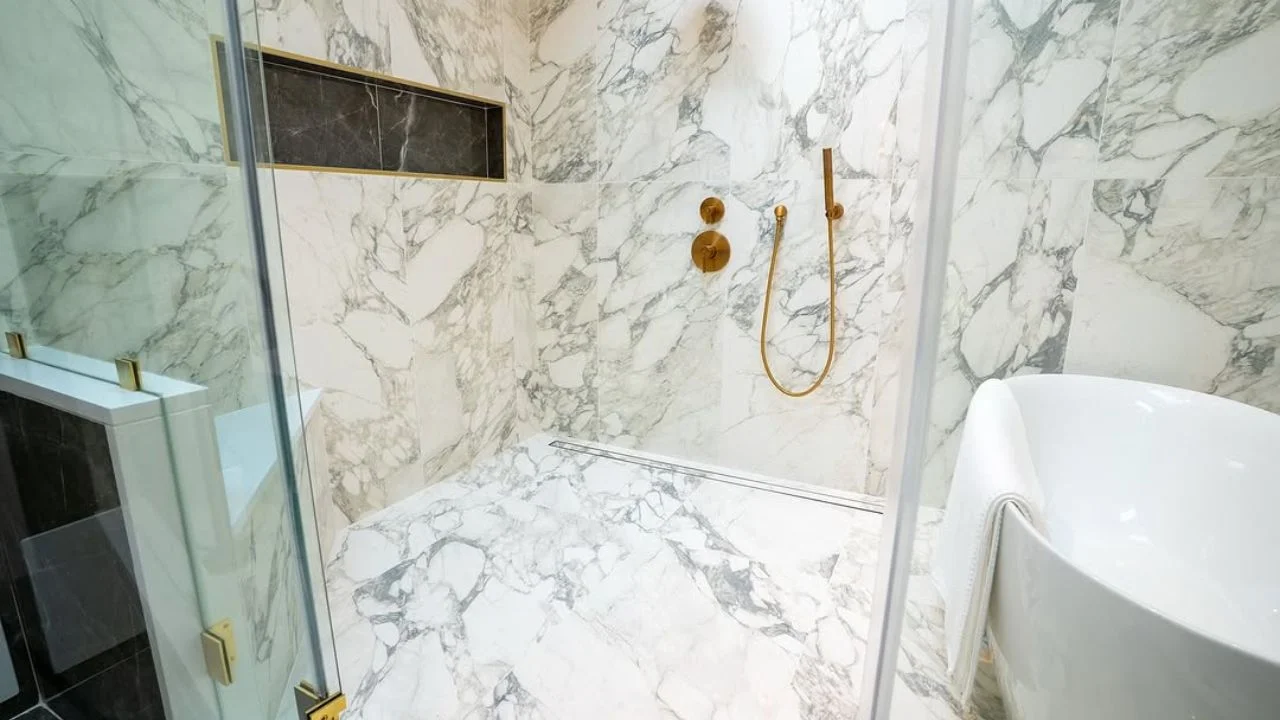
Large-format porcelain has become popular for modern walk-in showers for a practical reason: fewer grout joints. Minimal joints can create a cleaner visual field and reduce the amount of grout that needs routine cleaning. Large tiles can also make a compact shower appear more open because fewer lines interrupt the surface.
But large tiles are not automatically better everywhere. A shower floor needs to slope toward the drain. A large rigid tile may not adapt well to that slope, especially around a conventional center drain. Smaller tiles give the installer more flexibility. That creates a useful matching rule: large tiles for walls and smaller tiles for floors. It is not a hard-to-understand rule, but it is a sensible starting point for many walk-in shower designs.
Matte, Textured, or Polished: Which Finish Is Best?
Opting for matte or textured finishes is usually the perfect choice for the shower floor. Polished tile may look elegant on a shower wall, but a smooth, polished surface may become less forgiving when water and soap are present. A matte tile can provide a better balance between appearance and practical use. For walls, the decision is more flexible. Glossy ceramic or porcelain can work well because the wall does not carry the same foot-traction concern. If you want the same visual style throughout the shower, choose a coordinated collection that offers different finishes or formats for walls and floors.
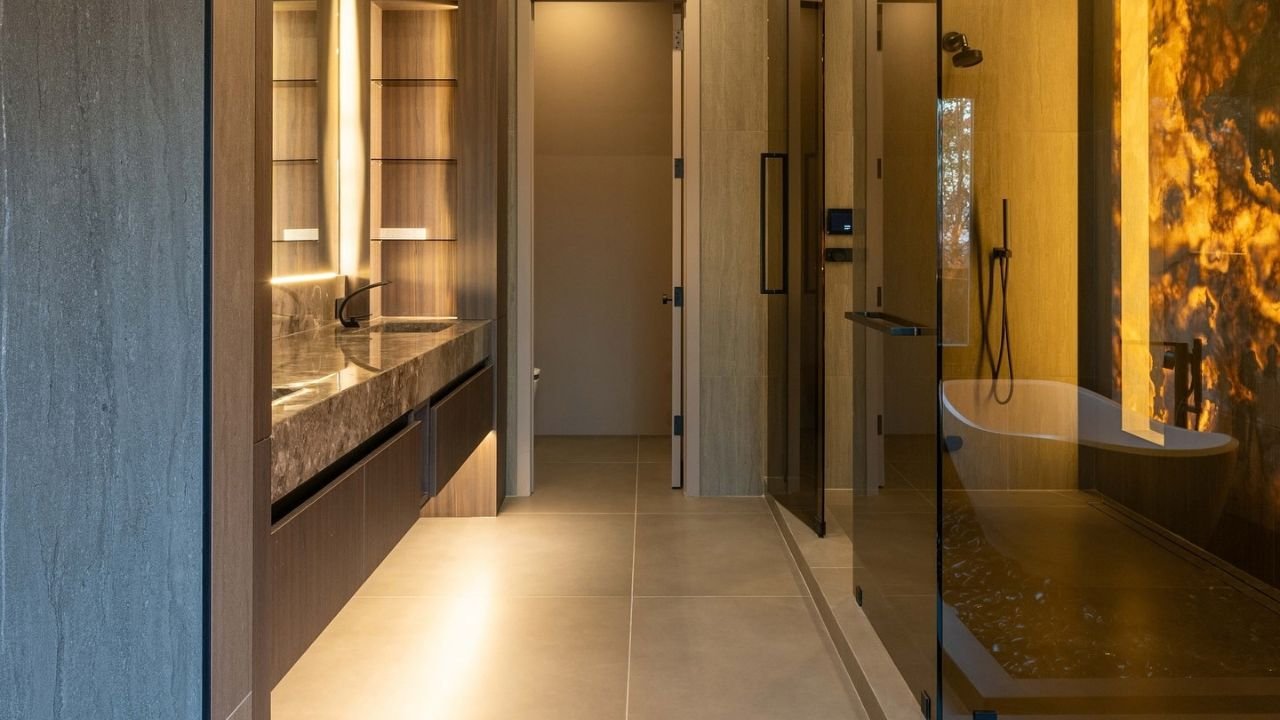
This is one reason natural stone-look porcelain has become useful for shower design. You can create the appearance of marble, limestone, or other stone while using a porcelain product suited to wet areas.
Can You Use Natural Stone in a Walk-In Shower?
Yes. Natural stone tile can create an excellent walk-in shower, but it requires more planning than porcelain. Marble tile, travertine tile, slate tile, limestone tile, and other stone tiles have different absorption, hardness, texture, and maintenance requirements.
Some need sealing and more careful cleaning. Acidic or harsh cleaners can also damage certain stones. Finish matters as much as the stone itself. A polished stone floor is not automatically the best choice simply because the stone is durable.
If you want natural stone, discuss the specific stone, finish, sealer, and cleaning method, and targeted shower application with an experienced installer. At NT Pavers, the same principle applies to natural stone selection in other wet and outdoor applications. The material needs to match the environment, not just the design.
What Tile Size Makes a Walk-In Shower Look Better?
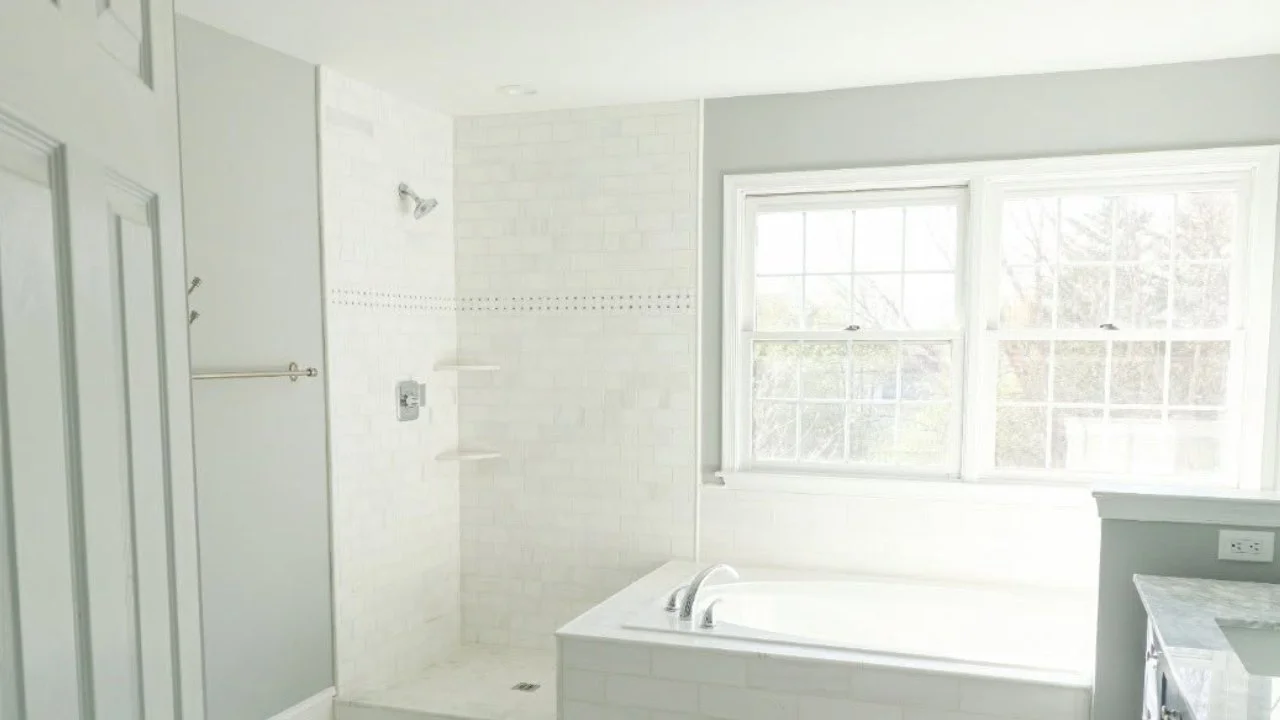
Tile size should support both the shower’s proportions and its installation requirements. For walls, large format tiles such as 12×24 inches, 24×48 inches, 48×48 inches, or larger can create a clean, spacious appearance. They can work especially well in contemporary bathrooms. For floors, smaller mosaics often make more practical sense because they accommodate slope changes and add grout joints. You can also mix sizes without making the shower look disconnected.
For example, large-format porcelain walls with a small mosaic floor can create a deliberate contrast while giving each surface the tile format it needs.
Don’t Overlook Grout and Waterproofing
Even though you can use a stunning tile, when the construction is poor, it wont worth the effort. The shower assembly requires proper waterproofing, drainage, substrate preparation, movement accommodation, and tile installation.
TCNA’s 2026 handbook provides recognized installation guidance for ceramic, glass, and stone tile, including wet-area methods and grout-joint considerations. Don’t overlook the grout. Narrow joints can create a cleaner look, but the joint width must suit the tile and installation requirements. The grout itself is not the waterproofing layer. For homeowners, the practical lesson is simple: select a tile and installation system together.
That approach helps prevent the common mistake of spending most of the budget on beautiful tile. One shouldn’t treat waterproofing and installation as secondary details.
Frequently Asked Questions About Walk-In Shower Tile
Let’s answer your questions about walk-in showers.
What is the safest tile for a walk-in shower?
A properly selected matte or textured tile rated for wet-floor use is a strong choice. Smaller formats can also provide more grout joints and flexibility around the shower slope.
Is porcelain or ceramic better for a walk-in shower?
Porcelain is usually the stronger all-purpose option because of its low water absorption, stain resistance, soap scum resistance, and durability. Ceramic can also work well, especially on shower walls, as long as the product is approved for the application.
What size tile is best for a walk-in shower floor?
Small-format tiles and mosaics are often the easiest choice for a sloped shower floor. They can follow the slope toward the drain with fewer installation problems.
Can you use large tiles on a shower floor?
Yes. Large tiles require careful planning around the shower slope and drain. They are often easier to use on walls than floors.
Is polished tile good for a shower?
Polished tile can work well on shower walls, but it is usually not the first choice for a wet shower floor. A suitable matte or textured product provides better floor traction.
Is natural stone good for a walk-in shower?
Natural stone can work well when the stone, finish, waterproofing, sealing, and cleaning requirements suit the shower. It generally requires more maintenance than porcelain.
Bottom Line
The best tile for a walk-in shower is not simply the most expensive tile or the tile with the most attractive pattern. It is the tile that fits the surface. Most projects work well with porcelain tiles. They offer resistance to moisture, scratches, and regular use without showing signs of wear. Use smaller, wet-rated porcelain or mosaic tile when traction, slope, and drainage become priorities on the floor.
And above all, treat waterproofing and installation as part of the tile decision. A well-designed walk-in shower matches the material, finish, format, and installation method to the job. That is what makes the finished space work as well as it looks.