
A countertop material choice affects your kitchen’s look and must also withstand heat, spills, scratches, wear, and tear. Porcelain and quartz are two materials commonly used in countertop manufacturing today. Although both have similarities, they are not exactly alike. Which one is a better choice for you?
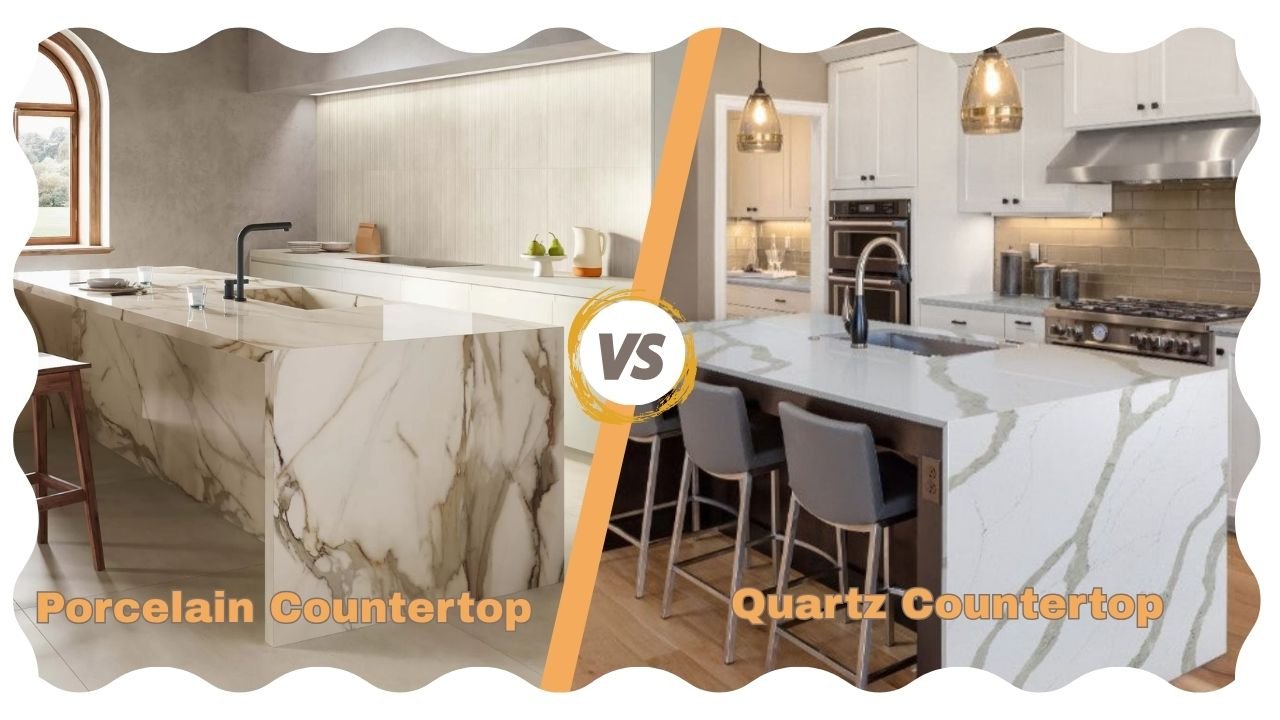
Porcelain vs Quartz Countertops Comparison
| Feature | Porcelain Countertops | Quartz Countertops |
| Durability | Highly durable, but edges can be more vulnerable to impact | Highly durable with strong everyday performance |
| Heat resistance | Excellent | Good, but prolonged high heat can damage resin |
| Scratch resistance | Excellent | Excellent |
| Stain resistance | Excellent and non-porous | Excellent and non-porous |
| UV resistance | Excellent | More limited depending on the product |
| Outdoor use | Suitable for many outdoor applications | Product-specific; check manufacturer guidance |
| Thickness | Often available in thin slab formats | Commonly available in thicker slabs |
| Edge options | More limited, with mitered edges often used for thicker looks | Wider range of edge profiles |
| Installation | Requires careful fabrication and handling | Generally more forgiving to fabricate |
| Maintenance | Easy to clean and normally needs no sealing | Easy to clean and normally needs no sealing |
| Appearance | Can imitate marble, stone, concrete, wood, and other materials | Wide range of colors, patterns, and stone-like designs |
| Chipping | Edges can chip from strong impact | Generally better edge impact resistance |
| Best suited for | High heat, UV exposure, thin modern designs | Everyday indoor kitchens and thicker countertop profiles |
What is the difference between porcelain and quartz countertops?
Porcelain countertops are made from clay and minerals fired at extremely high temperatures. These countertops have a dense composition and are almost non-porous. Quartz countertops are a blend of quartz stones with binders. The resulting product has a solid, dense, and non-porous construction. The main difference between these products lies in their performance under heat exposure, impact, fabrication, and installation. Porcelain countertops withstand temperatures better than quartz countertops. Moreover, porcelain countertops can withstand direct sunlight, while quartz countertops cannot. No product is truly indestructible. The properties of both products depend greatly on many factors.
Is porcelain better than quartz for kitchen heat?
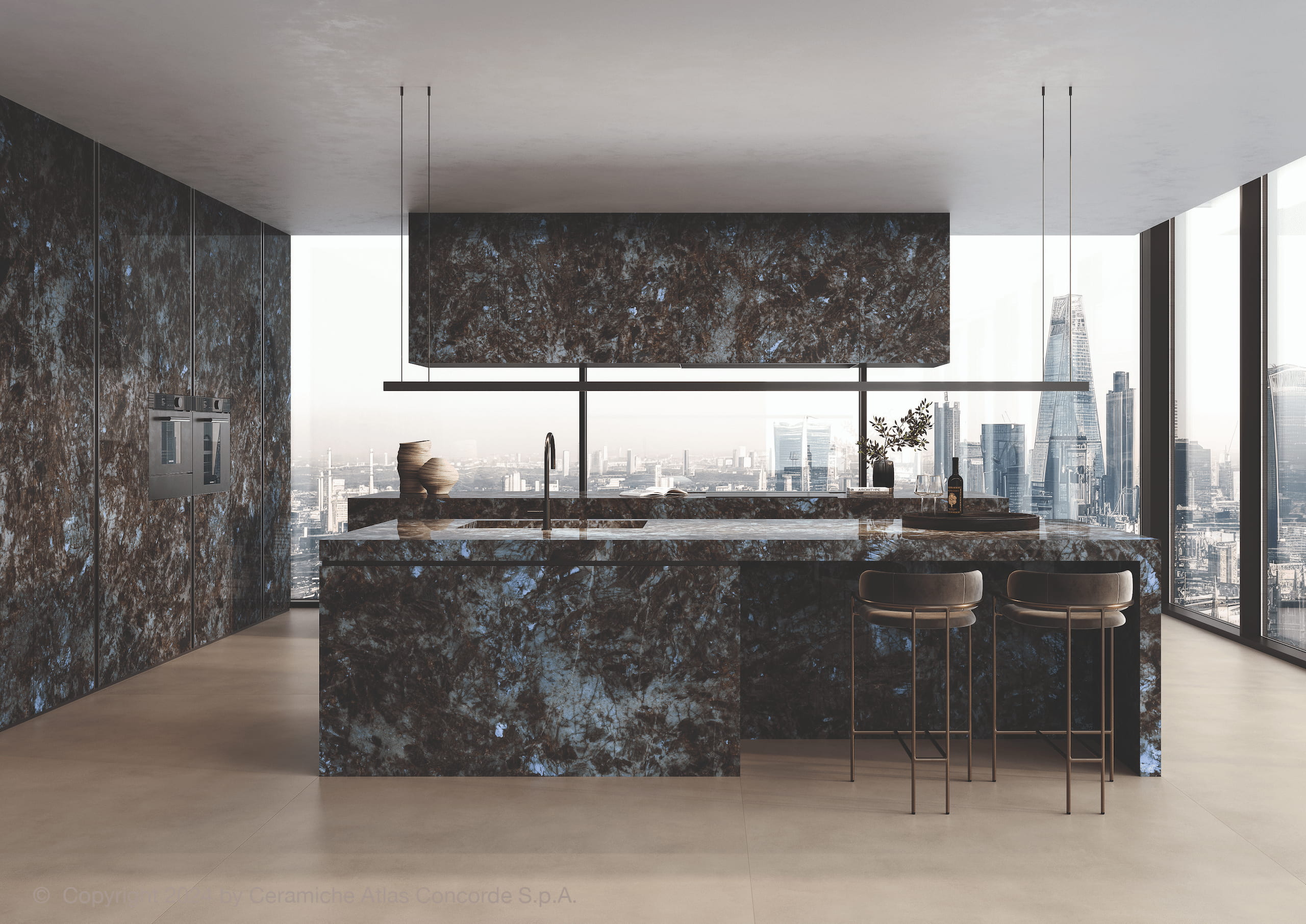
Yes, porcelain is better for heat resistance. Porcelain is fired at extremely high temperatures. Therefore, porcelain has great resistance to high temperatures and heat changes. Quartz has heat-resistance properties as well, but quartz has a polymer resin. Excessive temperature can lead to discoloration and deterioration of the resin.
It is especially important to consider this if you often use cookware that reaches high temperatures. Even with heat-resistant countertops, it is recommended to use trivets or hot pads. Lucciare also advises protecting both countertops, as neither of them is completely safe from heat changes. If you have any equipment that involves high-temperature cooking in your kitchen, porcelain can be helpful.
Which is more durable, porcelain or quartz?
While both products are sturdy, their resistance to everyday damage differs greatly. For one, quartz is highly efficient and has good scratch and stain resistance. The thick design also allows for sturdier countertops. Porcelain is a durable and dense product that is resistant to scratches, stains, heat, and UV rays. But porcelain can be susceptible to impacts and faulty installation. Any heavy objects dropped on the exposed edge of the counter will result in a chip in the material. Faulty handling and transportation before and during installation may damage the slab. This does not imply porcelain’s weakness in regular countertop service.
How can porcelain countertops be damaged?
Porcelain countertops are prone to cracking and chipping where there are exposed edges and sink cutouts if they are impacted by any heavy item. While porcelain countertops are highly durable in regular kitchen conditions, they still need to be handled carefully and installed professionally. With the thin slab construction, it may be aesthetically pleasing, yet more sensitive to fabrication and porcelain countertop installation.
It may happen due to:
- Impact of a heavy item on an exposed edge.
- Incorrect handling of the slab.
- Inadequate support for the countertop.
- Use of unsuitable machinery to cut the countertop.
- Incorrect installation that goes against the instructions from the manufacturer.
Which countertop is more scratch resistant?
Porcelain and quartz both have great scratch resistance characteristics. Porcelain is very hard and dense and provides great scratch resistance. Quartz, on the other hand, is also known for its ability to resist scratches and can withstand daily kitchen activities. Neither should be assumed to be totally scratch-resistant. It is important to always use a cutting board since it will protect the countertop and the kitchen knives.

Maintenance and cleaning
Both porcelain and quartz are easy to maintain. Their non-porous surfaces help resist stains and make everyday cleaning simple.
For routine cleaning, use:
- A soft cloth or sponge
- A mild or neutral cleaner
- Clean water
- A dry cloth for wiping the surface
Avoid harsh chemicals and abrasive cleaning products unless the countertop manufacturer specifically approves them. Browse our guide on how to maintain and clean porcelain slab.
Another advantage is that neither material normally requires routine sealing. This makes porcelain and quartz easier to maintain than some porous natural stone surfaces.
Which looks better, porcelain or quartz?
This cannot be answered as one because appearance will depend on what style you want to have. Porcelain has the ability to imitate other materials like marble, natural stone, concrete, wood, and even metal. Porcelain slabs that are large in size are able to produce an appearance that is very clean and will have fewer seams. Quartz has many colors and patterns available, and it also has the ability to imitate veining similar to natural stone. Quartz can be useful where you need a certain color or pattern throughout different parts of the kitchen. Porcelain will come in handy where you need a large surface or contemporary look with thin profiles. Both materials can be used in modern kitchens, but the important thing is the appearance you would like to have.
What about countertop edges?
Quartz generally offers more edge-profile options. Quartz slabs are commonly available in thicker formats. This makes it easier to create substantial edge profiles without building up the edge from separate pieces.
Porcelain is often thinner. If you want the countertop to look thicker, a fabricator may use a mitered edge to create that appearance. A mitered edge joins pieces at an angle to create a thicker-looking countertop. This requires accurate cutting and careful fabrication. A poorly made miter can be noticeable, especially with dramatic veining.
If you want a thick traditional countertop edge, quartz may provide more flexibility. If you prefer a thin, modern edge, porcelain can create a distinctive look.
Is porcelain harder to install than quartz?
Porcelain generally requires more specialized fabrication and careful handling.
Thin porcelain slabs can be lighter than quartz, but their size and edge characteristics require experienced handling.
The fabricator needs to account for:
- Slab thickness
- Support
- Cutting
- Corners
- Sink openings
- Edge details
- Transportation
- Installation
Quartz is also heavy and requires proper cabinet support. When planning the standard countertop depth, the fabricator should also account for the slab thickness, support, and edge details. However, its thickness can make fabrication more forgiving in some applications.
Which is better for a modern kitchen?
Porcelain can be a strong choice for a thin, modern kitchen design. Its thin profile creates a clean look that works well with contemporary cabinets and minimalist spaces.
Large format porcelain slabs can also visually connect the countertop and backsplash.
Quartz is also a popular kitchen countertop option for modern kitchens. Its wide selection of colors and patterns makes it suitable for minimalist, contemporary, transitional, and traditional designs.
If your main priority is an ultra-thin appearance, porcelain may fit your design better.
If you want a thicker edge with many profile options, quartz may be easier to work with.
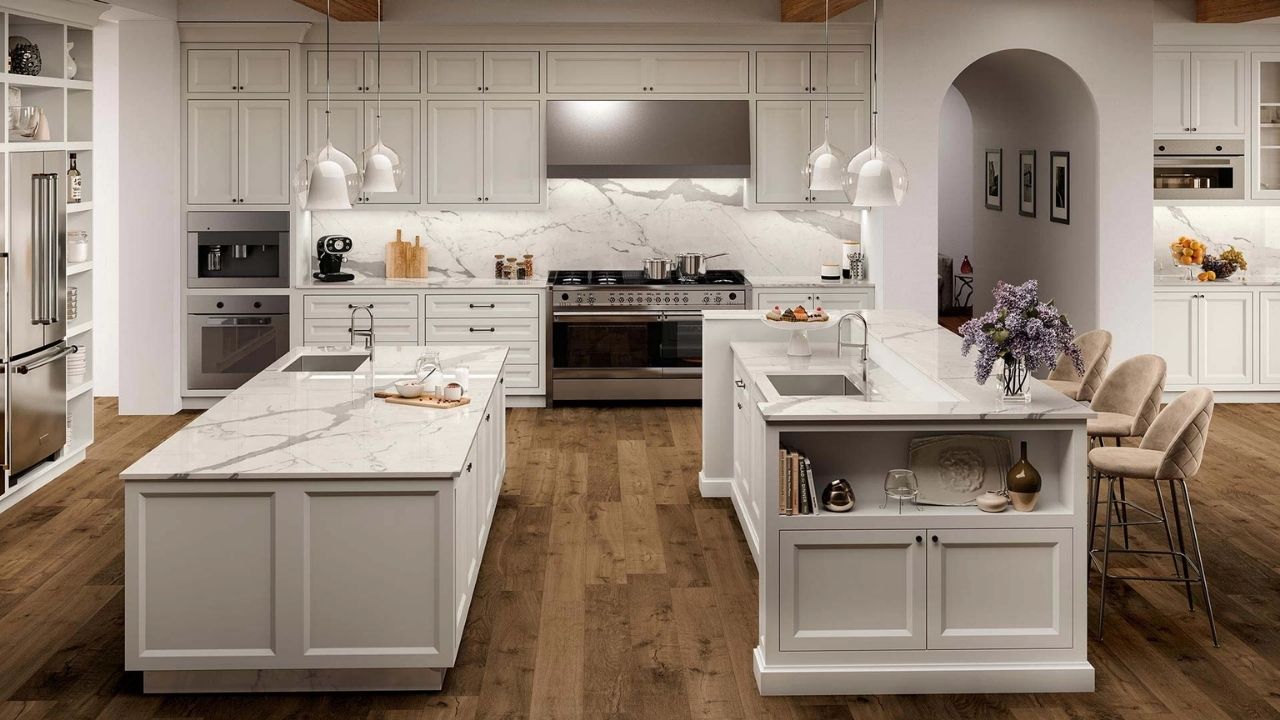
Which countertop should you choose?
The answer depends on what matters most in your kitchen.
Choose porcelain countertop if you:
- Cook with high heat regularly.
- Want a thin, modern countertop profile.
- Need strong UV resistance.
- Want to continue the countertop material into a backsplash.
- Prefer large-format slab designs.
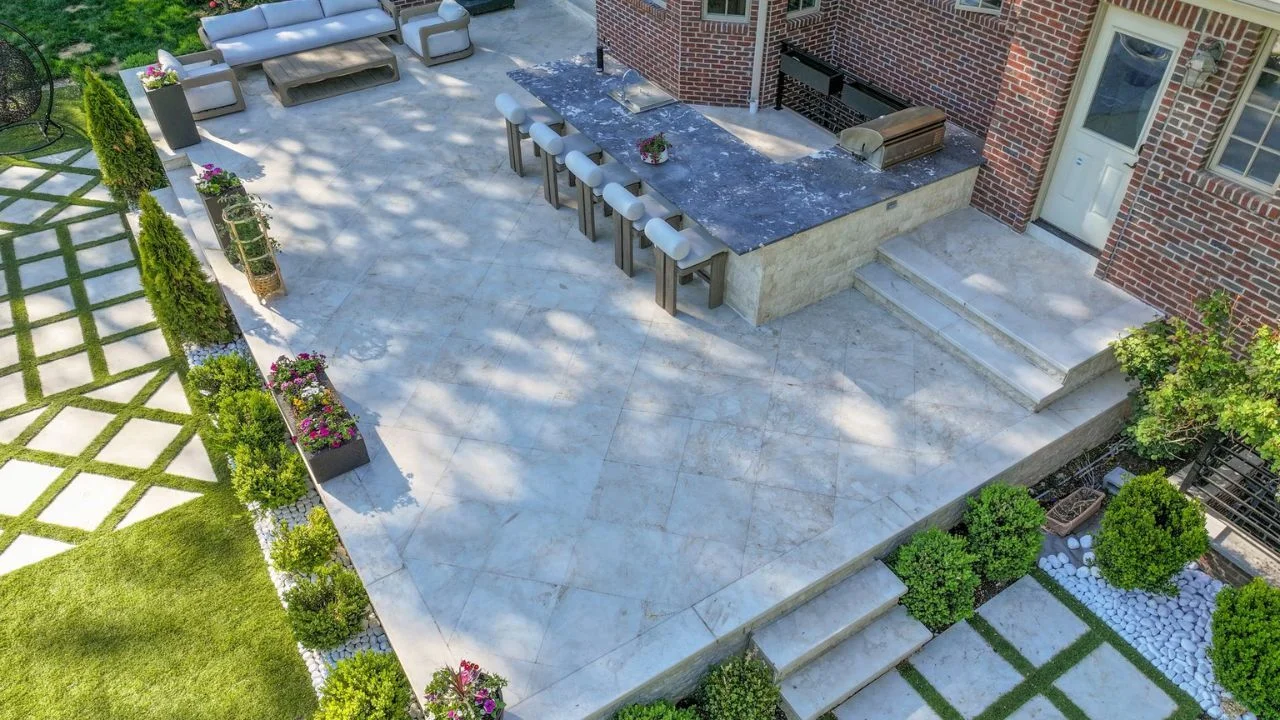
- Are considering an outdoor kitchen and have selected an outdoor-rated product.
- Want strong resistance to heat and everyday staining.
Choose quartz countertop if you:
- Want a thicker countertop profile.
- Prefer more edge-profile options.
- Want a wide selection of colors and patterns.
- Prioritize strong everyday edge performance.
- Want a relatively forgiving fabrication process.
- Are designing a standard indoor kitchen.
Neither material is automatically right for every kitchen.
Think about how you cook, where the countertop will be installed, how you want it to look, and how the slab will be fabricated.
FAQs About Porcelain vs Quartz Countertops
Is porcelain better than quartz for kitchen countertops?
Porcelain is better for heat resistance, UV exposure, and thin modern profiles. Quartz offers strong everyday durability, more edge options, and broad design choices.
Do porcelain countertops crack easily?
No. Porcelain countertops should not crack during normal use when properly fabricated and installed. However, strong impacts, poor handling, inadequate support, or installation problems can cause chips or cracks.
Which is more heat resistant, porcelain or quartz?
Porcelain is more heat-resistant. Quartz contains resin that can be affected by prolonged exposure to high temperatures.
Do porcelain countertops need to be sealed?
No. Porcelain is non-porous and usually doesn’t require sealing.
Does quartz need to be sealed?
No. Quartz is also non-porous and normally does not require sealing.
Which is easier to install, porcelain or quartz?
Quartz is generally more forgiving to fabricate and install. Porcelain requires careful handling and experienced fabrication, especially when working with thin slabs and mitered edges.
Which is better for a busy kitchen, porcelain or quartz?
Both can work well in busy kitchens. Consider heat exposure, edge impact, desired countertop thickness, appearance, and installation requirements before choosing.
Final thoughts
Porcelain and quartz can both make durable and attractive kitchen countertops.
Porcelain stands out for heat resistance, UV stability, thin profiles, and large-format designs. Quartz stands out for everyday durability, edge options, design variety, and easier fabrication. The most important thing is to match the countertop to the application.
If high heat or outdoor exposure is a major concern, porcelain may provide advantages that quartz does not. If you want a thicker edge, broad design choices, and a more forgiving installation, quartz may better fit those requirements. Whichever material you choose, use the manufacturer’s specifications and work with an experienced fabricator. Countertop performance depends not only on the material but also on proper fabrication, support, and installation.