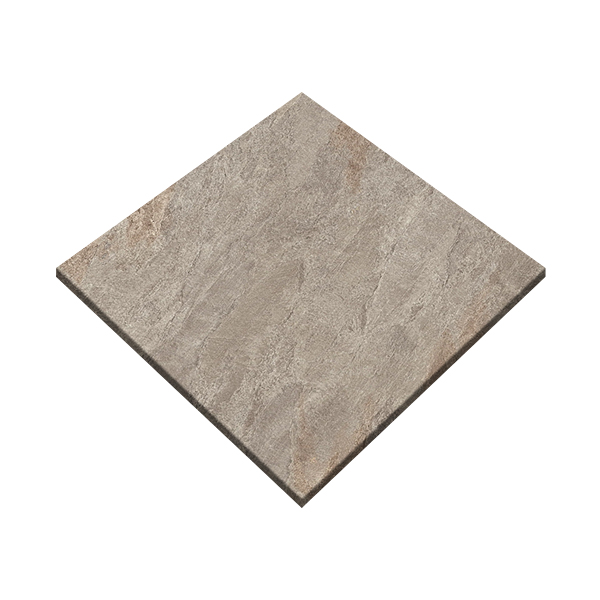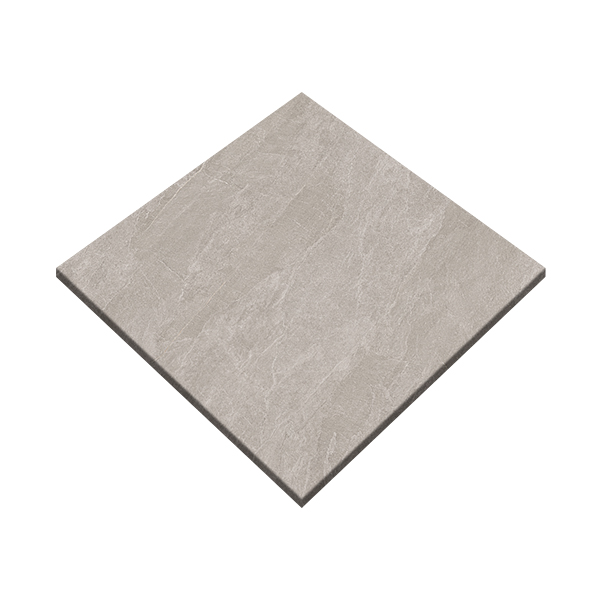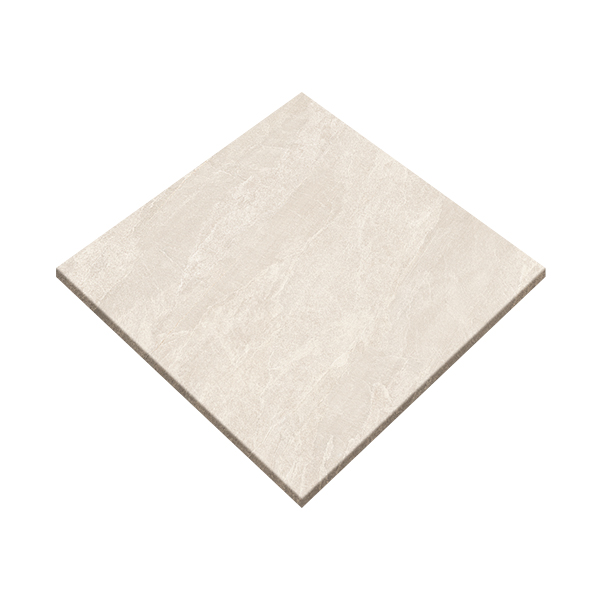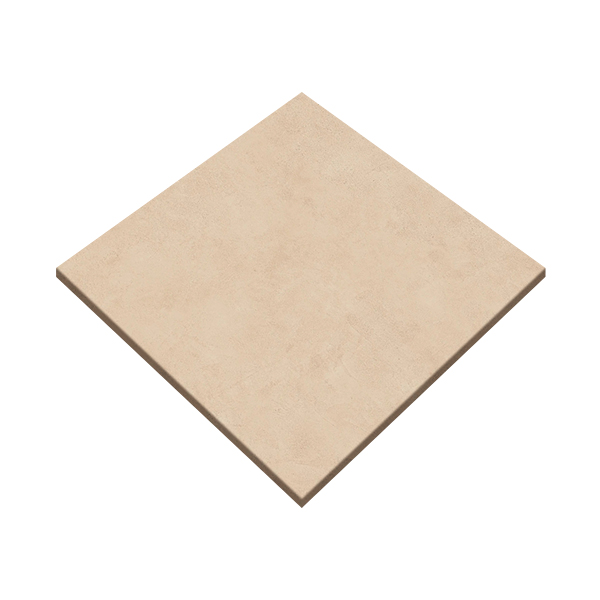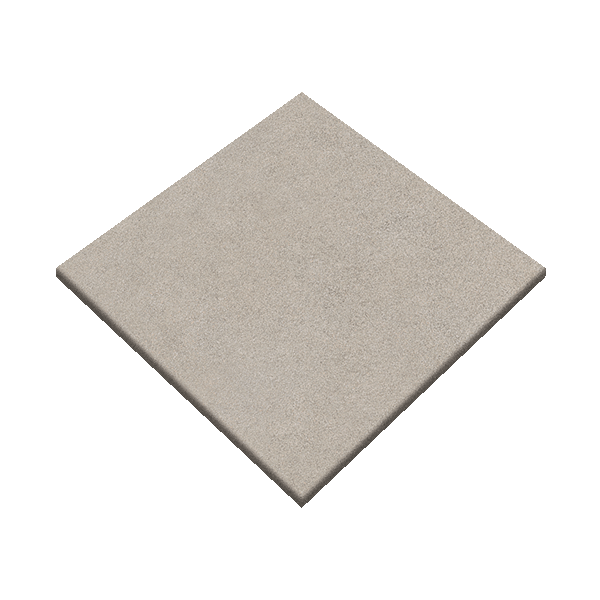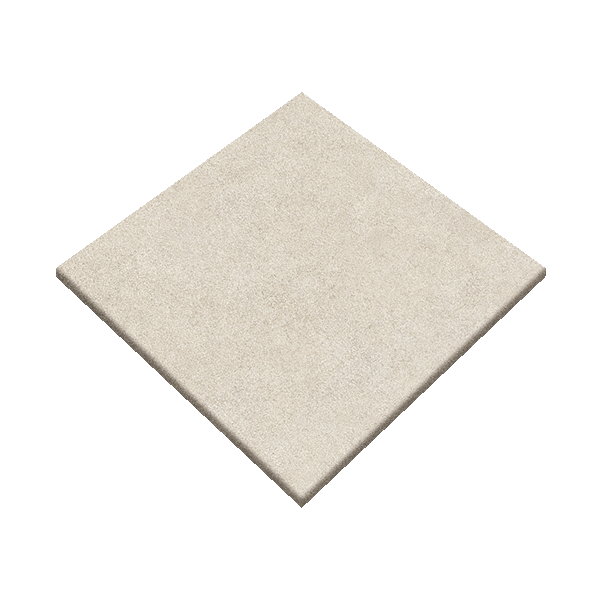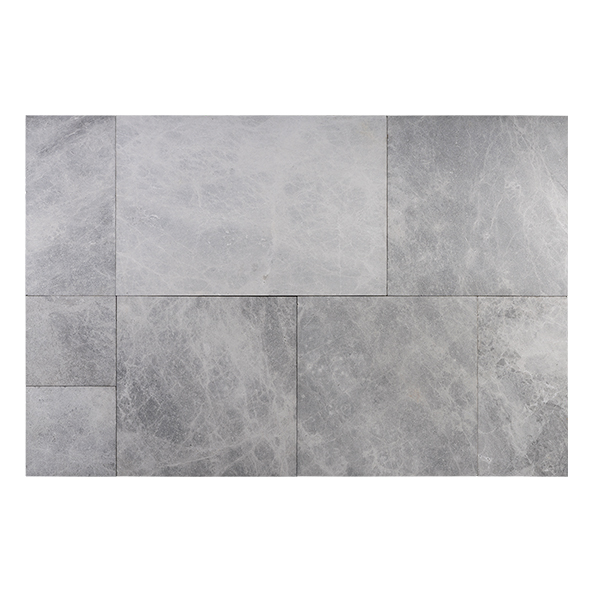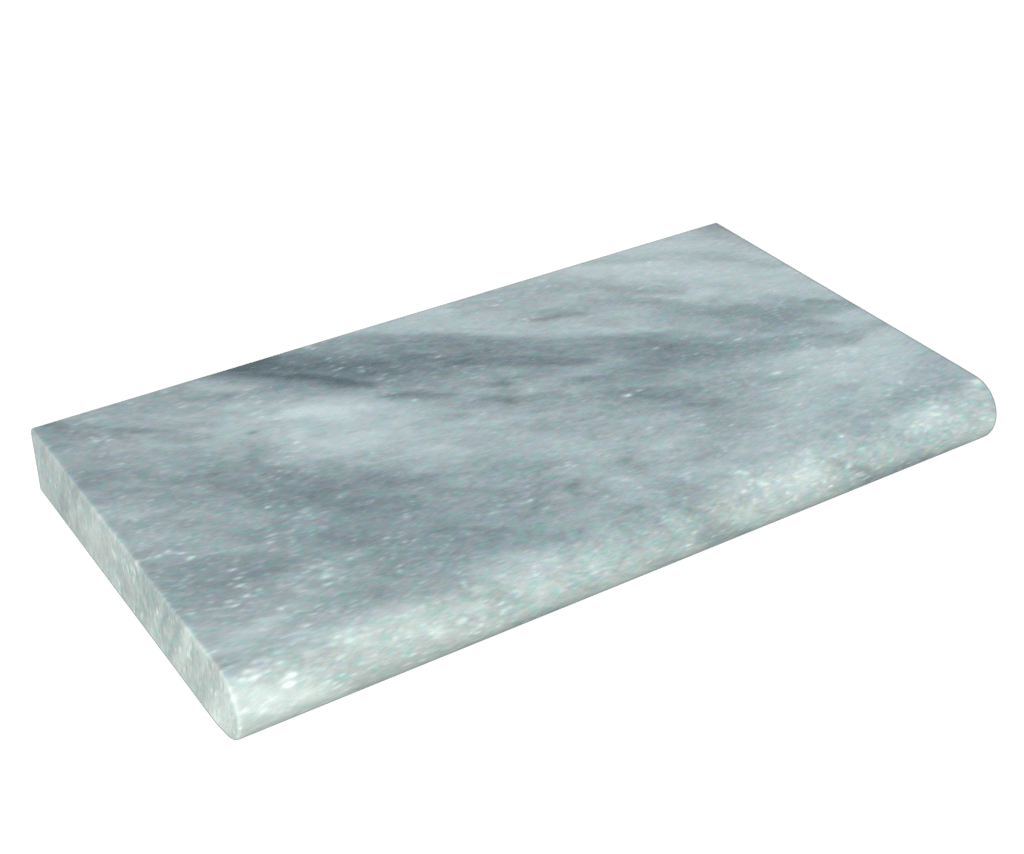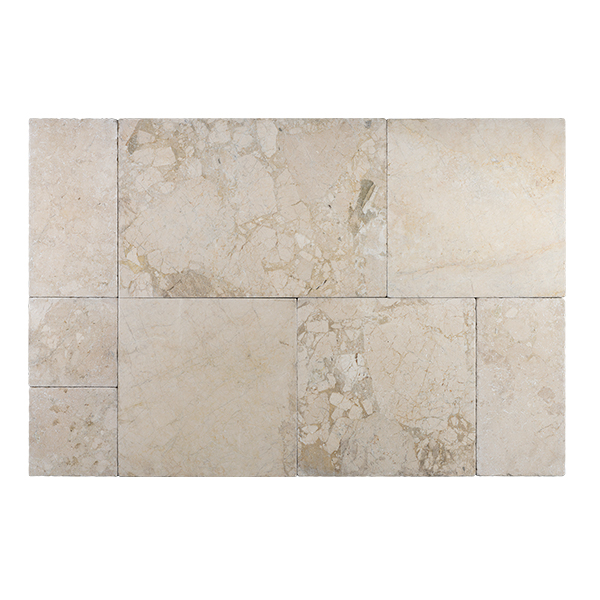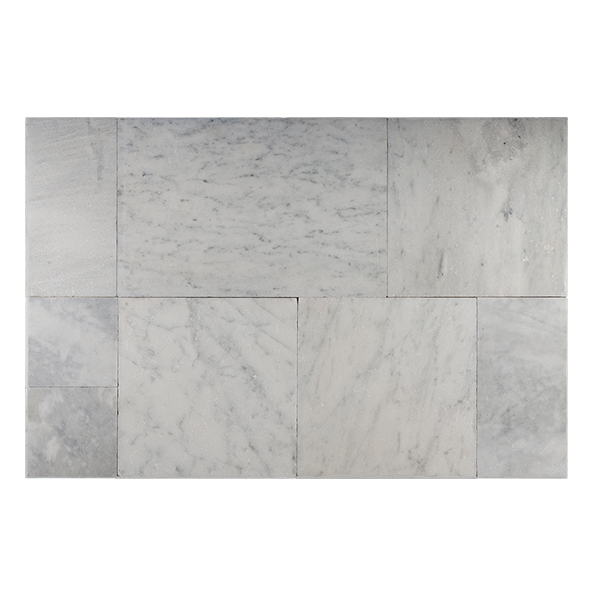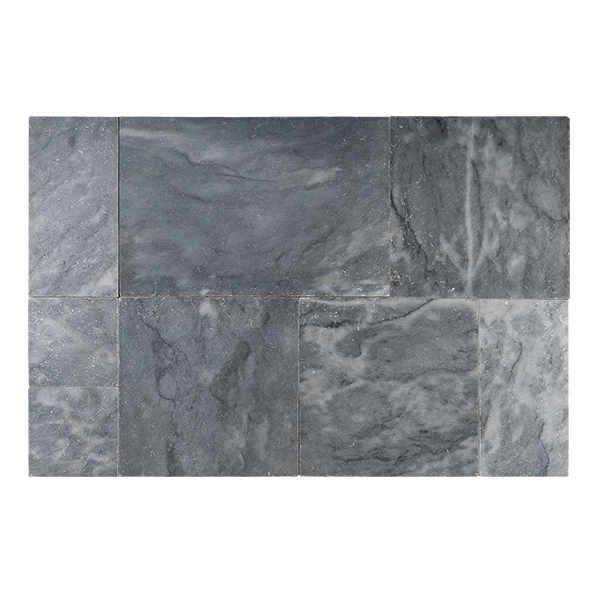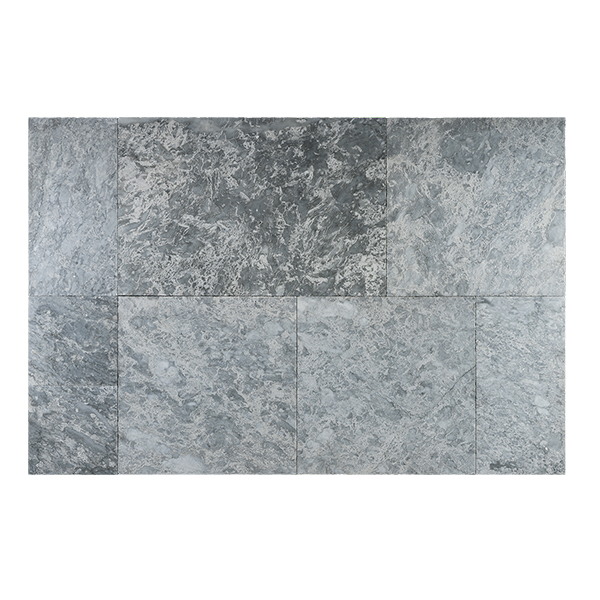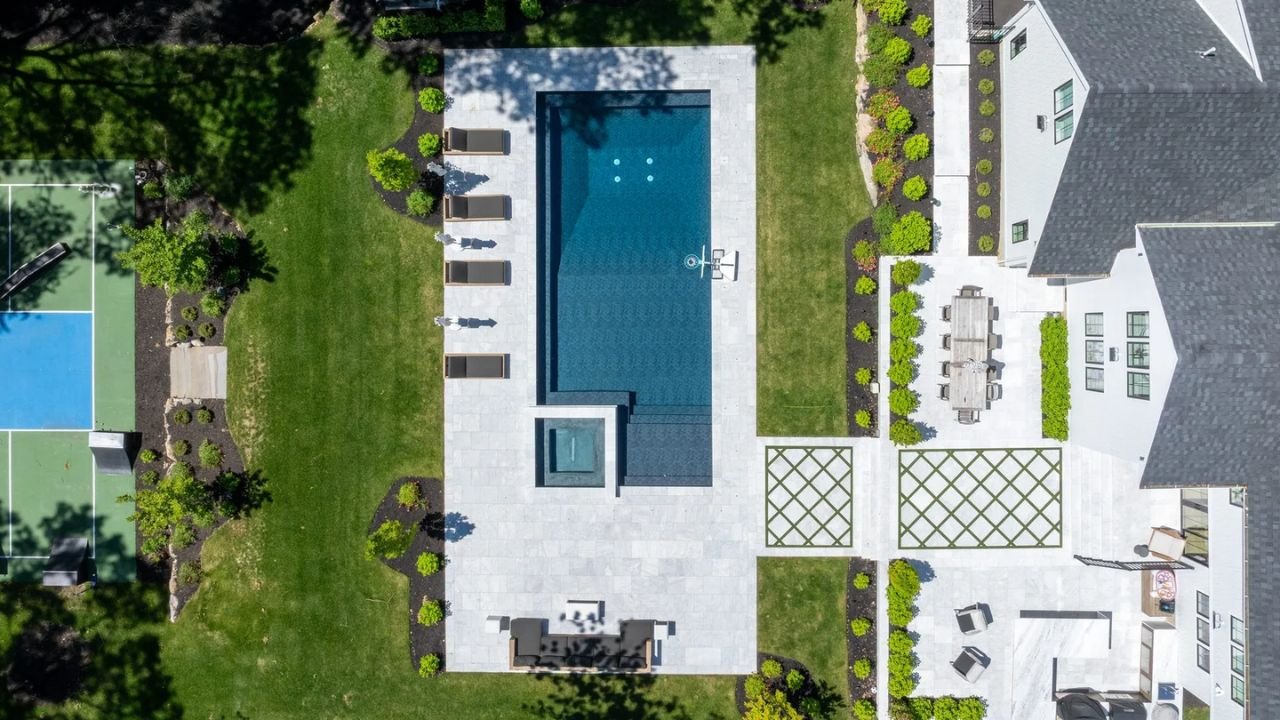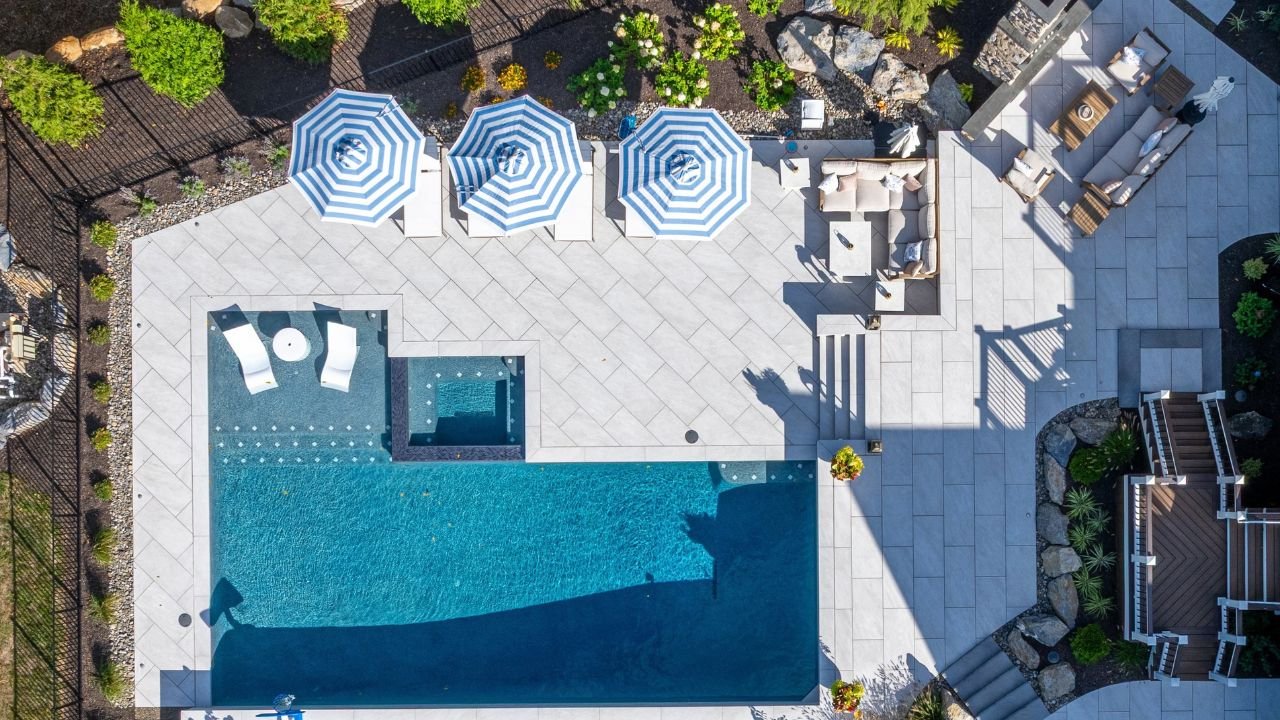
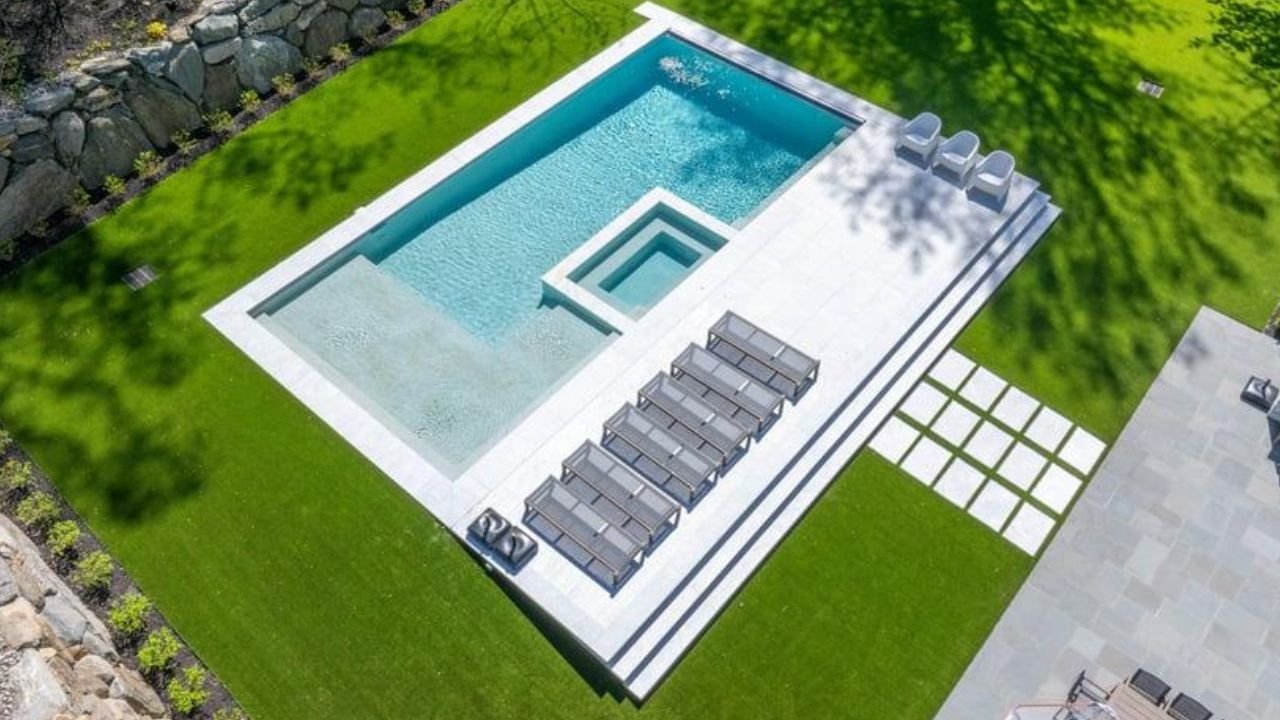
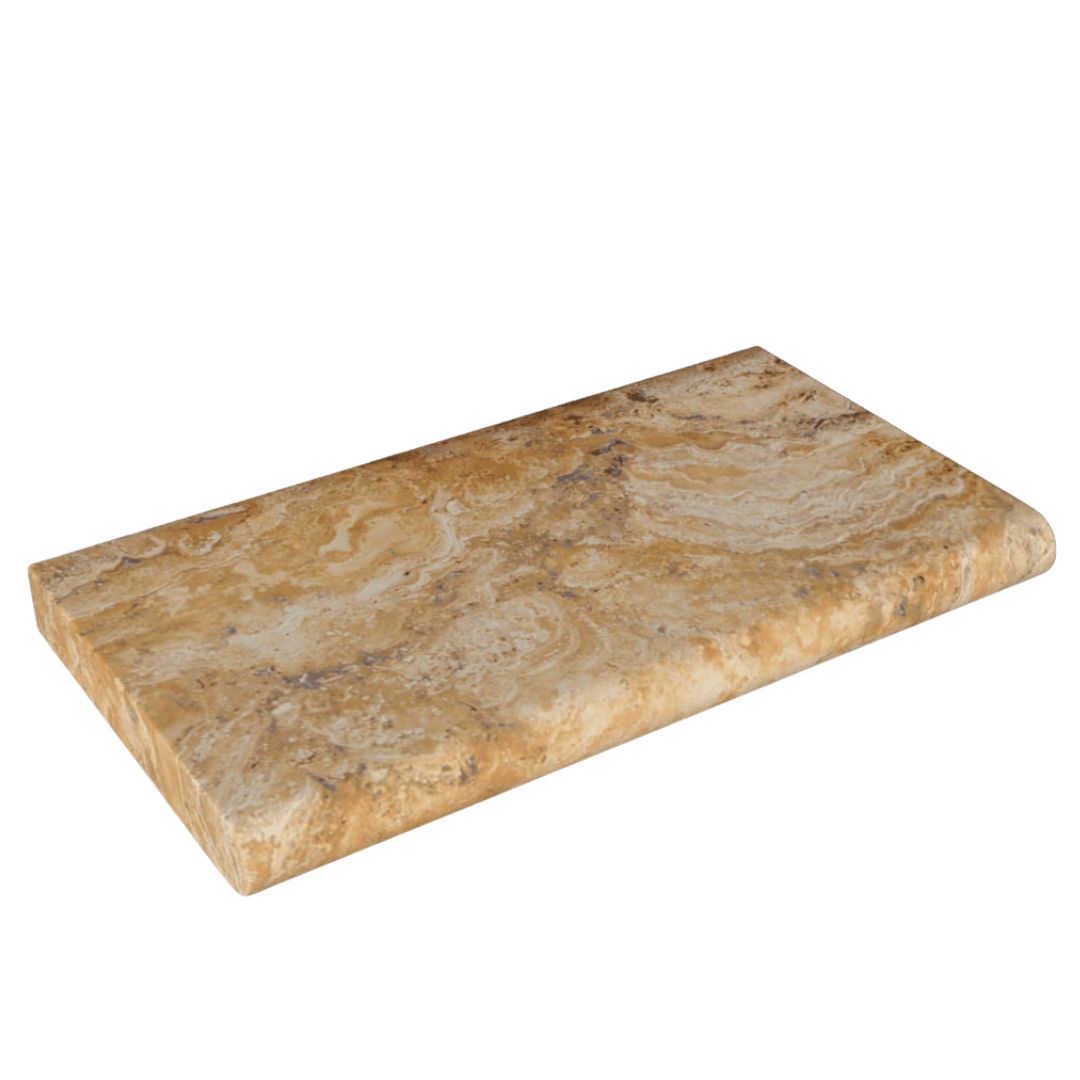
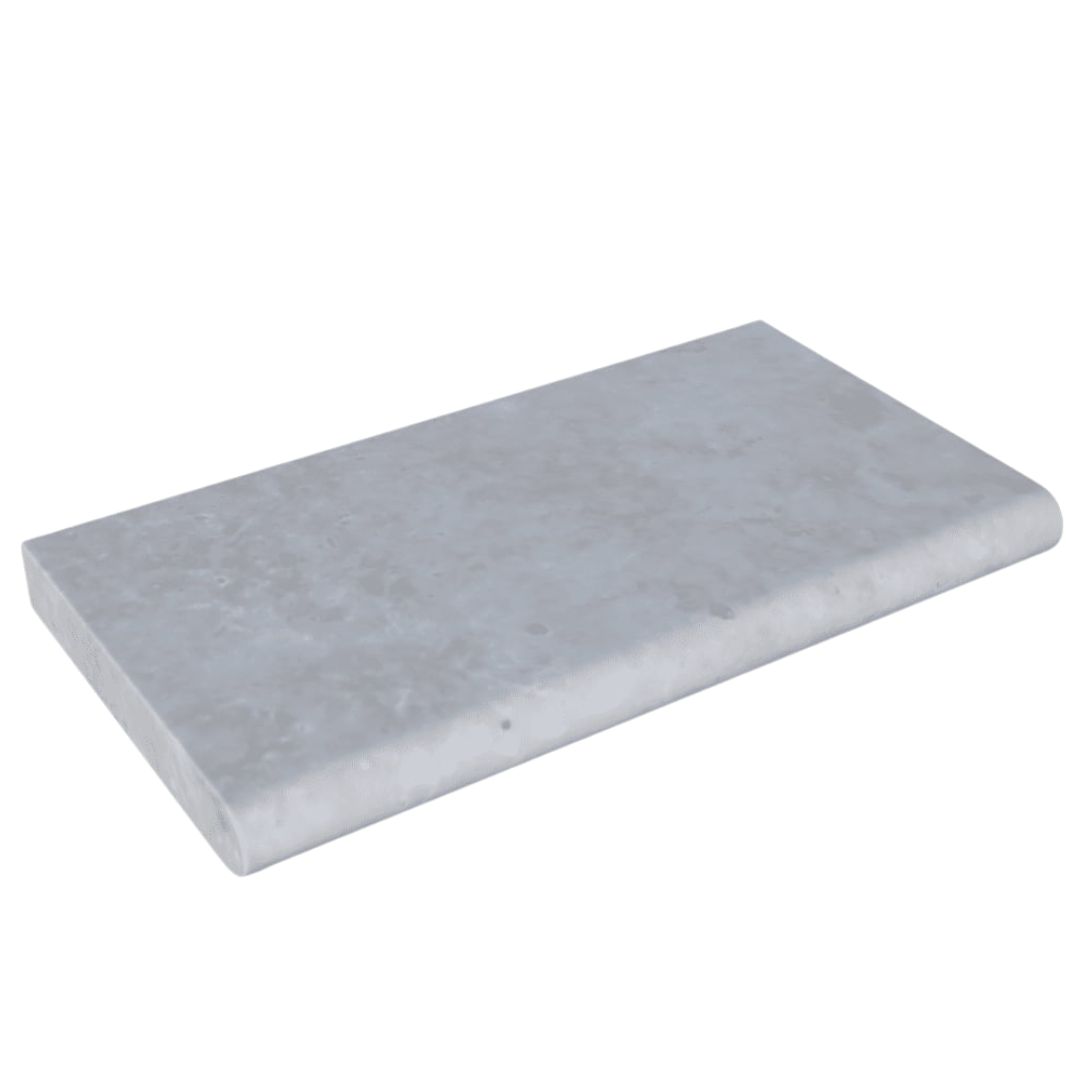
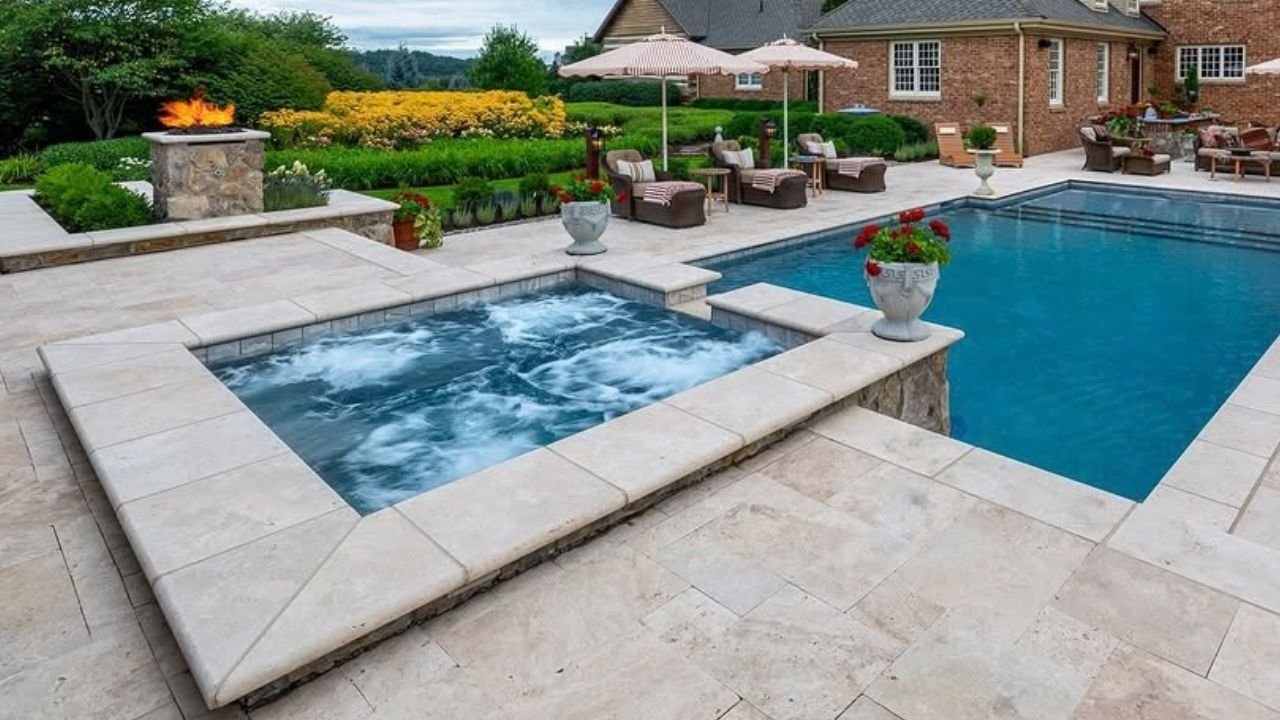
A spa space in any home should feel peaceful and calm. However, the surface surrounding it has to face a lot, including bare feet, sunlight, and regular cleaning. This is why choosing the right material matters more than the style decision. Materials like Travertine, Porcelain, and Marble are often preferred by many homeowners because they solve different problems in the right setting. Travertine offers a warm color palette and a heat-resistant surface. Porcelain is highly durable, resists water absorption and staining, and offers low maintenance. Marble offers luxurious looks but needs more care and careful finish selection. So considering a single material and calling it best won’t be that easy. Here is our marble vs travertine vs porcelain comparison to determine which stone is best for a spa.
Disclaimer
Video doesn't show the true color and texture of the material.
Travertine vs Marble vs Porcelain Pavers For Spa
Travertine, porcelain, and marble each possess the distinct qualities that set them apart from each other. Also, no material is superior to another just because it doesn’t work in certain settings. The best stone for a spa is usually determined by how the spa will be used.
| Factor | Travertine | Porcelain | Marble |
| Wet traction | Very good with a suitable finish | Very good with textured outdoor products | Depends heavily on finish |
| Barefoot comfort | Excellent | Good to excellent | Good with suitable finish |
| Heat performance | Excellent in many light colors | Depends on color and product | Good in lighter colors |
| Water resistance | Porous; sealing may be appropriate | Excellent | Varies by stone |
| Maintenance | Moderate | Low | Moderate to high |
| Natural variation | High | Low to moderate | High |
| Outdoor spa use | Excellent | Excellent | Selective |
| Best quality | Natural character and comfort | Low maintenance | Luxury appearance |
The table shows why there is no universal winner. Travertine is a strong natural-stone choice for spa floors; porcelain is a strong low-maintenance choice, and marble is primarily a design-led choice.
Is Travertine Good for an Outdoor Spa?
When it comes to building a spa or hot-tub surround for residential space, travertine is one of the strongest natural stone choices. One of the major advantages of travertine is its unique aged appearance and barefoot comfort in direct sunlight. Travertine features a naturally porous structure and can remain cooler under direct sun than many dense paving materials.
Travertine pavers have a naturally textured surface, which offers better traction when wet. NT Pavers uses travertine in outdoor shower and spa zones for this reason. This surface texture matters for outdoor spaces when wet. A smooth finish will change the stone’s performance. A tumbled, brushed, or another appropriately textured finish is better than choosing a polished surface for its appearance alone.

Travertine Maintenance:
Travertine tile does require more care than porcelain. It is porous, so an appropriate impregnating sealer can improve stain resistance. The Natural Stone Institute also notes that sealing does not make stone stain-proof; it makes the surface more resistant to staining.
That distinction matters around a spa, where sunscreen, drinks, organic debris, and pool chemicals can reach the surface. Choose travertine stone when you want real natural stone, cooler barefoot contact, natural variation, and a resort-style appearance.
Is Porcelain Good Around a Hot Tub?
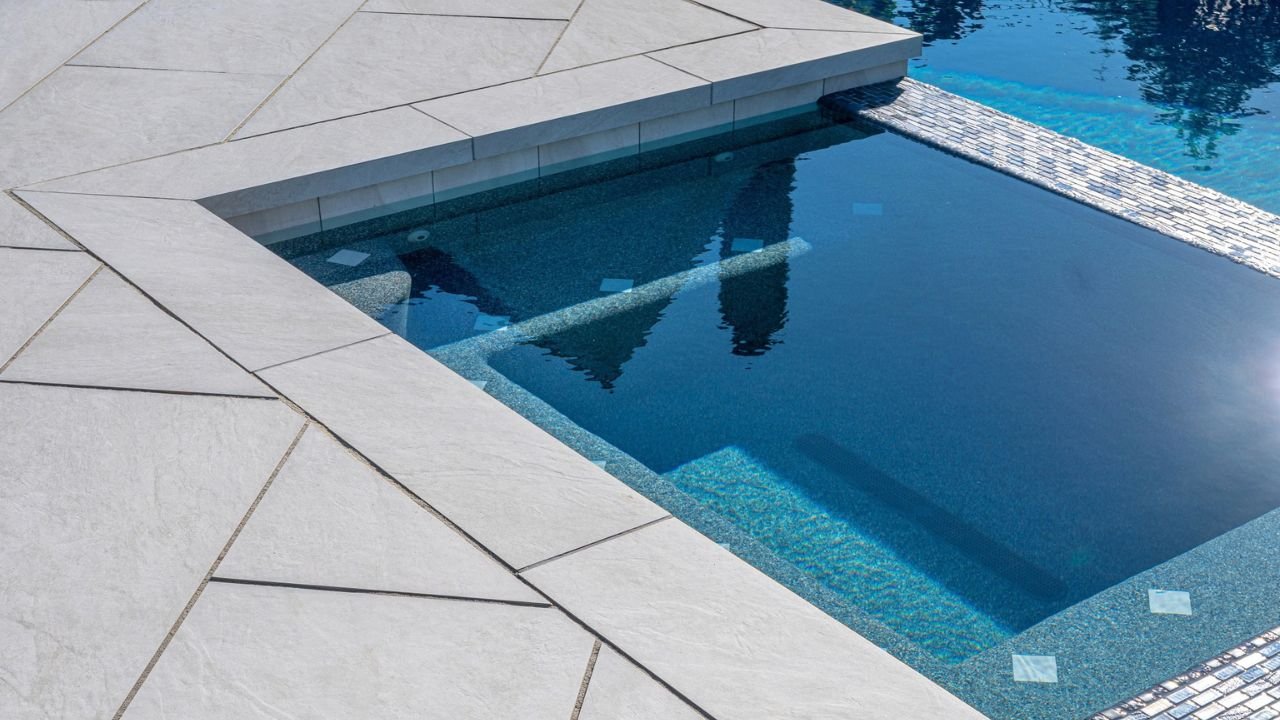
For residential spa surrounds where low maintenance is a priority, outdoor-rated porcelain is an excellent choice. Choose porcelain pavers when you want low maintenance, consistent appearance, high water resistance, and a contemporary outdoor design. Porcelain has much lower water absorption compared to natural stone. Porcelain can resist scratches and doesn’t require resealing every 6 months or a year. This means water, stains, and many common outdoor contaminants cannot penetrate the surface easily. A properly selected outdoor porcelain product can also resist pool chemicals and freeze-thaw exposure.
For example, NT Pavers lists porcelain products for spa and pool applications with very low water absorption. It resists thermal shock, frost resistance, stain resistance, and has tested anti-slip performance.
How To Select Porcelain For a Spa?
However, don’t assume that each porcelain type is suitable for wet areas. Homeowners should check the actual product specification and finish. A smooth decorative tile designed for an interior wall is not the same thing as a textured outdoor porcelain paver. For spa areas, look for an exterior-rated, slip-resistant surface intended for wet conditions. When choosing porcelain for a wet spa area, look for a product with tested slip resistance under ANSI A326.3 rather than relying only on an “anti-slip” label.
Is Marble Good for a Spa?
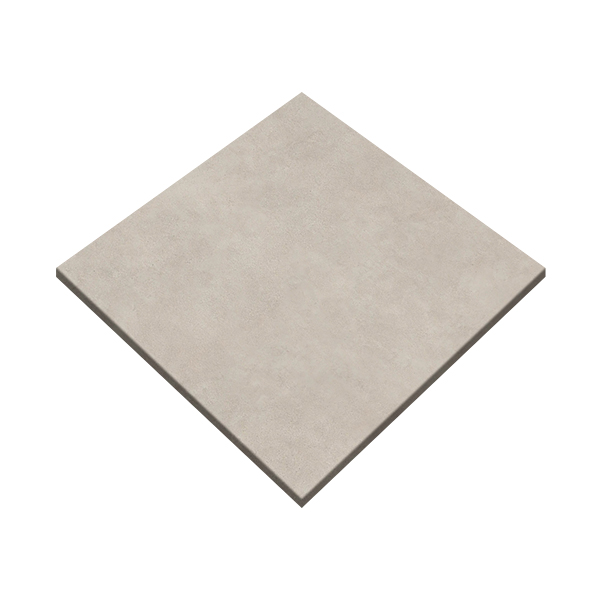
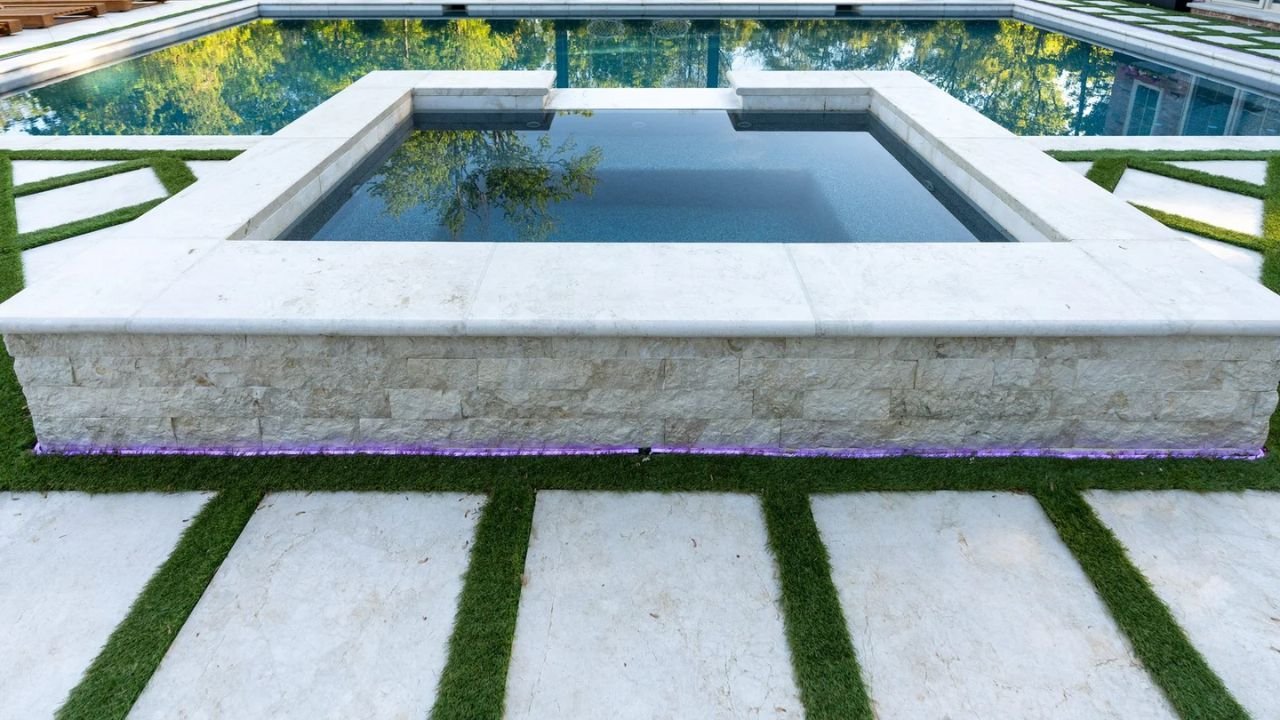
Marble is a perfect choice when an aesthetic and premium look is the goal for a spa and outdoor hot tub. Marble pavers look great in a spa, but only when the setting is right. It is not a practical choice for every wet area. Homeowners need to separate luxury appearance from surface performance.
Why Choose Marble For a Spa?
Marble offers stunning natural color, veining, and depth that manufactured materials cannot always reproduce. It can make an indoor spa bathroom, soaking area, or carefully designed outdoor setting feel much more refined. Choose marble when luxury appearance is a major priority, and you are prepared to select the right finish and maintain the stone properly.
However, consider the right finish. Polished marble is a poor default for a wet barefoot surface. A honed, tumbled, or textured finish can provide a more appropriate surface depending on the specific stone and application.
Marble Maintenance
Marble also needs thoughtful maintenance because it is more prone to visible etching. Marble is a calcium-carbonate-based stone and can react with acidic cleaners. The Natural Stone Institute recommends non-acidic cleaning products for calcareous stones because acids can etch the surface. Marble isn’t unsuitable. It just needs more care. It means the homeowner should accept that marble requires more care.
NT Pavers also offers textured and tumbled marble products specifically listed for spa and pool applications. They do offer the right marble, finish, and application that can work together.
What Should You Look for in a Spa Surface?
A spa shouldn’t just look calm in residential areas, but be durable and lasting as well. Don’t just focus on colors or patterns, because the surface will regularly become wet. People will walk on the surface barefoot, sit on its edge, and step directly from the water onto the paving. Sun exposure can also heat the surface, while pool chemicals, salt, body oils, and cleaning products can leave marks over time.
This is why a good spa surface should provide good wet traction and be comfortable for barefoot use. It should also offer resistance to water and stains, suitable heat performance, and a finish appropriate for wet areas. The selected spa surface should be manageable to maintain and compatible with the surrounding pool or patio.
For outdoor use, also check the manufacturer’s test data for properties such as water absorption and freeze-thaw performance, especially in climates with freezing temperatures.
Keep in mind that material is only part of the decision. The surface finish, drainage, installation, and maintenance plan matter too.
What Finish Is Best for a Spa?
The finish for every material should be more about providing slip resistance, especially in areas that will be prone to getting wet. Picking a textured or honed finish over a polished one is a sensible choice. Polished surfaces often look good, but they are prone to getting slippery. Textured surfaces offer better traction and are safe to walk barefoot on when wet. How this plays out depends on the material:
Porcelain:
Choose an outdoor-rated mat or textured finish. This is where you get the most reliable traction, because the surface is manufactured and can be tested. NT Pavers, for example, lists tested skid resistance for several outdoor porcelain products rather than just calling them “anti-slip.”
Travertine:
Honed, brushed, or tumbled finishes give far better grip than polished travertine. The natural texture helps, but check how the pits are treated, since filled and unfilled surfaces feel and drain differently.
Marble:
Polished marble is the riskiest option when wet. If you love the look, choose a honed or textured finish, and be aware that marble is more sensitive to staining and etching than the other two.
However, don’t choose overly textured surfaces, as they may be safe to walk on but might not be comfortable when walking barefoot. For a spa, choose a middle ground; a honed or evenly textured surface works well.
Also, don’t just fall for anti-slip claims only. Ask for a tested slip rating of the exact product you are about to buy. Look for its drainage capabilities too, so water will not pool after people leave the spa. It is better to look at the live sample in person and check the technical specs.
Transform Your Space with Premium Stone & Porcelain Pavers
Backed by Double Quality Control. Available Across the USA.
Which Spa Material Is Easiest to Maintain?
Porcelain generally requires the least routine maintenance. It absorbs less water and doesn’t require the same sealing routine as porous natural stone. It also resists many stains and pool-related contaminants well.
Travertine needs more attention, especially in high-traffic areas. Marble can require even more care when exposed to staining or acidic products.
Maintenance should match the stone’s composition. Use appropriate, non-acidic cleaners and follow the stone supplier’s recommendations.
Commonly Asked Questions About Best Spa Stone
Let’s answer your questions about the best spa stone.
Is travertine better than porcelain for a spa?
Travertine is often better when barefoot comfort, natural texture, and a traditional resort appearance are priorities. Porcelain is better when low maintenance and water resistance matter most.
Can you use marble around a hot tub?
Yes, but choose the stone and finish carefully. Don’t assume polished marble is suitable for wet, barefoot traffic.
Does travertine need to be sealed around a spa?
Sealing can improve travertine’s resistance to staining, but it does not make the stone completely stain-proof. The right sealer and maintenance schedule depend on the specific stone and installation.
Is porcelain slippery when wet?
It depends on the finish and product. Outdoor-rated porcelain with a tested slip-resistant surface is ideal for wet spa and pool areas.
What is the coolest stone for a spa area?
Light-colored travertine is usually favored for sunny outdoor areas because of its porous structure, which makes it feel cooler underfoot. Actual surface temperature also depends on color, sun exposure, and surrounding conditions.
Should a spa surround match the pool deck?
Not necessarily. Matching materials create a unified design, but installing the contrasting material can define the spa as a separate feature. The key is to coordinate color, texture, coping, and drainage.
Available for booking
MOBILE SHOWROOMS
Can’t visit our showroom? No problem! With NT Pavers’ mobile showroom service, we bring our wide range of stones, pavers, and marble right to your doorstep.
Book today, and our trailer or van showroom will visit you anywhere across the East Coast or Midwest—including VA, CT, Long Island, Manhattan, DC, Chicago, and more. Convenient, fast, and hassle-free!
Bottom Line
For most outdoor residential spas, travertine is the best all-round choice, with high-quality outdoor porcelain as the closest alternative. No single material wins every category, so the right one depends on your priorities:
- Choose travertine if you want natural stone, barefoot comfort, good wet traction with a honed or tumbled finish, and a relaxed outdoor look.
- Choose porcelain if low maintenance, stain resistance, and consistent performance matter most.
- Choose marble if a luxury appearance is the priority and you’re willing to give it more care and a suitable finish.
Whichever you pick, check the tested slip rating of the exact product and see the finish in person before you buy. At NT Pavers, we help homeowners match the material to how the space will actually be used, so the surface works under wet feet and sun as well as it looks in the sample.