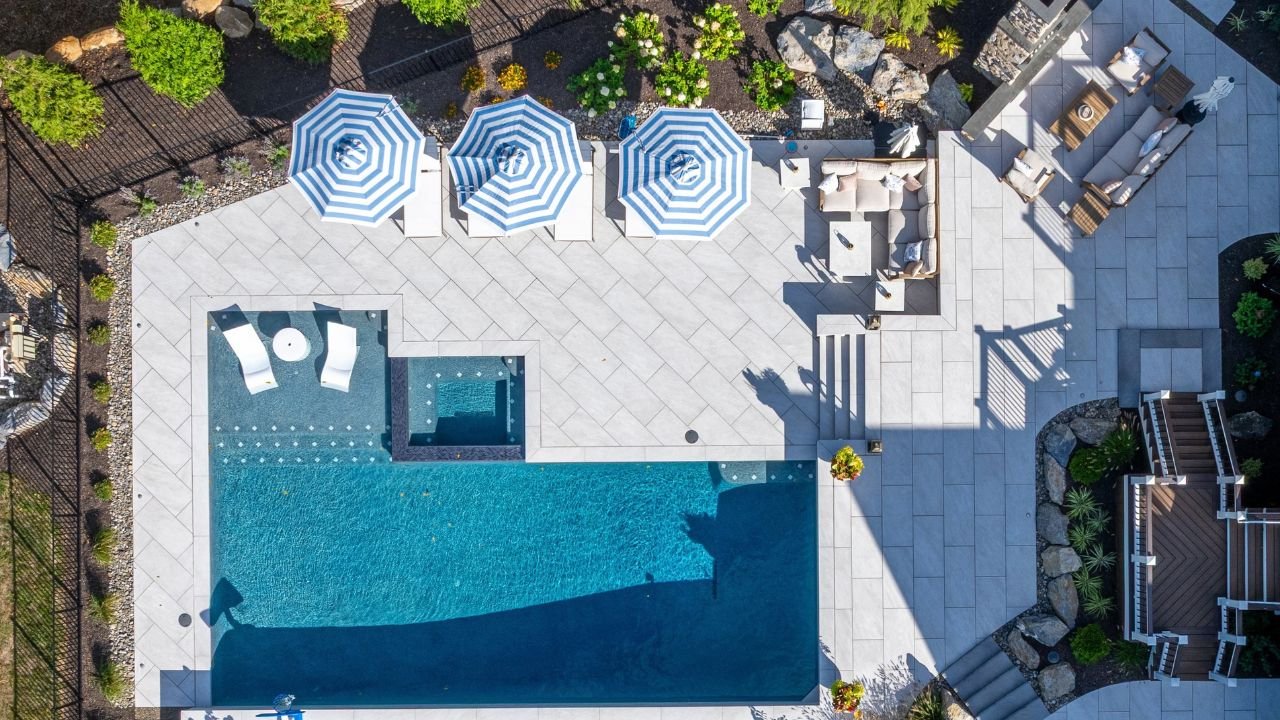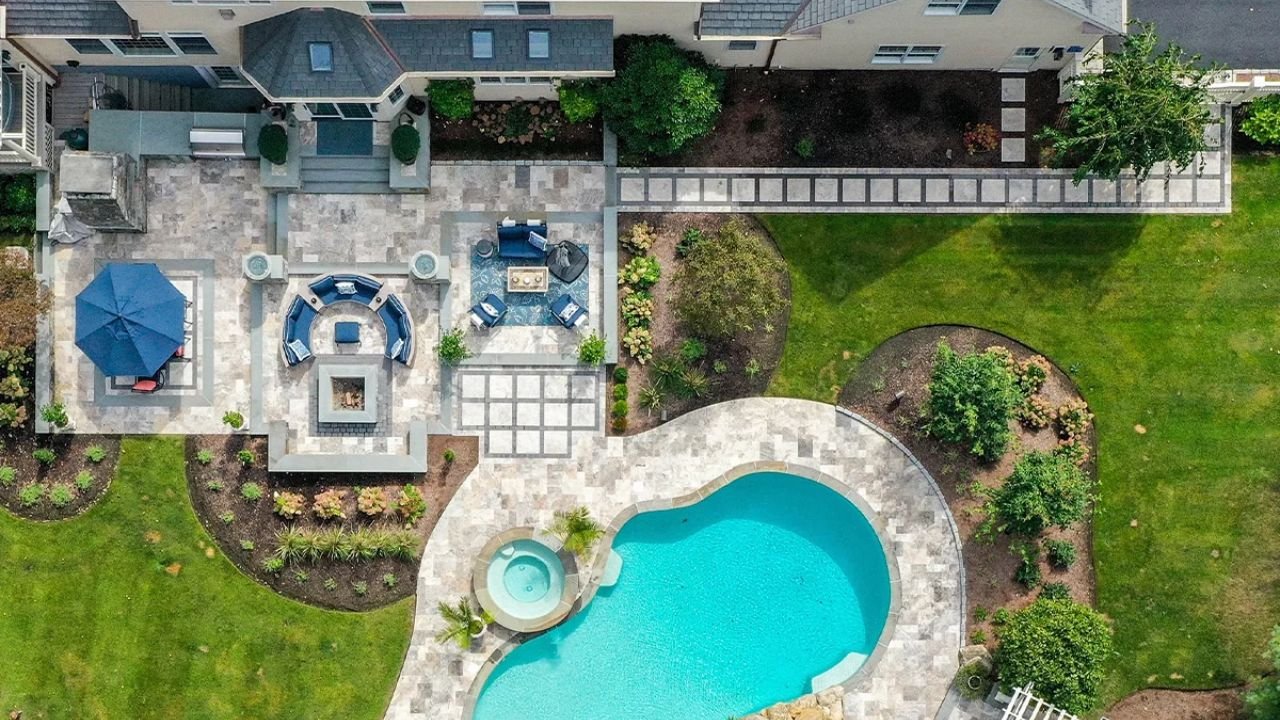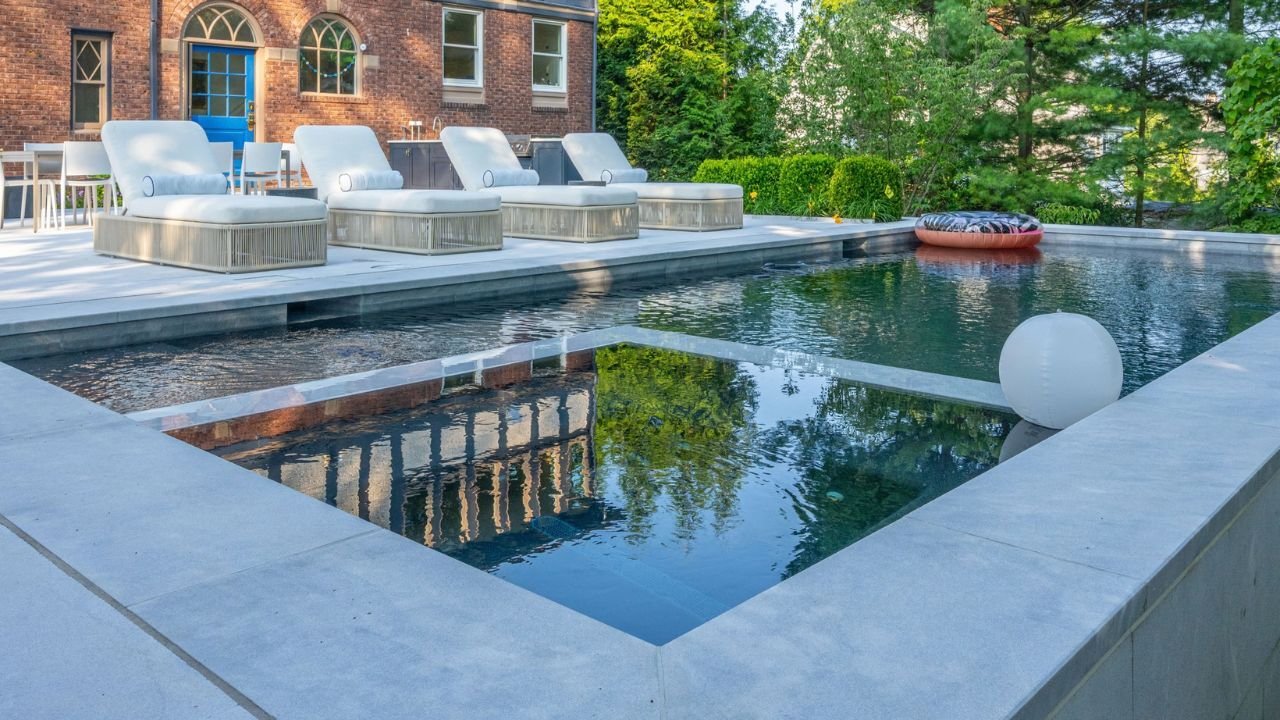

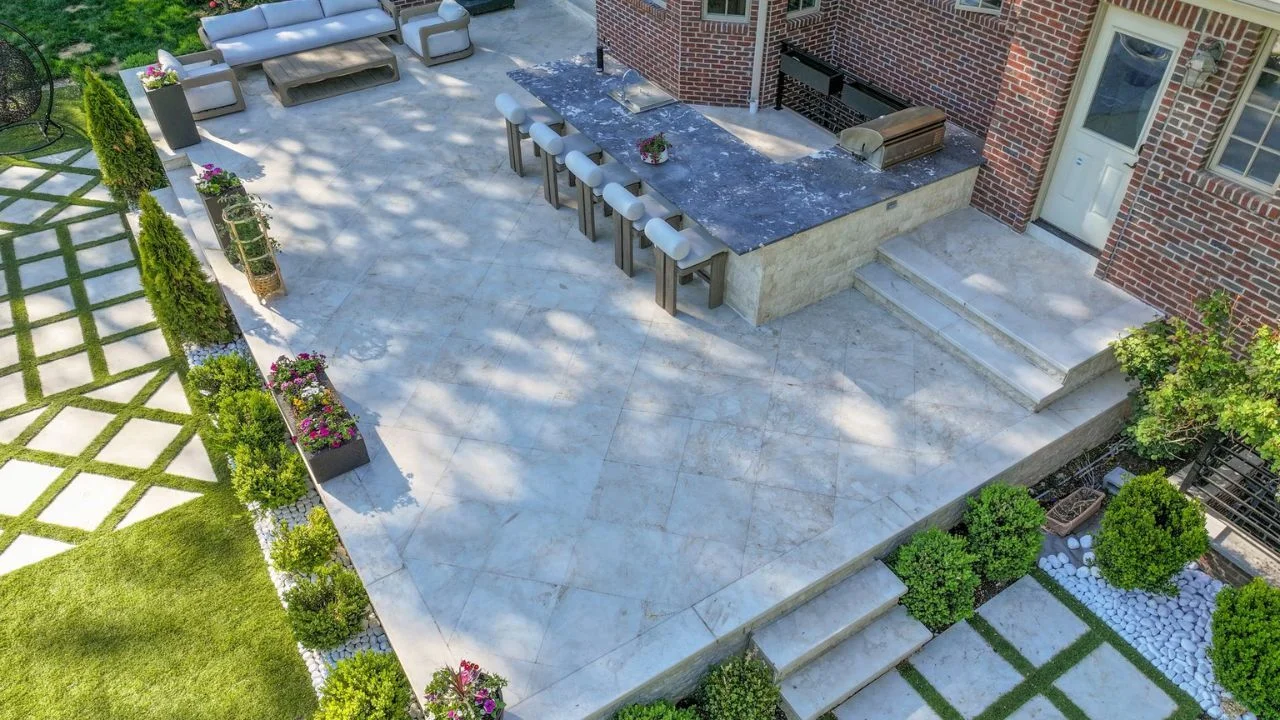
The backyard and outdoor living space have always been a practical space for most homeowners. One of the major uses of a backyard is the outdoor kitchen. When it comes to an outdoor kitchen, it puts more demands on a patio than a typical seating area. The surface will need to withstand grills, appliances like a pizza oven, islands, furniture, and constant foot traffic. It also has to withstand grease, food spills, water, heat, and cleaning. That is why choosing the right paver matters. Homeowners shouldn’t just choose a paver based on their favorite colors that match their countertops. Here are our picks for the best pavers that will work great for your backyard with an outdoor kitchen.
Compare the Best Outdoor Kitchen Pavers
These pavers are an ideal choice for a backyard with an outdoor kitchen, but not every paver is equal. Here is a side-by-side comparison of each paver for a better idea.
| Paver Material | Stain Resistance | Maintenance | Traction | Sealing | Outdoor Kitchen Fit |
| Porcelain | Excellent | Low | Depends on finish | Usually not required | Good for low-maintenance cooking areas |
| Concrete | Good with sealer | Moderate | Depends on texture | Often beneficial | Good for flexible designs |
| Granite | Very good | Moderate | Good with suitable finish | Depends on stone | Good for high-use natural-stone areas |
| Travertine | Moderate with sealing | Moderate | Depends on finish | Typically recommended | Good when natural appearance is a priority |
| Brick | Moderate | Moderate | Good | Depends on product | Good for traditional/rustic designs |
1. Porcelain Pavers
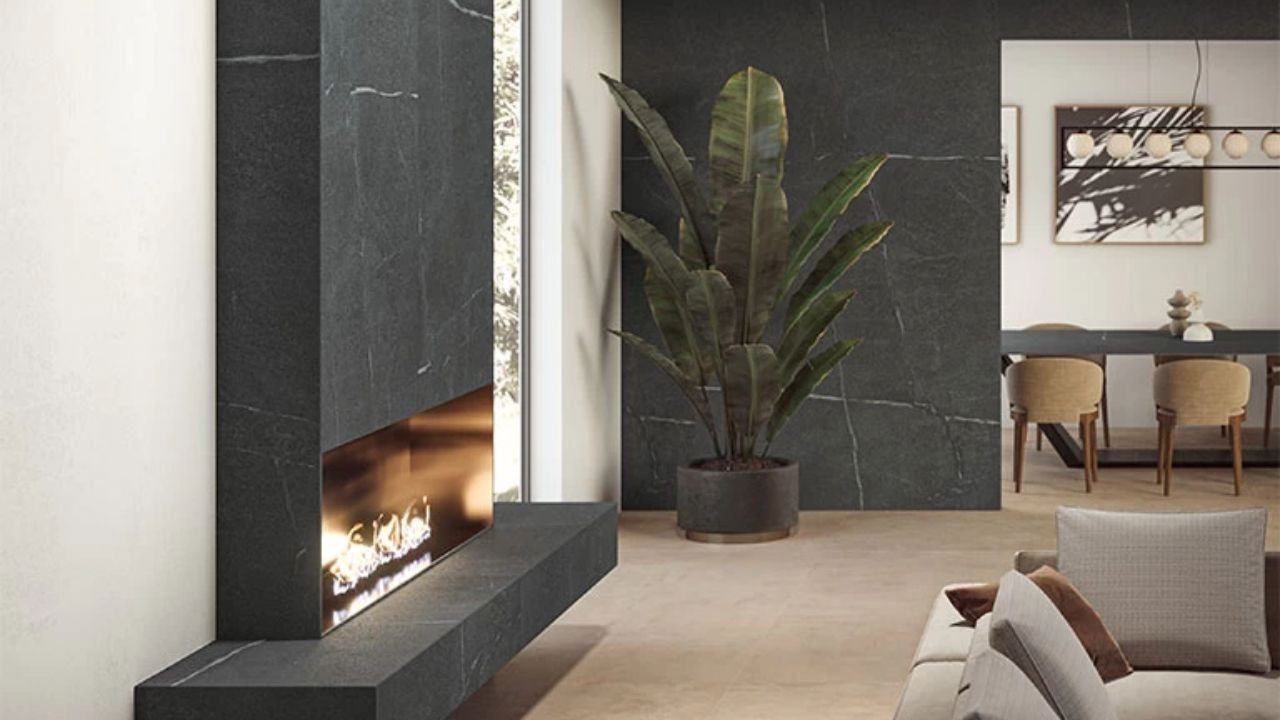
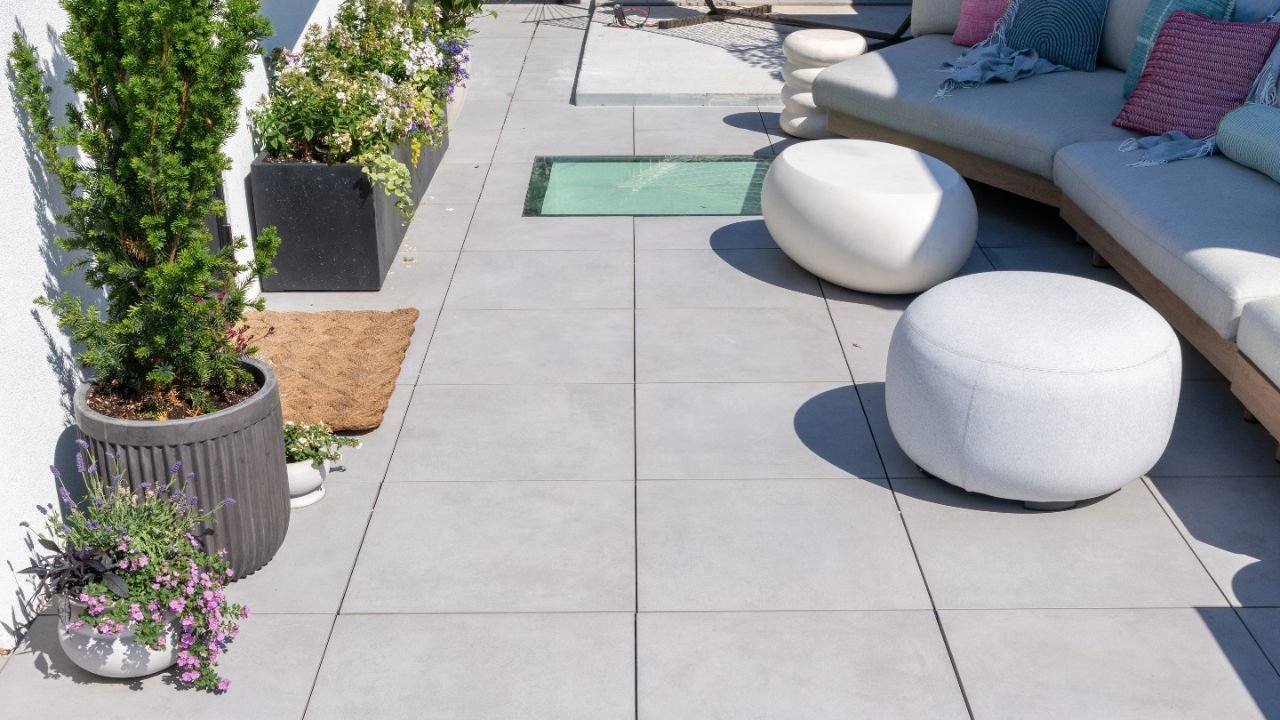
Porcelain pavers are one of the strongest choices for homeowners who want an outdoor kitchen floor that is easy to clean. Quality outdoor porcelain comes with very low water absorption compared with many natural stones. They offer better durability when used for a walkway. This helps limit the amount of grease, sauces, and colored liquids that can penetrate the surface. It also comes in stone-look finishes, so you can get a natural appearance without taking on the same maintenance routine as some porous stones. It is well suited for modern outdoor kitchens, frequent cooking, and homeowners who want less sealing and stain maintenance.
But don’t assume that porcelain is automatically suitable for an outdoor kitchen. Opt for an exterior-rated product with a textured, slip-resistant surface. While a smooth finish may look beautiful in a showroom, it can be less suitable when water or cooking grease reaches the floor.
Porcelain also needs a properly prepared installation base. The material itself can be durable, but poor support can lead to cracked or uneven pavers.
2. Concrete Pavers
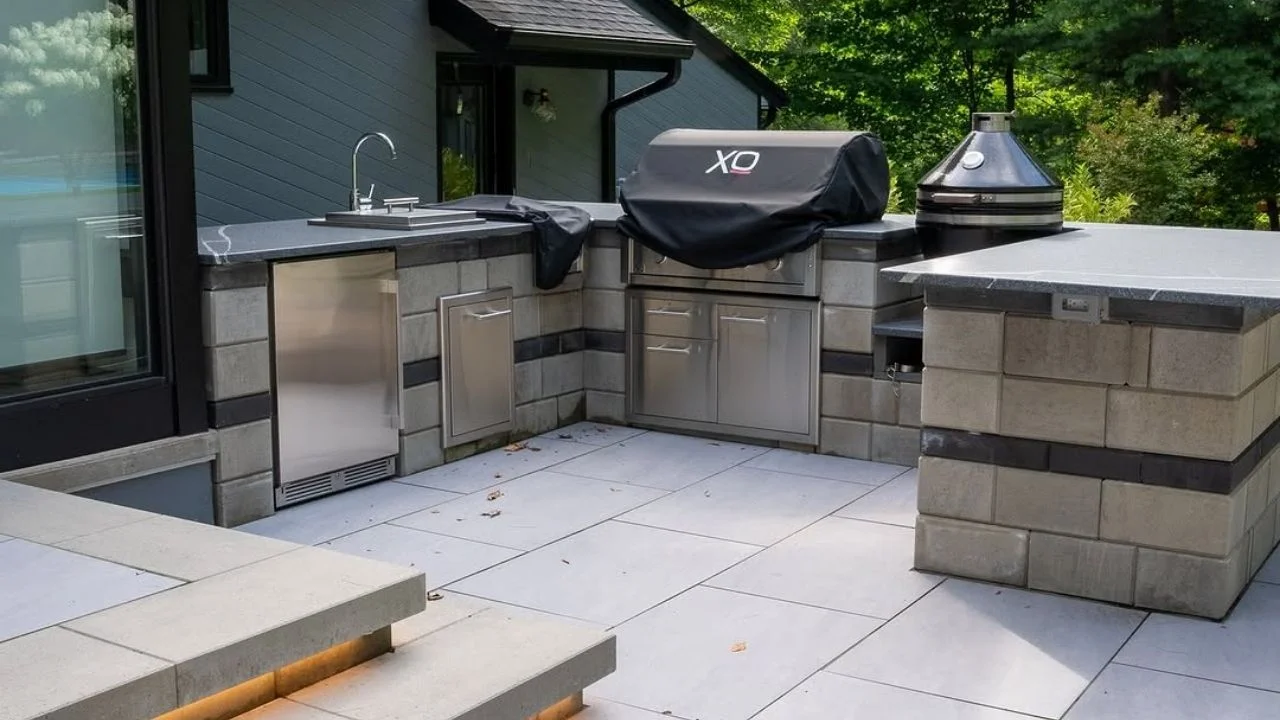
Concrete is another one of the most practical materials for outdoor kitchens. Also, it is popular for its affordability. Concrete paving slabs come in many shapes, colors, textures, and laying patterns. More importantly, one can remove individual units when they are damaged or badly stained. You do not have to replace the entire patio to repair one problem area. It is widely popular for homeowners who want durability, design flexibility, repairability, and a practical price point.
Concrete does have a weakness, which is its porosity. Grease can penetrate an unsealed concrete paver. They require paver sealing with a penetrating sealer, which can reduce staining and make cleaning easier. The paver still needs regular care, especially around the grill.
Installation matters just as much. A properly compacted base and good edge restraint help prevent movement and settlement. If the base fails, even a high-quality paver can move.
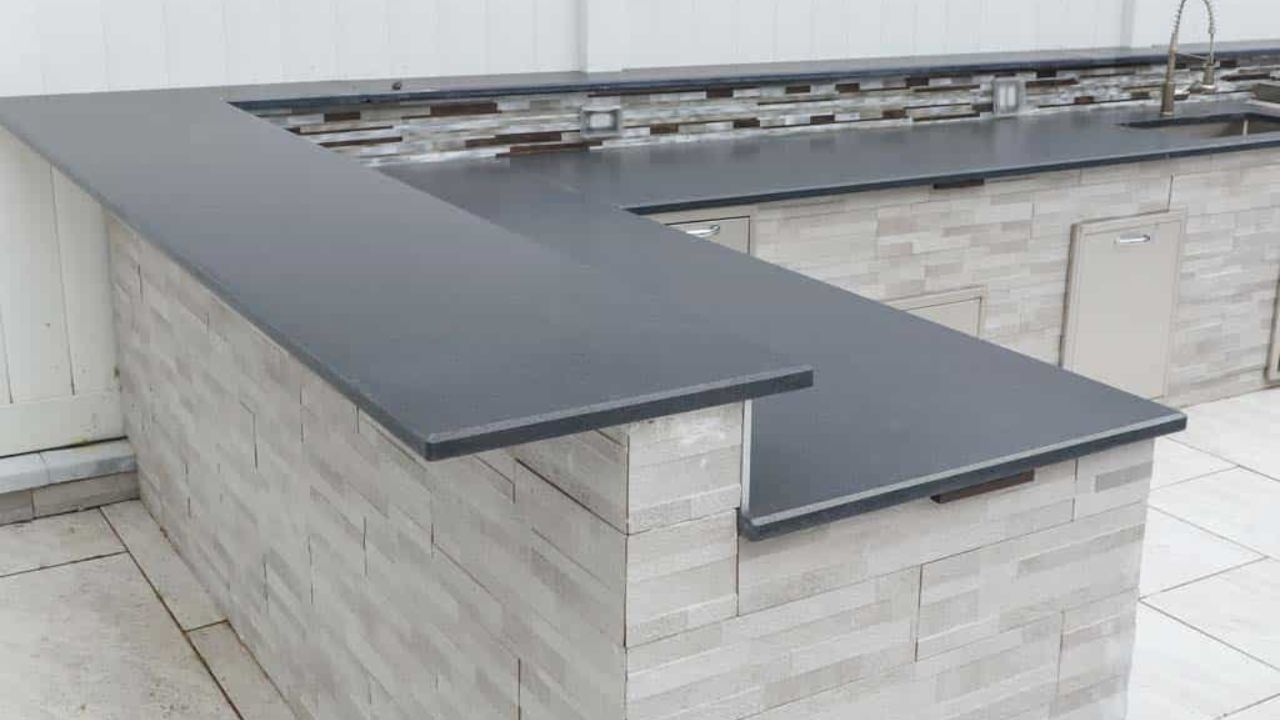
3. Granite Pavers
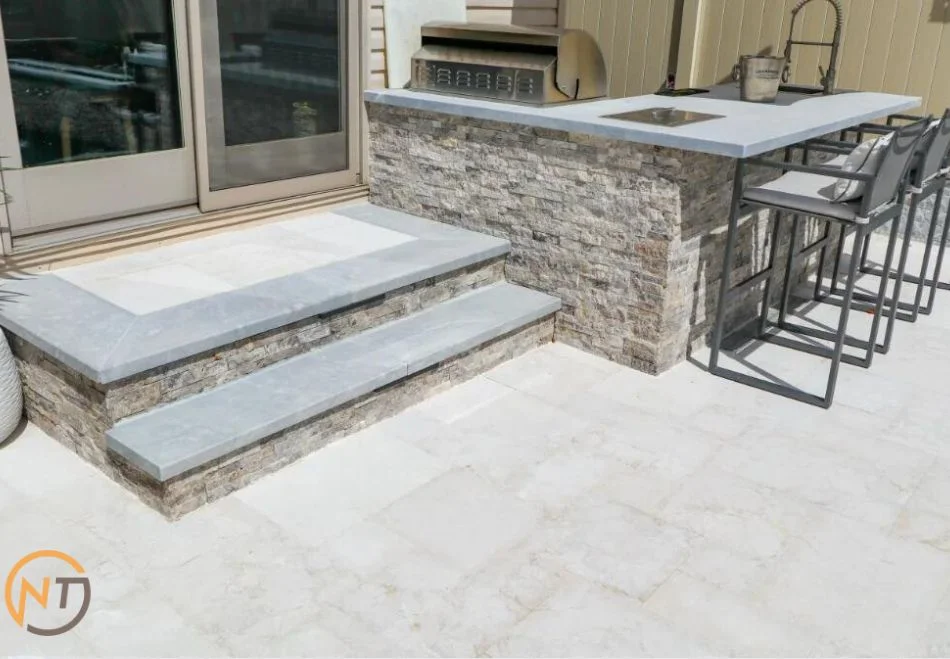
If you want genuine natural stone around an outdoor kitchen, granite deserves consideration. It is well suited to high-use kitchens where natural stone character and durability are priorities.
Granite is dense and durable, making it well suited to areas with heavy foot traffic and demanding outdoor use. A textured or natural finish can also provide useful traction without the slick feel of polished granite. The key is to select the specific types of granite and finish, not simply buy something because it carries the granite label.
Avoid highly polished surfaces for the cooking area. A textured finish gives you a more practical walking surface and better fits the outdoor setting.
Granite also gives an outdoor kitchen something manufactured pavers cannot fully reproduce: natural variation. Each piece has its own mineral pattern and granite colors and color movement.
4. Travertine Pavers
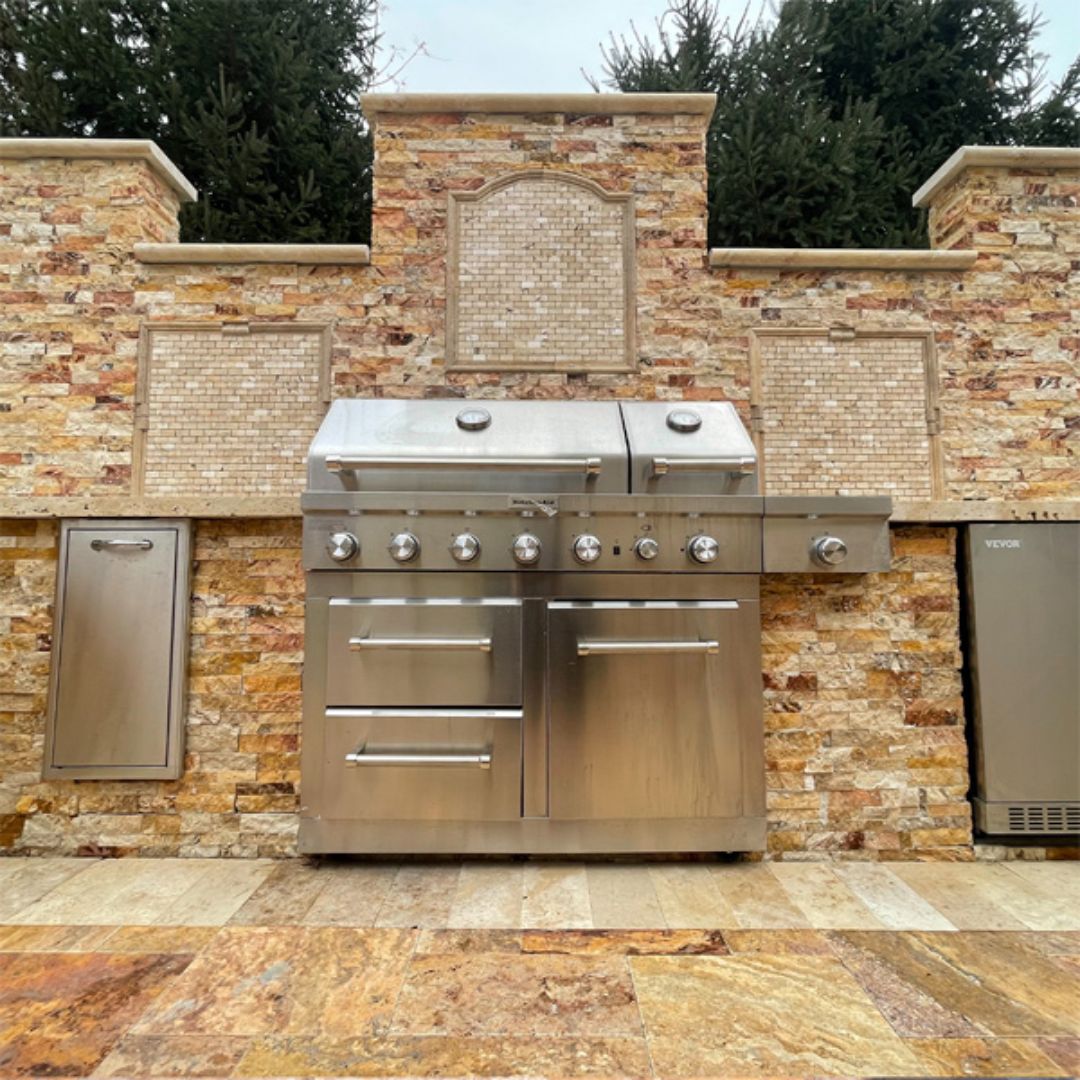
While travertine is a popular indoor space material, its warm color range and natural texture make it a great choice for outdoor kitchens. It can create a softer transition between an outdoor kitchen, garden, pool, and patio. Travertine performs well in hot climates because many travertine surfaces feel cooler under direct sun than darker paving materials. Travertine pavers suit warm-climate patios where natural texture and appearance matter more than minimal maintenance.
However, the major drawback of travertine is maintenance. Travertine is more porous than porcelain and many dense stones. So elements like oil, acidic foods, and colored liquids can create problems if spilled. They need quick treatment, as if they stay too long, they stain will get stronger and harder to deal with.
A suitable sealer can provide additional protection, but sealing does not make porous stone maintenance-free. Natural-stone manufacturers also recommend stone-safe, non-acidic cleaners for routine care. For outdoor use, the finish matters too. Avoid assuming that every smooth travertine finish is appropriate around a wet cooking area.
5. Brick Pavers
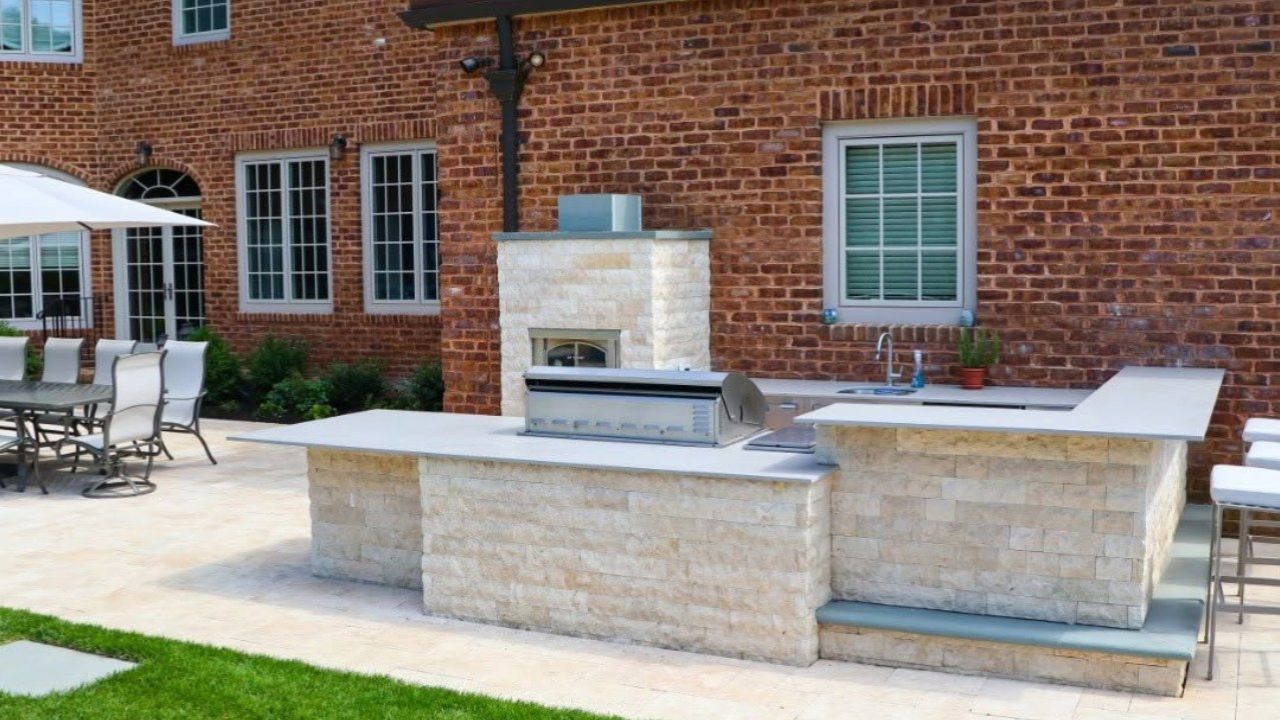
Brick pavers have long been used for backyards and overall construction of traditional homes. They look great when an outdoor kitchen has a traditional, farmhouse, or rustic design.
Their textured surface can provide good traction, while their natural color variation helps hide minor marks between cleanings. Brick also pairs well with masonry outdoor kitchen islands and traditional homes. The limitation is stain resistance. Brick is porous, so grease can become more noticeable if spills are ignored.
What Pavers Are Best Around a Grill?
The area immediately around a grill has different requirements from the rest of an outdoor kitchen. Grease, food spills, dropped utensils, water, and frequent cleaning can put additional demands on the paving surface. For the grill zone, prioritize stain resistance, a suitable textured finish, easy maintenance, and compatibility with the installation and cooking setup.
Porcelain can be a practical option when low water absorption and easy cleaning are priorities. Concrete can also work well when properly selected and sealed. Natural stone such as granite can provide a durable surface, while travertine requires more attention to sealing and spill cleanup because of its porosity.
Do not assume that every paver is suitable directly beside every grill or pizza oven. Check the manufacturer’s application recommendations and consider the specific heat source, installation system, and required clearances.
What Makes a Paver Good for an Outdoor Kitchen?
An outdoor kitchen needs a paver that offers a balance of stain resistance, slip resistance, durability, drainage, and maintenance. You will have to think about what will happen around the grill or outdoor cooking area. You know the chaotic times when oil splatters or marinade spills. A drink gets knocked over, or a heavy grill tool falls. The rain may reach the cooking area, or guests walk through the same surface with wet shoes. That is why appearance should come after performance.
A suitable outdoor kitchen paver should:
- Resist grease and food stains
- Provide traction when wet
- Handle outdoor temperature changes
- Support heavy kitchen equipment
- Allow proper drainage
- Clean without excessive effort
- Suit the climate and installation method
Current outdoor kitchen with pavers guidance also places strong emphasis on drainage, slip resistance, stable installation, and the ability to repair individual sections.
How to Choose Pavers for Different Areas of an Outdoor Kitchen
Not every part of an outdoor kitchen has the same requirements. The best paving material can vary depending on where it is installed.
Grill zone: Prioritize stain resistance, easy cleaning, traction, and suitability for the specific cooking setup.
Kitchen island: Consider the weight of the island, appliances, and countertop, along with the stability of the supporting base.
Dining area: Focus on comfortable walking, drainage, traction, and maintenance.
Pathways: Choose a durable surface with appropriate traction for frequent foot traffic.
Areas near a pool: Pay particular attention to wet traction and the suitability of the surface finish.
Does Paver Thickness Matter for an Outdoor Kitchen?
Yes. Paver thickness and the installation method should be considered together when planning an outdoor kitchen. A patio supporting an outdoor kitchen island, grill, appliances, and regular foot traffic may have different structural requirements from a simple walkway. Also consider kitchen counter dimensions when planning the island layout and determining how much space the surrounding paving needs.
However, thickness alone does not determine whether a paver is suitable. The substrate, base preparation, installation method, load distribution, and manufacturer’s specifications all affect performance. Always confirm that the selected paver and installation system are appropriate for the intended application.
Don’t Overlook Drainage and Slope
Even if you have chosen a high-end paving material, it will perform poorly when water has no place to go. The finished surface should direct the water away from the kitchen surface and prevent it from standing around the cooking area. The exact slope depends on the site, drainage design, surface, and local construction requirements. Make sure your installer establishes it during planning rather than relying on just visual judgment.
Drainage becomes even more important in freeze-thaw climates. Water trapped beneath paving can freeze, expand, and contribute to movement or surface damage. The kitchen island also needs a stable foundation. Do not assume that a patio designed for chairs and tables will automatically provide the support required for a substantial masonry island, grill, or outdoor appliances.
Drainage should also account for water coming from sinks, refrigerators, ice makers, and other outdoor-kitchen fixtures where applicable.
Which Paver Should You Choose For Outdoor Kitchen?
There is no single best paver for outdoor kitchens because of different climate conditions and installation requirements. However, when choosing the right paver, consider the following:
- Choose porcelain for low maintenance and a spill-resistant surface with low water absorption.
- Choose concrete when you are looking for flexibility, repairability, and a wide range of design options.
- Choose granite if you prefer a dense natural stone with a strong, structured appearance.
- Travertine is ideal for you if you like warm natural variation and accept a more involved maintenance routine.
- Choose brick if your design calls for traditional texture and character.
At NT Pavers, we recommend selecting an outdoor kitchen paver based on the complete application rather than appearance alone. Consider the cooking zone, expected foot traffic, appliance and island loads, drainage, climate, surface finish, maintenance requirements, and installation method together.
For homeowners comparing porcelain, concrete, granite, travertine, and brick, the right choice ultimately depends on how the outdoor kitchen will be used. Our team can help you compare available materials, finishes, sizes, and application requirements before you place an order.
FAQS About Outdoor Kitchen Pavers
Let’s answer your question about the best pavers for a backyard with an outdoor kitchen.
What is the best paver for an outdoor kitchen?
Porcelain, concrete, and selected natural stone pavers can all work well. The best choice depends on cooking frequency, climate, maintenance expectations, and installation system.
Are porcelain pavers good around an outdoor grill?
Yes. Exterior-rated porcelain pavers provide low water absorption and strong stain resistance. However, choose a textured surface designed for outdoor use.
Can you put an outdoor kitchen on concrete pavers?
Yes. Concrete pavers can support outdoor kitchens when the base, load distribution, drainage, and installation are properly designed.
Is travertine good for an outdoor kitchen?
Travertine can work well, especially in warm climates, but its porosity means you should plan for sealing, prompt spill cleanup, and stone-safe cleaning.
Do outdoor kitchen pavers need to be sealed?
Not always. Porcelain generally does not require the same sealing routine as porous natural stone or concrete, while sealing can help reduce staining on many concrete and natural stone surfaces.
What should I put under an outdoor kitchen island?
The paving system should be selected based on the island’s weight, the supporting base, load distribution, drainage, and the manufacturer’s installation requirements. A patio designed only for normal foot traffic should not automatically be assumed to support a heavy masonry island or multiple appliances.
How do you prevent grease stains on outdoor kitchen pavers?
Choose a stain-resistant material, use an appropriate sealer where needed, clean grease before it sits, and select a practical surface finish that is both slip-resistant and easy to maintain.
Bottom Line
The best pavers for an outdoor kitchen setup are not chosen by appearance alone. Porcelain pavers offer low maintenance, concrete offers practical flexibility, and natural stone pavers offer distinctive character. Before choosing, consider the grill zone, drainage, traction, climate, appliance loads, and cleaning routine. When those factors guide the decision, your pavers can support the outdoor kitchen rather than become another maintenance problem.