
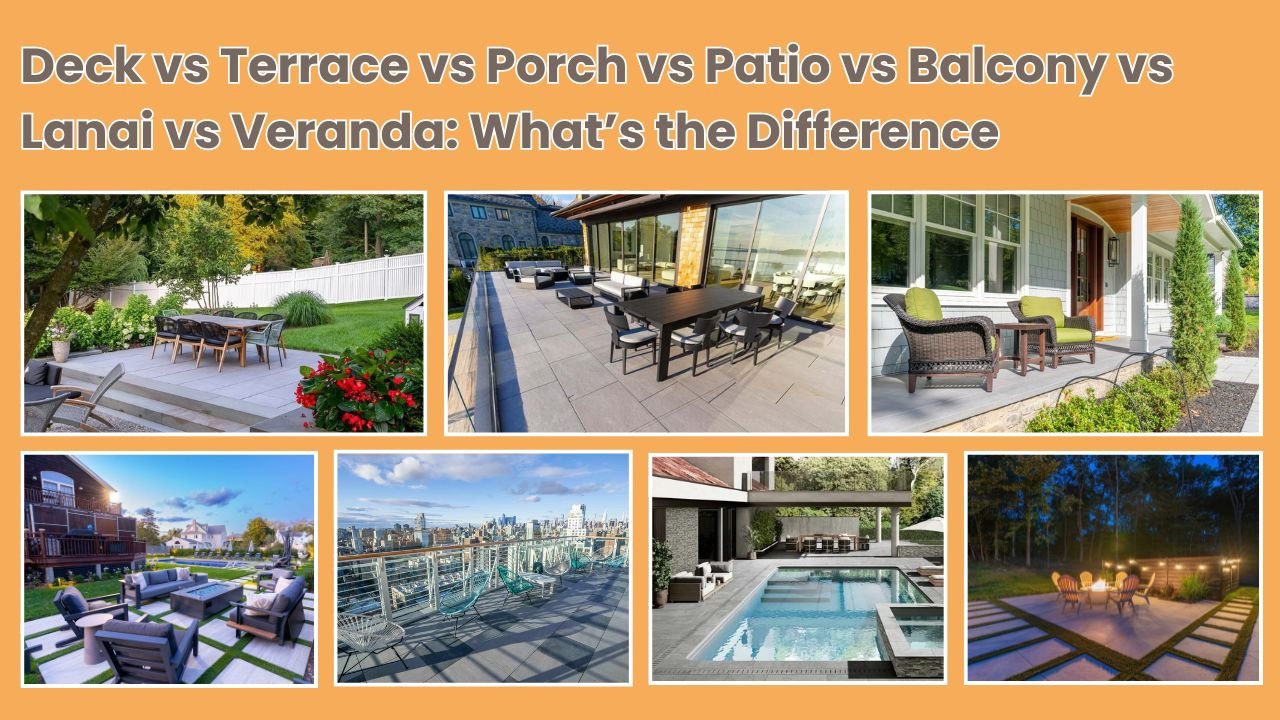
An outdoor space these days is as important as indoor spaces. They are widely used for sitting, eating, entertaining, or just for spending leisure time. However, there are several names for outdoor spaces, which can confuse many homeowners. But they are distinctively different and share different relationships with the house and ground.
Learning this distinction matters when you plan a new outdoor area. A ground-level space needs different drainage and base preparation from an elevated deck. One should also consider roof loads, water runoff, ventilation, and connection to the house when considering a balcony, porch, or lanai. The simplest approach is to identify where the space sits, how it is supported, whether it has a roof, and what material forms the walking surface. Here is the difference to understand for each space.
How Decks, Terraces, Porches, Patios, Balconies, Lanais, and Verandas Differ
Here is a side-by-side comparison of each area so homeowners can understand better.
| Space | Usually attached to house? | Typical location | Roof | Typical elevation | Simple definition |
| Deck | Yes | Backyard, side, or sometimes rooftop | Usually no | Ground-level or elevated | A constructed outdoor platform, commonly made from wood or composite decking |
| Terrace | Usually | Ground level, rooftop, or upper floor | Usually no | Ground-level, elevated, or rooftop | A broad outdoor area that may be open, paved, or built above the surrounding grade |
| Porch | Yes | Directly outside an entrance | Usually covered | Ground-level or slightly raised | A covered or partly covered outdoor space connected to an entrance |
| Patio | Usually | Ground level beside or behind a house | Usually no | Usually ground level | A ground-level outdoor living area commonly finished with concrete, brick, stone, or pavers |
| Balcony | Yes | Upper floor | Usually no | Elevated | A projecting outdoor platform connected to an upper floor |
| Lanai | Usually | Ground level, sometimes upper level | Usually covered | Usually ground-level, but may be elevated | A covered outdoor living area, often associated with warm-climate homes |
| Veranda | Yes | Along the front, side, or rear of a house | Usually covered | Ground-level or slightly raised | A long, covered outdoor space extending along part of a house |
Patio vs Deck: The Ground Level Makes the Difference
Many homeowners may get confused between the patio and deck.
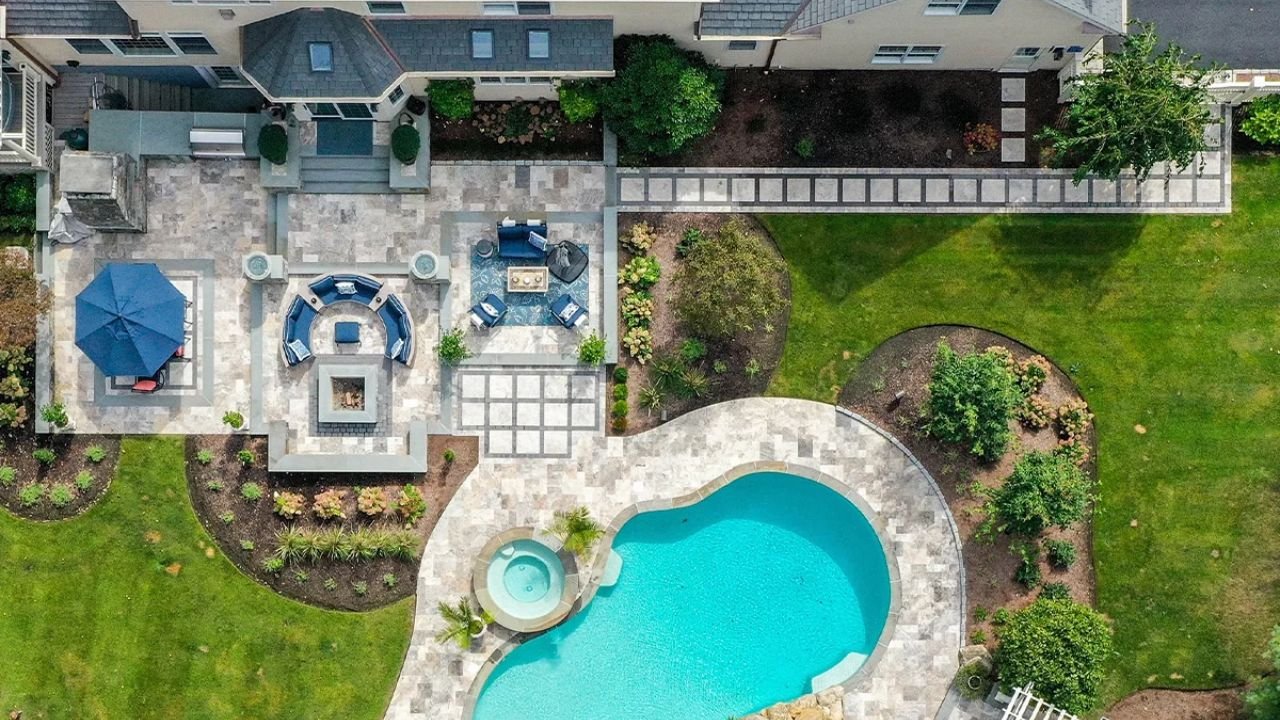
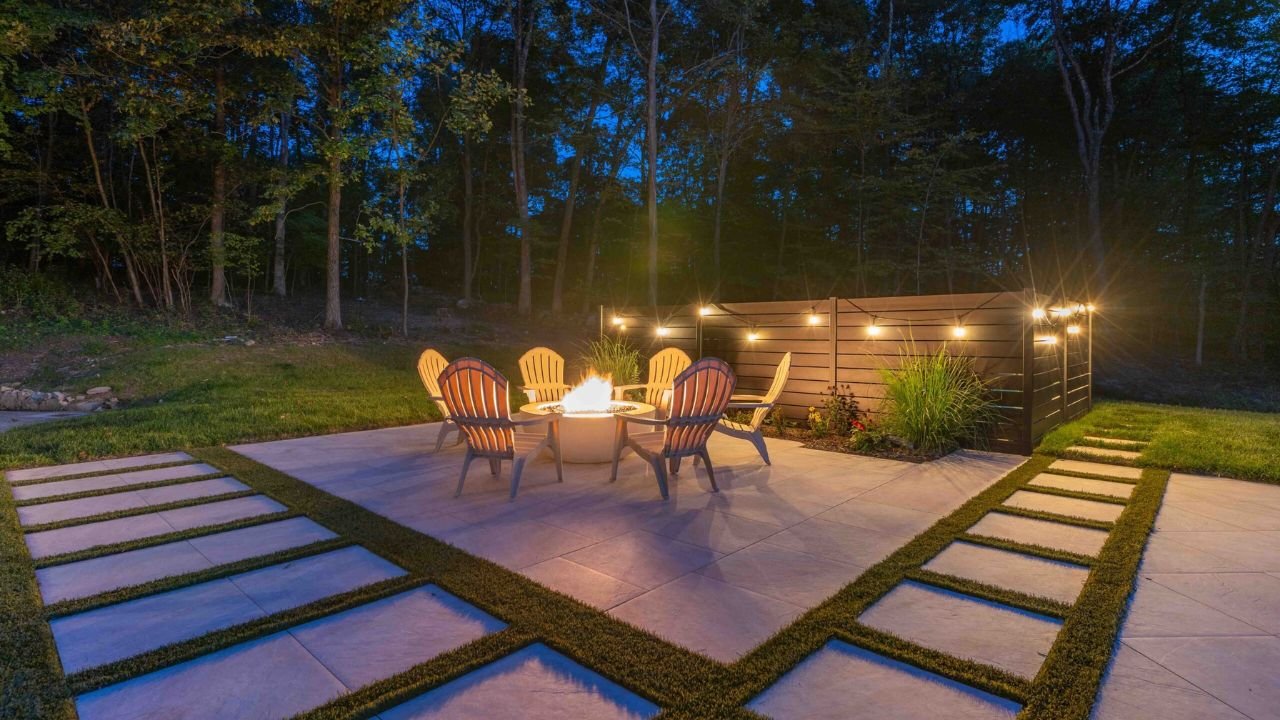
- A patio is usually a ground-level outdoor space beside or behind a home. It can be made of concrete, brick, natural stone pavers, or porcelain pavers.
- A deck is a constructed platform. It often uses wood or composite decking and can sit above the surrounding grade.
The key distinction is that a patio is generally built on or near the ground, while a deck is supported by a structural framing system and may be elevated above the surrounding grade. This difference matters when the yard slopes. A deck can be used to accommodate uneven ground with posts and framing, while a patio may require a proper base that follows the site’s grading.
However, this difference becomes convenient when considering pavers. A well-built patio can create a durable outdoor floor without opting for the elevated framing required for a deck. The base, drainage, edge restraint, joint material, and slope still matter.
NAHB research continues to show strong demand for outdoor living spaces, and patios remain common in new homes. In its 2025 data, NAHB reported that 61.8% of new single-family homes started in 2024 included patios.

What Is a Terrace?
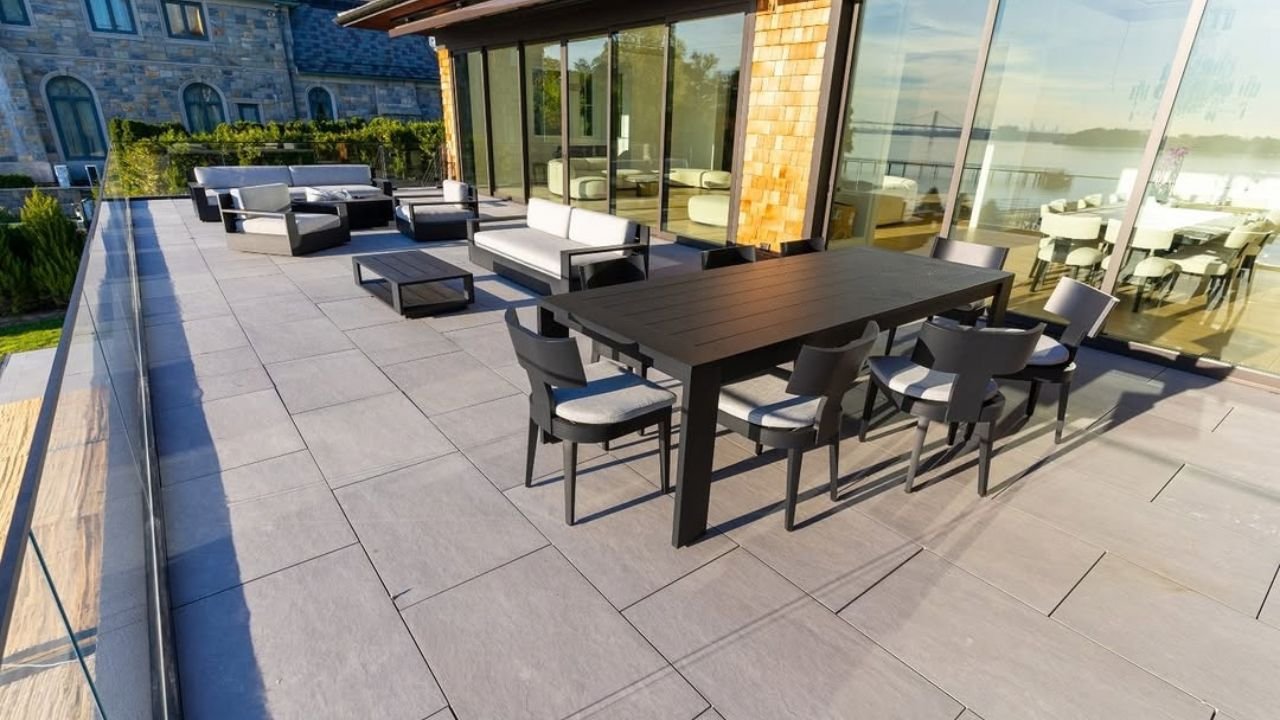
A terrace is a broad term for an outdoor area that may sit at ground level, on a raised platform, or on a roof. This makes terrace less precise than patio or balcony. In one house, a terrace may be a large paved garden area. In another, it may be a rooftop entertaining space.
The meaning of terrace can also vary by region and architectural style, so the term does not always describe one specific construction method.
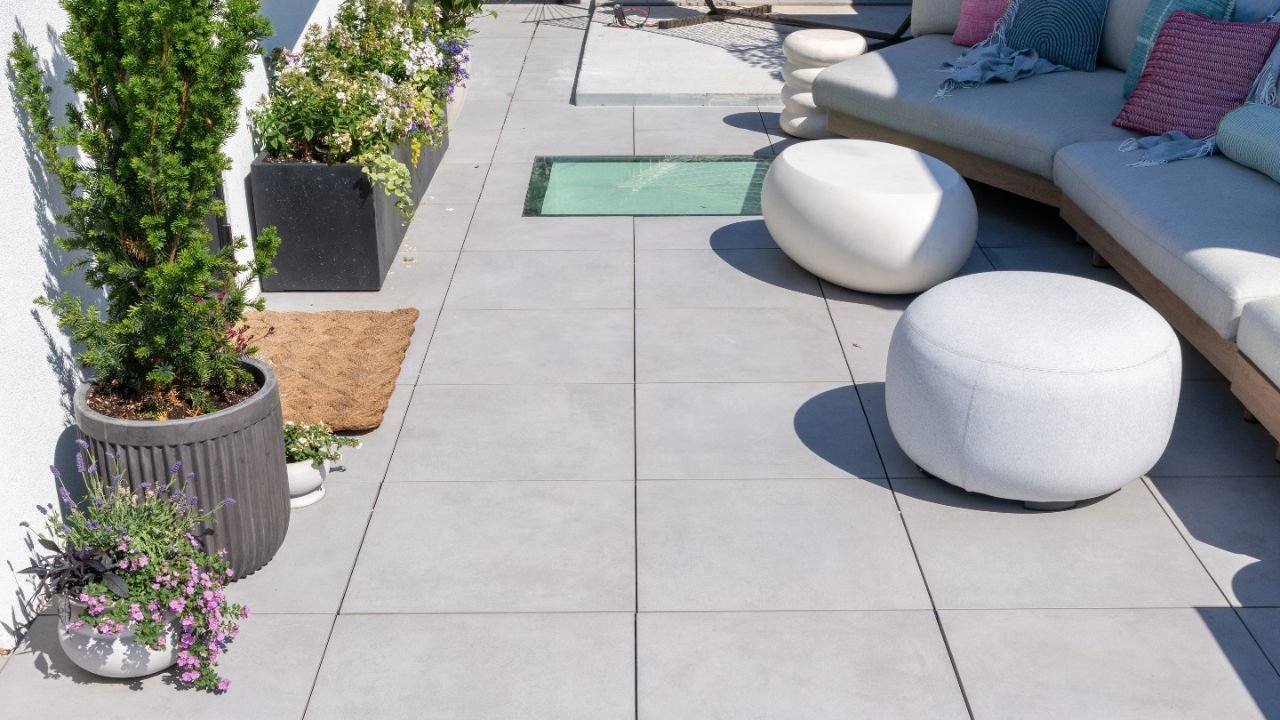
The construction changes with its location. A ground-level terrace can use a similar build-up to a patio. A rooftop terrace needs a structural deck or roof assembly beneath the finished surface, plus waterproofing, drainage, edge protection, and careful load planning.
This is one reason homeowners should not treat terrace and patio as exact synonyms. They can look similar, but their underlying construction may be very different.
What Is a Porch?
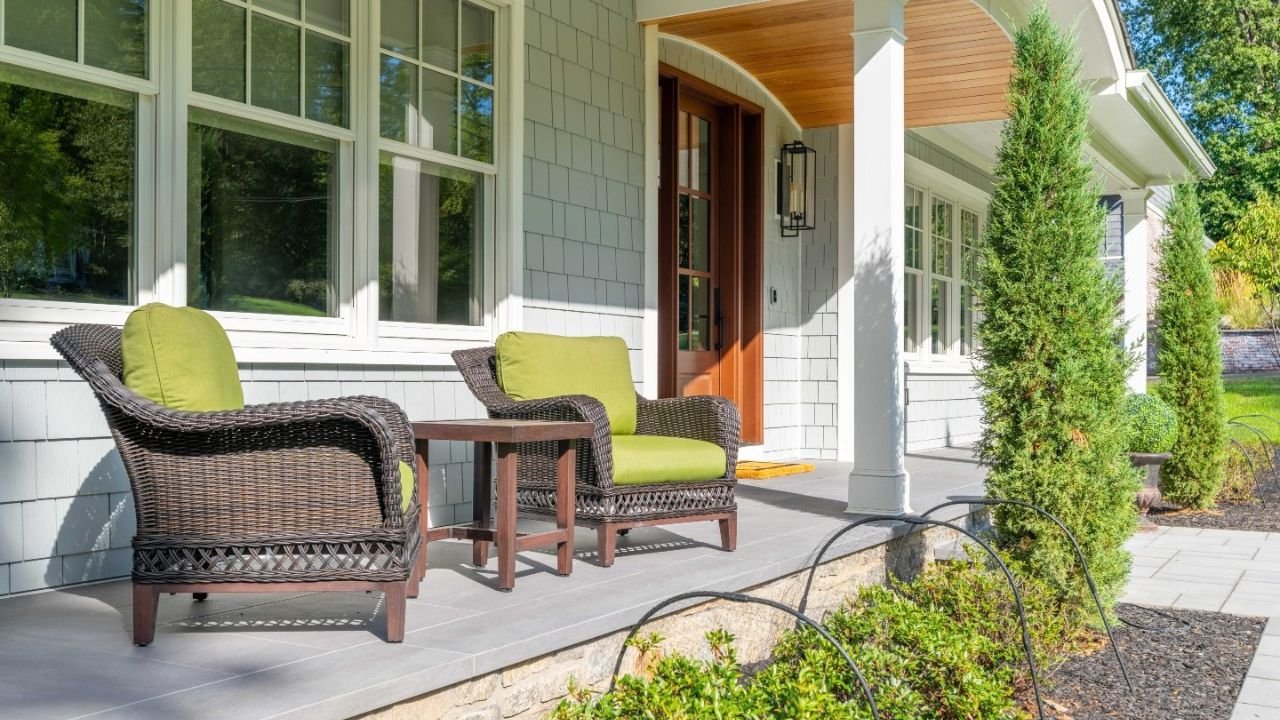
A porch is an outdoor area attached to a house, most often around an entrance. It commonly has a roof and may include railings, columns, steps, or screens.
A front porch usually creates a transition between the public exterior and the home’s interior. Choosing the right front porch tiles can help create a welcoming entrance that complements the home’s exterior. A back porch can be used as an outdoor sitting or dining room. When it comes to the roof, the design requires changes. You need to consider how rainwater reaches the ground. You should also consider bearing loads, the roof connection to the existing structure, and how the finished floor meets the house. A porch can be built with many floor materials, including wood, concrete, brick, natural stone, or pavers, according to the structure.
What Is a Balcony?
A balcony is an elevated platform connected to an upper floor and usually projecting from the building. Unlike a patio, a balcony cannot simply be placed on compacted soil, while a porch and veranda can be more easily integrated into the outdoor structure of a home. Its structure should be able to carry the weight of the balcony, occupants, furniture, finishes, and other applicable loads.
That makes the waterproofing and structural details critical. Water must not collect against the building envelope, and the balcony edge needs appropriate drainage and guard protection. The finish also matters. A lightweight deck system may suit some structures, while other designs can accommodate tile, stone, or paver systems. The structural engineer or qualified builder should confirm the allowable loads before adding a heavy finish.

What Is a Veranda?
A veranda is generally a long, covered outdoor space that extends along the front, side, or sometimes rear of a house. They often act as an open-air relaxation area. It is like an outdoor room that runs along the building, rather than a small platform that projects from one upper-floor room. Verandas may have a roof supported by columns or posts. It can include seating, dining furniture, plants, ceiling fans, or screens.
The term also overlaps with porch in everyday US English. A useful distinction is that a porch is commonly associated with an entrance, while a veranda is typically a longer covered space that extends along one or more sides of a house. The terms can still overlap depending on the home’s design and region.
What Is a Lanai?
A bis a covered outdoor living area associated especially with warm-climate architecture. It may be open, screened, or enclosed, depending on the design. In practical terms, a lanai usually lies between an interior living space and the outdoors. It may have a solid floor, furniture, lighting, fans, and screens that reduce insects while preserving outdoor airflow.
The important point is that a lanai describes the type of outdoor living space more than a specific floor material. A lanai can incorporate concrete, tile, stone, or other suitable exterior flooring.

Which Outdoor Space Works With Pavers?
If your project is on ground level, consider a patio or terrace rather than a deck. Pavers work particularly well for these applications because you can remove and replace individual units if a localized area needs repair. They also allow patterns, borders, different laying directions, and transitions between outdoor zones.
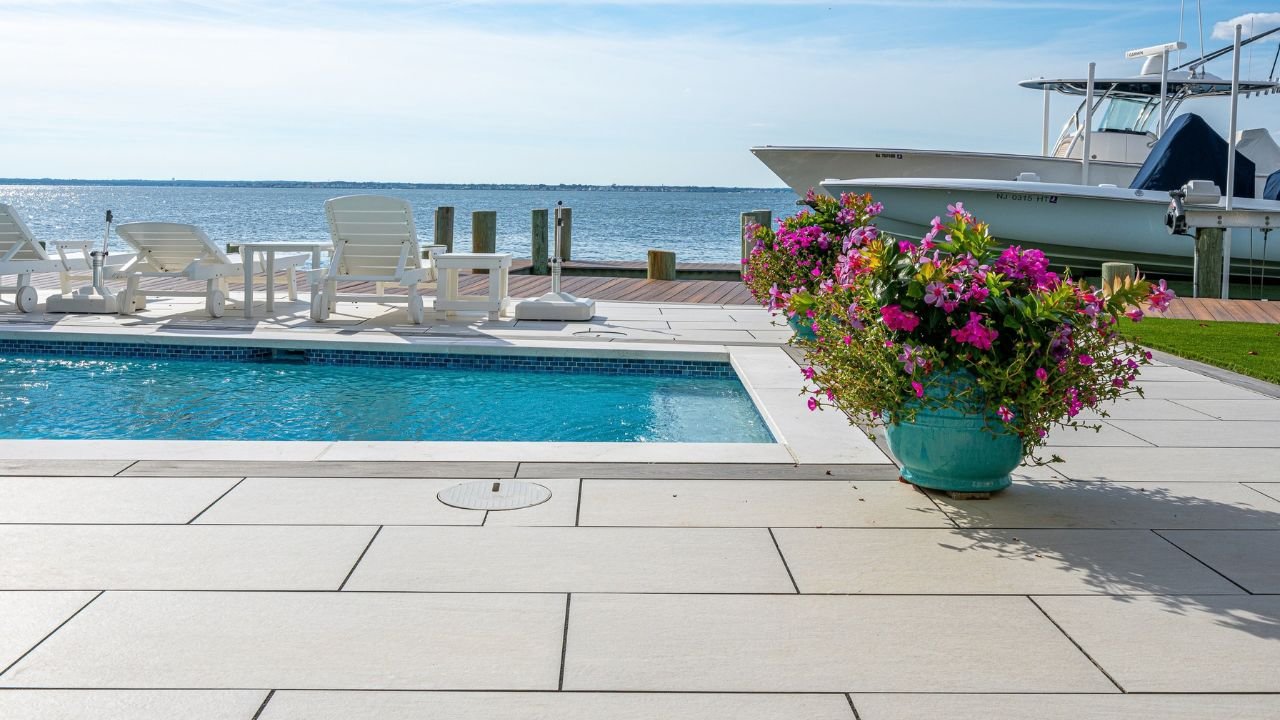
Natural stone pavers can create a more traditional appearance, while porcelain pavers can suit contemporary designs. For ground-level patios and terraces, porcelain and natural stone pavers can provide durable outdoor flooring when the paving material and installation system are appropriate for the site. The right choice depends on climate, slip resistance, expected traffic, drainage, maintenance expectations, and the installation system.
For the best paver installation, determine the elevation, drainage path, soil conditions, intended use, and connection to the house before choosing the surface. That approach prevents a common mistake: selecting a beautiful material before solving the water and structural details underneath it.
How to Choose the Right Outdoor Space
Choose a patio when: You want a ground-level outdoor area and have suitable soil and base conditions.
Choose a deck when: You need an elevated outdoor platform or want to accommodate a sloped site.
Choose a terrace when: You want a broad outdoor area that may be ground-level, elevated, or on a rooftop.
Choose a porch when: You want a covered or partly covered outdoor area connected to an entrance.
Choose a balcony when: You want an outdoor space that projects from an upper floor.
Choose a lanai when: You want a covered outdoor living area suited to a warm climate.
Choose a veranda when: You want a longer covered outdoor area extending along part of the house.
Frequently Asked Questions About Patios, Decks, Porches, and Other Outdoor Spaces
Let’s answer your questions about patios and other outdoor resting areas, including the differences between a patio vs lanai vs veranda.
Is a patio the same as a terrace?
No. A patio is generally a ground-level outdoor area, but a terrace can be ground-level, elevated, or on a rooftop.
Is a deck better than a patio?
No. Both deck and patio have their distinct application so it won’t be right to call one superior to the other. A deck works well on uneven or elevated areas, while a patio is ideal for a properly prepared ground-level surface.
What is the difference between a porch and a veranda?
A porch is generally a covered outdoor space attached to a house. A veranda is also a covered outdoor space, but it is extended along the building.
Is a balcony the same as a terrace?
No. A balcony is normally an elevated platform that sits off an upper floor. A terrace is a broader term and can occur at ground level, on a roof, or on another elevated structure.
What is a lanai on a house?
A lanai is a covered outdoor living area, often associated with warm climates and sometimes enclosed with screens.
Can you put pavers on a deck or balcony?
Yes. But the structure should be designed or verified for the additional load, and the installation should include drainage and waterproofing.
Bottom Line
Whether it’s a deck, terrace, porch, patio, or balcony, knowing the difference between each area matters. This matters when you are constructing or renovating your residential space. Instead of getting confused, learn about the difference first. However, when homeowners choose an outdoor surface, they shouldn’t just consider the name.
Consider the grade, drainage, structure, climate, application, and material performance to determine the build. That is the difference between simply creating an outdoor space and building one that works for the house for years.