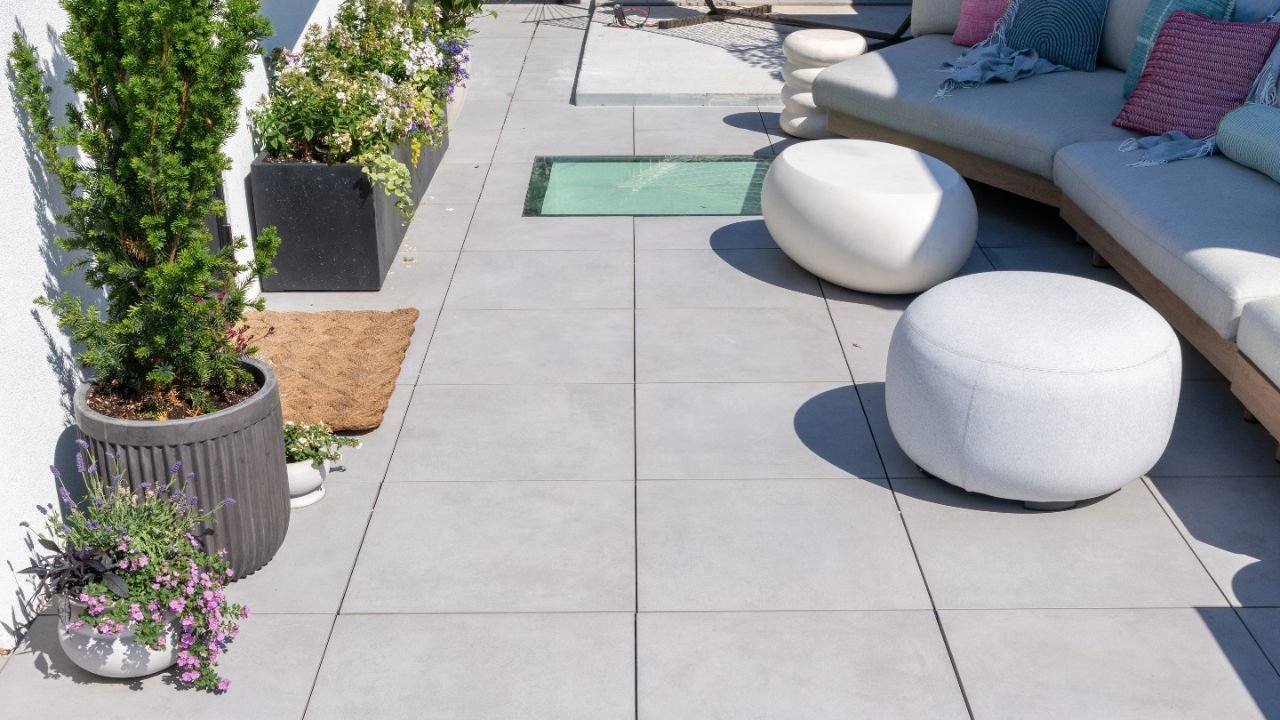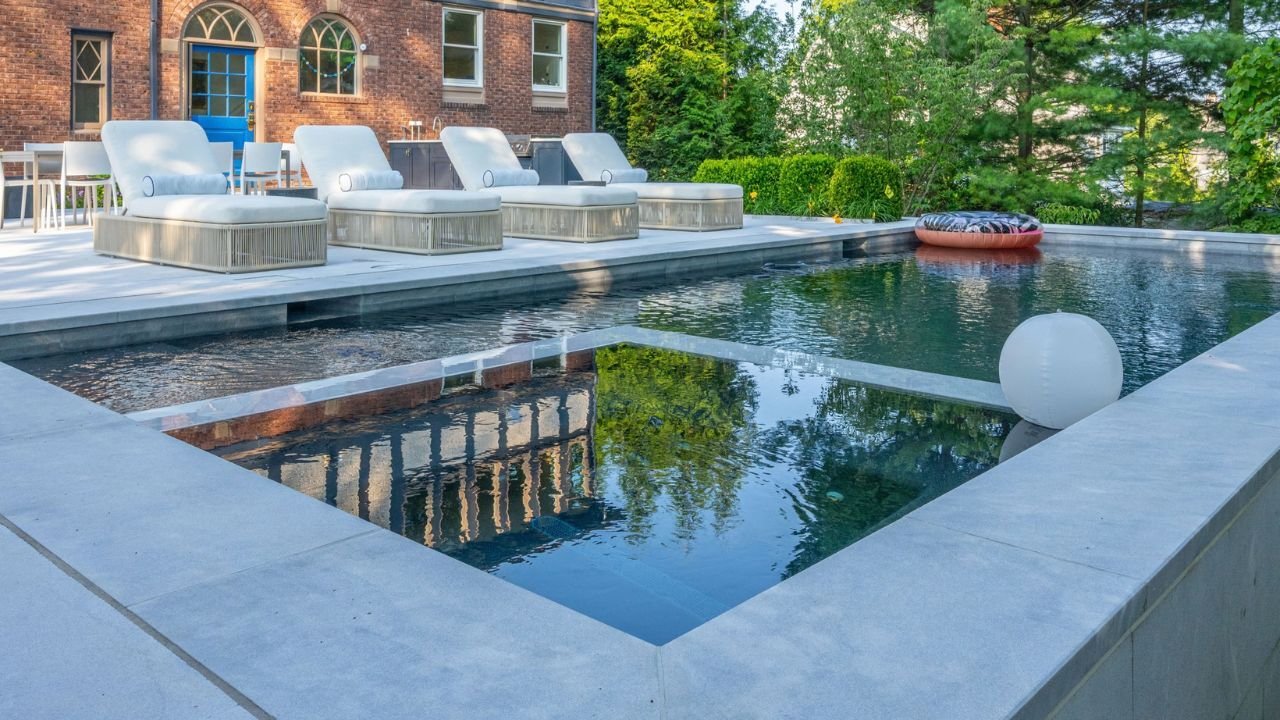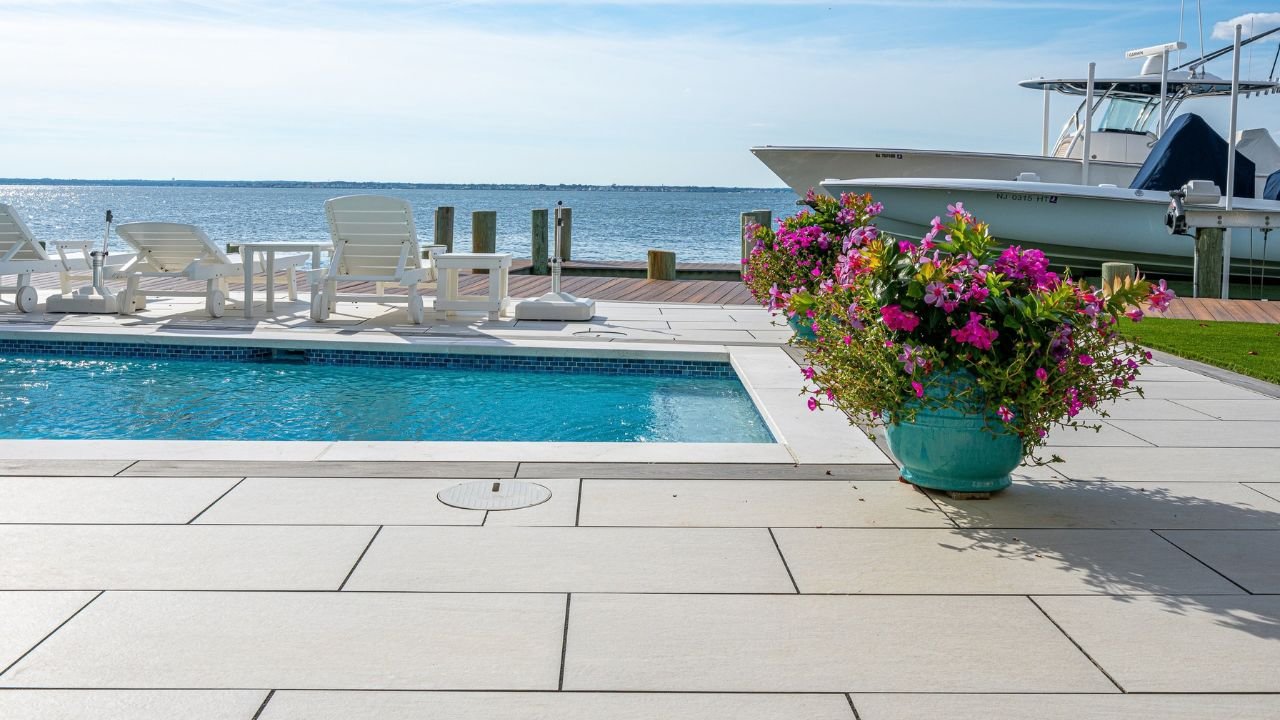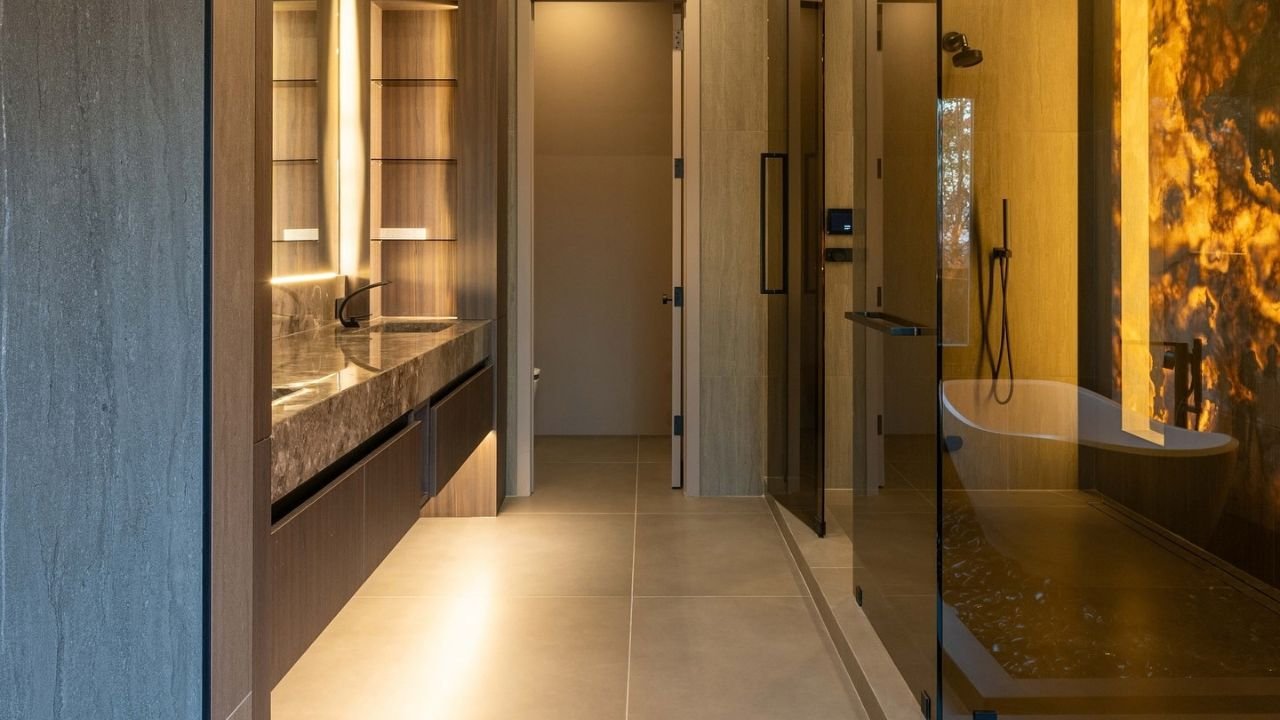

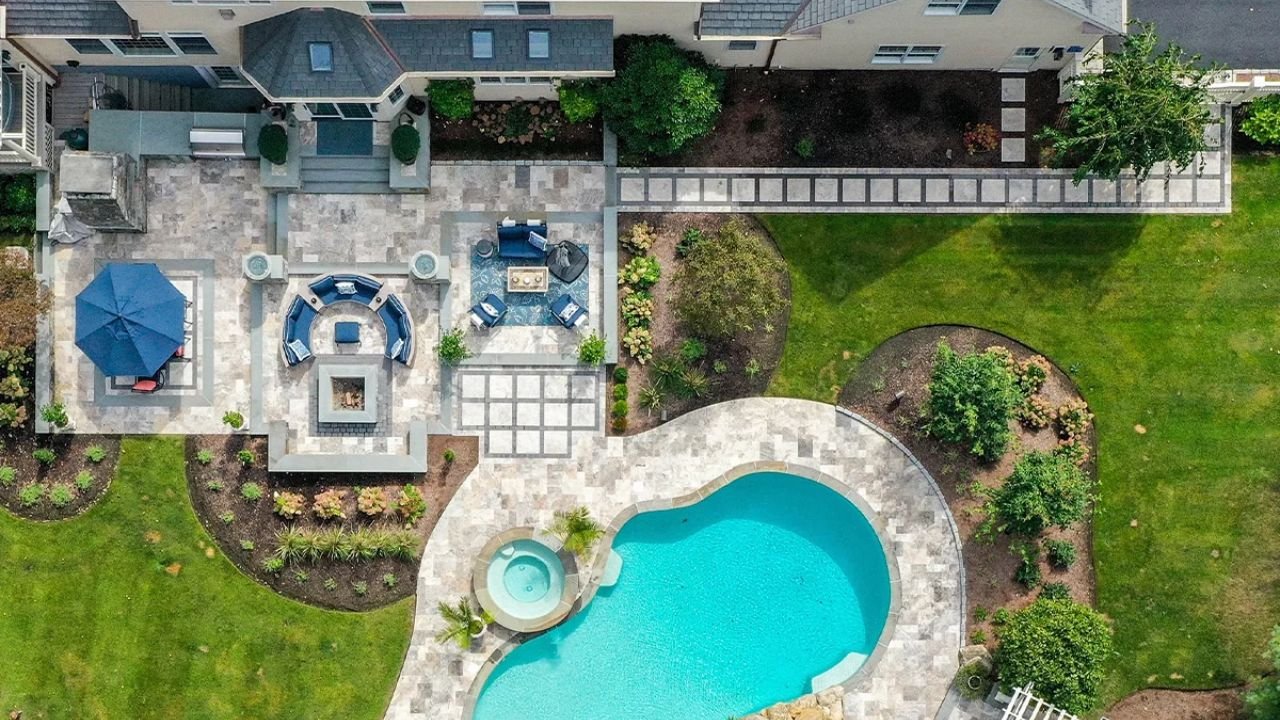
Often, homeowners wonder whether the paver they are going to select will stay cool for their outdoor designs. It is common knowledge that areas like pool decks, outdoor walkways, and patios stay exposed to the sun during summer. The surfacing material for outdoor living should be comfortable enough for homeowners to walk barefoot. A sunny patio can look perfect in the morning and become uncomfortable by mid-afternoon. The problem is not simply that one paving material is “hot” and another is “cool.” Color, solar reflectance, surface finish, moisture, density, shade, and the exact product all affect how a paver behaves in direct sun. Here are our picks for the most practical choices for exposed patios and pool decks. Continue reading the following.
| Paver Material | Hot-Sun Considerations | Common Applications |
| Light-colored travertine | Light colors can reduce solar heat absorption; finish and product characteristics matter | Pool decks, patios, walkways |
| Light-colored limestone | Performance varies by stone; verify exterior suitability | Patios, walkways |
| Light-colored porcelain | Low water absorption and consistent manufacturing; color and surface finish matter | Patios, pool areas, modern outdoor spaces |
| Light marble | Light colors can reflect more sunlight, but stone selection and finish are important | Patios, courtyards |
| Light-colored concrete | Practical and consistent, but can retain heat after prolonged sun exposure | Patios, driveways, walkways |
Best Paver Materials for Hot, Sunny Climates
These materials are not entirely cool, but they remain relatively comfortable even when they are constantly exposed to sunlight.
Light-Colored Travertine
Homeowners who prefer a natural stone surface for a sunny patio or pool deck, light colored travertine is one of the strongest options to consider. Travertine features a naturally porous structure and is available in light shades like ivory travertine, cream, beige, and empire silver travertine.
These colors can reduce solar heat absorption compared with darker versions of the same material. NT Pavers’ Ivory Travertine data sheet, for example, reports a dynamic coefficient of friction of 0.66 under the cited TCNA test. In real installations, you get a surface comfortable enough to use when the sun is strongest. That matters most around swimming pools, outdoor seating areas, and walkways where people may walk barefoot.
Travertine also deserves attention for wet areas. The finish still matters, but a textured or tumbled surface can provide useful traction. Avoid treating every travertine paver as interchangeable; the stone, finish, thickness, and installation system all need to suit the project. Here is the travertine pavers TCNS Test Report.
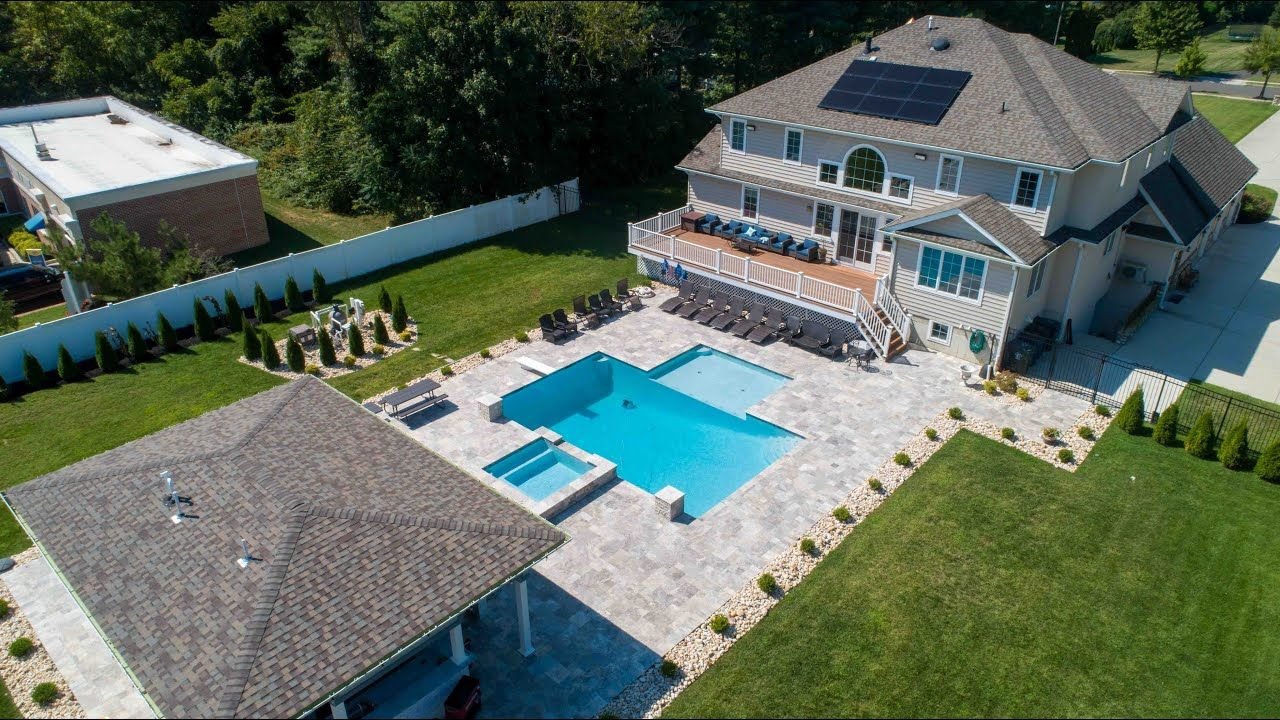
Light-Colored Limestone
Limestone can work well in sunny outdoor spaces, especially when you choose a pale variety with a proven history of exterior use. The Natural Stone Institute notes that limestone varieties differ in absorption and performance, and not every limestone is suitable for every exterior paving environment.
That distinction is important. Do not choose limestone pavers only because they look light and cool. Ask about the specific stone’s absorption, durability, freeze-thaw suitability where relevant, and intended exterior application. For a warm-climate patio, a suitable light limestone can provide a softer appearance than concrete while keeping the visual temperature of the space lower than a dark paving surface.

Light-Colored Porcelain Pavers
Porcelain pavers are one of the best candidates when it comes to modern outdoor space design with consistent sun exposure. The major appeal is not that porcelain is automatically cooler than natural stone. It offers a durable surface with low water absorption, consistent manufacturing, design variety, and available outdoor-rated surfaces. It can withstand harsh outdoor elements while staying relatively cool underfoot.
Choosing light-colored porcelain pavers for sunny patios is ideal for outdoor use. Around pools, confirm the manufacturer’s slip-resistance information rather than assuming that every porcelain surface provides the same traction. A pale porcelain surface looks good where homeowners want a clean, contemporary appearance and predictable product dimensions. Dark porcelain, however, can absorb more solar energy, so the color remains important.
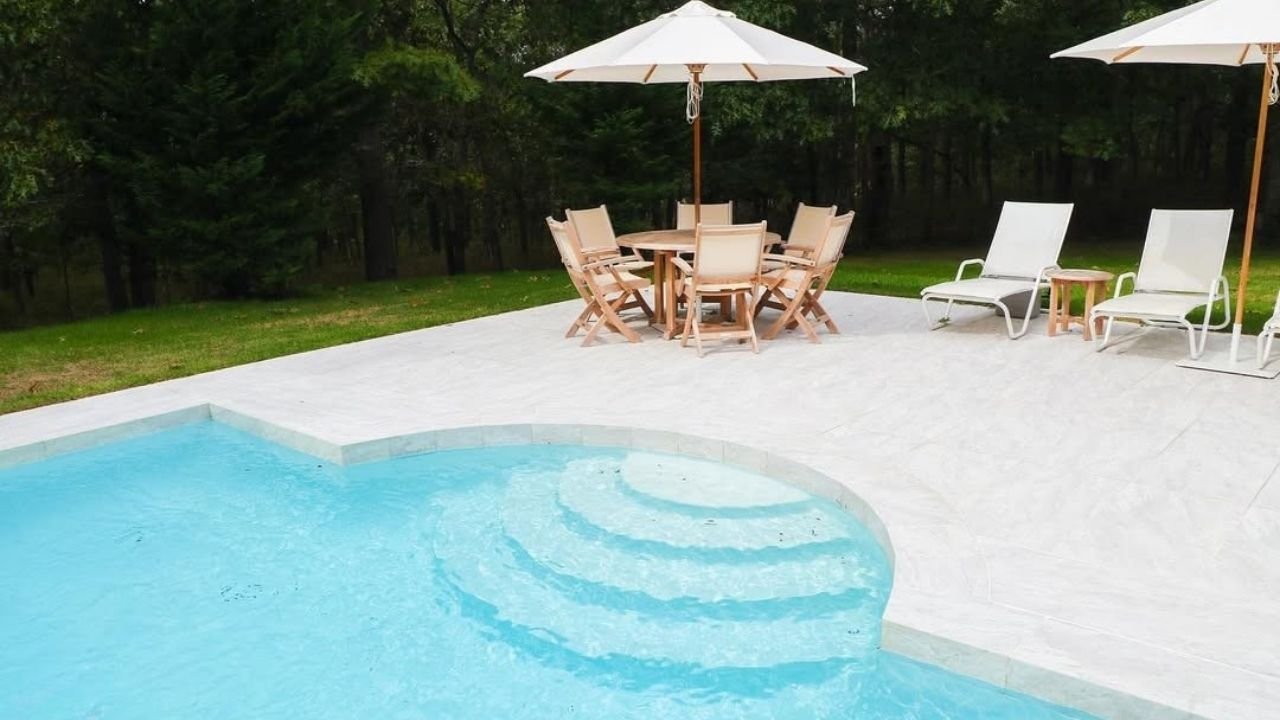
Light Marble Pavers
Light marble can work in sunny outdoor areas, but installing it for outdoor projects requires careful consideration. Marble pavers in white, cream, and beige can reflect more sunlight than dark stone. A honed or appropriately textured finish is also recommended outdoors over a highly polished surface, particularly where water may be present. Marble is dense and can still become hot under prolonged direct sunlight. It also contains calcium carbonate, so exposure to acids can affect the stone. While it can increase the curb appeal, the pavers offer a soft surface that requires extensive care.
For that reason, marble can be a good choice for selected patios, courtyards, and architectural outdoor areas, but the exact marble and finish should match the environment.
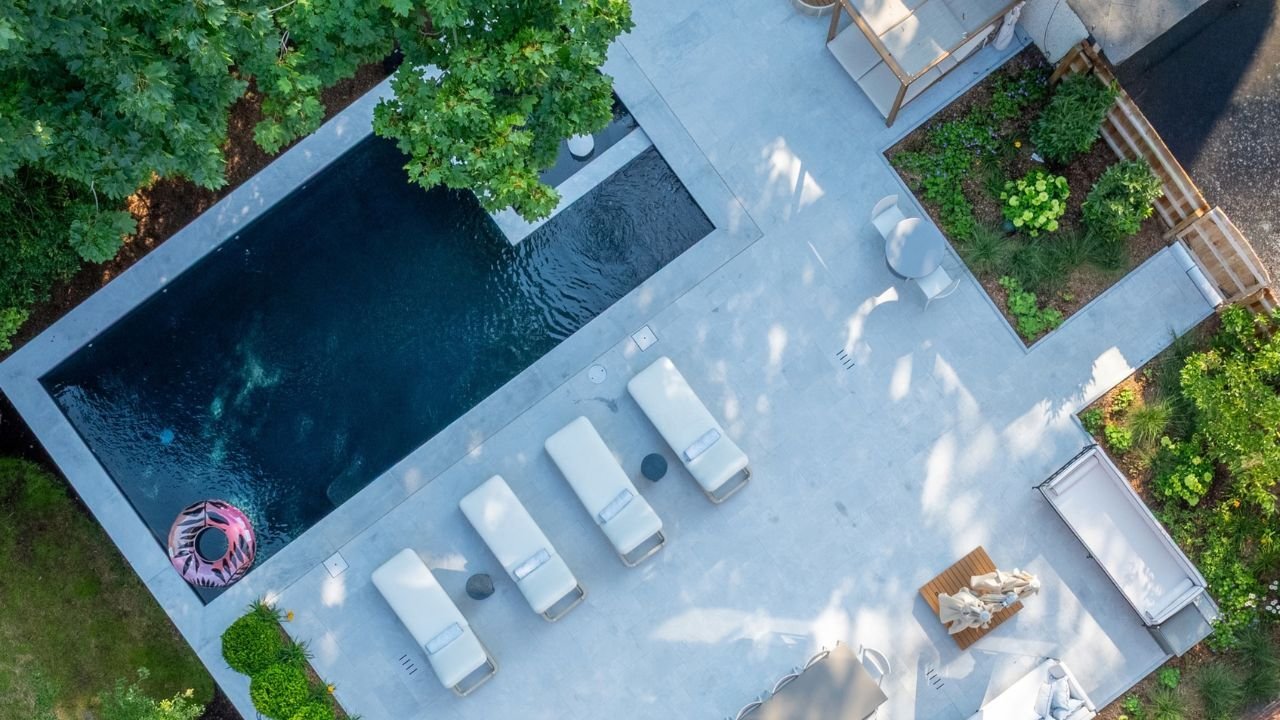
Light-Colored Concrete Pavers
Homeowners shouldn’t overlook concrete pavers because they are lower maintenance than natural stone and get more attention. Light-colored concrete pavers can perform well in sunny spaces, particularly when the mix and surface provide higher solar reflectance. Concrete is also practical for driveways, walkways, and larger areas that need consistent dimensions.
The limitation is thermal mass. Concrete can store substantial heat after long exposure. So a pale concrete paver may be more comfortable than a dark one without becoming genuinely “cool” during peak afternoon sun.
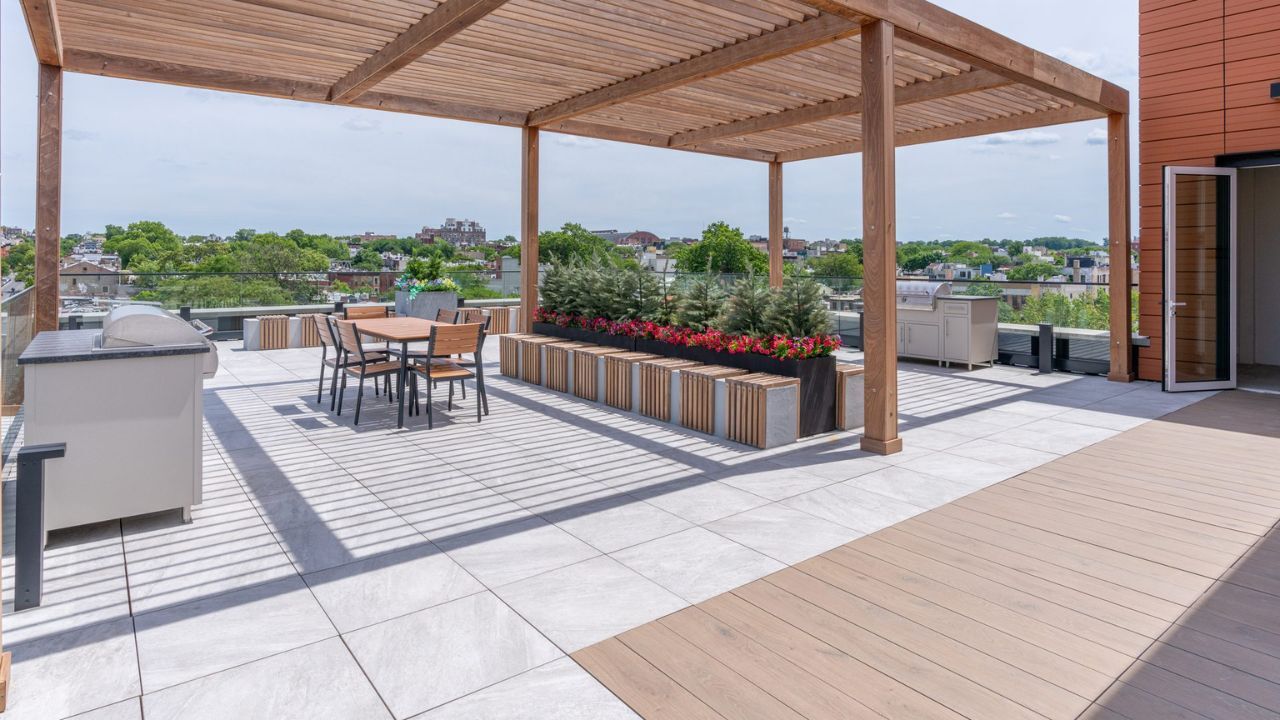
What Makes Some Pavers Hotter Than Others?
When a paver is installed in a sunny landscape, it absorbs the part of the solar energy that reaches its surface. The more energy it absorbs, the more its surface temperature can rise. This is where the color matters when choosing the right paver for an outdoor living space. Dark brown, charcoal, black, and some dark gray pavers absorb more solar energy than lighter cream, ivory, beige, and light-gray pavers. Ivory, beige, and light-gray surfaces absorb less solar energy.
Solar reflectance measures how much incoming solar energy a surface reflects rather than absorbs. ASTM C1549 provides a method for measuring solar reflectance on exposed opaque surfaces.
Surface properties matter too. The U.S. EPA identifies solar reflectance, thermal emittance, and heat capacity as important factors that affect how paving materials respond to sunlight. That means “natural stone” or “porcelain” alone does not tell you how hot a paver will feel. A pale stone can perform differently from a dark stone, even when both belong to the same material category.
Which Paver Colors Stay Coolest in Full Sun?
Light colors generally have an advantage for sunny patios and pool decks; consider ivory, cream, light beige, sand, pale gray, and light silver. NT Pavers offers options such as Ivory Travertine Pavers, Empire Silver Travertine Pavers, Afyon Ice Marble Pavers, Cream Marble Pavers, Aspen White Porcelain, and Light Grey Porcelain Pavers. Dark-colored pavers like charcoal, black, dark walnut, and deep brown can create striking designs, but they can also absorb more solar energy. ASTM notes that maintaining reflectance matters when thermal performance depends on it.