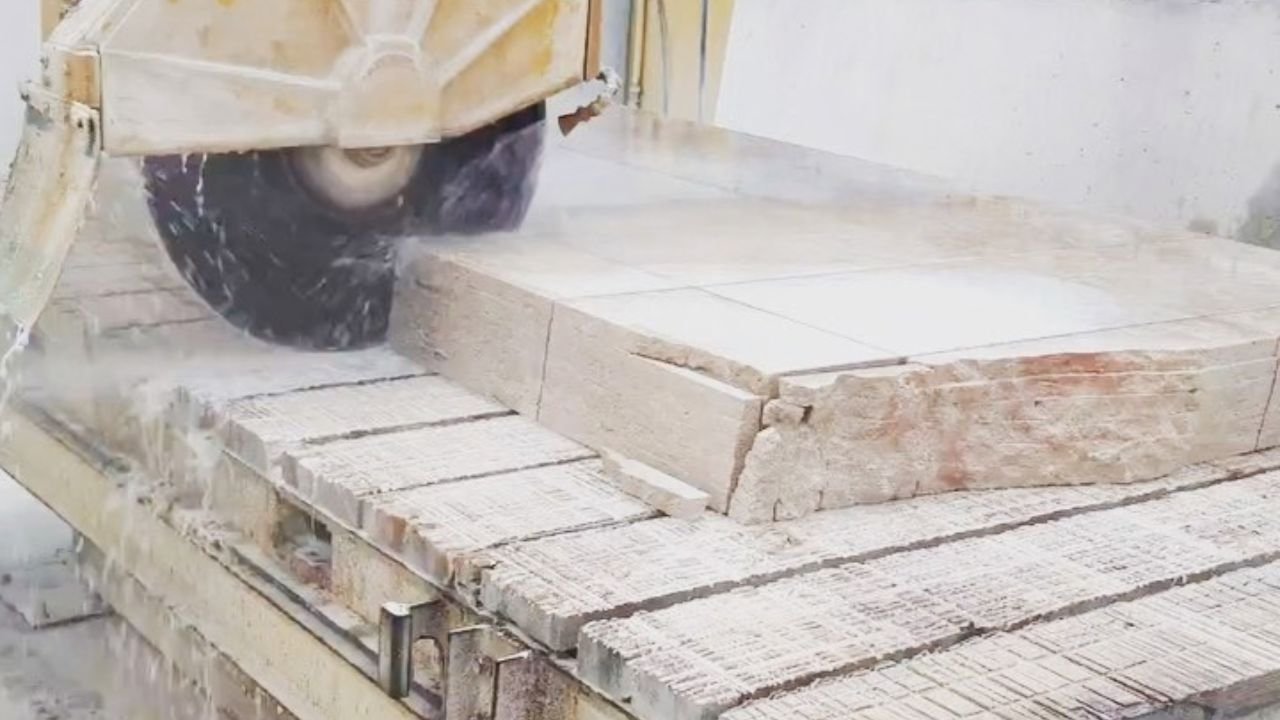

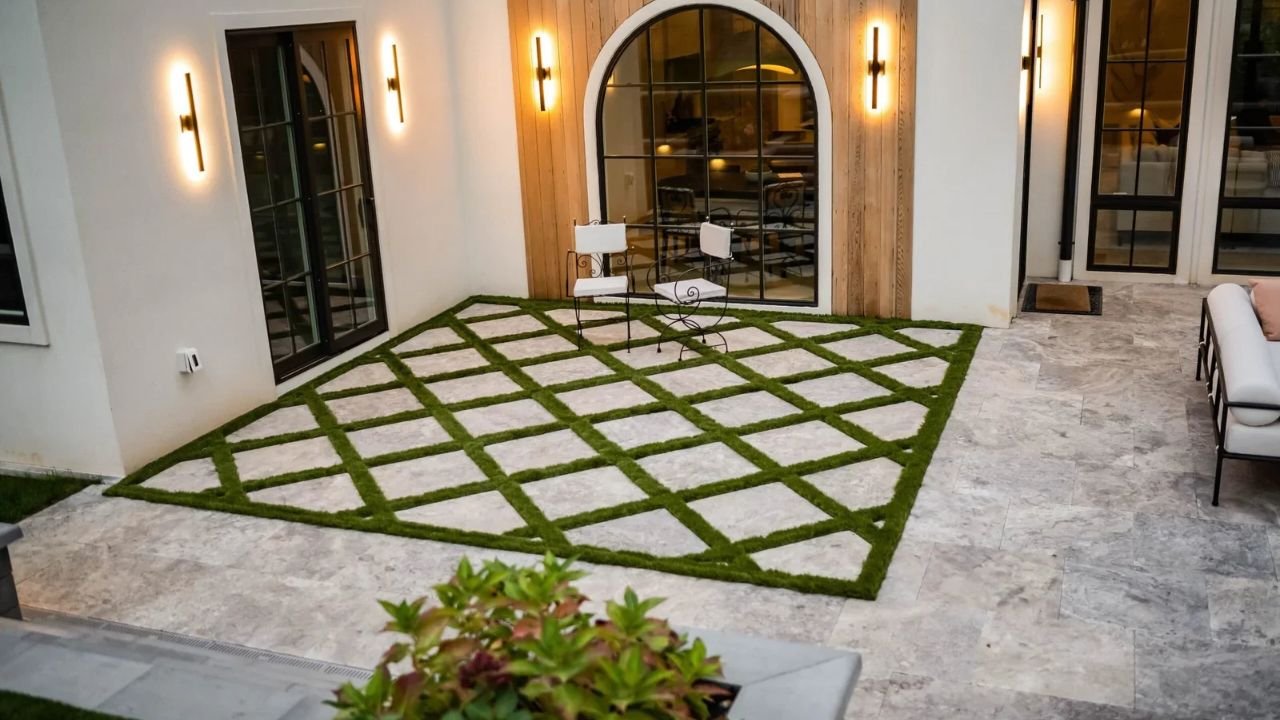
Pavers with grass in between are a practical way to connect hardscape and landscape. They don’t cover an entire area with concrete or stone, but leave open joints where grass can grow. The result looks ideal for a modern backyard patio, winding garden path, or a driveway with green strips. However, the right design depends on more than appearance. Consider paver size, spacing, soil conditions, drainage, and maintenance for the finished surface. When you are searching for paver patio ideas on a budget or plan a larger landscape project, consider how people will use the space. A layout design for pavers with grass in between that performs well for a quiet garden path may not support parked vehicles.
1. Large Square Pavers With Grass Joints
Large square pavers create a clean, geometric pattern for modern patios and garden walkways. Their broad surfaces offer space for walking, while the grass joints soften the hard edges. Opt for porcelain pavers, concrete pavers, or suitable travertine pavers with consistent thickness. Keep the spacing uniform for a balanced appearance, and make sure the finished surface remains comfortable to walk across.
This design suits a patio with light foot traffic, but it needs a stable, well-drained base to prevent individual pavers from settling.
2. Rectangular Pavers in a Running-Bond Pattern
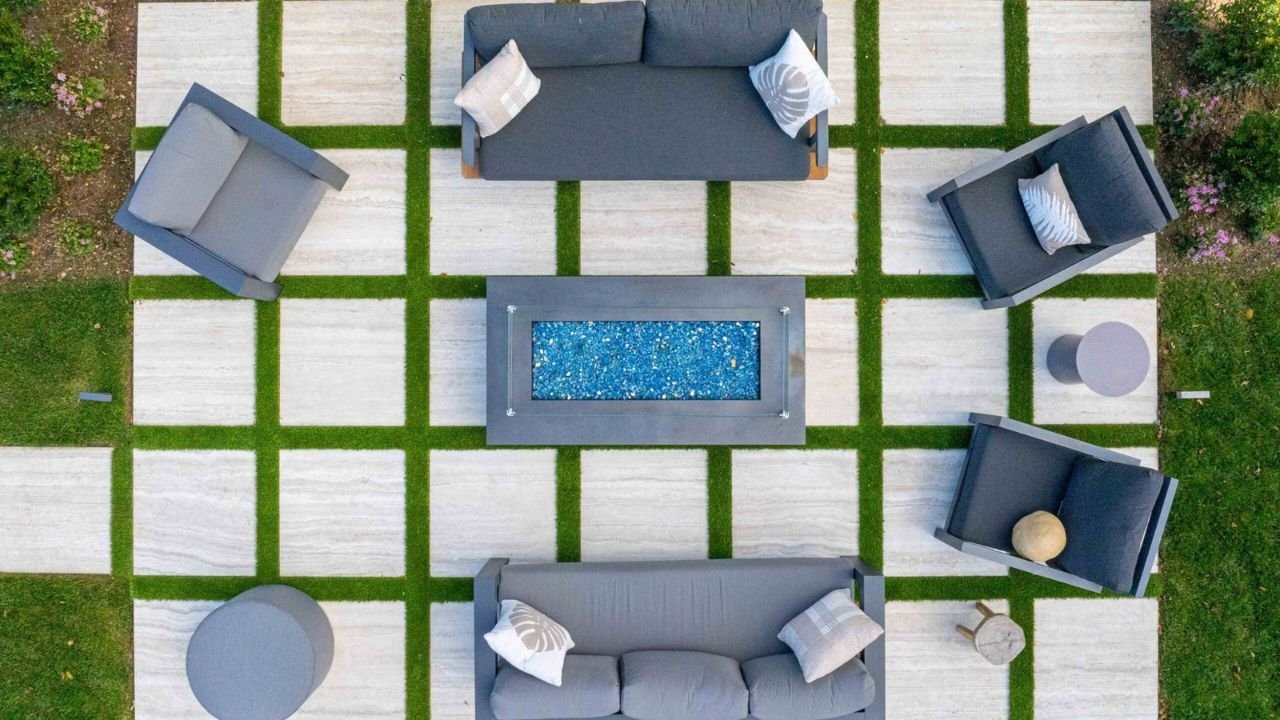
A running-bond paver pattern places each paver’s end near the middle of the paver in the next row. This paver layout creates movement and performs well for straight garden paths, side yards, and routes between outdoor seating areas.
Choose rectangular porcelain pavers, concrete pavers, or cut natural stone with consistent dimensions. Plan the grass joints before installation so the pattern stays aligned. This layout is easier to follow than an irregular pattern, though accurate base preparation remains essential.
3. Stepping Stones Across a Lawn
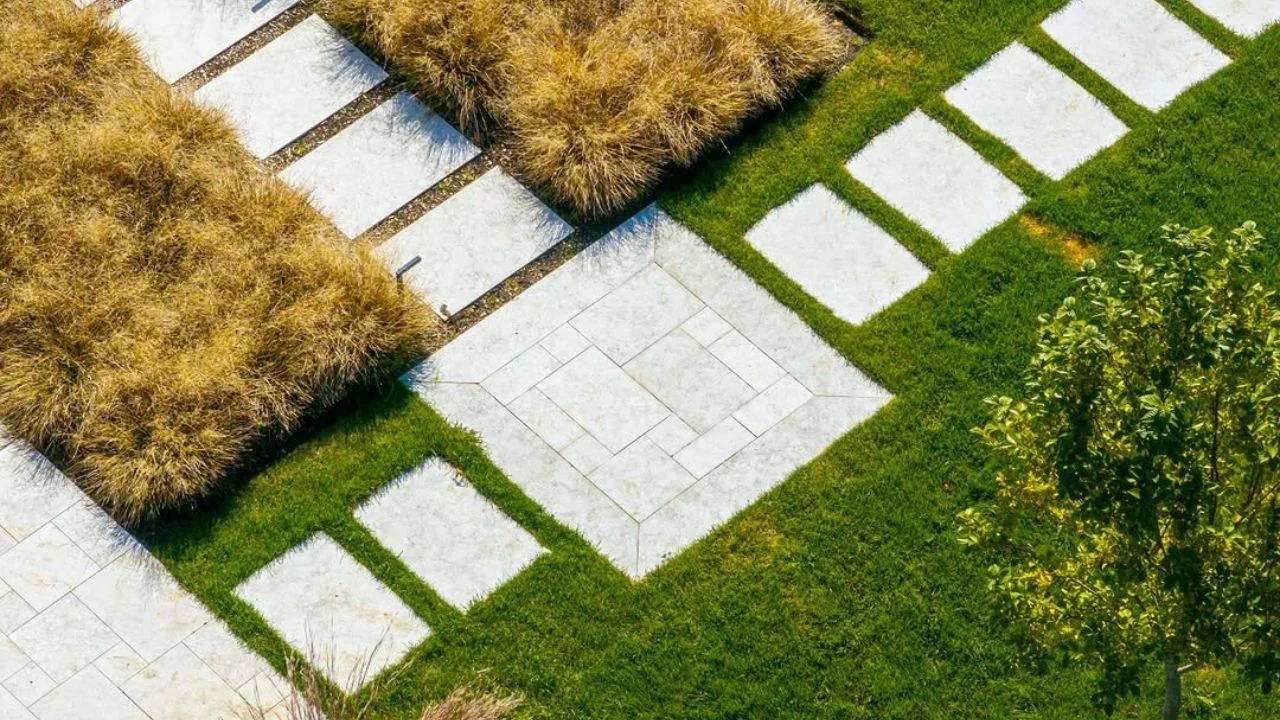
Stepping stones placed into a lawn create an informal route that doesn’t cover the entire ground, providing a lush appearance. Square or rectangular stones are ideal for contemporary gardens, while irregular flagstones create a more natural appearance. You can set each stone at a comfortable walking distance. Keep the top level aligned with the surrounding soil or slightly above for the site.
The stones need individual support beneath them; placing them directly on loose soil often leads to rocking and uneven surfaces. Leave enough room around each stone for mowing and grass growth.
4. Grid-Pattern Pavers for Contemporary Landscapes
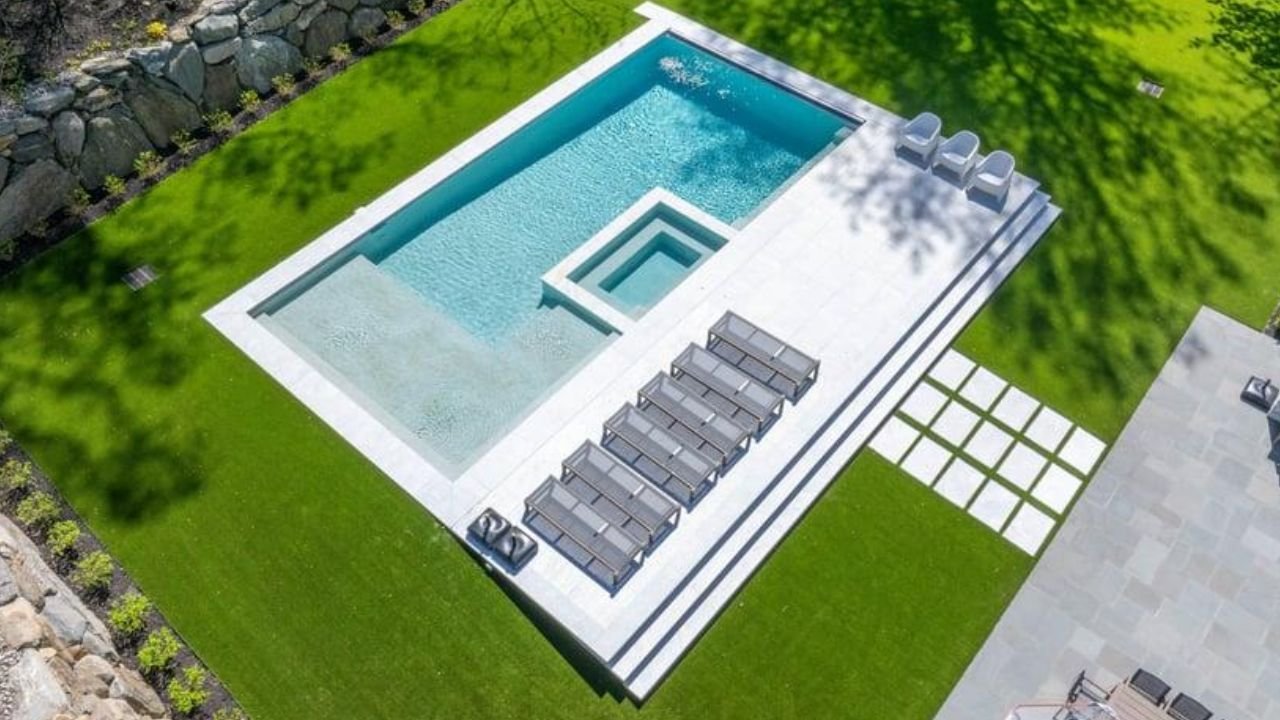
A grid pattern uses evenly spaced pavers to create strong lines throughout a patio or courtyard. This can be a great DIY project. It works particularly well beside modern architecture, where simple shapes and repeated spacing complement the building. Select pavers with consistent dimensions and create the grid before excavation. Check the alignment throughout the full area rather than independently correcting each row.
Wider grass joints can strengthen the green appearance. They also reduce the amount of continuous paved surface available for furniture and everyday movement.
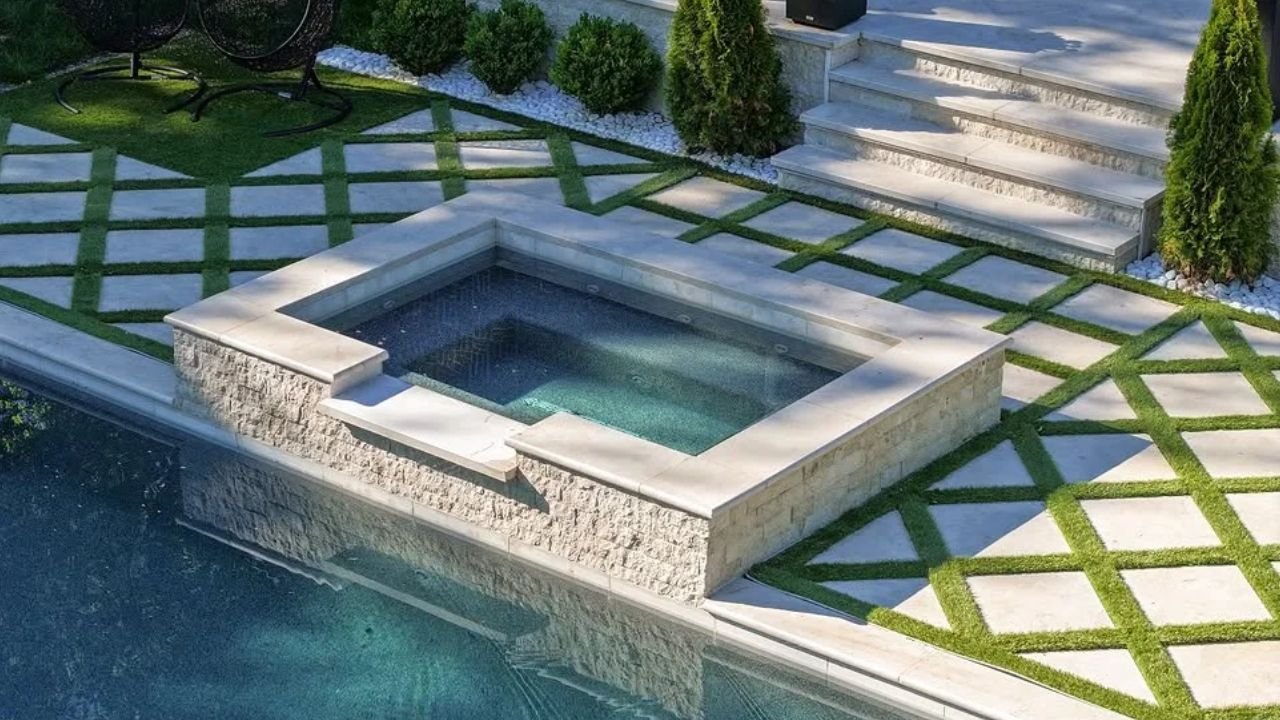
5. Grass-Joint Pavers Around an Outdoor Seating Area
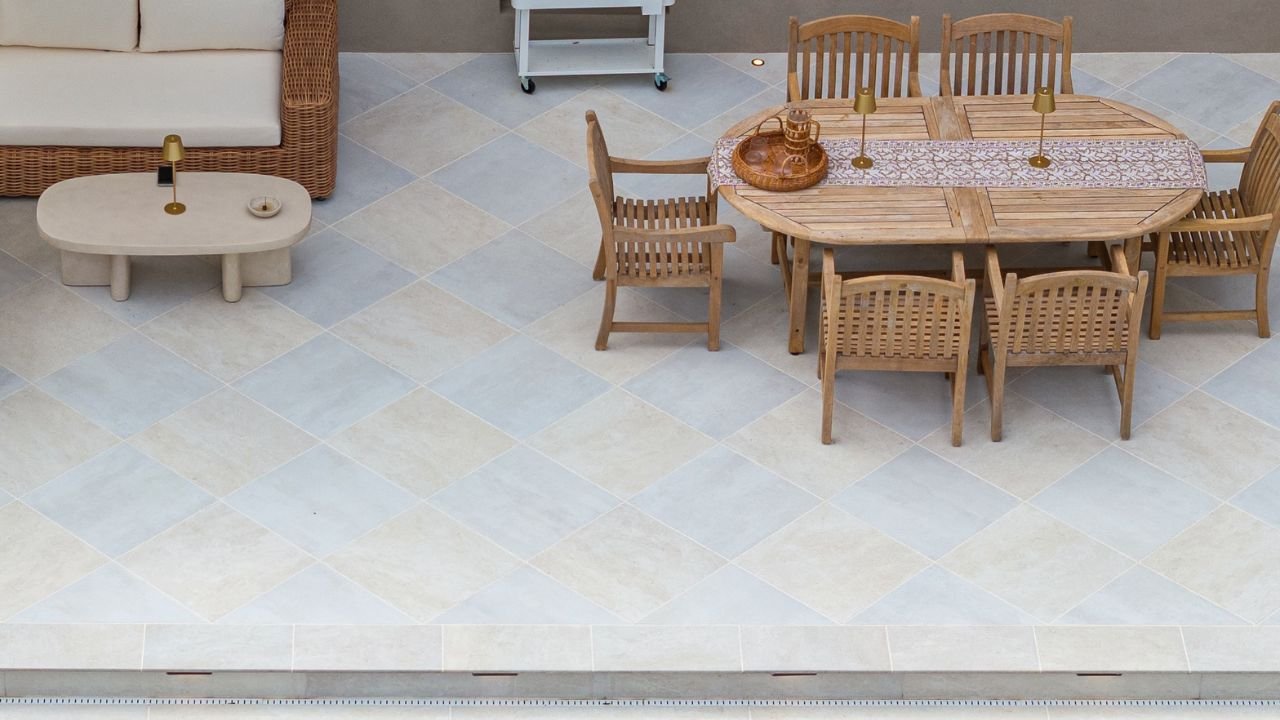
Grass-joint paving is one of the best grass-between-paver ideas to define a seating area without building a solid-looking stone platform. Using large pavers with narrow joints works well underneath dining tables and outdoor chairs when the surface is level and stable. Consider furniture legs before selecting the spacing.
Beyond their visual appeal, pavers with grass in between can offer benefits such as design flexibility and a natural outdoor appearance. Learn more about the benefits of using pavers with grass in between designs when planning your outdoor space.
Narrow joints reduce the chance of chair legs catching between pavers, while broad joints create a stronger green effect but may make furniture less stable. Keep the grass around table legs trimmed and avoid placing heavy furniture on pavers that lack adequate support.
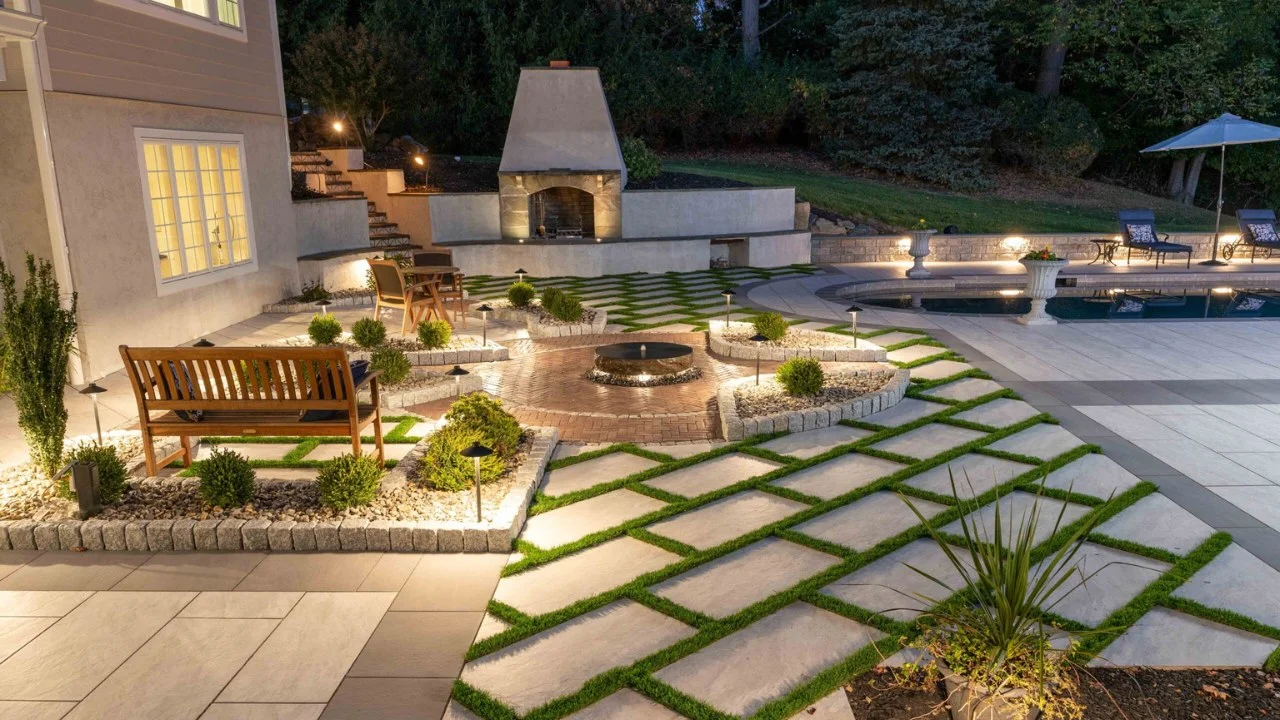
6. Driveway Pavers With Grass Strips
Driveway can also look great with paver with grass in between design ideas. However, the design approach will be a little different. Repeated vehicle loads may result in paver shift, weak soil compression, and damage to the growing grass in poorly supported joints.
One option is to create paved wheel tracks with grass strips between or beside them. Another idea is to use a purpose-designed reinforced grass paving system. Both require a base designed for the expected vehicle loads, suitable drainage, and secure edge restraints. Common decorative patio pavers with wide grass joints are not automatically suitable for cars. Confirm the manufacturer’s specifications, soil and drainage conditions of the site before choosing designs.
7. Alternating Pavers and Grass Bands
Alternating paved and grass bands create a stylized design for long walkways, side yards, and modern gardens.
The repeated pattern can make a narrow outdoor space feel more organized. Opt for consistent strip widths and keep the walking surface wide enough for everyday use. While the design looks unique, careful planning is required for implementation. Consider the spacing around gates, steps, and entrances, where gaps can interrupt the pattern. For accessible routes, avoid uneven surfaces and joints that could catch a cane, walker, or wheelchair.
8. Irregular Stone Pavers With Grass
Irregular flagstone creates a relaxed garden path that blends into planting beds and mature lawns. The varying shapes suit informal landscapes better than strict geometric designs.
The major challenge is maintaining comfortable walking surfaces. Select stones with suitable thickness, arrange them to minimize awkward gaps, and support each piece throughout its footprint. Very wide joints can collect leaves and weeds or make the path difficult to navigate. This style is well suited to garden routes, but it requires more precise work than a layout using uniform rectangular pavers or porcelain pavers.
9. Reinforced Grass Pavers for Selected Driveways
Reinforced grass pavers use a grid or cellular structure that supports grass while helping distribute loads. The cells may be filled with soil and grass or with gravel depending on the product.
These systems are different from ordinary decorative pavers separated by grass joints. Their structure, base depth, and installation method should match the intended load. Some products are designed for occasional vehicle access, but others suit different applications. Take a look at the manufacturer’s load rating and installation instructions before specifying a system for a driveway.
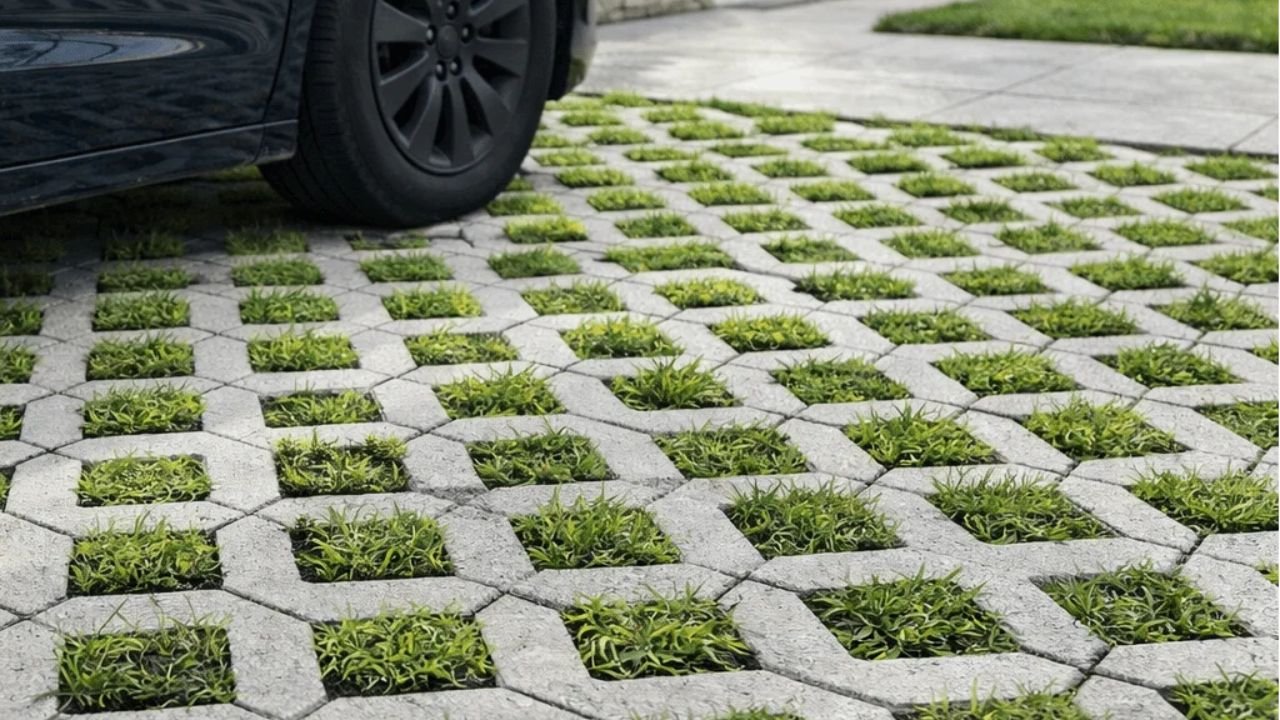
How to Choose the Right Pavers and Grass-Joint Width
Choosing the pavers and joint width affects comfort, durability, and maintenance.
| Material | Key
Benefits |
Important
Considerations |
| Concrete pavers | Offer consistent dimensions and a wide range of shapes for patios, walkways, and driveways using pavers or concrete slabs. | Choose exterior-rated pavers with sufficient strength for the intended traffic. |
| Natural stone | Granite and suitable limestone provide natural color, texture, and a distinctive outdoor finish. | Check stone thickness, weather resistance, and slip resistance before installation. |
| Living grass | Creates a natural green appearance between pavers and blends paving with the landscape. | Needs adequate sunlight, water, suitable soil, and regular trimming. |
| Gravel joints | Provide a practical alternative where grass struggles to grow. | Use suitable joint materials and containment to reduce gravel migration. |
| Artificial turf | Maintains a green appearance without mowing or regular grass care. | Does not provide a living, soil-based surface and requires a suitable installation base. |
Narrow joints create a more continuous walking surface, while gaps between pavers can enhance drainage. Wider joints offer more room for greenery but require greater attention to maintenance and footing. However, there is no single ideal width for every project, so follow the paving system’s specifications. Also consider how the area will be used.
Maintenance Tips for Grass Between Pavers
Grass-joint paving requires routine care to keep both materials in good condition.
| Maintenance Task | What Homeowners Should Do |
| Mow and trim grass | Keep grass short and trim growth along paver edges. |
| Control weeds | Remove weeds before their roots spread through the joints. |
| Manage drainage | Clear blocked drainage paths and address standing water. |
| Check paver stability | Inspect for loose, rocking, or sunken pavers and reset them as needed. |
| Repair bare patches | Refill joints with suitable growing soil and reseed areas where grass has died. |
Grass may struggle to survive under heavy foot traffic, dry weather, and in shaded areas, making ideas about pavers a viable alternative for a lush lawn. This is why you should choose a suitable grass variety for the site’s climate and sunlight and consider gravel joints where living grass is impractical.
Pavers With Grass in Between FAQs
Commonly asked questions about pavers with grass in between.
What are the best pavers to use with grass between them?
Concrete pavers, granite, and well-suited exterior-grade limestone can all work. Select a material with proper thickness, weather resistance, and slip resistance for the targeted use.
How wide should the gaps be between pavers for grass?
The suitable width depends on the paver system, traffic, and desired appearance. Check the manufacturer’s guidance and avoid uncomfortable or unsafe walking gaps.
Can you put pavers with grass between them in a driveway?
Yes. If the paving system and base are designed for vehicle loads. Use properly rated pavers or a purpose-built reinforced grass grid rather than thinking decorative patio pavers can support cars.
Does grass grow well between pavers?
Grass grows best when the joints offer suitable soil, moisture, sunlight, and root space. Deep shade, drought, and frequent traffic can leave gaps uncovered.
Are pavers with grass between them permeable?
Yes. They may act like a permeable surface as they let water enter the joints, but they are not an alternative to a permeable surface. Overall performance depends on the base, subsoil, joint materials, and drainage design.
Are grass-joint pavers difficult to maintain?
They need mowing or trimming, weed control, and occasional joint repairs. Areas with limited sunlight or heavy traffic may require more attention or an alternative joint material.
Bottom Line
Pavers with grass in between combine a structured paved surface with the natural look of a lawn. Large-format pavers are ideal for modern patios; stepping stones perform well throughout the gardens. The reinforced grass systems can save selected driveways when designed for vehicle loads. Select a layout based on how you will use the space, then match the paver material, joint width, base, and drainage to those needs.
If you are planning an outdoor project, NT Pavers recommends treating the installation underneath the surface as an essential part of the design but not an afterthought.