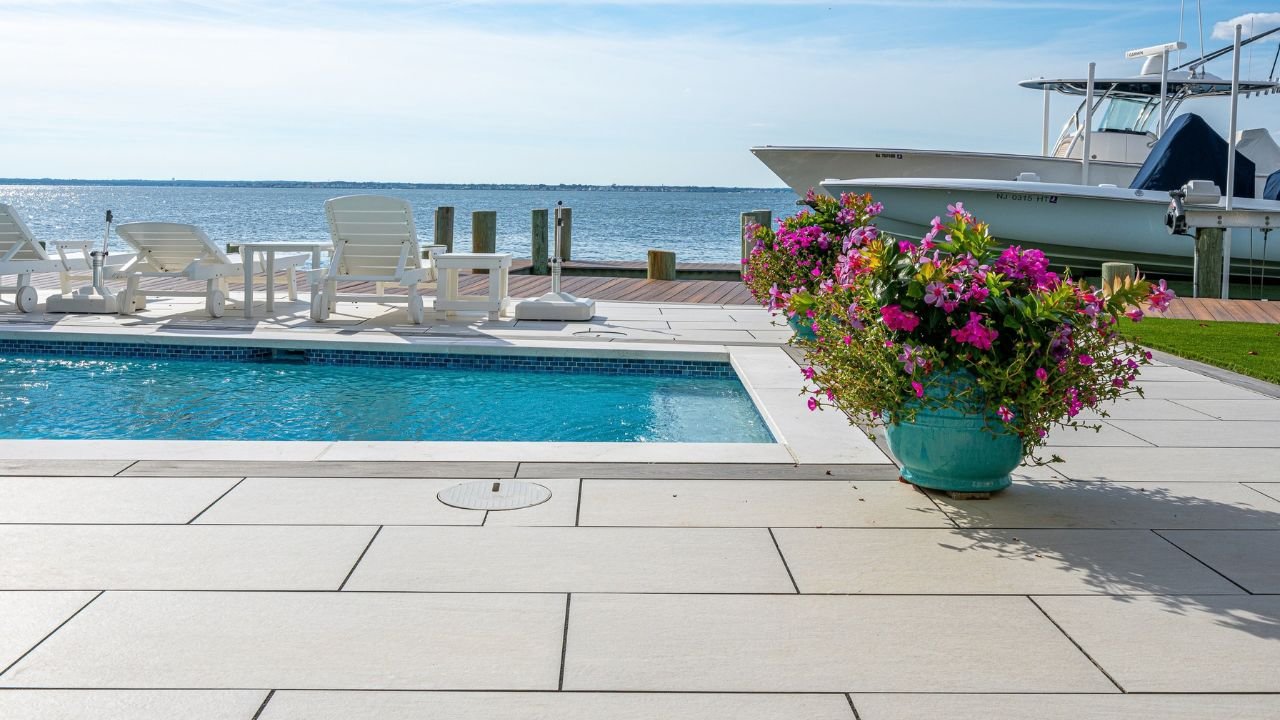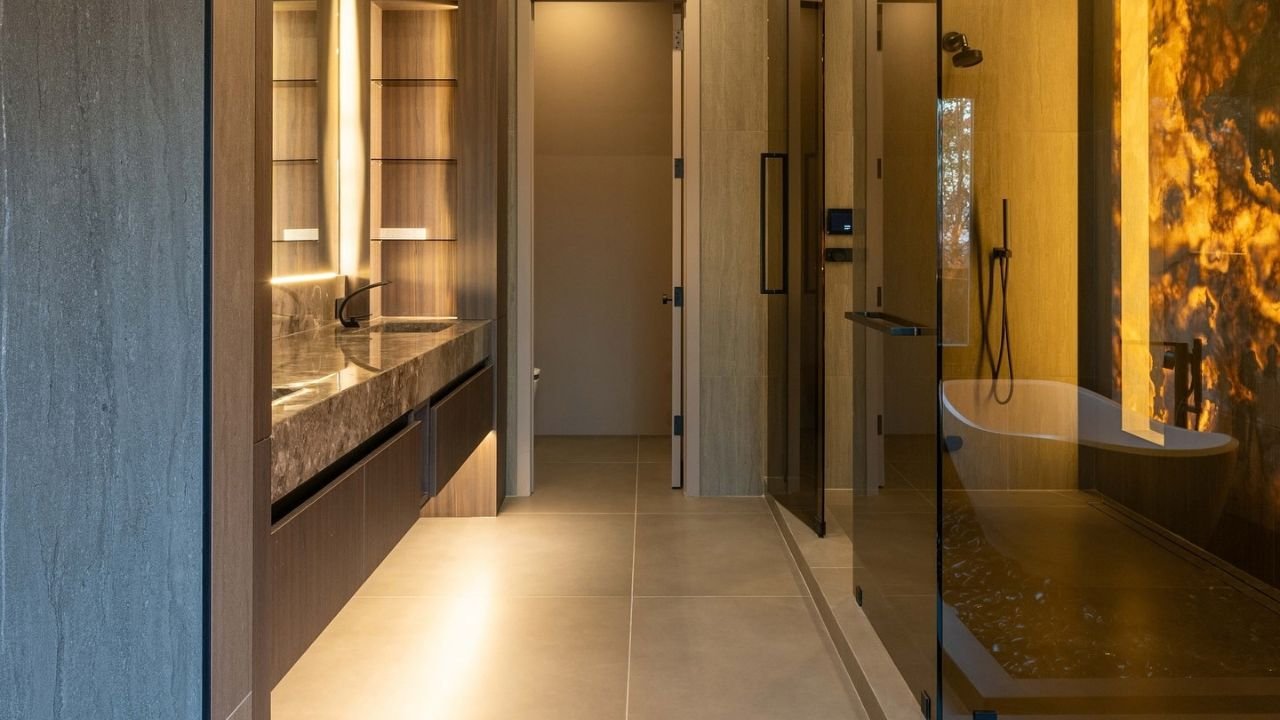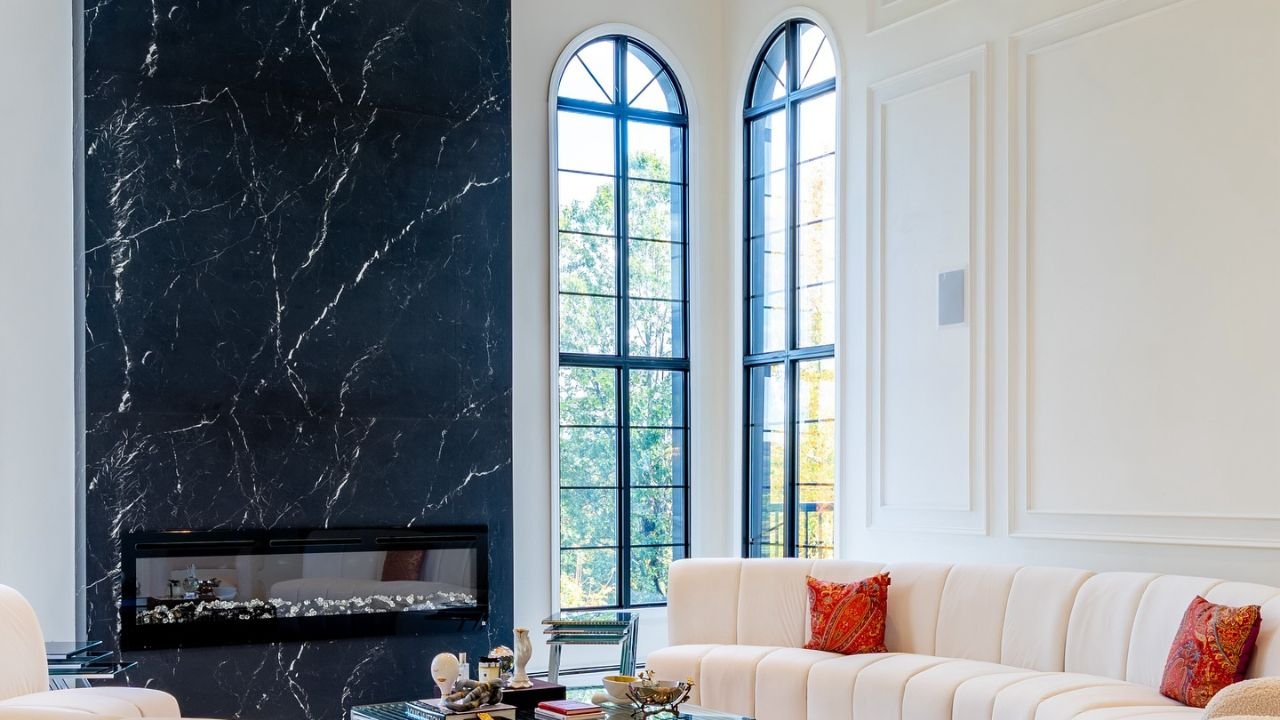

Garden paths are one of the most crucial elements of any outdoor living space. They shape how the landscape feels and functions. They offer a comfortable walking surface throughout the landscape, frame planting beds, and control drainage. Using stones like marble, limestone, and sandstone is a smart choice. Each surface features a distinct character and thermal properties. Limestone feels soft when you touch the surface. Marble features a luxury look and contrast. Sandstone adds warmth and texture that mixes with soil and plants.
Natural stone garden path ideas can add a unique look and feel, depending on the choice of stones. Each design shows real installation patterns used in modern residential landscapes. Continue reading the following to learn about the 9 garden path ideas using limestone, marble, or sandstone.
1. French Country Stepping Stones (Limestone Focus)
French country path depends on irregular rhythm and soft edges. Limestone pavers works well here because it features muted color and natural variation. For this garden path idea, place large limestone steps with uneven spacing. Let gravel or compacted earth fill gaps. Keep edges slightly softened instead of giving it a sharp look. This layout is well-suited to cottage gardens, herb borders, and relaxed patio transitions. Plants look spread over the edges, where moss and thyme fill the gaps.
The design also works great for drainage. Water can pass through joints, so no pooling on the surface. Opt for honed or lightly textured limestone and do not use a polished surface. They can be slippery when wet and don’t look natural. This pattern also works best when the path doesn’t have a strict geometry, and when slow walks are accompanied by visual calm.
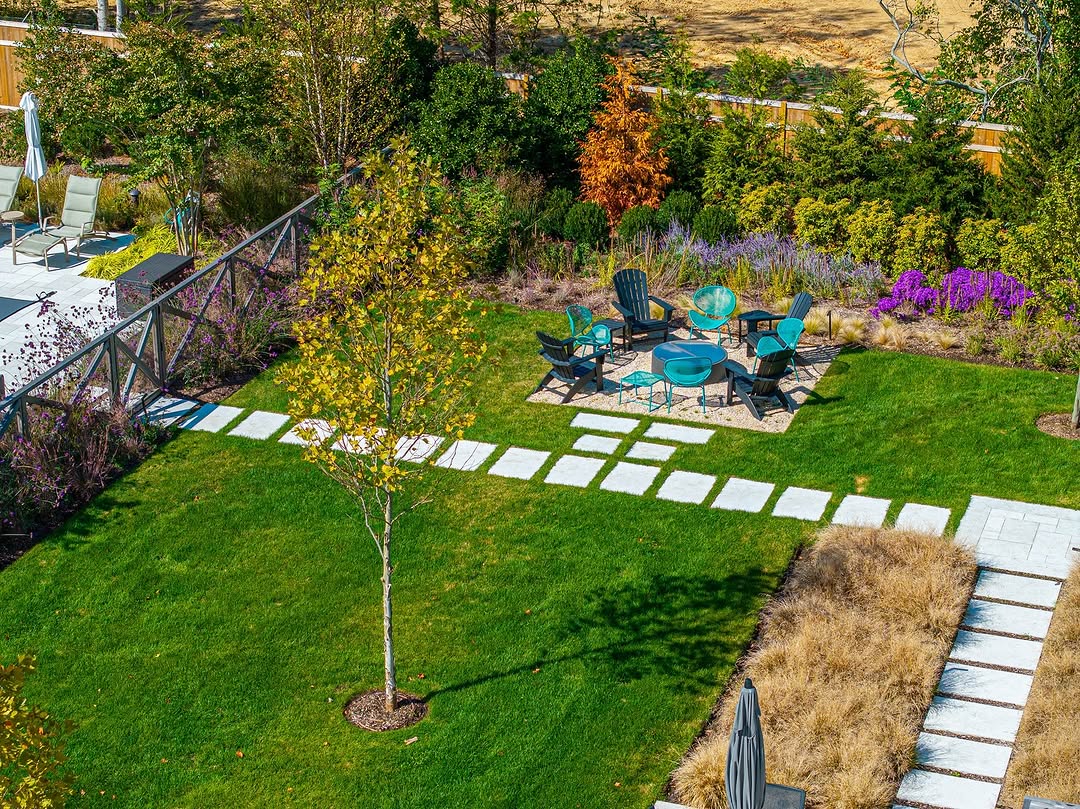
2. Rustic Dry-Lay Limestone Path
Dry-lay limestone path doesn’t require mortar. Stones are placed on a compacted base of crushed gravel. Choose irregular limestone pieces and place them tightly but not uniformly. This creates a natural rural effect. The path looks older than the garden itself.
Water drains through gaps easily. That reduces puddles and erosion. This design performs well in sloped gardens or semi-wild landscapes. Edge remains loose. Plants often grow between stones that soften the structure over time. Maintenance is usually simple for this design. Replace settled stones or top up gravel occasionally.
This is one of the most practical low-cost natural stone layouts for large gardens. Compared to decorative concrete paving, dry-lay limestone creates a softer and more natural visual character.
3. Contemporary Grid Layout Path (Sandstone or Limestone)
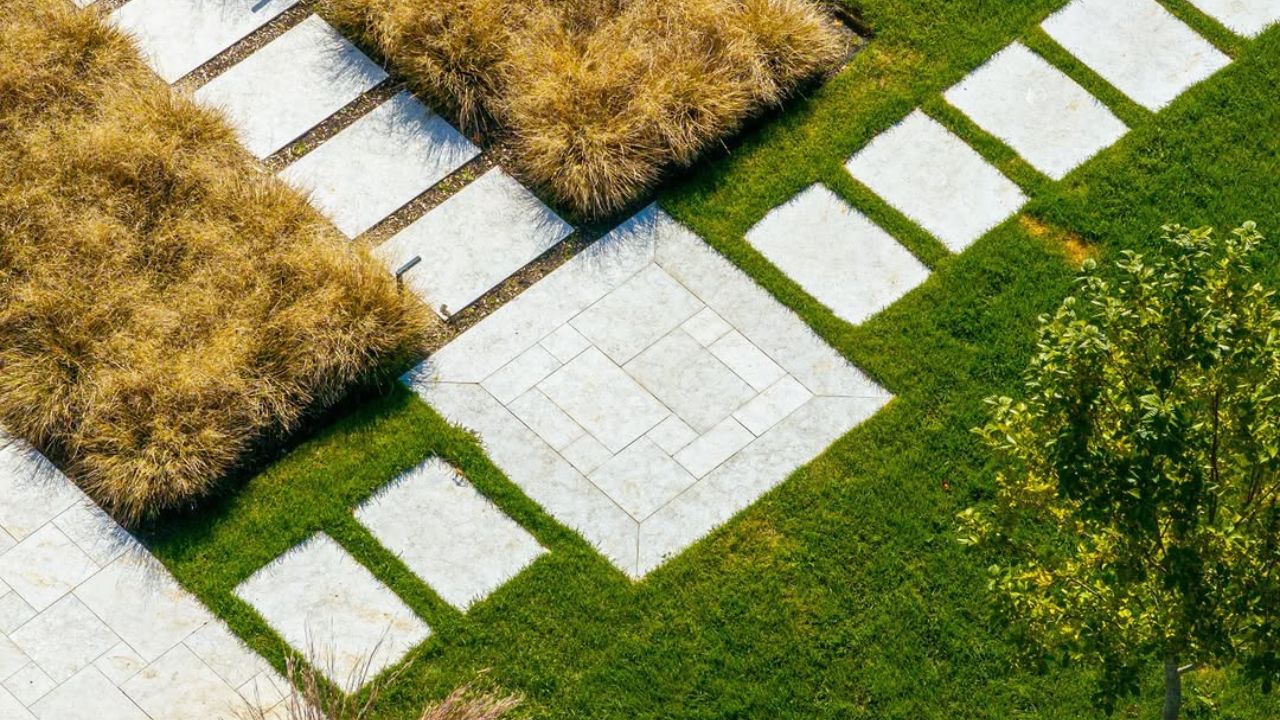
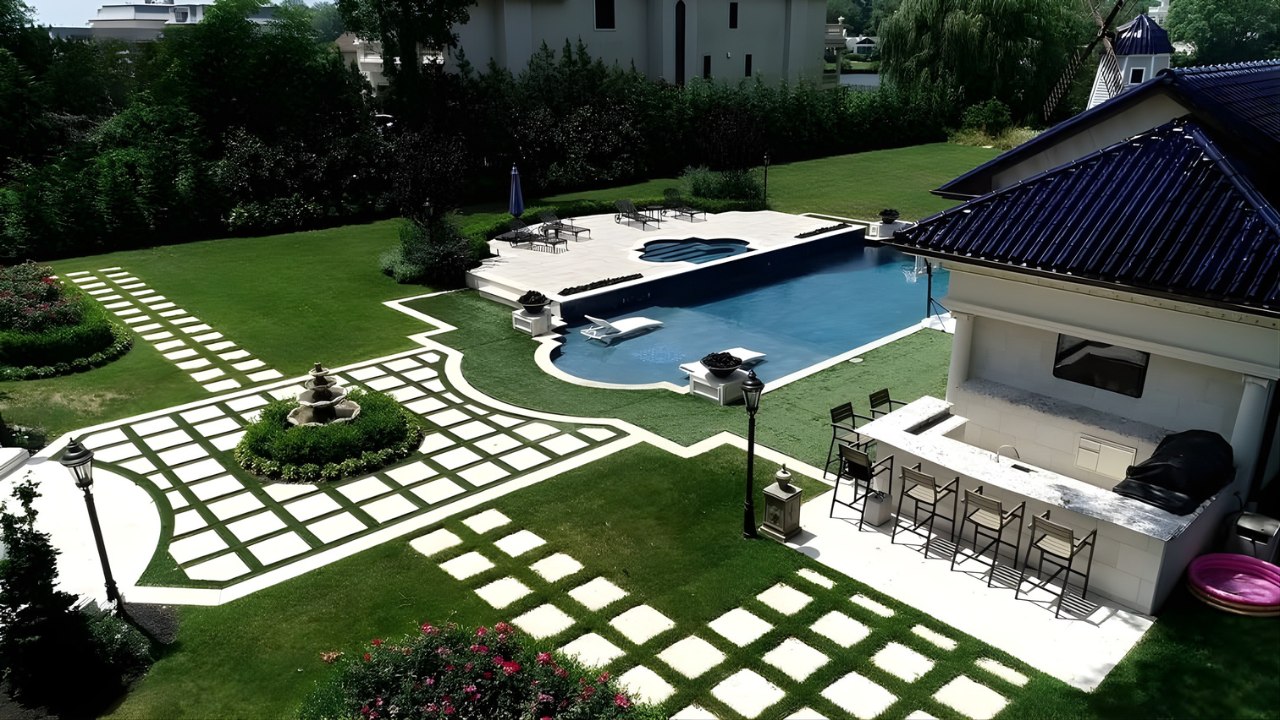
Contemporary grid path uses repetition and alignment. Cut sandstone or limestone slabs form a strict square or rectangular system. Keep the gaps equal between each slab and fill the joints with fine gravel or low ground cover. Some homeowners also prefer pavers with grass in between to soften the grid pattern naturally. The grid in such garden path ideas creates order. It is well-suited to modern houses with flat roofs and minimal planting design. You will need to keep the stone consistent. Light maya grey sandstone or heritage olive limestone pavers works best.
In modern landscape design, this pattern aligns with low visual noise architecture. Homeowners prefer clean lines and reduced clutter. Opt for calibrated slabs as uneven thickness breaks alignment and weakens the grid effect. This design is also helpful for improving walk stability, and each step lands on a predictable geometry.
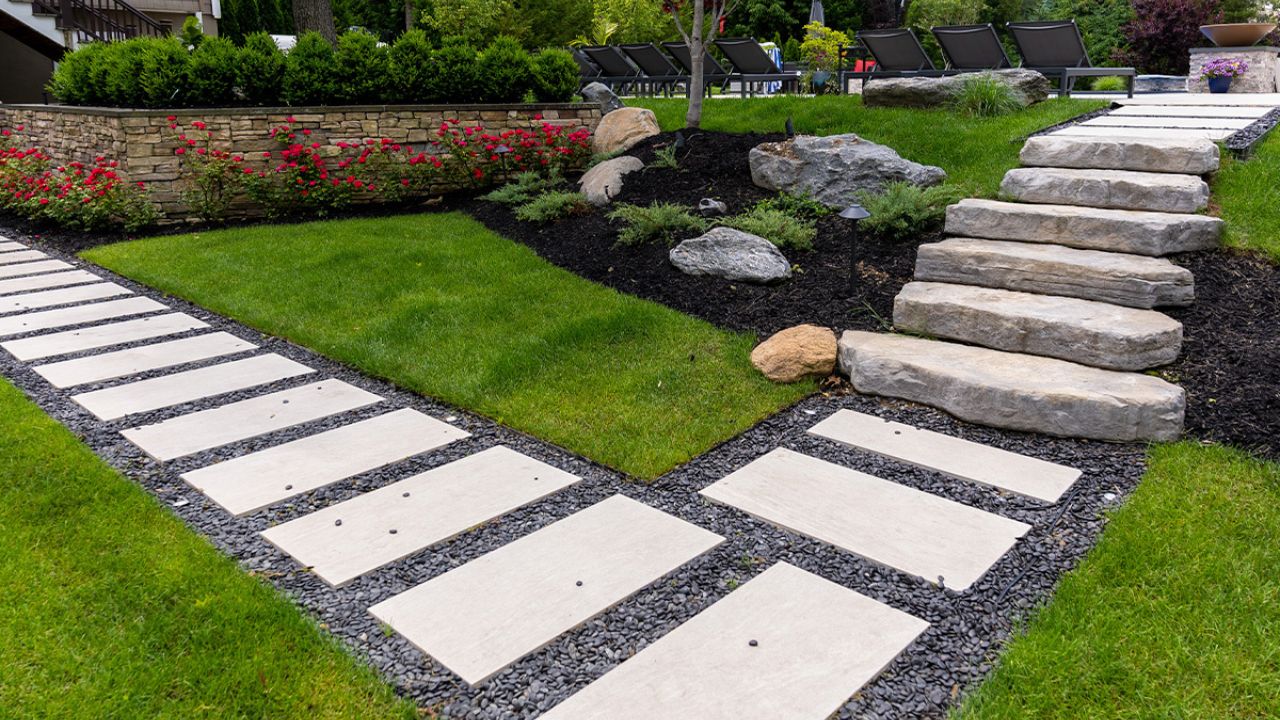
4. Formal Straight Walkway with Marble Slabs
Marble is a great material to be used in controlled, formal pathways, especially when exploring paver walkway ideas for elegant outdoor design. A straight walkway with uniform slabs creates a strong direction. Use large paver stones while keeping the joints tight and linear. Do not use irregular edges.
White or light grey marble increases contrast against green lawns and dark hedges. This design works great for front gardens, entry paths, and villa-style homes. Opt for a brushed or honed finish instead of polished. This reduces slip risk when wet, and the visual result stays architectural, not rustic.
Marble has a reflective surface that reflects light. You will notice a subtle brightness under garden lighting at night. However, marble requires regular maintenance. While general cleaning is simple, deeper cleaning requires extra consideration. It can be stained with acidic soil or leaf decay. Also, sealing after installation and resealing every 6-12 months, depending on its application, is important. The overall paver installation cost may also increase because marble requires skilled handling and sealing procedures.
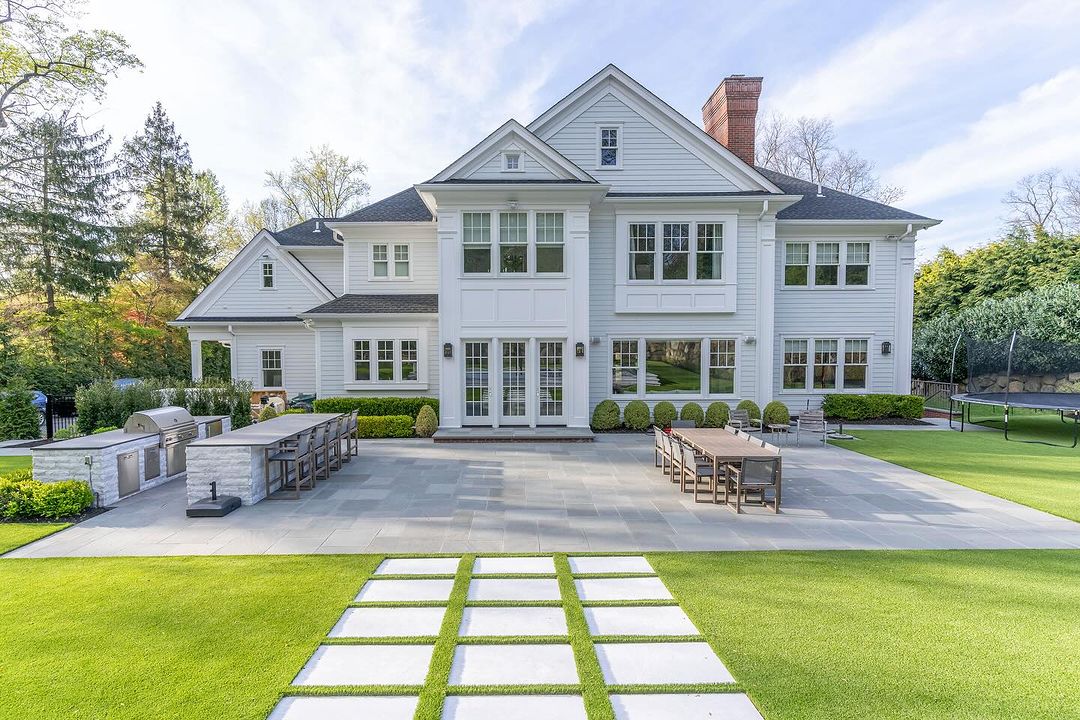
5. Mixed Material Mosaic Path (Limestone + Marble Accents)
This design mixes a limestone base with marble highlights. Opt for limestone as the primary surface and insert marble strips or small inlays at intervals. The contrast is perfect to create visual markers along the path. This works well in long walkways where direction changes or areas shift.
For the best look, keep the marble accent minimal, as too much contrast breaks visual harmony. The mix improves functionality, too, and marble can highlight steps or turns. This approach is also helpful in controlling costs. Marble pavers is usually kept limited, while limestone becomes the main material.
Such garden path ideas are well-suited for transitional landscapes that balance formal and natural styles.
6. Curved Travertine Flow Path
Travertine is perfect for curves because it cuts clean and carries warm color tones. Opt for designing a flowing path that bends around planting trees and beds. Use mixed-size travertine slabs and avoid strict repetition. Let edges vary slightly.
This layout copies natural walking behaviour, as people do not move in straight lines in gardens. The texture of travertine adds grip, which makes the surface safer in wet weather compared to polished stone. Such garden path ideas are well-suited for tropical and subtropical climates. It blends with soil tones and vegetation.
In the current landscaping trends, curved paths replace rigid layouts in residential backyards. They reduce visual stiffness and improve garden immersion.
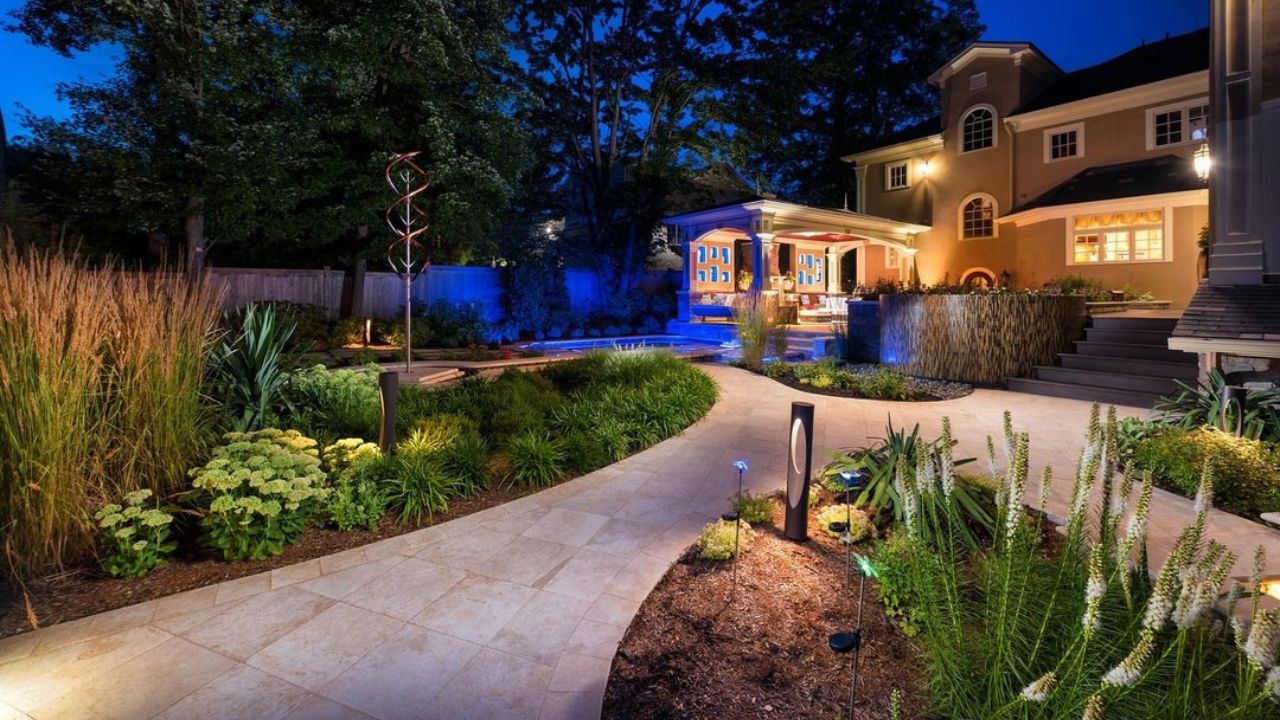
7. Japanese-Inspired Minimal Steppers (Limestone or Marble)
If Japanese minimalism inspires you, then such garden path ideas should be on your list. The design reduces visual weight. Place single large stepping stones throughout a gravel or moss base. Use limestone for softness or marble for contrast against dark gravel. Spacing should be intentional, which will define movement, not the speed. This path design is advantageous for slow walking and will require attention to placement. Edges stay clean with no overgrowth dominating.
This design suits small courtyards or meditation gardens. It also works well in modern minimalist homes where outdoor space is limited. It requires low maintenance, and you only adjust the stone occasionally. The simplicity becomes the main design feature. Among all types of stone, limestone and marble remain popular because of their clean texture and calming appearance.
8. Framed Path with Marble or Limestone Edging
This layout adds structure through borders. Use sandstone or limestone as the main path surface. Then add marble or darker limestone as edge bands. The border locks the visual boundaries as it prevents plant spread into the walking area.
It also improves durability. Edges resist erosion from foot traffic. This design is well-suited for formal lawns and driveway-to-garden transitions. In the current landscape practice, framed paths improve longevity more than unbound layouts. They also help contractors maintain alignment during installation. The result feels structured without becoming rigid. Decorative edging also works well around paver steps and raised pathway sections for a more finished appearance.
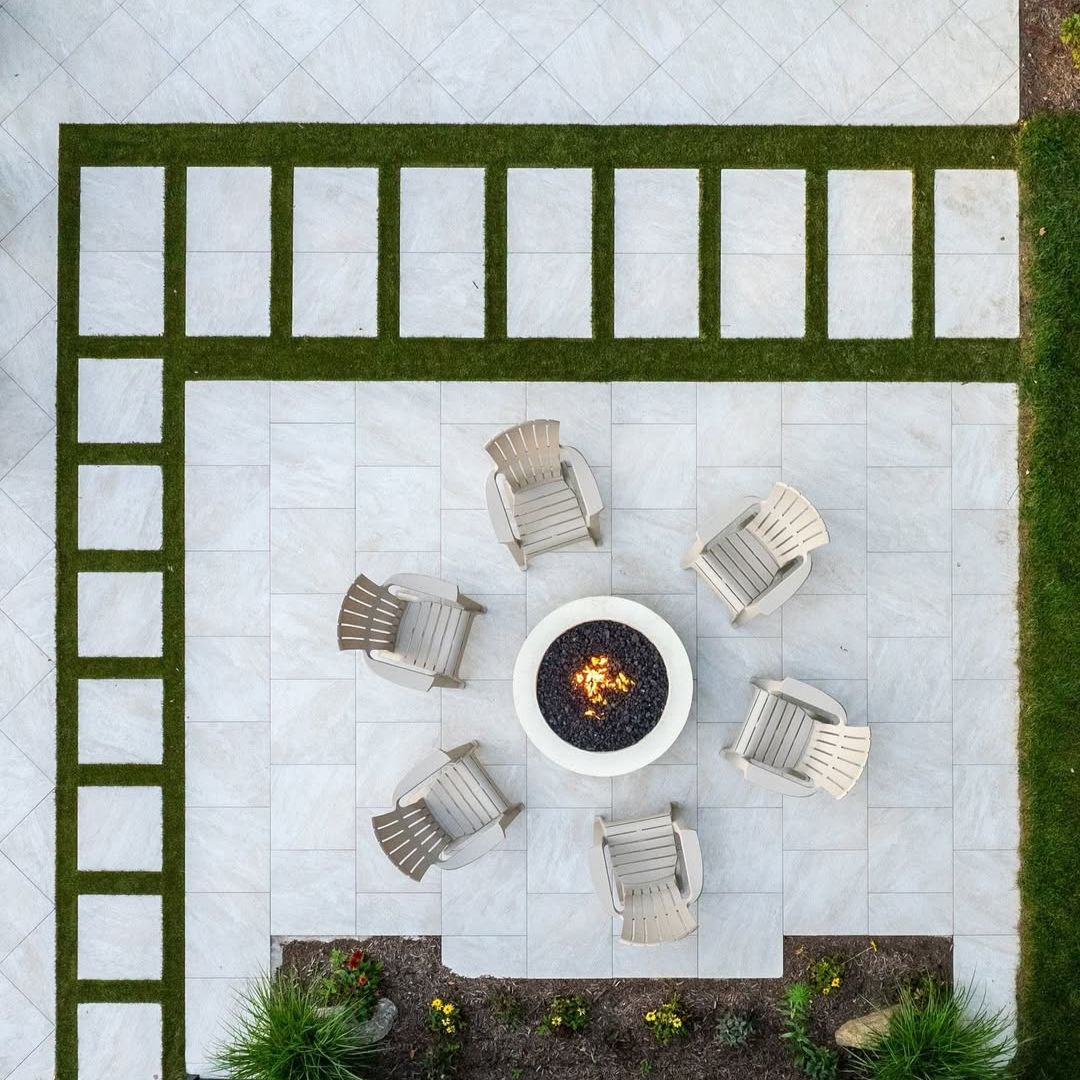
9. Mediterranean Villa Path (Sandstone + Gravel Joints)
Mediterranean design focuses on warmth and texture. Use golden or honey-toned sandstone slabs. Space them slightly wider than usual. Fill the joints with pea gravel or crushed stone. This combination shows sun-heavy climates and dry landscapes. Decorate the border with plants like lavender or rosemary, which often border these paths.
The stone stays cool under heat compared to concrete. This style is making a return because homeowners prefer climate-responsive materials. It also increases the permeability. Rainwater drains quickly into gravel joints. The resulting surface feels relaxed but structured. Similar to a rustic gravel walkway, this design supports better drainage and softer visual texture.
Gaden Path Ideas Using Natural Stone Pavers FAQs
Let’s answer your questions about Garden Path Ideas.
Which stone is best for garden paths: limestone, marble, or sandstone?
It depends on your goals and expectations, as no natural stone is perfectly fine for outdoors. Limestone looks soft, marble is luxurious, and sandstone looks good with textures and warmth.
Does marble work well outdoors in garden paths?
Yes. But when a brushed and honed finish is used. It requires sealing to withstand outdoor elements and works better in low-acid environments.
Is sandstone slippery when wet?
No. Sandstone has a naturally textured surface, so it doesn’t get slippery when wet.
How thick should natural stone slabs be for garden paths?
The thickness of natural stone slabs is around 20-30mm. However, high-traffic pathways may require extra thickness.
Do natural stone paths need sealing?
Yes. Natural stone pathway, in general, requires sealing to prevent moisture absorption, staining, and harsh weather.
What is the most low-maintenance garden path material?
Sandstone with gravel joints or a dry-laid limestone path doesn’t require high maintenance in the long run.
Bottom Line
Garden paths are not just for decorative purposes, but they are also a functional part of the outdoors. Garden path shapes how the outdoor space performs and feels. Using natural stones like marble, sandstone, travertine or limestone can add distinct benefits, look, and personalities to any garden path ideas. Keep in mind that not all natural stone performs the same. They respond differently to weather, foot traffic, and maintenance habits.