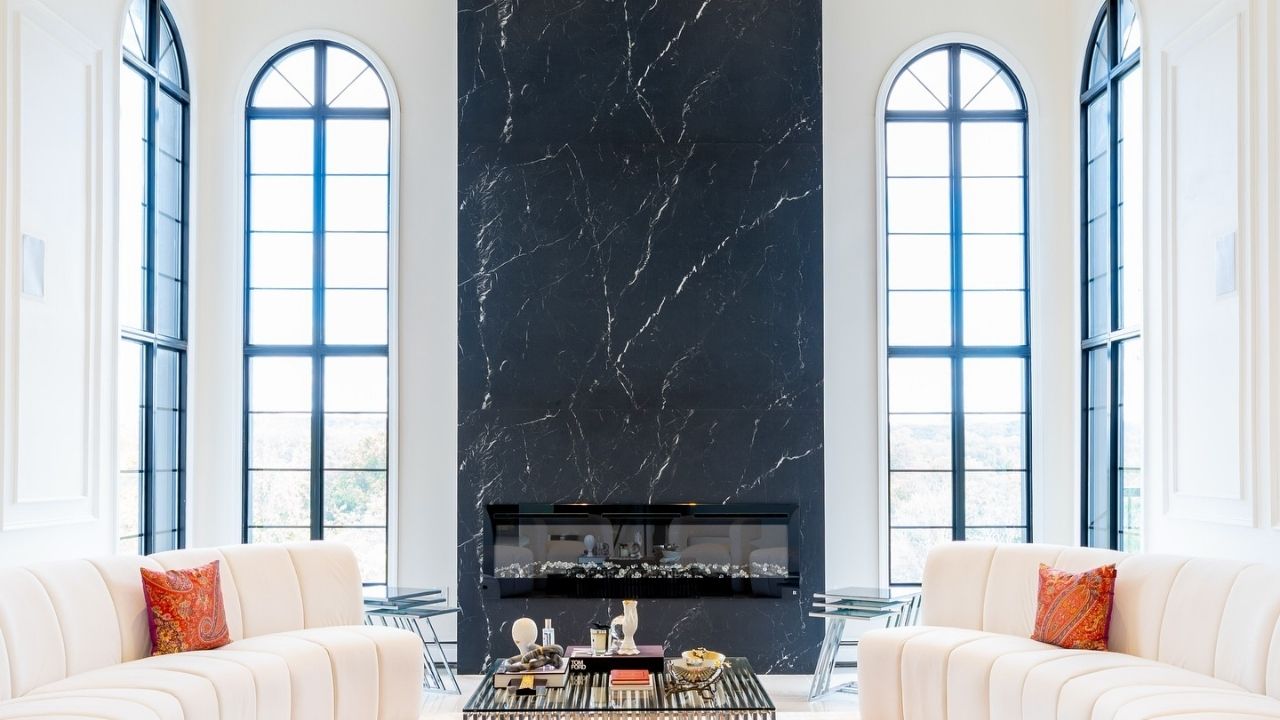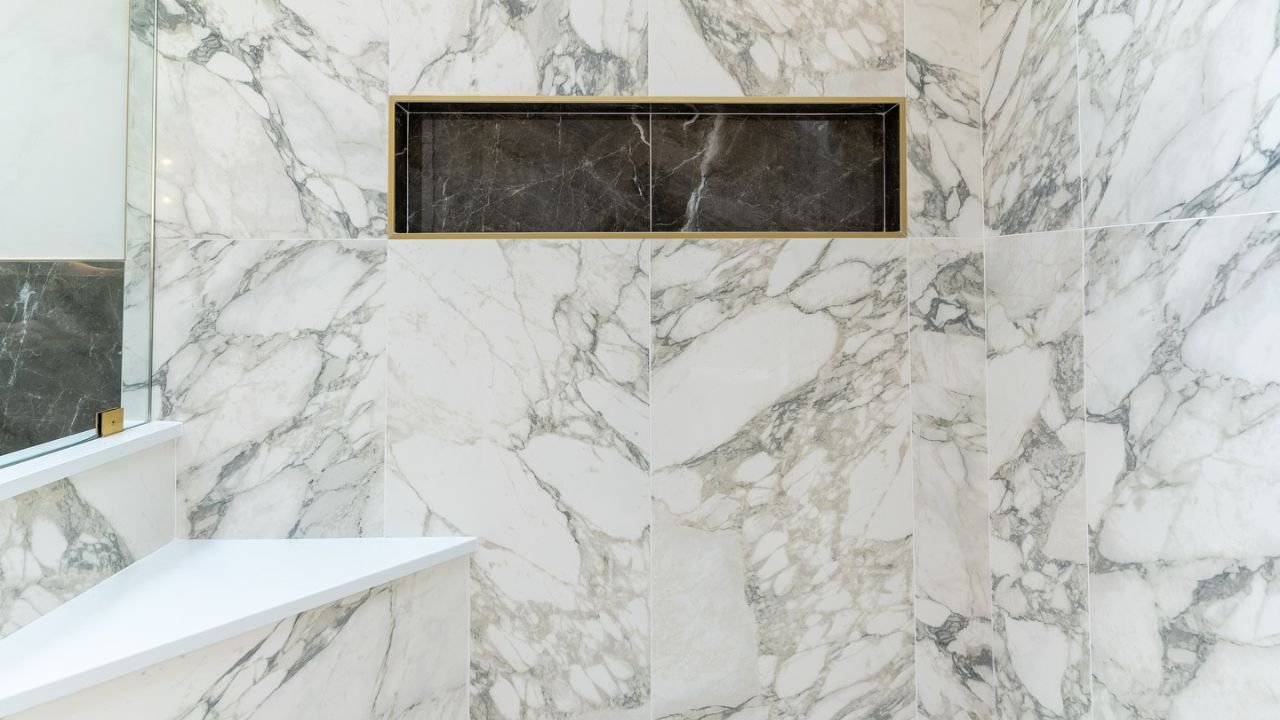

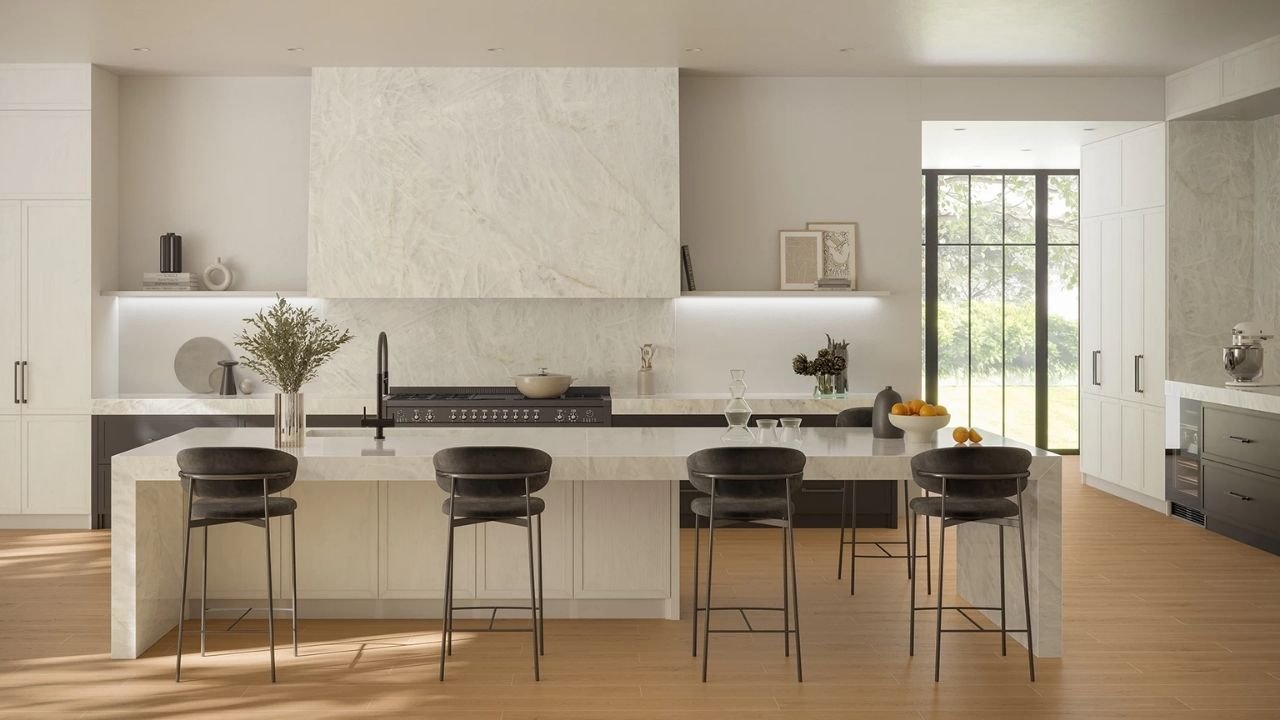
Porcelain slabs are one of the best choices for countertops. Because of their strength, thickness, durability, and low maintenance, they are the most preferred choice for many homeowners. A countertop has to handle a lot, from hot cookware to spilled coffee, acidic foods, water accumulation, and cleaning chemicals. This is why a strong surface is key to sustaining itself in such an environment. Porcelain slabs have become a popular option because they blend a hard, low-porosity surface with large formats and patterns. Also, they resemble marble, granite, or other natural stones. But are they right for every kitchen? The answer depends on how you use your countertop, the slab thickness, edge detail, and fabrication quality. Here is what homeowners should know before choosing one.
Why Are Porcelain Slabs Good for Countertops?
Porcelain is crafted from finely crushed minerals and fired at high temperatures. The process creates a thick surface that has very low porosity. This low porosity is one of the key factors that makes porcelain slabs a practical choice for countertops. Water and spills have little opportunity to soak into the countertop.
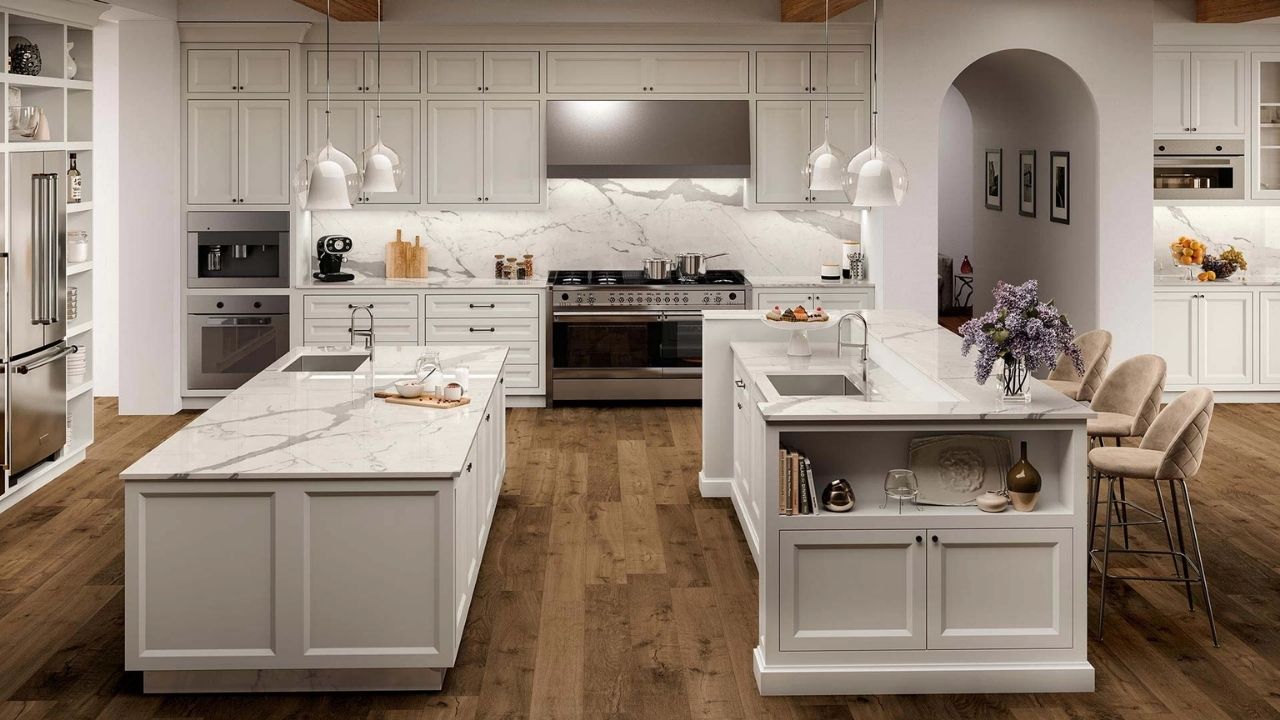
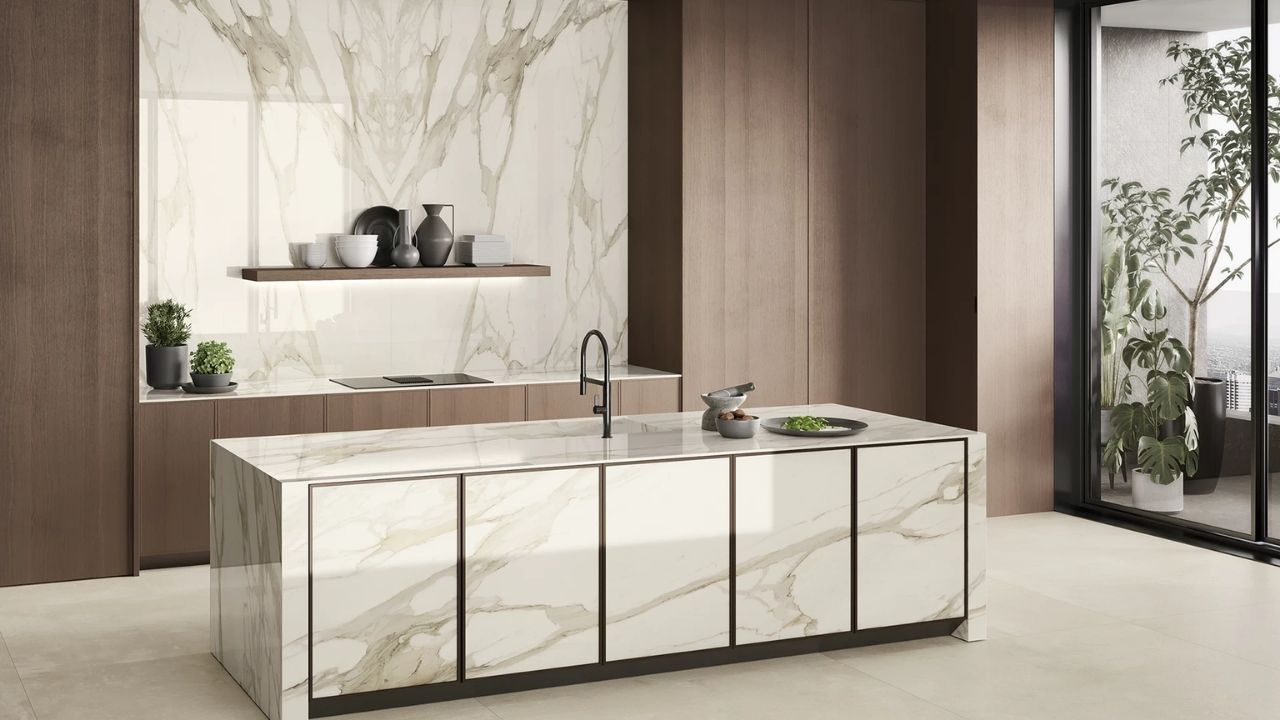
Large porcelain slabs also reduce the number of joints compared with smaller tiles. That creates a cleaner countertop surface and makes the material well suited to kitchen islands, bathroom vanities, backsplashes, and other large applications. Some current porcelain slab systems are available in formats around 5 feet by 10 feet or larger, depending on the manufacturer. But porcelain is not simply indestructible. A good outdoor kitchen countertop still depends on proper fabrication and installation.
Porcelain Has Low Porosity
Porcelain is known for its low porosity. Coffee, wine, oil, sauces, and water are less likely to penetrate a properly manufactured porcelain surface. This makes daily cleanup simple and reduces the need for special maintenance. You do not have to manage the same sealing routine required by some natural stones.
This matters in busy kitchens. A countertop should not demand special treatment every time someone prepares a meal. This low absorption also helps limit moisture from entering the slab, which can be especially useful in areas exposed to frequent water and spills.
Porcelain Has Heat Resistance
Porcelain offers an excellent heat-resistant surface, and this is because of its production method. Many porcelain countertop products are designed to resist heat and scorching. While the surface is heat-resistant, it is not immune to thermal shock.
A manufacturer may recommend a trivet or hot pad under appliances such as slow cookers, electric skillets, or deep fryers. Sustained heat in one area can create thermal stress, while a sudden temperature change can also affect a surface or its supporting structure.
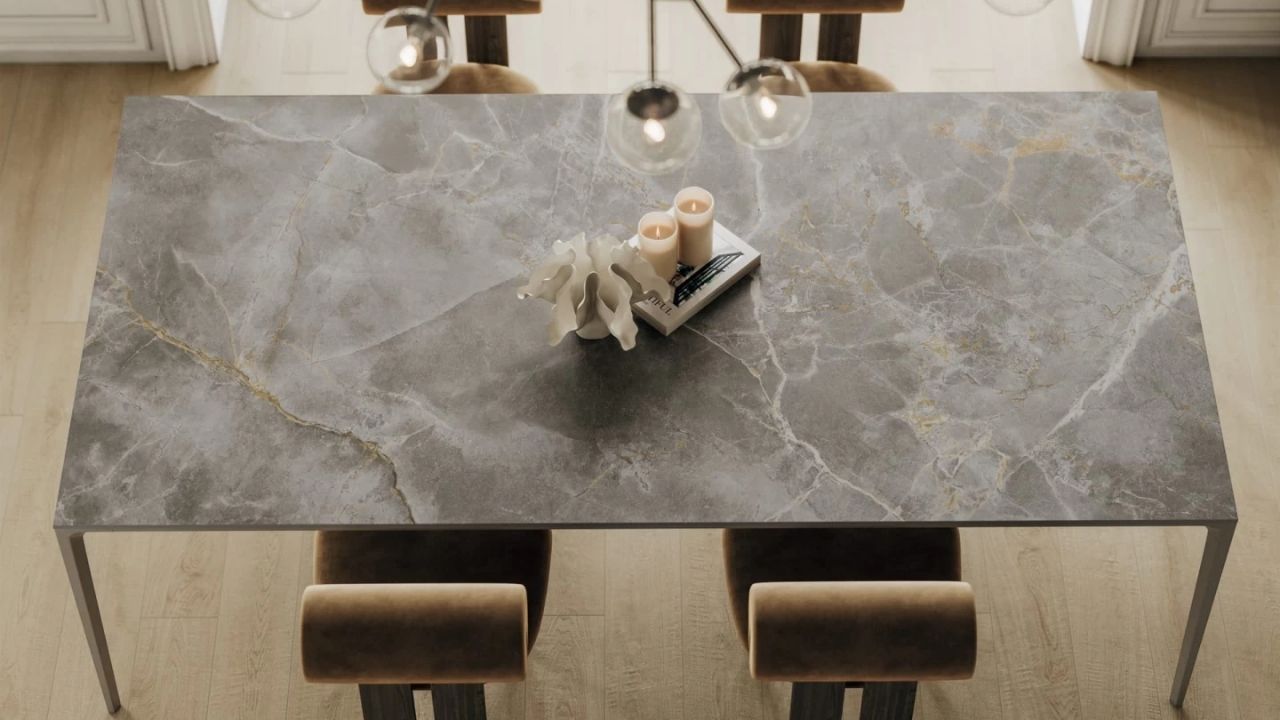
Porcelain Resists Stains and Moisture
Porcelain has a dense structure that prevents common kitchen liquids from penetrating the surface. This is especially beneficial around sinks and food preparation areas. This is why porcelain is a practical choice for bathrooms. Water, toothpaste, soap, and cosmetics can be cleaned from the surface without having to worry about routine sealing.
For homeowners who want a kitchen countertop that looks clean without a demanding maintenance schedule, this is one of porcelain’s strongest advantages. In everyday use, this means common spills can usually be wiped away before they have a chance to leave a lasting mark, making porcelain practical for busy kitchens and bathrooms.
Scratch Resistance Is Good
Porcelain offers strong resistance to everyday scratches, which makes it suitable for busy kitchen environments. However, homeowners should still use a cutting board rather than cutting directly on the countertop. This protects the countertop finish and helps preserve the sharpness of kitchen knives.
The more important concern is the edge. A countertop edge can experience concentrated force from a dropped pan, heavy object, or hard impact. Thin porcelain slabs need proper support and fabrication because the exposed edge has less material to absorb that force. This is where an experienced fabricator matters. Edge profiles, sink cutouts, corners, overhangs, and support points should match the slab manufacturer’s requirements.
What Are the Disadvantages of Porcelain Countertops?
Porcelain countertops offer many benefits, but they also have a few limitations to consider before choosing them for your space.
Edges Can Chip
The surface is highly durable, but exposed edges and corners can chip if hit by heavy or hard objects. Proper edge fabrication helps reduce this risk.
Fabrication Requires Experience
Porcelain needs skilled fabrication for cutting, polishing, mitering, and sink or cooktop cutouts. Poor fabrication can increase the risk of chips or cracks.
Thin Slabs Need Proper Support
Thinner slabs may need additional support, especially around cutouts and large overhangs. Always follow the manufacturer’s support requirements.
Thermal Shock Is Still Possible
Porcelain handles high temperatures well, but sudden temperature changes can still create thermal stress. Follow the manufacturer’s recommendations for hot cookware.

What to Consider Before Choosing a Porcelain Countertop
Before choosing a porcelain slab for your countertop, consider its thickness, edge design, cutouts, support requirements, and the experience of the fabricator. These factors can affect the countertop’s durability and long-term performance.
Slab Thickness
Porcelain slabs are available in different thicknesses, and the right option depends on the application, fabrication method, and manufacturer’s requirements. Thickness can affect handling, edge construction, support, and the overall strength of the countertop. Check the slab manufacturer’s specifications before selecting a thickness for your project.
Edge Design
The countertop edge needs careful consideration because exposed edges and corners are more vulnerable to impact. Square, eased, and mitered edges can create different looks and fabrication requirements. A properly fabricated edge can help reduce the risk of chipping and create a clean finished appearance.
Sink and Cooktop Cutouts
Sink and cooktop cutouts require precise fabrication because they create openings in the slab. These areas should be measured and cut according to the manufacturer’s requirements, with appropriate support around the opening. Professional fabrication is especially important for large or complex cutouts.
Overhang and Structural Support
Large countertop overhangs may need additional structural support to reduce stress on the porcelain slab. The amount of support required depends on factors such as slab thickness, overhang size, application, and the manufacturer’s specifications. Always confirm the support requirements before installation.
A common question when planning a countertop is, “How wide are countertops?” The answer varies depending on the application, cabinet depth, and desired overhang.
Fabricator Experience
Choose a fabricator who has experience working with the specific porcelain slab you plan to use. Proper cutting, edge fabrication, mitering, handling, and installation can help minimize the risk of chips, cracks, or other damage. Ask the fabricator to follow the slab manufacturer’s fabrication and installation guidelines.
When Are Porcelain Countertops a Good Choice?
Choose porcelain if you want:
- Low-maintenance surfaces
- High stain resistance
- Strong heat resistance
- Large-format designs
- Marble or stone-like appearance
- A surface that usually doesn’t require sealing
When Might Porcelain Not Be the Best Choice?
Porcelain may not be the best fit if:
- You want highly impact-resistant exposed edges
- Your project has unusual structural requirements
- You prefer the natural variation of stone
- You don’t have access to an experienced porcelain fabricator
- Your design requires complex cutouts or unsupported overhangs
Porcelain Countertops Are Easy To Maintain
Porcelain slabs as countertops offer convenient maintenance. You can use a soft sponge or cloth for everyday cleaning with water and a gentle, non-abrasive cleaner. Wipe spills when convenient rather than allowing food residue to build up. For everyday cleaning, use a soft sponge or cloth with water and a gentle, non-abrasive cleaner. Avoid abrasive pads, steel wool, and harsh chemical cleaners that may damage certain surface finishes.
What to Avoid When Cleaning Porcelain?
Avoid treating the porcelain countertop like an industrial workbench. Do not use:
- Steel wool or abrasive scrubbers
- Strong abrasive powders
- Harsh chemical cleaners
- Aggressive scraping tools
- The countertop as a cutting board
You should also follow the specific cleaning instructions supplied with your slab. Different finishes can have different care requirements.
Porcelain Doesn’t Require Sealing
Porcelain typically doesn’t require routine sealing because of its very low porosity. However, some installation materials, such as certain grout products, may have separate sealing requirements.
This can reduce long-term maintenance compared with natural stone surfaces that may need periodic resealing to maintain their resistance to moisture and staining.
Porcelain Vs Natural Stone Countertops
Porcelain is usually compared with granite, marble, quartzite, limestone, and travertine. Each material has a different maintenance profile. These countertop options differ in heat resistance, stain resistance, scratch resistance, sealing, and maintenance.
| Countertop Material | Heat Resistance | Stain Resistance | Scratch Resistance | Sealing | Maintenance |
| Porcelain | Excellent | Excellent | Excellent | Usually not required | Low |
| Granite | Excellent | Good–Excellent | Excellent | Often recommended | Low |
| Quartzite | Excellent | Good–Excellent | Excellent | Depends on porosity | Low–Moderate |
| Marble | Good | Moderate | Moderate | Recommended | Moderate–High |
| Limestone | Moderate | Moderate | Lower | Recommended | Moderate–High |
| Travertine | Moderate | Moderate | Moderate | Recommended | Moderate |
Performance varies by the specific product or stone, thickness, finish, fabrication, and installation. Check the manufacturer’s technical specifications before making a final selection. Granite and quartzite offer excellent durability, while marble and limestone require consistent care. The calcite-rich stones can react with acids. Limestone, for example, can etch from substances such as vinegar and lemon juice, and its porosity varies by stone.
Quartzite also deserves consideration when comparing countertop materials. According to the Natural Stone Institute, some stones sold as quartzite may be mislabeled, so homeowners should verify the stone type and its properties before buying.
Porcelain Countertops FAQS
Let’s answer your questions about porcelain slabs as countertops.
Are porcelain slabs durable enough for kitchen countertops?
Yes. Use high-quality porcelain for stronger resistance to heat, stains, moisture, and everyday scratching. Edges and cutouts need proper fabrication and support.
Do porcelain countertops scratch easily?
No. Porcelain has good scratch resistance, but for indoor or outdoor use, cutting directly on any countertop is poor practice. Use a cutting board to protect the surface and your knives.
Can you put a hot pan on a porcelain countertop?
Porcelain is highly heat-resistant, but manufacturers may still recommend trivets or hot pads to reduce thermal stress from sustained or sudden heat.
Do porcelain countertops need to be sealed?
The porcelain surface generally does not require routine sealing because it has very low porosity. Other installation materials may have separate maintenance requirements.
Is porcelain better than granite for countertops?
Neither is universally better. Porcelain offers very low maintenance and excellent resistance to stains and heat. Granite provides natural variation and strong performance with its own care requirements.
Can porcelain countertops chip?
Yes. Porcelain can chip when a hard object strikes an exposed edge or corner. Proper edge design, support, handling, and professional fabrication reduce this risk.
How thick should a porcelain countertop be?
The right thickness depends on the slab system, application, edge construction, support, and manufacturer’s requirements. Check the product specifications before selecting a thickness.
Are porcelain slabs good for kitchen islands?
Yes. Porcelain slabs can work well for kitchen islands because they offer low porosity, stain resistance, heat resistance, and large-format designs. Large islands still require careful planning for seams, cutouts, overhangs, and structural support.
Bottom Line
Porcelain slabs are a practical countertop material for homeowners who want durability, stain resistance, heat resistance, and simple maintenance. Their low porosity helps limit liquid absorption, while their scratch resistance and large-format designs make them suitable for kitchens, bathrooms, islands, and other countertop applications.
However, porcelain is not completely immune to damage. Exposed edges and corners can chip from hard impacts, while thin slabs, cutouts, overhangs, and mitered edges require careful fabrication and support.
Before choosing a porcelain slab, check the manufacturer’s specifications for thickness, support, edge fabrication, heat exposure, and maintenance. Working with an experienced fabricator can also help ensure the slab is handled and installed correctly.