
Kitchen countertops are one of the most essential parts of any kitchen. They are the most functional part of any kitchen that also works as an accent piece. It won’t be wrong to say that they influence how a kitchen will look and work. This is why looking for the right kitchen countertop options is crucial. The right countertop surface will determine how functional and durable the countertop will be. But what countertop surface option should you choose? Here is our list of kitchen countertop options, from stone, engineered surfaces, to affordable and everything in between. Continue reading the following.
Natural Stone Kitchen Countertop Options
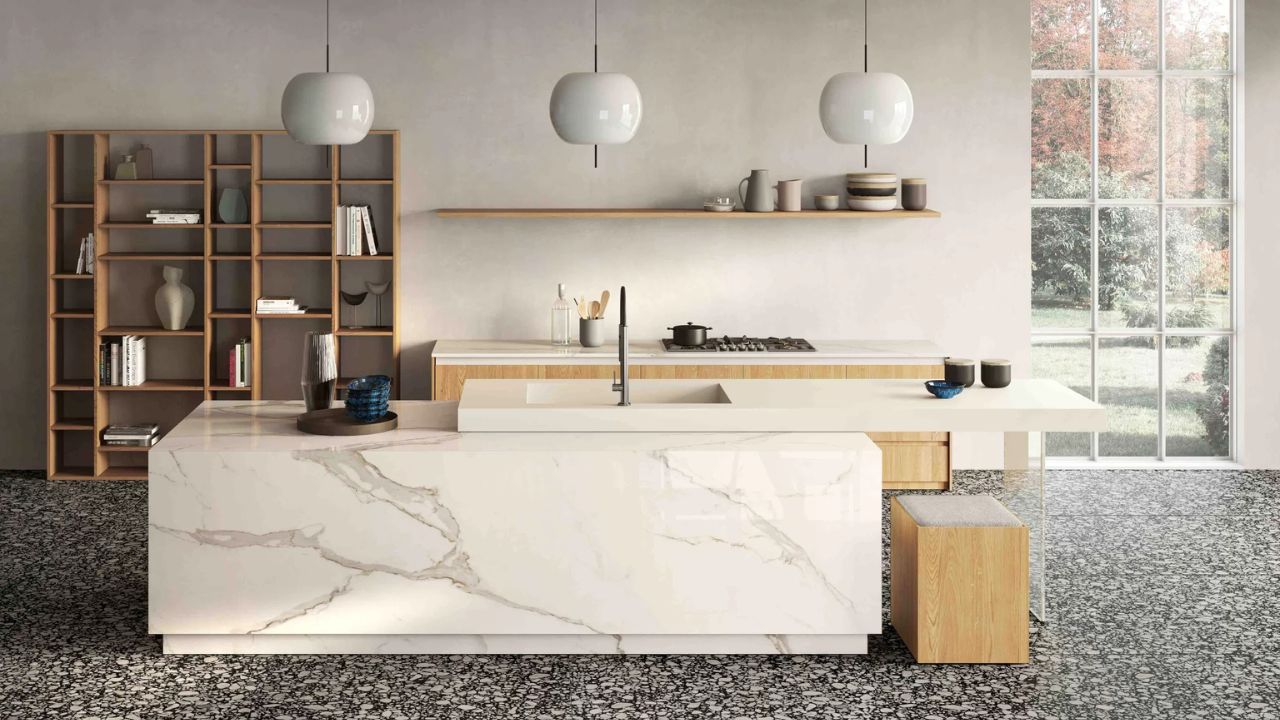
Natural stone is one of the most common kitchen countertop options to date. It has a distinct organic beauty, strength, and heat tolerance. Every natural stone slab is unique in terms of colors, surface, and veining patterns. The best thing about natural stone countertops is that they age beautifully if properly maintained. This category includes many types of stone used for interior kitchen designs.
Marble Countertops
Marble is a classic choice for kitchen countertops. The soft and stunning look features unique and naturally artistic veins. The stone is associated with luxury and often features in high-end projects. Marble countertop options are perfect in low-heat cooking areas and baking stations. Homeowners comparing Porcelain vs Marble Countertops often find marble more elegant but higher maintenance.
| Pros | Cons |
| Refined veining | Prone to etching from acids |
| Cool surface ideal for baking | Requires sealing |
| Distinct character | Scratches more easily than granite |
| Long-term aesthetic appeal | Not heat-proof |

Quartzite Countertops
Quartzite countertop is one of the strongest natural stones, sometimes outperforming Granite. This is because of the stone formation under intense heat and pressure. The crystallized surface is hard, durable, and resistant to scratches, impact, and heat.
| Pros | Cons |
| High heat resistance | Requires sealing |
| Harder than marble | Limited color range |
| Natural stone look | Rare slabs can be costly |
| Strong structural stability | Professional fabrication only |
Soapstone Countertops
Soapstone offers a matte feel and rich, deep color that darkens naturally with age. It is one of the most beautiful kitchen countertop options that you can opt for. If maintained properly, you will witness a beautiful aging surface for years to come.
| Pros | Cons |
| Non-porous surface | Soft and can dent |
| Resists stains | Limited color variation |
| No sealing required | Needs periodic oiling |
| Handles heat well | Shows wear faster |
Slate Countertops
Slate provides subtle textures and consistent grays, greens, and blacks. This natural stone countertop slab has a low absorption rate and is durable. However, they can chip, especially around the edges, and are softer than granite.
| Pros | Cons |
| Naturally non-porous | Edges can be brittle |
| Stain resistant | Less pattern variety |
| Low maintenance | Not suitable for large spans |
| Affordable for stone | Can scratch |
Granite Countertops
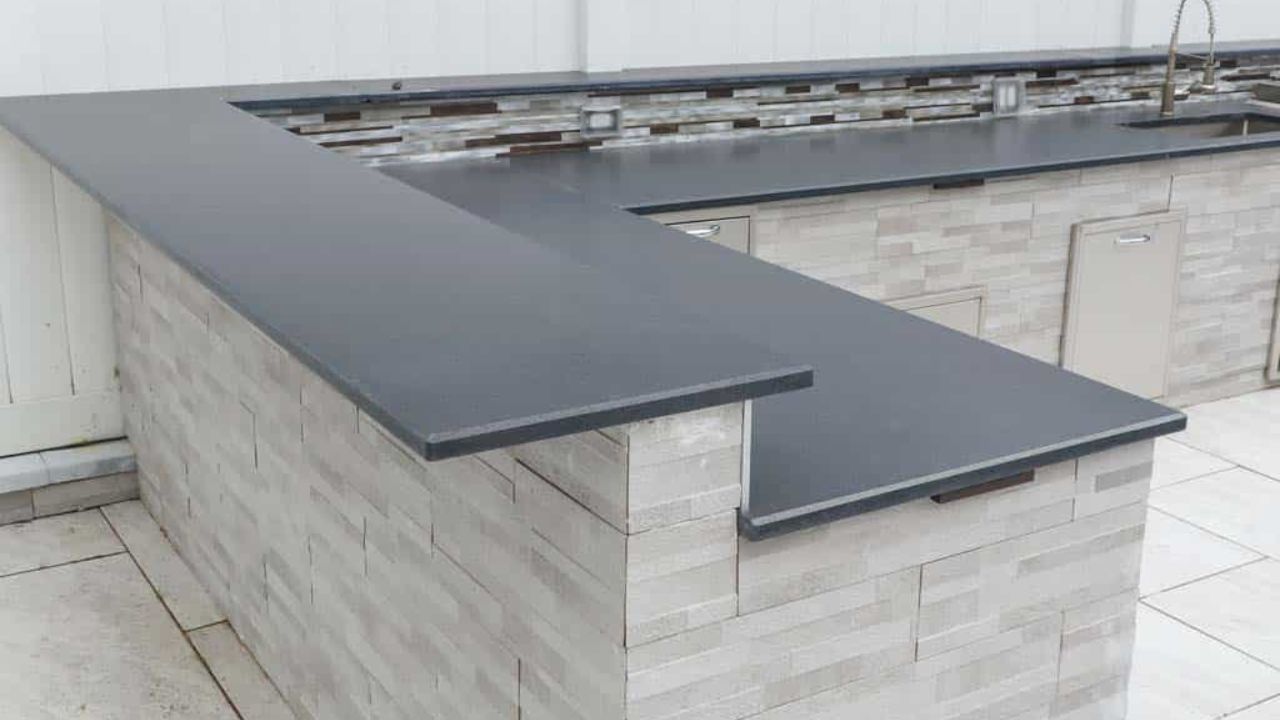
Granite is one of the most popular and rugged options for kitchen countertops. It comes in a wide range of colors and surface types. The absolute black granite countertops come with natural texture and durability due to its formation. It can resist heat and heavy usage effectively without showing signs of wear and tearing. Granite also pairs beautifully with combinations like dark brown cabinets with black countertops, creating dramatic and contemporary kitchens.
| Pros | Cons |
| Withstands heat | Needs periodic sealing |
| Resists scratches | Variation may complicate design matching |
| Strong and durable | Can chip if struck with force |
| Enhances resale value | Professional installation required |
Travertine Countertops
Travertine kitchen countertops, though not very common they work great even in a busy kitchen environment. It has warm, earthy tones that soften modern kitchens. The stone can resist water effectively and efficiently. Not only that, but travertine can also resist direct heat. It will not crack or show signs of damage easily.
| Pros | Cons |
| Warm appearance | Needs sealing and filling |
| Natural beauty | Pores trap debris |
| Lightweight stone | Less durable than granite |
| Affordable | Susceptible to acids |
Onyx Countertops
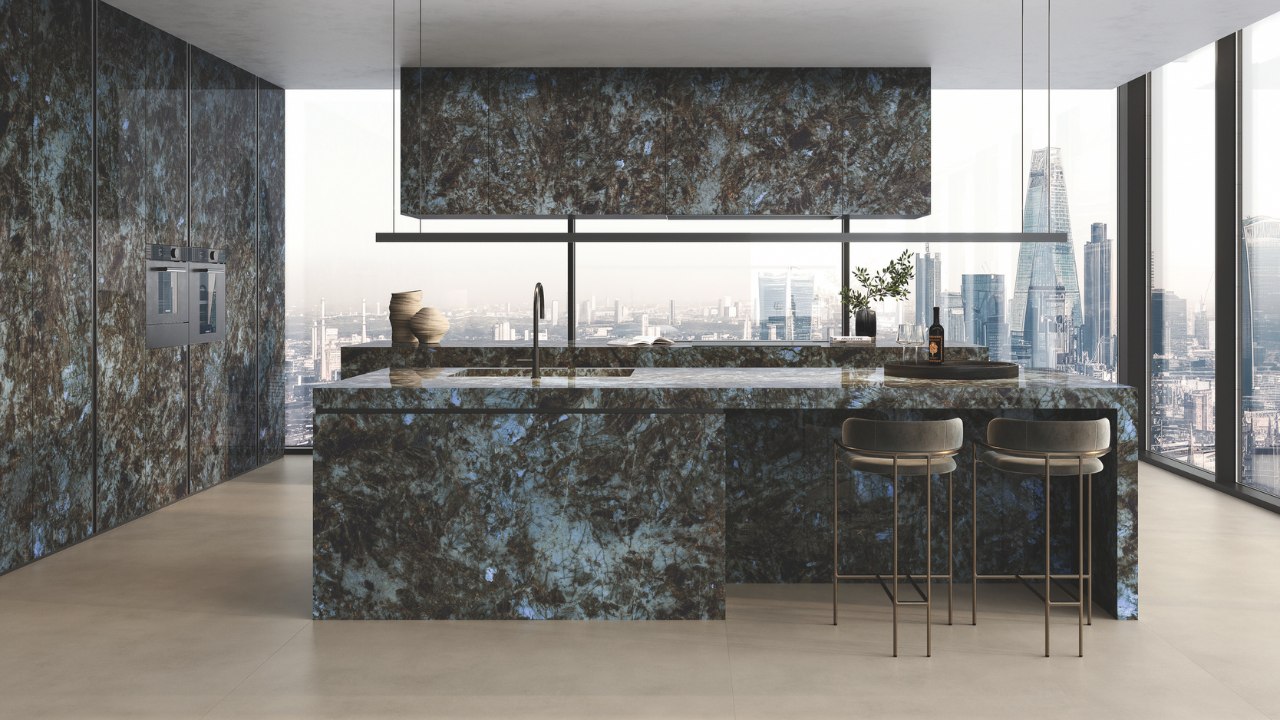
Onyx is a translucent stone that works well with backlighting. Which means the light can go through the surface. It is popular for its stunning and subtle beauty that is often mistaken for marble. Though not as durable as granite or quartzite but with propper care and sealing, it can perform efficiently with proper care and sealing. This is one of those kitchen countertop options that doesn’t just look beautiful but withstands scratches and heat once sealed.
| Pros | Cons |
| Unique translucent quality | Softer and fragile |
| Creates dramatic lighting | Requires reinforcement |
| Rare and luxurious | Scratches easily |
| Distinct colors | High installation cost |

Limestone Countertops
Limestone countertop provides a soft, natural appearance with muted tones. If you can properly maintain they will add great value to any space. However, the surface is porous, which means it is prone to chipping. Also, without sealing, it cannot withstand scratches and direct heat exposure.
| Pros | Cons |
| Gentle, organic look | Prone to etching |
| Blends with many styles | Needs sealing |
| Smooth texture | Less durable |
| Natural variation | Not heat-proof |
Dolomite Countertops
Dolomite is another popular stone that offers the beauty of marble but with a more durable surface than marble. The Dolomite is one of those kitchen countertop options that sits between marble and quartzite in durability. It is still the best countertop option compared to other materials like limestone.
| Pros | Cons |
| More durable than marble | Can etch over time |
| Softer veining | Limited color range |
| Cost-effective alternative | Needs sealing |
| Balanced hardness | Requires maintenance |
Engineered Surfaces
Unlike natural stone, engineered surfaces are crafted with byproducts of different natural stones artificially. The resulting surface is exceptionally durable and aesthetically versatile. These materials provide uniform color options, reliable durability, and predictable performance.
Quartz (Engineered Stone)
Quartz kitchen countertops offer the greatest durability, which is just a little lower than porcelain. It is popular for a stunningly white surface that resembles granite. Quartz combines natural stone particles with resins to produce a non-porous, low-maintenance surface. Quartz is one of the best kitchen countertop options that withstand heavy usage, scratches, and wear. However, when comparing Sintered Stone vs Quartz Countertops, quartz is less heat-resistant because direct heat exposure may fade or yellow the surface.
| Pros | Cons |
| No sealing required | Not fully heat-proof |
| Resists stains | UV exposure may discolor |
| Wide color range | Visible seams on long spans |
| Uniform patterns | Higher cost for premium brands |

Porcelain Slabs
Porcelain slabs are one of the most durable and strongest kitchen countertop options. Thanks to its high-temperature crafting methods, it has a thick and durable surface. Porcelain and Sintered Stone can withstand high temperatures and resist UV rays. It is the best choice for a busy kitchen due to its scratch, heat, and stain resistance. Porcelain kitchen countertops can also withstand moisture exposure, which makes it easy to maintain the surface in kitchens.
| Pros | Cons |
| Heat resistant | Requires skilled installers |
| UV stable | Brittle edges if mishandled |
| Very thin options | Limited thickness profiles |
| Hygienic surface | Cost varies by brand |
Solid Surface (Corian-Type)
They are created with acrylic polymer and natural minerals like aluminum trihydrate. The resulting surface is a non-porous and durable countertop slab. Solid surface materials are one of those kitchen countertop options that create seamless installations with integrated sinks.
| Pros | Cons |
| Seamless joints | Can scorch |
| Easy to repair | Scratches more than quartz |
| Smooth matte look | Not heat-resistant |
| Many color options | Synthetic feel |
Terrazzo Countertops
Terrazzo combines chips of marble, glass, or quartz with a cement or epoxy binder. It is a unique surface for kitchen countertops, offering durability and a resilient surface that looks good, too. The Terrazzo kitchen countertops are easy to maintain when sealed properly.
| Pros | Cons |
| Distinct speckled look | Heavy |
| Durable | Requires sealing (cement-based) |
| Customizable | High installation cost |
| Long lifespan | Can crack if not reinforced |
Epoxy Resin Countertops
Epoxy creates a glossy surface and supports custom patterns. This is one of those kitchen countertop options that offer a beautiful, functional surface effortlessly. The non-porous surface is resistant to moisture, but you have to take care when dealing with direct heat.
| Pros | Cons |
| Seamless finish | Can yellow under UV |
| DIY-friendly | Not fully heat-proof |
| High gloss | Chips if hit hard |
| Non-porous | Hard to repair |
Engineered Marble
Engineered marble gives a marble-like appearance with added binders. The material is perfect for homeowners who prefer natural stone aesthetics and feel, but without the maintenance requirements of actual stone. If you are looking for kitchen countertop options that are engineered but don’t look fake, then an engineered marble countertop will be the best choice.
| Pros | Cons |
| Uniform veining | Less durable than quartz |
| More affordable | Can stain |
| Lighter than natural marble | Not heat-resistant |
| Many finishes | Limited color depth |
Recycled Glass Countertops
Recycled glass countertops embed glass chips in resin or cement. The resulting surface is a beautiful and non-porous surface that is resistant to scratches, stains, and bacteria. These kitchen countertop options are eco-friendly and help to reduce waste in landfills.
| Pros | Cons |
| Eco-friendly | Resin versions scratch |
| Bright, modern look | Cement versions need sealing |
| Unique patterns | Glass chips may loosen over time |
| UV stable | Custom slabs cost more |
Paper Composite (PaperStone)
Paper composite uses compressed recycled paper and resin. The surface is resistant to wear and feels warm. It is a great alternative to quartz and granite kitchen countertops. Thanks to its non-porous surface, which will not absorb any moisture into its surface.
| Pros | Cons |
| Sustainable | Not fully heat-proof |
| Matte appearance | Can scratch |
| Warm texture | Limited color options |
| Lightweight | Needs care with moisture |
Ultra-Compact Surfaces (Dekton, Neolith)
These surfaces form under high heat and pressure. These kitchen countertops are highly durable and resistant. However, these slabs are thicker and heavier. They require precise and expert installation, which makes it an expensive choice for a kitchen countertop.
| Pros | Cons |
| Highly heat-resistant | Hard to cut onsite |
| UV stable | Expensive fabrication |
| Scratch resistant | Limited edge profiles |
| Non-porous | Skilled installation needed |
Budget-Friendly Countertops
These materials offer reliable performance with lower upfront costs. Budget-friendly kitchen countertop options don’t mean cheap. You cannot compare them with stone like marble or granite, or surfaces like porcelain or quartz. But they are still functional and good choices as a kitchen countertop.
Laminate Countertops
Laminate remains one of the most affordable surfaces. They are easy to craft with a layer of paper, and they are easy to install. However, they are only good for low usage kitchens. Laminate kitchen countertops offer aesthetic versatility, but they are not durable enough for heavy usage.
| Pros | Cons |
| Low cost | Vulnerable to heat |
| Wide design range | It can swell if water penetrates |
| Lightweight | Scratches easily |
| Easy installation | Shorter lifespan |
Ceramic Tile
Tile supports varied colors and patterns. Ceramic tile is one of the best kitchen countertop options that offer strength and beauty. Ceramic tiles can withstand scratches and direct heat effortlessly. Also, the tile is non-porous, which makes it the best choice for against water spills. However, the surface can be easily affected by heavy impact.
| Pros | Cons |
| Affordable | Grout needs maintenance |
| Heat resistant | Uneven surfaces |
| DIY-friendly | Tiles can crack |
| Many designs | Not seamless |
Large Format Tile
Large tiles reduce grout lines and create sleek surfaces. They can be some of the best kitchen countertops. If you opt for the right tiles, they can create a stunning countertop surface. Large format tiles are the perfect choice for a waterfall countertop. They also allow homeowners to achieve precise countertop sizes when designing custom kitchen layouts.
| Pros | Cons |
| Fewer grout lines | Requires leveling |
| Modern look | Fragile edges |
| Budget-friendly | Heavy |
| Many finishes | Needs skilled placement |
Butcher Block
Butcher block warms the kitchen visually and supports easy sanding. They add warmth and organic beauty, and feel to any kitchen space. They offer durability once they are properly sealed.
| Pros | Cons |
| Natural warmth | Needs oiling |
| Can be refinished | Vulnerable to moisture |
| Affordable | Scratches |
| Easy cutting surface | Not heat-proof |
Prefabricated Quartz/Granite
Prefab slabs reduce cost while offering real stone. They have factory-finished and cut for standard dimensions. They are quite affordable kitchen countertop options that one can opt for.
| Pros | Cons |
| Lower cost | Limited sizes |
| Faster installation | Simple edge profiles |
| Real stone options | Seams may be visible |
| Good durability | Fewer colors |
Wood, Metal, and Specialty Countertops
These surfaces create strong visual statements or support specific cooking habits. These kitchen countertops create not only an aesthetic look but also offer great functionality according to the cooking environment.

Stainless Steel Countertops
Stainless steel fits professional cooking spaces and matches modern dimensions, especially when planning kitchen counter dimensions or exploring standard kitchen counter depth. These countertops are perfect kitchen options with low maintenance requirements. The surface is non-porous, resists scratches, but the shiny surface is a fingerprint magnet.
| Pros | Cons |
| Heat resistant | Shows fingerprints |
| Hygienic | Scratches |
| Seamless fabrication | An industrial look may not suit all homes |
| Strong | Can dent |
Copper Countertops
Copper offers warm tones that develop patina over time. It is an extremely antibacterial and low-maintenance material.
| Pros | Cons |
| Antimicrobial | Reacts with acids |
| Unique warmth | High maintenance |
| Forms natural patina | Soft surface |
| Easy to bend into shape | Cost varies |
Zinc Countertops
Zinc darkens with time and creates an organic finish. It is also an antimicrobial surface that is non-porous. The moisture and water spills cannot seep into the surface.
| Pros | Cons |
| Forms natural patina | Soft and dents |
| Antibacterial | Needs regular care |
| Warm silvery tone | Expensive |
| Custom shapes | Not heat-proof |
Live Edge Wood Slabs
Live edge slabs act as focal pieces in rustic or modern spaces. They are crafted from live natural wood slabs. They retain the original and raw beauty.
| Pros | Cons |
| Distinct character | Needs sealing |
| Natural grain | Vulnerable to moisture |
| Can be refinished | Heavy |
| Custom shapes | Can warp |
FAQs About Kitchen Countertop Options
What type of countertop is best for a kitchen?
Granite, due to its cost, scratch and high heat resistance properties.
Which countertop is the most durable?
Quartzite, granite, and ultra-compact surfaces offer the strongest durability for everyday kitchen use.
Which countertop requires the least maintenance?
Quartz, porcelain slabs, and stainless steel require the lowest maintenance.
What is the cheapest countertop option?
Laminate is the cheapest and most affordable kitchen countertop option you can go for.
Which countertop is best for heat resistance?
Granite, soapstone, quartzite, stainless steel, and sintered stone handle heat reliably.
Which surface is best for sustainability?
Recycled glass, paper composite, reclaimed wood, and eco-terrazzo are the most eco-friendly surfaces.
Bottom Line
Kitchen countertop materials offer different levels of durability, appearance, maintenance, and cost. Natural stone countertops offer unique beauty and strength. Engineered surfaces offer consistency and low maintenance. Budget-friendly options provide functionality within the budget.
Specialty materials create strong design identities, while eco-friendly surfaces reduce environmental impact. You can choose the best material according to your kitchen’s functionality and your requirements.