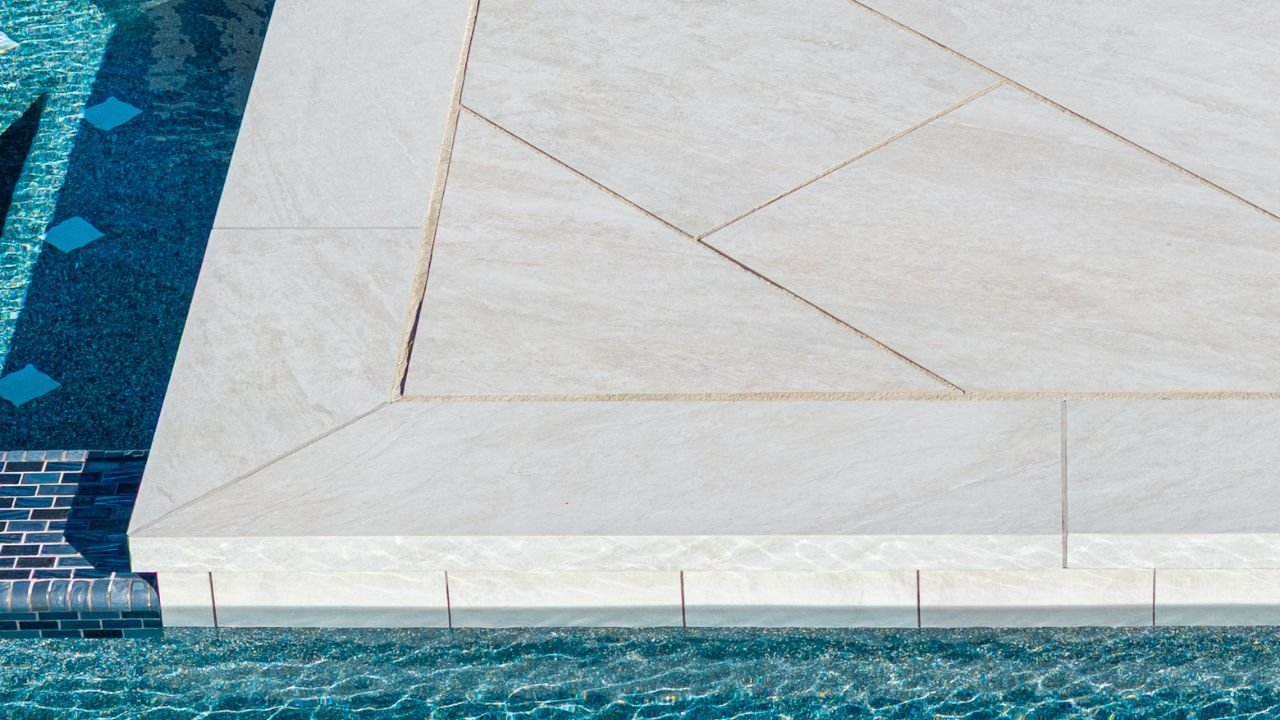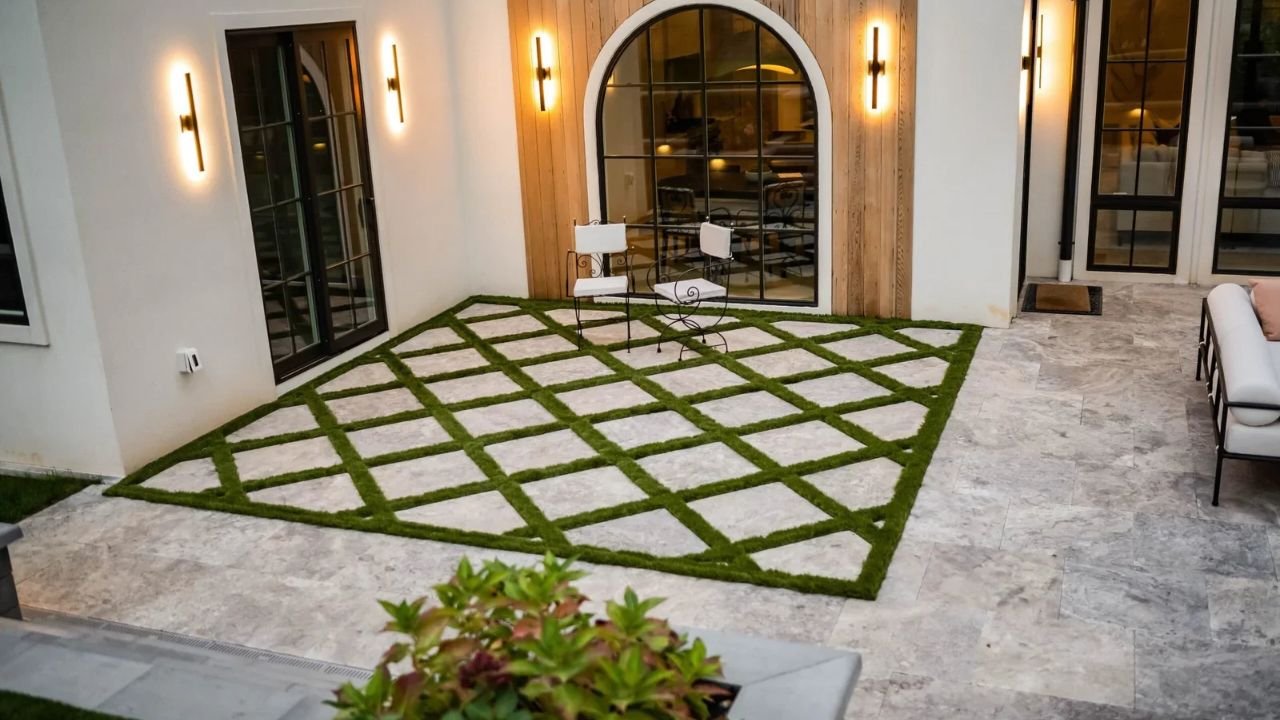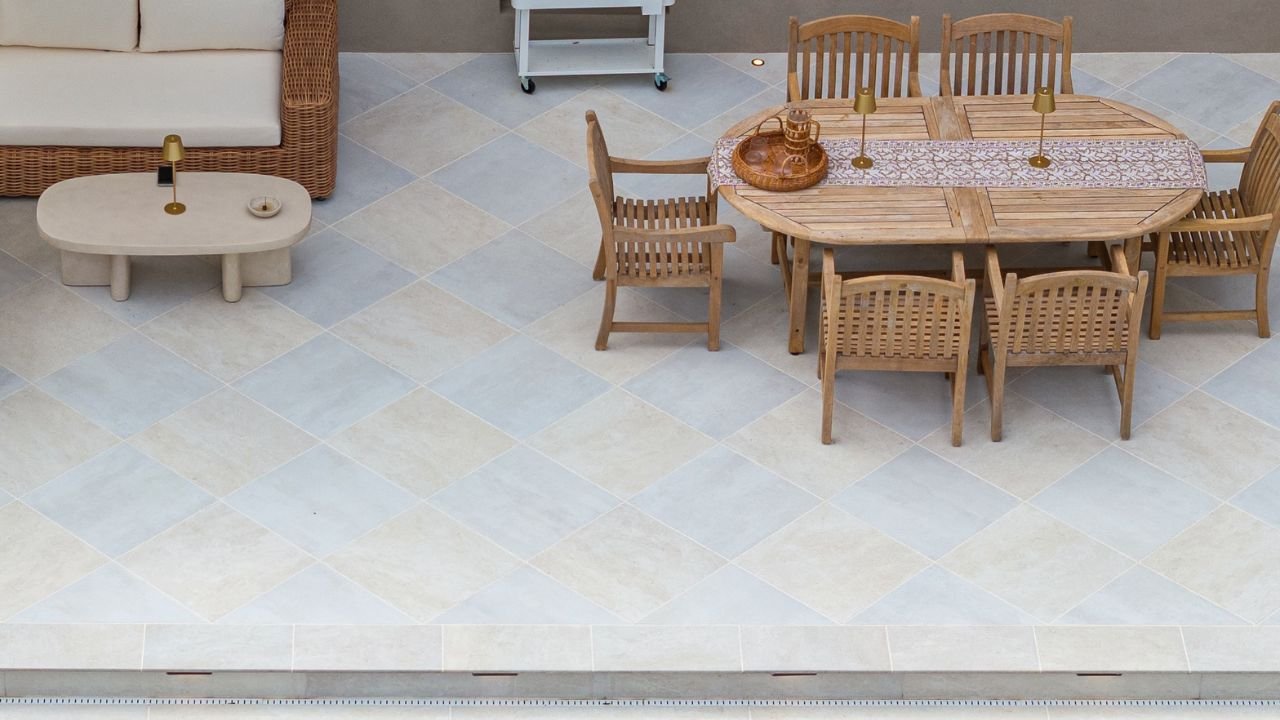

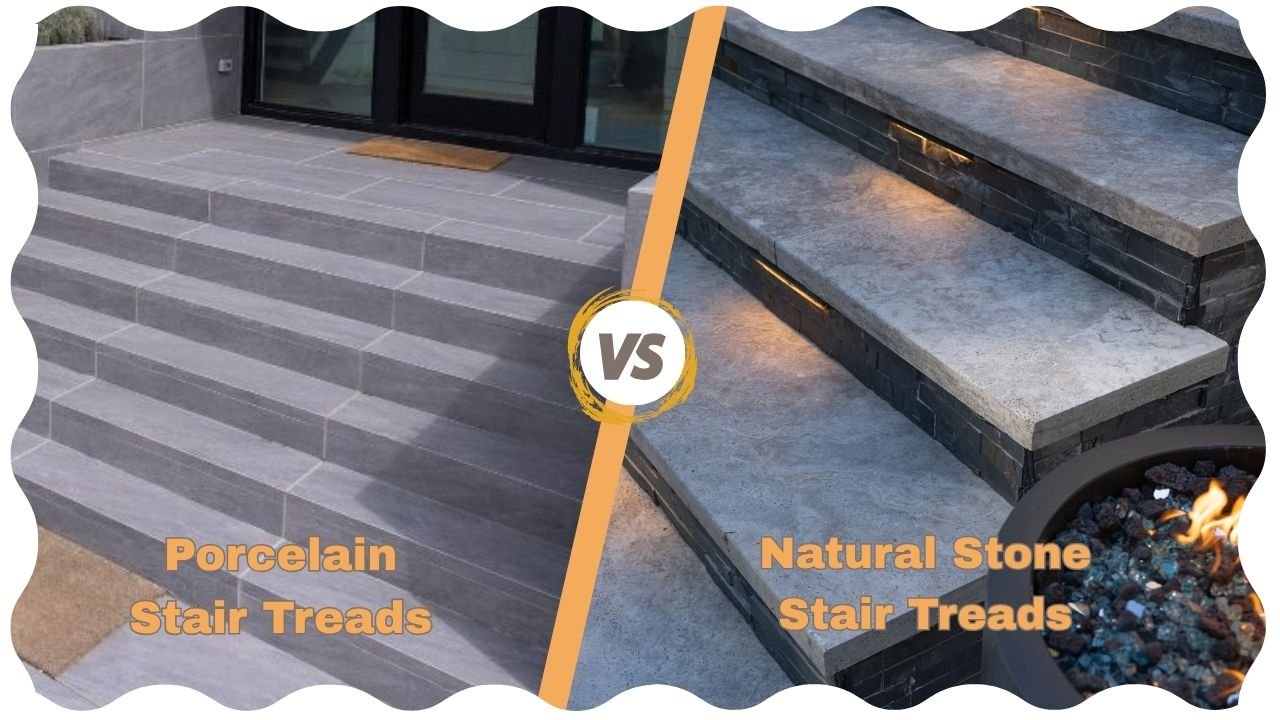
Outdoor treads have to withstand harsh outdoor elements consistently, from dirt to exposure to sun, rain, and freeze-thaw cycles. Materials like porcelain and natural stone can both be used as treads, and they add unique personality to treads. However, depending on the finish and installation system of the specific product, the performance will vary. Homeowners comparing outdoor stair treads should evaluate factors like tread edges, weather resistance, maintenance, and total installed cost. Just keep in mind that no material is universally better than others.
What Is the Difference Between Porcelain and Natural Stone Stair Treads?
Both materials can be used as stair treads, but their outdoor performance is drastically different. Here is a table comparing both materials so homeowners can have a better idea.
| Factor | Porcelain stair
treads |
Natural stone stair
treads |
| Appearance | Consistent colors, patterns, and manufactured stone-look designs | Natural veining, grain, and color variation |
| Dimensions | Generally uniform factory sizing | Depends on fabrication and stone characteristics |
| Wet traction | Depends on the specific texture and tested performance | Depends on stone type and finish |
| Weather resistance | Exterior-rated products can offer very low water absorption | Varies by stone type, porosity, and weather exposure |
| Maintenance | Usually straightforward routine cleaning | May require stone-specific cleaning or sealing |
| Edge design | Available with specialized tread profiles or separate nosing pieces | Can be fabricated with bullnose, eased, or other suitable edges |
| Cost | Varies by product, profile, and installation system | Varies by stone, thickness, fabrication, and installation |
| Best fit | Consistent modern designs and predictable sizing | Natural character and a traditional or organic appearance |
Porcelain stair treads are manufactured from ceramic materials and fired at high temperatures. This results in a dense surface that is highly durable and water-resistant. It offers consistent dimensions and appearance. On the other hand, natural stone treads are crafted from natural stones like granite, marble, limestone, and travertine. Their physical properties and appearance depend on the stone type, source, and finish.
Porcelain is a consistent material, while the others offer natural variations. Porcelain offers predictable sizing and repeatable colors, while the natural stones offer natural patterns and textures. Natural stone varies in pattern, color, and texture from piece to piece.
Which Material Grips Better on Wet Outdoor Stairs?
The finish determines slip resistance, not just the material. ANSI A326.3 measures the dynamic coefficient of friction (DCOF) of hard-surface flooring. A wet DCOF of 0.42 or higher is associated with the Interior, Wet use classification, but it does not establish suitability for every outdoor stair application. NT Pavers’ porcelain test results report a wet DCOF greater than 0.42, an R11 classification under DIN 51130, and an A+B+C classification under DIN 51097. Natural stone traction also varies by finish: Afyon Ice Marble measures 0.77 with a sandblasted finish and 0.54 with a tumbled finish. Ask the stone supplier for the test results for your selected product and finish, and confirm its suitability for exterior stairs.
Natural stone grips through its finish. Granite treads with a thermal top surface add slip resistance. Polished and honed faces turn slick when wet, so skip them on exterior steps.
Which Material Handles Freeze-Thaw Better?
Low water absorption can help reduce moisture-related freeze-thaw damage, but it does not guarantee performance on its own. NT Pavers’ porcelain test results report water absorption of 0.1% or less and compliance with the reported frost-resistance test. Check the specific product’s test documentation and exterior-use suitability before installation.
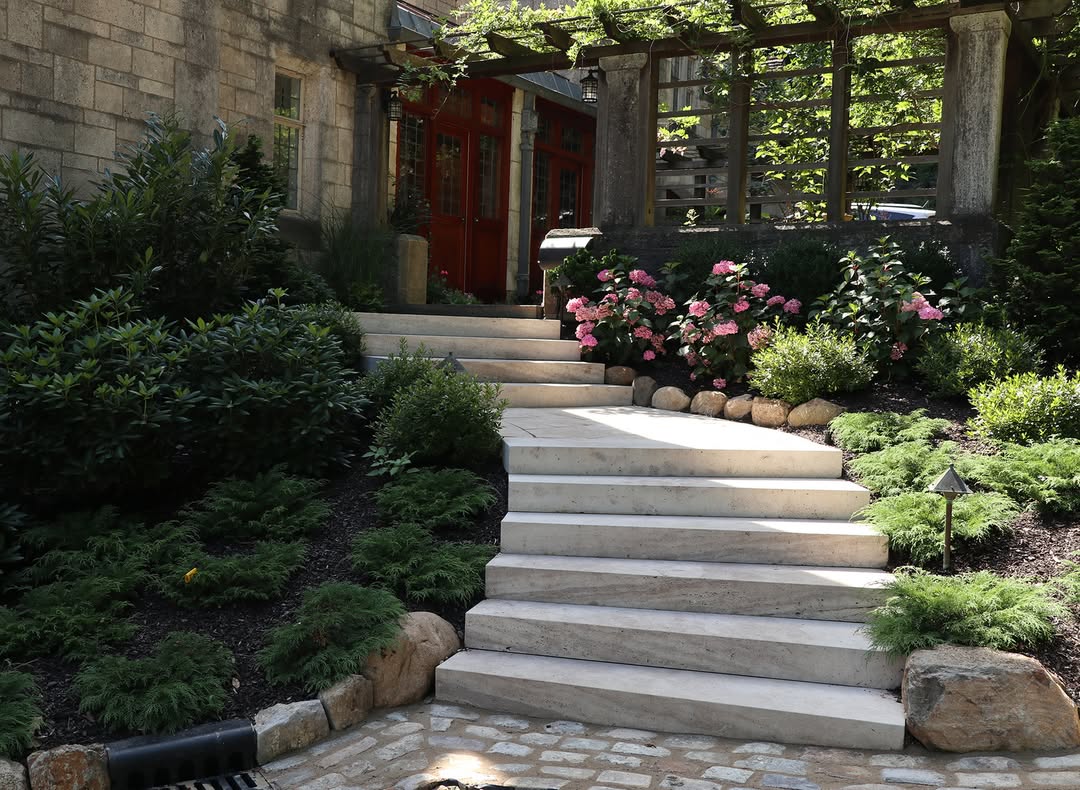
Travertine has a higher water absorption rate than many dense stones, but absorption alone does not determine freeze-thaw performance. NT Pavers’ test results report absorption values of 0.80% for Ivory Travertine, 1.09% for Silver Travertine, and 0.98% for Walnut Travertine. All three products are listed as having passed freeze-thaw testing. In regions exposed to repeated freezing, request the specific product’s test documentation before selecting a stone tread.
Granite is one of the lowest water-absorbing stones material compared to travertine stair treads, which means it resists freeze-thaw distress better. In a region with repeated freezing, request freeze-thaw test data before you order any porous stone.
How Do the Stair Treads Edges Compare?
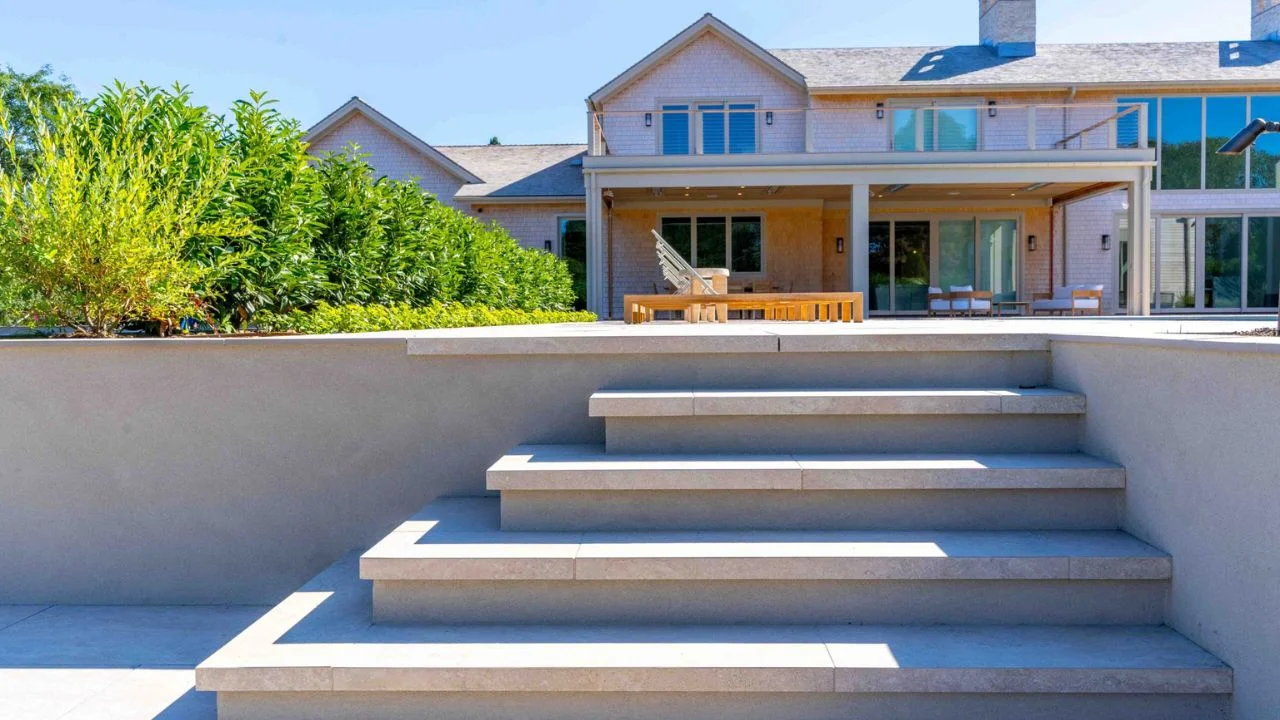
The tread edges take the most damage on any stairs. Manufacturers sell 20mm porcelain treads with a finished bullnose front edge and a matte surface, produced to order. Build lead time into your schedule. A tread cut and mitered from standard tile leaves a seam at the nosing. Stone fabricators cut treads from one piece. Homeowners can choose a bullnose edge, which has a rounded profile, or a mitered edge, where two pieces are cut at an angle and joined to create a corner. An eased edge, by contrast, has a slightly softened corner. A 3cm stone tread commonly pairs with a 1 in. nosing overhang.
Building rules also shape the edge. The IRC stair requirements set a maximum riser of 7¾ in. and a minimum tread depth of 10 in. Treads under 11 in. deep require a nosing between ¾ in. and 1¼in. The largest riser, tread depth, or nosing projection in a flight cannot exceed the smallest by more than ⅜in. Local codes control these measures, so confirm with your building department.
What About Weight and Installation?
Natural stones are heavy. A 48 x12 x 2 inches bluestone tread can weigh up to 75 pounds. You should plan for two installers. Granite treads reach lengths up to 10 feet, and long treads cut the number of grout joints on a wider stair. However, porcelain weighs less comparatively and installs faster. Both materials require full support under the full tread. A hollow spot or not enough support underneath the nosing results in cracks. For more installation guidance, read our guide on how to build steps with pavers.
How Should You Choose Between Porcelain and Natural Stone?
To choose between porcelain and natural stone outdoor stair treads, consider the project’s priorities to narrow your options. Don’t follow a general claim that one material is better.
Choose Porcelain Stair Treads If:
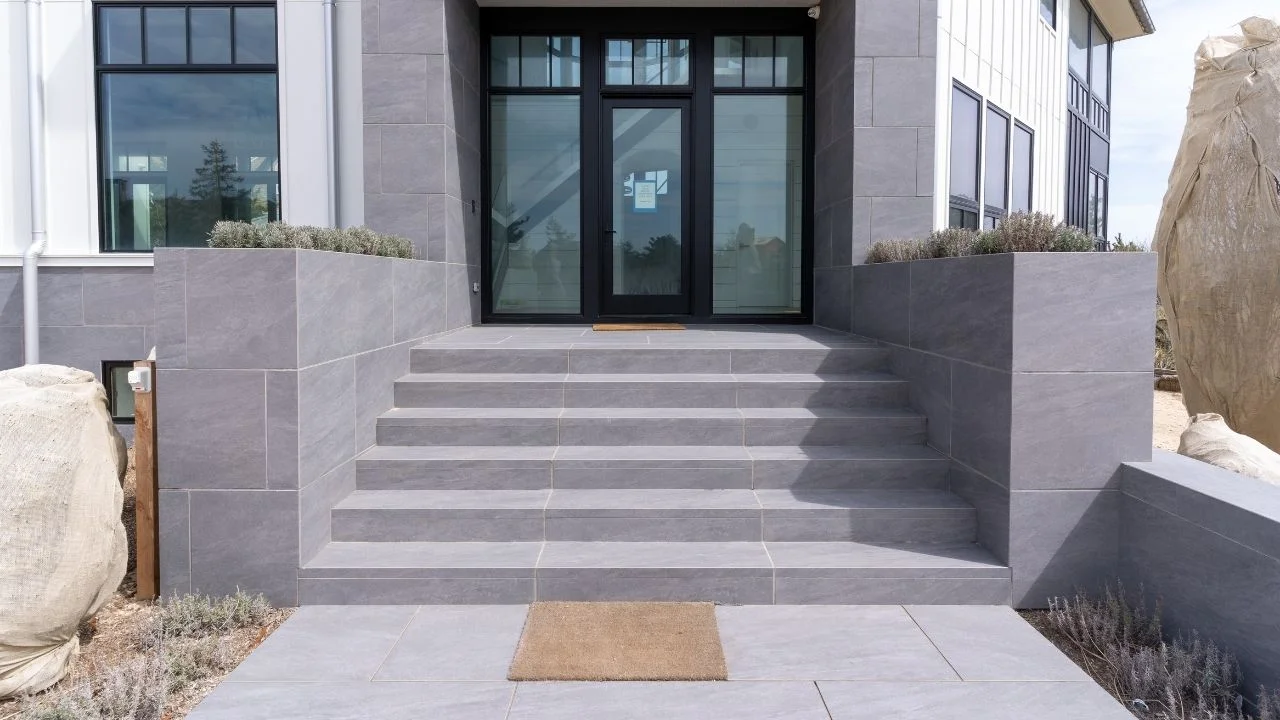
- You want consistent dimensions and repeatable colors.
- Low routine surface maintenance is a priority.
- You prefer a contemporary design or a coordinated porcelain paving system.
- You can source a product specifically suitable for exterior stairs and wet conditions.
Choose Natural Stone Stair Treads If:
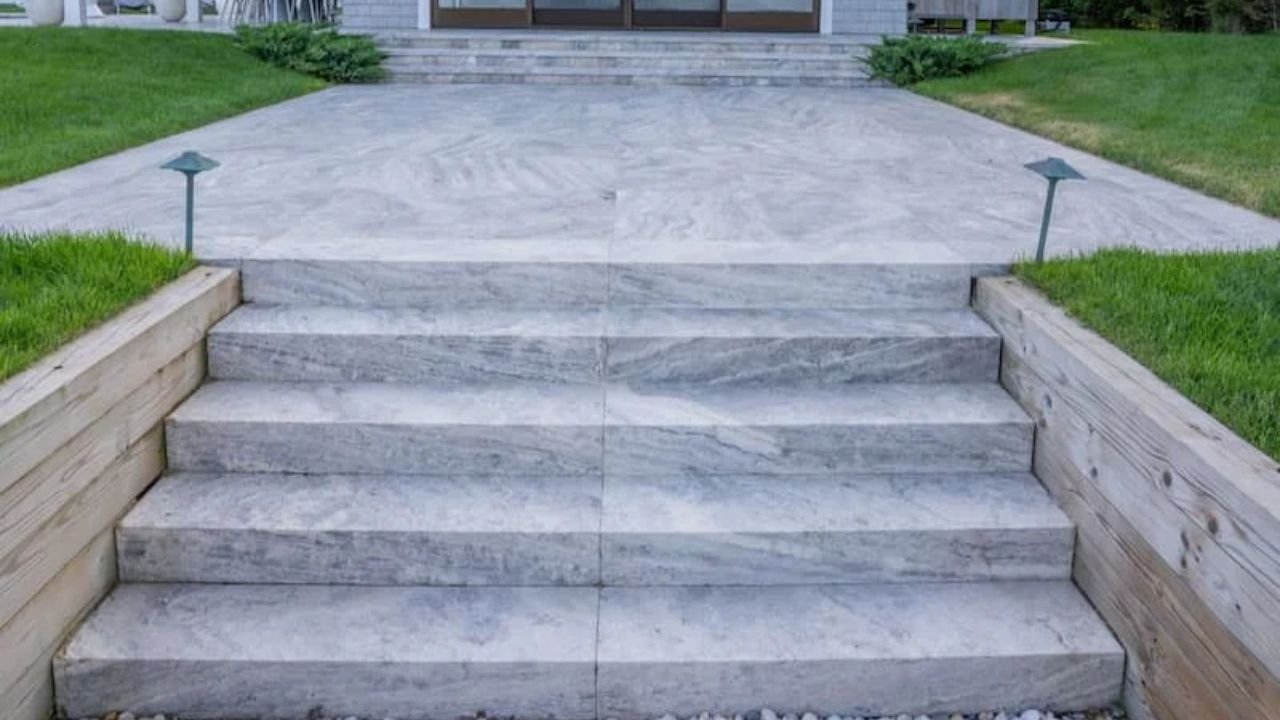
- You prefer authentic grain, color variation, and natural texture.
- The selected stone’s strength and weathering properties suit the exposure.
- You want custom-fabricated edges or a particular natural finish.
- You are comfortable following stone-specific cleaning and sealing guidance.
However, NT Pavers recommends obtaining a real-life sample of your selected material with the actual finish and evaluating it with the technical documentation. Inspect the finish under wet conditions, using a safe test arrangement rather than walking on a wet sample positioned precariously. If you are coordinating the stairs with a patio or pool surround, then compare the stair tread and neighboring paving as separate products. The finishes, thickness, and installation requirements may be different even if the colors match. For sloped landscapes, see our guide on how to build steps on a hill with pavers for planning hillside steps, preparing the base, and managing drainage.
NT Pavers’ guide to creative step designs using porcelain or stone treads can help with visual planning before you finalize the material specifications.
Outdoor Stair Treads FAQ
Commonly asked questions about outdoor stair treads.
Are porcelain treads good for outdoor stairs?
Yes. Porcelain can be suitable for outdoor stairs when the specific product is approved for the intended exterior application and installed using a compatible system. Check its wet-traction data, water absorption, thickness, edge profile, and freeze-thaw suitability before selecting it.
Do outdoor stair treads need a nosing?
Under the IRC, treads shallower than 11 in. need a nosing of ¾ in. to 1¼ in. Local code governs your project.
Can I use polished stone on outdoor steps?
No. Polished finishes become slippery when wet; this can increase the risk of slipping. Choose textured or thermal finishes.
Does natural stone need to be sealed outdoors?
Not always. Some stones benefit from an appropriate sealer, while others may be better left untreated. Follow the stone supplier’s recommendations and confirm that any sealer is suitable for the intended exterior finish.
Conclusion
Porcelain and natural stone are both viable options for outdoor stair treads, but the best choice depends on the exact product and installation conditions. Porcelain stair treads are a strong candidate for consistent sizing and straightforward maintenance; natural stone is attractive when its distinctive appearance and verified performance suit the site. Compare wet traction, weather resistance, edge details, and total installed cost before committing to either material.