
A paver may have a look and advertise for its anti-slip surface, but it can still be slippery when wet. This matters a lot when being used around swimming pools where water, sunscreen, algae, and barefoot walking can affect the traction. The dynamic coefficient of friction (DCOF) rating helps homeowners compare the surfaces regarding their slip resistance when wet. However, understanding the numbers matters here.
You may find a 0.42 rating associated with interior level flooring where you can walk on it when wet. Outdoor patios and pool decks require a more specific evaluation. Understanding these test methods, installation conditions, and manufacturer classification can help you find the right pavers for outdoor surfaces.

What Is a Paver DCOF Rating?
The DCOF stands for Dynamic Coefficient of Friction. It is the force ratio required to keep a surface in motion relative to the load pressing on it. The higher the number, the better the grip. The associated labs measure it under ANSI A326.3 with a Bot-3000E tribometer. ANSI A326.3 was released in 2017 and revised in February 2022 to include five product-use classifications related to slip resistance. These include interior dry, interior wet, interior wet plus, exterior wet, and oils/greases.
DCOF Rating by Application
A proper DCOF rating is declared by the manufacturer for the intended use of the product.
| Area | ANSI A326.3 category | DCOF reference value |
| Dry interior floors | Interior, Dry | 0.42 |
| Interior floors that get wet | Interior, Wet | 0.42 (wet DCOF reference) |
| Indoor pool decks, locker rooms, showers | Interior, Wet Plus | 0.50 (reference only) |
| Outdoor pool decks and wet patios | Exterior, Wet | 0.55 (reference only) |
Interior, Wet Plus and Exterior, Wet are manufacturer-declared use categories. The values of 0.50 and 0.55 are reference points, not universal ANSI minimums for every indoor or outdoor pool deck and patio. Always check the manufacturer’s declared classification and supporting test documentation.
Why Do Sellers Quote 0.42, 0.55, and 0.60?
A DCOF value of 0.42 is commonly associated with interior level flooring expected to be walked on when wet. However, it should not automatically be used to determine whether pool deck pavers are suitable for an outdoor pool. Values of 0.55 and 0.60 may appear in product specifications or recommendations, but neither should be treated as a universal ANSI requirement for every poolside application. Check the manufacturer’s recommended use, the test conditions, and the documentation for the exact product and finish.
Does DCOF Apply to Travertine and Concrete Pavers?
You may have heard the claim of “naturally non-slip” on many travertine and concrete paver pages. But don’t take them for granted. Ask selected stone suppliers for the DCOF report. If it doesn’t exist, then ask for the pendulum slip value. European standards use that method for natural stone (EN 14231) and for concrete paving blocks (EN 1338).
DCOF testing is commonly used to evaluate ceramic and porcelain tile, but its applicability to natural stone and concrete pavers should be considered in the context of the material, finish, test method, and intended use. For natural stone, ask your supplier for relevant slip-resistance test results and confirm that the method is appropriate for the selected application.
ASTM withdrew C1028, which is the traditional stone friction test, in 2014. The Natural Stone Institute (NSI) has discussed the challenges of evaluating slip resistance across different natural stone types and finishes. Ask your supplier for relevant test results rather than assuming that a particular stone has a universal slip-resistance rating. The institute then tested 52 stone types in six finishes with the A326.3 method and called the results encouraging.
What Are The Best Finishes For Grip Around a Pool?
Pavers come in a wide range of finishes, and each finish offers its distinct look and features. But for a pool surround that is prone to getting wet, you need a grippy surface to prevent slipping hazards.
Porcelain pavers:
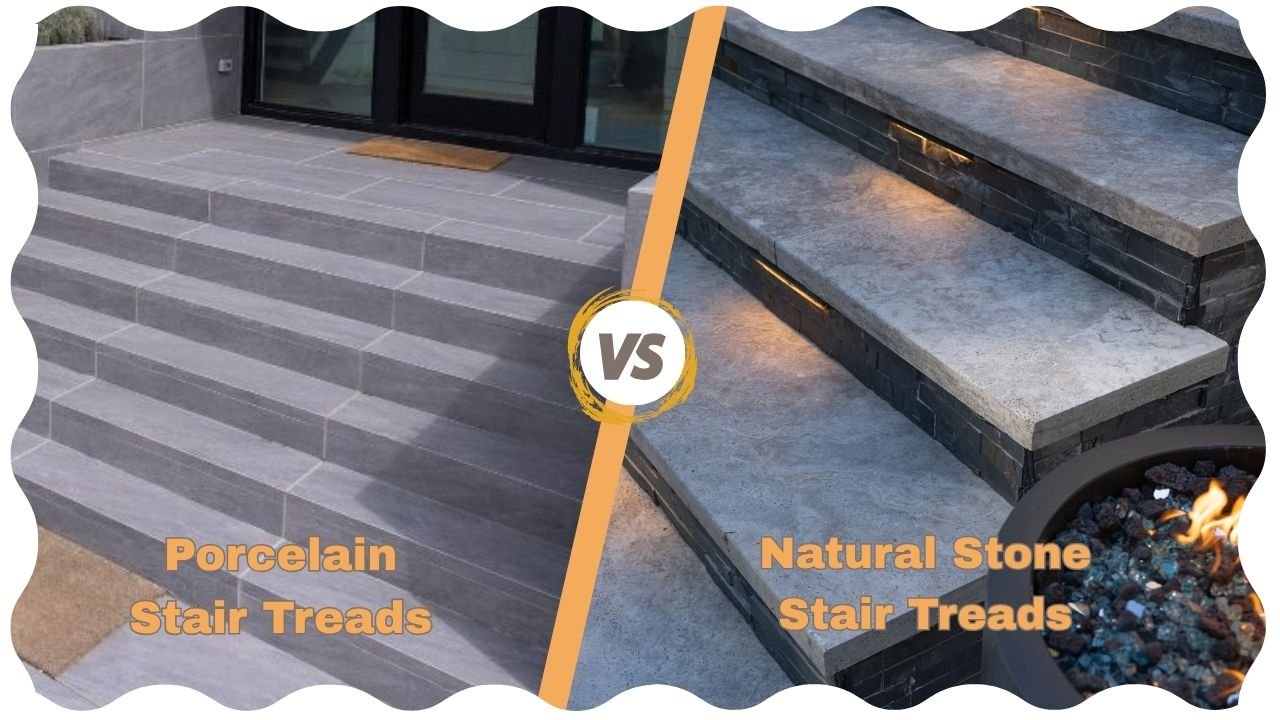
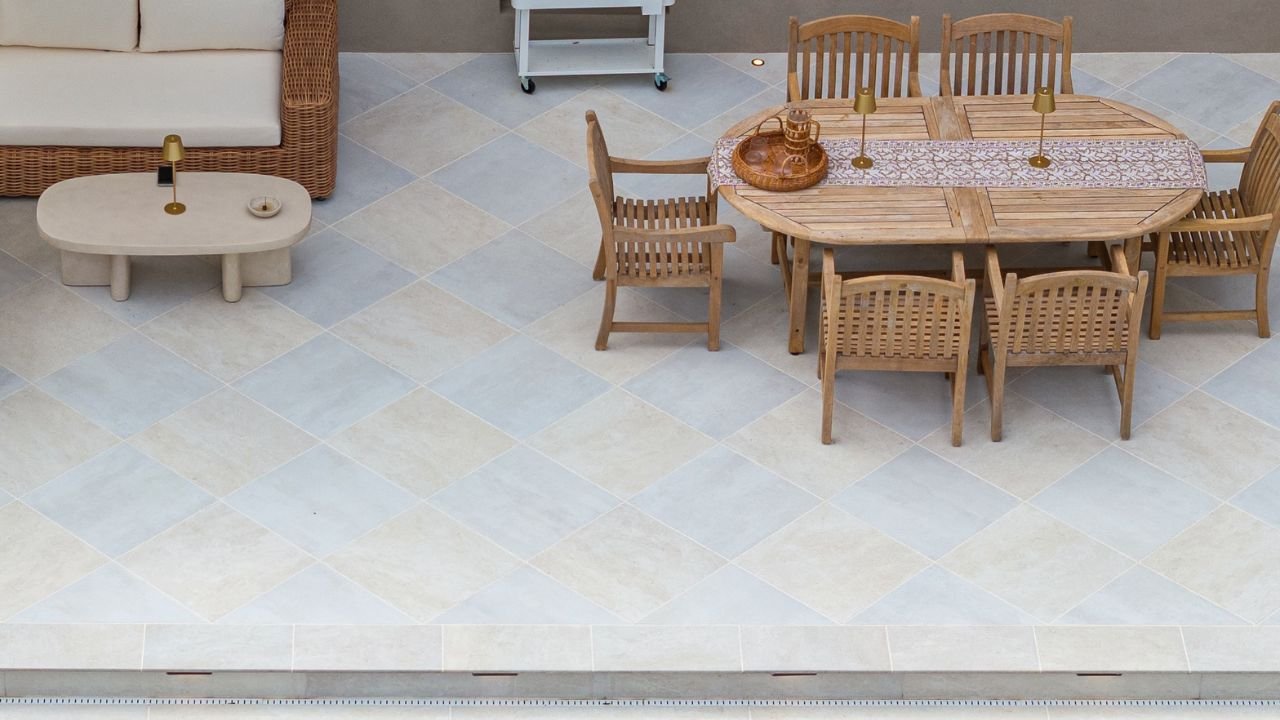
Choose a textured surface for porcelain pavers and tiles. A polished surface is a big no around pool surfaces and patios, and is not even recommended by tile makers. Compare our porcelain pavers for pool decks and check the product-specific finish and slip-resistance documentation.
If shoes will cross the same surface, you may also see an R-rating between R9 and R13. R-ratings relate to slip resistance under specified shoe testing conditions and should not be used alone to determine suitability for barefoot, wet poolside applications.
Travertine:
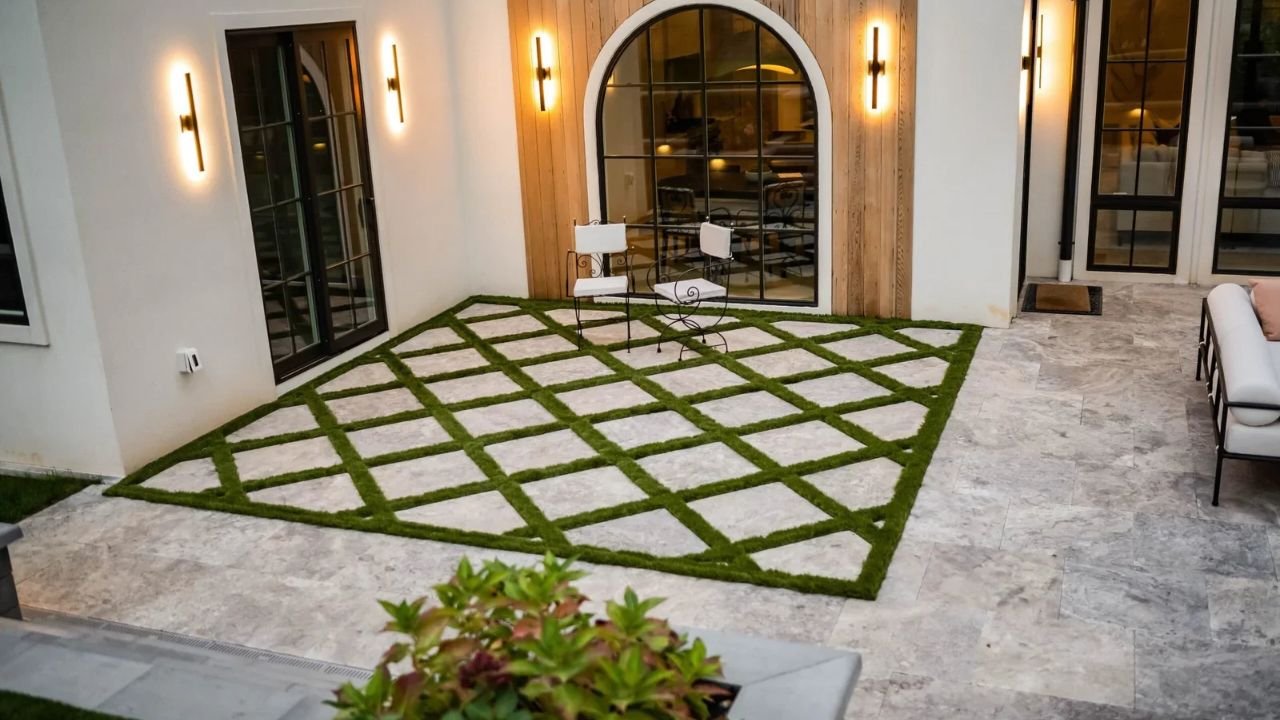
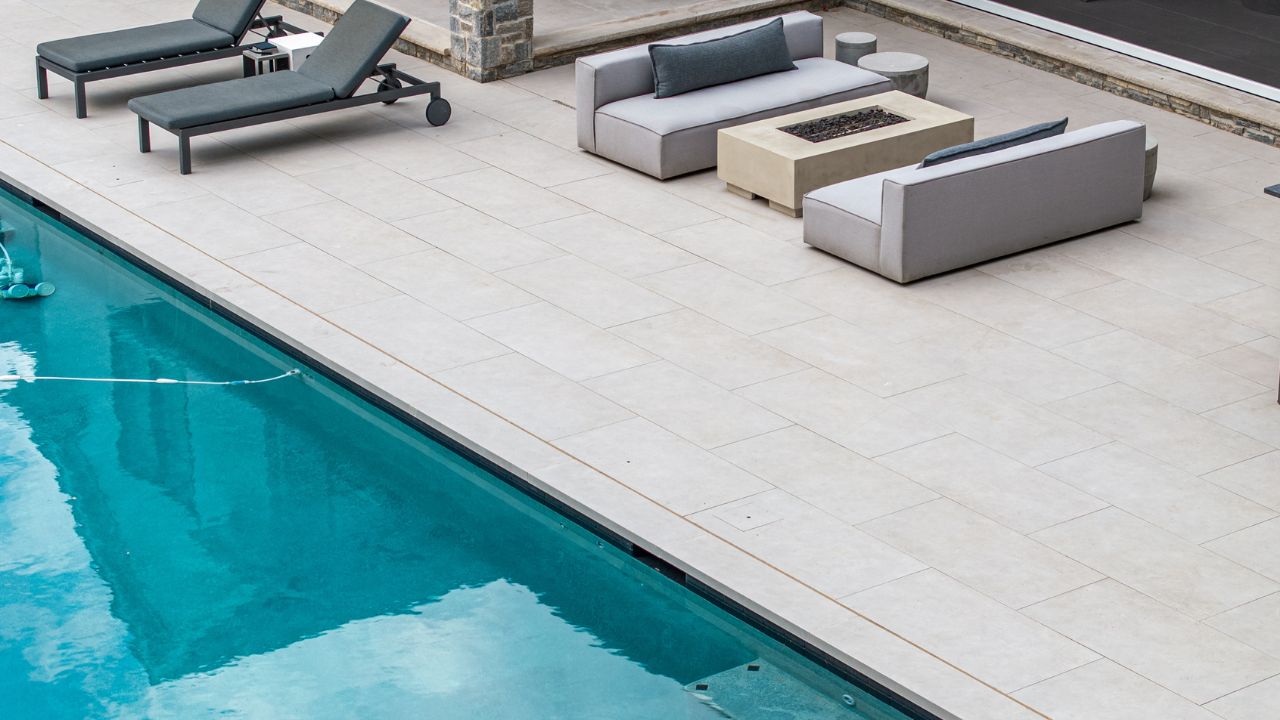
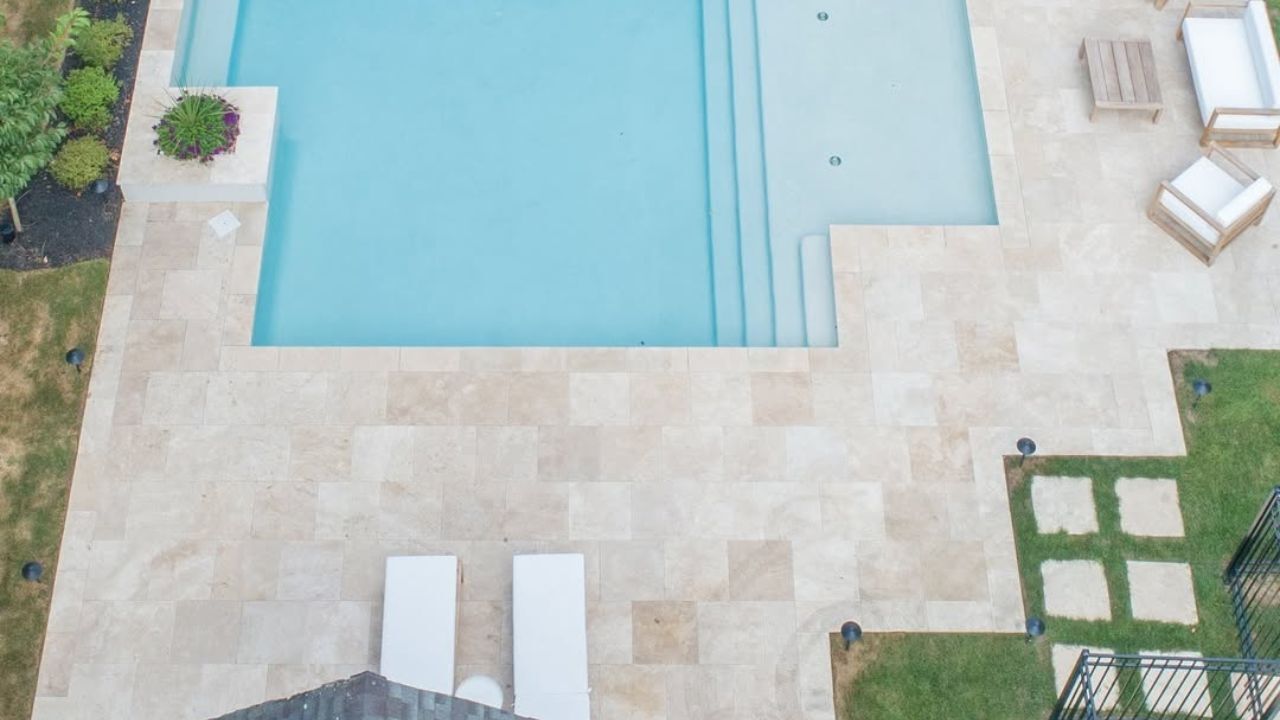
While travertine features a naturally textured surface, choose a tumbled, brushed, or sandblasted finish. These offer better traction than a polished or honed one underfoot. For more design options, explore our travertine pool deck selections and compare the available stone finishes.
Other Pavers (Concrete, Brick):
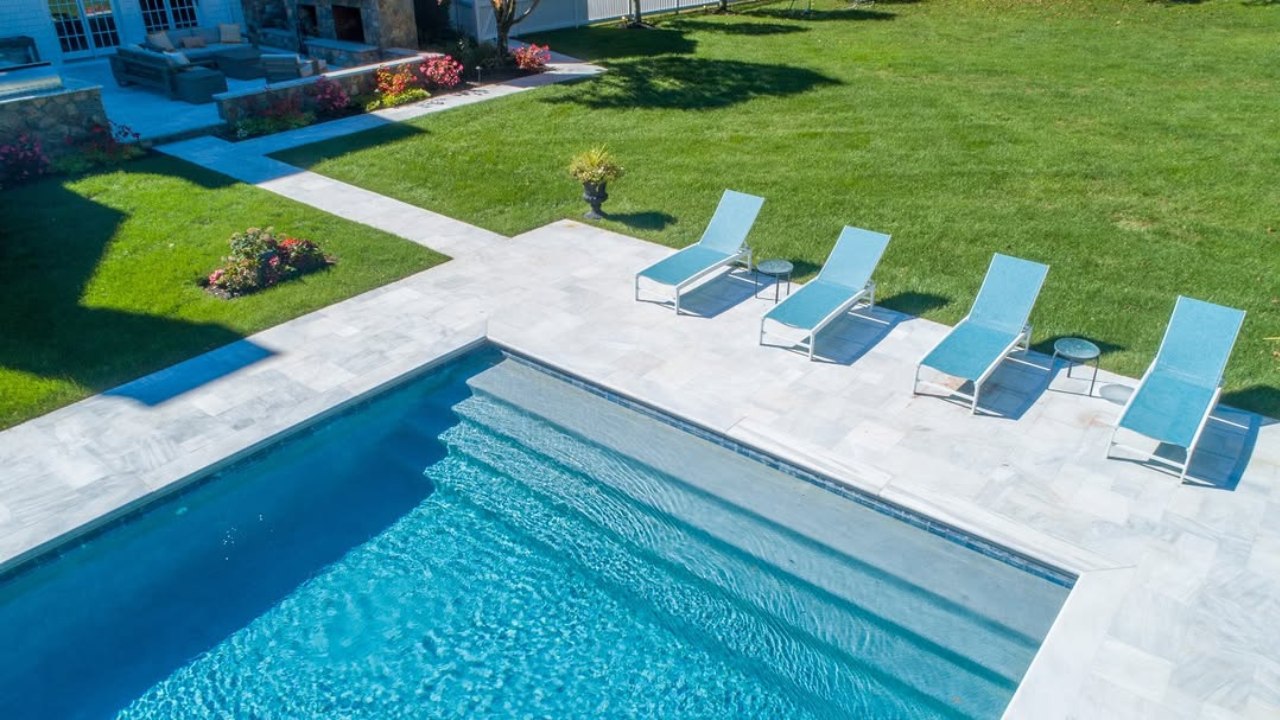
Check the finish yourself and make sure it matches the finish you receive. A DCOF report for a single finish doesn’t say anything about another. You can also explore a sandblasted marble pool deck and ask for slip-resistance test results for the specific stone and finish.
Why DCOF Alone Does Not Make a Pool Deck Safe
A DCOF rating matters, but it is just one input among several. The standard doesn’t set any single required limit for outdoor areas and pool decks. DCOF is one factor in evaluating slip resistance; the product’s intended use, surface finish, drainage, maintenance, and actual conditions must also be considered.
Also, rating changes with wear. The slip testing consultants argue that BOT-3000E can read high on polished stone and concrete. Tile makers state that no surface is slip-proof, only slip-resistant. One should also consider drainage, standing water, algae, and bare feet to determine the real-world results.
How to Choose Pavers With the Right DCOF Rating
Use this checklist when comparing products for an outdoor paving project.
| Steps | What to Check | Questions to Ask Before Buying |
| Review the technical data sheet | Wet DCOF result, test method, and limitations | What is the product’s measured wet DCOF, and under what testing conditions was it evaluated? |
| Verify the intended application | Exterior-wet or pool-deck suitability | Does the manufacturer recommend this exact paver and finish for outdoor wet areas? |
| Evaluate barefoot traction | Surface texture and suitability for poolside use | Is the surface appropriate for barefoot traffic around a swimming pool? |
| Check drainage and installation | Surface slope, runoff, and water pooling | Will the proposed installation drain water effectively and prevent standing water? |
| Review maintenance requirements | Cleaning methods, algae control, and residue removal | How should sunscreen, algae, dirt, and other contaminants be removed without damaging the surface? |
| Verify overall product performance | Outdoor durability, climate suitability, and chemical exposure | Is the material suitable for the local climate and intended exposure to pool chemicals or other environmental conditions? |
NT Pavers buyers can use these questions when comparing outdoor paving options. The important point is to verify the specifications of the exact product rather than assume that every stone or porcelain paver performs alike.
How to Check a Paver’s DCOF Before You Order?
Checking the DCOF paver rating can help you understand whether you are buying a paver that is actually slip-resistant or not.
- Ask your paver supplier for the DCOF report for the product and finish you have selected, not a sister product.
- Read the test standard, lab name, and test date.
- Confirm it describes your intended usage: Exterior, Wet for outdoor areas.
- Compare your delivered sample with the tested finish.
- Ask whether the rating covers sealed or unsealed surfaces.
- Test the finished deck before the pool opens. Slip-testing firms recommend field testing before use.
Frequently Asked Questions About DCOF Rating of Pavers
Commonly asked questions about DCOF rating for pavers.
Is 0.42 DCOF enough for a pool deck?
Not necessarily. A wet DCOF value of 0.42 is associated with the Interior, Wet category, but it does not automatically establish suitability for an outdoor pool deck. Check the manufacturer’s declared use classification, the test report for the exact product and finish, and its suitability for barefoot, wet conditions.
Can a paver with a high DCOF still be slippery?
Yes. Factors like accumulated water, surface wear, algae, and poor drainage reduce the grip regardless of the lab number.
Do I need a high DCOF for a dry patio?
Not entirely. Dry can still use a lower DCOF rating for pavers. One tile maker treats 0.42 or higher as normally fine for generally dry patios and outdoor kitchens.
Are textured pavers better for pool decks?
Yes. A well-textured paver offers better traction for barefoot walking around the pool when wet. But overly textured pavers may not provide a comfortable walking experience. Check product-specific testing and manufacturer recommendations for barefoot, wet conditions.
Do porcelain pavers need a DCOF rating for outdoor use?
Yes. Ask for the documented wet-slip performance and confirmation that the exact porcelain paver and finish are ideal for their targeted use. But do not rely solely on the word porcelain or a general outdoor-use label.
How can I maintain traction on a paver patio?
Remove algae, sunscreen, dirt, and other residue with the appropriate cleaning methods. Keep the drainage paths clear, correct any water accumulation, and keep an eye on the surface to notice any changes.
Bottom Line
The DCOF rating for pavers can help you select the right paver for indoor or outdoor applications to provide better slip resistance. Consider the manufacturer’s declared use category first, then review the measured DCOF value and supporting test report. Values of 0.55 and 0.50 should be treated as reference points, not universal ANSI minimums. NT Pavers recommends asking the DCOF for slip test data for the selected pavers, finish, and sealer.