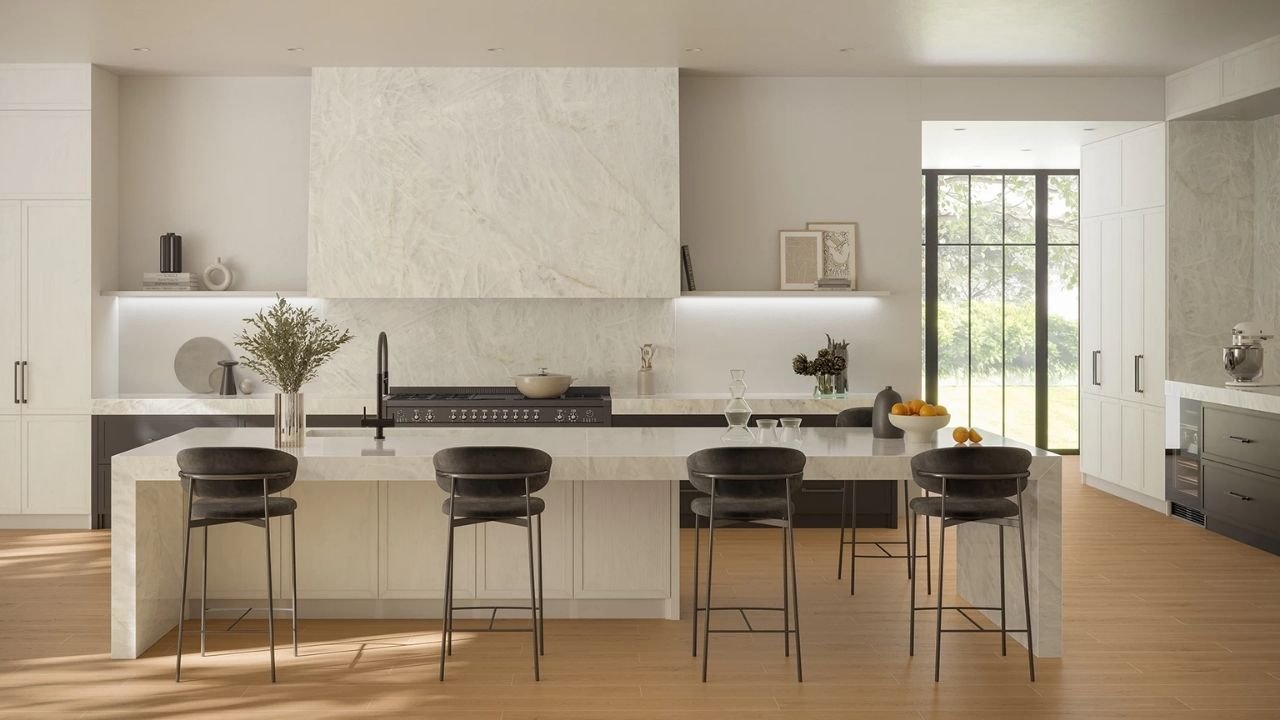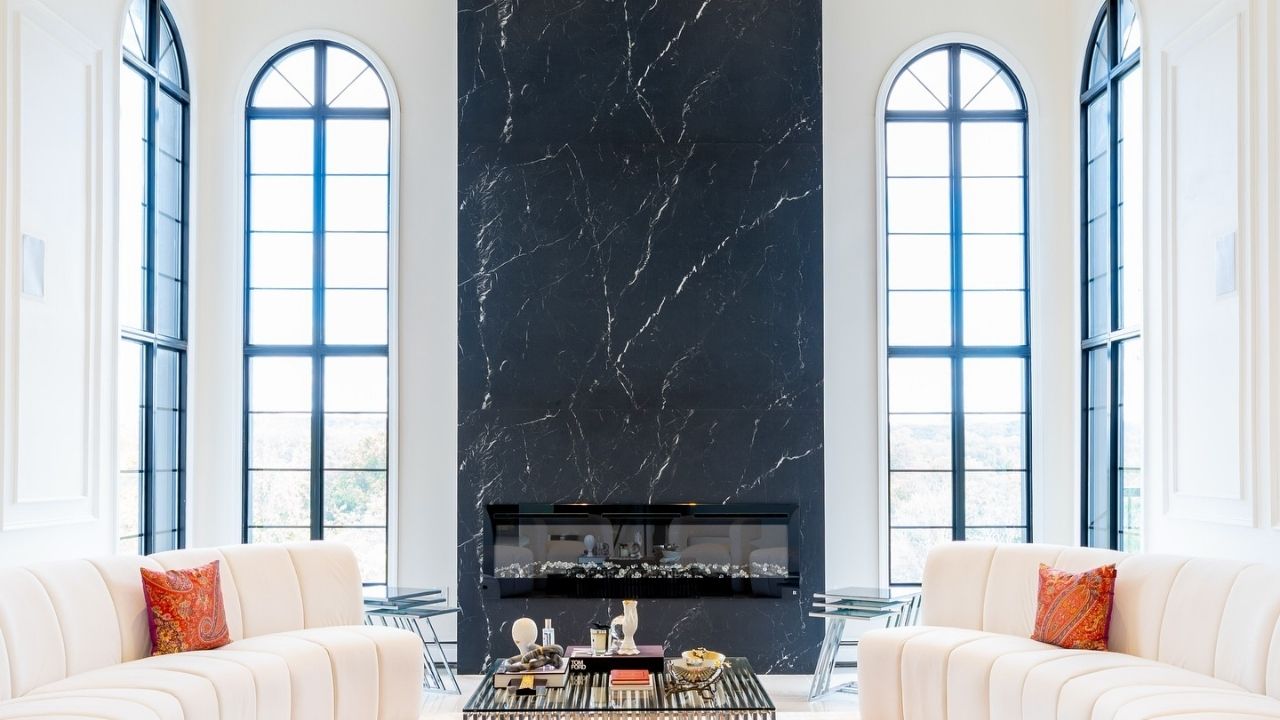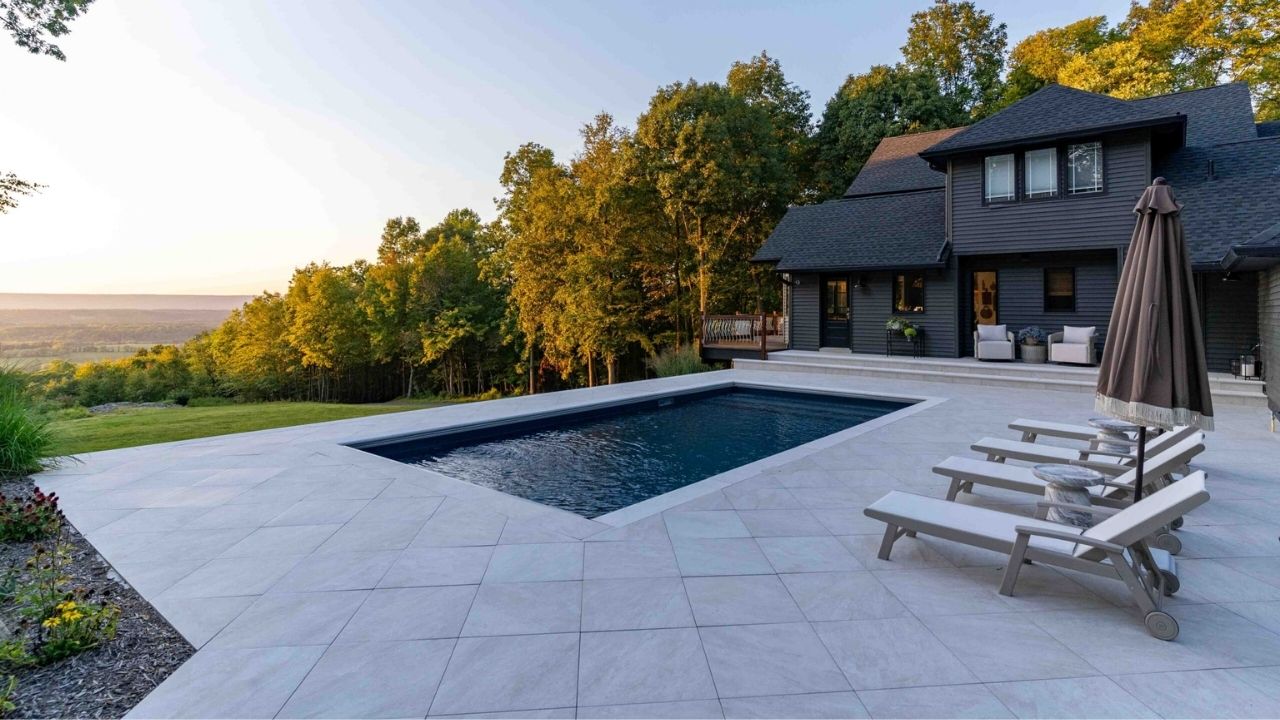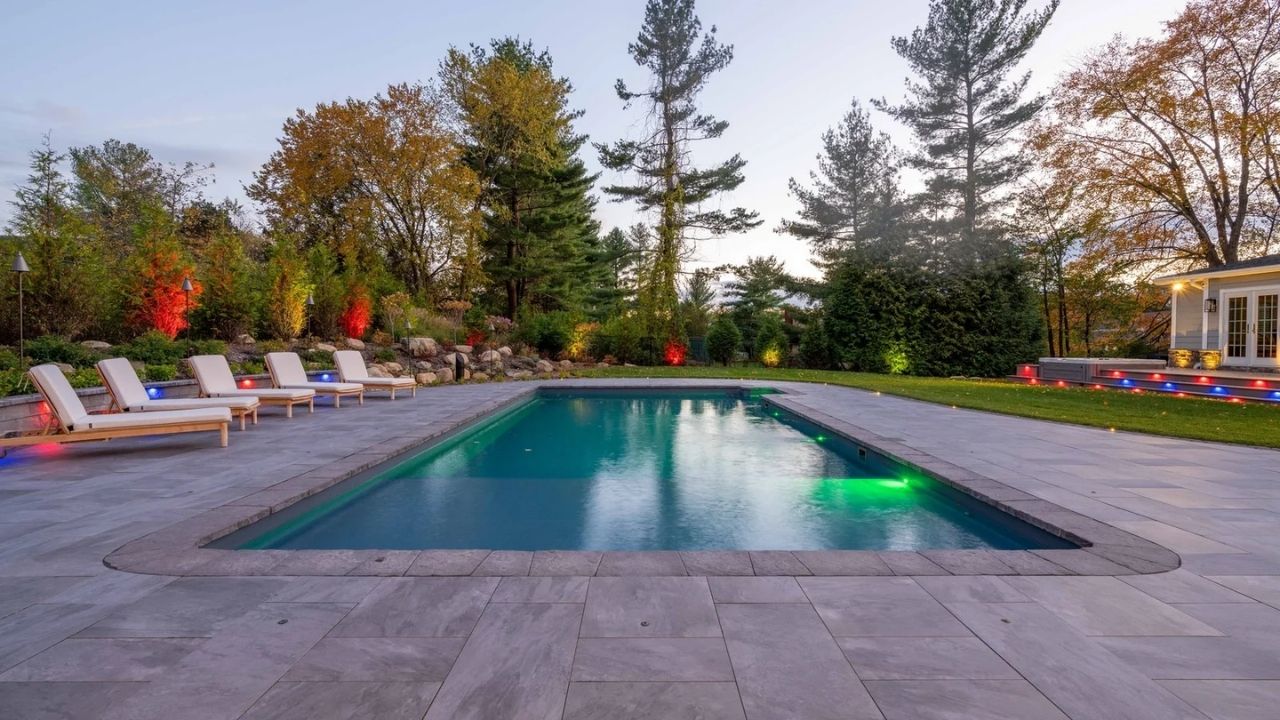

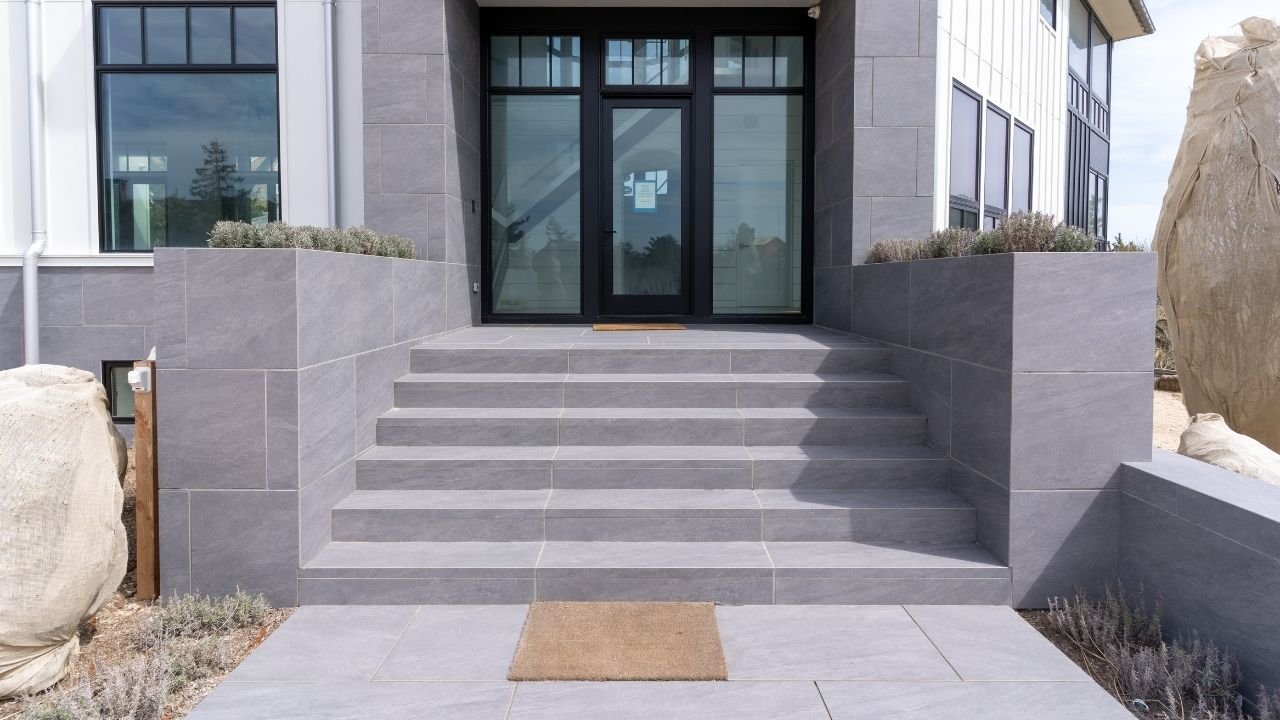
A porcelain installation may seem straightforward, but it gets complicated at the edges. A typical porcelain paver features a finished top surface, but the exposed sides may not give you the look you want. This is where a mitered edge profile gets too handy. Instead of leaving the side visible or adding a separate trim piece, fabricators join two porcelain pieces at an angle. This results in a clean edge for porcelain tile and slabs that can look like one thicker piece, akin to the seamless appearance of a waterfall edge on porcelain countertops. This approach works well for pool coping, steps, corners, raised walls, and other outdoor details.
Where Does a Mitered Porcelain Edge Work Best?
Homeowners who want to understand this profile should look at where the edge is actually used. It is less about decoration and more about solving exposed-edge details.
Pool Coping
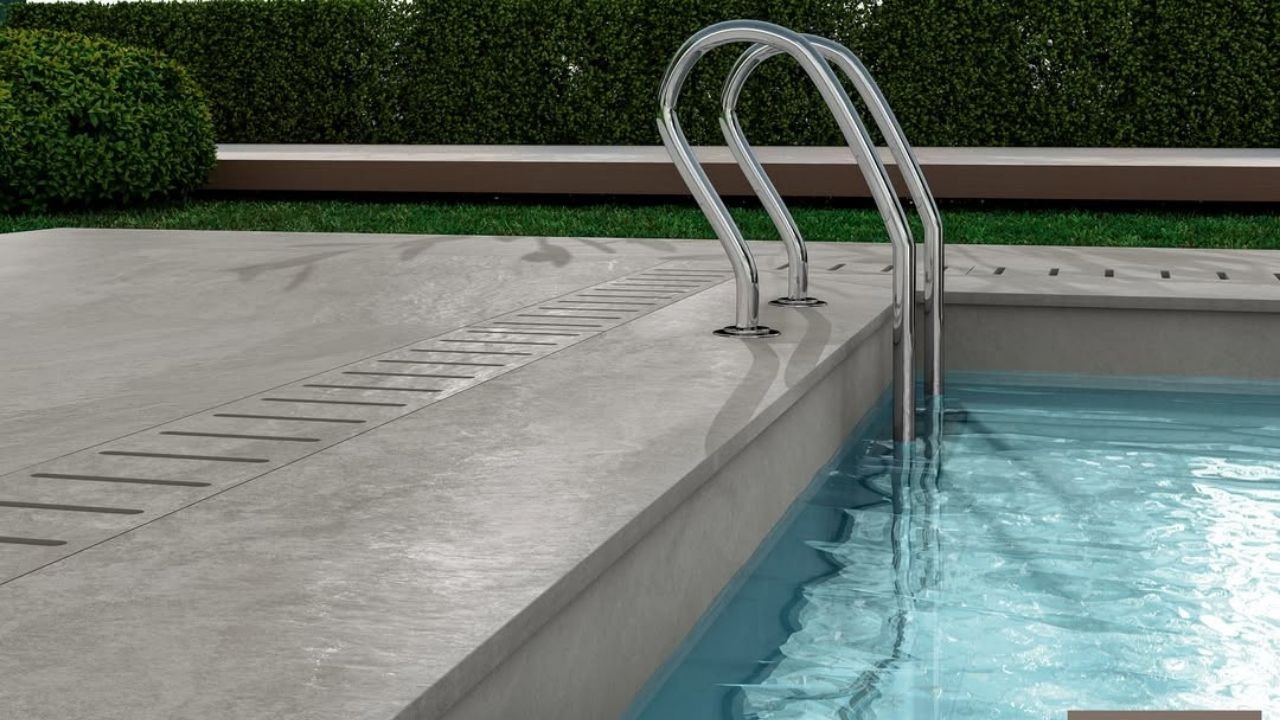
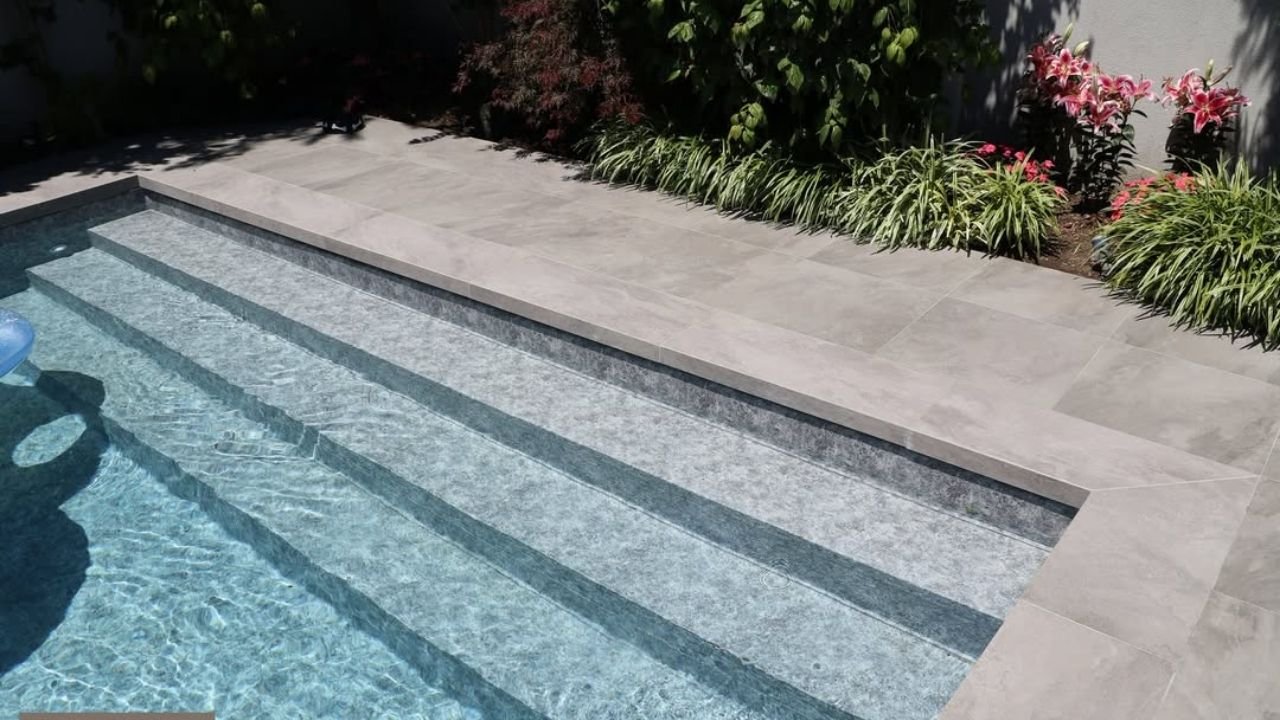
Mitered porcelain edge is widely used for the pool coping. A typical mitered coping piece uses a horizontal porcelain surface with a vertical drop at the front. The two sections meet through a mitered joint. This creates the appearance of a substantial coping unit rather than a thin paver sitting on the pool wall, similar to the visual impact of a porcelain countertop.
Because of the 90-degree pool corner, matching miter cuts can meet to create a continuous-looking corner. This is largely helpful around modern pools where straight lines and sharp geometry are part of the design. Miter joints for pool coping corners also matter because they can produce a cleaner appearance than a simple butt joint. However, elements like substrate, adhesive coverage, drainage, movement joints, and joint spacing all affect long-term performance.
For example, NT Pavers‘ mitered edge coping uses a ¾-inch porcelain piece with a 2-inch front drop and an R11 A+B+C slip-resistance rating. The exact profile and rating can vary by product, so homeowners should check the specifications before choosing a coping system.
Pool Corners
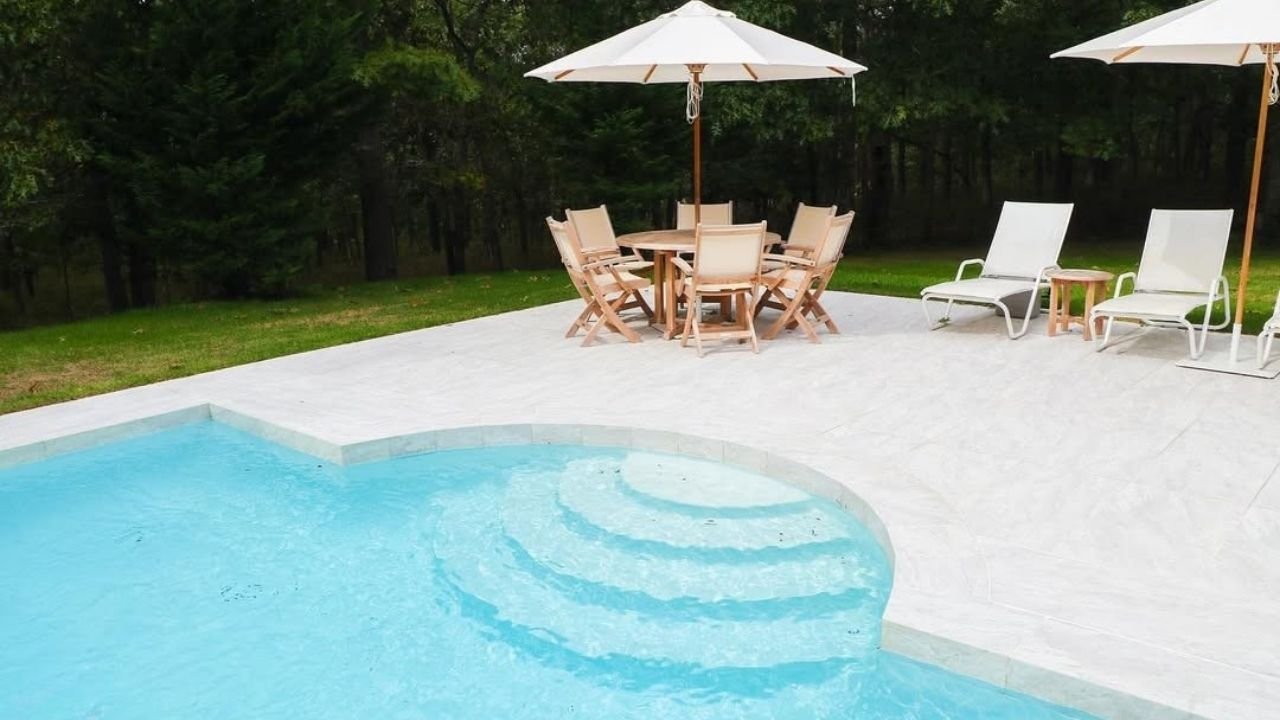
Straight pool edges are easy to understand. Corners are where the fabrication becomes more important. A mitered porcelain corner combines two pieces at matching angles. When pieces with the same colors come together, the corner can read as one continuous architectural element. This approach works for:
- Outside pool corners
- Inside corners
- Raised pool walls
- Spa edges
- Tanning ledges
- Water features
- Poolside benches
Corner pieces should be planned before installation rather than treated as an afterthought. Pre-fabricated corner units can reduce the amount of difficult cutting required on site.
Wall Caps and Raised Edges
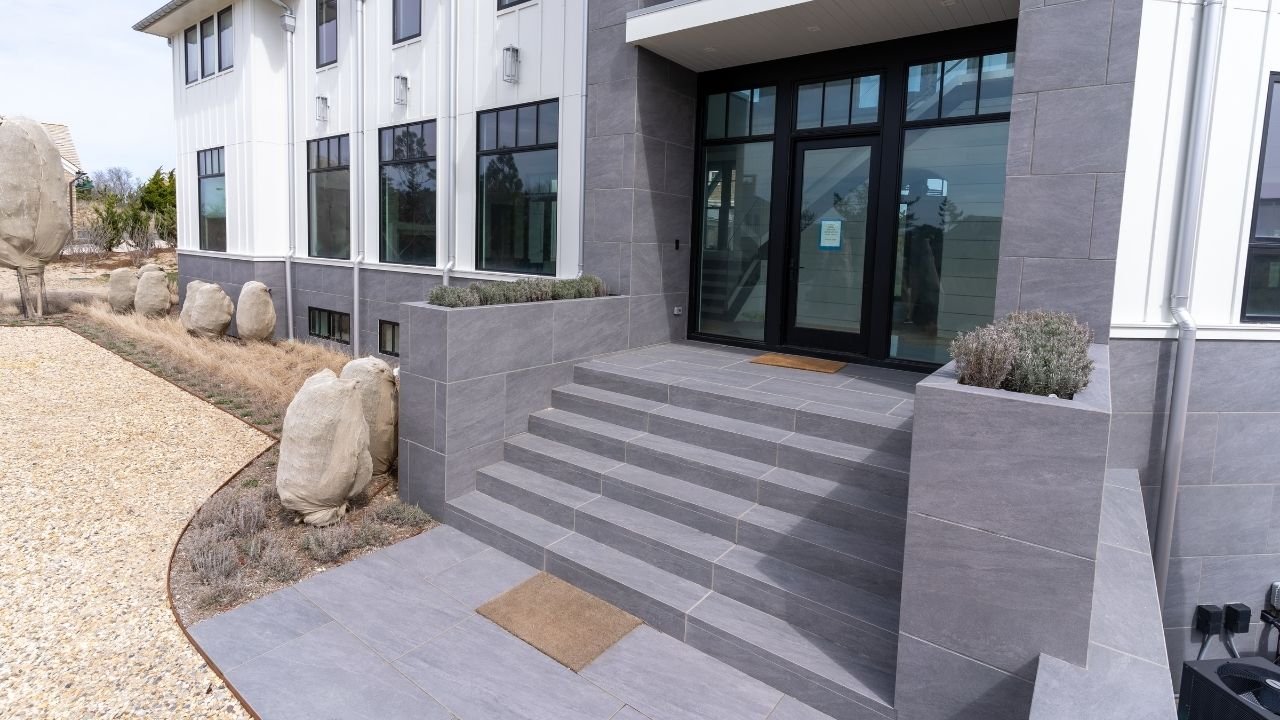
Mitered porcelain is not limited to horizontal walking surfaces. Raised planters, low walls, outdoor kitchens, benches, and architectural walls can all have exposed edges where finished treatment is required. A mitered return can connect the horizontal top with a vertical face.
This is advantageous when the homeowner wants the same porcelain throughout several parts of the landscape. Instead of switching to another material for the wall cap, the same porcelain can continue over the edge. That creates visual continuity between the patio, steps, pool coping, walls, and outdoor kitchen.
Steps and Stair Treads
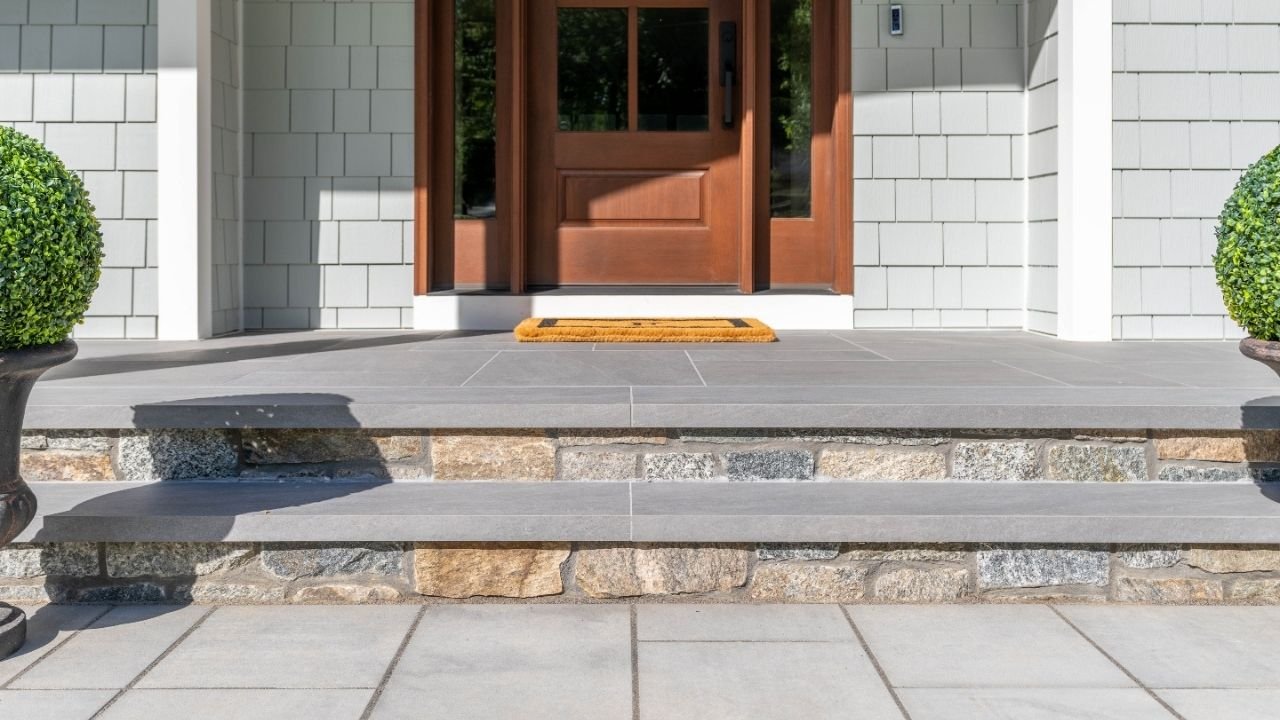
Steps are another natural application for a mitered porcelain edge. A porcelain tread may cover the horizontal part of a step, while the mitered section creates a vertical face or drop at the front. This gives the step a more substantial appearance and avoids leaving the raw edge of the paver exposed. The same approach can work for:
- Garden steps
- Pool steps
- Patio steps
- Outdoor staircases
- Raised terraces
- Landscape retaining steps
NT Pavers‘ technical drawings show mitered porcelain edge coping used for stair tread and wall-coping details.
Outdoor Kitchens and Built-In Features
Outdoor kitchens often feature exposed corners. Porcelain countertop edges, serving ledges, islands, and built-in seating can all take advantage of a finished porcelain edge. The mitered porcelain edge is less about making porcelain thicker. It is more about hiding the unfinished side of the material and creating a deliberate architectural edge.
Fabricators can also match the porcelain’s surface pattern across the joint. This matters with stone-look porcelain because many products use high-definition surface printing rather than a naturally veined stone body. A miter can make the appearance neutral over the edge.
Mitered Porcelain Vs Natural Stone Edges
Porcelain is not natural stone, but homeowners often compare the two when selecting pool coping and steps. The right choice depends on the desired appearance, maintenance, fabrication, and project conditions.
| Material | Mitered Edge Potential | Maintenance | Pool/Outdoor Considerations | Best Fit |
| Porcelain | Excellent with proper fabrication | Low; generally no routine sealing | Low water absorption; choose suitable slip rating | Modern pools, steps, patios |
| Travertine | Very good | Usually needs sealing and care | Comfortable underfoot; porous surface needs attention | Traditional and natural-looking pools |
| Limestone | Very good | Requires more maintenance | Can be sensitive to acids and some chemicals | Soft, natural outdoor designs |
| Bluestone | Very good | Moderate | Strong natural-stone option; finish affects slip performance | Formal patios and pool surrounds |
| Marble | Excellent fabrication potential | Higher maintenance | Can be sensitive to acids, staining, and scratching | Decorative, high-end applications |
| Granite | Excellent | Relatively low for natural stone | Dense and durable; surface finish matters | Heavy-use steps and architectural edges |
While mitered porcelain edges perform great, not every material performs the same way. A mitered natural stone edge still has the maintenance characteristics of that stone. Porcelain keeps its own material properties that will shine with a fine polish.
How Professionals Install Mitered Porcelain Edges
A mitered porcelain edge is a fabricated assembly. Its performance largely depends on more than the accuracy of the visible joint. Professional installation should coordinate the porcelain thickness, miter angle, substrate, adhesive, joint width, reinforcement, drainage, movement joints, and edge finishing.
Confirm the Porcelain Is Suitable for Miter Fabrication
Though porcelain is hard and durable already, not every porcelain slab is ideal for mitering; precision is key in selecting the right materials. Before fabrication, confirm the technical data from the manufacturer for:
- Material thickness
- Intended exterior use
- Cutting and fabrication requirements
- Slip-resistance rating
- Water absorption
- Recommended adhesive system
- Maximum unsupported spans
- Pool or wet-area suitability
A thicker porcelain paver or slab offers more material for fabrication. However, thickness alone doesn’t determine whether a mitered edge will perform well. The fabricator should work within the manufacturer’s installation and fabrication limits.
Establish the Finished Dimensions Before Cutting
One of the most common porcelain fabrication mistakes is cutting from an assumed dimension instead of finished dimension. For a mitered coping or step, establish: Finished height + finished projection + joint allowance + substrate tolerance = fabrication dimensions.
The fabricator should account for the actual porcelain thickness and the depth of the miter cut. A 45-degree cut does not automatically produce the correct finished profile. For instance, if a coping detail requires a horizontal top with a vertical face, the fabricator should determine where the miter terminates. This is how the front face will meet the required height without creating an exposed void.
Use a Controlled Miter Cut
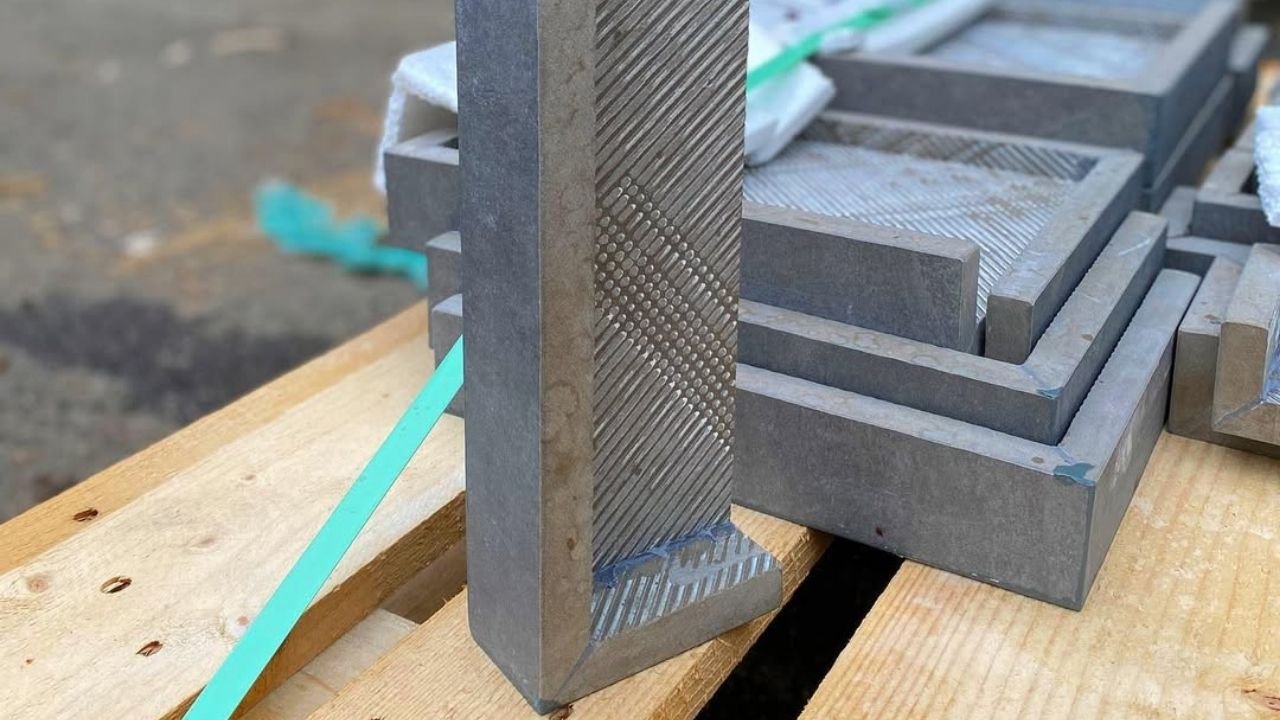
A miter joint is typically produced by cutting the adjoining pieces at matching angles. A nominal 45° + 45° joint creates a 90° corner, but the cutting angle should follow the actual geometry of the installation. Professional fabrication requires:
- A rigid cutting setup
- A suitable diamond blade
- Accurate measurement
- Controlled feed speed
- Proper water cooling where required
- Clean, supported cuts
- Inspection for chips and edge damage
The goal is not just about creating two angled pieces. Those pieces should meet along the intended joint without excessive gaps, lippage, or damaged edges.
Reinforce the Fabricated Return Where Required
The miter itself doesn’t make the porcelain assembly structurally stronger. This is crucial to understand when it comes to pool coping, stair fronts, benches, and cantilever details. The porcelain also requires continuous and proper support according to the manufacturer’s system and project design.
When the fabrication system requires reinforcement, professionals may opt for a compatible structural adhesive or reinforcement method behind the mitered return, including epoxy. The exact method should come from the porcelain manufacturer or qualified fabricator rather than a generic installation rule.
Prepare the Substrate Before Bonding
The substrate is a key element before porcelain installation. The substrate should be sound, clean, dimensionally stable, and well suited for a specific bonding system. For outdoor applications, installers should check:
- Flatness and level
- Surface cleanliness
- Cracks or loose material
- Drainage slopes
- Required movement joints
- Curing of cement-based substrates
- Compatibility with the specified adhesive
Pool coping deserves particular attention because the coping sits at the transition between the pool structure and surrounding hardscape. Water management and structural movement must be addressed before porcelain is installed.
Treat the Miter Joint as a Joint
A mitered edge is not fully seamless. The two porcelain pieces still meet at a joint. A skilled fabricator can make that joint look narrow and visually discreet, but the joint needs appropriate treatment.
Joint width should follow the porcelain manufacturer’s requirements and the expected movement of the installation. Exterior installations should not be treated like interior drywall applications where movement is minimal. For pool coping and other wet-area details, the jointing material should be compatible with the environment and the specified installation system.
Finish the Exposed Edge
A freshly cut porcelain edge may appear sharper than the factory-finished surface. Professionals may opt for an appropriate micro-bevel, arris, eased edge, or other specified edge treatment to remove the sharp corner. The correct treatment depends on the application. For example, a pool coping edge should balance:
- Edge protection
- Comfort underfoot
- Slip considerations
- Appearance
- Resistance to chipping
The goal is a controlled edge, not a heavily rounded profile that changes the intended architectural appearance.
Pay Special Attention to Outside Corners
Outside corners should also be on your checklist. For a 90-degree pool corner, the two coping pieces should be coordinated so their miters meet at the correct location. The fabricator should account for:
- Actual corner dimensions
- Joint width
- Pattern direction
- Surface texture
- Vein or graphic alignment
- Edge thickness
- Drainage
- Adjacent coping lengths
For stone-look porcelain, bookmatching or graphic alignment may also influence the cutting sequence. A technically correct miter can still look poorly executed if the printed stone pattern stops abruptly at the corner.
Inspect Before Final Installation
A professional installer will not wait until the adhesive cures to discover a fabrication error. A dry layout or test fit will help them verify:
- Overall dimensions
- Corner alignment
- Miter contact
- Joint width
- Surface orientation
- Pattern continuity
- Edge height
- Drainage direction
- Transitions to adjacent materials
Only after the pieces pass inspection should the final installation proceed.
Mitered Porcelain Edges FAQs
Let’s answer your questions about mitered porcelain edges for stairs, coping, and steps.
Are mitered porcelain edges good for pool coping?
Yes. They create a clean horizontal-to-vertical transition and work well for modern pool coping when the porcelain, substrate, adhesive, joints, and slip rating suit the application.
What is a mitered edge on porcelain?
A mitered edge joins two porcelain pieces cut at matching angles, commonly 45 degrees, to form a continuous-looking corner or thicker edge.
Can porcelain be mitered for steps?
Yes. Fabricated porcelain can form a horizontal stair tread with a vertical drop, creating a finished front edge.
Are mitered porcelain corners seamless?
They can look seamless, but they are still joints. Precise cutting, matching surfaces, proper bonding, and careful finishing make the joint less noticeable.
Is porcelain better than travertine for pool coping?
Neither is automatically better. Porcelain offers low water absorption and low routine maintenance, while travertine provides a natural stone surface and a different underfoot feel.
Can mitered porcelain be used on curved pools?
It can, but curved edges require more planning and fabrication. Shorter pieces, templates, angled cuts, or custom-fabricated components may be needed depending on the radius.
Bottom Line
Mitered porcelain edges can easily be understood as an edge solution and not a decorative feature. They give pool coping, steps, corners, walls, benches, and outdoor kitchens a finished appearance. This allows the porcelain surface to continue throughout exposed edges. When planned with the paving layout from the start, a mitered profile can make the difference between an edge that looks added on and one that looks intentionally built into the design.