
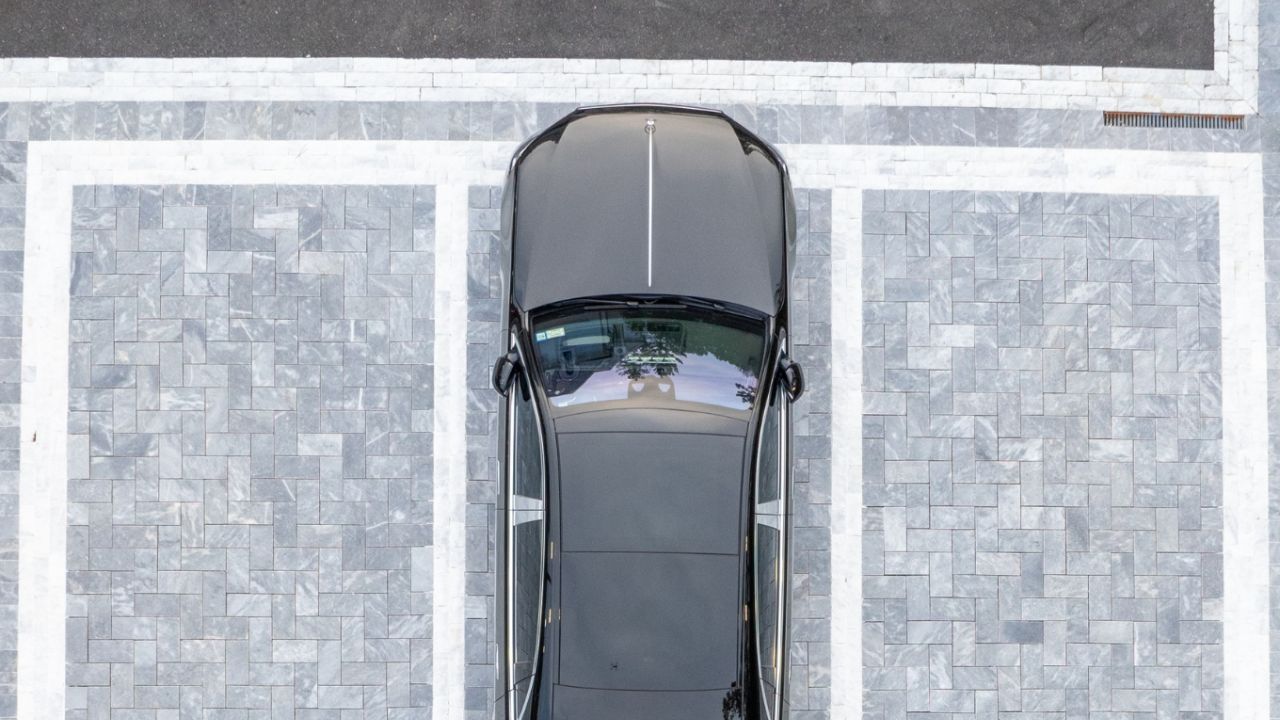
Quick Comparison of the Best Natural Stone Pavers for Driveway
| Stone | Best For | Durability | Maintenance |
| Granite | Heavy vehicles | ⭐⭐⭐⭐⭐ | Low |
| Quartzite | Luxury driveways | ⭐⭐⭐⭐⭐ | Low |
| Basalt | Modern homes | ⭐⭐⭐⭐⭐ | Low |
| Bluestone | Traditional homes | ⭐⭐⭐⭐ | Moderate |
| Limestone | Mild climates | ⭐⭐⭐ | Moderate |
| Travertine | Warm climates | ⭐⭐⭐ | Moderate |
Best Driveway Natural Stone Pavers:
Here is a list of the best stone pavers suitable for a driveway.
Granite:
Granite is one of the thickest and strongest types of stones because of its composition. Typically, the stone is cooled magma, which is why granite is one of the strongest natural stones. Also, its unique texture and surface make it a premium choice for residential driveways.
The dense crystal structure provides exceptional compressive strength and outstanding resistance to scratching, staining, and weather. Granite also performs well in ASTM C170 (compressive strength) and ASTM C97 (water absorption) testing, making it a dependable choice for heavy-duty driveways.
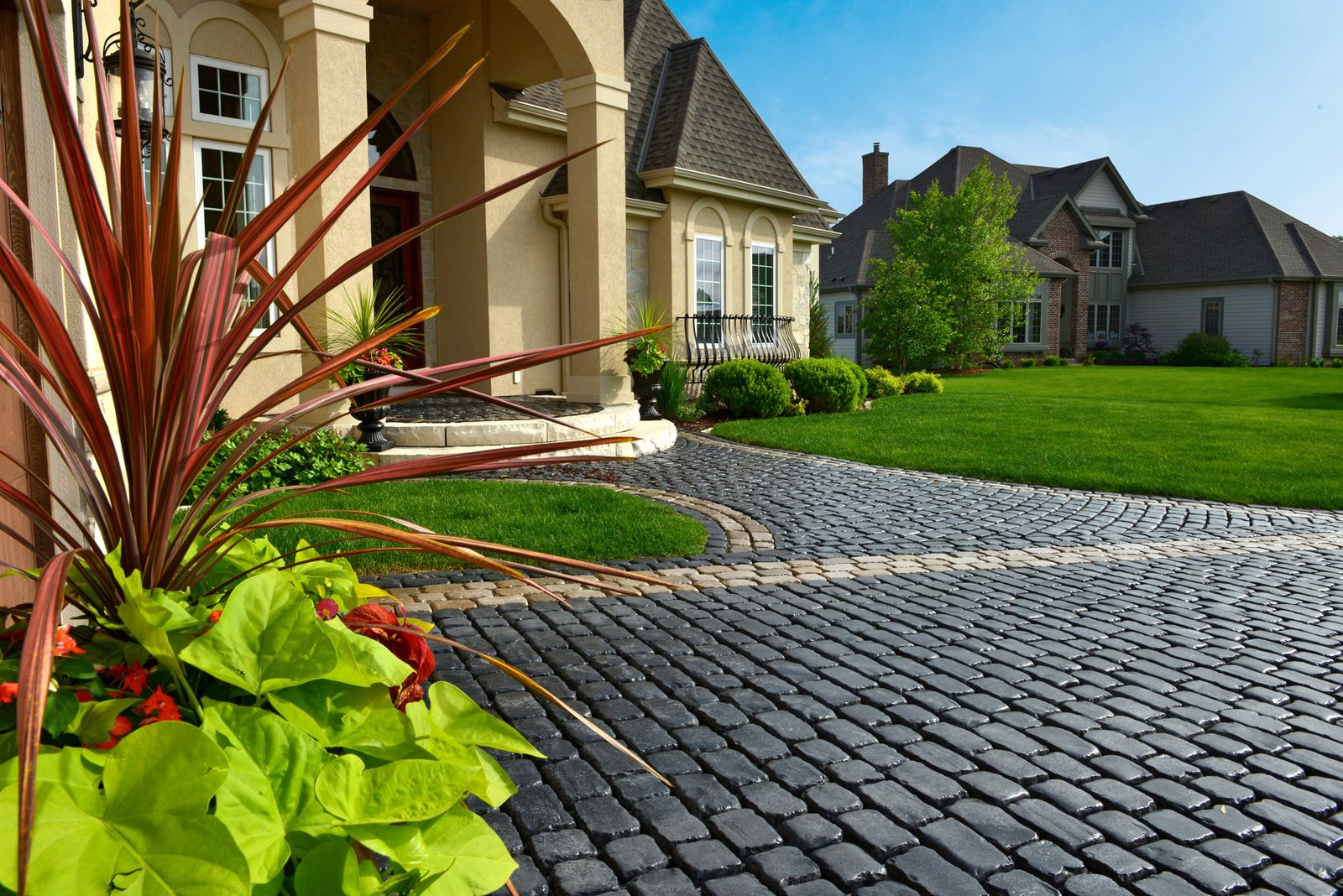
Why Do Homeowners Choose Granite Pavers For Driveway?
Granite stone can handle heavy vehicles with ease and resist freeze-thaw cycles. The stone has the lowest water absorption and can last over 75 years with proper installation.
Granite also performs well in regions with snow, road salt, and frequent temperature changes. This makes it one of the safest long-term investments.
Quartzite:
Quartzite is the best combination of elegant natural movement with outstanding durability. Although many homeowners select quartzite for its appearance, its strength often surprises them.
Qualities Of Quartzite Driveway Pavers
The best quality of quartzite is its extremely hard surface, which offers great scratch resistance. Quartzite ranks 7 on the Mohs Hardness Scale, giving it excellent scratch and abrasion resistance. It has strong weather performance while offering premium natural colors and a long service life. Quartzite typically costs more than granite but rewards homeowners with exceptional longevity and refined aesthetics.
Quartzite’s interlocking quartz crystals create a dense surface that resists chipping and abrasion, making it an excellent option for driveways exposed to regular vehicle traffic.
Basalt:
Basalt forms from volcanic lava, which creates one of the densest natural stones available. Its tight structure helps prevent cracking and surface wear. The appearance adds a rustic aesthetic appeal to your driveway.
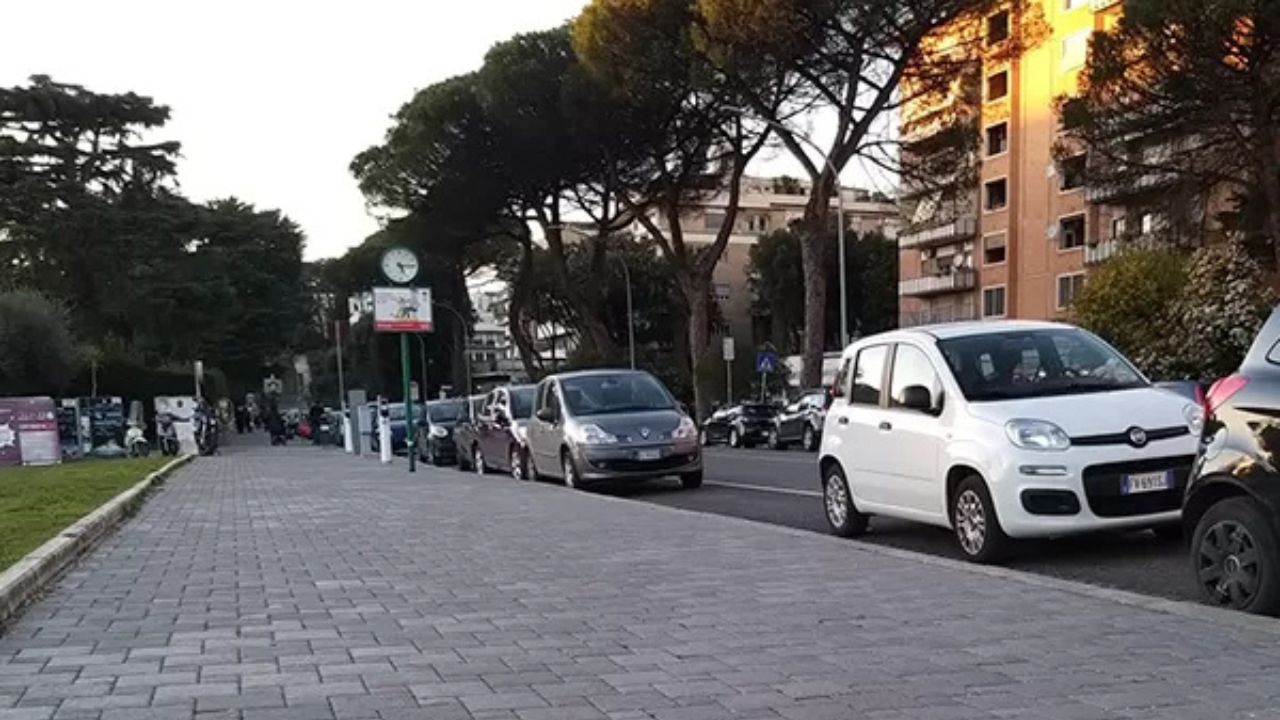
Advantages Of Basalt Driveways
Black basalt pavers for driveway are popular for its high load-bearing capacity, which makes it well suited for driveways. It offers excellent abrasion resistance with very low moisture absorption. It also offers strong performance in harsh climates. Its darker appearance also hides tire marks better than many lighter stones.
Basalt is also highly resistant to UV exposure, allowing it to maintain its appearance with minimal fading even in areas with intense sunlight.
Bluestone:
Bluestone pavers remains one of the most popular natural stones for residential landscaping. Dense bluestone varieties perform well under passenger vehicles while offering timeless visual appeal.
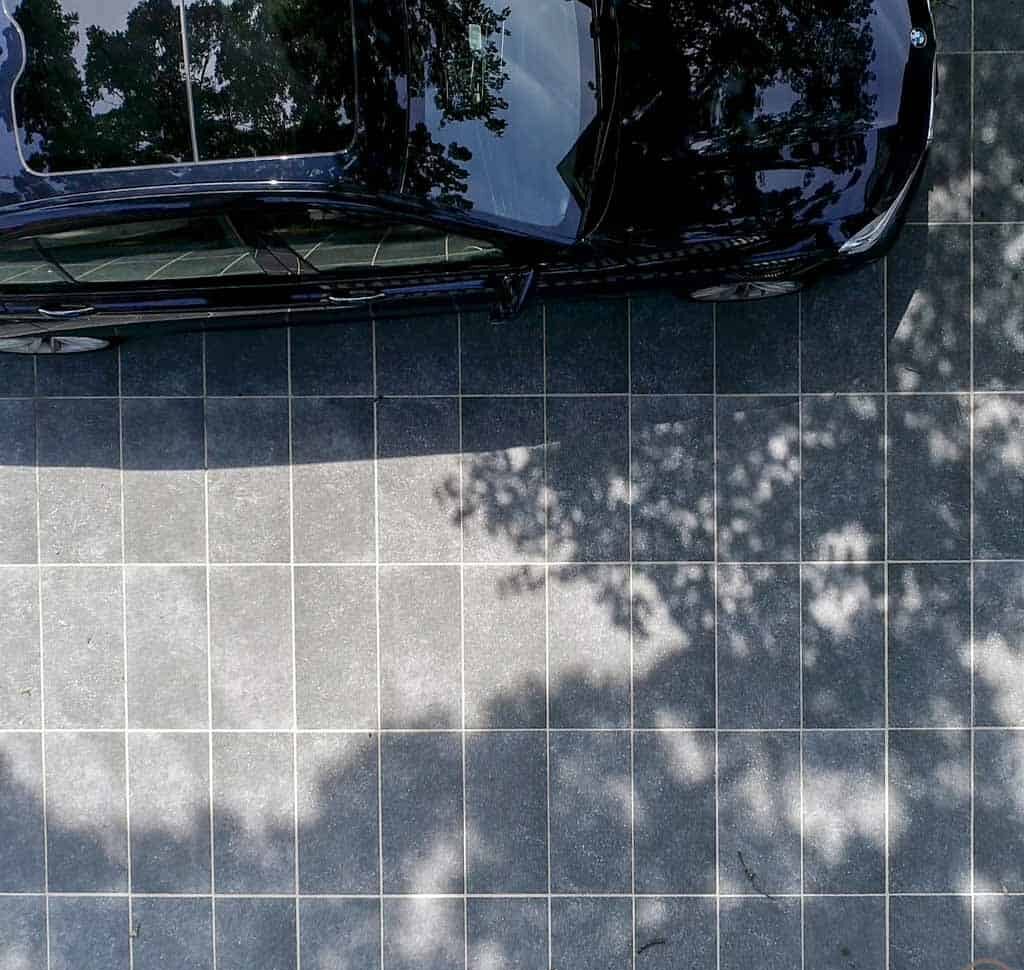
Best applications of Bluestone:
Bluestone is well-suited for traditional homes, contemporary landscapes, and moderate-to-heavy residential traffic. Compared with granite, bluestone requires slightly more maintenance but remains an excellent long-term driveway option.
Choosing a dense, high-quality bluestone and installing it over a properly prepared base significantly improves its long-term durability.
Limestone:
Limestone pavers creates a clean, sophisticated appearance that complements modern architecture. However, quality matters. Dense limestone performs much better than softer varieties, and the same goes for sandstone. The thicker stone can withstand the driveway load efficiently.
Ideal conditions For Limestone
- Mild climates
- Moderate traffic
- Homes with contemporary design
Routine sealing helps protect limestone against staining and moisture penetration. Not all limestone performs equally. Dense varieties are far more suitable for driveways than softer limestone because they offer better resistance to vehicle loads and weathering.
Travertine:
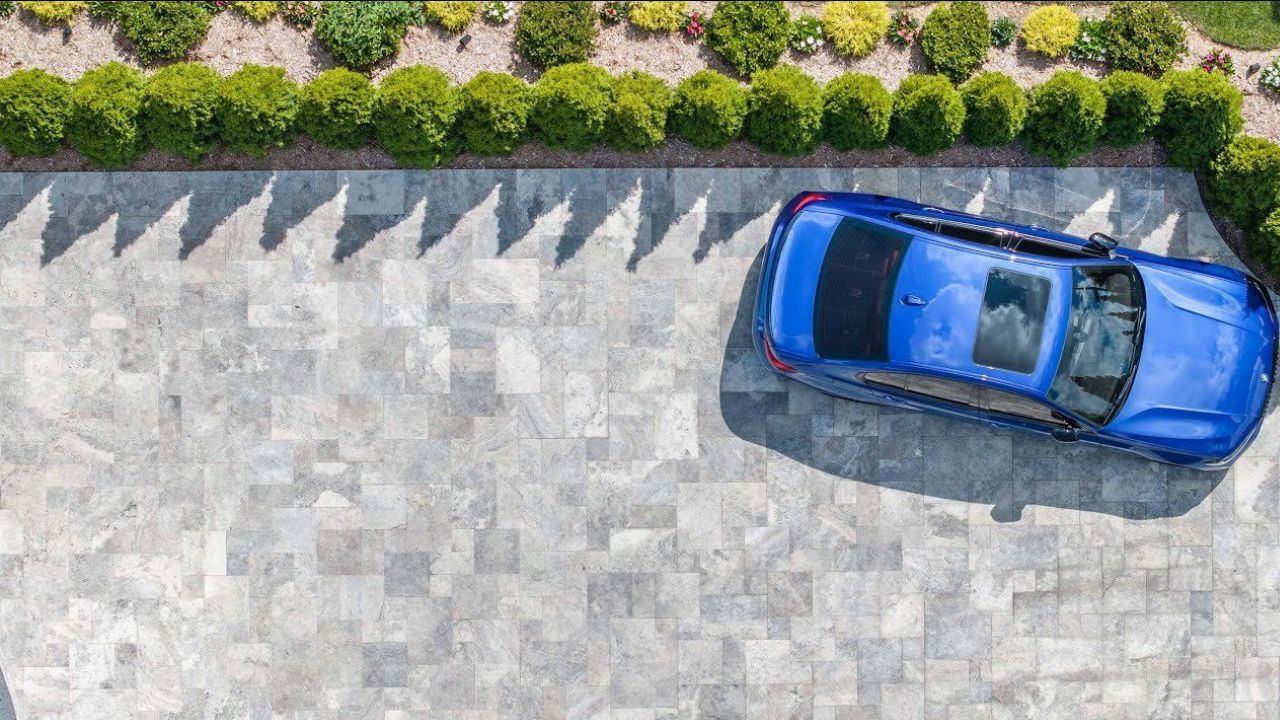
Travertine is popular for use as pool coping around swimming pools because it stays cooler than many paving materials. For driveways, filled and premium-grade travertine offers the best performance.
Benefits of Travertine
- Elegant appearance
- Comfortable surface temperature
- Natural texture
Travertine works best for homes with lighter vehicle traffic and regular maintenance schedules. Filled, premium-grade travertine with adequate thickness provides much better driveway performance than lower-grade material.
Best Natural Stones for Driveways According To Real-World Durability
While laboratory testing is crucial, it is just one part of the story; it is the real-life application that tells the truth. Contractors consistently report similar patterns after years of residential use.
| Stone | Tire Wear | Surface Cracking | Weather Resistance | Maintenance Level | Expected Lifespan |
| Granite | Excellent | Rare | Excellent | Low | 75–100+ Years |
| Quartzite | Excellent | Rare | Excellent | Low | 75+ Years |
| Basalt | Excellent | Rare | Excellent | Low | 75–100 Years |
| Bluestone | Very Good | Low | Very Good | Moderate | 50–75 Years |
| Limestone | Good | Moderate | Good | Moderate | 40–60 Years |
| Travertine | Good | Moderate | Good | Moderate | 40–60 Years |
These performance ratings are based on a combination of published stone properties, field performance, and long-term residential installation experience. Actual performance depends on stone quality, installation practices, and local climate.
The pattern remains consistent throughout the different climates. Dense stones with low porosity require fewer repairs and maintain their appearance longer. Many homeowners want to go for asphalt or gravel driveways, but they require consistent maintenance and rearrangements too often.
Why Is Stone Driveway Installation Important?
Though you know the importance of the proper material choice, it is not enough if it is not installed properly. Even the strongest natural stone can fail if installed over a weak foundation. Professional paver driveway installation usually includes:
- Proper excavation
- Compacted crushed stone base
- Correct drainage slope
- Appropriate bedding layer
- Joint stabilization
- Correct stone thickness
For better traction, choose finishes that meet ANSI A326.3 slip-resistance standards.
Many driveway problems result from poor installation rather than poor materials. That is why experienced contractors, including the team at NT Pavers, place equal emphasis on material selection and foundation preparation.
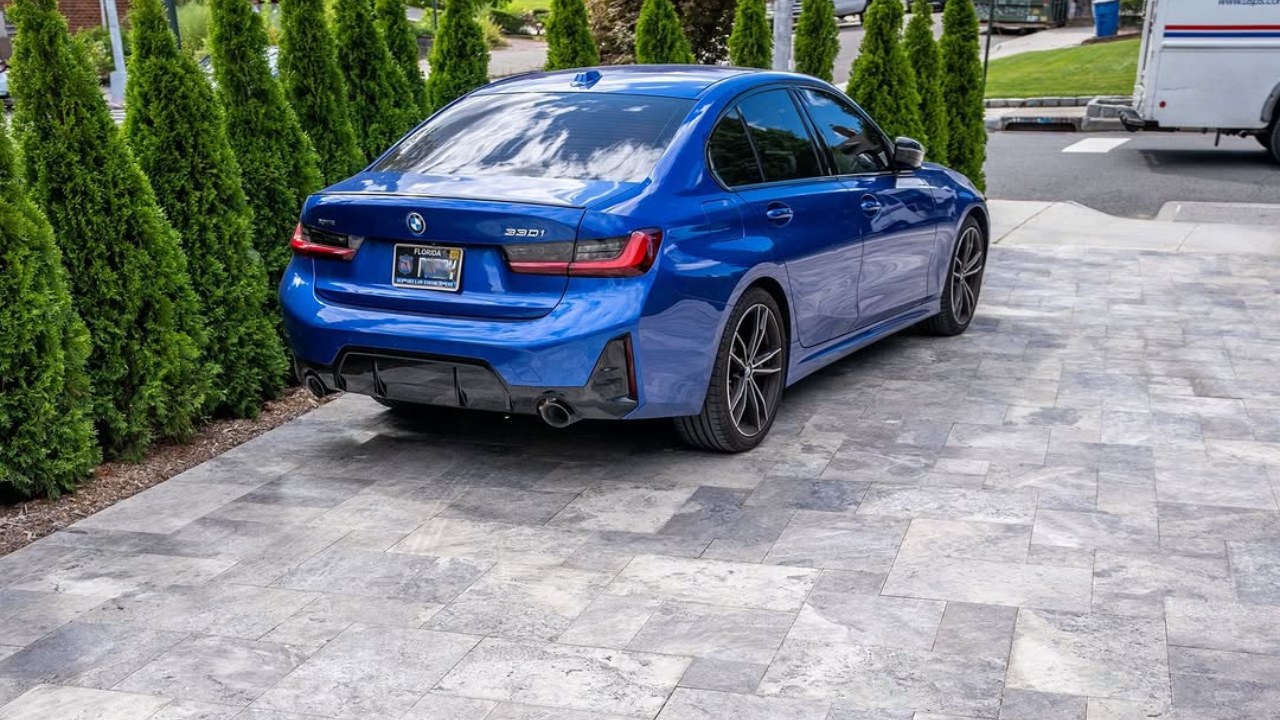
At NT Pavers, we’ve installed natural stone driveways throughout New Jersey in climates ranging from coastal areas to regions with repeated freeze-thaw cycles. Based on those installations, granite, quartzite, and basalt consistently deliver the best long-term performance. In our experience, most driveway failures are caused by poor base preparation rather than the natural stone itself.
How To Choose The Right Stone Pavers For Your Climate?
Climate is a major factor when choosing the natural stone pavers for driveway.
Cold regions
Choose basalt, granite, or quartzite because these stones resist freeze-thaw cycles and absorb very little moisture. Their low water absorption also helps them perform well in ASTM C666 freeze-thaw testing.
Hot climates
The surface will be exposed to consistent sunlight, causing painful warmth. Stones like limestone, light-colored granite, and travertine remain cooler under direct sunlight.
Wet environments
Low-porosity stones such as granite and basalt reduce the risk of water-related deterioration.
Matching the stone to local weather often extends driveway life by decades. Homeowners should evaluate both climate conditions and expected vehicle loads before selecting a stone, as the best choice varies depending on environmental exposure and daily use.
Which Natural Stone Offers the Best Long-Term Value?
The cheapest material rarely offers the lowest lifetime cost. A premium stone usually requires fewer repairs, less maintenance, and fewer replacements. Here is a lifetime value comparison.
| Stone | Initial Cost (per sq ft) | Compressive Strength (PSI) | Sealing Frequency | Typical Lifespan | Overall Value |
| Granite | $40–$100 installed | 19,000–32,000 | Every 3–5 years | 100+ years | ⭐⭐⭐⭐⭐ |
| Quartzite | $50–$120 installed | 20,000–30,000+ | Every 3–5 years | 100+ years | ⭐⭐⭐⭐⭐ |
| Basalt | $35–$85 installed | 25,000–60,000 | Every 4–6 years | 75–100+ years | ⭐⭐⭐⭐⭐ |
| Bluestone | $30–$60 installed | 8,000–20,000 | Every 2–3 years | 50–100 years | ⭐⭐⭐⭐ |
| Limestone | $20–$50 installed | 4,000–20,000 (varies widely by type) | Every 1–2 years | 30–75 years | ⭐⭐⭐ |
| Travertine | $25–$50 installed | 3,500–10,000 | Every 1–2 years | 25–50 years | ⭐⭐⭐ |
Although granite, quartzite, and basalt typically require a higher upfront investment, their lower maintenance needs and longer service life often make them the most cost-effective choices over several decades.
The lifetime value shouldn’t just include driveway paving cost. Many homeowners find that investing more upfront on the natural stone pavers for driveways reduces the ownership costs over several decades.
Which Natural Stone Is Best for Your Driveway?
Choosing the right driveway stone depends on your priorities.
- Choose granite pavers for driveway if you want maximum durability and minimal maintenance.
- Choose quartzite pavers for driveway if you want premium natural beauty with exceptional strength.
- Choose basalt pavers for driveway for modern homes and outstanding long-term performance.
- Choose bluestone pavers for driveway for traditional landscaping and classic curb appeal.
- Choose limestone pavers for driveway for contemporary homes in mild climates.
- Choose travertine pavers for driveway if keeping the surface cooler underfoot is a priority.
Best Natural Stone Pavers for Driveway FAQs
Let’s answer your questions about the best natural stone pavers for driveway.
What is the most durable natural stone pavers for driveway?
Granite is widely popular as the most durable natural stone pavers for driveway. It blends exceptonal strength with low water absorption and exceptional durability.
Is bluestone strong enough for a driveway?
Yes. Thicker bluestone performs great for residential driveways when installed over a properly prepared base and maintained with regular sealing.
Which natural stone requires the least maintenance?
Granite and Basalt pavers for driveway are the low-maintenance pavers. They have a dense structure that resists staining, moisture, and surface wear.
Does natural stone crack under vehicle weight?
No. Quality natural stone rarely cracks under normal residential traffic. Most natural stone driveway pavers crack because of poor base preparation, inadequate drainage, or improper installation.
Is natural stone better than concrete for driveways?
Yes. Natural stone often lasts much longer than poured concrete, offers better repair options, and provides greater visual appeal.
How thick should natural stone be for a driveway?
Most residential driveways use natural stone that is at least 30–40 mm (1¼–1½ inches) thick. However, the exact thickness depends on the stone type, expected vehicle loads, and installation method.
Bottom Line
When it comes to designing a residential driveway, preference goes beyond aesthetics. You need to choose pavers that aren’t just beautiful but also offer durability. They shouldn’t crack under heavy loads and should withstand harsh outdoor climates. Stones like Granite, Bluestone, premium travertine, and Basalt can be a great choice for driveways.
They have been proven to be a reliable option for driveways with real results. However, the longevity of these stones also relies on the installation approach. So make sure you don’t just choose the material; choose the installation, too. A thoughtful driveway ideas will not just be functional but will also improve curb appeal.