
Most homeowners will spend quite some time choosing the perfect pavers for their walkway’s aesthetic but overlook the border. However, the border is a defining element of their patio and walkways. It creates a finished look, adds structure and separates outdoor spaces while tying the landscape into the hardscape. As outdoor living is evolving, homeowners are selecting border design as carefully as the paver selection. They are focusing on functionality with thoughtful design. From porcelain pavers to natural stone, these creative border ideas will elevate any patio or walkway with a seemingly customized look.
1. Frame Your Patio Like a Piece of Art
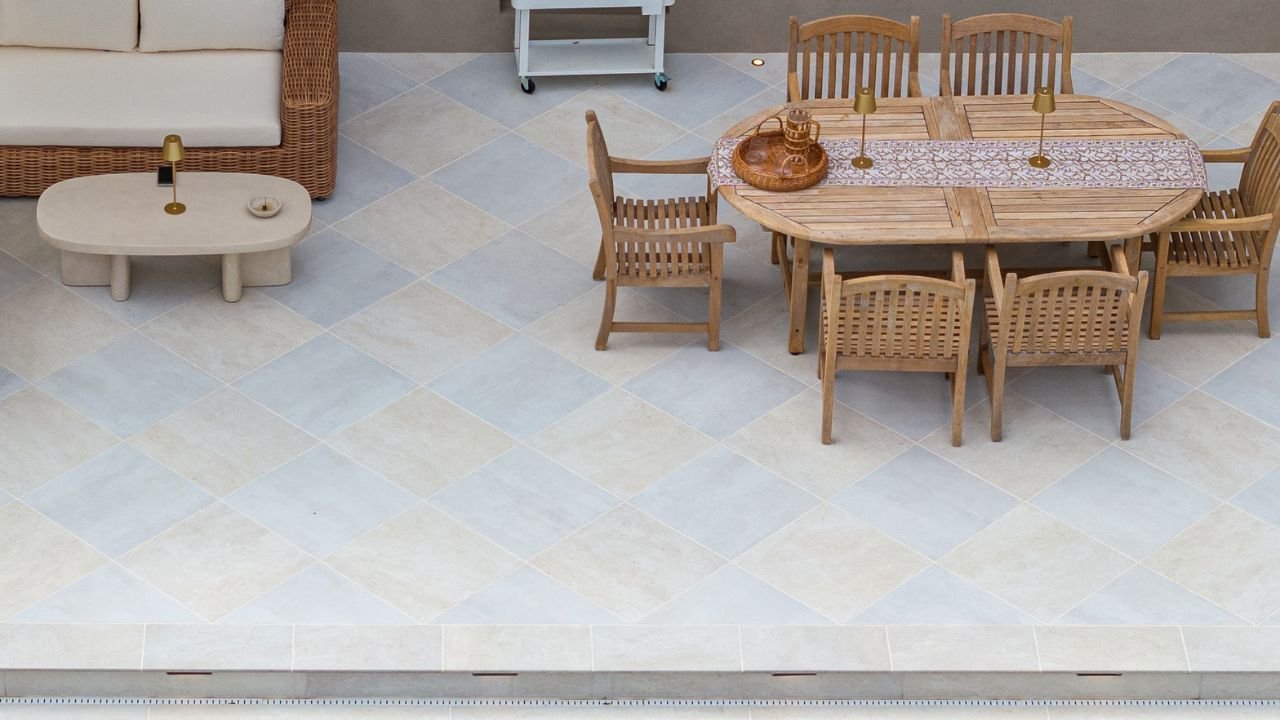
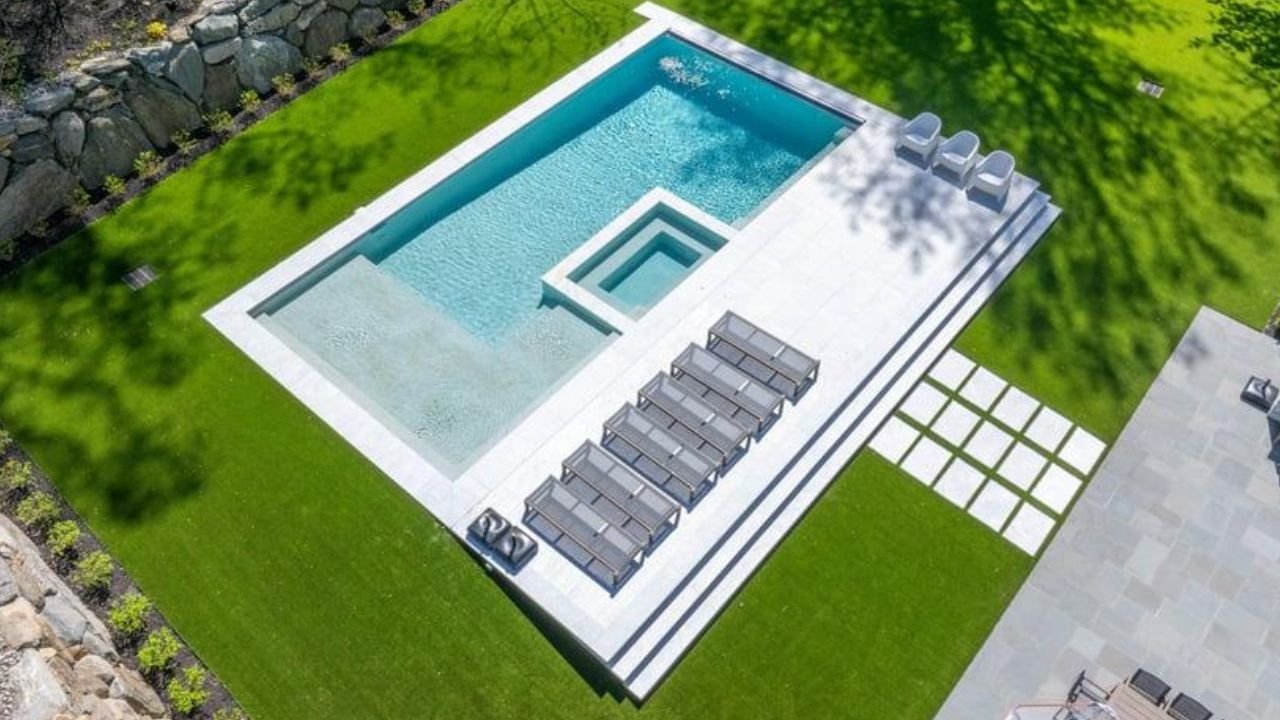
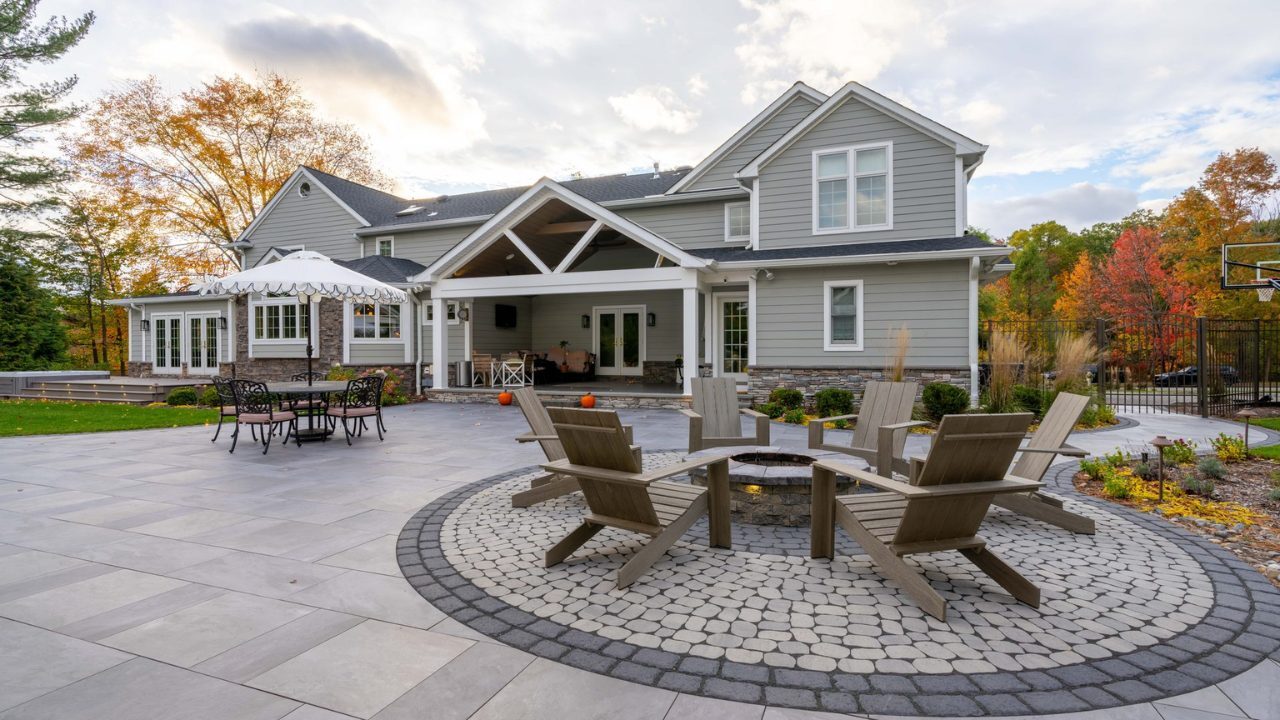
One of the simplest yet most effective border designs is the picture-frame border. Instead of matching the patio, use a contrasting stone around the entire perimeter. The border acts like a frame around artwork that draws attention to the paving pattern inside.
For instance, you can use light ivory travertine framed with charcoal porcelain or gray concrete pavers bordered with bluestone. A warm limestone surrounded by dark granite is another way to create that picturesque look.
This design works particularly well on large patios because it creates definition without making the space feel busy.
2. Create Depth with a Double-Band Border
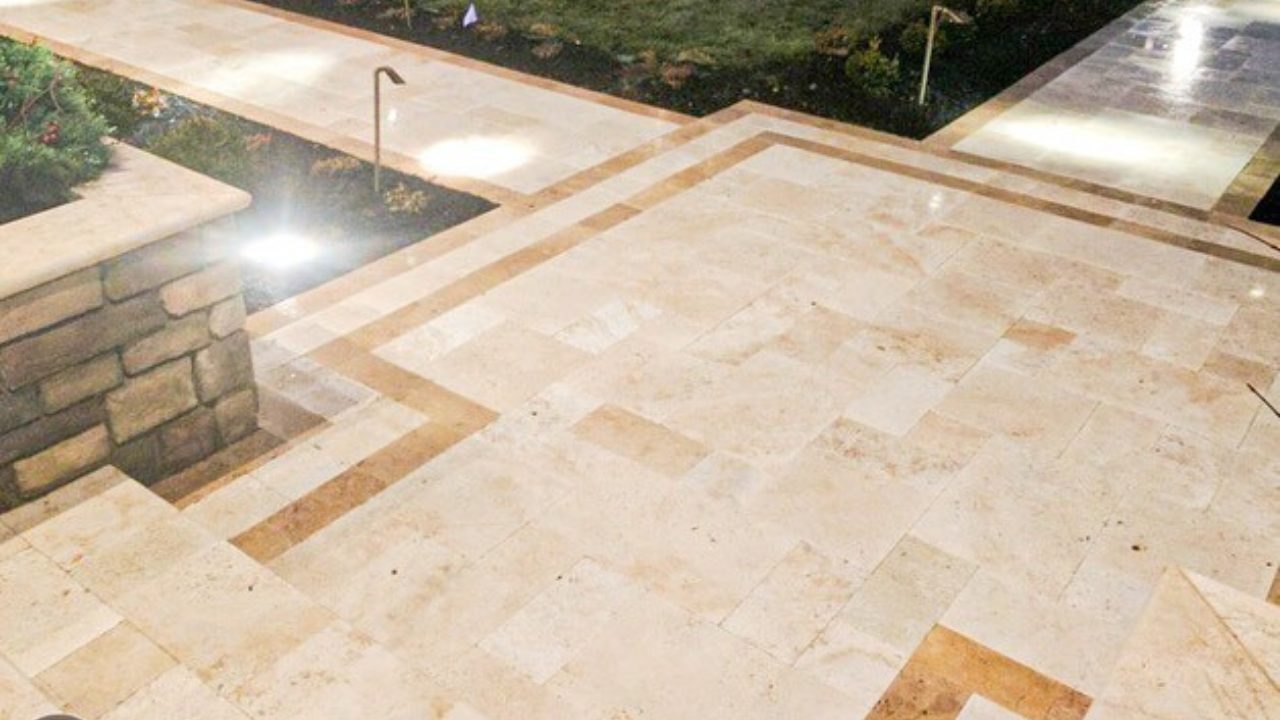
You can add a single border to your walkway but use two instead. Opt for a narrower inner band paired with a wider outer band to add depth and a layered appearance. Think of it as:
- A charcoal accent strip.
- A lighter border made with limestone pavers.
- The main patio pattern inside can be complemented by a cohesive garden walkway.
The eye will follow each layer naturally, which makes the patio appear larger and more refined. This approach works especially well around the outdoor kitchens and dining spaces where you want to define separate zones without adding walls.
3. Let Curves Follow Your Landscape
Straight borders are well suited to formal homes, but they are not always the best choice. If your yard already has curved garden beds, mature trees, natural slopes, and water features, then let the border follow those shapes.
Curved borders soften hard edges and help the patio blend into the landscape instead of competing with it. Natural stone pavers perform especially well here because the texture complements organic plantings.
4. Mix Stone Textures Instead of Matching Everything
Many homeowners believe that every paving material should match, but the opposite is often more suitable and interesting. You can pair:
- Smooth porcelain pavers with split-face granite edging.
- Honed limestone with textured bluestone.
- Travertine with cobblestone accents.
The difference in texture creates contrast while keeping the overall color palette consistent.
This layered approach has become increasingly popular as outdoor spaces shift toward a more natural, custom-built appearance in 2026.
5. Add Decorative Corner Features
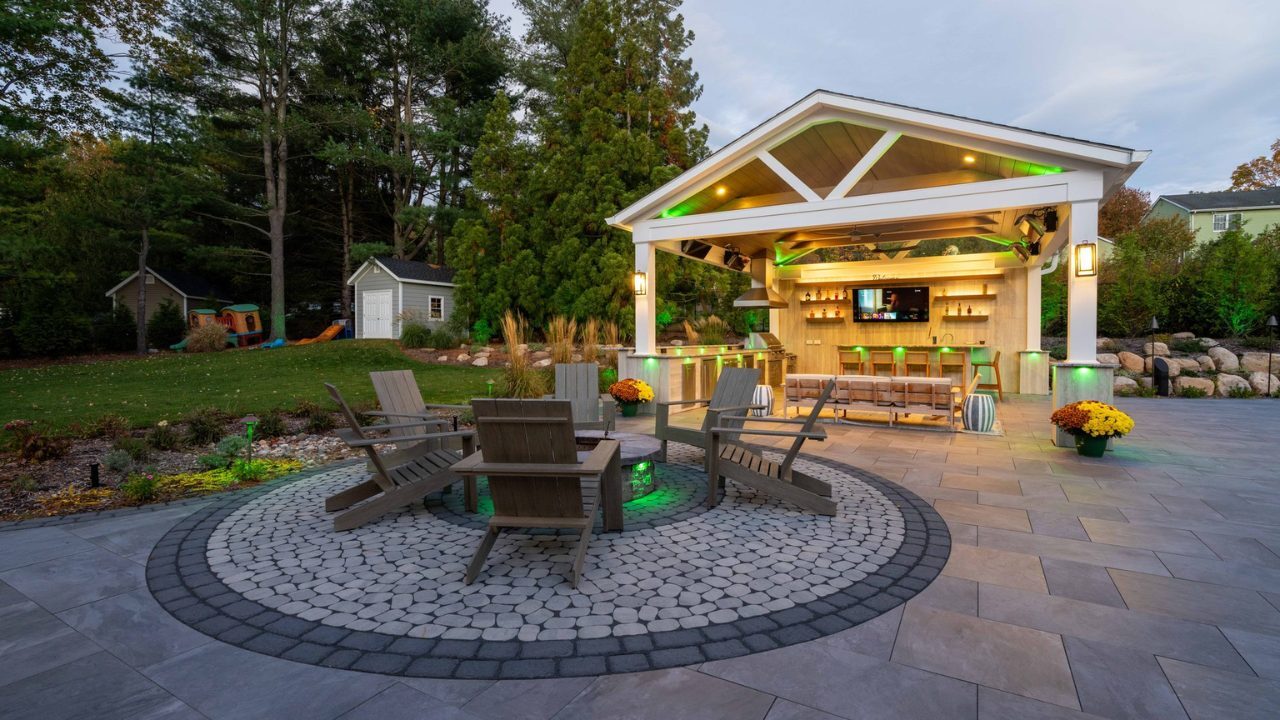
Don’t forget the corner while designing a walkway. Corners usually become forgotten spaces. So instead of creating a simple border around the patio, create decorative corner inlays using contrasting stones. The border Ideas include small geometric squares, diamond-shaped inserts, circular stone medallions, and French pattern corner details.
These design elements may seem small but catch the eye without overwhelming the main paving pattern. They also help large rectangular patios feel less repetitive.
6. Separate Hardscape from Landscaping with a Gravel Ribbon
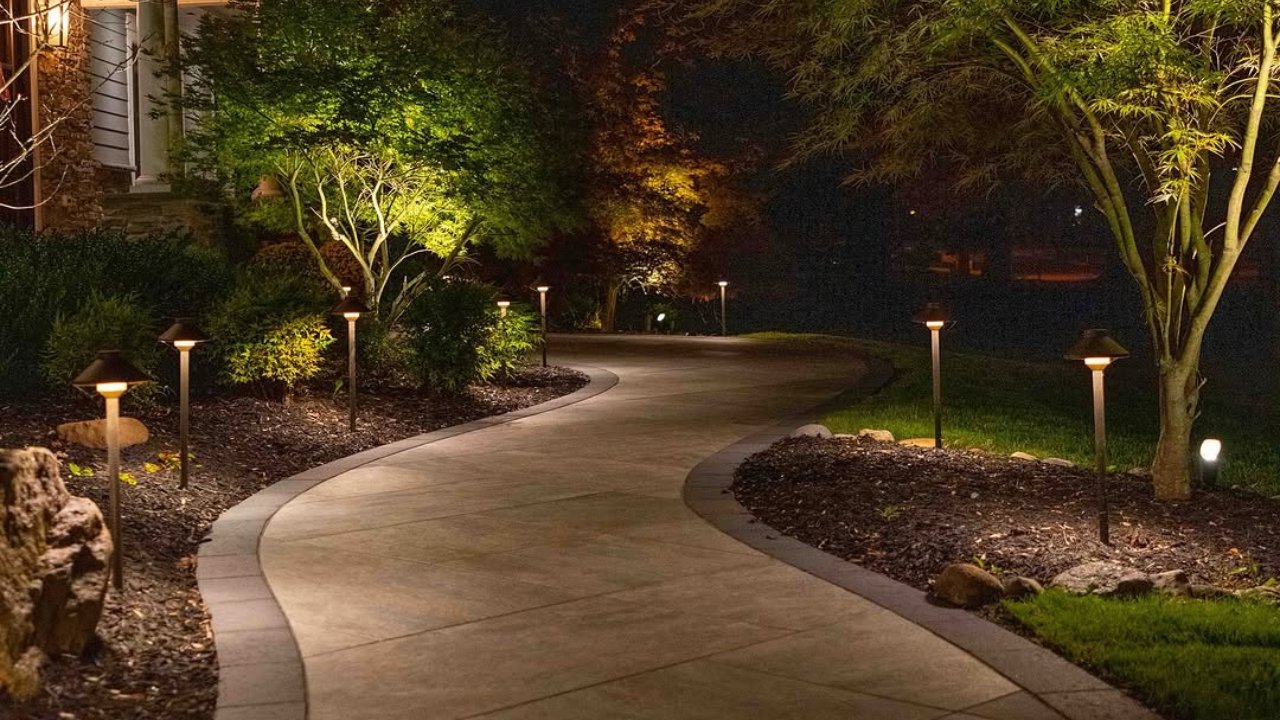
A narrow gravel border between the patio and planting beds builds a clean transition. This design is functional in several ways; it improves drainage and reduces soil washing onto the patio. It creates visual separation and makes maintenance of planting beds convenient. This simple detail also creates a smooth transition between the hardscape and surrounding landscape. A pea gravel walkway with stepping stones complements this border design by creating a natural transition between patios and planting beds.
Stones like river rock, crushed granite, or decorative stone all work well. You can make the transition crisp by adding metal edging underneath the gravel, which will allow the border itself to remain visually subtle.
7. Play with Border Patterns, Not Just Colors
A border does not require a different color to stand out. Just changing the laying pattern often creates sensible contrast. Popular options include:
Soldier Course
Pavers stand vertically along the edge.
This creates a formal appearance that suits traditional homes.
Sailor Course
Pavers run parallel to the edge.
The effect feels calmer and works well on modern patios.
Herringbone Accent Border
Instead of using herringbone across the whole patio, limit it to the border.
The resulting appearance creates movement while keeping the center simple. Pattern changes usually look more sophisticated than color changes because they rely on craftsmanship rather than contrast alone, which is a key aspect of garden design.
8. Make the Border Glow After Sunset
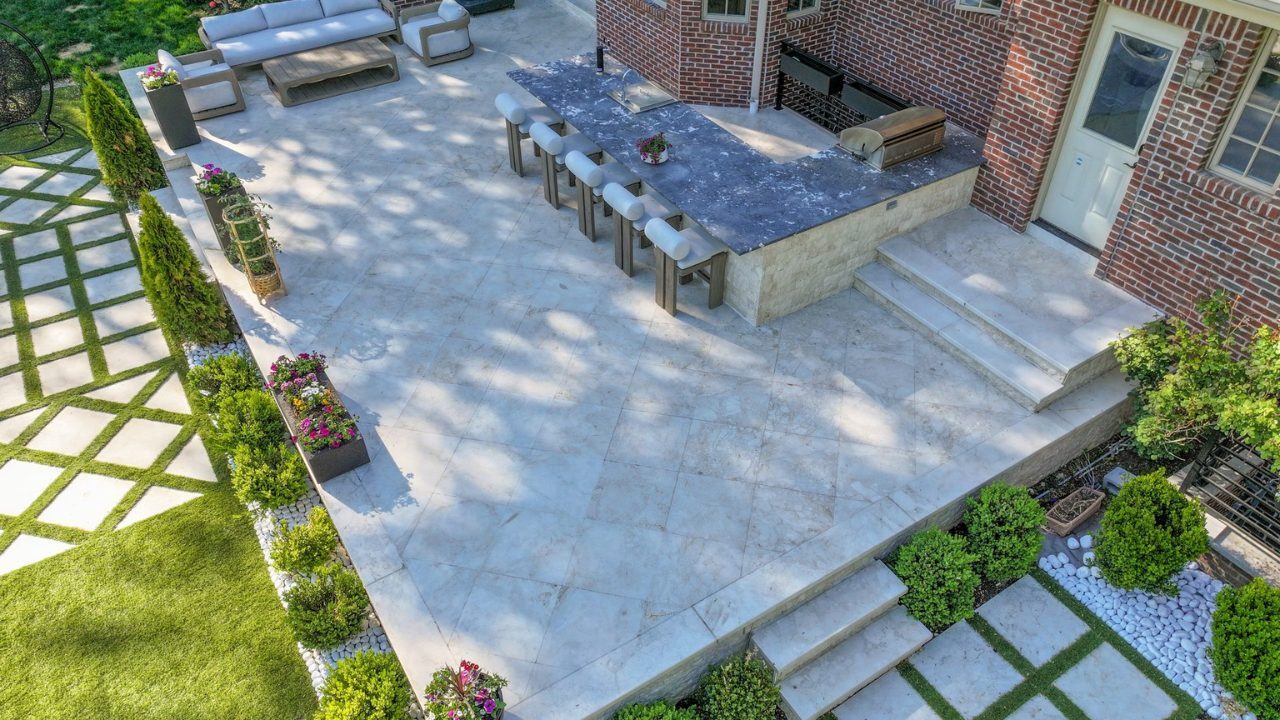
Modern patios need to withstand functionality both day and night. Instead of adding lights as an afterthought, design the border around them. Popular options include:
- Recessed LED strip lighting.
- Low-voltage path lights.
- Illuminated stone caps.
- Soft uplighting beside border plantings.
Lighting adds depth after dark while keeping the walkways safer. The border becomes both a design feature and a practical guide for guests moving through the landscape. Using smart outdoor lighting systems is becoming more common, which is why integrated border lighting is expected to stay trendy.
9. Let the Border Flow into Steps and Seating
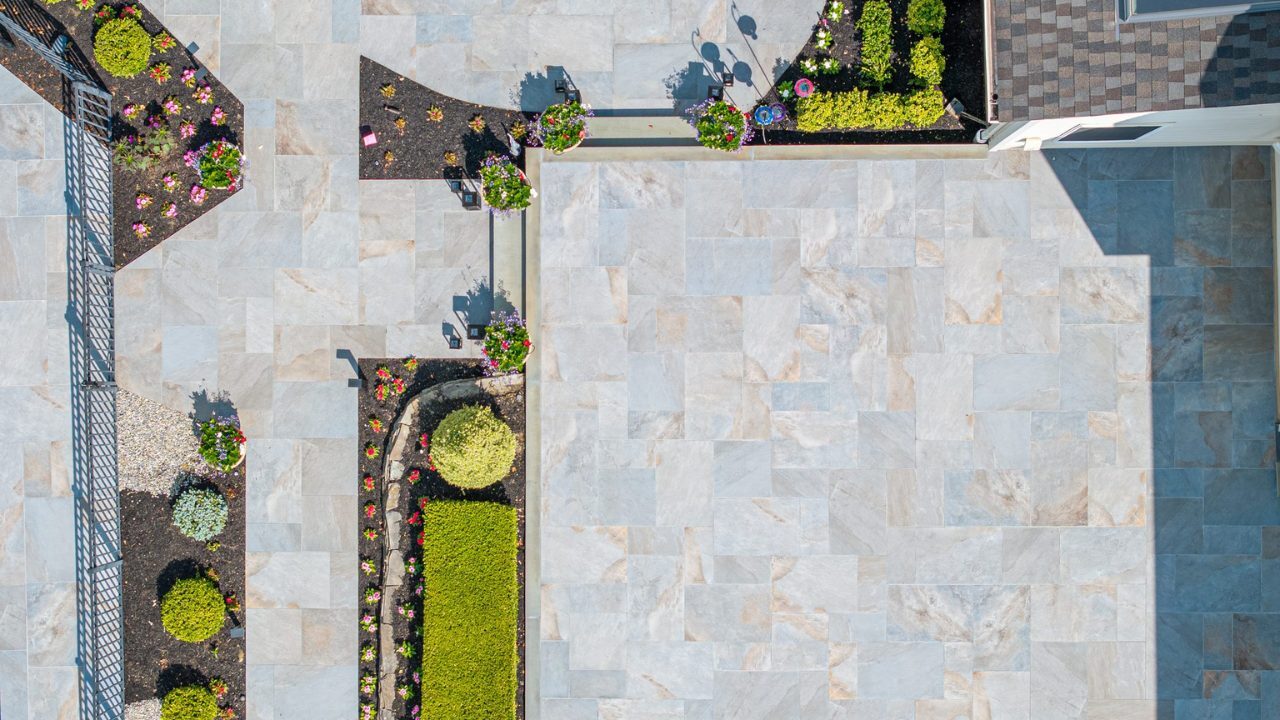
One of the major mistakes while thinking about creative border ideas is stopping the border at the patio edge. Instead, continue it through the garden steps, seat walls, fire pit surrounds, outdoor kitchen bases, and walkway intersections.
Repeating the same border material creates a continued effect through the landscape. Instead of making the border a separate project, every outdoor feature becomes part of one connected design. This approach is common in professionally designed landscapes because it gives the property a more cohesive appearance.
Why Border Design Matters?
Many homeowners see a border as the final step of a paving project. But the fact is, it should be part of the design from the beginning. A thoughtfully planned border can keep the pavers stable over time. This is why many cheap patio paver ideas focus on border designs before selecting paving materials.
It can define entertaining and walking areas while connecting patios with gardens. Highlight the curves and architectural features. A creative border design will improve the overall flow of your landscape.
Don’t just think about the material to use, but learn about how you can make an impactful appearance for your space. That simple shift often leads to a more cohesive outdoor design.
Choosing the Right Pavers for Your Border
Not all stone types work the same way. Climate, traffic, maintenance, and design style all influence stone performance. Here are the best materials to choose for your border.
| Material | Best Design Style | Texture | Durability | Maintenance | Best Border Use |
| Travertine | Mediterranean, poolside, classic | Soft, naturally textured | High | Low to moderate | Picture-frame borders, curved patios |
| Limestone | Contemporary, minimalist | Smooth with subtle variation | High | Moderate | Double-band borders and outdoor rooms |
| Bluestone | Traditional and modern | Natural cleft or thermal finish | Very High | Low | Walkways and high-traffic borders |
| Granite | Modern and architectural | Dense, fine-grained | Excellent | Very Low | Accent edges, steps, and driveways |
| Porcelain Pavers | Contemporary outdoor living | Uniform finish | Excellent | Very Low | Clean-lined patios and lighting-integrated borders |
At NT Pavers, many homeowners combine porcelain with natural stone rather than choosing one material alone. This creates contrast while maintaining a cohesive outdoor design that integrates well with the paver walkway.
Border Design Tips That Make a Lasting Difference
Even the most creative border ideas will not perform well without proper planning. Choosing the right paver base material is one of the most important steps for building a stable and long-lasting border. Here is a breakdown of the rules to follow when designing a border for a patio or walkway.
| Border Design Tip | Why It Matters | Best Practice |
| Build on a Stable Base | Prevents borders from shifting, settling, or separating over time, ensuring the durability of your retaining wall. | Install a properly compacted aggregate base before laying pavers or natural stone. |
| Plan Drainage First | Protects the border, patio, and surrounding landscape from water damage. | Create a gentle slope away from buildings and ensure water drains efficiently to protect your garden design. |
| Match Your Home’s Architecture | Creates a cohesive look between the hardscape and the home’s design. | Choose clean-lined porcelain or granite for modern homes, and limestone, brick, or bluestone for traditional styles. |
| Keep the Color Palette Simple | Helps the border complement the patio instead of competing with it. | Limit the design to one or two complementary colors for a balanced appearance. |
| Think About the Whole Landscape | Creates a seamless flow between outdoor spaces and improves visual continuity. | Extend border materials or design elements across patios, walkways, steps, planting beds, and outdoor living areas. |
Creative Border Ideas FAQs
Let’s answer your questions about border ideas for a patio or walkway.
What is the best border for a patio?
The best borders for patios are travertine, limestone, bluestone, granite, and porcelain. But the best border depends on your design goals.
Should patio borders be a different color?
Yes. A contrasting color can help define the patio and highlight the paving pattern without overwhelming the design.
Can I mix different border materials?
Yes. Mixing different materials such as porcelain and natural stone creates texture and visual interest. This adds colors and finishes that complement each other.
Do borders help keep pavers in place?
Yes. Creative border ideas work with edge restraints to reduce movement and protect the paving pattern. It also improves the long-term stability of the installation.
Are curved borders better than straight borders?
No. Neither is universally better. Curved borders are well suited to natural landscapes, while straight borders complement formal and modern designs.
What is the lowest-maintenance border material?
Porcelain and granite are the lowest-maintenance border materials due to their resistance to fading and weathering.
Conclusion
Creative border ideas do more than define an edge. They shape how people move through the space, connect different landscape features, and add long-lasting character. From a picture-frame border, a layered double band, a curved natural stone edge, to integrated lighting, they should complement the entire outdoor space.
By mixing thoughtful planning with quality materials, homeowners can create outdoor spaces that look balanced, function well, and look classy. That design-first approach is why carefully selected natural stone and porcelain systems, like those offered by NT Pavers, continue to play a central role in well-crafted landscapes.