
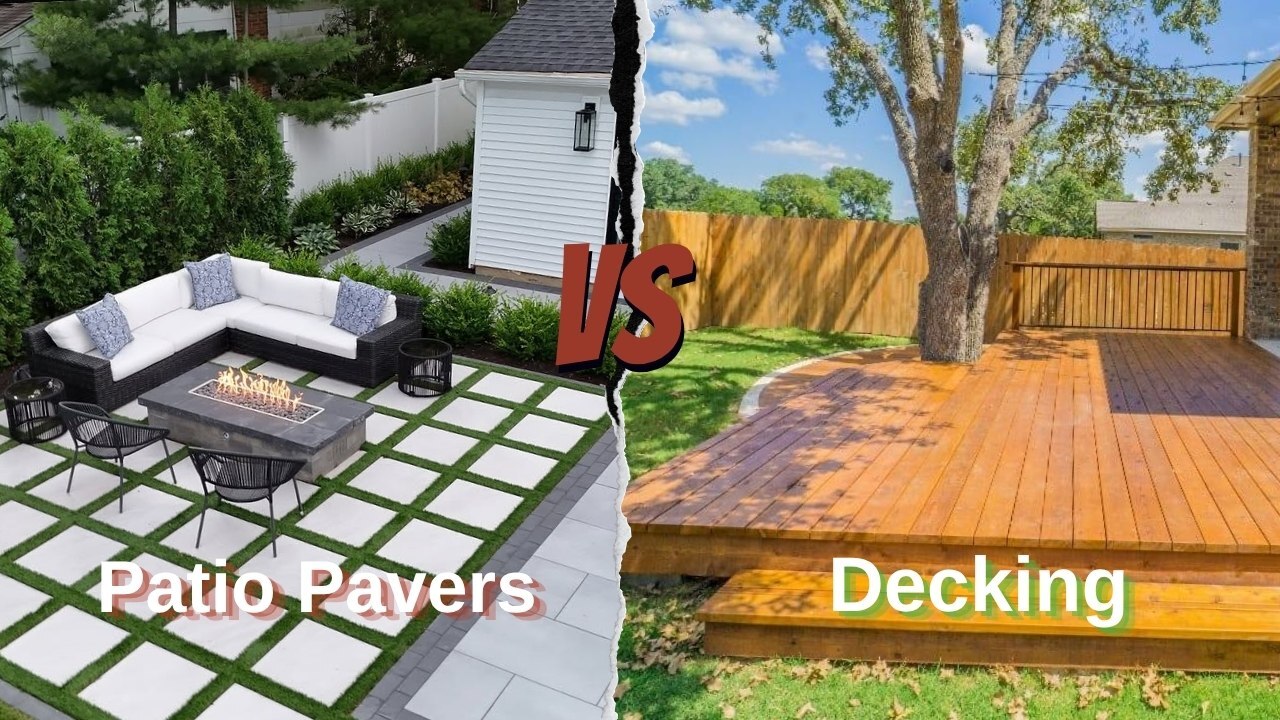
Outdoor landscape design can help you feature some of the most creative elements and create stunning landscaping. Two of the most popular elements are patio pavers and decking, and they are often mixed up. Many homeowners come to the point where they want to change an underused backyard into a comfortable outdoor living area. They wonder whether to choose patio pavers or install a deck.
While both choices have perks of their own, the final decision is totally up to you. It depends upon your plan to use the space, the condition, and how long you are going to own the space. Continue reading the following for a comparison between patio pavers vs decking and their pros and cons for an informed decision.
Patio Pavers vs Decking Comparison
Here is a detailed comparison between patio pavers and a wooden deck, with every key difference for the best information. Take a look at the following table.
| Feature | Patio Pavers | Decking |
| What It Is | Modular surface system made of stone, concrete, brick, or porcelain installed over a compacted aggregate base | Elevated structural system built with joists, beams, posts, and surface boards |
| Best Use Cases | Ground-level patios, outdoor kitchens, pool decks, fire pits, walkways, and courtyards | Elevated outdoor living, sloped yards, second-story exits, waterfront views |
| Structural Dependency | Ground-supported system; performance depends on base preparation and compaction | Structurally load-bearing system dependent on framing integrity and fasteners |
| Climate Suitability | Highly stable in freeze-thaw cycles when properly installed with a drainage base | Performance varies by material; wood is moisture-sensitive, and composite is more stable |
| Moisture Behavior | Permeable joints allow drainage into base layers; reduce surface pooling | Water drains between boards, but can accumulate under the structure if ventilation is poor |
| Maintenance Level | Low to moderate (joint sand, occasional leveling, cleaning) | Moderate to high (cleaning, sealing for wood, board replacement, inspections) |
| Typical Lifespan | 30–50+ years, depending on base quality and material type | 10–30 years, depending on wood vs composite and maintenance routine |
| Repairability | Individual units can be lifted and replaced without affecting the surrounding area | Repairs often require partial board removal and matching replacement material |
| Cost Per Sq Ft Installed | ~$15–$50+ depending on material (porcelain and natural stone higher) | ~$20–$65+ depending on wood, composite, railing, and elevation complexity |
| Substructure Complexity | Requires excavation, grading, geotextile, and compacted aggregate base | Requires engineered framing, footings, posts, and ledger attachment |
| Load-Bearing Behavior | Distributes load across compacted base; very stable under heavy static loads | Load depends on joist spacing and structural design; must meet code spans |
| Drainage Performance | High when properly graded; water infiltrates through joints into the base system | Depends on spacing, slope, and under-deck ventilation; risk of trapped moisture below |
| Thermal Comfort | Stone and porcelain can heat up in direct sun; retains coolness in shaded areas | Wood feels cooler underfoot; composite can retain heat in the summer sun |
| Design Flexibility | High pattern, color, and layout variation (herringbone, modular, French pattern) | Flexible in elevation, shape, multi-level layouts, and integrated features |
| Integration with Landscape | Blends seamlessly with gardens, retaining walls, and hardscape zones | Better integration with upper floors, decks, and architectural extensions |
| Snow & Ice Handling | Can use de-icing salts (material dependent); surface remains stable | Ice buildup between boards can create slip hazards if not maintained |
| Pest / Biological Resistance | Not affected by termites or rot | Wood decks vulnerable to termites, rot, and fungal decay |
| Resale & Appraisal Impact | Strong curb appeal due to permanence and perceived “premium hardscape” feel | Strong when it expands usable square footage or creates a view-based living space |
| Inspection & Compliance | Typically simpler permitting; less structural code complexity | Requires structural code compliance, railing height rules, and footing depth checks |
| Failure Risk Pattern | Failures usually surface-level (settling, joint loss, uneven pavers) | Failures can be structural (joist rot, ledger failure, footing movement) |
What Are Patio Pavers?
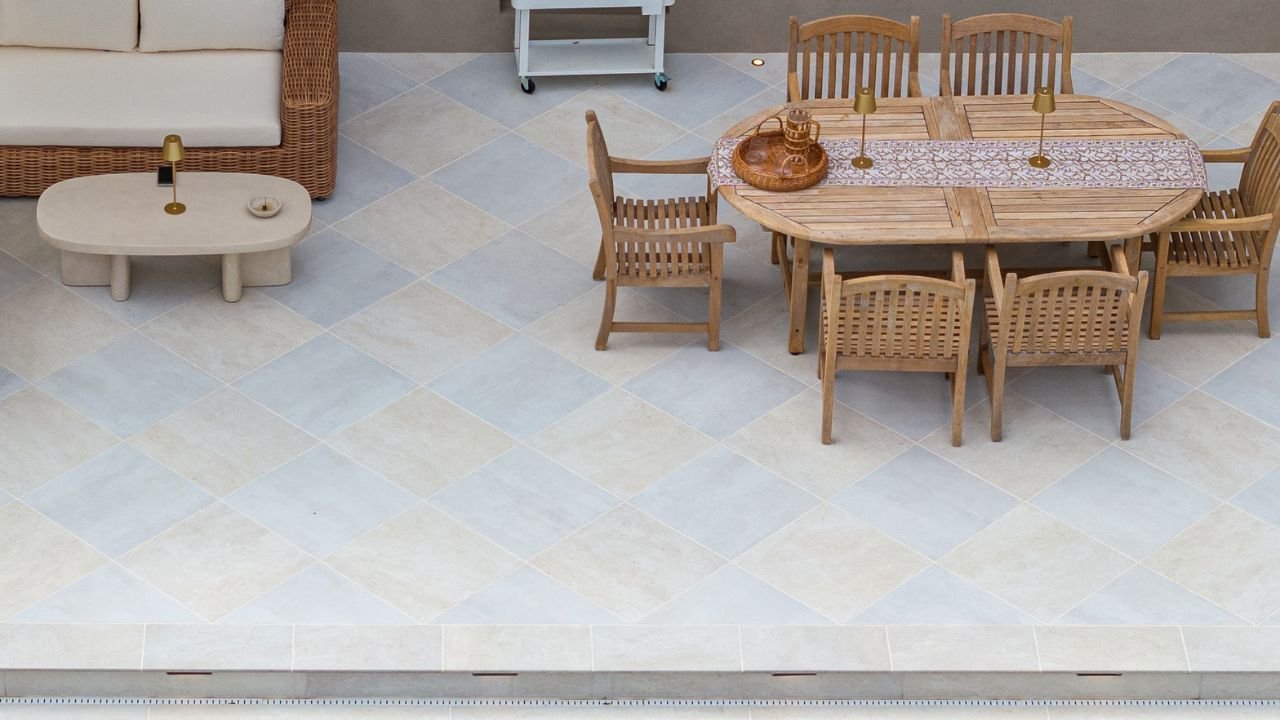
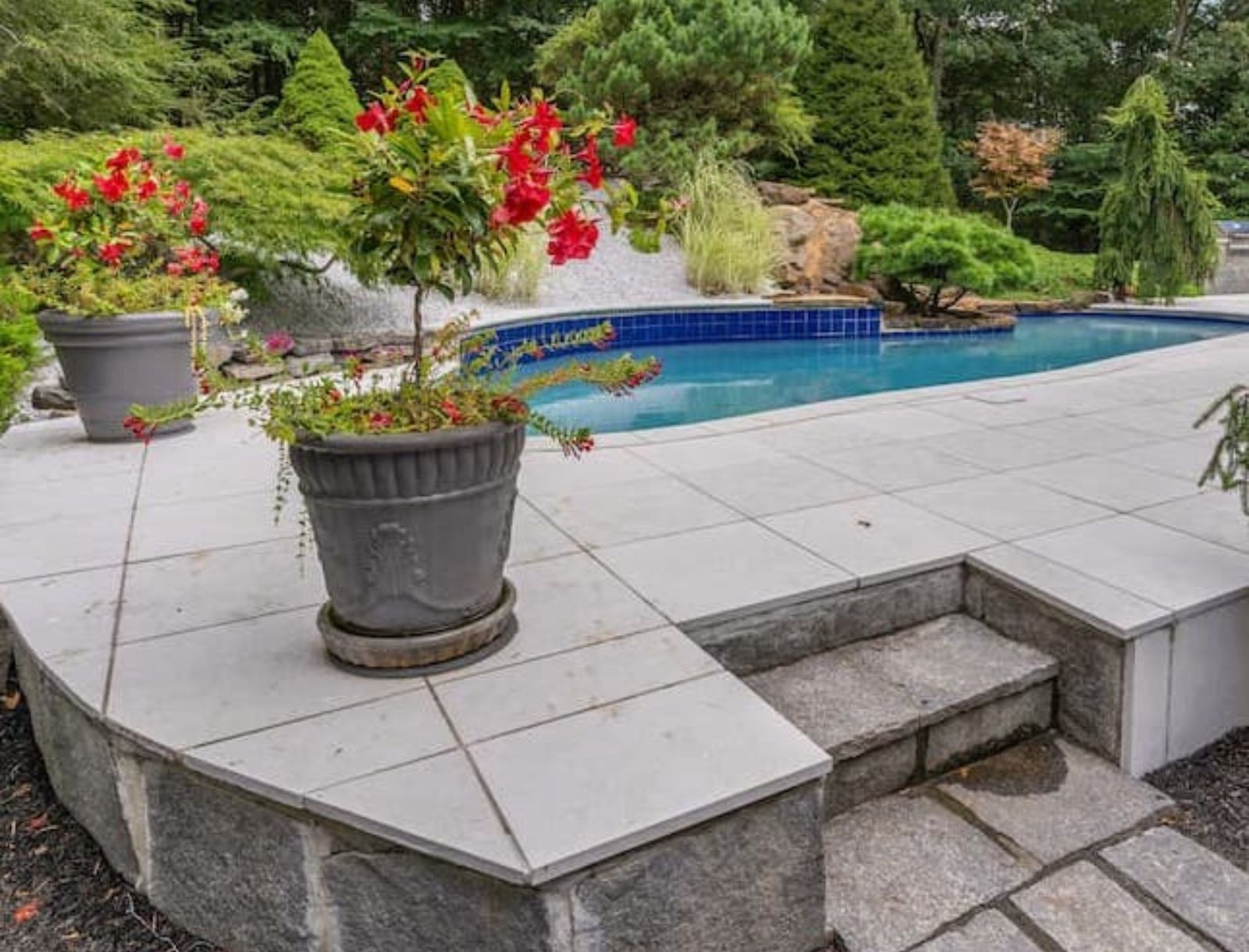
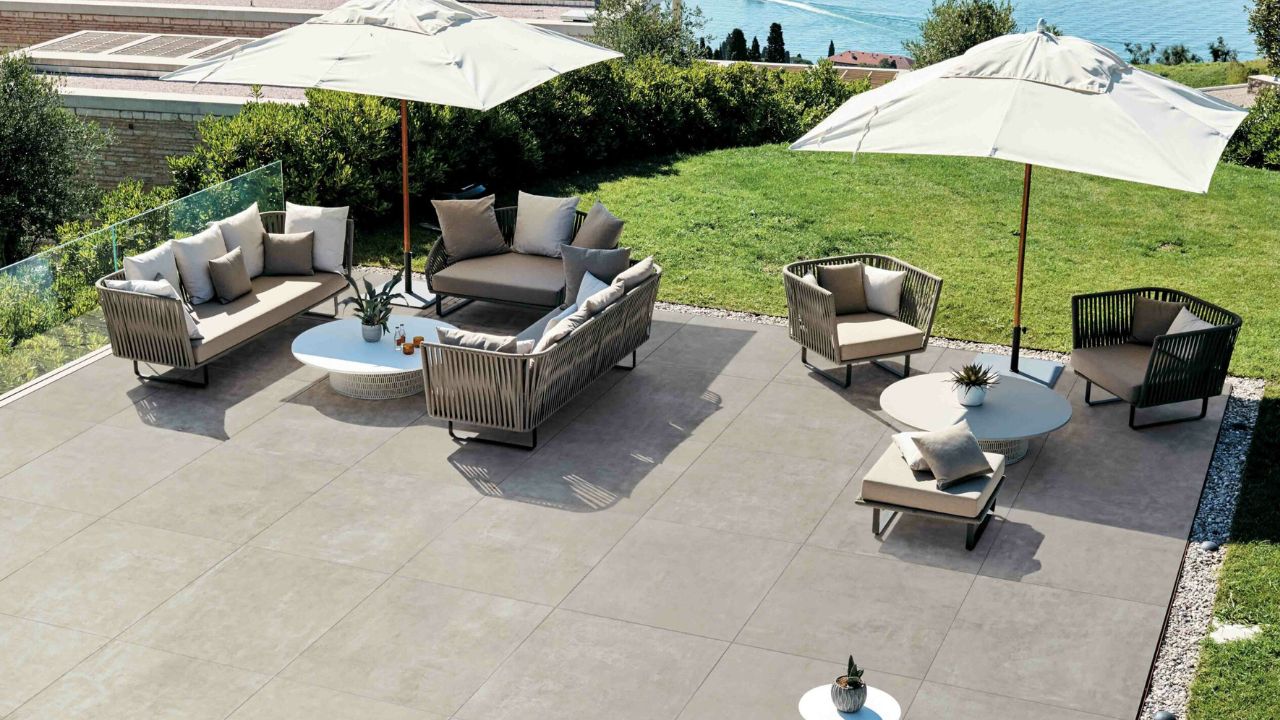
Patio pavers are individual units crafted from concrete, natural stone, and porcelain that are installed over a compacted base system. Popular patio paver materials are concrete paving slabs, natural stone pavers, brick pavers, and porcelain pavers.
Pavers create a strong and solid surface when installed correctly. They sit directly on the ground and can be customized with a wide range of colors, textures, patterns, and layouts. Unlike poured concrete slabs, pavers consist of individual units that interlock and perform together as a flexible pavement system. A properly installed paver patio includes an excavated subgrade, compacted aggregate base, bedding layer, pavers, and joint material.
The layered structure helps distribute loads and reduce cracking in the pavers. The easy repairability makes them a great return on investment in the long run.

What Is Decking?
A deck is an elevated platform that is supported by a structural framing system. Decking consists of surface boards that are installed over a structural framing system supported by posts and beams. The most common elevated deck materials are pressure-treated lumber, cedar, redwood, composite decking, and PVC decking.
Decks are built above the ground level, unlike patio. This elevated structure helps homeowners to create usable outdoor space even when there are challenging site conditions. In some modern installations, adjustable deck supports are used to help create a stable and level surface over uneven ground.
Patio Pavers Climate Performance
When comparing patio pavers vs decking, climate performance matters a lot. One of the major reasons that patio pavers are gaining popularity is their stable performance in different types of weather conditions.
Cold Climates
When pavers are installed properly, they often outperform concrete slabs in freeze-thaw regions. This is because individual units of stone patio pavers can move slightly without developing large cracks.
Hot Climates
Prolonged sun exposure does not affect the pavers. Certain lighter colors also absorb less heat than darker colored materials.
Wet Climates
Proper paver patio installation often features perfect drainage that helps water to drain through paver joints into the base system. This reduces the water pooling significantly.
Snow Regions
Snow removal is straightforward when using plastic-edged shovels and proper equipment.
Decking in Different Climates
Decking in the patio pavers vs decking comparison offers varying levels of performance depending on the material selection.
Wood Decking
Wood expands and contracts when it comes into contact with moisture. Without maintenance, boards may warp, split, rot, and develop mold.
Composite Decking
Composite decking material resists moisture better than natural wood and requires low maintenance.
Hot Regions
Some composite decking products can get significantly warmer when exposed to direct sunlight.
Coastal Areas
In coastal climates, salt exposure and humidity can affect the fasteners and structural components when inappropriate materials are used.
Patio Pavers vs Decking: Maintenance Requirements
Maintenance requirements play a key role in patio pavers vs decking. This is often the biggest deciding factor for most homeowners.
Patio Paver Maintenance
A well-built paver patio typically requires occasional sweeping, seasonal rinsing, periodic joint sand replenishment, and optional sealing depending on the material. When a paver is damaged, contraction can conveniently remove and replace only the affected side. Typical maintenance frequency includes:
| Task | Frequency |
| Sweeping | As needed |
| Washing | 1–2 times per year |
| Joint inspection | Annually |
| Sealing (optional) | Every few years |
Deck Maintenance
In the patio pavers vs decking comparison, decking requires more attention in the long run. Wood decks usually require cleaning, staining, sealing, board replacement, and fastener inspections. Composite decking reduces maintenance but still takes advantage of regular cleaning. The general maintenance frequency includes:
| Task | Frequency |
| Cleaning | Several times per year |
| Structural inspection | Annually |
| Staining and sealing (wood) | Every 2–4 years |
| Board repairs | As needed |
Patio Pavers vs Decking: Installation Costs
Project cost is different depending on the region, material selection, site conditions, labor rates, and design complexity. Many homeowners also ask how much does a 20×20 paver patio cost, since patio size directly influences overall installation expenses.
Patio Paver Costs
| Material Type | Typical Installed Cost Per Sq Ft |
| Concrete Pavers | $15–$30 |
| Brick Pavers | $15–$35 |
| Porcelain Pavers | $20–$40+ |
| Natural Stone Pavers | $25–$50+ |
Decking Costs
| Deck
Material |
Typical Installed Cost
Per Sq Ft |
| Pressure-Treated Wood | $20–$35 |
| Cedar or Redwood | $25–$45 |
| Composite Decking | $30–$60+ |
| PVC Decking | $35–$65+ |
Patio Pavers vs Decking: Durability and Lifespan
Homeowners usually focus on the starting costs, but they forget or overlook the replacement frequency.
Patio Pavers
When installed professionally, paver patios stay functional for decades, with an expected lifespan of 30 to 50 years or more. Many natural stone installations are still performing well beyond that range.
Their longevity lies in the flexible pavement system. It helps accommodate soil movement, temperature fluctuations, and seasonal expansion and contraction. This long-term durability makes pavers a reliable choice for projects of all sizes, including small paver patio ideas.
Decking Lifespan
The longevity of decking relies largely on material quality and maintenance. The expected lifespan of decking is:
| Material | Typical Lifespan |
| Pressure-Treated Wood | 10–20 years |
| Cedar | 15–25 years |
| Composite | 25–30 years |
| PVC | 30+ years |
Structural elements may require repair before surface boards need replacement.

Patio Pavers vs Decking: Repairability
Many homeowners ignore the repair cost during the planning phase.
Patio Pavers Repairability
One damaged paver rarely affects the entire installation. Also, if an individual paver is damaged, it is much easier to repair that one spot. Stain removal is relatively easier with replacement, with little to no disruption. The modular design is the key advantage of paver systems.
Decking Repairability
Deck repair typically includes board replacement, fastener replacement, structural repairs, and joist reinforcement. Repairs can be more complicated due to the age of the deck.
Pros of Patio Pavers
Patio pavers offer distinct benefits such as:
Exceptional Longevity
When pavers are installed properly, they can last several decades. Materials like concrete and natural stone installation can last as long as 30-50 years, even longer with minimal maintenance.
Easy Repairs
Modular construction is their major advantage. As patio pavers are installed individually, repairs get easier when they become stained, cracked, or settle unevenly. They are easy to remove and replace without damaging the entire patio.
This results in lower repair costs with minimal disruption and convenient long-term maintenance.
Better Resistance to Ground Movement
Paver systems feature joints that allow slight movement. As materials expand or contract according to the weather, this flexibility helps them accommodate freeze-thaw cycles, soil expansion, and minor settling.
Extensive Design Options
Pavers offer an almost infinite range of customization. Many paver patio design ideas 2026 feature paver patterns such as running bond, Herringbone, Basket weave, Modular layouts, and French pattern. Homeowners can choose to mix colors, borders, textures, and materials to create unique designs.
Strong Weather Performance
Pavers generally perform well in different climates, from rain, snow, heat, to freeze-thaw climates. Water easily drains through the joints rather than pooling on the surface.
Cons of Patio Pavers
Patio pavers come with a fair share of drawbacks, too:
Higher Initial Installation Labor
A perfect patio paver installation requires a thorough process from excavation to base prep, compaction, bedding layer installation, and joint stabilization. This requires labor and costs more if the installation is complex.
Weed Growth in Joints
If not maintained properly, weeds start to grow occasionally between the joints. Adding modern polymeric sand significantly reduces the issue, but it may need periodic replenishment.
Not Ideal for Steep Slopes
When there is a slope involved in the landscape, it will need retaining walls, terracing, and additional grading. This can increase project complexity and cost.
Pros of Decking
Decking is beneficial in several ways:
Works Well on Sloped Properties
Decks can be built above uneven terrain without major excavation. This makes them particularly attractive for hillside homes, elevated lots, and properties with drainage challenges.
Elevated Views
Decking allows homeowners to enjoy views that ground-level patios cannot provide: waterfront homes, mountain properties, and homes overlooking landscapes.
Faster Installation in Some Situations
Depending on site conditions, building a deck may require less excavation than installing a paver patio. This can simplify projects where grading is difficult.
Comfortable Underfoot
Many homeowners enjoy the warmth and comfort of decking. Wood and composite surfaces often feel softer than stone or concrete under bare feet.
Cons of Decking
Decking is also not the perfect option. The drawbacks include:
More Ongoing Maintenance
A traditional wood deck requires cleaning, staining, sealing, and periodic repairs. Even composite products require routine cleaning to maintain appearance.
Shorter Lifespan
Premium composite decking can last for decades, whereas many wood decks require significant repairs or replacement sooner than well-installed paver patios.
Structural Component Wear
Decks rely on posts, beams, joists, and fasteners. Over time, these components can loosen, deteriorate, or require replacement. Paver patios do not rely on elevated structural framing.
Moisture-Related Issues
Wood decking is usually vulnerable to rotting, mold, mildew, warping, and splitting. Composite products reduce these concerns but usually come with a higher upfront cost.
Patio Pavers vs Decking FAQs
Let’s answer your questions about Patio Pavers vs Decking.
Are patio pavers cheaper than decking?
No. Initial installation costs may be higher, but pavers usually have lower maintenance and replacement costs.
Do patio pavers last longer than decks?
Yes. In most cases, when installed and maintained properly, they can last 30 years or more.
Which option requires less maintenance?
Patio pavers are a lower-maintenance option than decking.
Are pavers better for cold climates?
Yes. Pavers perform better in a freeze-thaw environment because the system can flex when the ground moves.
Can a damaged paver be replaced individually?
Yes. Pavers are individually installed, so they are easy to replace without damaging the entire structure.
Bottom Line
The patio pavers vs decking debate doesn’t have a definite winner. Both patio pavers and decking offer distinct benefits and features. Pavers are a perfect choice for ground-level builds where they offer longevity, low maintenance, and easy repairability. Decks are ideal for sloped landscapes with elevated builds. However, they require extensive upkeep and costly repairs.
The winner between a deck or a patio depends on your individual preference; if you prefer a ground build, opt for patio pavers or decking for a raised build.