
Limestone vs Bluestone: Features Comparison
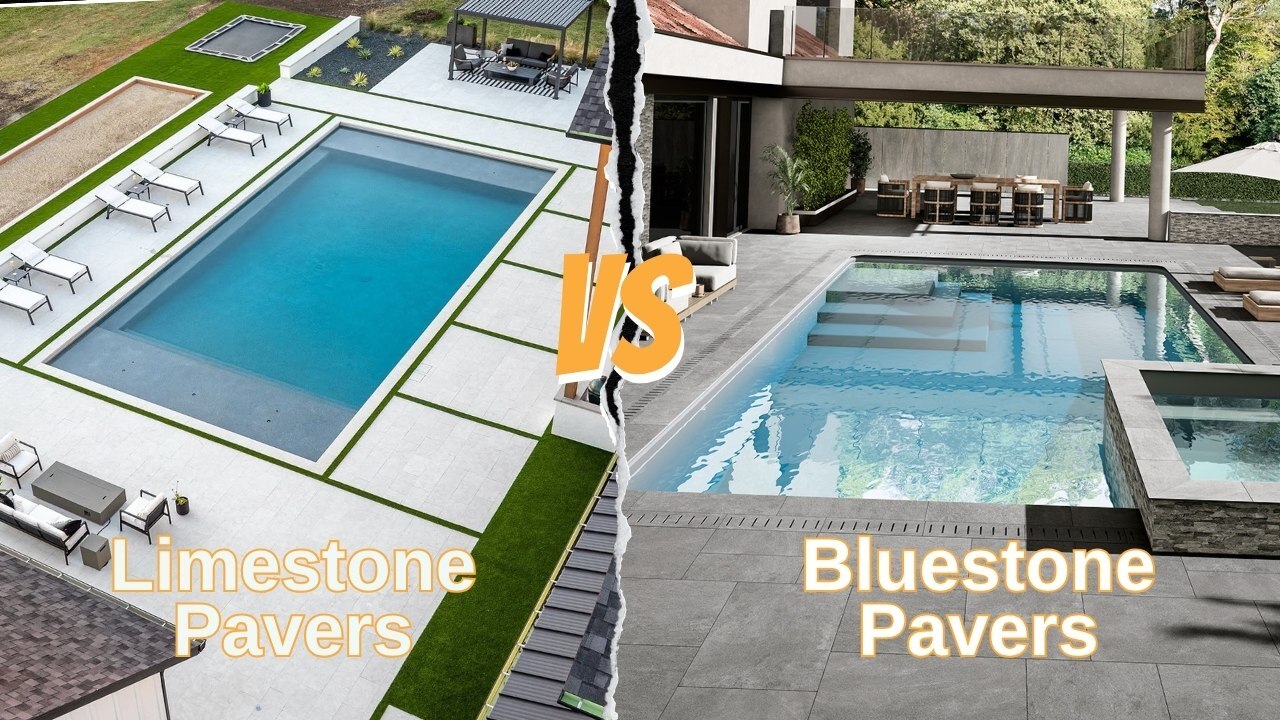
Limestone and bluestone are distinctly different in terms of cost, performance, and almost every feature. This table explains the differences between bluestone and limestone.
| Feature | Limestone Pavers | Bluestone Pavers |
| Stone Type | Sedimentary rock | Sandstone or basalt-based stone, depending on quarry source |
| Appearance | Smooth and refined | Natural and textured |
| Color Consistency | High | Moderate |
| Color Range | Beige, ivory, cream, silver, grey | Blue-grey, charcoal, brown, earthy tones |
| Surface Texture | Smooth to lightly textured | Natural cleft and textured |
| Heat Retention | Lower | Higher |
| Slip Resistance | Good to excellent | Excellent |
| Durability | High | Very high |
| Pool Deck Performance | Excellent | Very good |
| Driveway Suitability | Limited to specific applications | Excellent when properly specified |
| Maintenance | Low | Low |
| Design Style | Contemporary, coastal, Mediterranean | Traditional, rustic, natural |
| Lifespan | 30–50+ years | 50+ years |
| Cost | $$–$$$ | $$$ |
| Sustainability | Natural material with a long lifespan | Natural material with a long lifespan |
What Are Limestone Pavers?
Limestone pavers are crafted with natural limestone, which is a sedimentary stone. It is formed from compressed marine materials over millions of years. It has a long history of being used in architecture and hardscape due to its durability and elegant appearance. They have been used in the world’s most recognizable buildings, which contain limestone. This reflects its long-term performance.
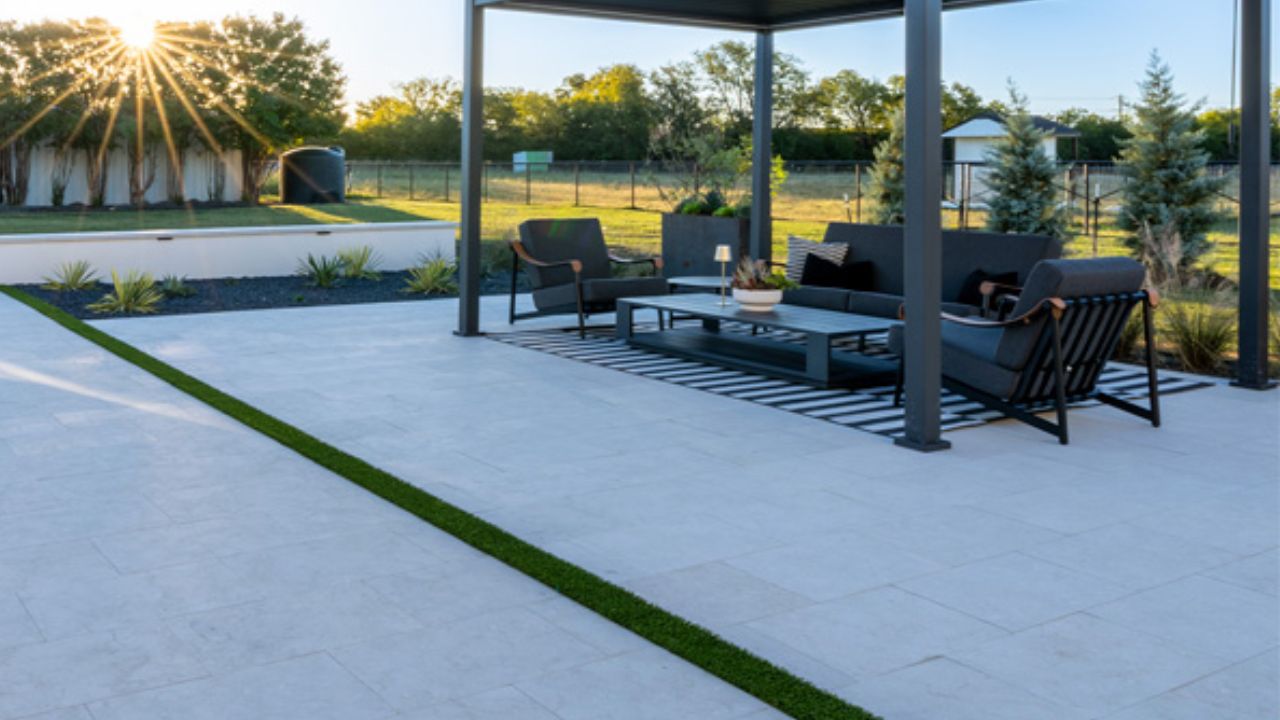
For outdoor paving, limestone is valued for its consistent color tones. They offer a smooth appearance, a comfortable surface temperature, natural sophistication, and design versatility.
Modern limestone pavers are commonly available in:
- Olive Garden
- Ivory
- Cream
- Beige
- Silver
- Light grey
- Soft charcoal
These neutral tones are a perfect choice for contemporary homes and outdoor living spaces.
Limestone Pavers- Pros and Cons
Limestone pavers are not a perfect paving option as they come with their fair share of drawbacks and advantages.
| Aspect | Pros | Cons |
| Appearance | Clean, elegant, and uniform look that suits modern and luxury outdoor designs | Can feel “too uniform” for homeowners who prefer heavy natural variation |
| Color Range | Soft neutral tones (cream, beige, ivory, light grey) that brighten outdoor spaces | Limited dark or high-contrast options compared to other natural stones |
| Surface Comfort | Stays cooler under sunlight, ideal for barefoot use around pools | A lighter surface may show stains more easily if not sealed properly |
| Design Flexibility | Works well with contemporary, Mediterranean, and coastal architecture | Less suited for rugged or rustic landscape styles |
| Slip Resistance | Good traction when finished properly (tumbled or textured finishes perform well) | Smooth finishes can become slippery when wet |
| Durability | Strong and long-lasting under residential use (30–50+ years) | Softer than stones like bluestone; can show wear in high-impact areas |
| Maintenance | Low maintenance with occasional limestone cleaning and sealing | Requires sealing in stain-prone environments for best performance |
| Heat Performance | Reflects heat well, stays comfortable in hot climates | Light color may fade slightly over time, depending on exposure |
| Availability | Widely available in many regions and stone grades | Quality varies significantly between suppliers and quarries |
| Cost | Generally more affordable than premium dense stones like bluestone | Higher-end limestone can still be costly, depending on finish and origin |
| Best Use Cases | Pool decks, patios, courtyards, outdoor kitchens, terraces | Not ideal for heavy-traffic driveways or industrial use without proper specification |
What Are Bluestone Pavers?
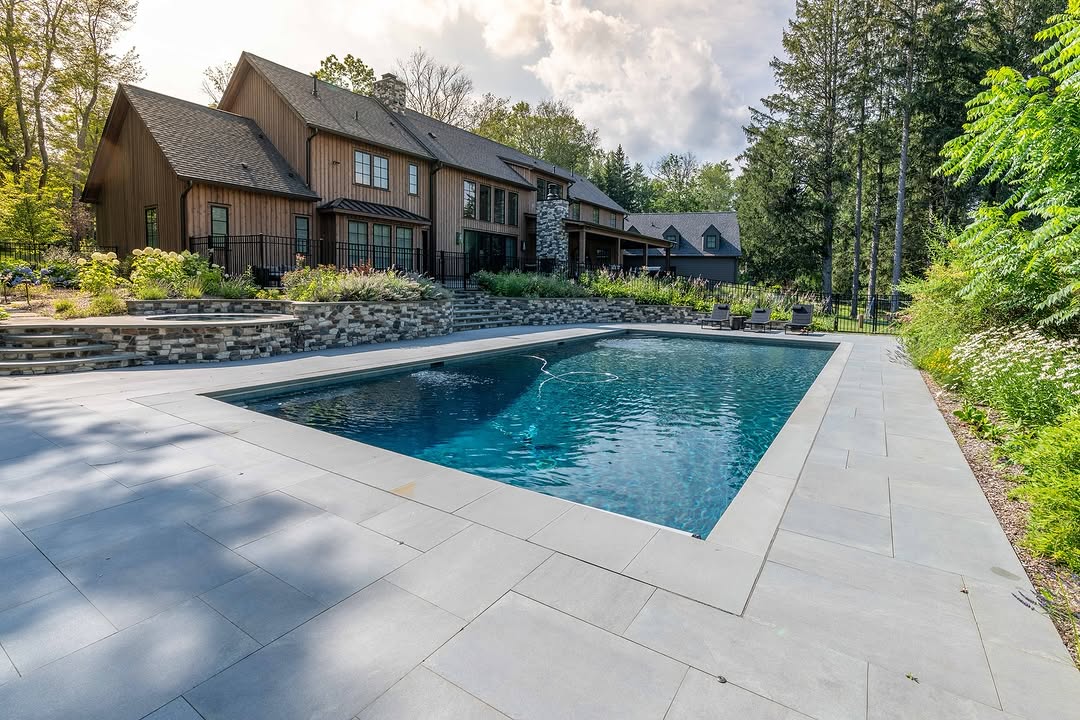
Bluestone is a thick natural stone popular for its strength and unique blue-grey appearance. The term bluestone refers to different geological materials depending on the region. In North America, bluestone is usually a dense sandstone. In other markets, the term may describe basaltic stone with similar coloring.
Despite its origin, bluestone shares several characteristics, including a dense structure, high durability, natural texture, rich color variation, and excellent traction. The natural cleft of bluestone creates a defined character that many homeowners prefer for traditional and landscape-focused designs.
Bluestone often features:
- Blue-grey tones
- Charcoal shades
- Earthy browns
- Natural color variation
- Textured finishes
Homeowners will notice a unique appearance because of the stone’s natural variation.
Bluestone Pavers – Pros and Cons
While bluestone pavers are durable and uniquely bold, they also have drawbacks alongside their advantages.
| Aspect | Pros | Cons |
| Appearance | Rich, natural character with blue-grey tones and earthy variation that adds depth to landscapes | A less uniform look may not suit minimalist or ultra-modern designs |
| Color Range | Natural spectrum of blue, charcoal, brown, and grey tones that blend well with outdoor environments | Darker tones can limit design brightness in small or shaded spaces |
| Surface Texture | Naturally cleft texture provides a strong grip and visual character | A rough surface can feel less smooth underfoot compared to limestone |
| Durability | Extremely strong and dense; performs well under heavy traffic and long-term exposure | Hardness can make cutting and installation more labor-intensive |
| Slip Resistance | Excellent traction, especially in wet conditions; ideal for sloped areas and pool surrounds | An uneven surface may require more careful furniture placement |
| Weather Resistance | Performs well in freeze-thaw cycles and harsh climates | Can absorb heat and become warm in direct sunlight |
| Maintenance | Low maintenance with basic cleaning and occasional sealing | Organic growth (moss/algae) may appear in shaded or damp areas |
| Longevity | Can last 50+ years with proper installation | Higher initial investment compared to softer natural stones |
| Versatility | Suitable for driveways, walkways, patios, and commercial spaces | Not always the best match for very refined or luxury-resort aesthetics |
| Installation | Strong structural performance once installed correctly | Heavier and more difficult to handle, increasing labor costs |
| Cost | Long-term value due to durability and lifespan | Typically, more expensive upfront than limestone |
| Best Use Cases | Driveways, garden paths, high-traffic patios, traditional landscapes | Pool areas in very hot climates where surface heat becomes a concern |
Limestone vs Bluestone Pavers: Appearance
One of the major differences to notice between limestone and bluestone pavers is the appearance.
Why Homeowners Choose Limestone?
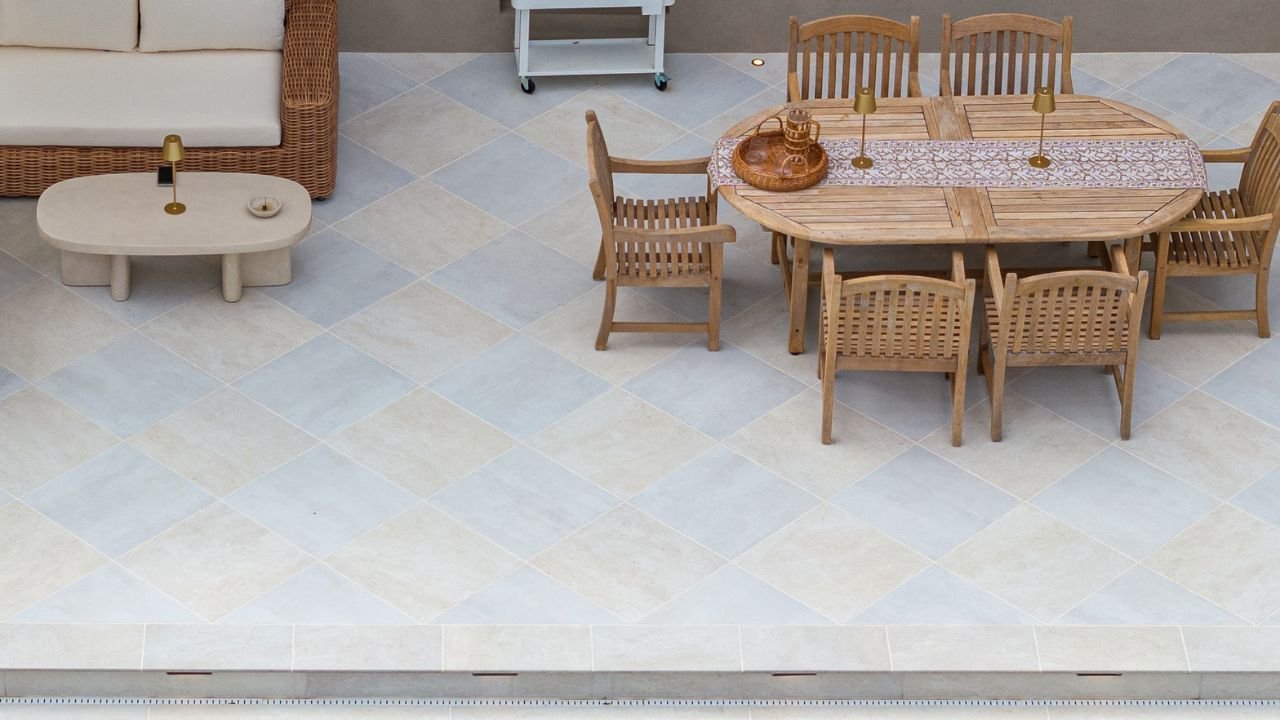
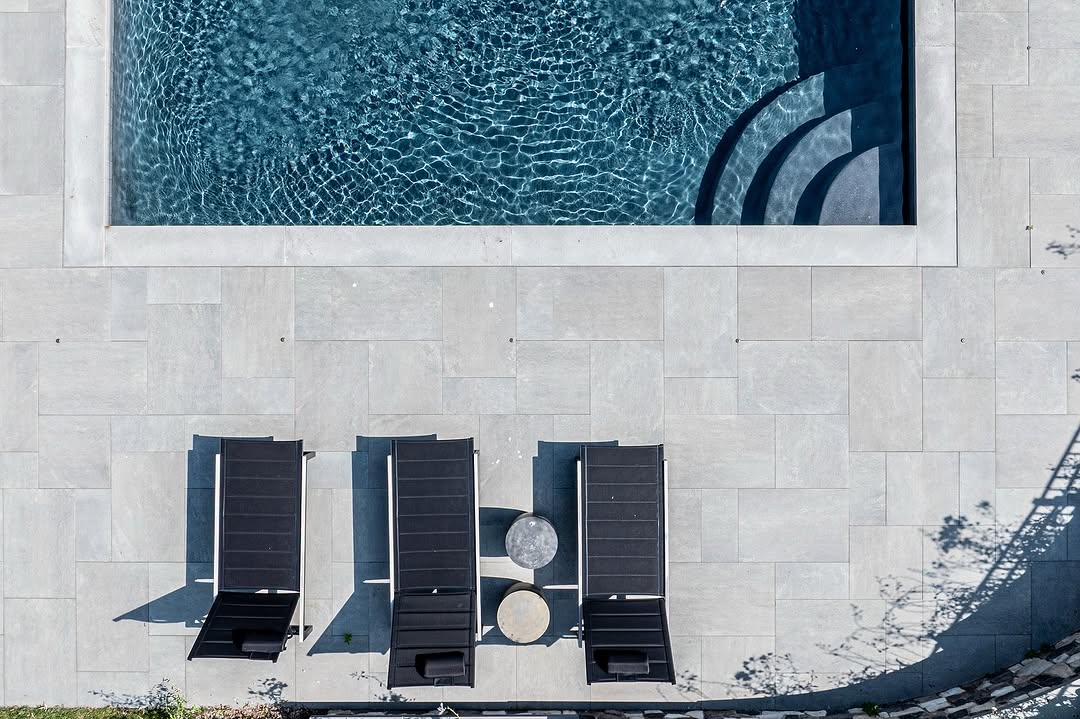
Limestone features a calm and cohesive visual effect. The stone offers a uniform color palette that makes patio and pool areas look larger and more sophisticated. Designers like limestone pavers for projects where they want to create a luxury resort aesthetic. Limestone is well-suited to contemporary homes, coastal properties, Mediterranean architecture, minimalist landscapes, and modern outdoor kitchens.
The subtle texture keeps attention on the overall design rather than the paving itself.
Why Homeowners Choose Bluestone?
Bluestone offers more visual movement. The varied colors and textured surfaces build a landscape that looks and feels organic and established. They don’t just blend into the background; bluestone pavers become a defining feature of the space.
Bluestone pairs well with:
- Traditional homes
- Cottage gardens
- Farmhouse landscapes
- Rustic architecture
- Naturalistic outdoor designs
Bluestone is perfect for homeowners who prefer variation and texture in their outdoors.
Limestone vs Bluestone Pavers: Durability and Long-Term Performance
Natural stone pavers are more than just beautiful outdoor options. Their durability makes them an investment. This is why understanding the durability helps homeowners make better long-term decisions.
Limestone Durability
High-quality limestone pavers perform exceptionally well in residential applications. When installed properly on a stable base, limestone can withstand foot traffic, weather exposure, outdoor furniture, and pool environments for decades.
Even the premium limestone installations can last up to 30 to 50 years or even longer. However, sealing is crucial as the surface is relatively softer, which is why they are prone to wear over time.
Bluestone Durability
Bluestone is largely popular because of its strength, which is why it is one of the toughest natural paving materials available. The dense composition helps it resist heavy traffic and surface abrasion, freeze-thaw cycles, and physical impacts.
Many bluestone pavers installed in residential settings stay functional and attractive for more than 50 years. When installed in areas with heavy traffic, bluestone stays stronger in terms of long-term performance.
Limestone vs Bluestone Pavers: Cool Surface in Summer
Surface temperature is largely important as outdoor living spaces start to improve. This factor is especially important around pools and entertainment spaces.
Limestone and Heat Performance
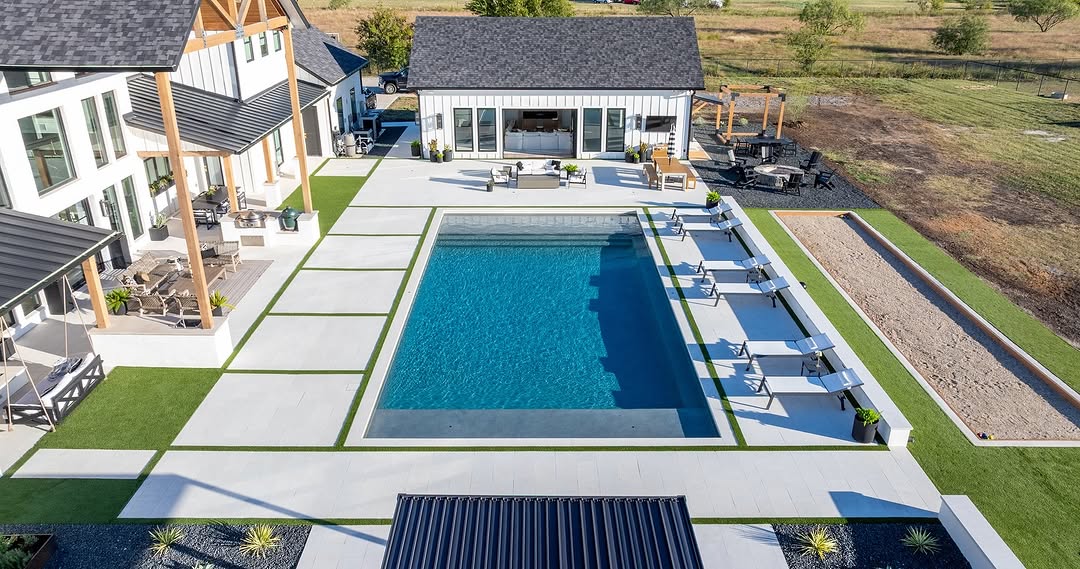
Limestone pavers with lighter tones reflect sunlight efficiently. This is why the surfaces stay cooler, and barefoot walking is rather comfortable. Pool areas become more usable during hot weather, but a low-temperature surface makes it a great choice in warmer regions. Limestone often provides a better experience for pool surrounds and barefoot comfort.
Bluestone and Heat Performance
Bluestone pavers tend to absorb more sunlight because of the darker tone. Though this varies by finish and color variation, bluestone generally feels warmer under direct sunlight.
Limestone vs Bluestone Pavers: Slip Resistance and Outdoor Safety
Surface safety is the major factor to consider throughout the year.
Limestone Slip Resistance
Many premium limestone pavers feature textured or lightly tumbled finishes that offer better grip. Limestone performs great in pool areas, patios, courtyards, and walkways. Selecting a proper finish will offer better safety and performance.
Bluestone Slip Resistance
Bluestone has a naturally slip-resistant surface. The cleft texture creates excellent traction even when surfaces become wet. This makes it well-suited for sloped paths, garden walkways, pool surrounds, and high-traffic zones. Bluestone’s natural texture has a superior grip to limestone.
Best Uses for Limestone Pavers
Limestone is the best choice for projects where appearance and comfort matter the most. Limestone pavers are well-suited to:
- Pool decks
- Luxury patios
- Outdoor kitchens
- Courtyards
- Rooftop terraces
- Entertaining areas
- Contemporary landscapes
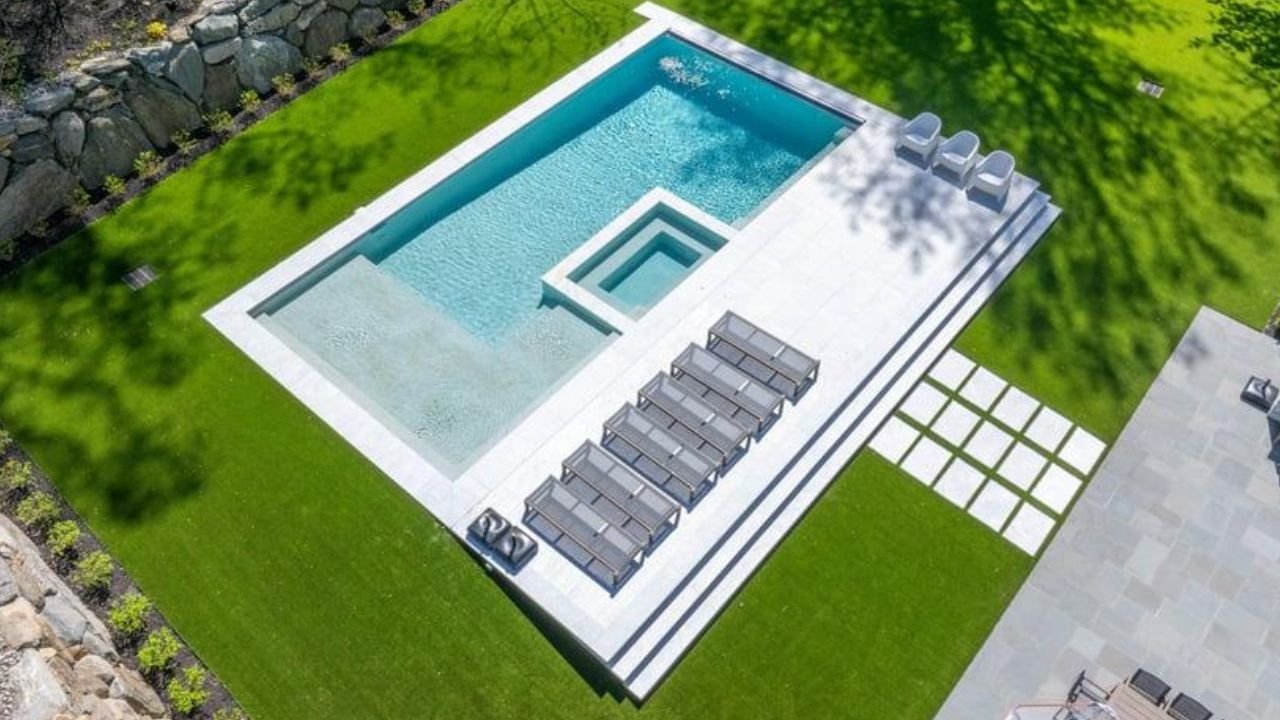
Many designers prefer premium limestone for outdoor projects because it delivers a polished and cohesive appearance. Designers also explore different pool surround ideas when planning modern backyard transformations. At NT Pavers, limestone remains one of the most requested materials to build modern backyard transformations.
Best Uses for Bluestone Pavers
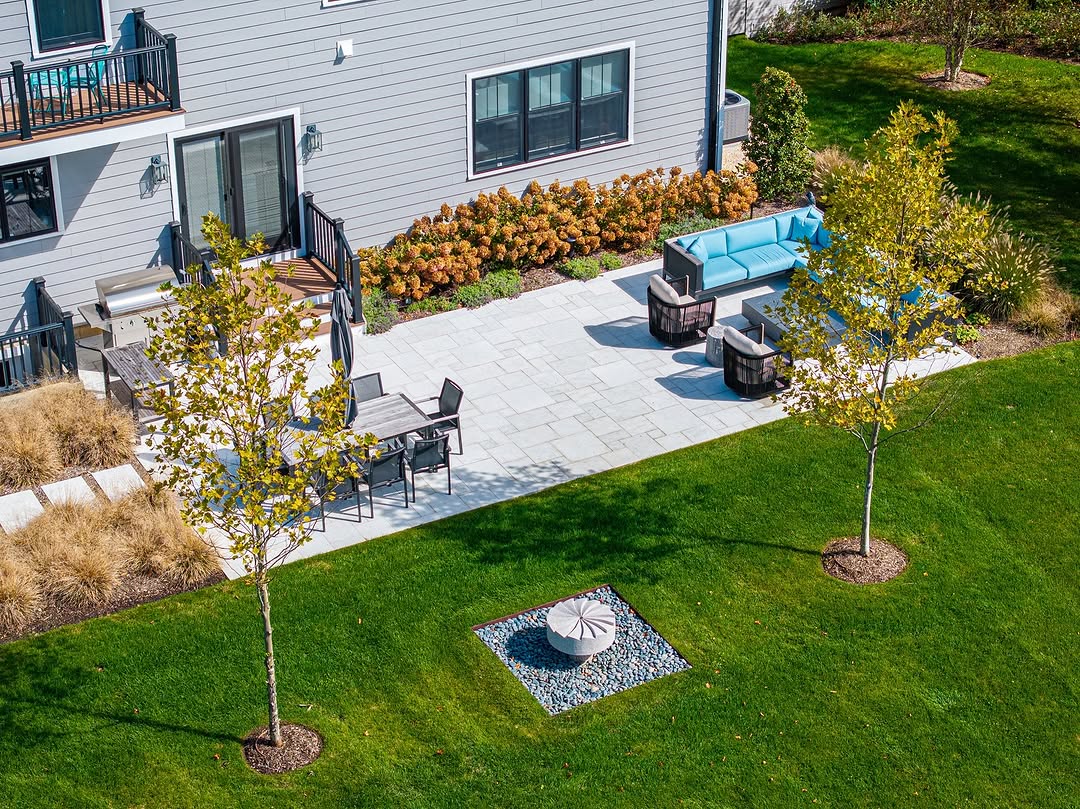
Bluestone is the best choice where durability and texture take priority. Bluestone pavers are the best choice for:
- Walkways
- Garden paths
- Driveways
- Entry paths
- Public spaces
- Commercial landscapes
- High-traffic patios
Popular formats like 24×24 bluestone pavers are often used in these applications to create a clean, structured, and modern layout. Because of their strength, bluestone pavers become a practical choice for areas with constant use.
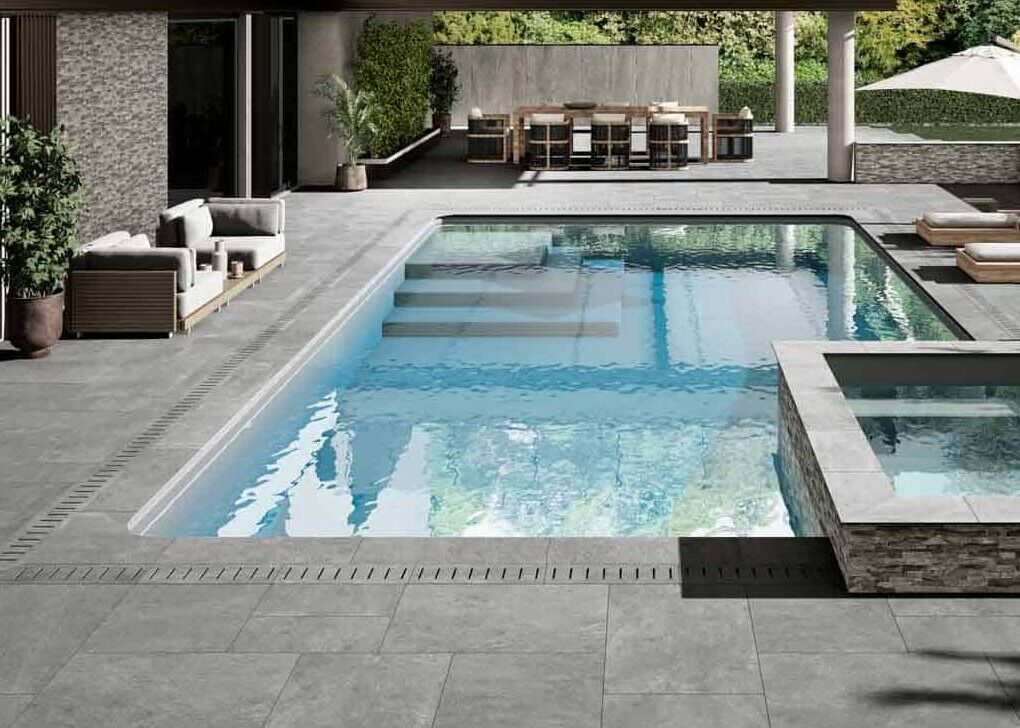
Limestone vs Bluestone Pavers: Cost Comparison
Both limestone and bluestone fall in different ranges of cost. However, the cost varies according to stone origin, thickness, finish, availability, installation complexity, and local labor rates. Take a look at the prices of both stones compared.
| Cost Category | Limestone | Bluestone |
| Material Only | $8–$20 per sq. ft. | $10–$25 per sq. ft. |
| Installed Cost | $15–$40+ per sq. ft. | $20–$50+ per sq. ft. |
| Long-Term Maintenance | Low | Low |
| Expected Lifespan | 30–50+ years | 50+ years |
Bluestone is usually priced at a higher price at first; its durability offers excellent long-term value.
Limestone vs Bluestone Pavers FAQs
Let’s answer your questions about Limestone and Bluestone Pavers.
Is limestone better than bluestone?
Depends. Limestone is a great choice for aesthetics and refined appearance, while bluestone is preferred for better durability and texture.
Does bluestone last longer than limestone?
Yes. Bluestone’s higher density helps it to withstand heavy use for decades.
Which stone is better around a swimming pool?
Limestone is often picked for its lighter colors, cooler underfoot surface, and resort-style aesthetics.
Is bluestone slippery when wet?
No. Bluestone naturally features a textured surface, which provides better slip resistance in wet conditions.
Which paver costs more?
Bluestone costs more than limestone pavers, but the pricing varies by region and stone source.
Can limestone be used for driveways?
Some dense limestone can be used for driveways, but they are not as recommended as the bluestone.
Which stone requires less maintenance?
Both limestone and bluestone pavers are natural stone, so the maintenance requirements are similar.
Bottom Line
When it comes to limestone vs bluestone, neither of them is a perfect material. Limestone offers refined aesthetics and beauty, while bluestone pavers offer durability and rugged performance. While both are natural stones, they are clearly different with unique appearances, features, applications, and performance. Just make sure to consider the best that aligns with your architectural.