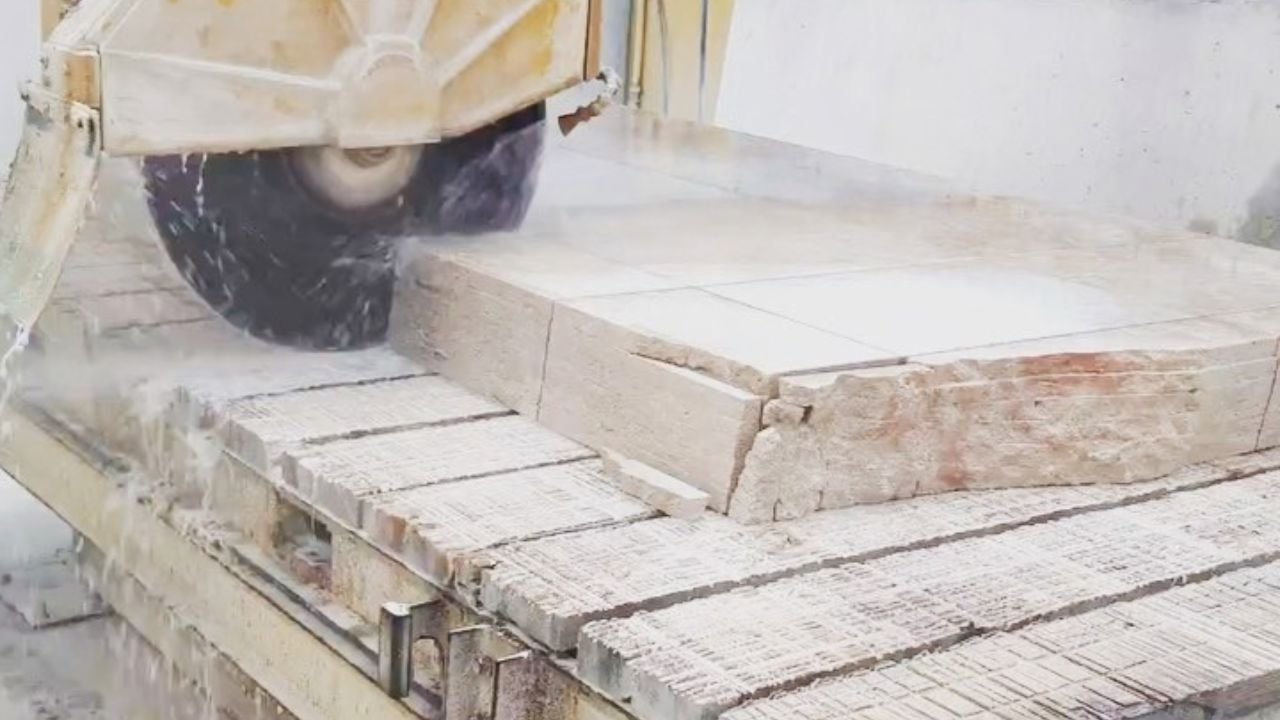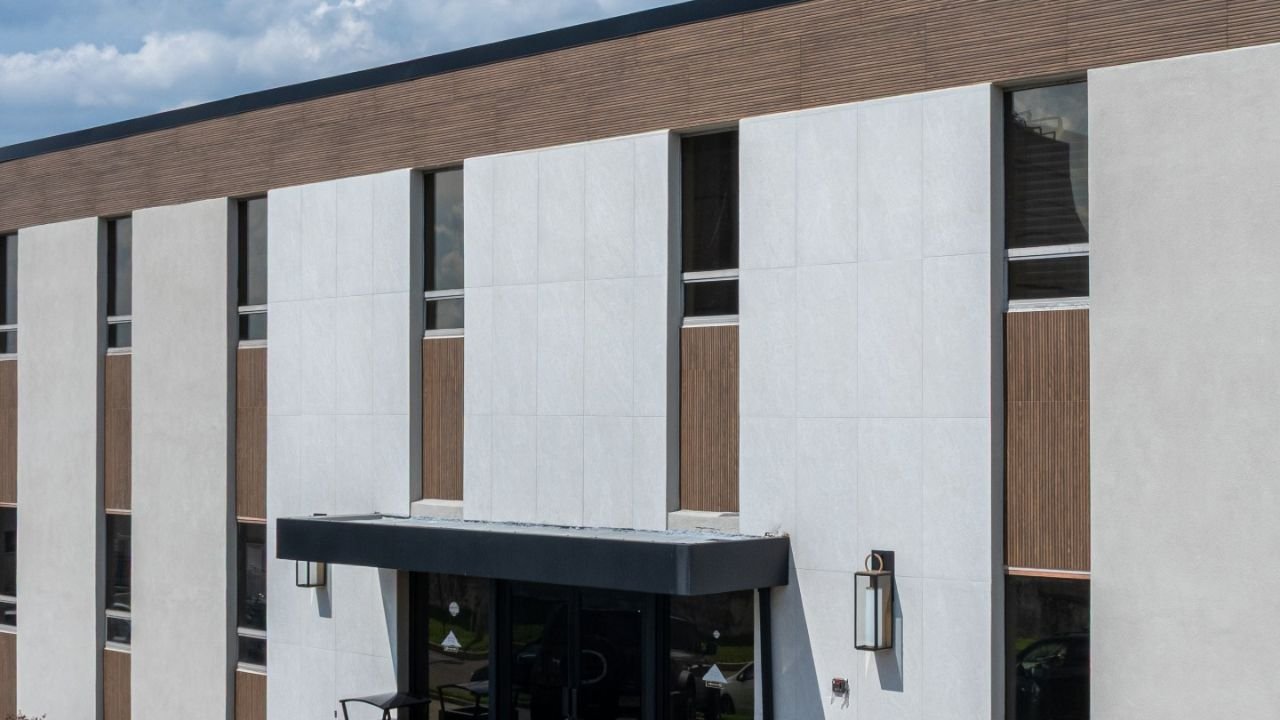


If you are planning to start your home design project, then you may have come across travertine tiles and travertine pavers. They may sound similar, but both of these are quite different on so many levels. Not having enough information may result in getting overwhelmed, trying to figure out the differences between travertine tiles and pavers. Whether you’re a homeowner doing a bathroom renovation or a Landscape stone installation project manager overseeing an outdoor build, knowing these differences will help you choose the right product the first time.
Travertine Tile vs Travertine Paver
From sizes, applications, to several other factors, here are the differences between travertine pavers and tiles.
Feature | Travertine Tile | Travertine Paver |
Thickness | 0.25″ to 0.5″ | 1.25″ to 2″ |
Standard Sizes | 12″x12″, 18″x18″, 6″x24″, cut to fit | 6″x12″, 12″x12″, 16″x24″, French pattern sets |
Weight | Light (easier to handle for walls or vertical installs) | Heavy (requires compacted base or slab support) |
Surface Finish | Honed, polished, brushed, chiseled | Tumbled, natural cleft, brushed |
Texture | Smooth or slightly textured (depending on finish) | Textured, naturally rough, anti-slip |
Slip Resistance | Lower—especially when wet, unless treated | Higher—ideal for wet zones like pools and outdoor showers |
Load-Bearing Capacity | Low to moderate—suited for foot traffic only | High—can support cars, furniture, and heavy foot traffic |
Thermal Conductivity | Can feel cold indoors without radiant heating | Stays cool underfoot outdoors—even in sunlight |
Water Resistance | Porous—requires sealing to prevent staining | Porous but weather-resistant—can function unsealed in dry climates |
Frost Resistance | Poor—may crack in freeze-thaw zones | Good—adapts to temperature fluctuations, especially when dry-set |
Best Use Cases | Bathrooms, kitchens, interior walls, accent features, and indoor floors | Driveways, pool decks, patios, courtyards, garden paths |
Installation Method | Thinset mortar over concrete or backer board + grout | Dry-set over compacted base or sand; can also be mortar-set over slab |
Sealing Requirements | Required—during installation and every 1–2 years thereafter | Optional—but recommended for color enhancement and stain protection |
Ease of Replacement | Difficult—tiles must be removed, cleaned, and reinstalled with mortar | Easier—individual pavers can be lifted and reset without disturbing the surrounding area |
Indoor vs Outdoor Suitability | Indoor only (unless fully covered, sealed, and protected from moisture) | Outdoor only (not suitable for vertical indoor installations) |
Price per Sq. Ft. (2025) | $4–$8 (varies by grade and finish) | $7–$15 (depends on thickness, pattern, and edge detail) |
Maintenance Level | Medium—requires regular cleaning, sealing, and protection from moisture | Low to medium—resistant to weathering, easier to clean outdoor surfaces |
Longevity When Properly Installed | 20–30 years indoors | 30–50 years outdoors (or longer, with correct sub-base) |
Visual Variation | Consistent per batch, color-matched for interiors | Natural variation expected—adds outdoor character |
- The main differences between travertine tiles and pavers are the thickness, as both of them are cut from travertine, but their thickness and weight differences set them apart.
- Tiles are not recommended to be used outside, like pool decks or driveways; they cannot withstand pressure or moisture shifts.
- Pavers are generally heavier than tiles, so using them on vertical walls or backsplashes should be avoided. Their weight and unfinished edges make them unsuitable for vertical adhesion.
- Always consult your installer about freeze-thaw climate considerations, drainage, and slip ratings, especially for commercial or family-safe environments.
Brands like NT Pavers have already posted their travertine tiles and pavers’ features, including their load-bearing capacity, environmental endurance, and more, so one can make an informed decision about selecting tiles.
What Are Travertine Tiles?
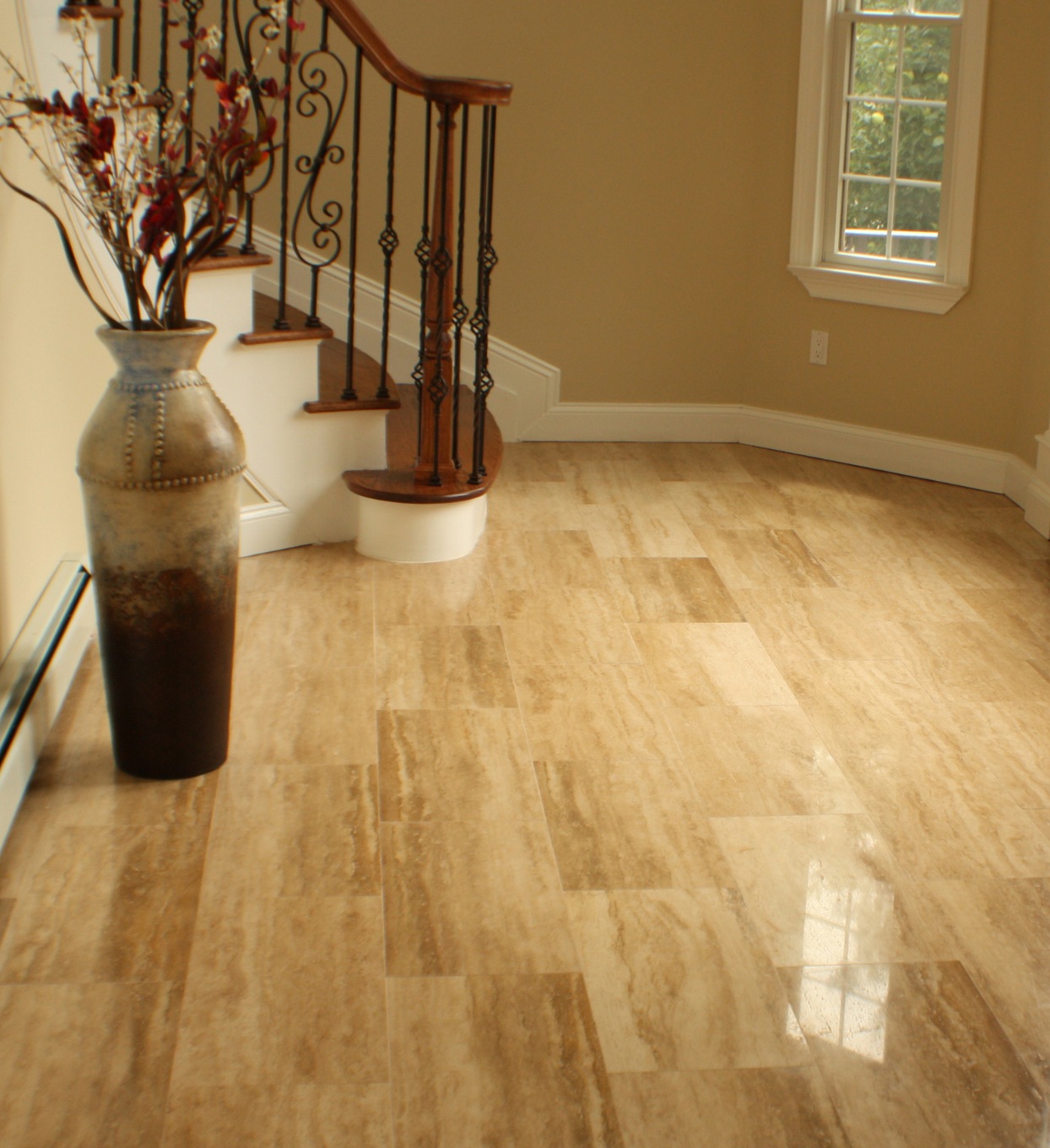
Travertine tiles are made from natural stone, cut into thin, flat slabs. They usually come with a thickness of 1/4 inch to 1/2 inch, polished or honed for smoothness. These interior stone tiles come in standard indoor sizes, like 12″x12″, 18″x18″, or plank formats such as 6″x24″.
Travertine tiles are most suited for indoor travertine flooring, bathroom walls to backsplashes, and accent walls. They can also be used in covered patios or sunrooms. These tiles are not supposed to bear heavy loads or withstand the freeze-thaw cycle. They may crack under harsh conditions.
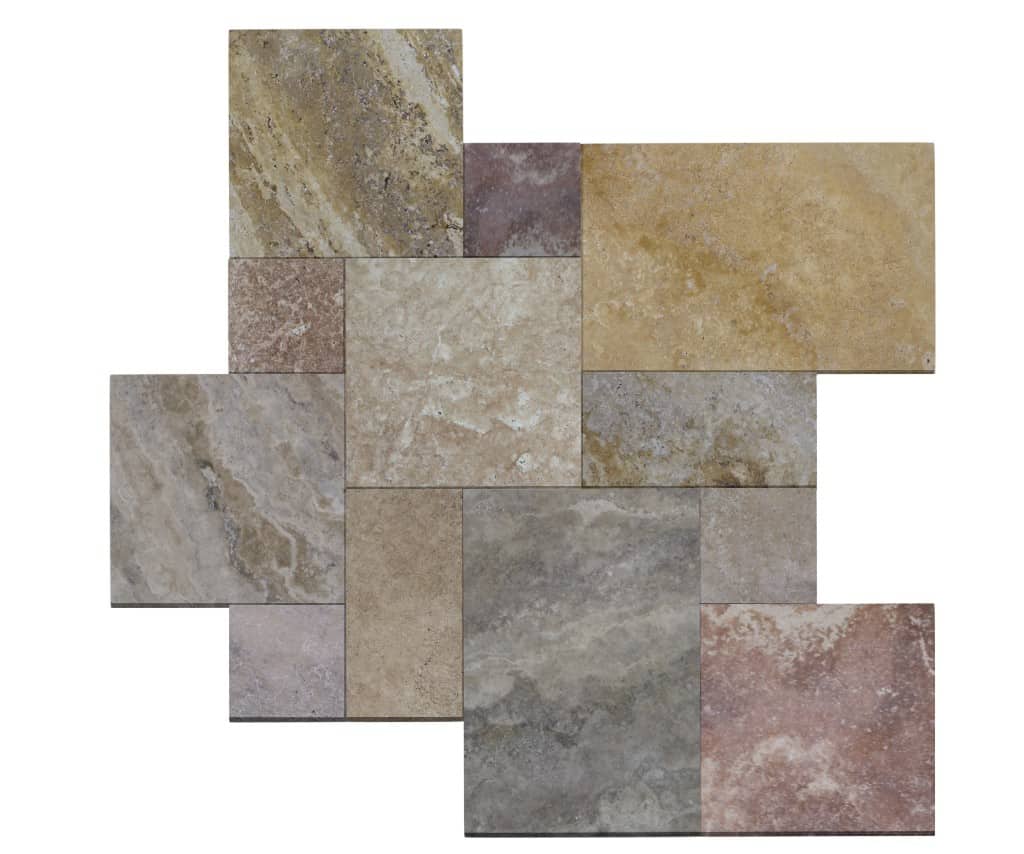
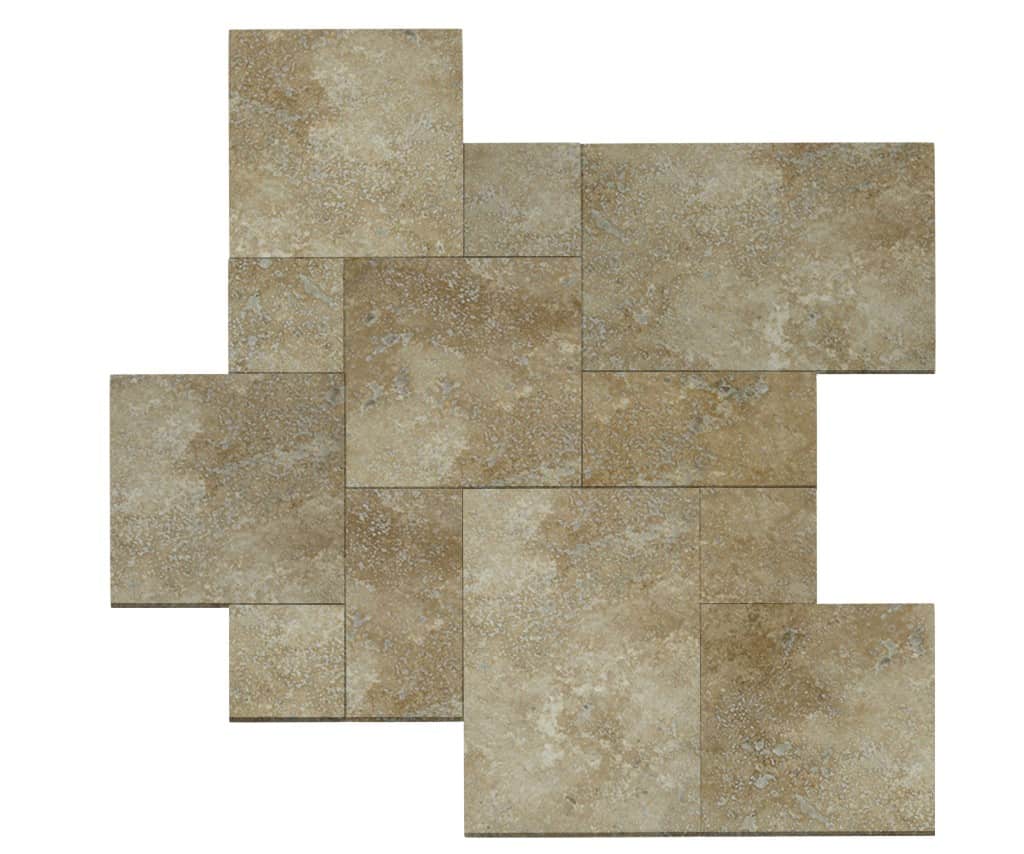
What Are Travertine Pavers?
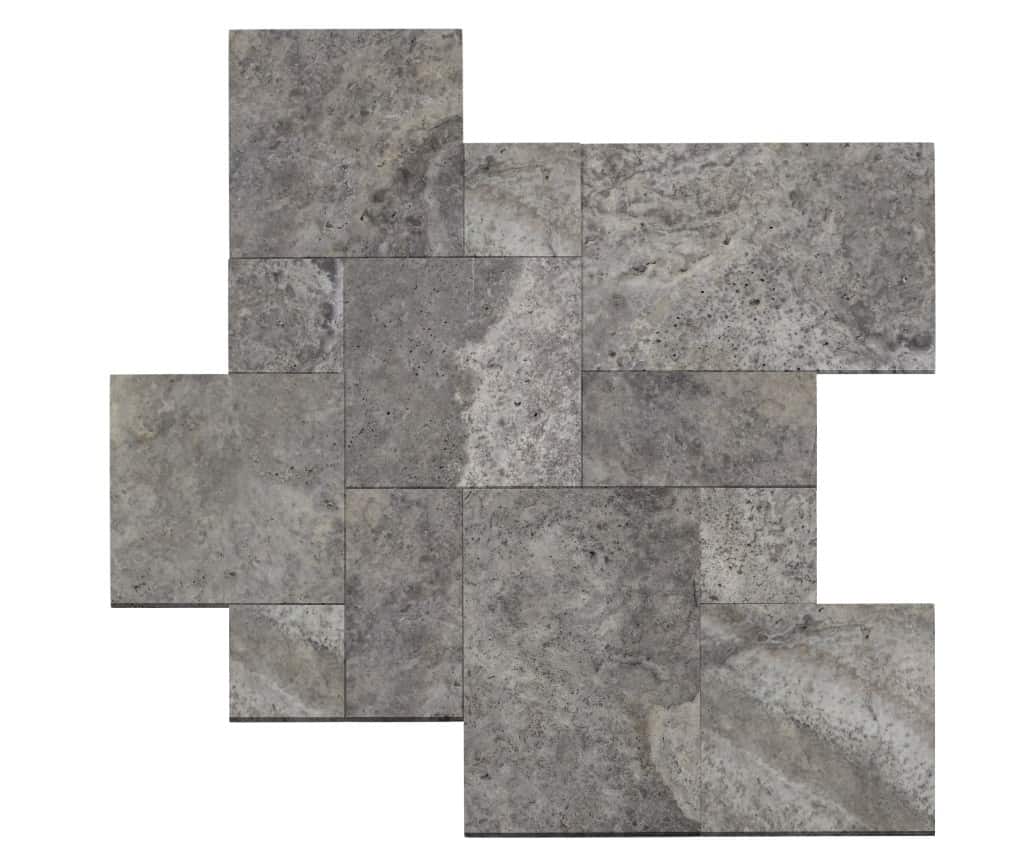
Travertine pavers are also cut from natural stone pavers, but they are thicker and denser. Their typical thickness ranges from 1.25 to 2 inches, and they are often tumbled to create a slip-resistant, textured surface.
They’re made to be used outdoors, especially for:
- Pool decks
- Walkways
- Patios
- Driveways
- Garden paths
Because of their thickness and finish, pavers resist wear, handle moisture better, and withstand weight without cracking.


Where To Use Travertine Tiles?
Travertine tiles are recommended to be used indoors only. Though they are durable, they cannot withstand heavy foot traffic and loads like driveway pavers. However, for indoors and covered spaces, their natural elegance and refined finishes make them a great choice. They can add visual warmth and character without sacrificing durability. Here are the top uses of travertine tiles.
Living rooms
They should be used in formal living areas and halls with little foot traffic. Use a honed or brushed surface to avoid slipperiness and reduce polish.
Bathrooms (floor and walls)
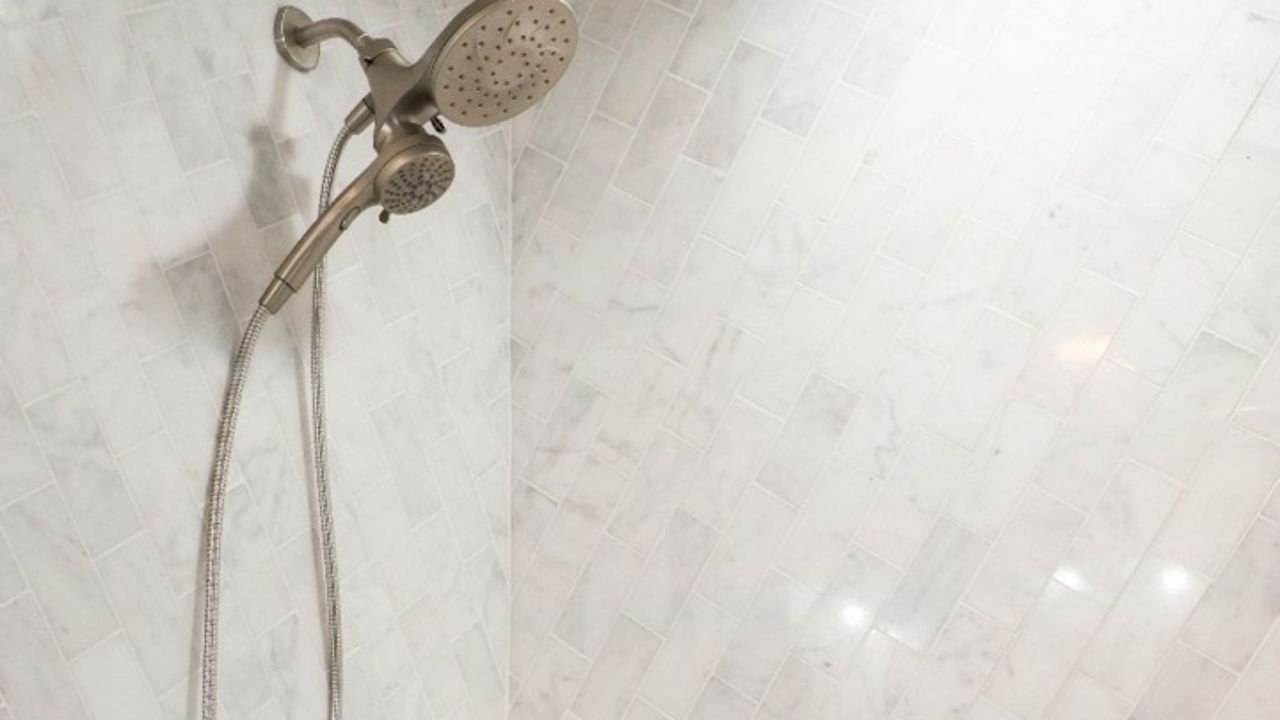
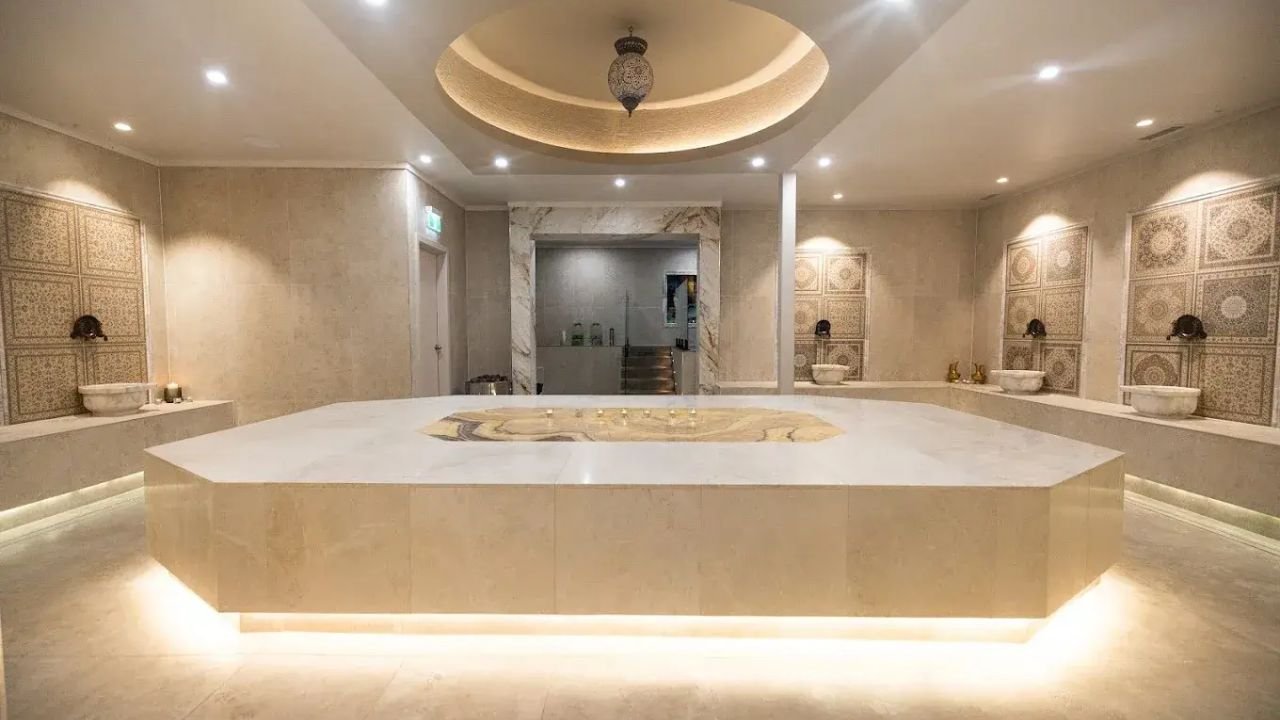
For bathroom floors and walls, it can create a spa-like space, adding warmth and yet calm and organic feeling. However, it has a porous surface, so a penetrating stone sealer is required to secure the tile surface. Use them for shower walls, floors, or areas with accent niches. Sealing travertine tile is critical here to prevent water damage.
Kitchens (flooring or backsplashes)
It is also ideal for travertine flooring and vertical finishes of the kitchen. Because of warmth and earthy tone, travertine tile complements a great range of cabinetry styles in the kitchen, including traditional to contemporary matte finish.
Flooring: Use matte, honed, or brushed finishes to resist scratches and provide a better grip underfoot.
Backsplashes: Smaller tile formats (e.g., 4×4, 3×6) or mosaic travertine bring texture without overwhelming the design.
Fireplaces
Using travertine tiles around a fireplace creates a classic, natural look. You can use even more delicate travertine cuts in fireplaces since they don’t get wet or get a lot of foot traffic. They work especially well for:
- Floor-to-ceiling fireplace walls
- Raised hearth platforms
- Mantel surrounds with mitered or chiseled edges
Be sure to coordinate tile color with wall paint and flooring for visual flow.

Interior accent walls
A feature wall in your dining room, entryway, or stairwell could feature Travertine’s variety of tones and layers. Modernize with larger format tiles, or opt for rustic, stacked travertine.
Make sure that travertine is installed properly and sealed regularly. Avoid placing them where they’ll be exposed to water runoff, direct sun, or ground shifts.
Where to Use Travertine Pavers
Travertine pavers are built for outdoor spaces. They perform well in:
Pool decks
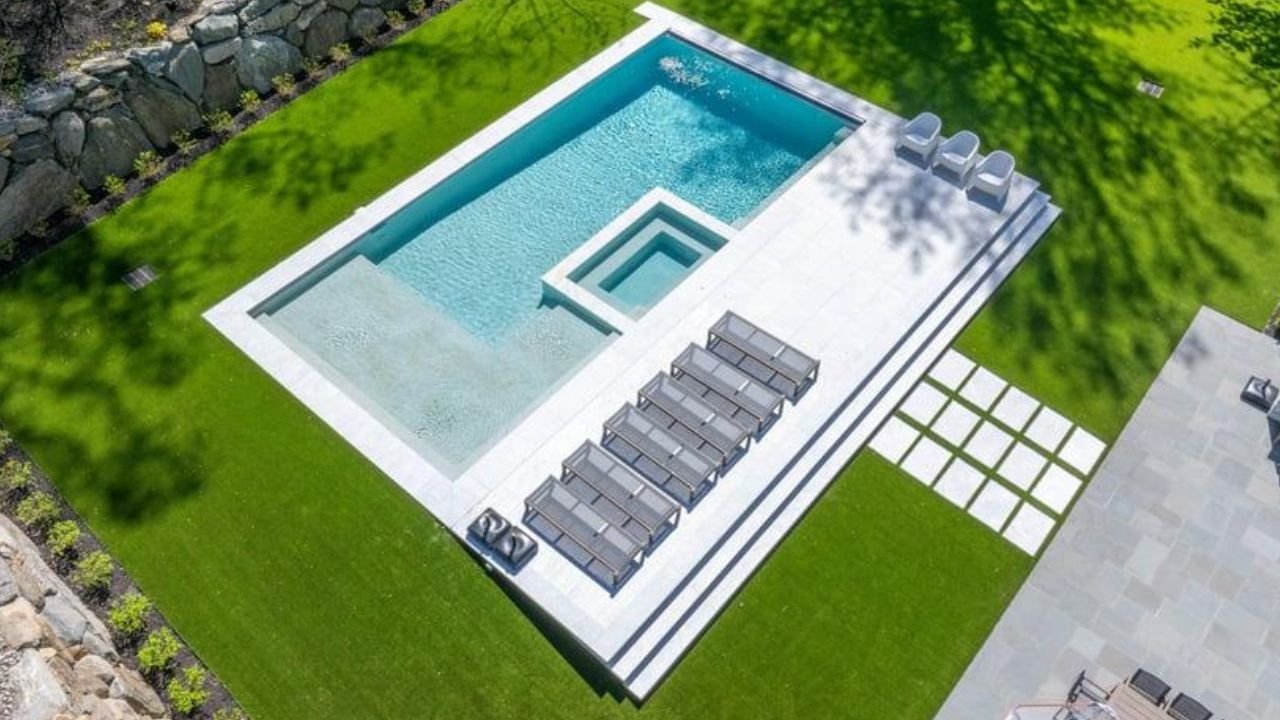
Travertine pool deck is the best choice for the pool area surrounding. The tumbled surface stays cool and reduces the slip. This makes an ideal option for families with kids, the elderly, and pets. They resist saltwater and chlorine better than concrete pavers, stone pavers options or ceramic alternatives.
Driveways
Travertine is generally a durable outdoor paver stone, but the 2-inch-thick pavers can handle vehicle pressure easily without cracking. They’re set on a compacted gravel base and can handle parking pressure, rolling loads, and freeze-thaw cycles. With proper subgrade prep, they outperform many poured surfaces in driveways and entryways.
Patios
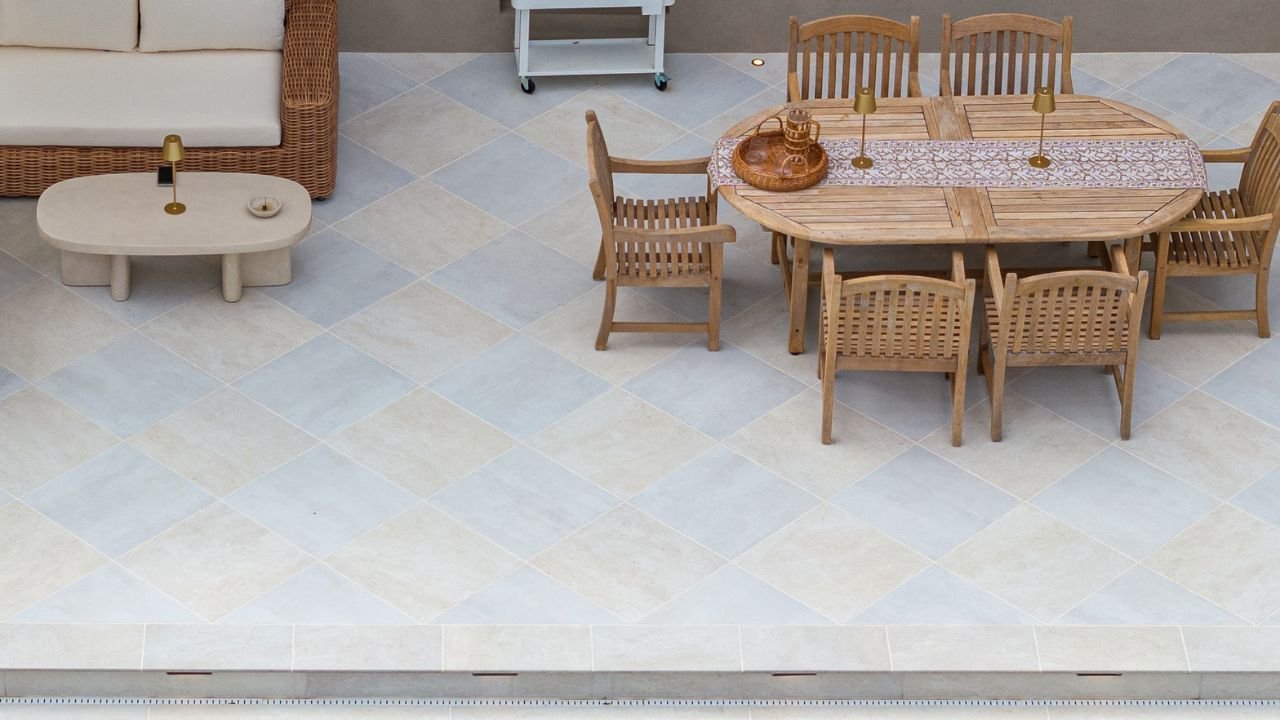
Travertine pavers can be used to create a natural stone patio with elegance and durability. They work well in outdoor dining areas, lounges, and firepit zones, blending seamlessly into both modern and rustic landscaping. Their color variation adds natural depth without looking artificial.
Courtyards
For courtyards or enclosed garden paths, travertine pavers bring warmth and cohesion. They can be arranged in French patterns, grids, or staggered layouts for visual interest. Their surface stays visually consistent even as it weathers over time.
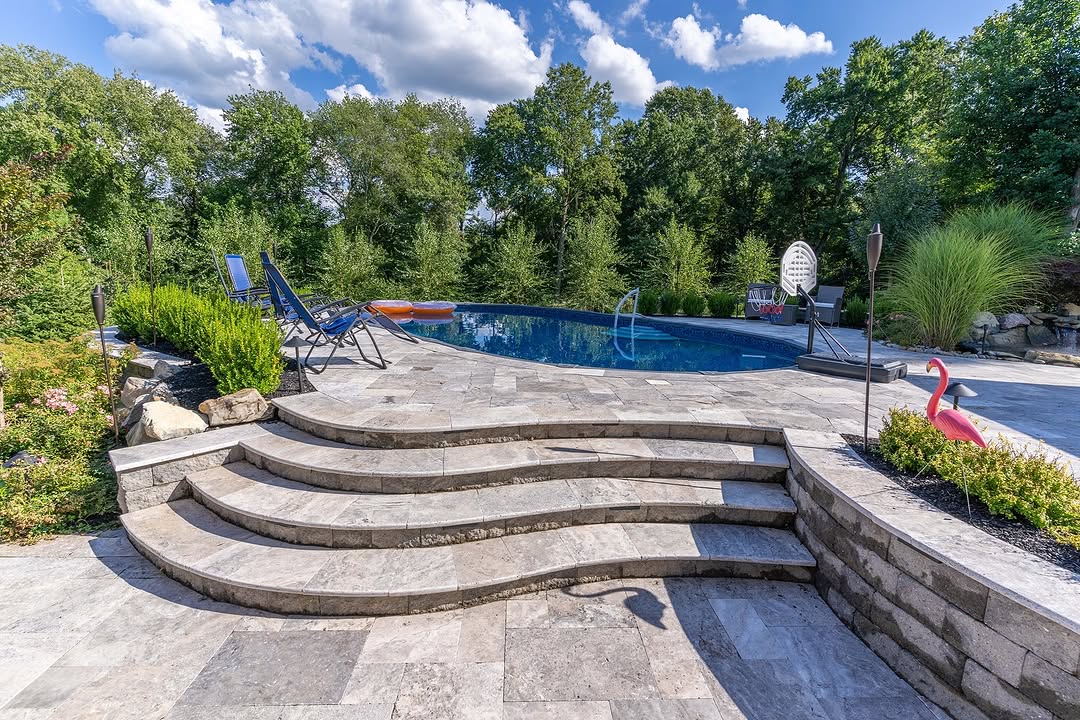
Outdoor stairs or steps
Travertine pavers can be used to build outdoor stairs or landings. It has a non-slip surface, so it is safe for underfoot, especially near wet areas. Use travertine edge caps or bullnose pieces to finish stair fronts professionally.
Walkways or stepping stones
Because they can be dry-set over compacted sand or gravel, they can shift slightly with weather, without cracking. This makes them ideal for freeze-thaw zones or high-moisture areas.
How Travertine Installation Is Different From Travertine Pavers?
Due to their thickness and size differences, both travertine tiles and pavers are installed differently.
Installation Factor | Travertine Tiles | Travertine Pavers |
Surface/Subbase | Flat indoor subfloor (concrete, cement board, or plywood) | Outdoor compacted base (gravel + sand) or existing concrete slab |
Installation Method | Thinset mortar with grout joints | Dry-set over sand, or mud-set with mortar for fixed installs |
Tools Required | Tile cutter or wet saw, trowel, grout float | Masonry saw, rubber mallet, level, sand compactor |
Sealing Requirement | Required at install; reseal every 1–2 years to prevent stains and wear | Optional but recommended to resist stains and enhance natural color |
Joint Treatment | Grouted seams for a smooth, sealed surface | Tight joints or polymeric sand (no grout) for movement and drainage |
Weather Resistance | Poor—prone to cracking in freeze-thaw or wet conditions | High—handles moisture, sun, and shifting soil effectively |
Repair & Replacement | Requires removal of the tile section and reinstallation with mortar and grout | Easy to lift and reset individual pavers without disturbing the surrounding layout |
Indoor/Outdoor Suitability | Best for interior use only | Built for exterior spaces with regular foot or vehicle traffic |
Travertine Tiles vs Pavers FAQs
Let’s answer some of your most searched questions about Travertine Tiles vs Pavers.
Can I use travertine tiles outside?
No. Travertine tiles are not designed for outdoor use. They may crack under freezing temperatures or pressure.
Are travertine pavers slippery?
Travertine pavers are less slippery than tiles, especially when tumbled.
How often do I need to seal travertine?
Travertine tiles should be sealed during installation and every 1–2 years indoors.
Which is more expensive: travertine tile or paver?
Travertine pavers usually cost more per square foot than tiles due to size and thickness.
Can I install travertine pavers over concrete?
Yes. You can mud-set travertine pavers over a concrete slab, especially for patios or walkways. Make sure the surface is clean, level, and has proper drainage.
Conclusion
Travertine is a natural stone. Travertine tile and travertine pavers are some of the most popular landscaping and indoor building materials. Though they may seem similar, they are largely different. Travertine tiles floorings have interior applications, while travertine pavers are mostly used in outdoor applications.
Both have distinct benefits when they are installed. Just make sure where you want to install travertine to make an informed decision.