
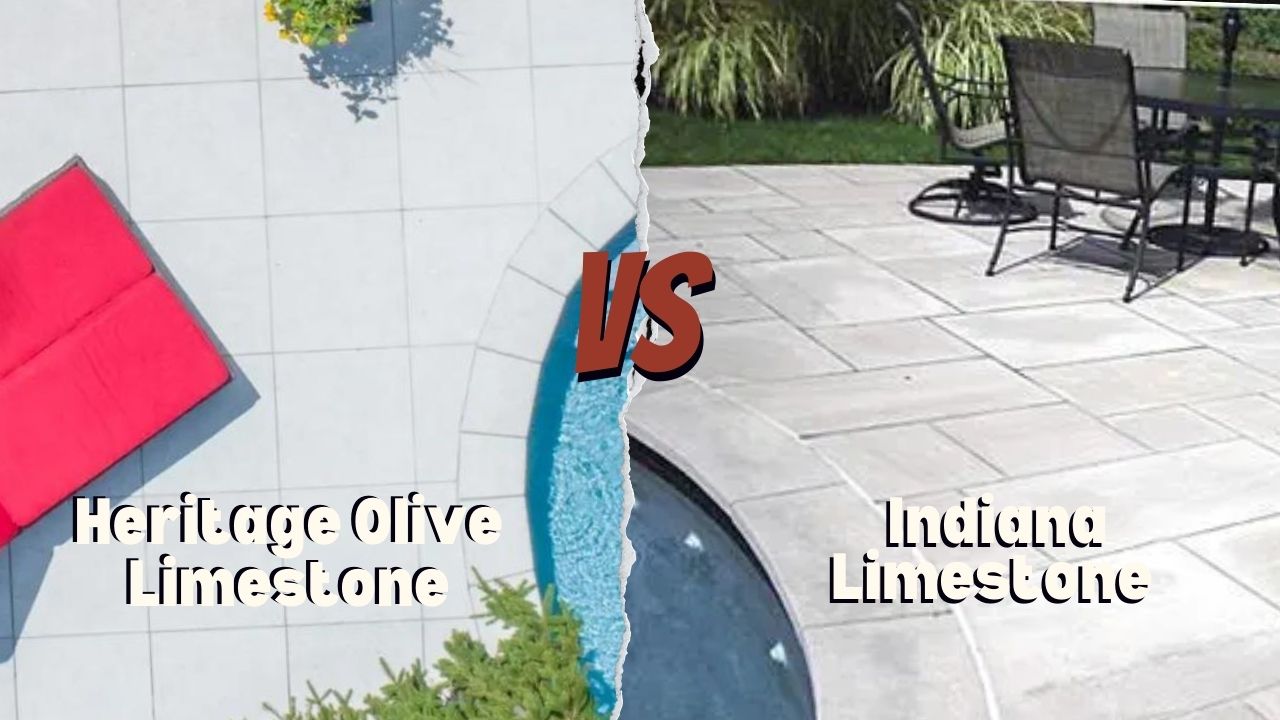
When it comes to natural stone paving selection, homeowners, project managers, and businesses compare natural stone for paving. Two of the major names that arise are Heritage Olive Limestone and Indiana Limestone. Both have huge popularity in architecture and landscaping. However, both of them are widely different in size, density, durability, appearance, and cost. Understanding these differences matters because stone is a long-term investment. Here is a complete comparison of both for a better idea.
Heritage Olive Limestone Pavers vs Indiana Limestone: Complete Comparison
Both heritage olive limestone and Indiana limestone are popular choices for construction, but it is important to invest in the right options. The table below highlights how Heritage Olive Limestone pavers measure against Indiana Limestone in terms of density, strength, slip resistance, aesthetics, and overall value.
| Feature | Heritage Olive Limestone Pavers | Indiana Limestone |
| Density | ~2,710 kg/m³ (2.71 g/cm³) – denser, higher strength | ~2,275 kg/m³ (2.28 g/cm³) – lighter, less dense |
| Compressive Strength | ~14,550 psi – suitable for heavy traffic and load-bearing | Lower, not widely specified for pavers, but adequate for building facades |
| Slip Resistance (DCOF) | 0.77 (sandblasted finish) – exceeds ANSI wet standard of 0.42 | Not consistently reported – may vary by finish and quarry |
| Water Absorption | Very low – improves freeze-thaw resistance and longevity | Higher absorption – more prone to weathering over time |
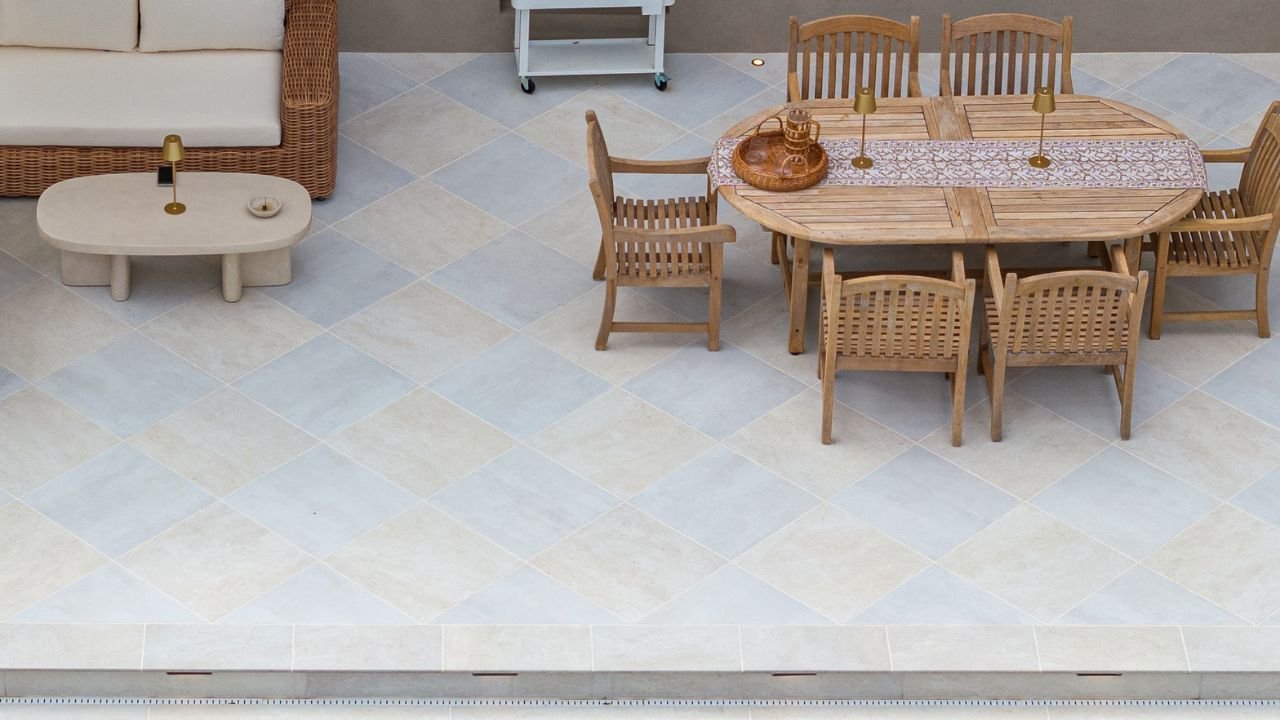
| Color & Aesthetic | Cool olive-grey with subtle undertones – timeless, modern, versatile | Buff, cream, and light grey tones – classic, authentic traditional |
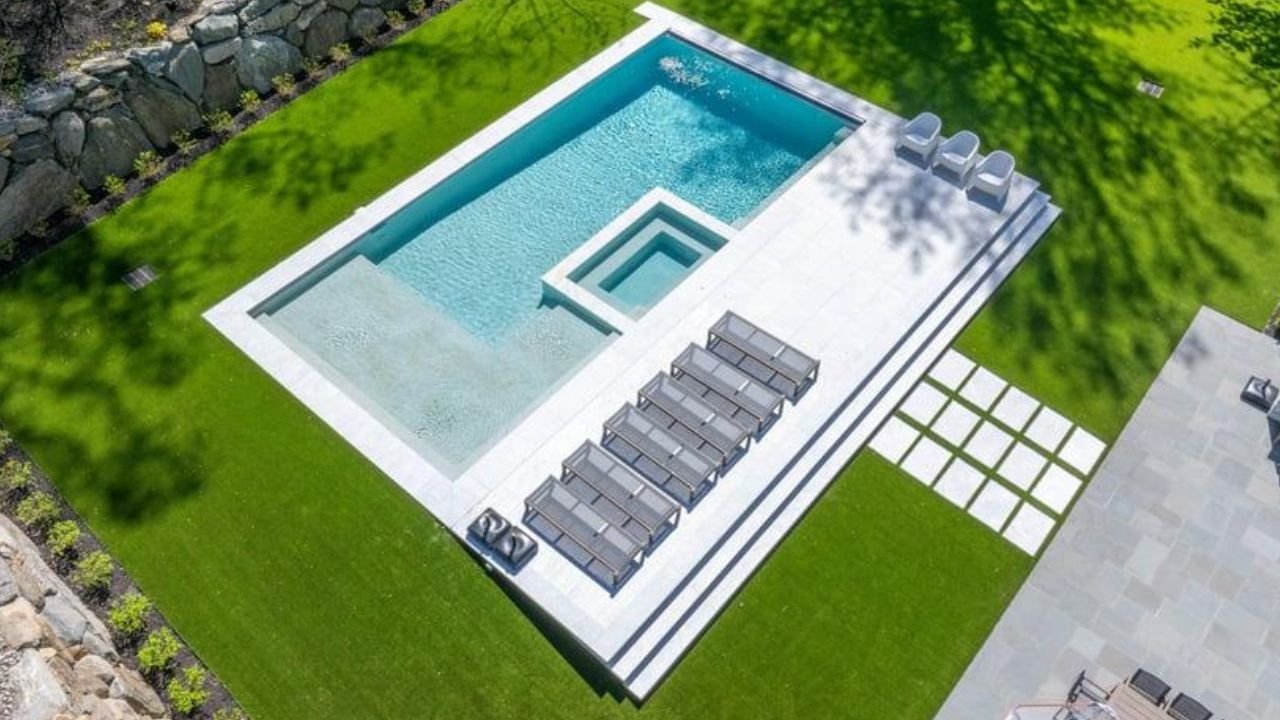
| Applications | Outdoor paving, pool surrounds, patios, high-traffic areas | Building facades, monuments, and some landscaping use |
| Cost & Value | More affordable, denser, and safer | Often priced higher due to heritage appeal and quarry history |
| Sourcing & Availability | NT Pavers Heritage Olive, quarried with modern methods | Indiana, quarried in the U.S. Midwest, with historic demand |
Not only that, the independent testing by the Tile Council of North America (TCNA) confirmed that Heritage Olive Limestone achieved a DCOF of 0.77 under ANSI A326.3-2017 standards. The minimum recommended wet DCOF is 0.42.
This indicates that heritage olive not only passes but also exceeds safety requirements. The density difference (2.71 g/cm³ vs. 2.28 g/cm³) also shows Heritage Olive offers a stronger structure, less porous, and better suited for long-term durability.
Why Density Matters in Heritage Olive Limestone Pavers vs Indiana Limestone?
Density is one of the most important elements in limestone. A denser stone may resist chipping, absorb less water, and withstand freeze-thaw cycles. The high density of Heritage Olive Limestone ensures fewer repairs and lower lifecycle costs.
The outdoor spaces in humid climates experience moisture and temperature swings too often. Indiana Limestone, while durable in its own right, tends to weather more quickly when exposed to outdoor elements.
Heritage Olive Limestone Pavers vs Indiana Limestone: Slip Resistance and Safety
One of the most important factors in selecting a stone is safety. It matters a lot for walkways, patios, and pool decks.
The ANSI A326.3 test measures slip resistance in wet conditions. Heritage Olive Limestone achieved a wet DCOF of 0.77 in TCNA testing with its sandblasted finish. This far exceeds the 0.42 minimum for interior-wet floors and is comfortably above the ~0.55 level. It is often required for exterior or barefoot wet areas like pool decks and plazas.
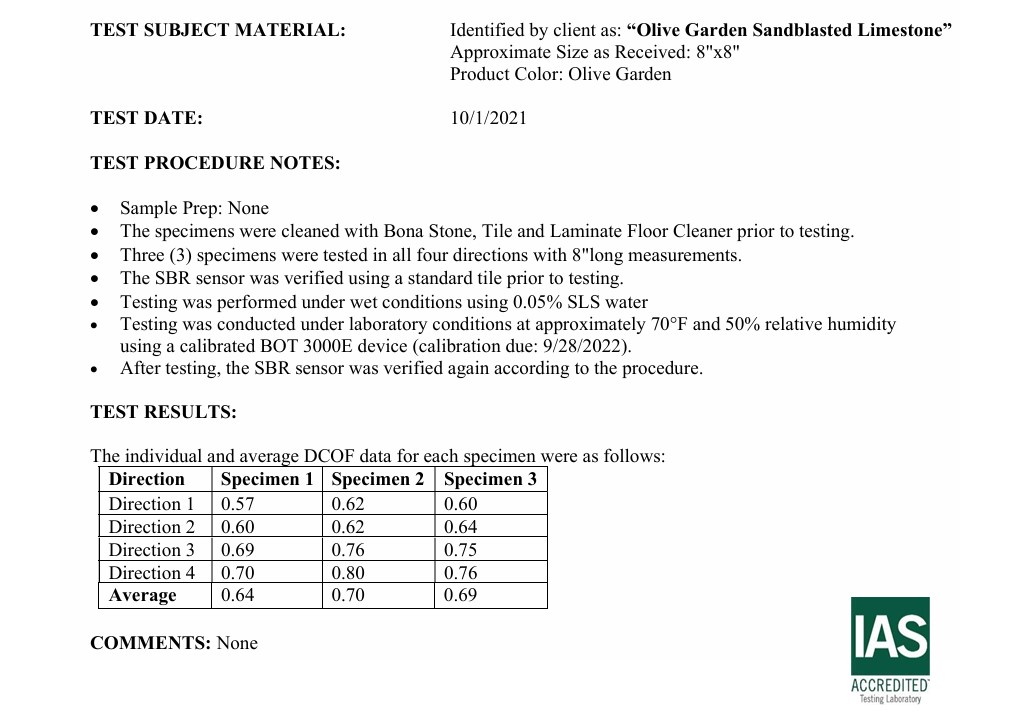
For project managers accountable for safety compliance, this difference is significant. This is because Indiana limestone’s slip resistance varies by finish and doesn’t provide any consistent report. This makes it a preferred, safer, and tested choice for exterior paving projects.
ASTM C170 Compressive Strength Comparison
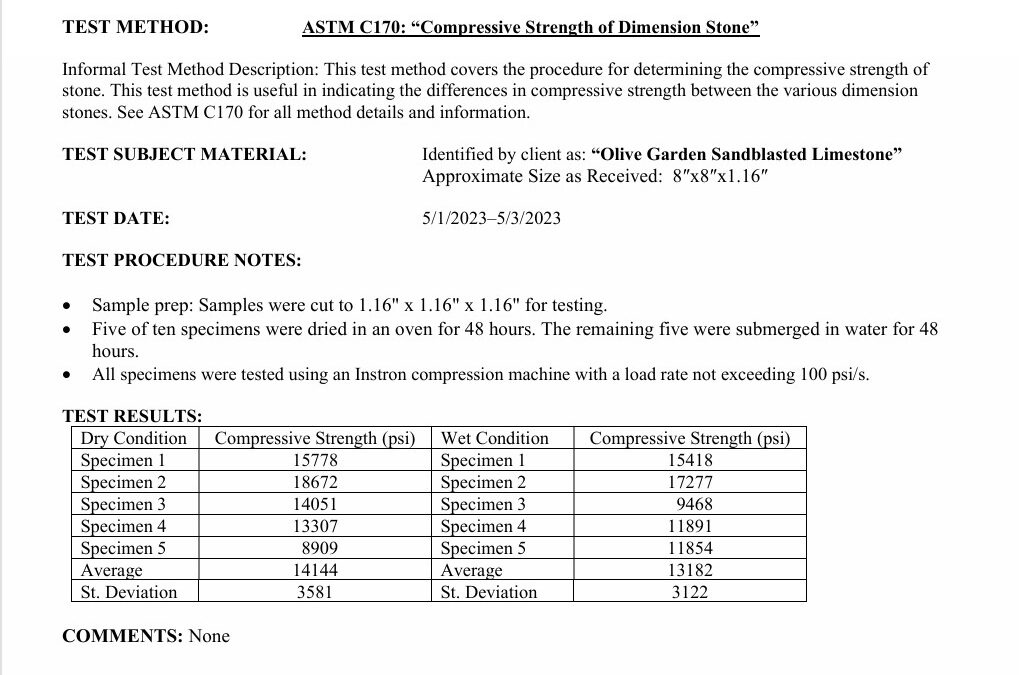
Compressive strength focuses on how well a stone can withstand heavy loads without showing any damage. The ASTIM C170 tests on heritage olive limestone performed well. It showed higher structural integrity compared to Indiana Limestone. This difference makes it better suited for driveways, plazas, and high-traffic paving projects, where durability directly impacts long-term value.
| Stone Type | ASTM C170 Compressive Strength (psi) | Notes on Performance |
| Heritage Olive Limestone | ~14,550 psi | Dense structure, reliable for load-bearing and exterior paving |
| Indiana Limestone | ~4,000 – 8,000 psi (varies by grade) | Adequate for building facades, but lower strength than Heritage Olive for paving loads |
It achieved almost double the compressive strength of typical Indiana Limestone according to the ASTM C170¹ data ranges. For outdoor paving where vehicles, equipment, or heavy pedestrian loads are expected, this difference provides measurable advantages in durability and reduced maintenance.
Freeze–Thaw Durability (ASTM C666)
Natural stone paving used in outdoor applications should withstand the freezing-thaw cycles, especially in northern climates. The ASTM 666 assesses this property by subjecting the stone samples to repeated freeze-thaw cycles. It measures the loss of strength, weight, or visible deterioration.
| Stone | Standard Test | Cycles Survived | Observed Condition |
| Heritage Olive Limestone | ASTM C666 | 300 cycles | No significant deterioration reported |
| Indiana Limestone | ASTM C666 | <300 cycles (varies by quarry and grade) | Surface spalling and strength reduction were noted in some samples |
The industry test data shows that Heritage Olive Limestone has consistently performed well through 300 cycles with minimal deterioration, making it suitable for harsh freeze–thaw regions. Though Indiana limestone is widely used, the freezing-thaw cycle affects some of its variants, which means it can be affected depending on the quarry and grade.

Water Absorption & Density (ASTM C97)
The Water Absorption & Density (ASTM C97) shows how the stone performed in a wet and freezing-thaw climate. It measures the percentage of water absorbed by the stone and absorbed by weight, as well as its bulk density. Lower absorption values generally indicate higher durability and reduced risk of cracking.
| Stone | Standard Test | Absorption (%) | Bulk Density (lb/ft³) |
| Heritage Olive Limestone | ASTM C97 | ~2.5% | ~160 lb/ft³ |
| Indiana Limestone | ASTM C97 | ~7–12% (varies by grade) | ~135 lb/ft³ |
These results clearly state that the heritage Olive Limestone absorbs less water and has a higher bulk density than Indiana Limestone. Particularly in climates with heavy rain or freeze-thaw cycles, these properties make it more durable.