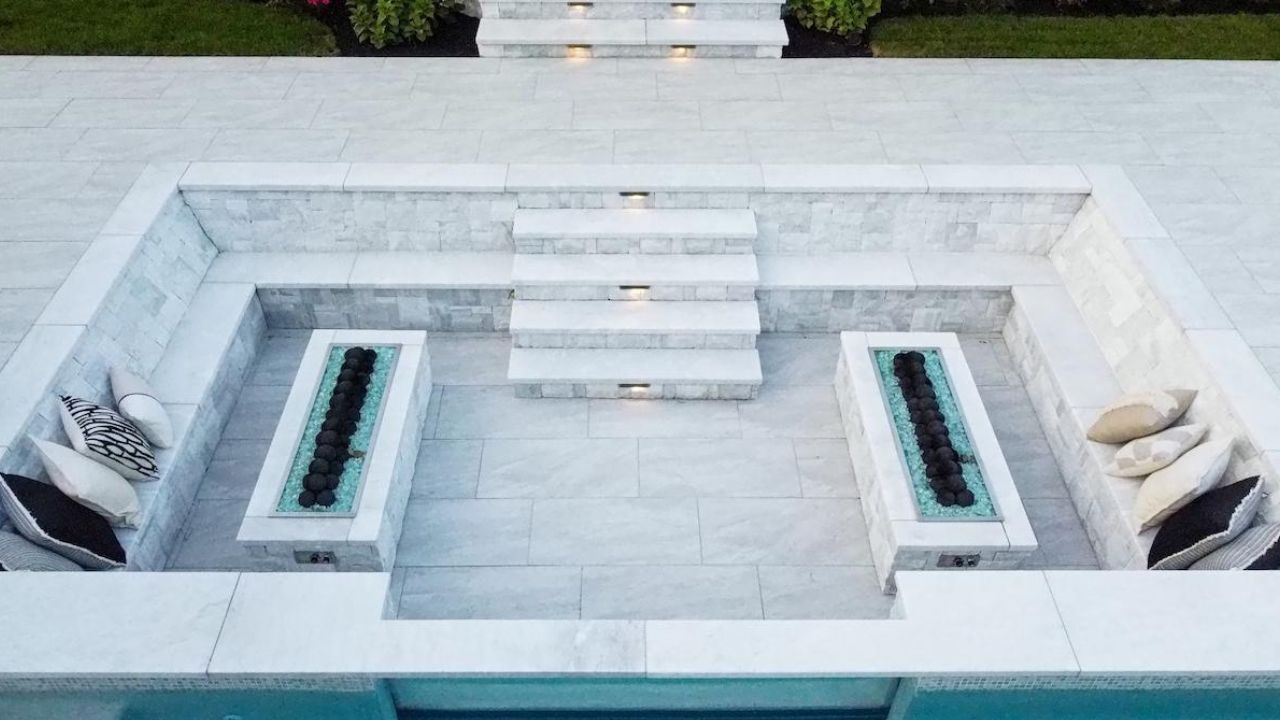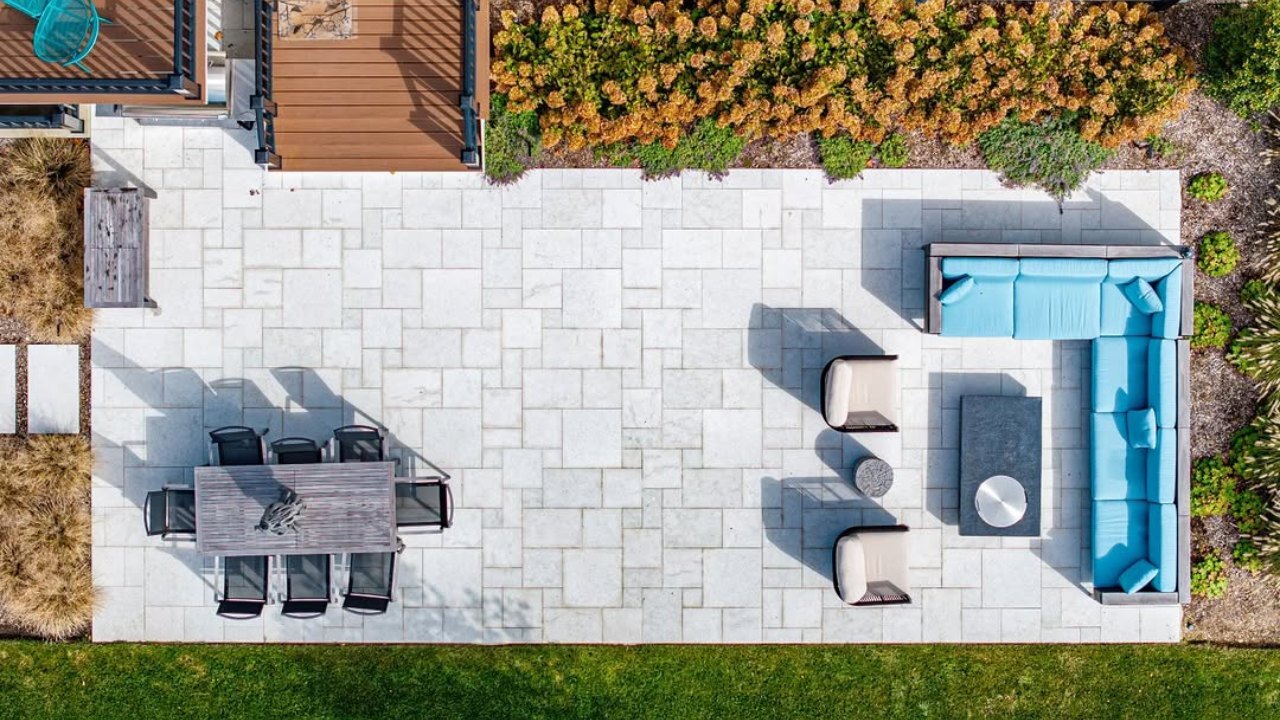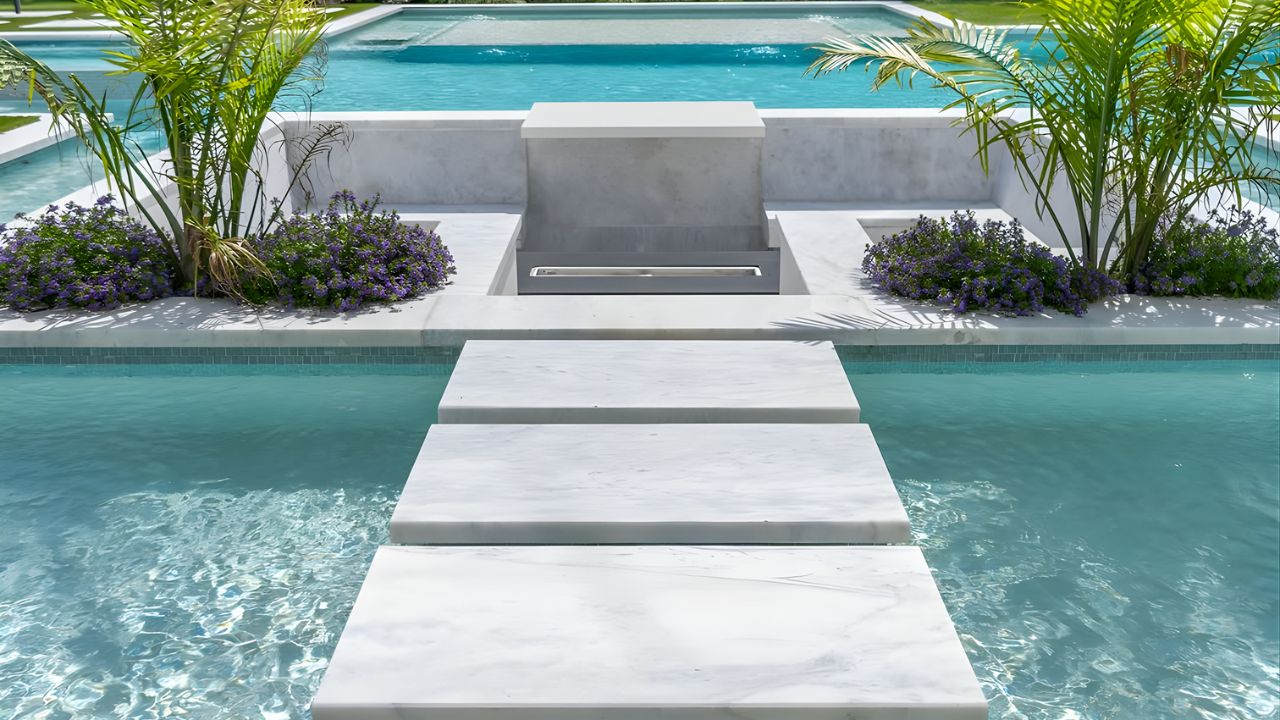
Saltwater pools are one of the most common pool types that one can opt for. They are simple to design, but they do come with unique stress on outdoor materials. Salt just doesn’t stay on the surface, but it penetrates, dries out, and crystallizes. If the material is weaker, it will break down over time. Though many homeowners want to go for outdoor pavers, they assume that they will perform well.
However, this assumption may result in fading, scaling, or surface within a few years. A saltwater system needs a more deliberate choice. Continue reading the following to learn about choosing the right pool deck pavers. This will help you make a clear decision.
Key Factors to Consider Before Choosing Pavers
Here is how to select the best pavers for a saltwater poolside.
1. Salt Resistance
The best pavers for saltwater pools should have a resistance to salt. Your target should be dense materials with low porosity for the best results. Higher density can block the salt from entering the surface. Softstones are not a good choice, nor is the low-grade concrete. They can absorb water easily and degrade early.
2. Slip Resistance
Pool areas remain wet, so the paver selection should include a surface that offers traction. Due to wetness, slip hazard is a common concern, especially for pools with families, so safety matters.
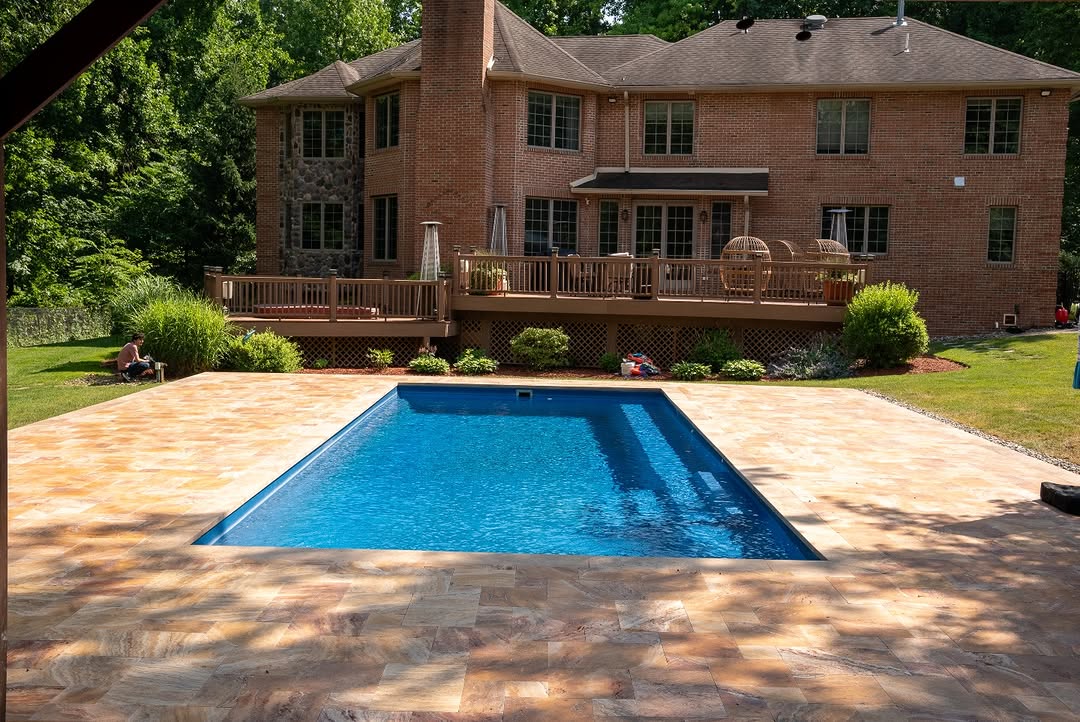
What you should consider for pool coping is the textured finishes, honed or matte surfaces, and certified slip ratings. It is better to avoid smooth, polished surfaces, as they increase risk.
3. Heat Retention
The best pavers for saltwater pools should have better thermal properties. This is because the pool decks will face consistent exposure to heat, so a surface that doesn’t reflect heat will trap it. It will make walking on it hard, even unbearable.
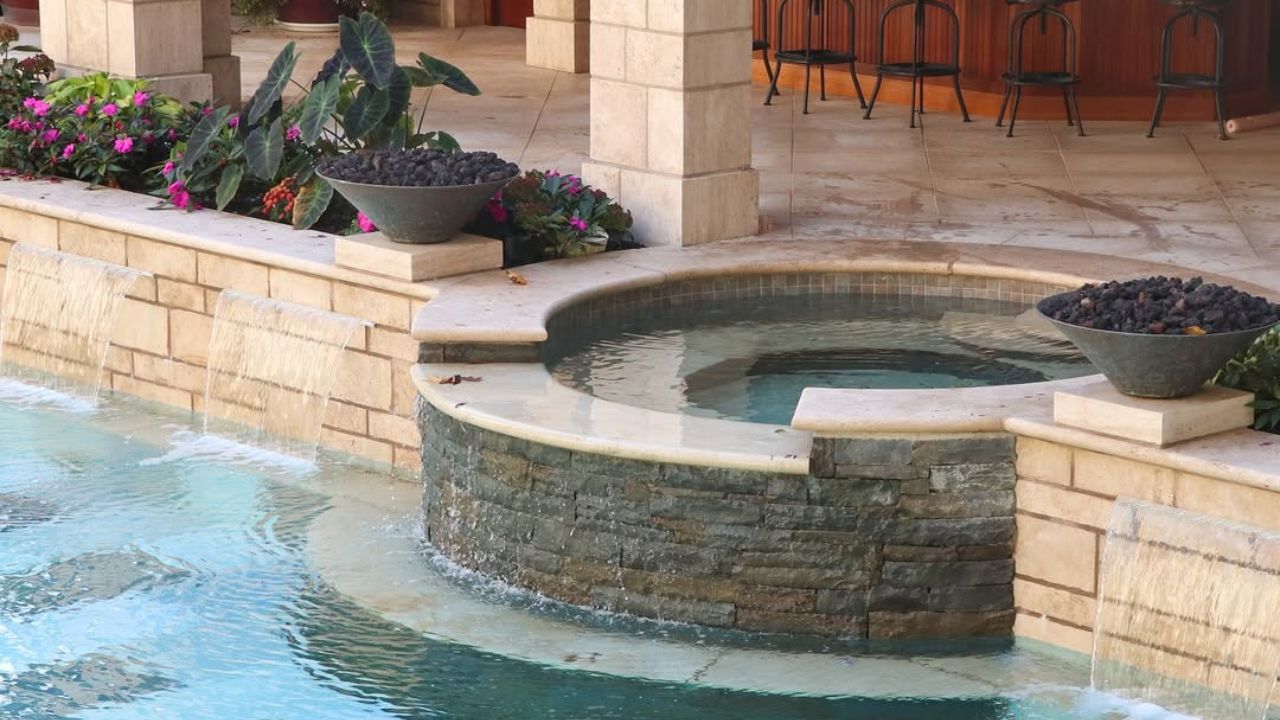
Bare feet and hot climates do not mix well with heat-trapping materials. This is why choosing pavers that reflect heat and stay cool under direct sunlight is important. Natural stone pavers, such as travertine pool coping, and light-colored porcelain often perform well here.
4. Durability and Strength
However, pool decks also have to withstand carrying weight, movement, and weather changes. So choose a paver that should resist cracking. They should also handle freeze-thaw cycles (for colder environments) and maintain color over time.
5. Maintenance Needs
Saltwater pools can be difficult to manage, especially because of the main element, salt. Some materials will require regular maintenance, but some will not, such as sealing. One material will require sealing, but others do not. So while selecting the best pavers for saltwater pools, make sure to check:
- Does this require regular sealing?
- How easy is cleaning?
- Will salt stains show?
Low-maintenance paver options save time long term.
What Makes Saltwater Pools Hard on Pavers?
Many homeowners will prefer the best pavers for saltwater pools, but it is easier said than done. Saltwater systems are hard to work with when selecting pavers. It uses the dissolved salt to generate chlorine. This process creates a constant presence of salt on and around the pool area. For pavers, this means that salt will enter the pores in the material. Water will evaporate, and a salt crystal residue will be left behind. Crystal will expand and cause internal stress, and the surface will start to flake or scale over time.
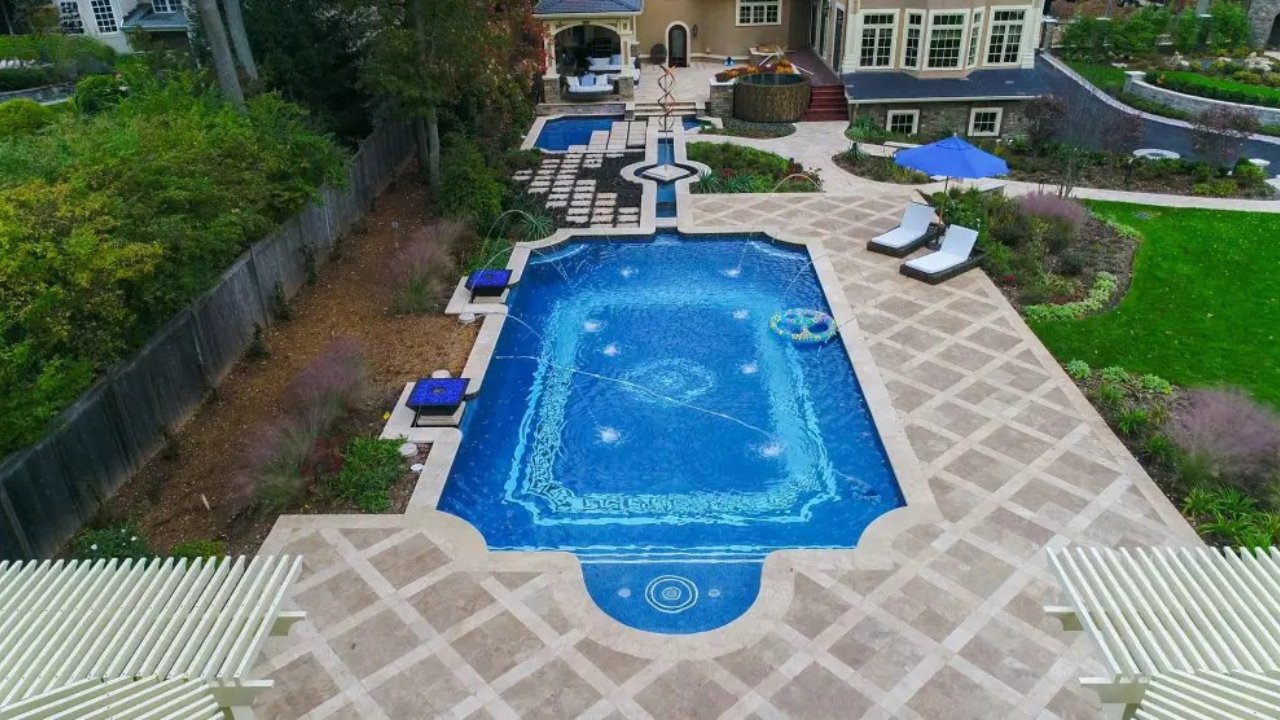
How does it affect the pavers?
This process is known as the salt attack, which affects the material, especially with high porosity and weak internal structure. Elements like pool chemicals, sunlight, and foot traffic increase the stress. So the goal is simple: choose a material that resists absorption and holds its structure.
Best Paver Materials for Saltwater Pools
While there is a wide range of pavers for saltwater pools, some materials can perform well in such environments.
| Paver Type | Saltwater Resistance | Key Benefits | Limitations | Maintenance Needs | Best For |
| Porcelain Pavers | Excellent (very low absorption) | Dense, non-porous structure; fade-resistant color; strong surface; slip-resistant options; modern design flexibility | Higher upfront cost compared to concrete | Very low (no sealing required) | Homeowners who want durability with minimal upkeep |
| Travertine | Good (when sealed) | Stays cool underfoot; natural grip; soft, neutral tones; comfortable texture | Porous by nature; needs sealing to prevent salt damage | Moderate (regular sealing required) | Pool decks in hot climates: natural, resort-style designs |
| Limestone | Moderate to Good (depends on density) | Clean, subtle look; smooth texture; blends well with modern designs | Can absorb water if of low quality; prone to salt damage without sealing | Moderate (sealing essential) | Refined outdoor spaces with a minimalist aesthetic |
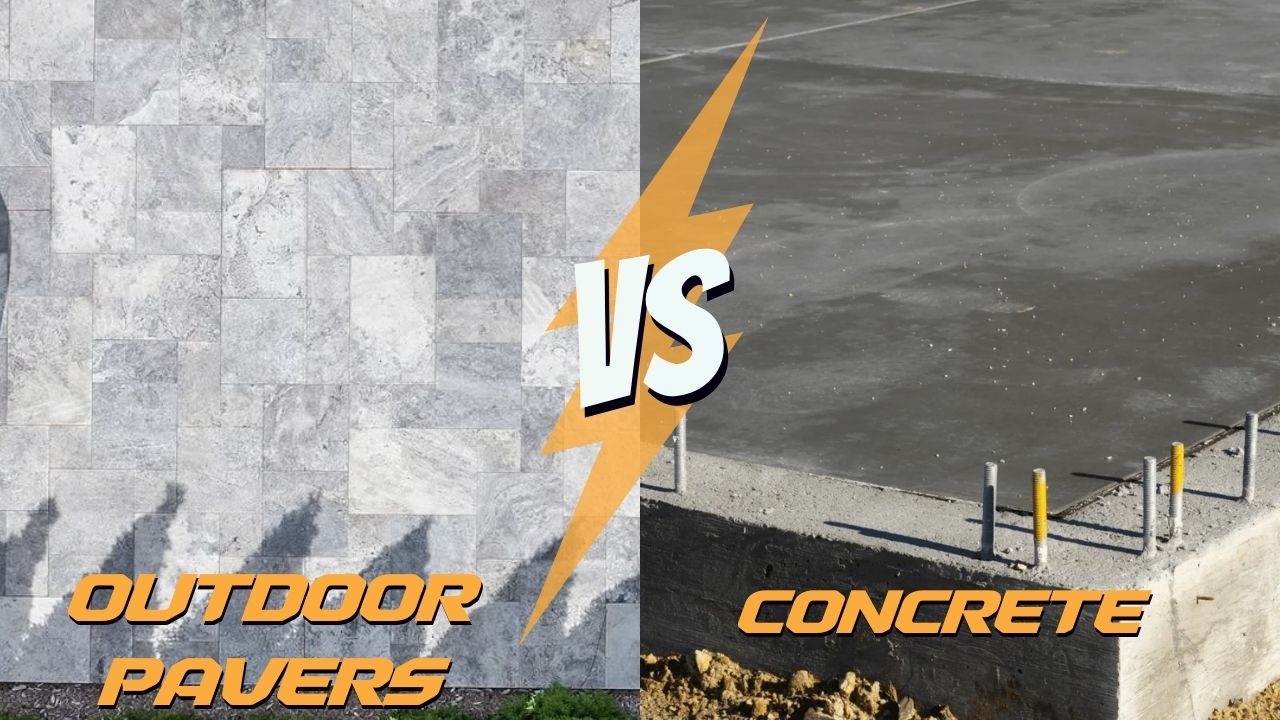
| Concrete Pavers | Moderate (varies by quality) | Cost-effective; flexible design options; widely available | More porous than porcelain; lower grades degrade under salt exposure | High (needs sealing and ongoing care) | Budget-conscious projects with proper maintenance planning |
| Granite | Excellent (low porosity) | Very strong; highly durable; resists salt well | Retains heat; higher cost; harder feel underfoot | Low to moderate | High-traffic areas where strength matters more than comfort |
For bonus material, you can also choose bluestone pavers
Materials to Avoid Around Saltwater Pools
Not all pavers can perform better when exposed to saltwater. These pavers should be avoided when choosing the best pavers for saltwater pools.
- Sandstone (too porous)
Sandstone, though, looks warm and inviting, but the surface is too porous to absorb water. This will result in a compromised pool surface.
- Low-grade concrete
Low-grade concrete may be an affordable option for pool areas, but concrete also absorbs water and may crack over time.
- Soft limestone varieties
The soft and porous surface of the limestone paver varieties is highly prone to intense degradation when paired with saltwater pools
- Unsealed natural stone
Most natural stone pavers cannot resist the saltwater pool damage when left unsealed after sealing. Unsealed natural stone can easily degrade
These materials can show signs of wearing faster and require frequent maintenance over time. You will soon start to notice scaling, cracking, or discoloration earlier than your expectations.
Importance of Proper Paver Installation
Proper installation of any pavers matters a lot when it comes to longevity. Even if you have chosen the best pavers for saltwater pools, they will fail with poor installation. Focus on:
| Installation Factor | What It Means | Why It Matters for Saltwater Pools |
| Proper Base Preparation | A compacted, stable foundation under the pavers | Prevents shifting, cracking, and uneven surfaces over time |
| Correct Jointing Material | Material placed between pavers (polymeric sand or grout) | Locks pavers in place and resists washout from water and salt exposure |
| Drainage Design | A system that directs water away from the surface | Stops water and salt from pooling, which reduces surface damage and staining |
| Sealing (When Required) | Protective layer applied to porous materials | Reduces water absorption and protects against salt penetration and surface breakdown |
Best Pavers for Saltwater Pools FAQs
Let’s answer your questions about Best Pavers for Saltwater Pools.
What is the most salt-resistant pool paver?
Porcelain pavers are the most resistant paver type against saltwater. They have the lowest absorption surface, which prevents salt from entering and damaging the surface.
Do saltwater pools damage concrete pavers?
Yes. Concrete pavers have a porous surface, so salt can penetrate the surface, which will break down over time. They require sealing to secure the surface.
Is travertine safe for saltwater pools?
Yes. When sealed properly, travertine stays cool and offers better traction, which makes it a strong option for pool decks.
Do I need to seal pavers around a saltwater pool?
Yes. Except for porcelain, every paver requires sealing around a saltwater pool, but sealing will add to its longevity.
Which paver stays coolest in hot weather?
Travertine and pavers with light colored surfaces stay cooler than darker materials.
How long do saltwater pool pavers last?
25 to 50 years with proper installation and maintenance.
Are textured pavers necessary for pool decks?
Yes. Texture improves grip and reduces slip risk, especially in wet conditions.
Bottom Line
Saltwater pools are one of the most common pool types that homeowners often opt for. However, the major problem is choosing a paver type that can withstand the harsh effects of the environment. Choosing the best pavers for saltwater pools should focus on low absorption, strong surface structure, slip resistance, and heat comfort.
Porcelain paver is the best choice in this regard, with a dense structure and an almost no water absorption rating. Travertine is a durable natural stone paver that can withstand saltwater pool conditions when installed and sealed properly. At NT Pavers When the right material is combined with the perfect installation, you get a lasting surface that is easy to maintain.