
Bathroom walls are constantly exposed to moisture and a humid environment. But this doesn’t mean that you cannot make these walls look stunning. Installing the wall tiles with a vertical or horizontal pattern will do the basic purpose of covering the wall; what’s next? Your bathroom tiles should look like part of your residential area instead of just a basic powder room. However, when choosing bathroom wall tile, it shouldn’t be just a design decision. The right wall tiles for bathroom spaces will withstand water exposure while making your bathroom look stylish.
A shower wall has different demands from a vanity wall. This distinction makes it easier to choose ideas for tile for bathroom walls. Here are our picks for bathroom wall tile ideas that are worth considering.
Large-Format Porcelain for a Minimalist Bathroom Wall
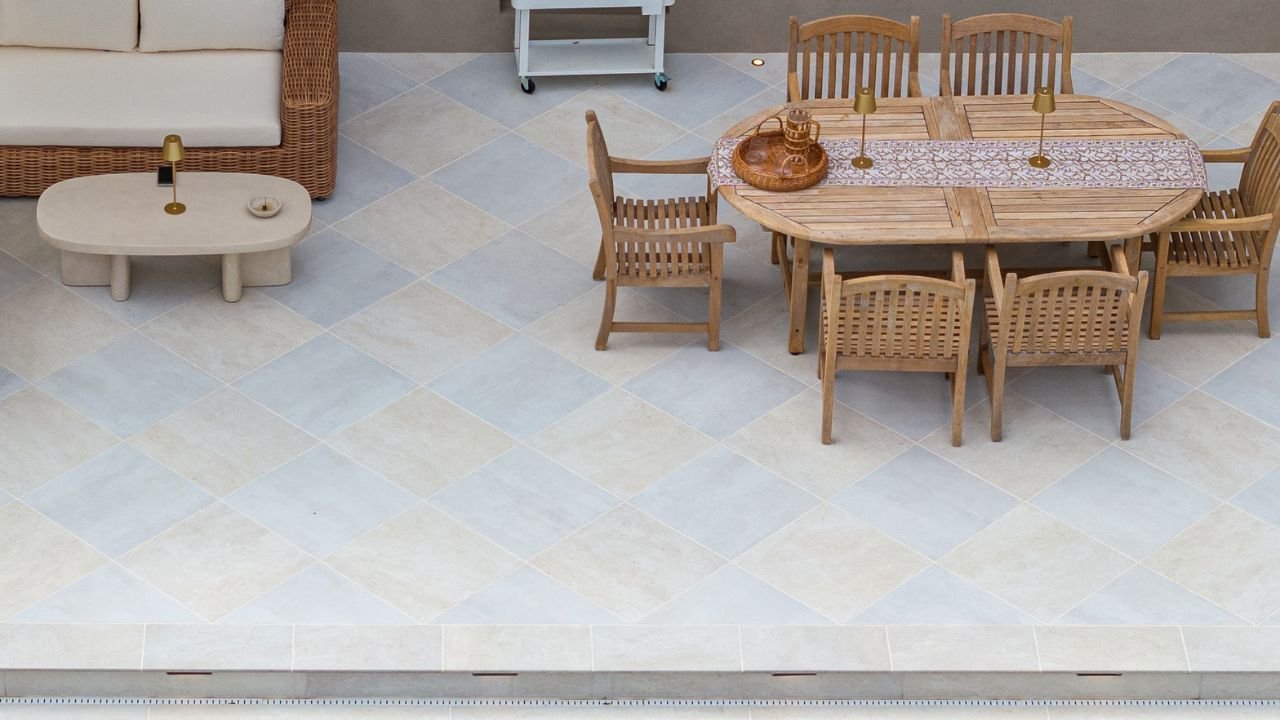
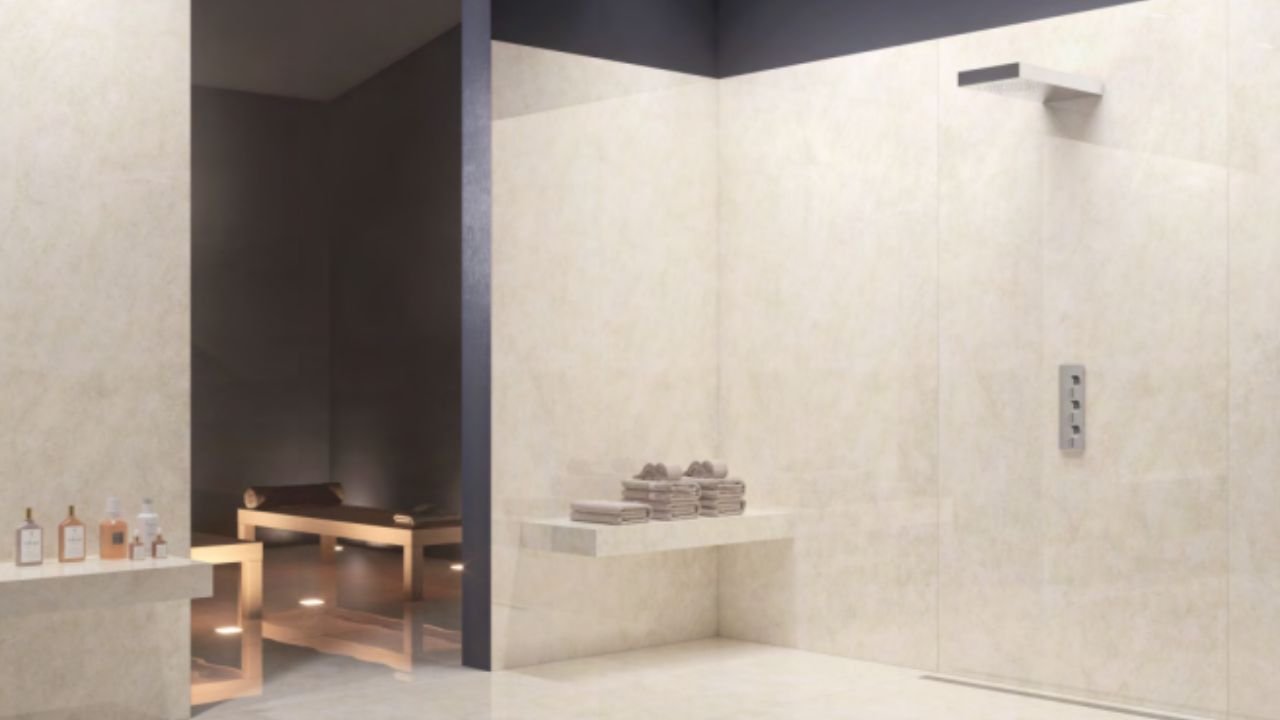
Large-format porcelain is one of the best choices for modern tile bathroom walls. Sizes like 10″ x 12″, 12″ x 24″, 18″ x 35″, 24″ x 48″ tiles, 48″ x 48″ tiles, and larger reduce the number of grout joints. This creates a unified and calmer surface while making a small bathroom feel less broken up. The best-matching approach is to pair a large-format wall tile with a smaller or more textured floor tile.
For example, a warm limestone look porcelain wall can work with a matte beige floor. Large formats remain a major bathroom trend in 2026 because they combine a clean appearance with practical maintenance benefits. This wall tile idea for bathrooms suits modern bathrooms, walk-in showers, small bathrooms, and full-height walls.
Classic Subway Tile With a Fresh Layout
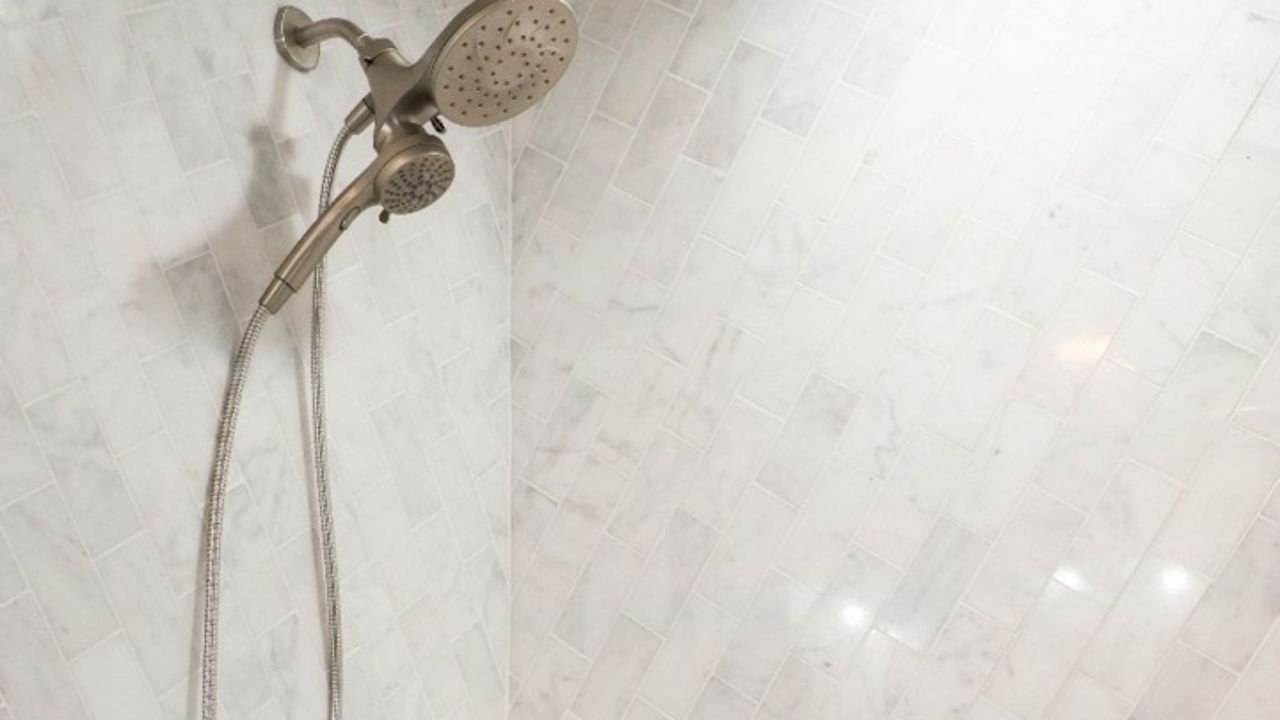
Subway tile remains useful because of its proportions, which make it easy to work with. But the traditional horizontal running-bond layout is not the only a single option. Try a vertical stack to emphasize ceiling height. For the best look, start with the bathroom floor.
A stacked horizontal layout gives the bathroom wall a more structured appearance. Herringbone can create a focal point around a vanity or tub. The key is restraint. If the floor already has a strong pattern, keep the subway wall simple. If both surfaces are quiet, the wall can carry more visual interest.
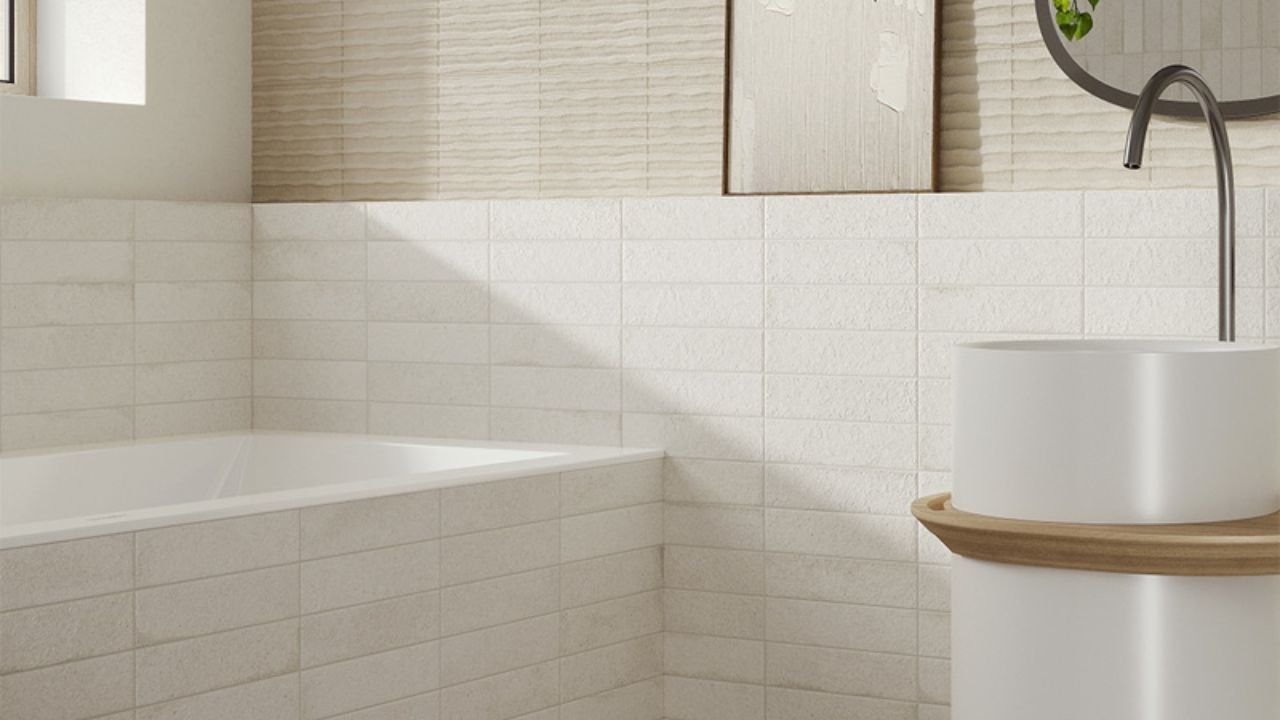
Marble-Look Porcelain for Natural Stone Character
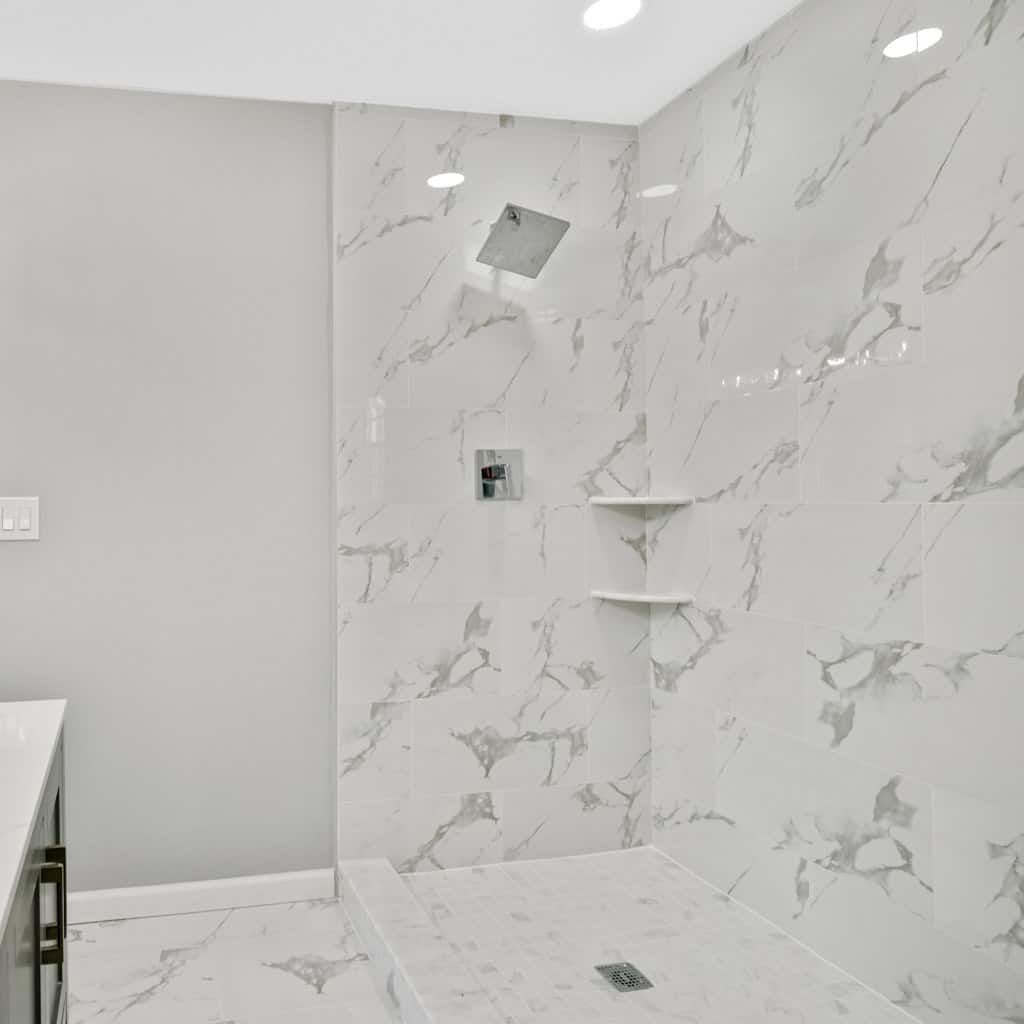
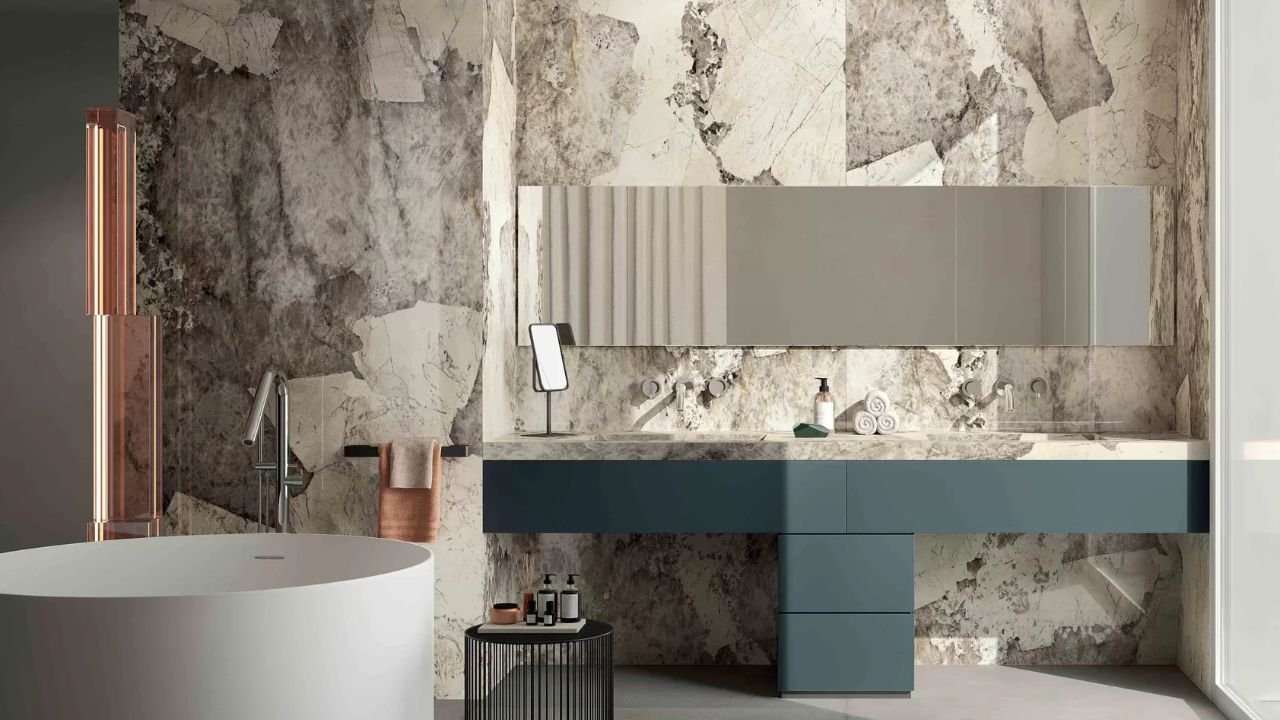
Marble-look porcelain tile gives you the authentic look of marble without the maintenance requirements of actual marble stone. For a balanced design with such bathroom wall tile ideas, match the dominant color in the veining with another bathroom element. A white tile with soft gray veins can connect with a gray floor, brushed metal fixtures, or a gray vanity.
For stronger marble patterns, use the tile on one major wall rather than every surface. This lets the veining become a design feature instead of visual noise.
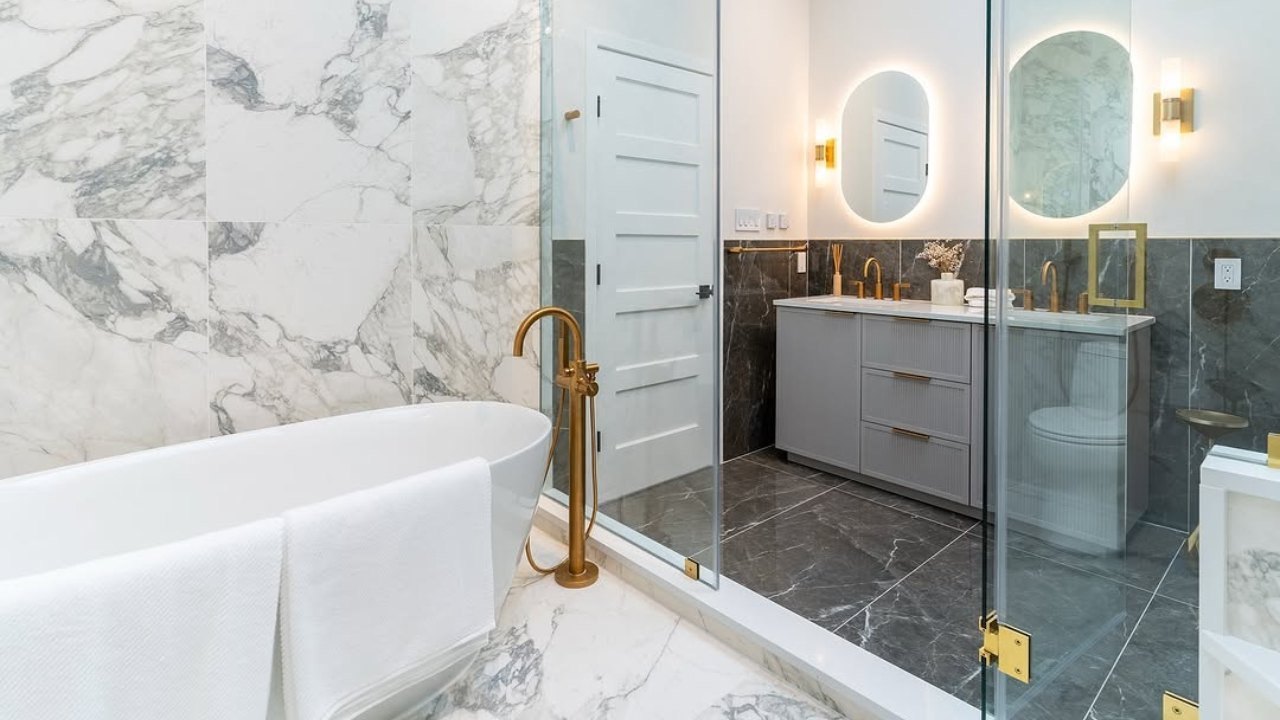
Real Marble for a More Authentic Natural Surface
If you prefer the authentic natural beauty of marble stone, then opt for real marble tile. Different marble variations can be utilized, including Imperial White Carrara Marble, Pearl Dolomite Marble, and other marble varieties. They can create a luxurious look effortlessly. This is one of the best bathroom wall tile ideas that can create a distinctive shower or vanity wall.
But marble requires precise installation and maintenance for bathroom areas. It is calcite-based and can react with acids. Vinegar and acidic cleaners can etch the surface, while some stones also need sealing to reduce staining and water absorption.
Because of this, marble is not a recommended material for bathrooms. This means you should choose it with maintenance in mind. For a refined look, use a polished finish for bathroom wall tiles or honed marble for a much softer look. Use polished marble for a more formal appearance or honed marble for a softer surface where minor etching is less noticeable.
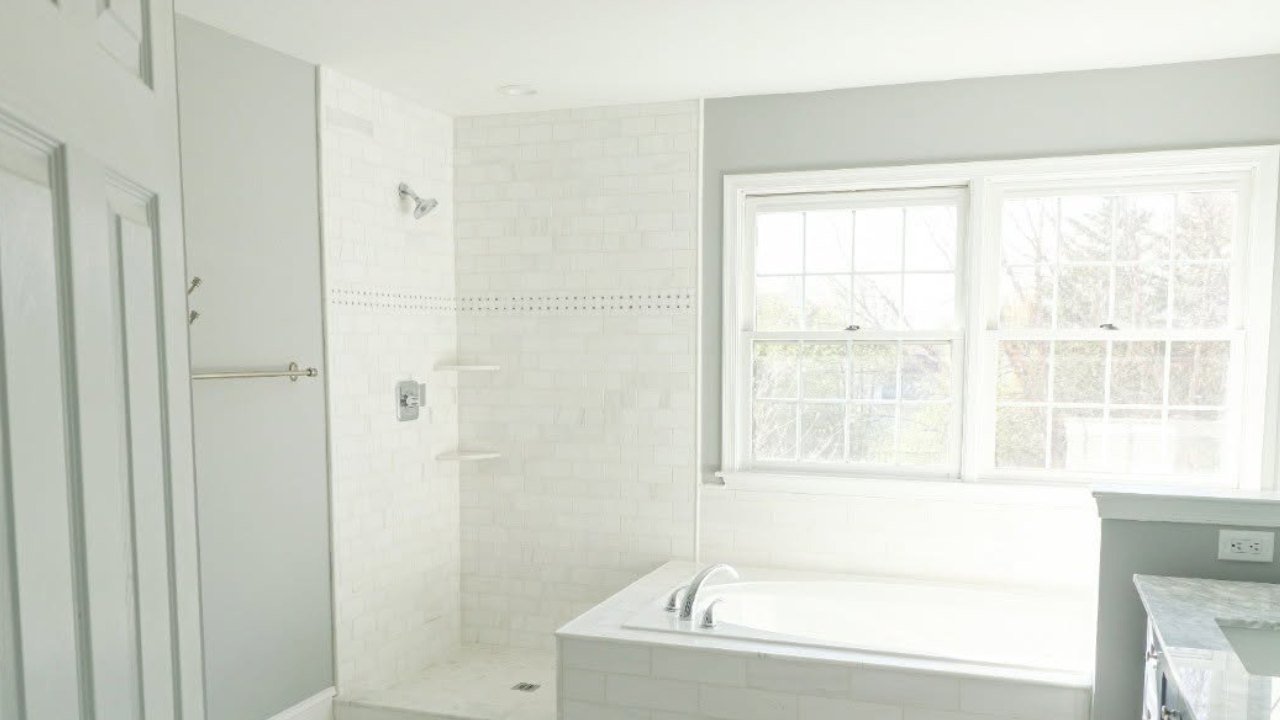
Warm Stone-Look Tile for a Relaxed Bathroom
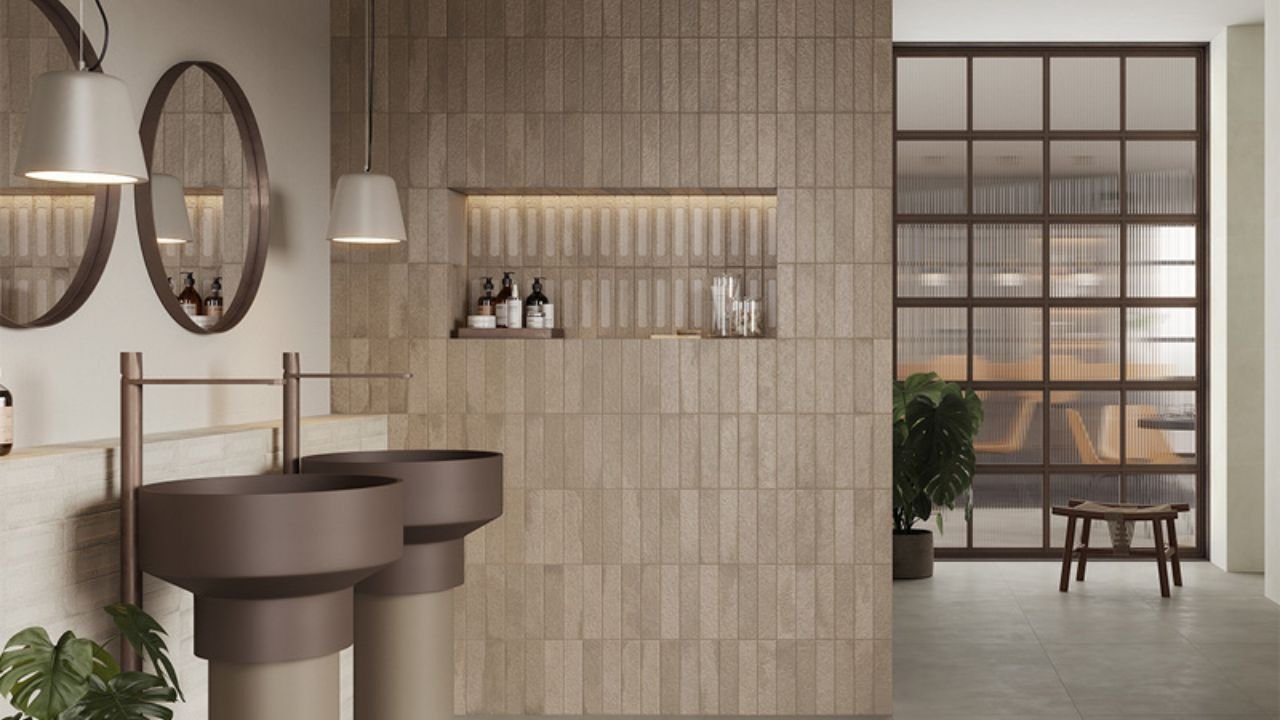
Stones with cool gray tones have dominated bathroom areas for years. Now homeowners are looking for warmer beige, taupe, clay, muted green, and other nature-inspired tones. A limestone or travertine look porcelain tile can add a touch of warmth to the bathroom wall without making it feel rustic. Pair warm wall tile with:
- Natural wood vanity
- Brushed brass or bronze hardware
- Cream-colored flooring
- Warm white lighting
The result feels grounded without relying on heavy decoration.
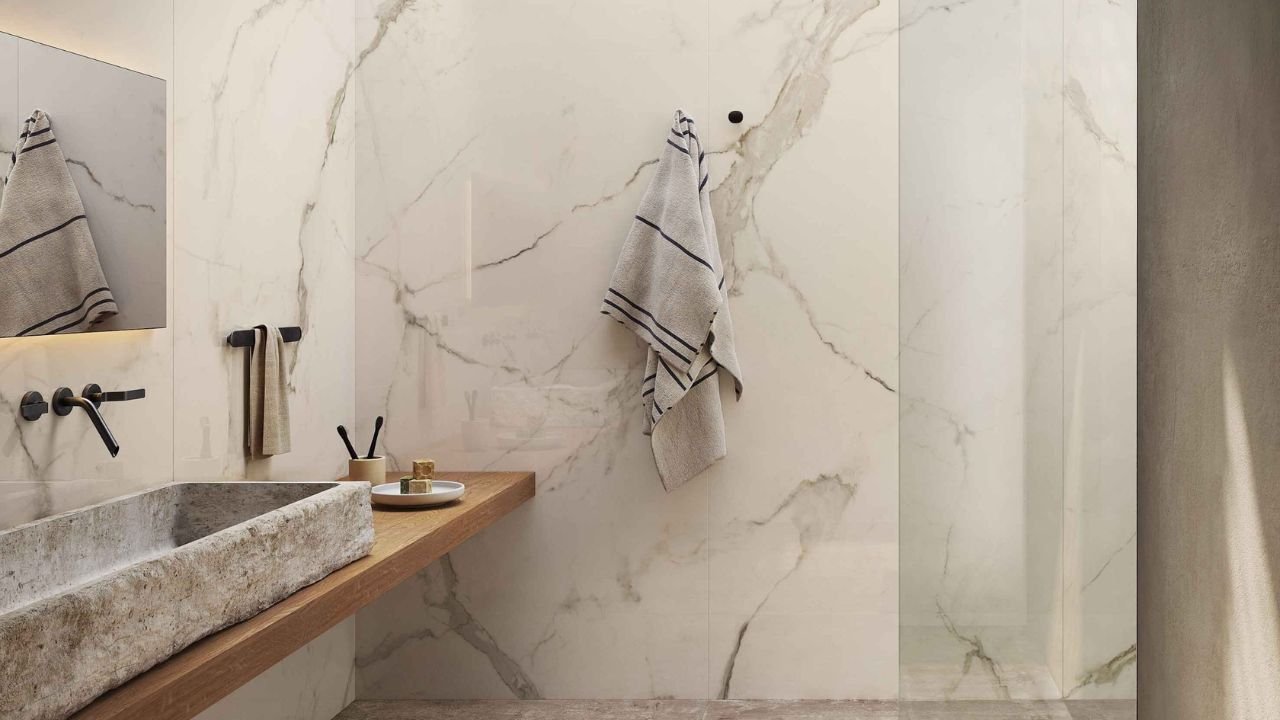
Vertical Tile to Make Walls Feel Taller
This is one of those bathroom wall tile ideas that will make your small bathroom feel taller. Vertical installation is a useful design tool when the bathroom has low ceilings or a narrow footprint. A rectangular tile installed vertically draws the eye upward. You can use this approach with subway tile, large-format rectangles, or narrow decorative tiles. However, do not assume vertical placement will suit every bathroom.
Consider the height, width, doors, niches, and plumbing before committing to the layout. Recent design coverage also notes that vertical layouts can look striking but need to work with the architecture of the room.
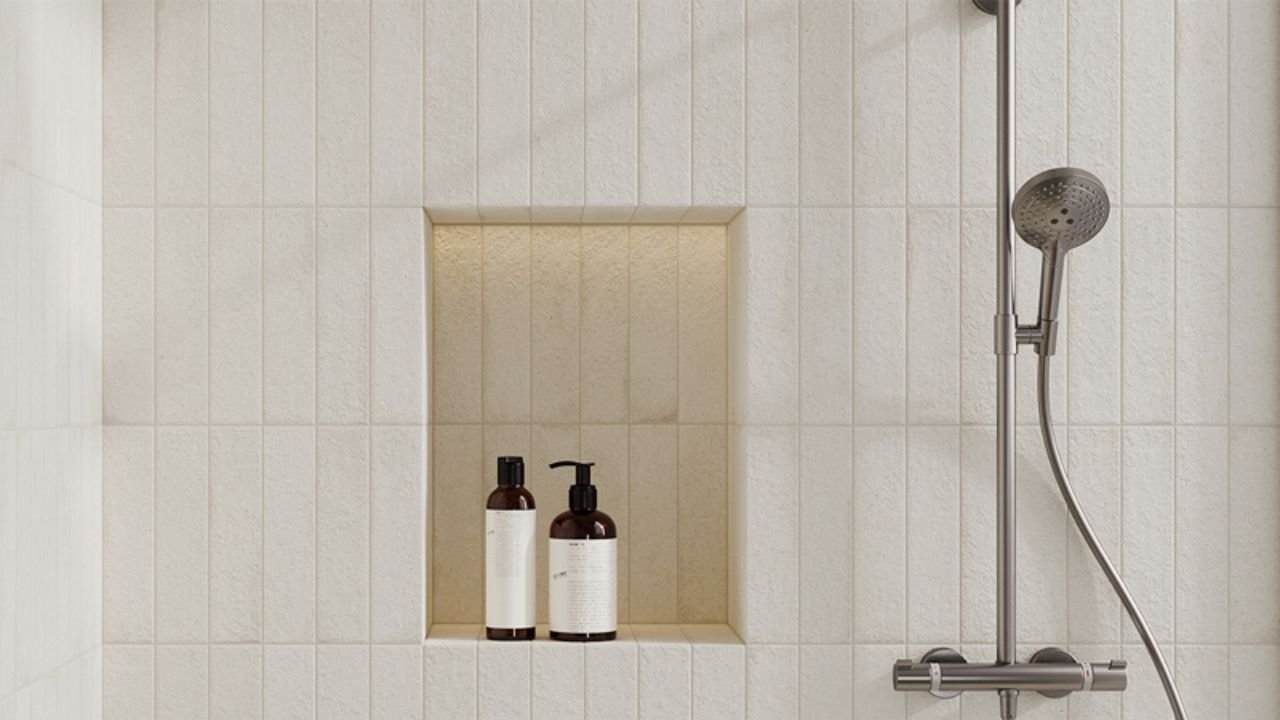
Textured Shower Wall for Subtle Contrast
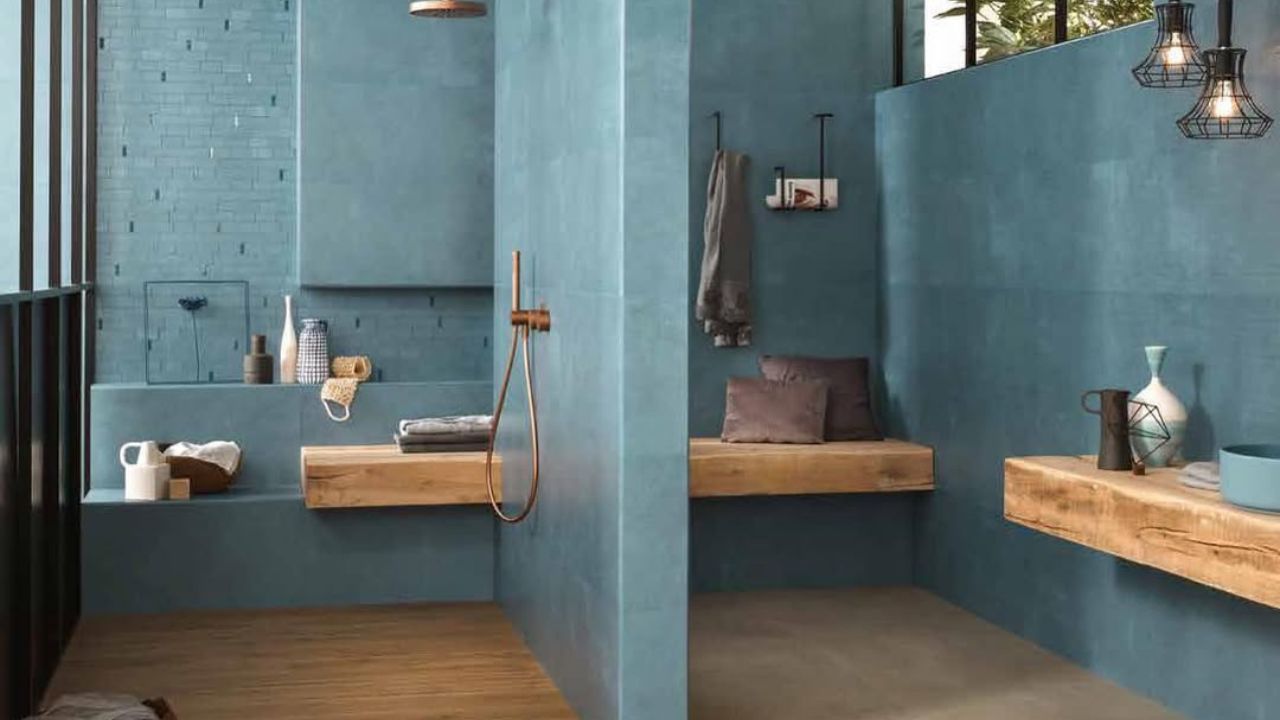
Not every accent wall needs a bold color. Texture can create contrast through light and shadow. For such bathroom wall tile ideas, you can use fluted, ribbed, hexagon, three-dimensional, or lightly structured wall tiles. The resulting design can add depth behind a shower or vanity.
Use texture on one surface. Keep neighboring walls and floors quieter. This matching approach prevents a small bathroom from feeling crowded. Also consider cleaning before choosing a highly textured tile for a shower. More surface detail can mean more places for soap residue and mineral deposits to collect.
Glossy Wall Tile for Smaller Bathrooms
Glossy tile reflects light and can help a compact bathroom feel brighter. White, cream, pale green, and soft blue glossy tiles work well where natural light is limited.
The trade-off is maintenance. Glossy surfaces can show water spots, fingerprints, and mineral deposits more clearly. For a small bathroom, you can use glossy tile on the main wall and a matte floor tile. The contrast creates visual separation without introducing another color.
Dark Bathroom Wall Tile for Drama
Charcoal, deep green, navy, and other dark colors can create a strong bathroom design. The key is in creating balance. A dark shower wall works well with a lighter floor, pale vanity, reflective mirror, and adequate lighting. Dark tile bathroom walls also benefit from larger formats because fewer grout lines keep the wall from looking busy. If the room receives little natural light, test a physical sample first.
A color that looks sophisticated in a showroom can feel much heavier inside a dim bathroom.
Mosaic Tile as a Controlled Accent
Mosaic belongs in the bathroom, but it doesn’t have to cover every wall. Use a mosaic as a shower niche backing, vanity backsplash, narrow border, or single accent wall. This can give your bathroom wall a creative pattern without making the entire room compete for attention.
Mosaic and small decorative tiles are also part of the broader 2026 shift toward more expressive bathroom surfaces. A useful rule is to let one surface lead. If the mosaic has a strong pattern, choose a quiet floor and simple surrounding walls.
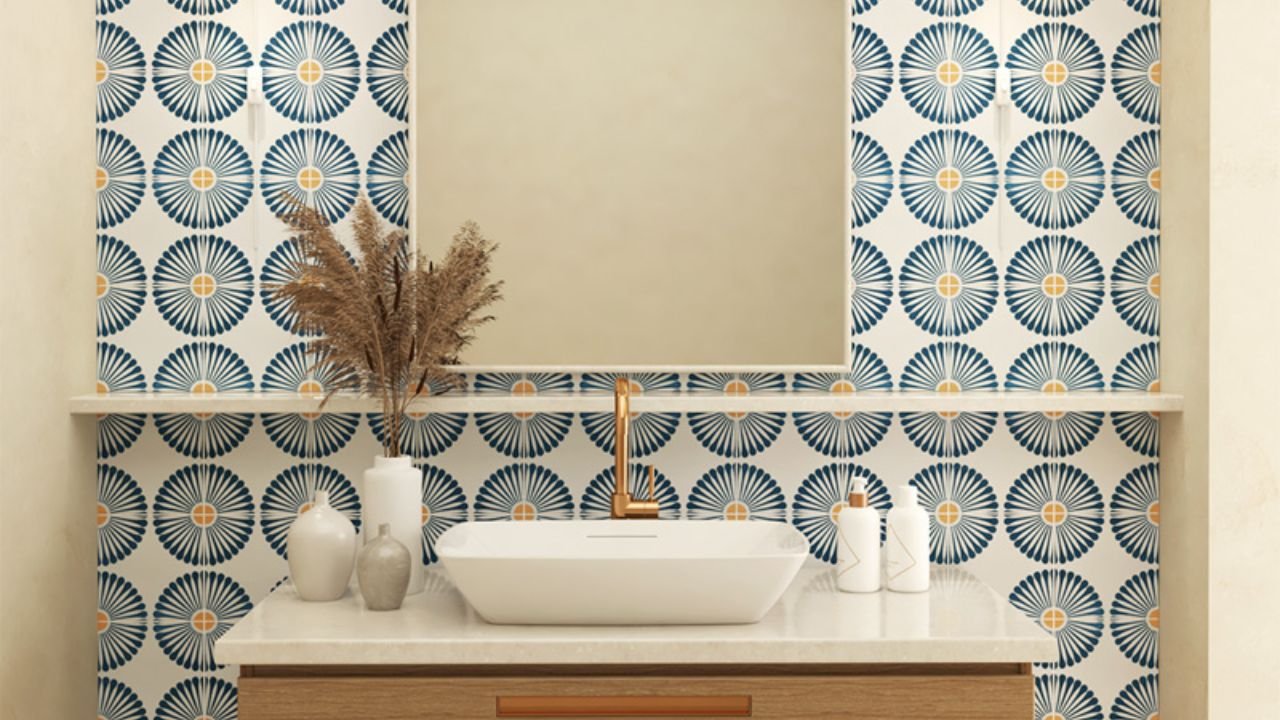
Matching Wall and Floor Tile for a Larger Visual Field
Using tiles from the same collection on the wall and floor can make a bathroom look cohesive and connected. This does not mean using the same size and finish everywhere. You can use a stone-look porcelain on the wall and a coordinating smaller format on the floor. For instance:
Warm limestone-look wall tile + matching matte floor tile + wood vanity + brushed metal fixtures. This design approach works because the materials share undertones while their different textures define each surface.
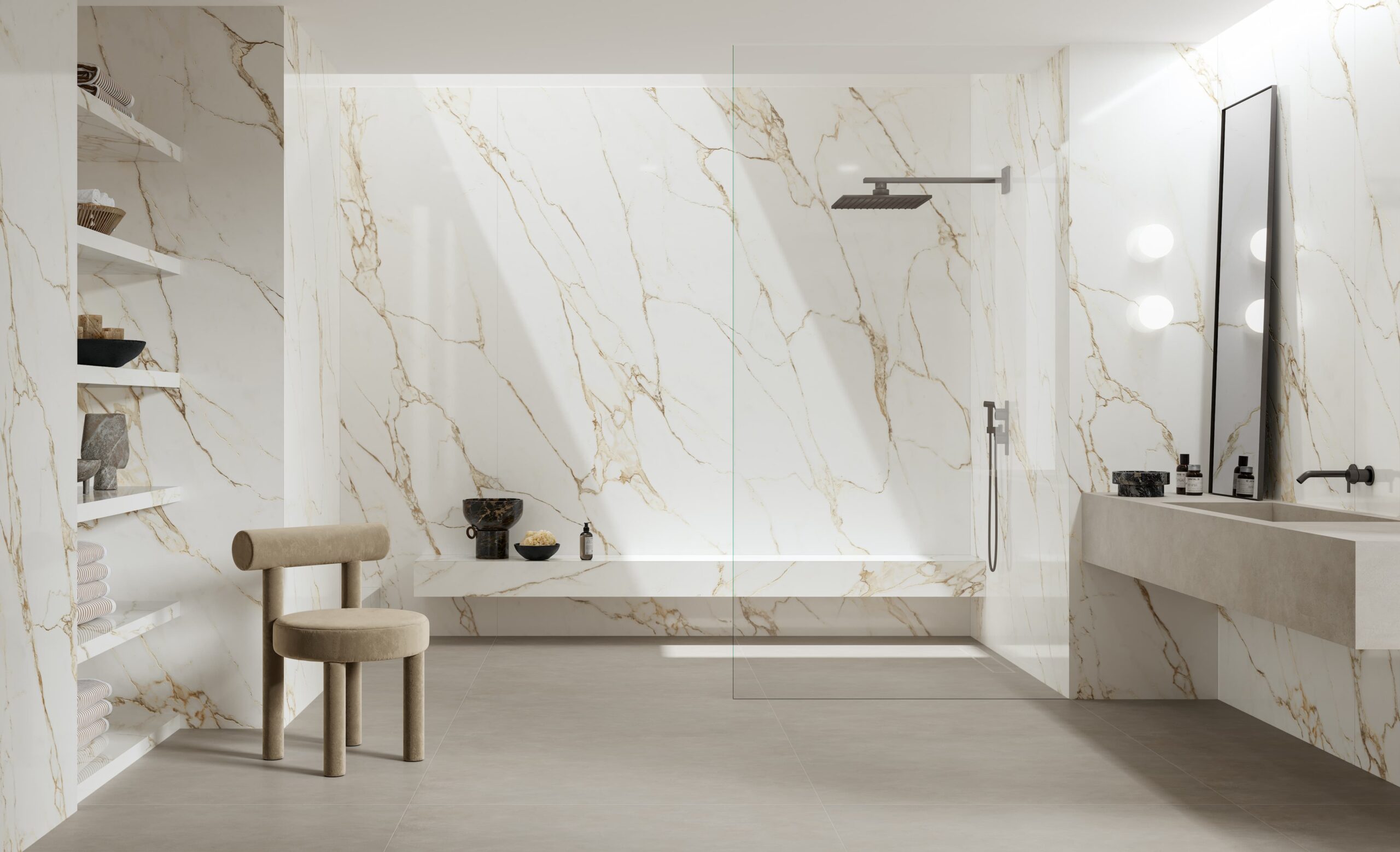
Natural Stone Walls for Material Depth
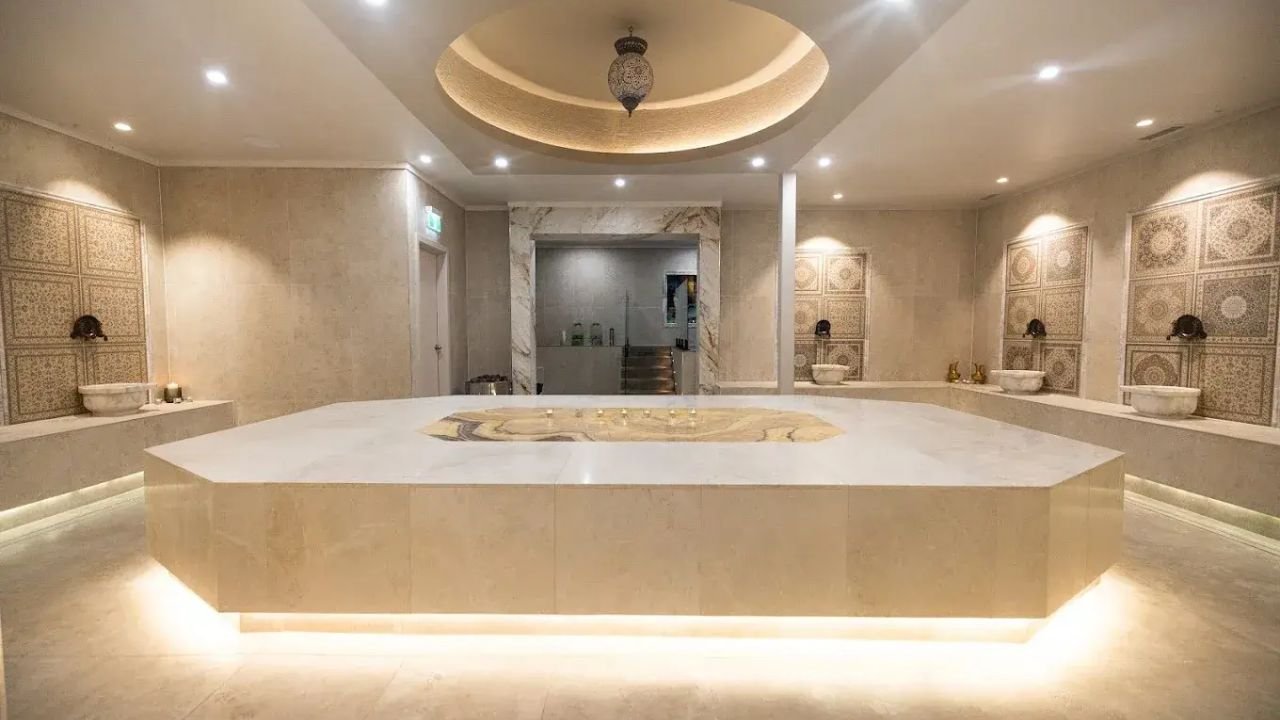
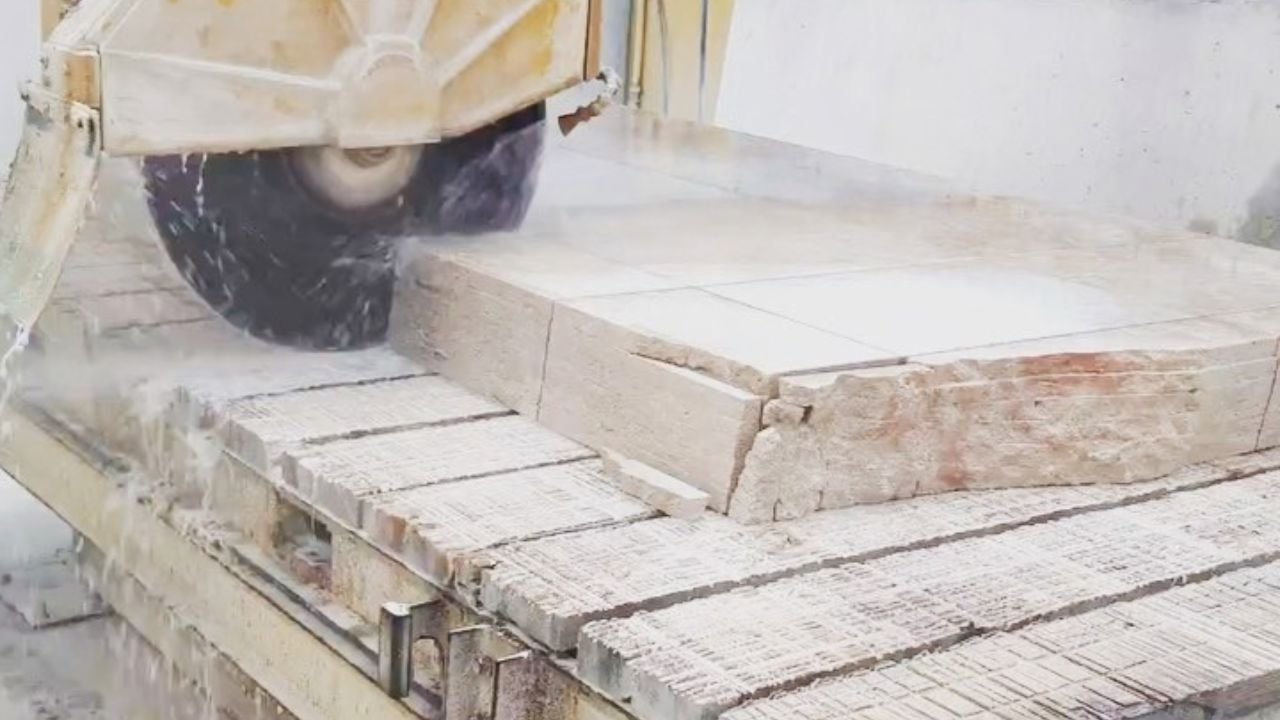
Natural stone tile can give your bathroom a look that manufactured tile cannot fully replicate. Each batroom wall tile has a different pattern from other pieces. Travertine, limestone, marble, and granite can all create different effects, but their performance varies. Natural Stone Institute guidance stresses matching a stone’s properties to its intended use.
Here is a practical comparison for homeowners:
| Natural Stone | Bathroom Wall Character | Maintenance | Main Consideration |
| Marble | Veined, refined, distinctive | Moderate | Acid-sensitive; sealing and proper cleaning matter |
| Travertine | Warm, textured, earthy | Moderate to high | Porous and acid-sensitive; sealing is important |
| Limestone | Soft, understated, natural | Moderate | Porosity varies; acid can etch the surface |
| Granite | Dense, strong, varied | Lower | Generally easier to maintain than calcite-based stones |
| Slate | Textured, dark, organic | Moderate | Choose a suitable finish and account for surface texture |
Natural stone is not a maintenance-free material. Marble, Limestone, and Travertine can react with acidic cleaners. Porous stones can absorb moisture and staining agents. A neutral stone cleaner is a safer general choice while a grout cleaner can help remove buildup from the joints without relying on harsh products..
For homeowners who want natural character with simpler upkeep, stone-look porcelain is worth comparing with the real material.
How to Choose the Right Tile for Bathroom Walls
While working with bathroom wall tile ideas, consider choosing the right tile for bathroom walls. Here is how you can choose in the best way possible.
Consider The Usage
A shower wall requires a properly designed wet area installation compared to a shower floor. A vanity backsplash has less water exposure.
Maintenance Requirments
Matte porcelain and ceramic are practical choices for many homeowners. Natural stone, though look beautiful but requires sealing and careful cleaning. For routine upkeep, learning how to clean bathroom tiles can help prevent buildup and keep tile surfaces looking their best.
Room’s Strongest Feature
If the floor has a bold pattern, choose a quieter wall. If the floor is plain, the wall can carry more texture or color.
Tile looks at full scale.
Do not judge a large-format tile from a tiny sample alone. Veining, shade variation, grout spacing, and light can change the finished appearance.
Bathroom Wall Tile Ideas FAQs
Let’s answer your questions regarding bathroom wall tile ideas.
What is the best tile for bathroom walls?
Porcelain is a strong all-around choice because it offers durability, low maintenance, and many colors and stone-look options.
What color tile makes a small bathroom look bigger?
Light neutrals such as white, cream, beige, and soft gray can make a small bathroom feel more open.
Are large tiles good for bathroom walls?
Yes. Large-format tiles can reduce grout lines and create a more unified appearance. However, the wall must be flat enough, and the installer should use an appropriate installation method.
Is marble good for bathroom walls?
Yes. Marble can work well on bathroom walls, including shower walls, with the specific stone, finish, sealing, cleaning method, and waterproofing system.
Should bathroom wall and floor tiles match?
They do not need to match. Coordinating color, undertone, texture, or material creates a connected design without making every surface identical.
What tile is easiest to maintain in a bathroom?
Porcelain is among the easiest options for regular care. Natural stone can also perform well, but some varieties require sealing and stone-safe cleaning products.
Bottom Line
The best bathroom wall tile ideas are not the ones that look impressive in isolation; they look sensible in the room. Opt for large-format tile when you want fewer visual interruptions. Opt for subway tile when you want a flexible classic. Use marble for genuine natural variation. Opt for stone-look porcelain for a low-maintenance surface. And opt for textured or mosaic tile when one wall needs more character. Match the bathroom wall tile to the shower exposure, floor, lighting, fixtures, and level of maintenance you are willing to accept.