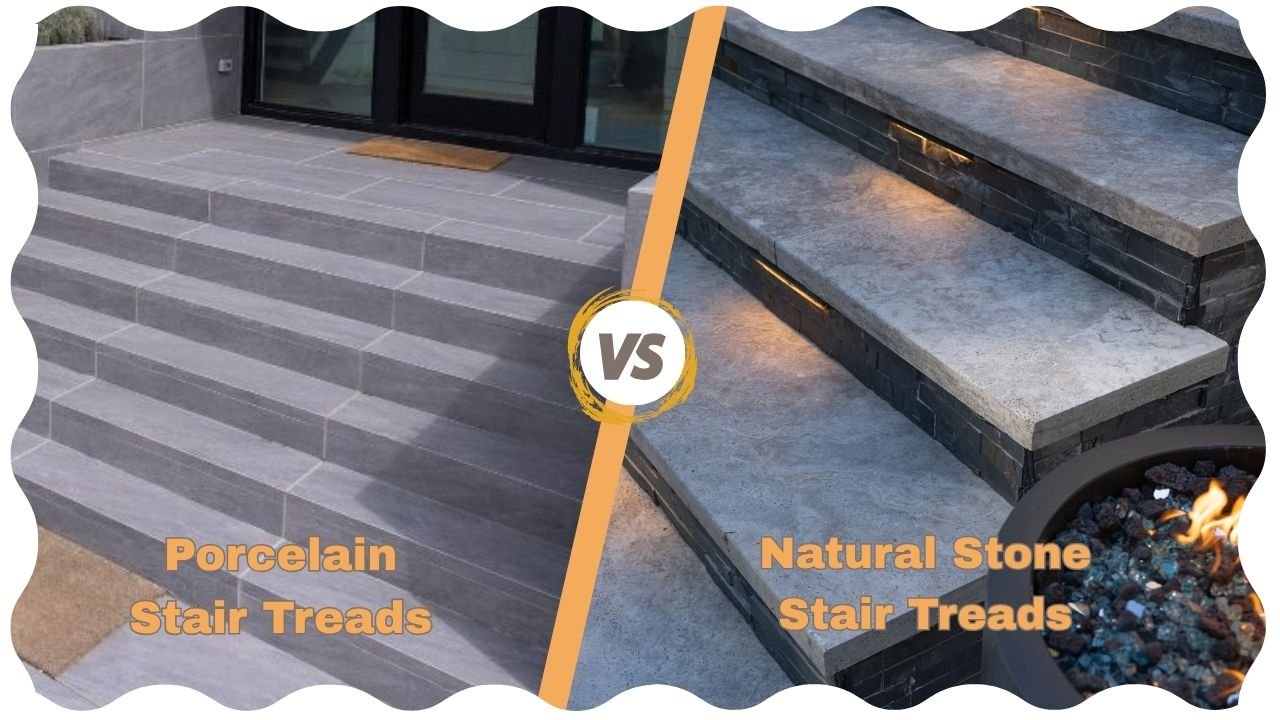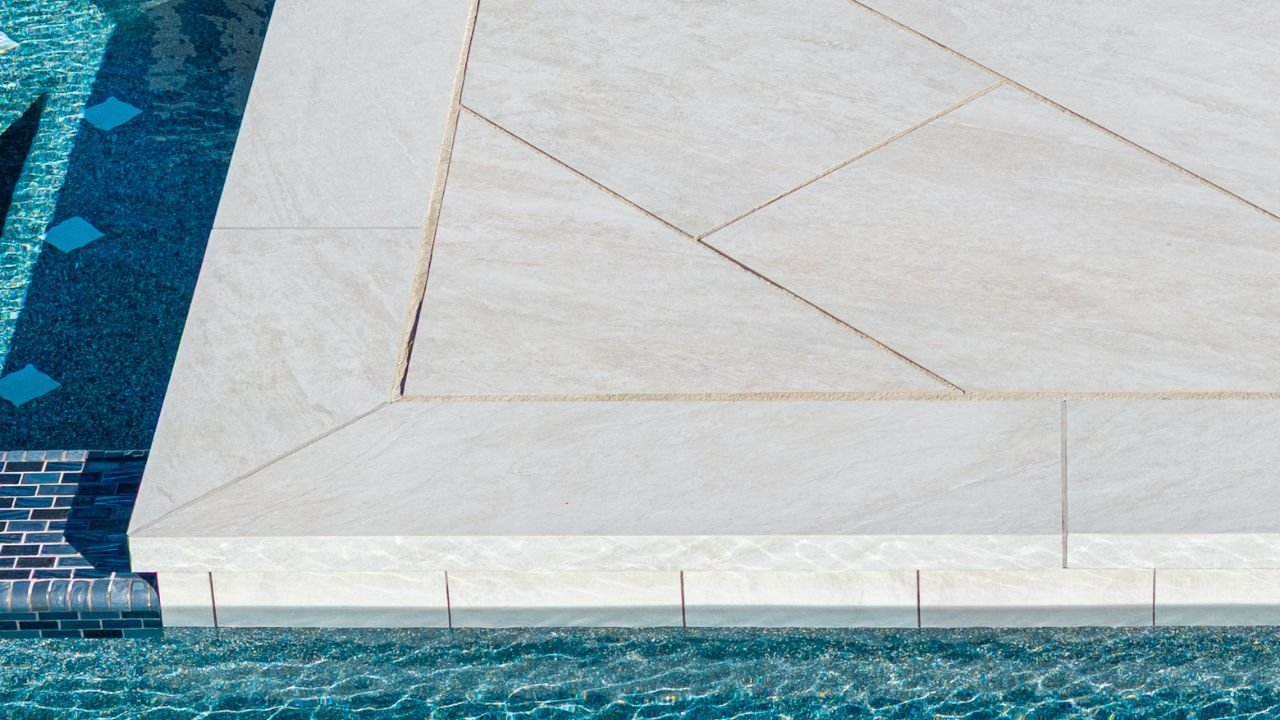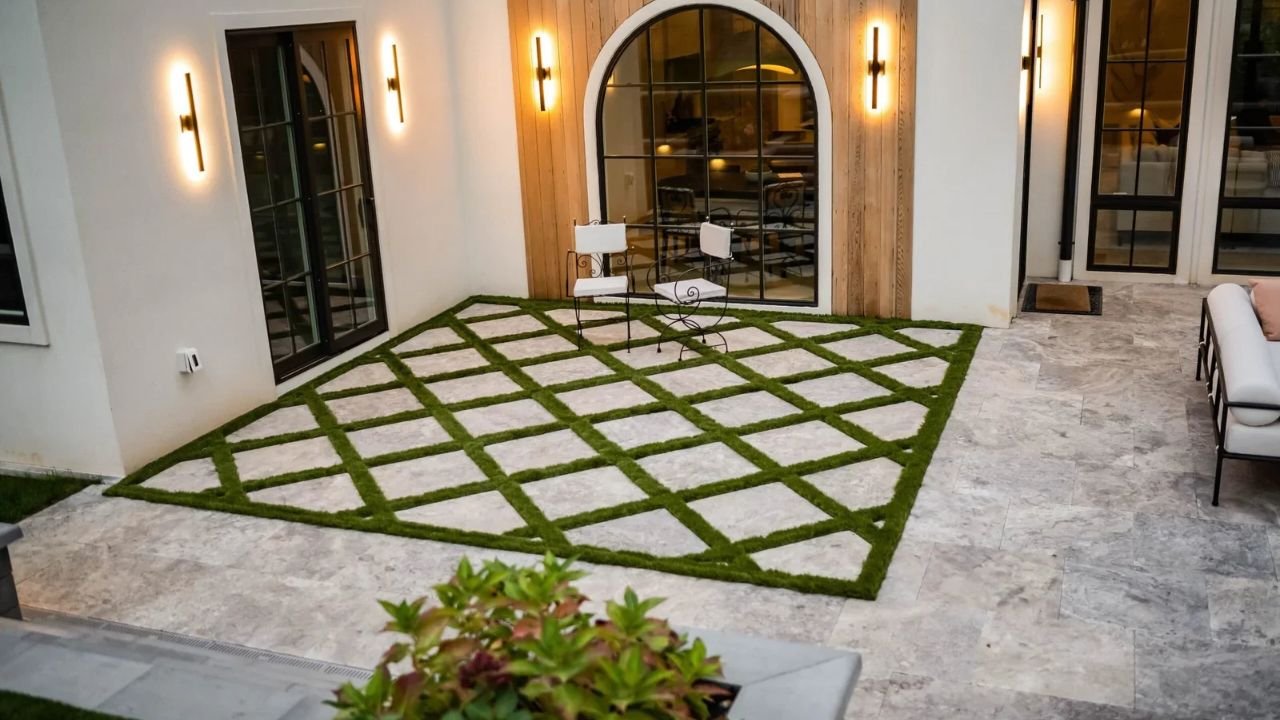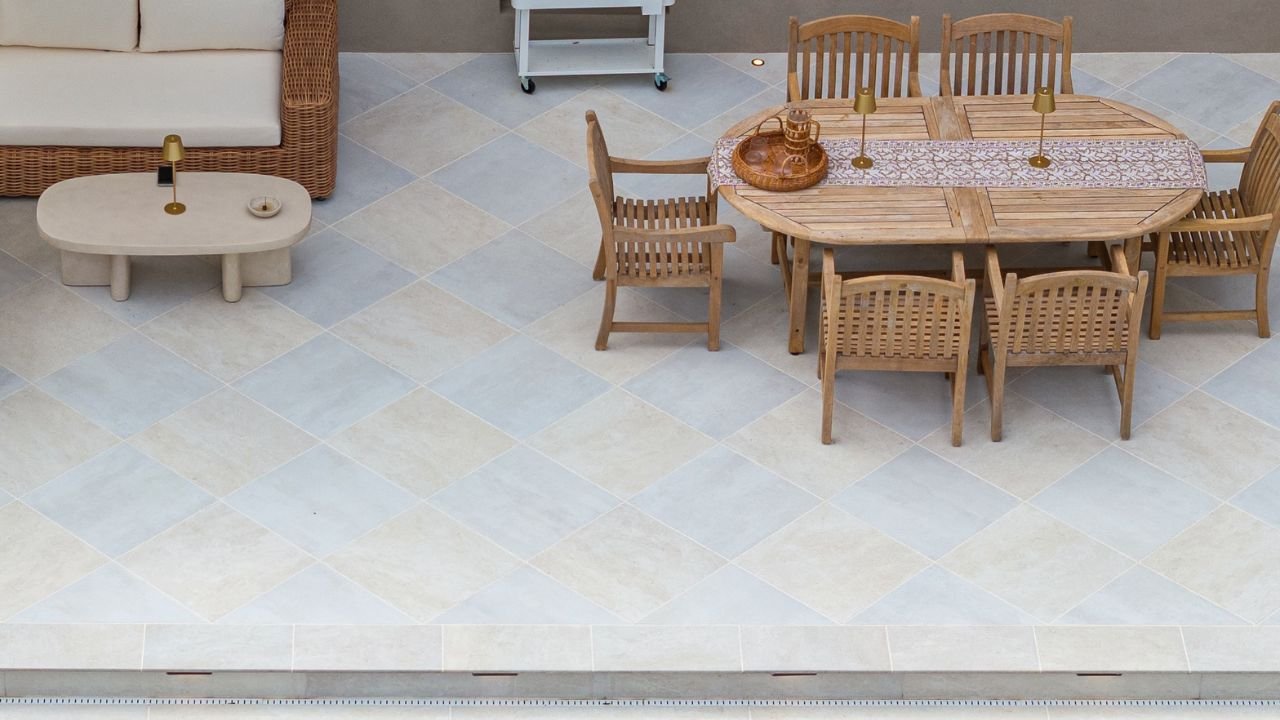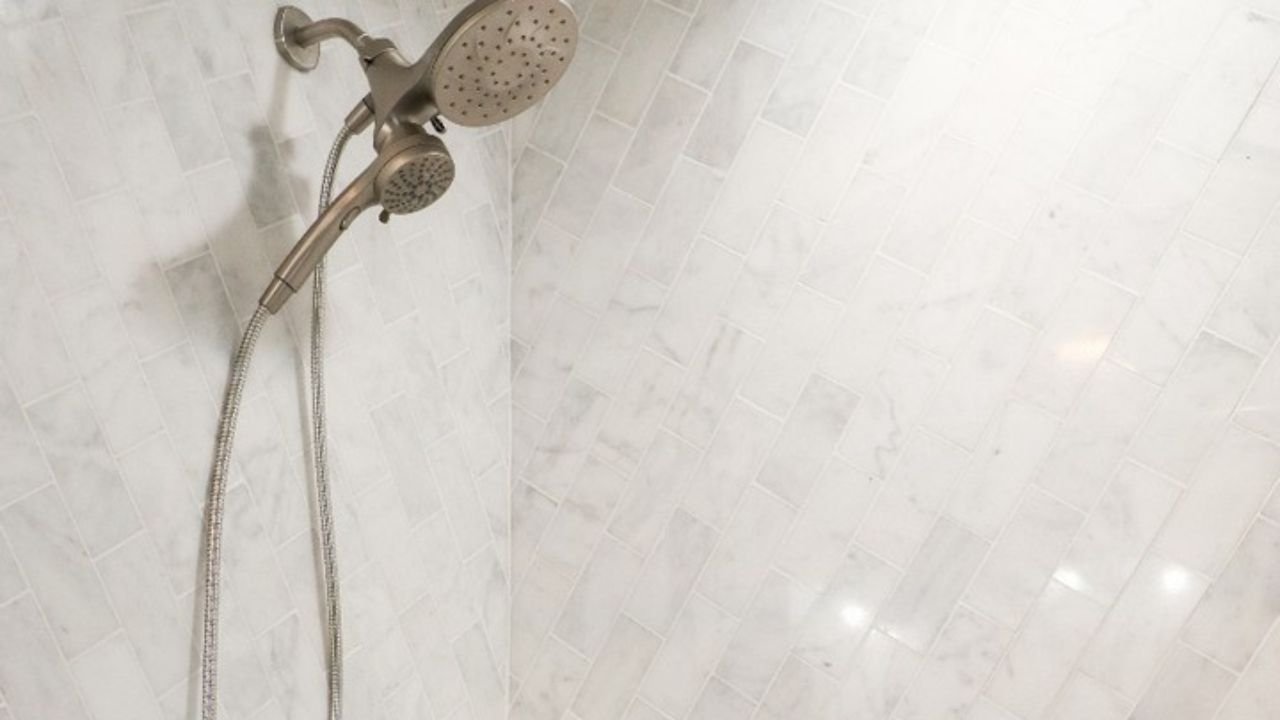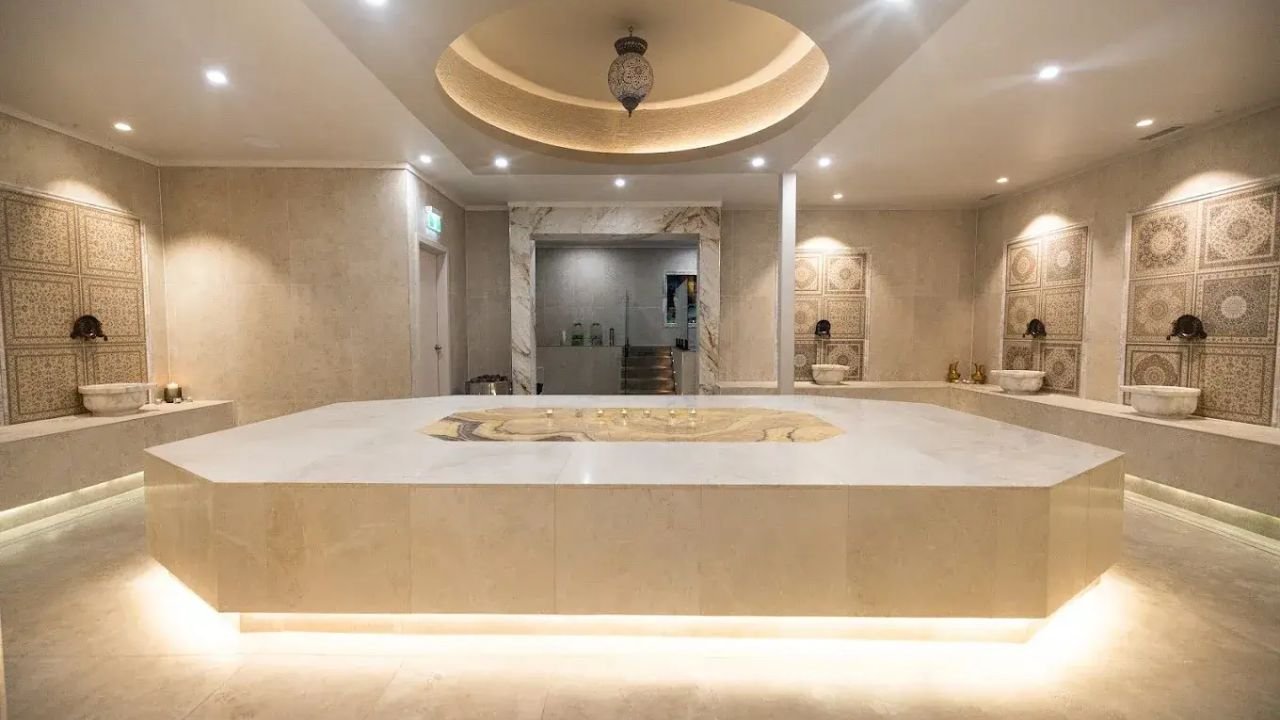

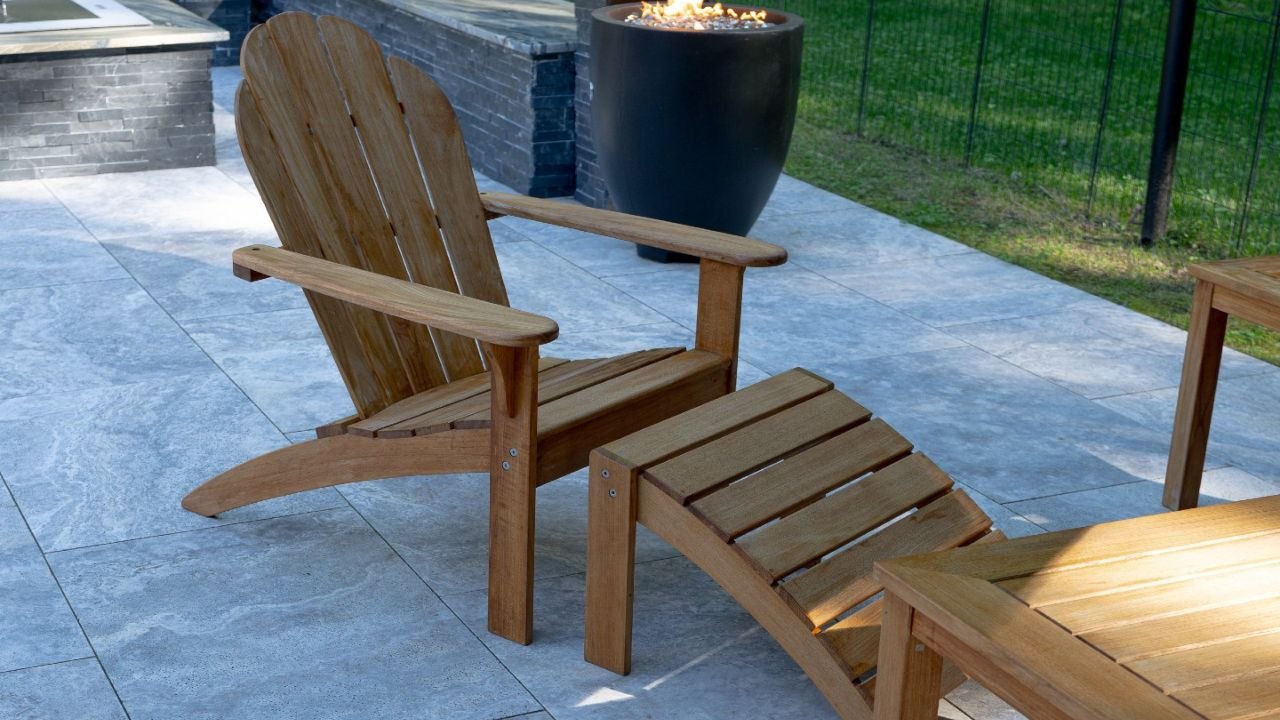
Outdoor natural stone finishes are the surface treatments that alter the paver’s texture, sheen, edge, and grip without changing the stone drastically. Common finishes like tumbled, honed, sandblasted, and brushed offer distinct looks and feel to the pavers. Tumbled pavers have softened edges and a weathered appearance, while honed pavers feature a smooth, matte surface. Their wet slip resistance depends on the specific stone, finish, and test conditions.
Brushed pavers have a subtly textured surface, while sandblasted pavers feature a fine, even texture. Wet slip resistance varies by stone, finish, and test conditions. For pool decks, steps, and slopes, verify that the specific product is suitable for the intended application rather than relying on the finish name alone. However, understanding the major types of outdoor stone paver finishes can help you compare products beyond price and colors.
What Are Outdoor Stone Paver Finishes?
The paver finish is the treatment done on the paver surface after cutting. Marble, travertine, limestone, granite, bluestone, and sandstone can feature different finishes, but the same stone looks and performs differently under each one in an outdoor space. One should understand that pore treatment, cut, and finish are three separate choices. The filled or unfilled process describes how the natural voids on travertine are filled. Travertine finishes are much different from it. You should mention the stone, the finish, and the pore treatment when you order.
What Is a Tumbled Finish?
A tumbled finish is created by processing cut pavers in a drum or vibrating bed with abrasive aggregate. The process makes the paver edges and corners round and leaves a softly uneven face that looks aged. It adds light pitting, natural color variation. The uneven surface creates texture, but its effect on wet slip resistance depends on the stone and the finished product’s tested performance. It doesn’t affect the stone’s natural beauty and looks best with pool decks, courtyards, and garden paths with limestone pavers and outdoor travertine pavers.
The drawback of this finish is the rounded edges, which widen the visible joint. The thickness varies from piece to piece, while the open pores collect dirt and require sealing. Tumbled stone is also used for pool coping stone, where the softened edges suit a relaxed, traditional pool design.
What Is a Honed Finish?
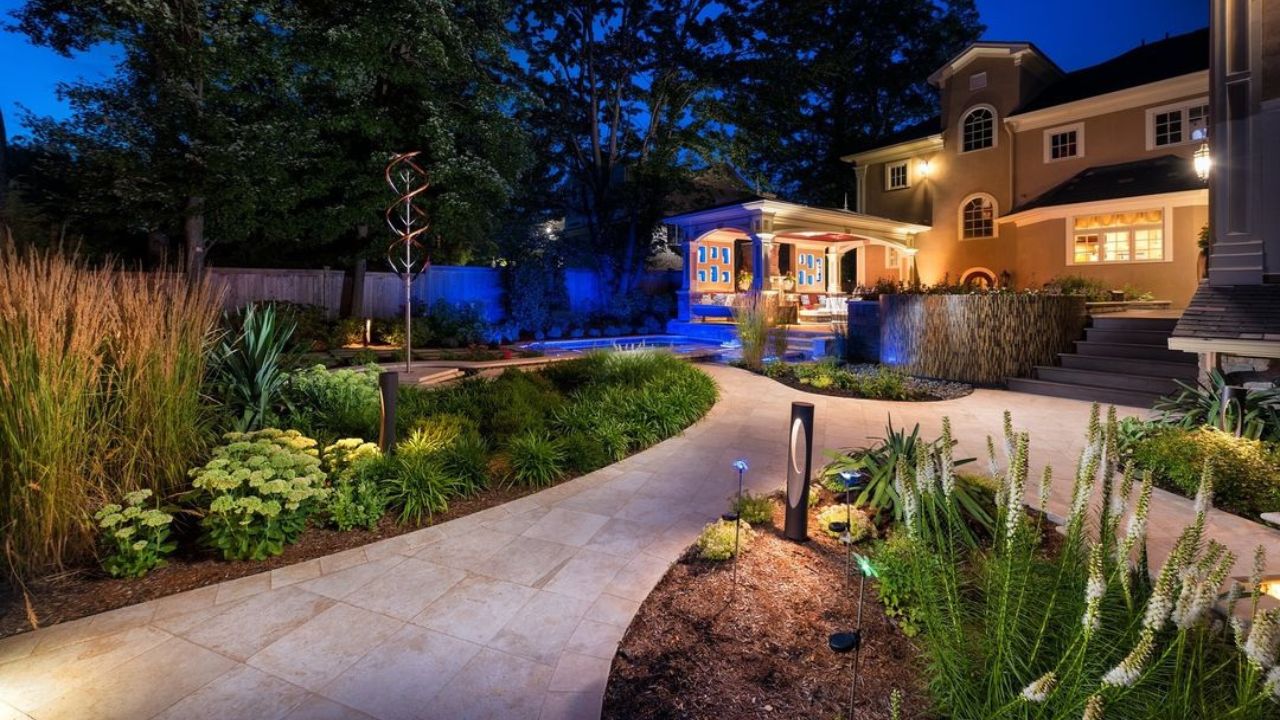
A honed finish is created by grinding the face flat with progressively finer abrasives and stopping just before it looks shiny. This creates a matte, even surface with crisp edges. The finish looks clean and contemporary, and it is well suited to tight joints. Its smooth surface may offer less traction than some textured finishes, but wet slip resistance must be evaluated using product-specific data. This finish is ideal for covered patios, outdoor kitchens, and indoor-outdoor transitions.
Honed stone hides scratches better than polished stone, but acidic cleaners can still etch travertine and limestone. When comparing tumbled vs honed travertine, tumbled suits rustic designs with softened edges, while honed gives a cleaner, more uniform look.
What Is Brushed Finish?
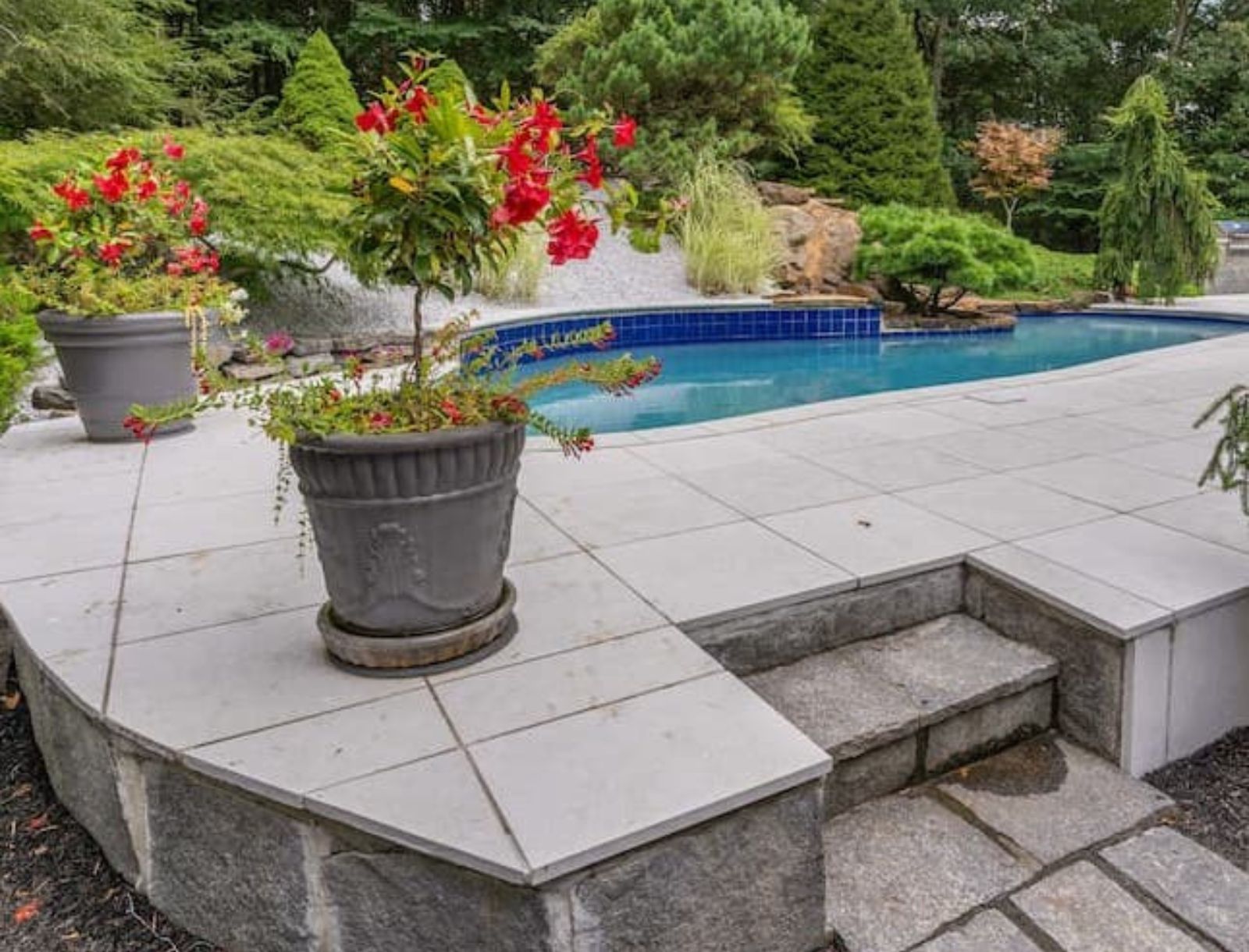
The brushed finish is created by working the stone surface with abrasive brushes or rotating wire. This process removes the softer areas and may leave the harder structure slightly raised. This gives the surface a weathered and textured appearance. However, the exact result depends on the stone and brushing method. Brushed pavers, including brushed marble, are the best choice when homeowners don’t like a smooth surface but don’t want an overly textured look.
The best applications for brushed pavers are Patios, garden walkways, terraces, and selected poolside settings. The maintenance of brushed surfaces depends on the level of texture depth, as debris may remain on the surface.

What Is a Sandblasted Finish?
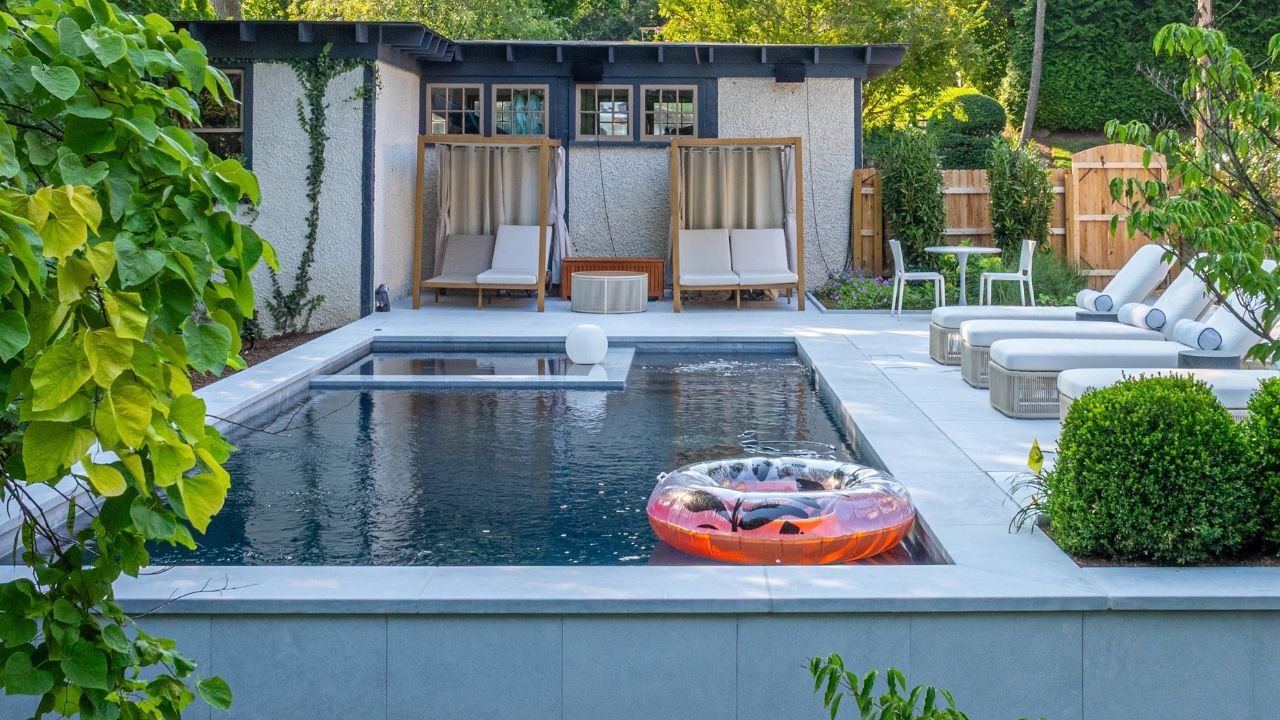
A sandblasted finish is created by firing abrasive grit at the surface under pressure. The blast eliminates sheen and saw marks and lightens the tone. This leaves a fine, uniform, rough texture. Grit size and pressure set the texture depth. The finish looks even, subtly matte with crisp edges. The resulting texture can influence traction, but a sandblasted finish does not automatically provide the highest wet slip resistance. Check the test results for the specific stone and finish.
The ideal application for sandblasted is for granite, bluestone, and limestone for driveways, pool decks, and outdoor steps. Sandblasted marble pavers are also a common choice for pool decks and patios. The color may shift over time, and deep texture on porous stone may collect dirt.
How Do the Four Outdoor Stone Paver Finishes Compare?
These are the general characteristics of each finish, but don’t consider them a performance benchmark. The stone variety, finish specification, and installation conditions can affect the result.
| Feature | Tumbled | Honed | Brushed | Sandblasted |
| Visual style | Rustic and aged | Refined and modern | Natural and understated | Clean and granular |
| Surface character | Softly irregular | Smooth and flat | Lightly textured | Fine-grained texture |
| Edge treatment | Usually softened | Often defined | Depends on fabrication | Depends on fabrication |
| Cleaning considerations | Irregularities can collect debris | Often easier to wipe clean | Depends on texture depth | Texture may retain residue |
| Wet-area suitability | Verify product-specific wet slip-resistance data | Verify product-specific wet slip-resistance data | Verify product-specific wet slip-resistance data | Verify product-specific wet slip-resistance data |
| Main design appeal | Traditional character | Minimalist appearance | Subtle natural texture | Consistent matte texture |
Which Finish Should You Choose for Your Outdoor Project?
The best outdoor stone paver finish depends on the site’s exposure, the way people use the surface, and the appearance you want.
| Outdoor application | Finishes to consider | What homeowners should verify |
| Patios | Tumbled for rustic designs; honed for contemporary spaces; brushed or sandblasted for added texture | Match the finish to your preferred appearance, cleaning needs, and exposure to rain. |
| Pool decks | Compare brushed, sandblasted, tumbled, or other suitable finishes | Check product-specific wet slip-resistance data, barefoot comfort, drainage, and resistance to poolside conditions. |
| Garden paths | Tumbled or brushed for informal landscapes; honed or sandblasted for structured designs | Check surface evenness, drainage, walking comfort, and accessibility requirements. |
| Outdoor stairs | Any finish verified as suitable for the intended conditions | Prioritize wet-use performance, consistent tread dimensions, secure footing, and appropriate edge profiles. |
| Cold-climate paving | Any finish available in a stone rated for the site’s weather exposure | Verify freeze-thaw suitability, water absorption, drainage, and installation requirements. |
Choose a finish according to the maintenance preference and appearance. But make sure the stone is rated for the intended applications too, including its water absorption and freeze-thaw performance. For a travertine pool deck and its pool coping, choose the finish based on verified wet performance, not appearance alone. A textured finish alone does not guarantee slip resistance, and no finish can compensate for poor drainage or an unsuitable installation. If you want a stone look with a more consistent surface, textured porcelain pavers are another option to compare.
Which Paver Finish Is the Least Slippery?
Sandblasted, tumbled, and brushed finishes have different surface textures, but no finish is automatically the least slippery. Wet slip resistance depends on the stone, finish specification, surface condition, cleaning, and test method. Ask your supplier for test data relevant to the exact product and intended application.
ANSI A326.3 measures the dynamic coefficient of friction (DCOF) of hard-surface flooring materials. A wet DCOF of 0.42 is the benchmark for level interior floors expected to be walked on when wet; it is not a universal safety threshold for outdoor paving or pool decks. Exterior suitability depends on factors such as drainage, surface texture, intended use, and exposure conditions.
Slip data is available for tile in general, so ask your supplier what testing covered their natural stone pavers.
Frequently Asked Questions About Outdoor Stone Paver Finishes
Commonly asked questions about Outdoor Stone Paver Finishes
What is the difference between tumbled and brushed pavers?
Tumbling rounds the edges and corners of the pavers. Brushing works the face and wears down its softer areas. Many pavers receive both.
Is honed travertine safe around a pool deck?
Honed travertine should be selected for poolside use only when the specific product’s performance data supports the intended application. Compare relevant wet slip-resistance results, barefoot comfort, drainage, and the manufacturer’s recommendations before choosing a finish.
Do finishes change the color of stone?
Yes. Sandblasting usually lightens the tone, and brushing mutes it.
Do I need to seal every finish?
Sealing needs depend on the stone’s porosity, surface finish, exposure, and the sealer manufacturer’s instructions. Confirm the appropriate sealing and maintenance requirements for the specific product.
Can I change a paver finish after installation?
No. You will have to choose the finish before installation.
Bottom Line
The right finish will determine how your outdoor surface will act when wet. To get the best appearance, compare tumbled, honed, brushed, and sandblasted natural stone paver samples side by side before you choose. NT Pavers can help you match the finish to your stone, your climate, and your project. Choose outdoor stone paver finishes by balancing appearance, surface texture, maintenance, and the demands of the installation.