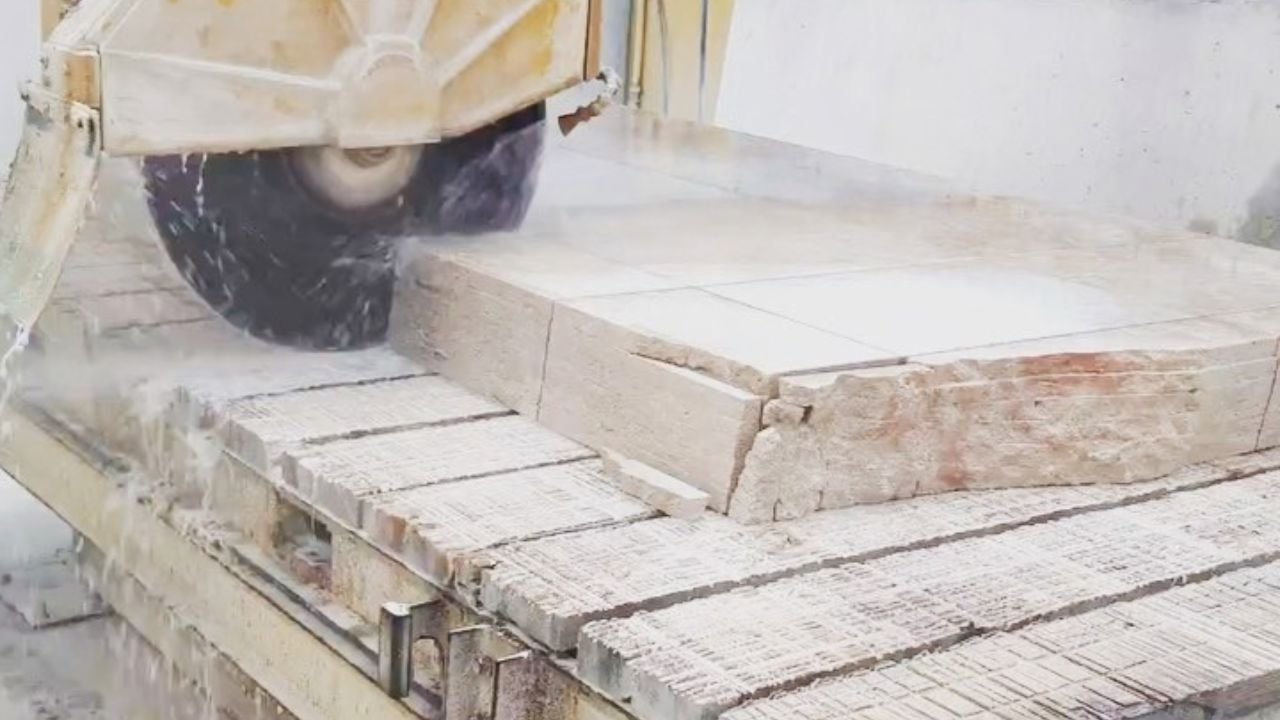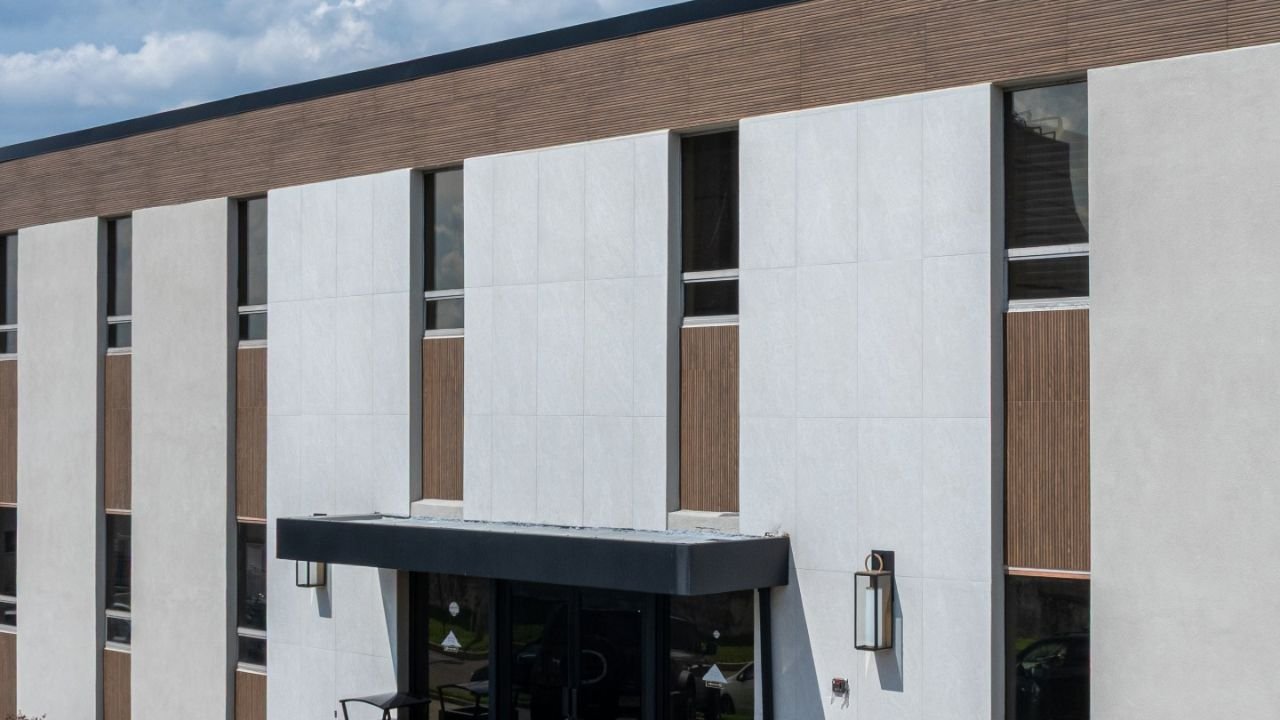

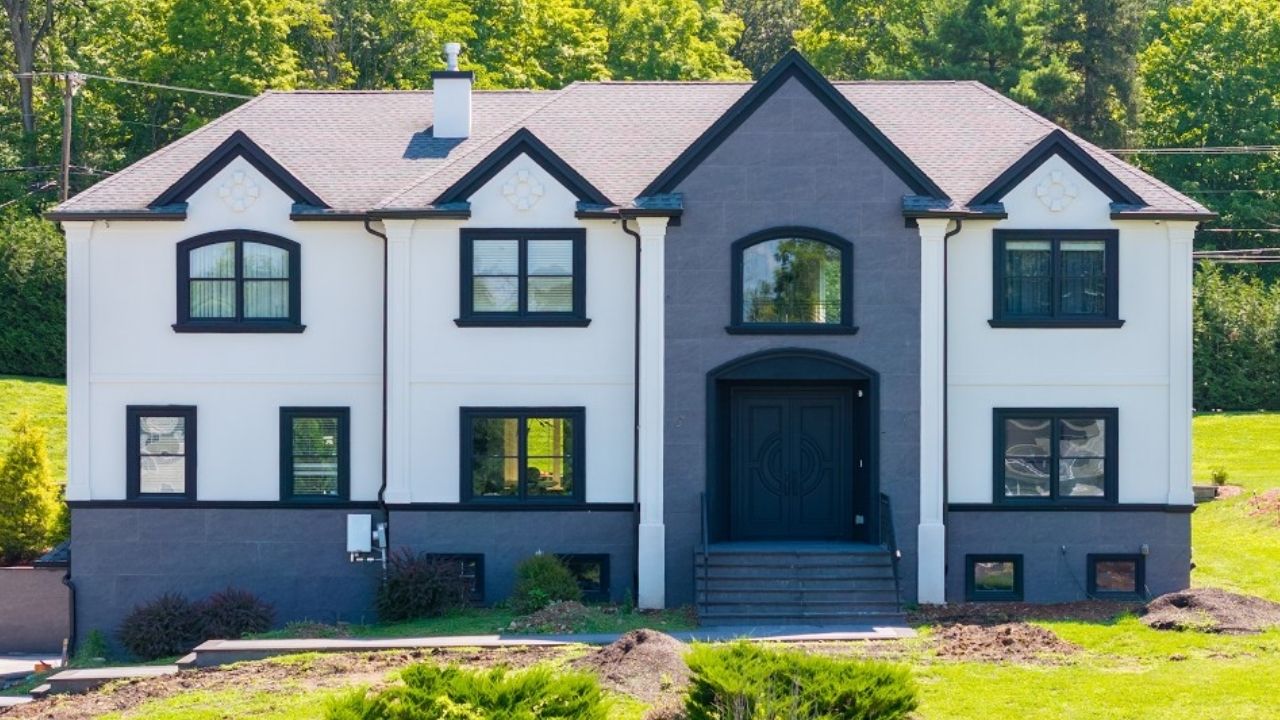
A modern facade does not need many materials to look distinctive. It needs the right relationship between them. Natural stone brings variation, depth, and a sense of permanence. Porcelain tile brings uniform color, large formats, and a clean architectural finish. Together, they can frame an entrance, define a feature wall, highlight an upper floor, or create contrast between different parts of a home. These 12 modern façade ideas show homeowners how to combine natural stone and porcelain without making the exterior look busy and odd. Continue reading the following.
1. Combine Warm Travertine
Travertine works well when you want a modern facade that still feels warm and natural. Use natural travertine around the entrance, garage, or ground-floor walls. Then use concrete-look porcelain across larger wall areas. The travertine adds natural variation, while porcelain creates the clean surface modern architecture often needs.
The best match here is the cream or ivory travertine + warm grey concrete-look porcelain. Choose a porcelain shade that sits close to the undertone of the travertine. Warm grey or soft beige usually works better than a sharp blue-grey.
Before choosing the combination, compare physical samples outdoors because natural stone and porcelain can appear different under changing light.
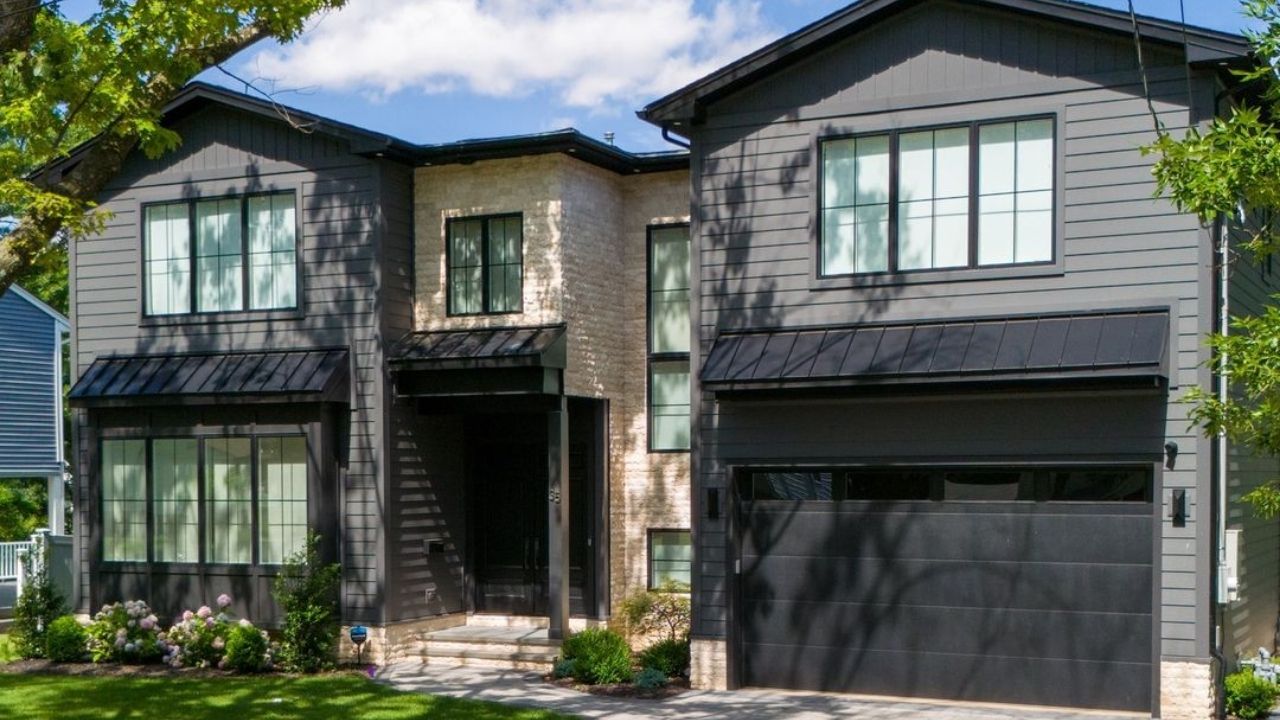
2. Use a Dark Stone Feature Wall
Natural stones with darker tones can create a strong focal point without covering the entire house. Slate, light limestone, and charcoal-toned natural stone can frame the front door or create a full-height feature wall behind the entrance. Pair it with dark porcelain on the surrounding facade.
This design approach works especially well with black window frames, simple landscaping, and warm exterior lighting. Good combinations include light stone with dark grey or ivory porcelain. The important point is balance. A dark stone wall already has visual weight, so the surrounding surfaces should stay quiet.
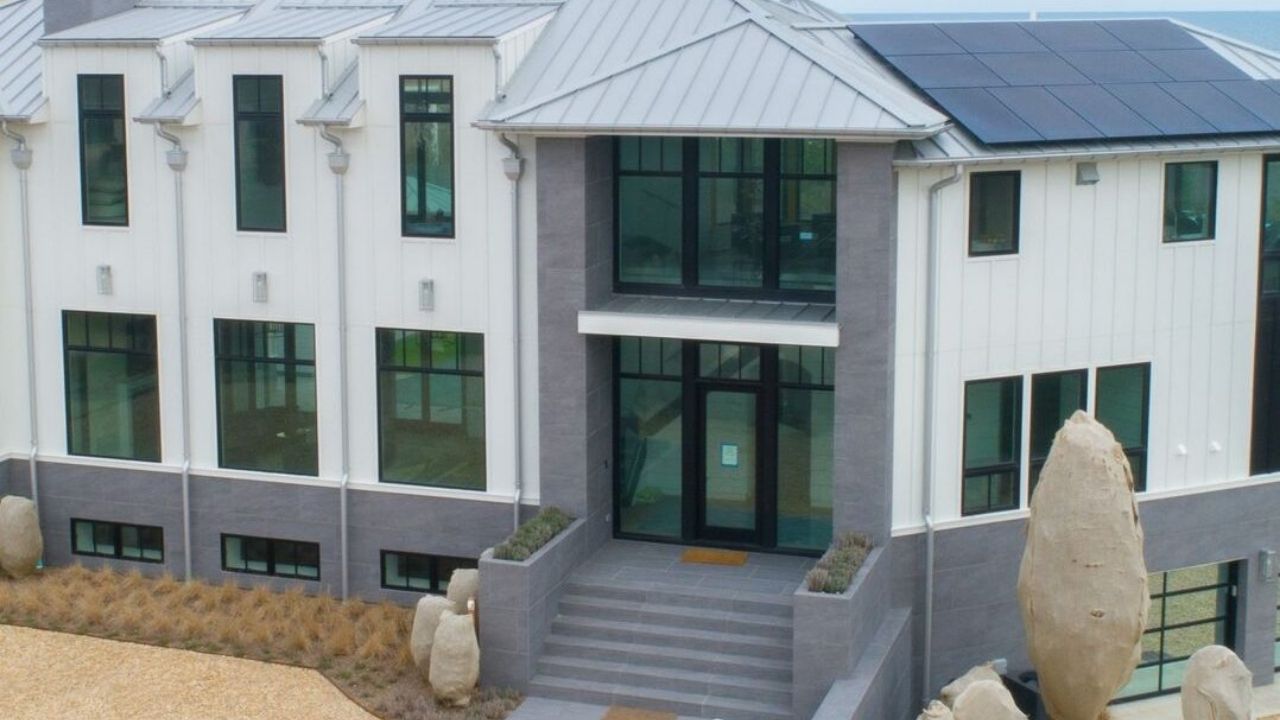
3. Create a Full-Height Stone Entrance
One of the most prominent places to add natural stone is the entrance. It can create a strong architectural focal point at the front of the home. You can extend the same stone from the ground to the roofline around the front door. Then stop the stone at a clean architectural line and continue with porcelain on the remaining walls.
Limestone, travertine, and marble can all work for this application when the selected stone is suitable for exterior exposure. What matters is the desired character and the suitability of the selected stone for exterior use. This makes the entrance feel like a separate architectural element rather than another decorated wall.
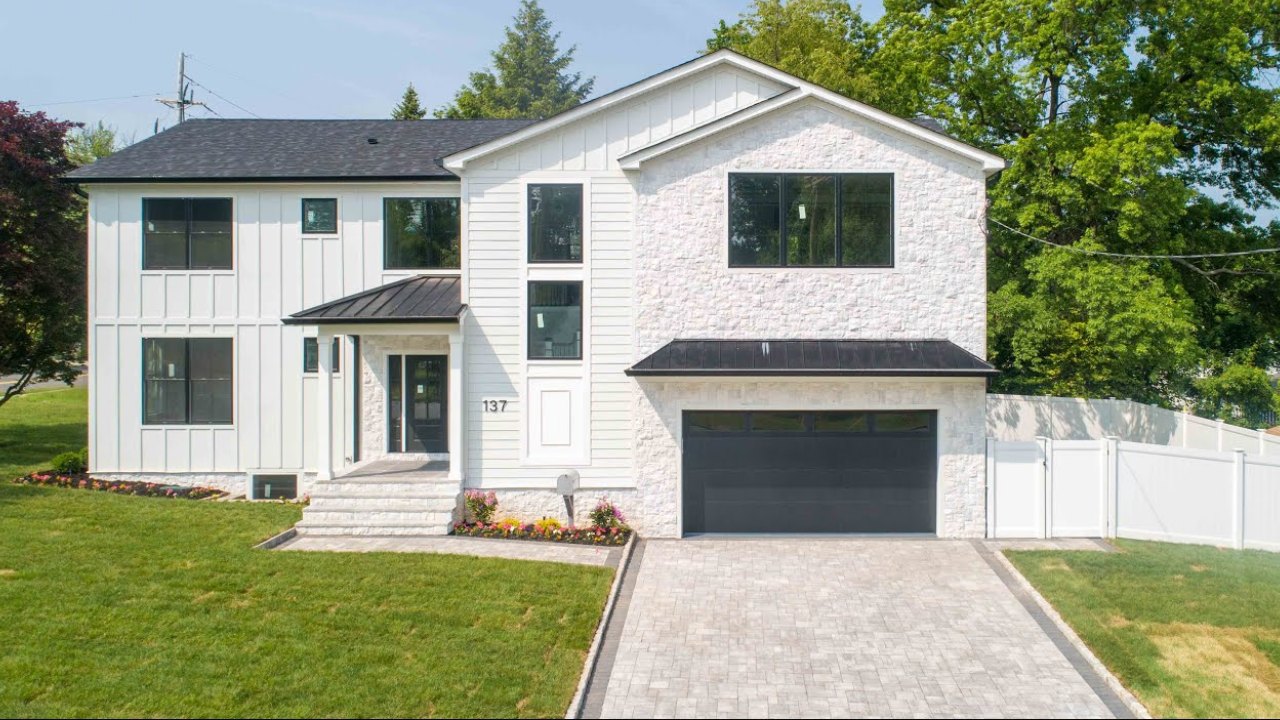
4. Pair Light Limestone With Charcoal Porcelain
For homeowners who prefer a restrained facade, light limestone and charcoal porcelain make a strong combination. Opt for limestone on columns, the entrance surround, or the lower portion of the facade. Add charcoal porcelain stoneware to large rectangular sections. The contrast gives the house definition without relying on complicated patterns.
Keep the joints and transitions aligned with windows and doors where possible. Clean lines matter as much as material choice in modern facades.
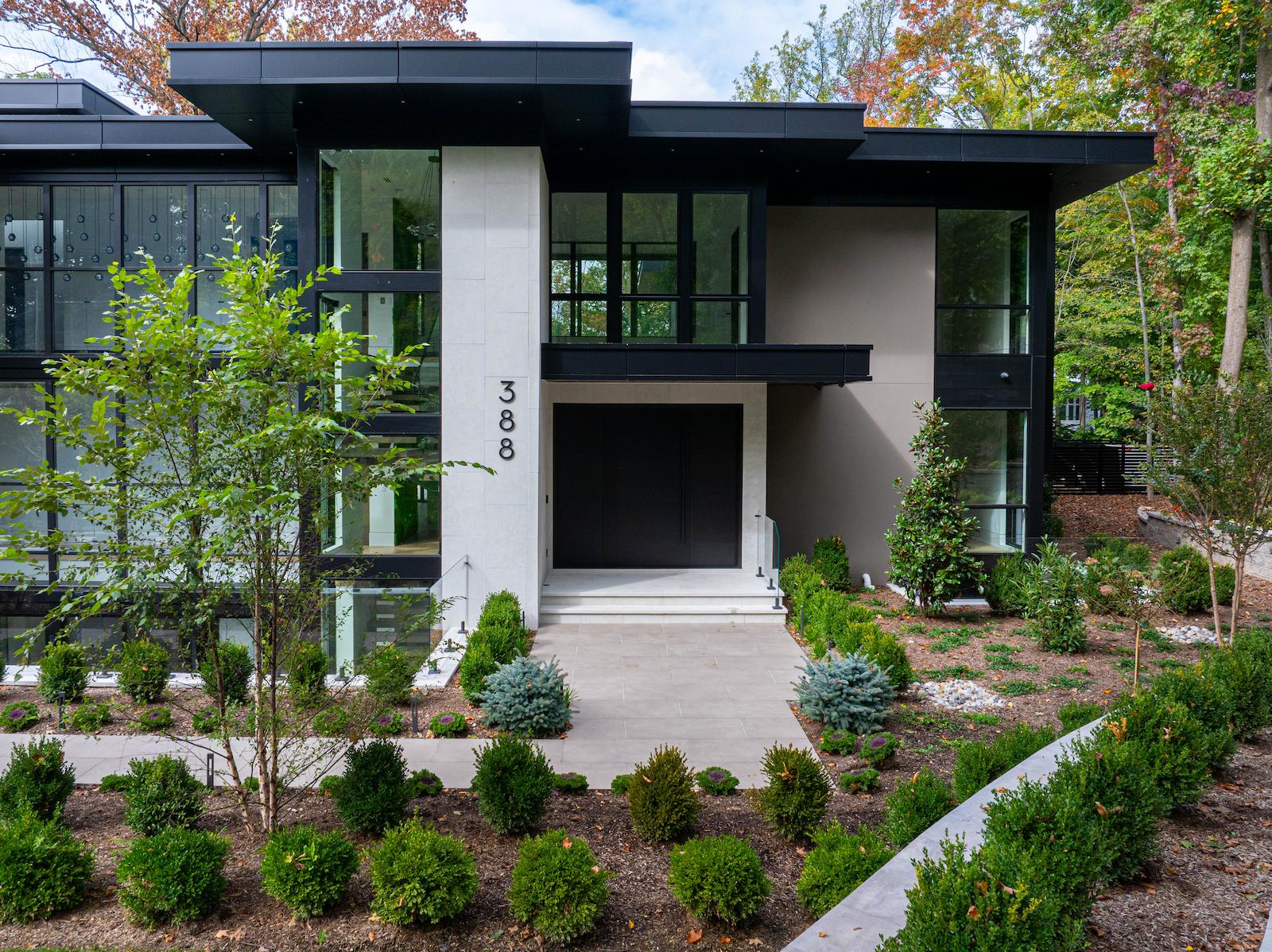
5. Use Porcelain as the Main Material and Stone as an Accent
This modern facade idea works great for homeowners who prefer durability over material aesthetics. You don’t have to go for equal amounts of both materials. One material should be the base while the other should support it.
A perfect starting point is to let porcelain cover most of the facade and reserve natural stone for smaller areas. A stone border underneath a window, a vertical column, or an entrance wall can be enough. This design approach also gives you more control over the budget because natural stone facades become a feature rather than the primary cladding material.
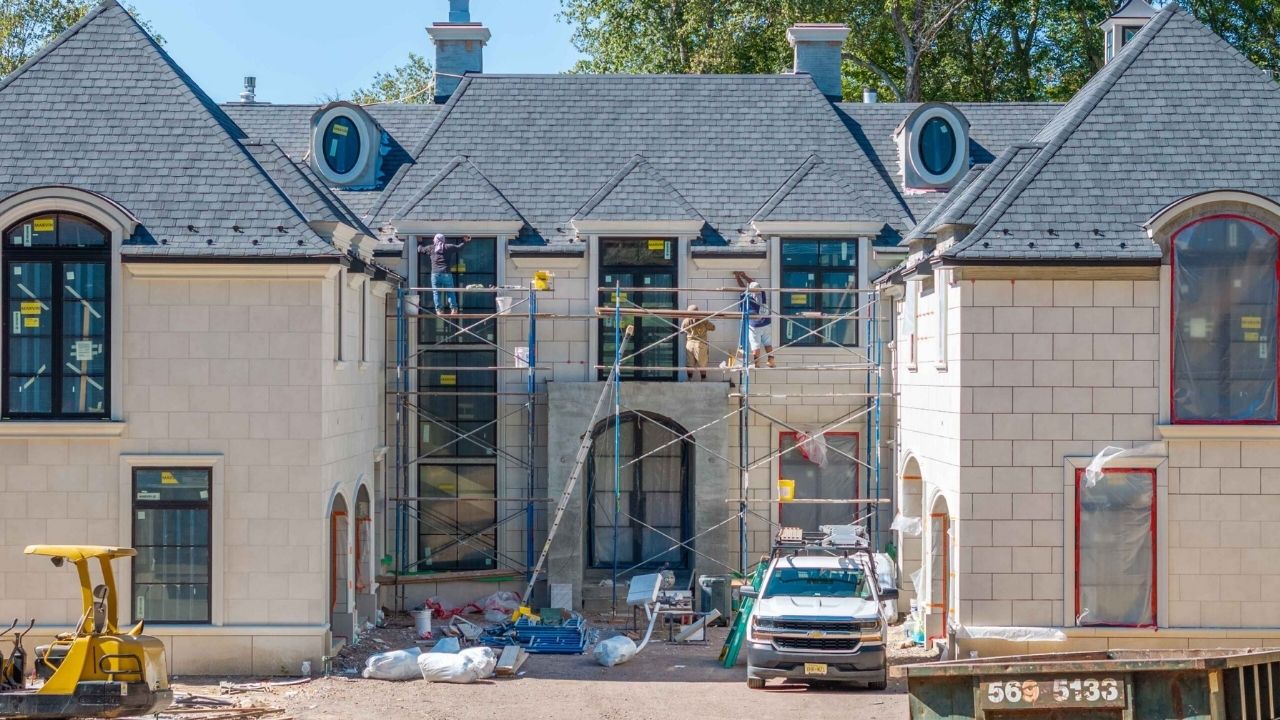
6. Mix Silver Travertine With Soft Grey Porcelain
Silver travertine has natural movement, which makes it useful for breaking up a flat modern facade. Use it around the entrance or on a central wall. Then subtly add a soft grey porcelain on adjacent sections.
Do not add several additional colors. Black or dark bronze window frames can complete the palette without competing with the stone. Before installation, view actual samples outdoors. Natural stone can look different under morning sun, afternoon light, and artificial lighting.
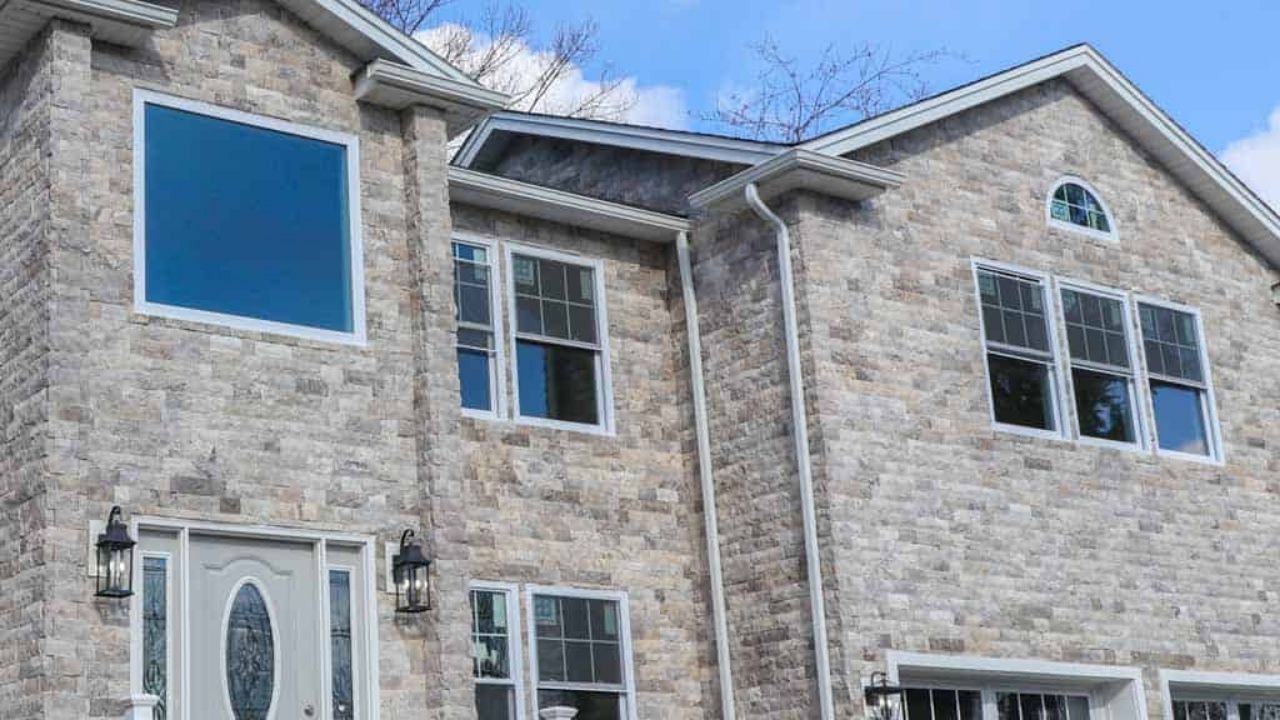
7. Try Large-Format Porcelain With Narrow Stone Bands
Large format porcelain pavers can create an ultimate modern look. They can be used to create broad, uninterrupted surfaces. Narrow stone bands can then add texture without overwhelming the design.
These facade pavers can also create a clean, continuous appearance when selected for suitable exterior wall applications.
For example, imagine a light porcelain facade crossed by a horizontal strip of limestone. The line can visually connect windows, doors, and architectural sections. This works particularly well on contemporary homes with long horizontal proportions. Just make sure that the stone band has a clear purpose. Random strips placed around the facade can make the design look fragmented.
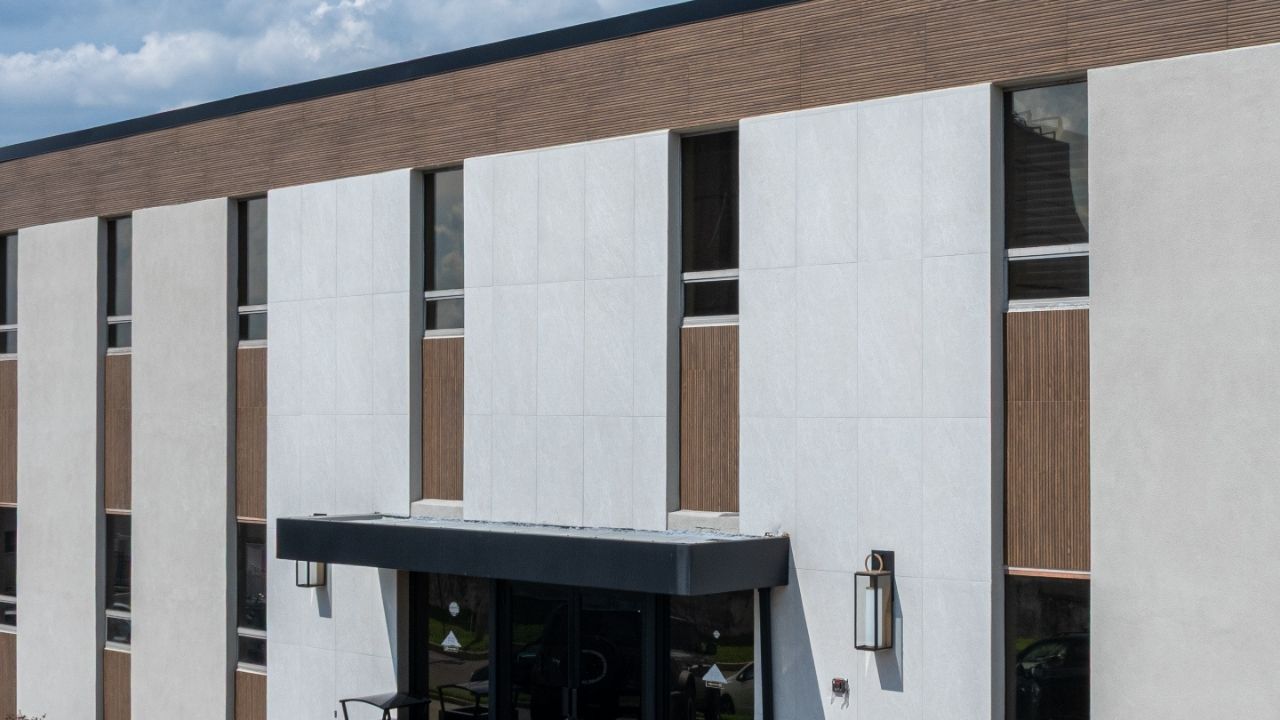
8. Use Stone on the Lower Facade
The lower part of the house usually receives more dirt, water splash, and contact with landscaping. A stone base can give this area visual weight while porcelain covers the upper walls. This design also creates a natural transition between the building and the landscape. The stone can repeat materials used in retaining walls, steps, garden walls, or the patio.
Choose the stone based on its intended exterior application rather than appearance alone. Natural Stone Institute guidance stresses evaluating properties such as absorption, strength, abrasion resistance, and other performance requirements for the specific use.
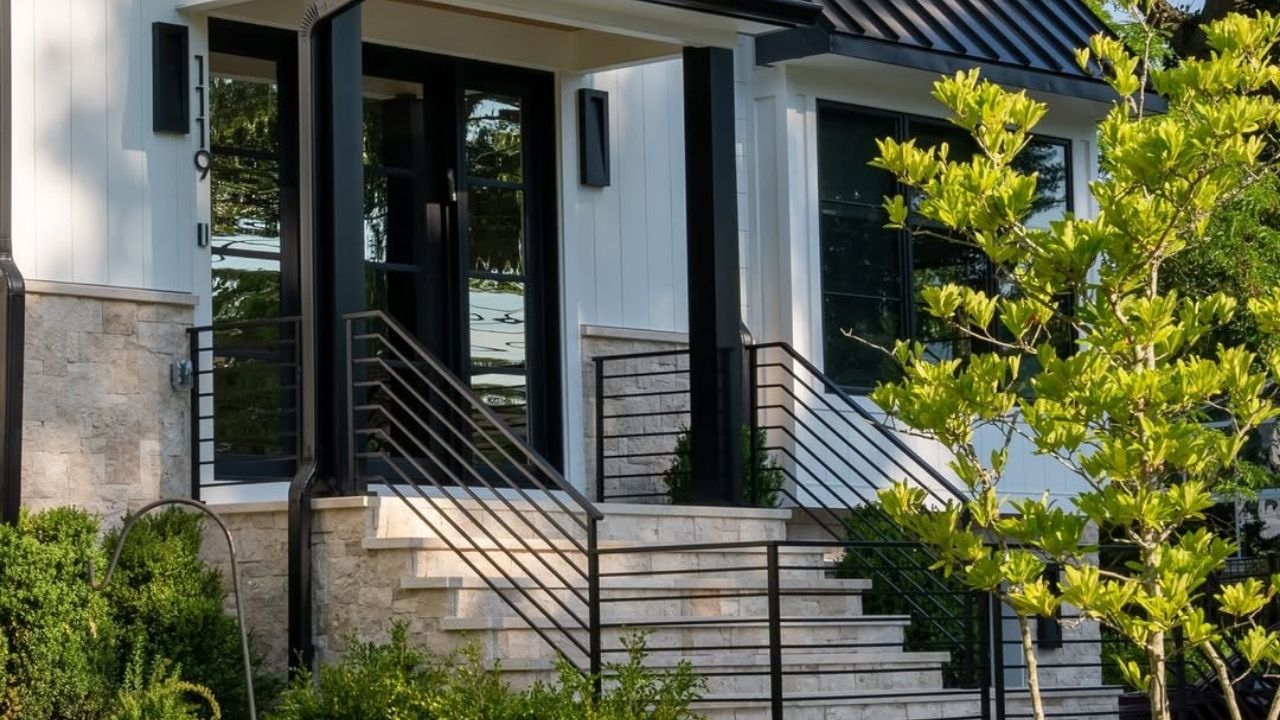
9. Match Stone With Stone-Look Porcelain
Sometimes the best combination is not strong contrast. You can select a natural limestone or travertine and pair it with porcelain that echoes its color without replicating its exact pattern. This creates a layered facade. The natural stone provides authentic variation, while porcelain makes the entire space look consistent. It is a practical option when you want the appearance of a coordinated material palette throughout a large exterior.
For instance, ivory limestone + pale stone-look porcelain + black aluminum frames. The resulting surface feels cohesive without looking monotonous.
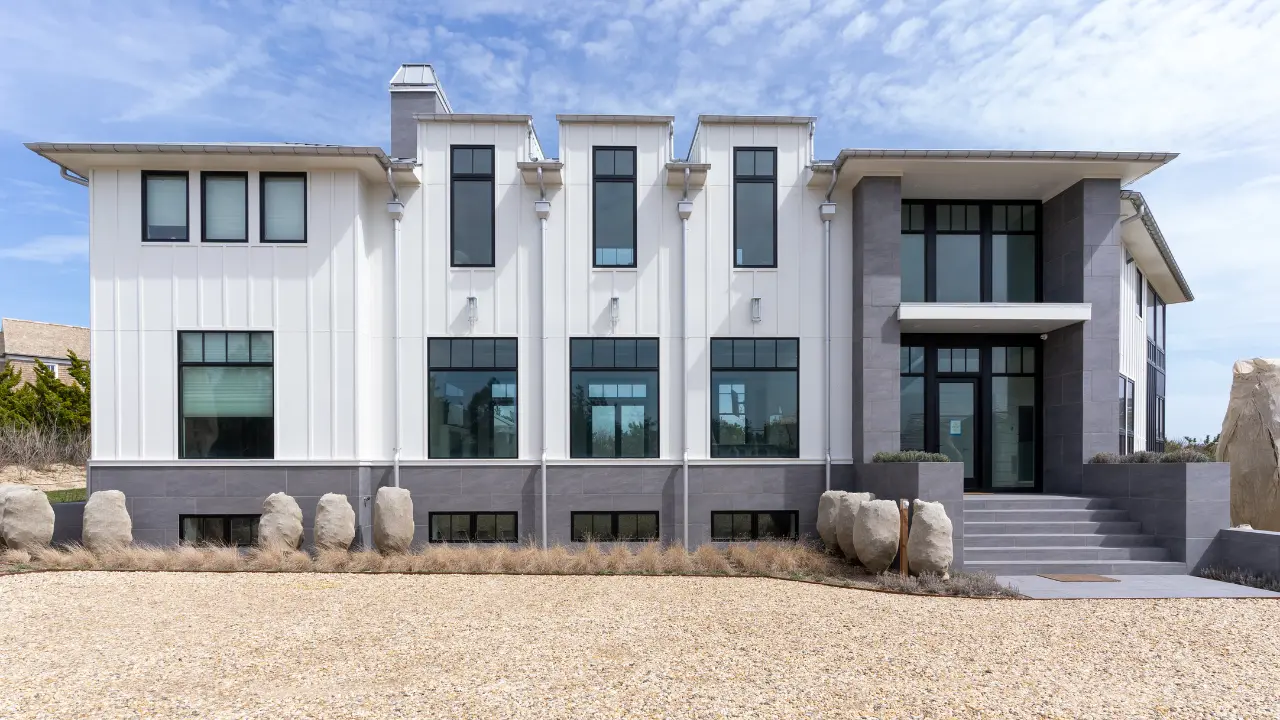
10. Frame Windows With Natural Stone
Window surrounds can become architectural details instead of simple openings. Use natural stone around selected windows while keeping the main facade in porcelain. You can repeat the same design approach on the entrance to create visual consistency. The design idea performs especially well on two-story homes. Vertical stone elements can also make a facade appear taller.
Keep the stone thickness, joints, and edges carefully planned. Exterior stone cladding involves more than simply attaching pieces to a wall. It can also be attached to the wall; support, anchoring, movement, drainage, and installation details can affect long-term performance. The Natural Stone Institute’s current design guidance covers multiple exterior vertical-surface systems and anchoring approaches.
11. Create a Minimalist Marble and Porcelain Facade
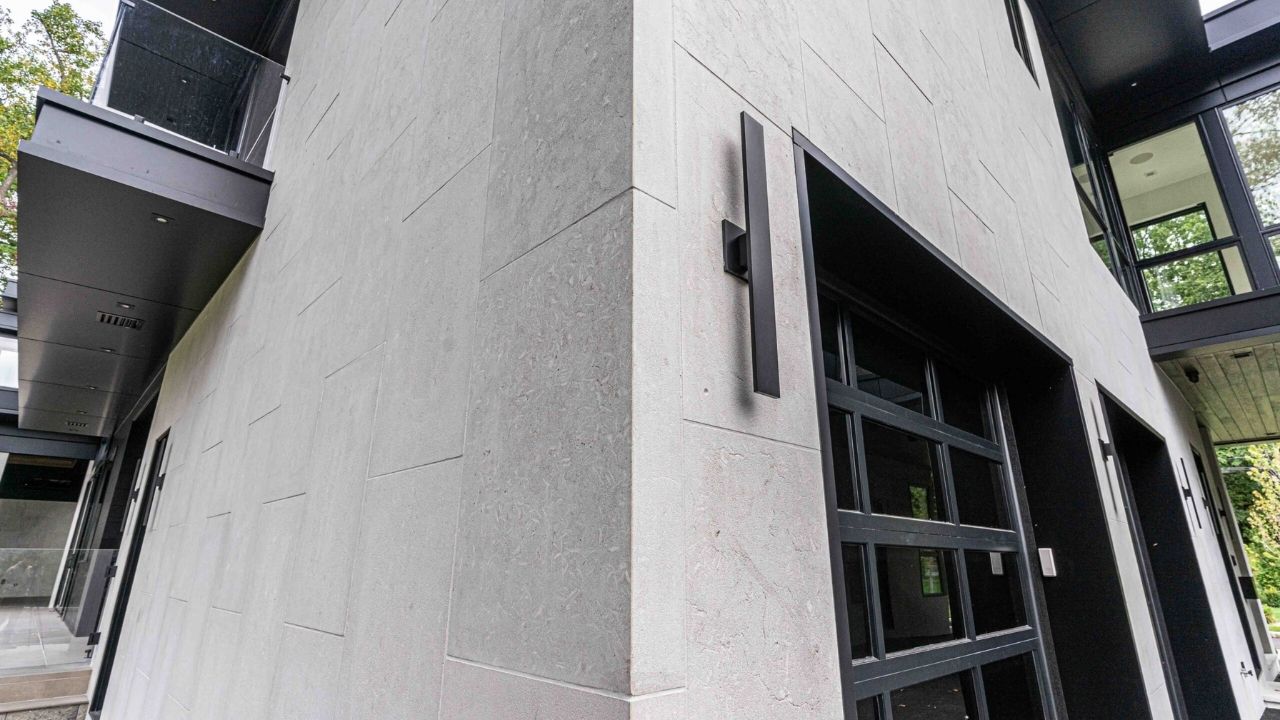
Marble is largely associated with classic luxury and spa-like aesthetics. It can give a modern facade a refined appearance, but it works best when used selectively. You don’t have to cover the entire exterior and use marble around the entrance or on one feature wall. Pair it with matte porcelain in a neutral color.
Do not use highly contrasting marble patterns if the architecture already has many lines and openings. For exterior applications, do not choose marble only from a showroom sample.
When considering stone, focus on the application, physical properties, finish, testing, and environmental exposure. The Natural Stone Institute specifically recommends matching stone properties to the intended use.
12. Connect the Facade With the Patio and Landscape
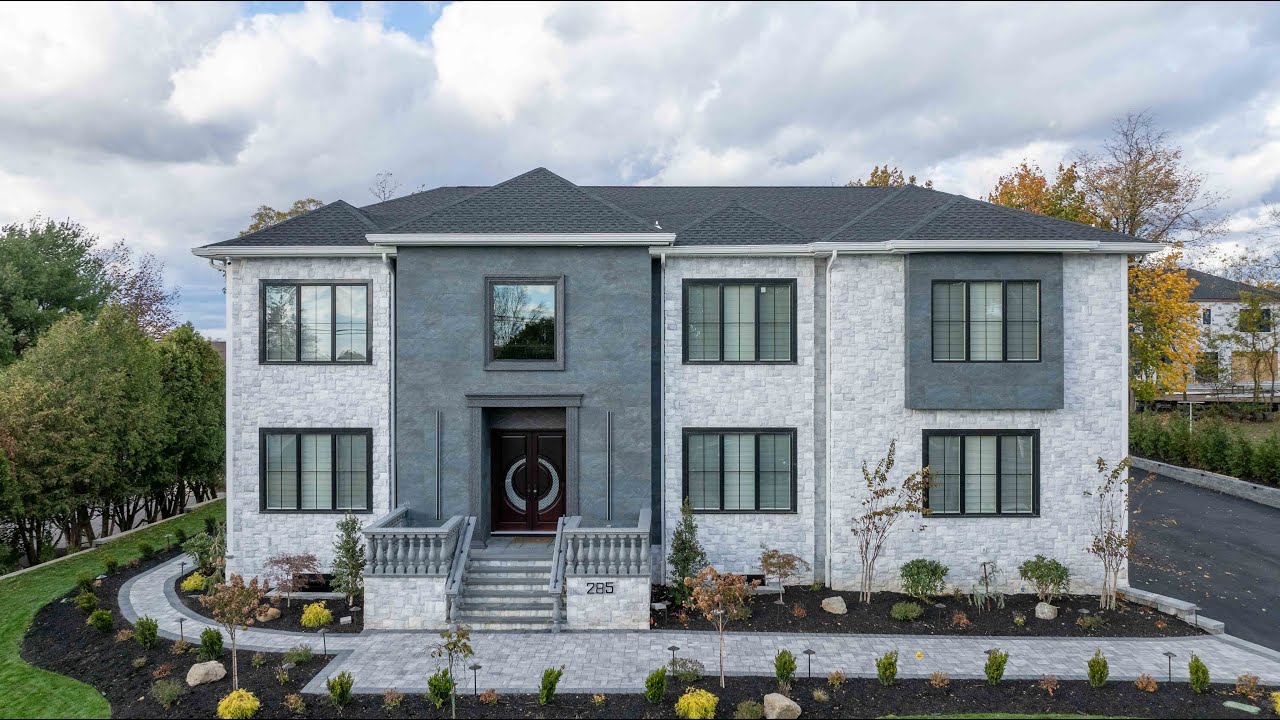
The most successful exterior designs do not treat the facade as a separate object. Repeat one facade material elsewhere on the property. For example, use the same porcelain around the entrance and patio, or carry the natural stone from the facade into a garden wall.
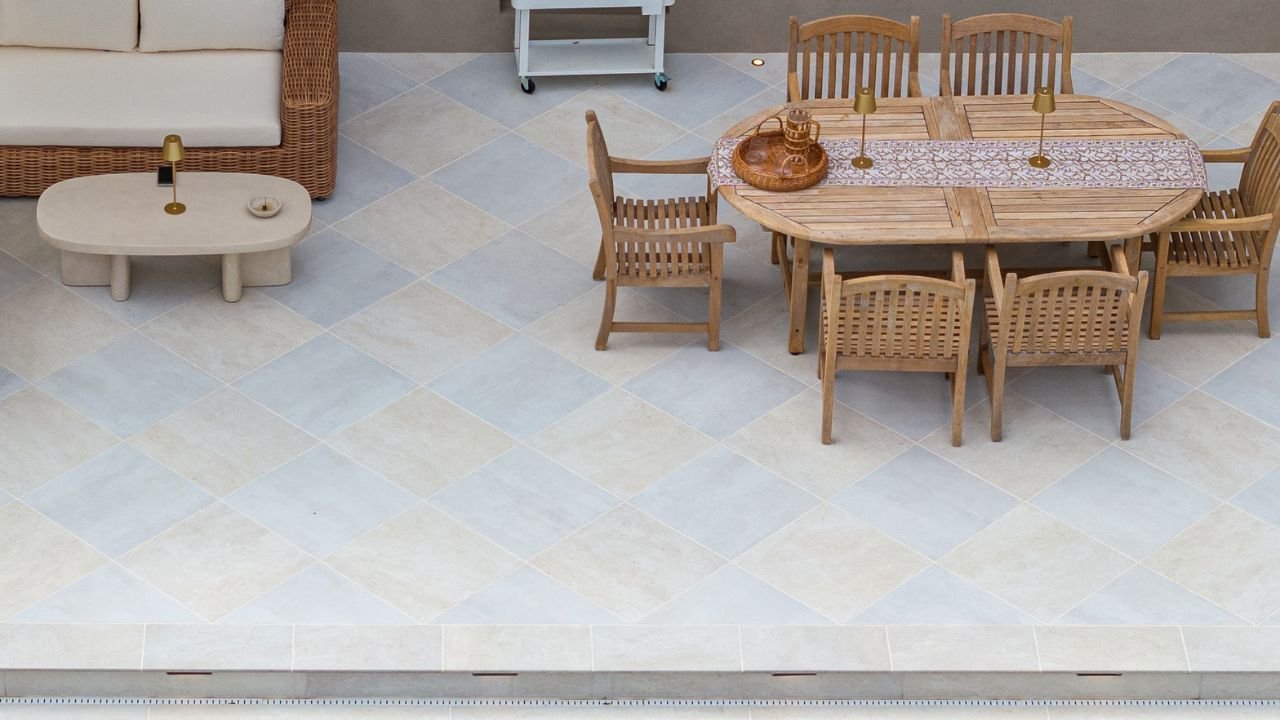
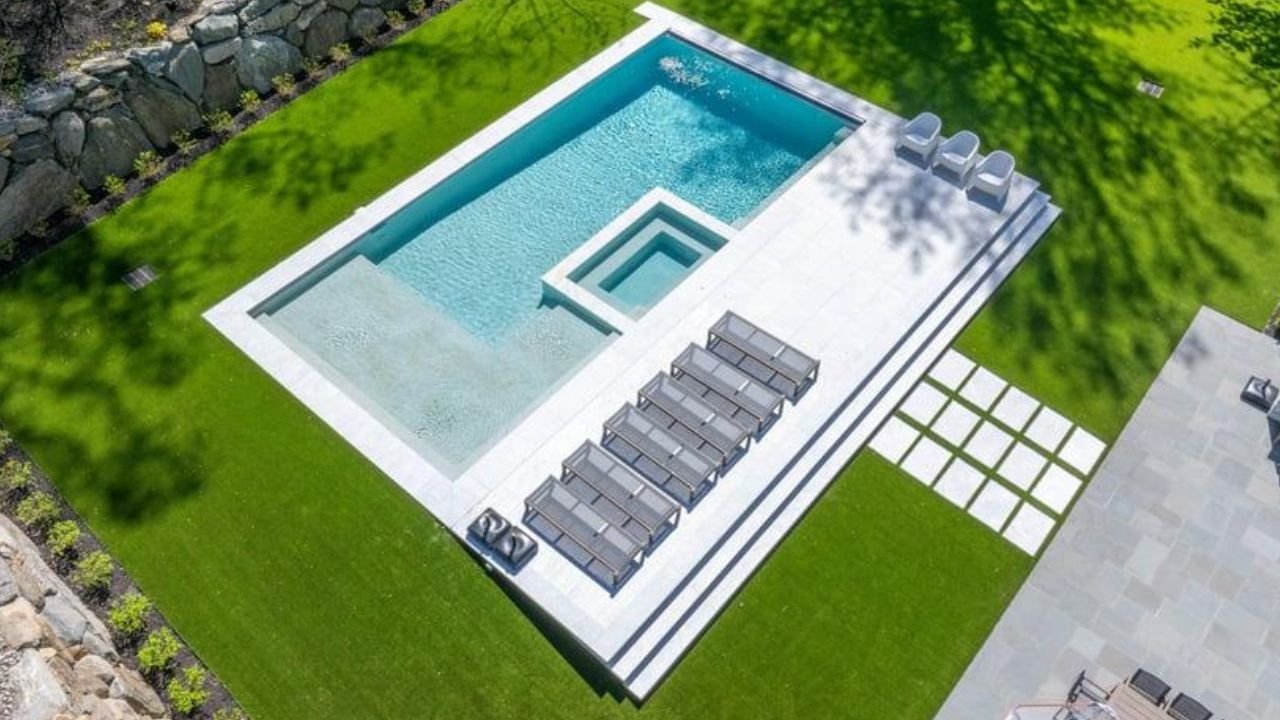
NT Pavers homeowners can use this approach to create a visual connection between the house, patio, steps, pool area, and landscape. The result feels planned because the same colors and textures appear across different surfaces.
What to Consider Before Choosing Facade Materials?
Before choosing natural stone and porcelain for a facade, consider the material’s appearance, performance, climate exposure, and installation requirements.
Climate and exposure: Consider rain, moisture, sunlight, freeze-thaw conditions, and local exposure.
Stone properties: Evaluate absorption, strength, abrasion resistance, finish, and other properties relevant to the application.
Porcelain specifications: Confirm that the selected porcelain is suitable for the intended exterior wall application.
Installation system: The substrate, support, anchoring, drainage, movement, and attachment method matter for long-term performance.
Color and proportion: Choose one dominant material and use the second material as a controlled accent.
Which Natural Stones Pair Well With Porcelain Facades?
Travertine, limestone, marble, granite, slate, and quartzite can all complement porcelain on a modern facade. The best choice depends on appearance, climate, exposure, physical properties, finish, and the selected cladding system.
| Natural stone | Appearance | Best porcelain pairing | Performance & maintenance considerations | Good facade use |
| Travertine | Warm, earthy, naturally varied | Beige, warm grey, concrete-look | May require sealing depending on finish and exposure | Entrances, feature walls |
| Limestone | Soft, understated, uniform | Ivory, light grey, charcoal | Selection should consider absorption and climate | Large feature areas, columns |
| Marble | Veined and refined | Matte white, grey, charcoal | Needs careful selection for exterior exposure | Entrance features, accent walls |
| Granite | Dense, bold, durable appearance | Grey, black, concrete-look | Generally low maintenance when properly selected | Base walls, strong architectural accents |
| Slate | Dark, layered, textured | Light grey, ivory, concrete-look | Texture and moisture exposure should be considered | Feature walls, entrance areas |
| Quartzite | Hard, natural variation | Neutral stone-look porcelain | Product-specific performance still matters | Premium accent areas |
The stone types listed above should not be treated as interchangeable specifications. Natural stone can vary significantly by quarry, grade, finish, and source, so two products sold under the same general stone name may have different performance characteristics. Product testing and project-specific specifications should guide the final selection.
FAQs About Modern Facades Using Natural Stone and Porcelain
Let’s answer your questions about modern facade ideas using natural stone and porcelain.
Can porcelain be used on an exterior house facade?
Yes. But the porcelain should have an outdoor wall application rating and be installed with a system designed for that use.
Which natural stone is best for a modern facade?
Travertine, limestone, granite, slate, marble, and quartzite can all work. The right choice depends on appearance, climate, exposure, physical properties, finish, and the selected cladding system.
Can natural stone and porcelain be used together?
Yes. Combining them works best when the colors share a common undertone, and each material has a clear role.
Is travertine good for exterior walls?
Travertine can work well on exterior walls when the specific stone and finish are suitable for the exposure, and the installation follows appropriate exterior cladding practices.
What porcelain color goes with natural stone?
Warm grey, beige, ivory, charcoal, and concrete-look porcelain are versatile choices. Match the porcelain to the stone’s undertone rather than trying to match its exact pattern.
Should the whole facade use the same material?
No. Using one dominant material with a carefully placed accent can create stronger modern architecture than covering every surface with the same product.
Bottom Line
Modern Facade ideas can give your house a stunning makeover without making it loud and overwhelming. Using two of the most popular materials, homeowners can achieve facade designs that will perform well while looking good. Most importantly, choose materials for both appearance and performance. Exterior stone cladding requires proper detailing and installation, not just attractive materials. Industry guidance covers stone selection, testing, anchorage, vertical surfaces, tolerances, and maintenance for this reason.