
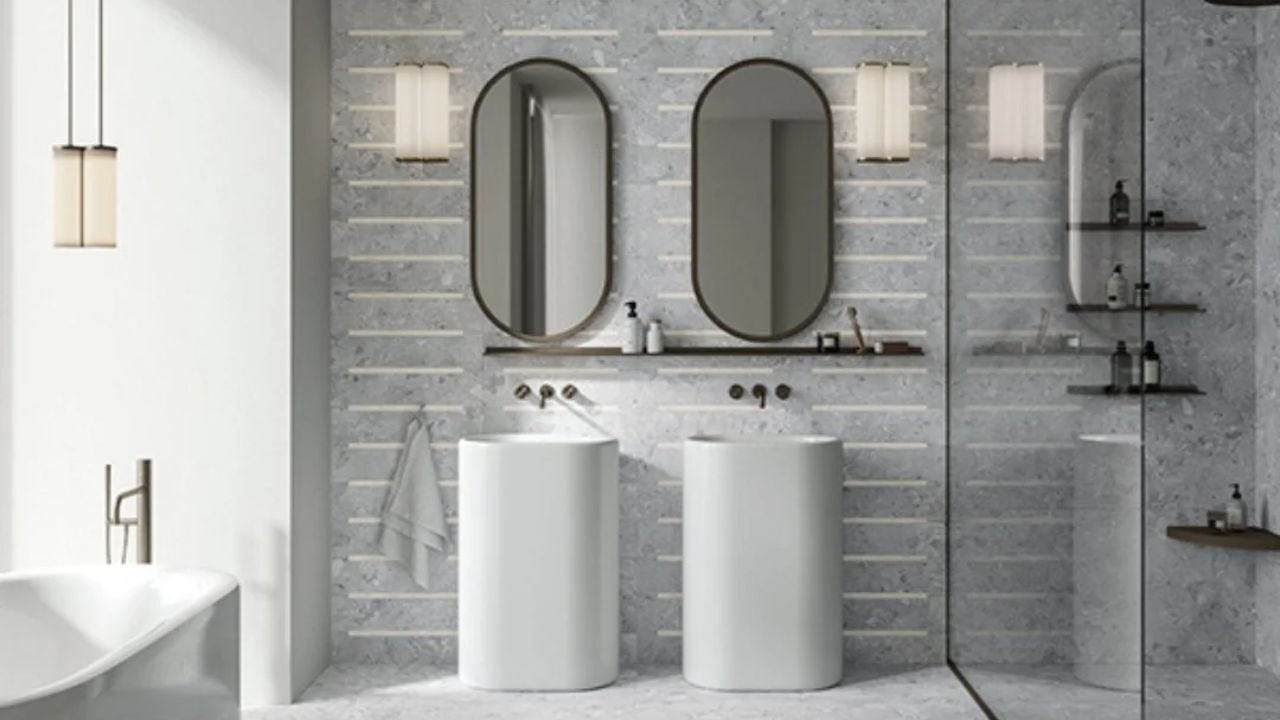
Bathroom walls emphasize wall finishes more than most rooms. Steam, splashing water, cleaning products, humidity, and regular use can put weak materials to problems. Porcelain bathroom wall tiles offer a practical solution because they resist water absorption. These tiles provide a wide range of colors, textures, sizes, and patterns. They can also create the look of marble or natural stone without requiring the same care that some porous stone needs.
They also work across many design styles, from quiet spa bathrooms to bold contemporary spaces. The key is choosing the right tile for the wall, shower, layout, grout, and overall design.
Why Choose Porcelain Bathroom Wall Tiles?
Porcelain is a type of ceramic tile that is crafted with refined clay and fired at high temperatures. This creates a hard and thick surface with the lowest moisture absorption rate. Under the commonly used ANSI definition, porcelain tiles have a water absorption rate of 0.5% or less. That low absorption makes it well suited to moisture-prone spaces such as bathrooms.
But water resistance is not the only reason to consider. A good bathroom wall tile should also support easy cleaning, fit the room’s scale, and complement fixtures. They also withstand normal household use. Porcelain provides homeowners plenty of options without forcing the design around the material.
| Benefit | What it means for a bathroom |
| Low water absorption | Helps the tile resist moisture penetration in kitchens, bathrooms, and other wet areas. |
| Durable surface | Handles everyday cleaning and bathroom use |
| Easy maintenance | Most glazed porcelain needs simple routine cleaning |
| Design variety | Available in marble, stone, concrete, wood, and solid-color looks |
| Large formats | Creates fewer grout joints and a cleaner visual field |
| Consistent appearance | Manufactured patterns offer predictable color and texture |
| Suitable for wet areas | Works well on shower and bathroom walls when installed correctly |
| Long service life | Proper installation can keep the surface looking good for years |
One important distinction matters here. Porcelain tile itself does not waterproof a shower assembly. A shower still needs a properly installed waterproof membrane and an appropriate backer system. It also requires sealed penetrations and correctly detailed transitions. The mosaic tile creates an artistic surface, not the waterproofing system behind it. That distinction is easy to overlook when planning a bathroom renovation.
What Are the Main Benefits of Porcelain Bathroom Wall Tiles?
Porcelain offers several practical advantages beyond appearance.
Water resistance
Porcelain is popular for its thick and hard surface. This makes it a great choice for bathroom walls and shower surfaces. It doesn’t absorb moisture in the same way that many porous natural stones do. However, the right installation matters here because water can move under poorly installed transitions, grout joints, and penetrations.
Low routine maintenance
Most glazed porcelain surfaces require little more than regular cleaning with products appropriate for the grout and tile. Knowing how to clean bathroom tiles properly can help remove soap residue, water spots, and everyday buildup without damaging the surface.
Avoid assuming that every cleaner is safe for every finish. Strong acids, abrasive powders, or inappropriate chemicals can damage grout, metal fixtures, or specialized surfaces even when porcelain itself remains unaffected.
Durability
Porcelain is dense and hard. It can withstand the normal wear associated with a residential bathroom. Bathroom wall tiles generally face less mechanical wear than floor tile. But the tile’s technical specifications still matter. Always confirm that the selected product is rated for the intended application.
Design flexibility
Porcelain has one of the most aesthetically versatile tile options to choose from. Few bathroom materials offer such a broad design range. You can find porcelain that resembles:
- Marble
- Travertine
- Limestone
- Slate
- Concrete
- Wood
- Fabric
- Terrazzo
- Handmade ceramic surfaces
- Solid colors
That flexibility makes porcelain useful for both traditional renovations and modern bathroom designs.
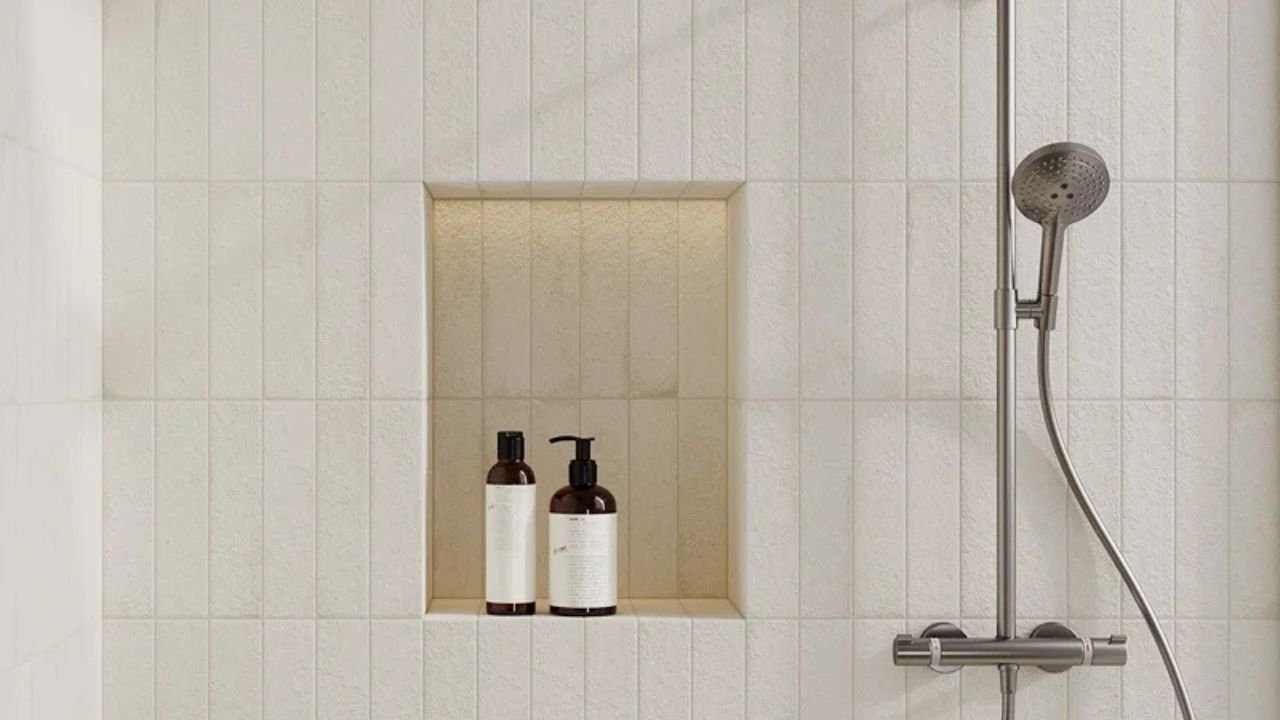
8 Porcelain Bathroom Wall Tile Styles Worth Considering
The strongest bathroom designs generally start with the room rather than the tile. Think about the bathroom’s size, natural light, vanity finish, plumbing fixtures, floor material, and shower layout before choosing a style. Here are several bathroom wall tile ideas using porcelain that work well in 2026 and should remain relevant beyond it.
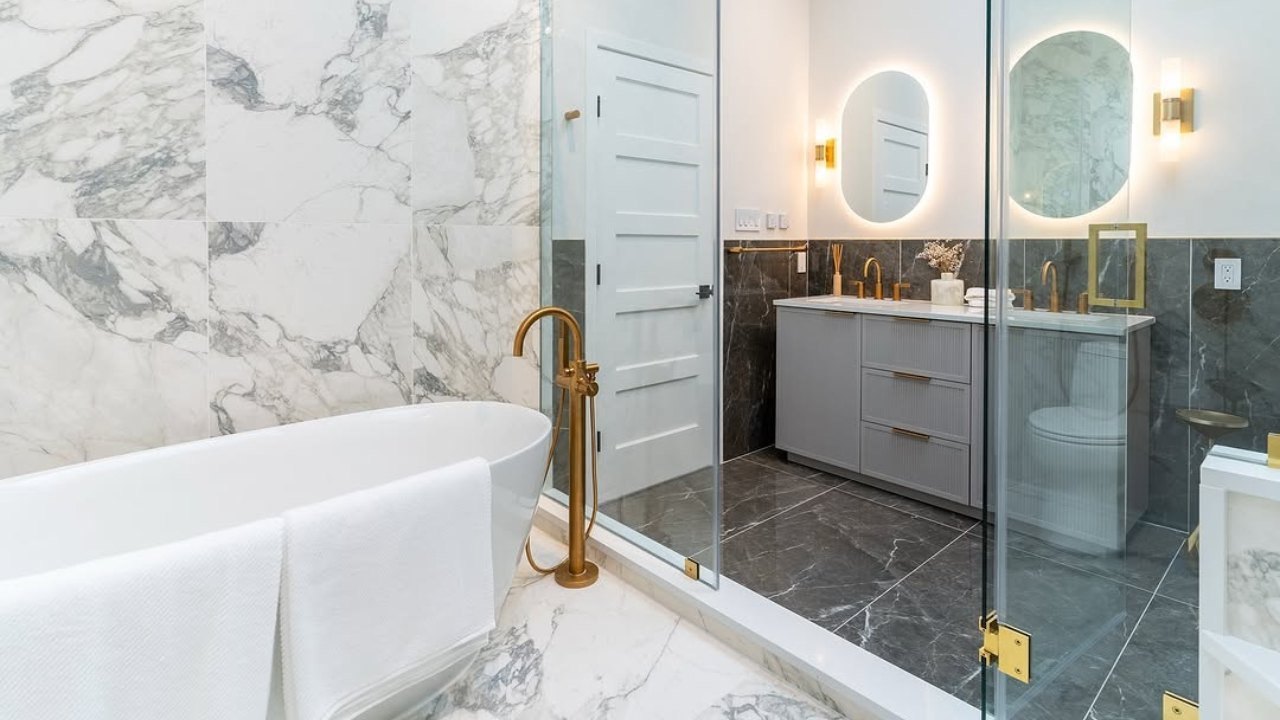
Marble-Look Porcelain for a Refined Bathroom
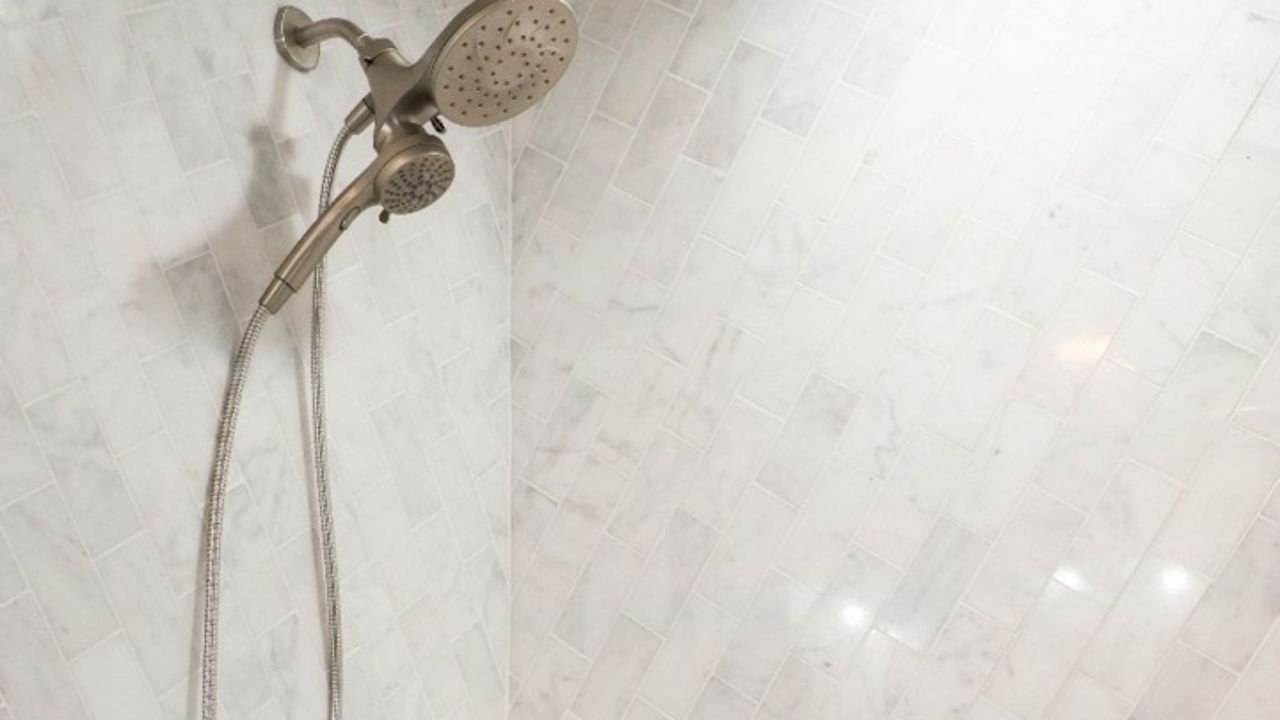
Marble-look porcelain tile for bathroom walls remains one of the most useful choices for homeowners who want a refined bathroom without using natural marble. White porcelain tile with soft grey veining can brighten a compact bathroom. Stronger veining creates a more dramatic statement behind a freestanding vanity or tub. For a calm look, pair marble-look wall tiles with:
- Warm white cabinetry
- Brushed metal fixtures
- Natural wood accents
- Simple stone-look flooring
- Minimal grout contrast
Large marble-look porcelain slabs or large-format tiles can also reduce the number of grout lines. This helps the veining read as one continuous design.
Stone-Look Porcelain for a Natural Feel
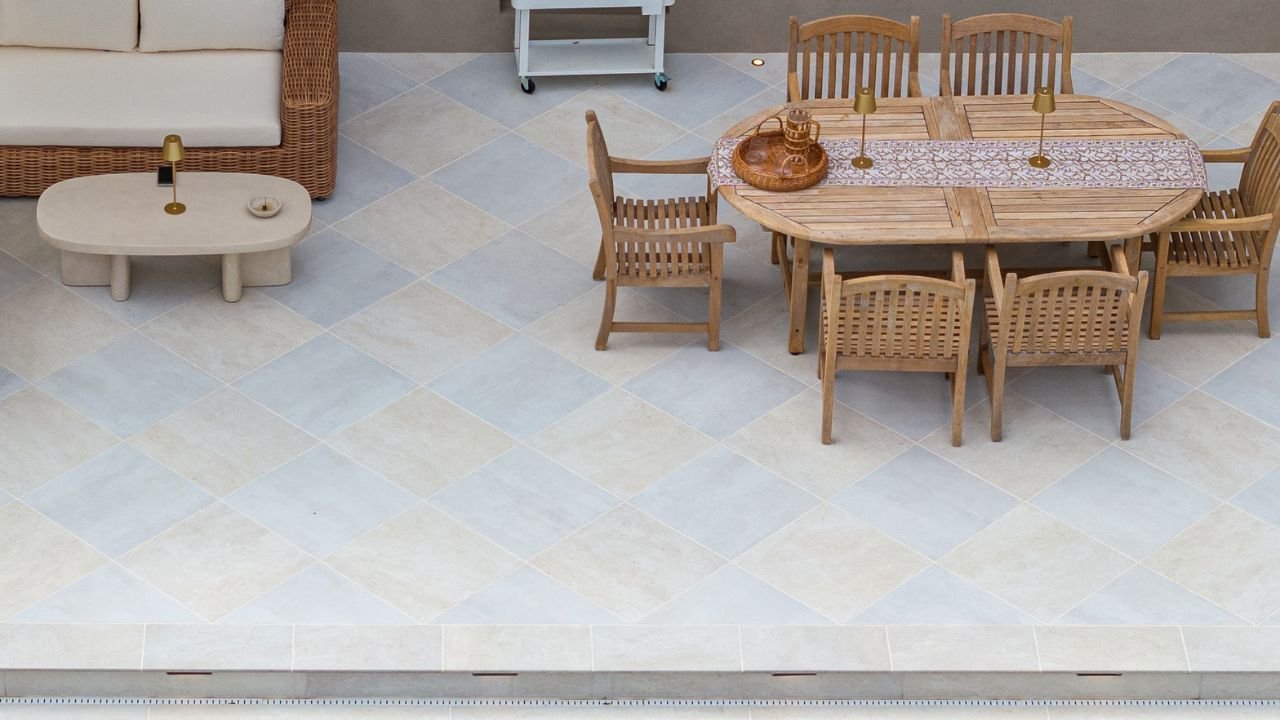
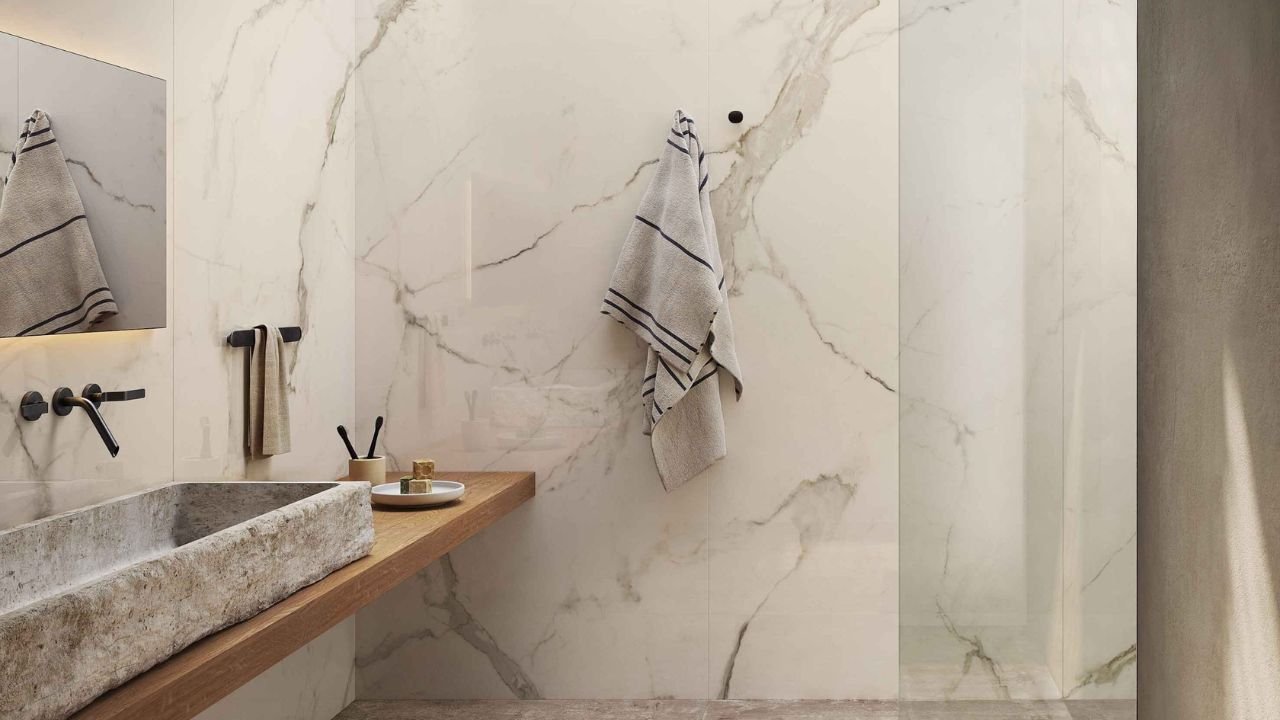
Stone-look porcelain tiles for bathroom walls can reproduce the visual character of limestone, travertine, slate, or other natural stones. This style is well suited for the bathroom to feel connected to nature without the high maintenance requirements of natural stones.
A limestone-look porcelain wall paired with a simple neutral floor can create a soft, understated bathroom. A darker slate-inspired porcelain can give a larger shower more visual weight. The important consideration is to choose a realistic surface and pattern variation. Natural stone does not repeat in a fixed grid. Opting for porcelain wall tiles with varied faces and subtle tonal changes looks convincing.
At NT Pavers, natural stone and porcelain are considered in terms of the entire surface rather than color alone. A tile should make sense beside the floor, coping, vanity, hardware, and lighting.
Large-Format Porcelain Bathroom Wall Tiles
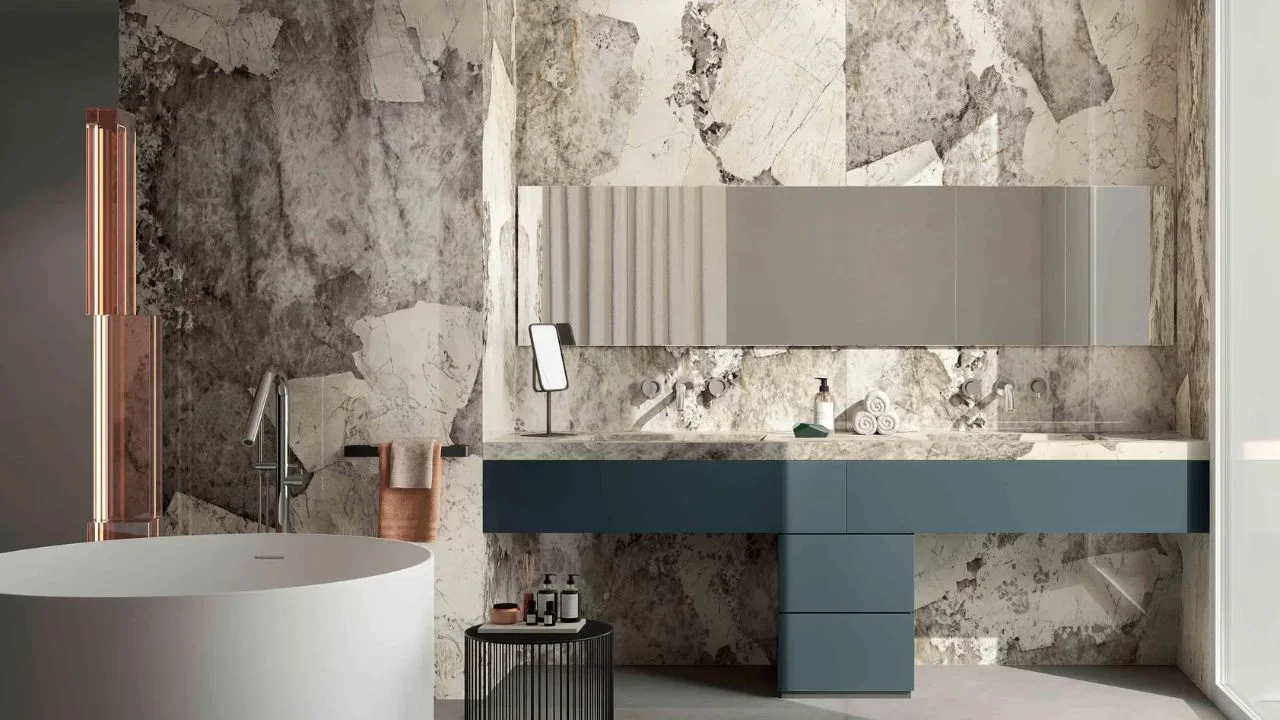
Large-format porcelain bathroom wall tiles have become a preferred choice for modern bathroom spaces. Large tiles can make a wall look more continuous because they feature fewer grout joints. This effect works especially well in showers, behind floating vanities, and on feature walls.
“ For example, a 24×48-inch format can produce a very different visual rhythm from a traditional 4-by-4-inch tile.”
However, larger is not automatically better. Porcelain is already thicker and heavier. Large tiles require careful substrate preparation. The wall should be flat enough to support proper installation, and installers need the right setting materials. They should also have proper layout planning, movement joints, and handling equipment. Large porcelain panels may require specialist installation.
4. Concrete-Look Porcelain for Modern Bathrooms
Concrete-look porcelain tile works particularly well in contemporary and industrial-inspired bathrooms. Soft greys can create a quiet background for black, chrome, or brushed nickel fixtures. Warmer greige versions can prevent the room from feeling cold.
The trick is to balance the industrial surface with warmer elements. Wood cabinetry, warm lighting, textured towels, and natural stone accents can soften the composition.
5. Subway-Style Porcelain With a Modern Twist
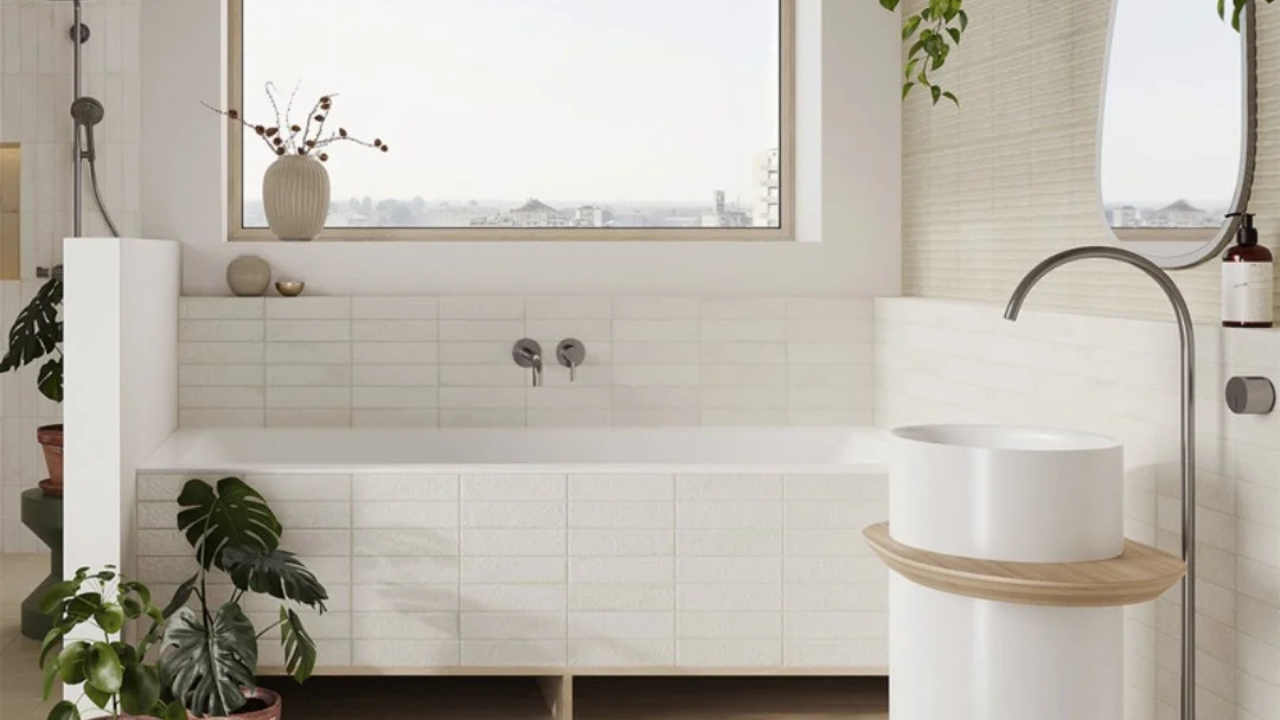
The classic rectangular tile remains useful because its proportions are easy to work with. But you don’t have to use a traditional white 3”x 6” inch layout. Consider:
- Elongated rectangular tiles
- Vertical installation
- Stacked layouts
- Soft beige or greige finishes
- Slightly textured surfaces
- Contrasting grout
A vertical arrangement can emphasize ceiling height. A horizontal arrangement can make a narrow wall feel wider.
6. Wood-Look Porcelain for Warmth
Wood-look porcelain bathroom wall tiles can add warmth to a bathroom without putting real wood in a consistently wet location. It performs exceptionally well as an accent wall behind a vanity or bathtub. Pair it with stone-look porcelain, white walls, or simple neutral surfaces.
Avoid covering every wall with a strong wood pattern unless the room has enough light and visual space to support it. One carefully selected wall often has more impact.
7. Textured and Three-Dimensional Porcelain
Textured porcelain adds character without relying on strong color. Fluted patterns, linear textures, ribbed surfaces, and subtle relief designs can work behind a vanity or on a feature wall. Use textured tile with some restraint. Deep textures create more places for dust and residue to collect, so they may require more attention than a smooth tile.
Porcelain Wall Tiles Vs Natural Stone: Which One Is Best?
Natural stone tiles and porcelain tiles are two of the most common yet popular choices for bathroom walls, but porcelain stands out. Take a look at the following table for more information.
| Factor | Porcelain | Natural Stone |
| Water absorption | Very low for qualifying porcelain | Varies by stone |
| Maintenance | Generally straightforward | Depends on stone and finish |
| Pattern | Manufactured and controlled | Naturally variable |
| Design range | Very broad | Depends on available stone |
| Sealing | Usually not required for the porcelain surface | Often required for porous stones |
| Repairs | Individual tiles can be replaced | Replacement stone may vary more |
| Feel | Can reproduce stone convincingly | Genuine natural variation |
| Installation | Requires proper tile installation | Requires stone-specific considerations |
Natural stone still has that elegance and naturally luxurious appeal that manufactured material cannot replicate. Each piece has a distinct geological formation, variation, and character. Porcelain offers a low-maintenance, resistant surface with a uniform look and exceptional durability. Neither is universally better. The right material depends on the priorities of the project.
Porcelain Bathroom Wall Tile Design Ideas That Make a Difference
Selecting the tile is just the first decision, but what makes the difference is how you install and combine them. It determines the final appearance.
Use large tiles to create visual continuity
An uninterrupted visual experience makes the space appear larger. Use large-format porcelain to make a shower wall feel softer because fewer grout lines look seamless. This works particularly well with marble and stone-look designs. When the pattern has directional movement, discuss the layout with the installers before starting your project. Veining should not be treated as an afterthought.
Run wall tile from floor to ceiling
Full-height tile can easily make a bathroom feel taller and more finished. In a shower, full-height porcelain also creates a strong visual feel. In a powder room, a floor-to-ceiling feature wall can make a smaller space feel more intentional.
Create one feature wall
You don’t have to opt for different porcelain bathroom wall tiles on every wall. A practical approach is to select one statement surface and keep the surrounding walls quieter. For example:
“ Marble-look feature wall + warm white side walls + neutral stone-look floor “
This gives the eye a focal point without making the room feel busy.
Match the grout to the design
When installing bathroom wall tiles, don’t ignore the grout lines. It affects the appearance of the entire wall. A grout color close to the porcelain creates a continuous surface. On the other hand, a contrasting grout emphasizes individual tile shapes and the installation pattern.
For marble-look porcelain, a close grout color helps the veining remain the focus. For subway tile, contrast can highlight that layout. Choosing the grout should also include the manufacturer’s recommendations and the location’s cleaning demands.
Porcelain Bathroom Wall Tiles FAQs
Let’s answer your questions about porcelain bathroom tiles.
Are porcelain tiles good for bathroom walls?
Yes. Their low absorption, resistant surface, and high durability make them a practical choice for bathroom walls. Make sure to install a proper waterproofed system.
Can porcelain tiles be used inside a shower?
Yes. Choose the porcelain floor tiles rated for the application and ensure the underlying shower assembly has proper waterproofing, drainage, and movement-joint details.
Is porcelain better than ceramic for bathroom walls?
Yes. While porcelain is also a type of ceramic, it is much better than regular ceramic tiles. It works well on many bathroom walls. However, the best choice depends on the application, product specifications, design, and budget.
Do porcelain bathroom wall tiles need to be sealed?
No. Most porcelain surfaces do not need sealing. But consider sealing the grout joints.
What size porcelain tile is best for a bathroom wall?
There is no standard size for bathroom walls to use. However, larger tile sizes, such as 24×24 inches, create fewer grout lines. Medium and smaller formats can make layouts, corners, niches, and cutting easier.
Are glossy or matte porcelain tiles better for bathroom walls?
Both can work. Glossy porcelain can reflect light and create a polished appearance, while matte porcelain offers a softer look with less reflection; the choice should match the bathroom’s lighting and design.
Bottom Line
Porcelain bathroom wall tiles are one of the most practical choices for the bathroom and shower walls. Their resistance to stains, cracks, and moisture keeps them good-looking for years to come. Just make sure to select the right bathroom tiles rated for showers. Also ensure a properly installed waterproofing system, which will add to their longevity. For homeowners comparing porcelain with natural stone, the decision is less about finding one universal winner. It is more about selecting a tile that fits your room.