
A small patio can still feel open, balanced, and inviting. However, what matters the most is how the surface directs the eyes and defines the movement. This is where pavers play an important role. They give homeowners control over the layout, scale, and color. This control makes them one of the best tools to improve the look of a narrow outdoor space.
Many small patio paver ideas include visual tricks. Designers use pattern direction, color contrast, and stone scale that adds a sense of spaciousness in a paver patio. Material choice also plays an important role. Continue reading the following to learn about the 7 practical ways to integrate small patio ideas.
1. Choose Larger Pavers to Reduce Visual Breaks
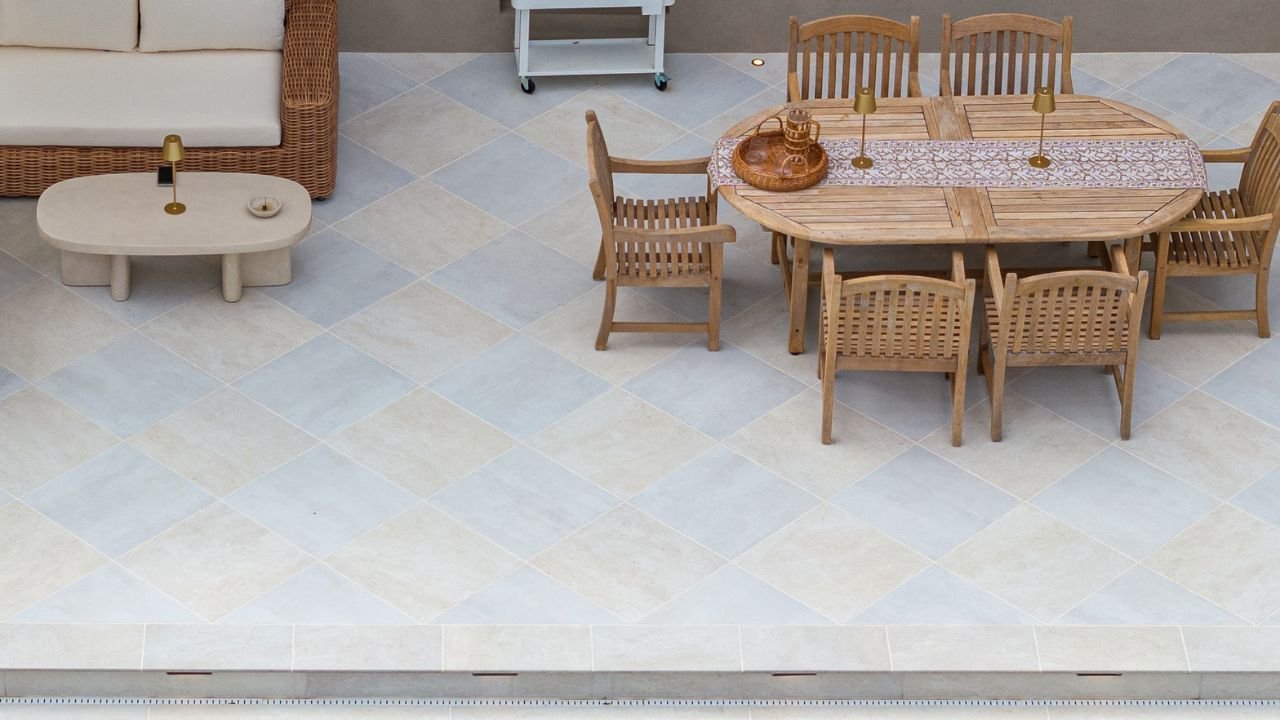
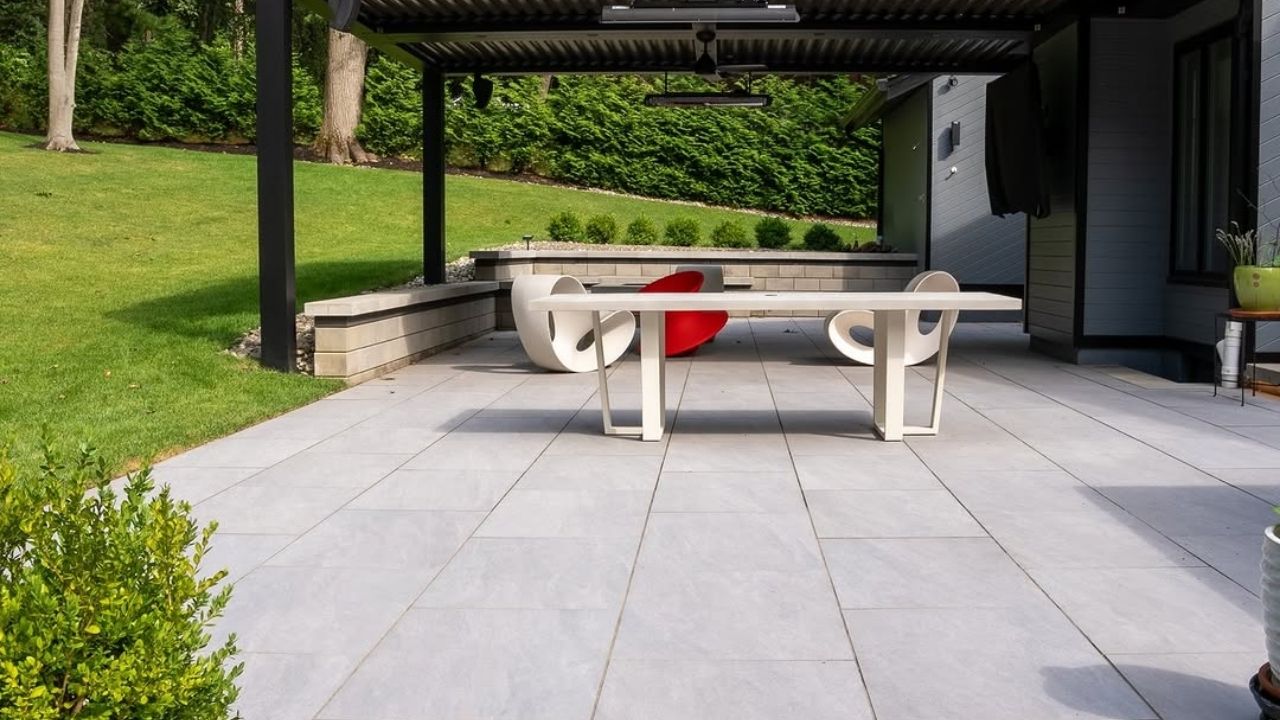
One of the major problems with small paving units is too many joint lines. They add to the visual clutter and make the space look cramped. Large stone pavers for the backyard are the key to use here. Opt for 24×24 pavers or even 48×48 pavers units to create fewer joints. The surface feels continuous, calmer, and the eyes move throughout the patio. This approach remains one of the most effective Small Patio Paver Ideas because it simplifies the layout.
Why Choose Large Porcelain Pavers?
Large porcelain pavers and large concrete pavers both work well here. Many modern porcelain installations opt for modular sizes that repeat across the surface. The paver patterns stays clean while the space appears wider. Do not mix too many paver sizes in a small space. Using a single size or a simple two-size modular pattern will make the space feel larger.
At NT Pavers, designers often recommend large-format porcelain pavers for compact patios. They combine thin joints with smooth surfaces that reflect light.
2. Use Linear Patterns That Lead the Eye Outward
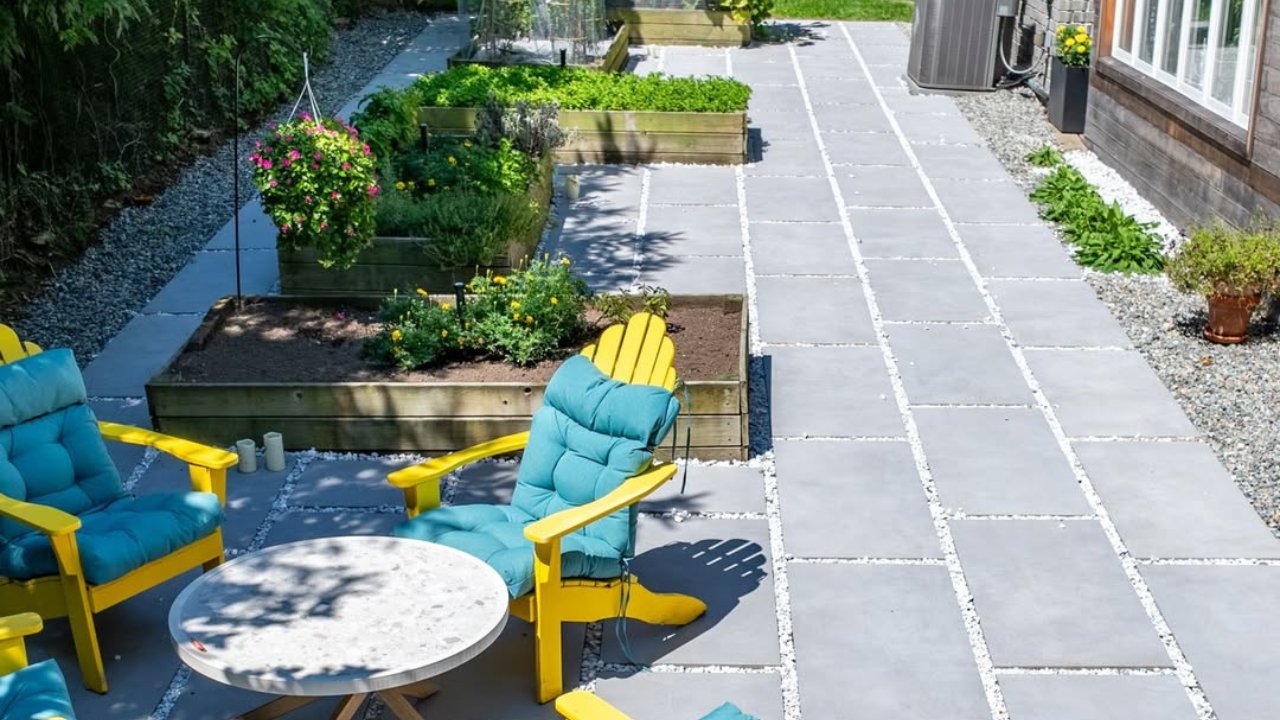
The direction of a pattern influences how the brain reads the space. A pattern that runs toward the patio’s longest dimension stretches the visual perspective. The space feels deeper and longer. This is why many designers prefer stacked layout or running bond pattern for small patio paver ideas.
Another great option is the classic linear pattern. The angled joints guide the eye diagonally. That diagonal movement usually makes a patio look wider than its true dimensions.
Design Rule For Linear Pattern
Align the pattern with the main viewing angle from the house. When someone looks out from a door or window, the pattern should guide their eye toward the yard. This subtle change can transform the space’s feel.
3. Use Light-Colored Pavers to Reflect Light
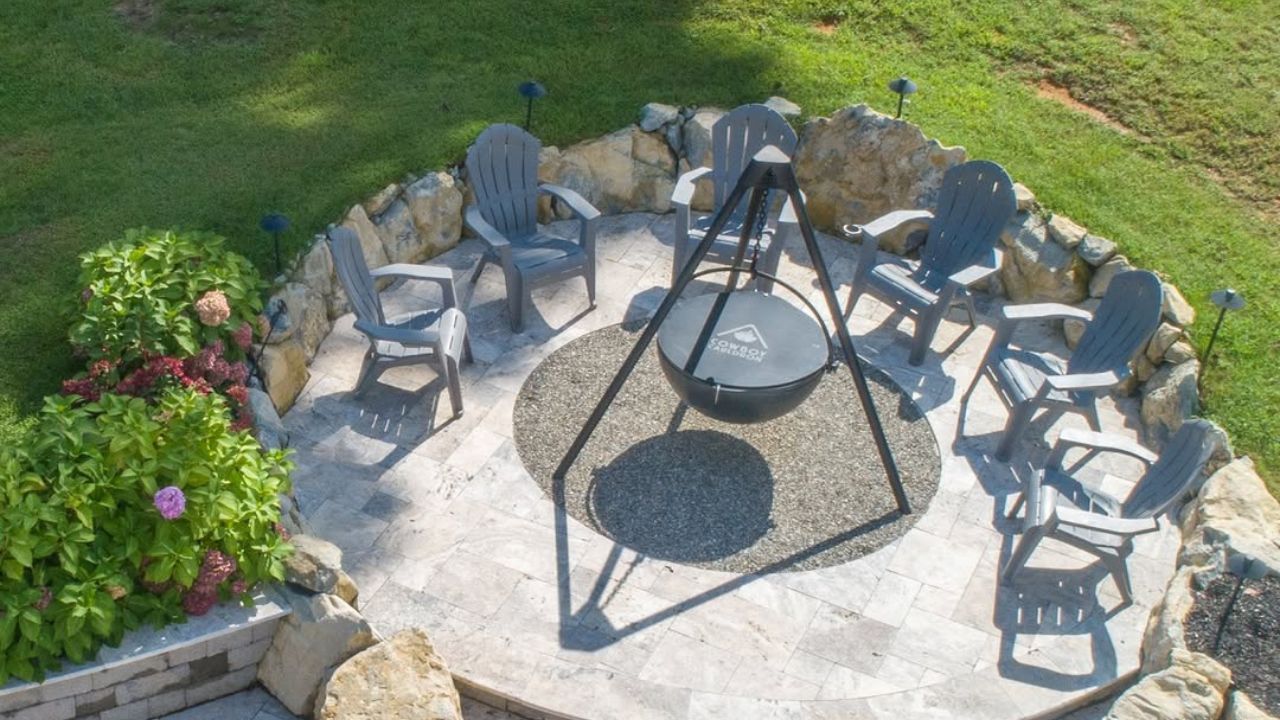
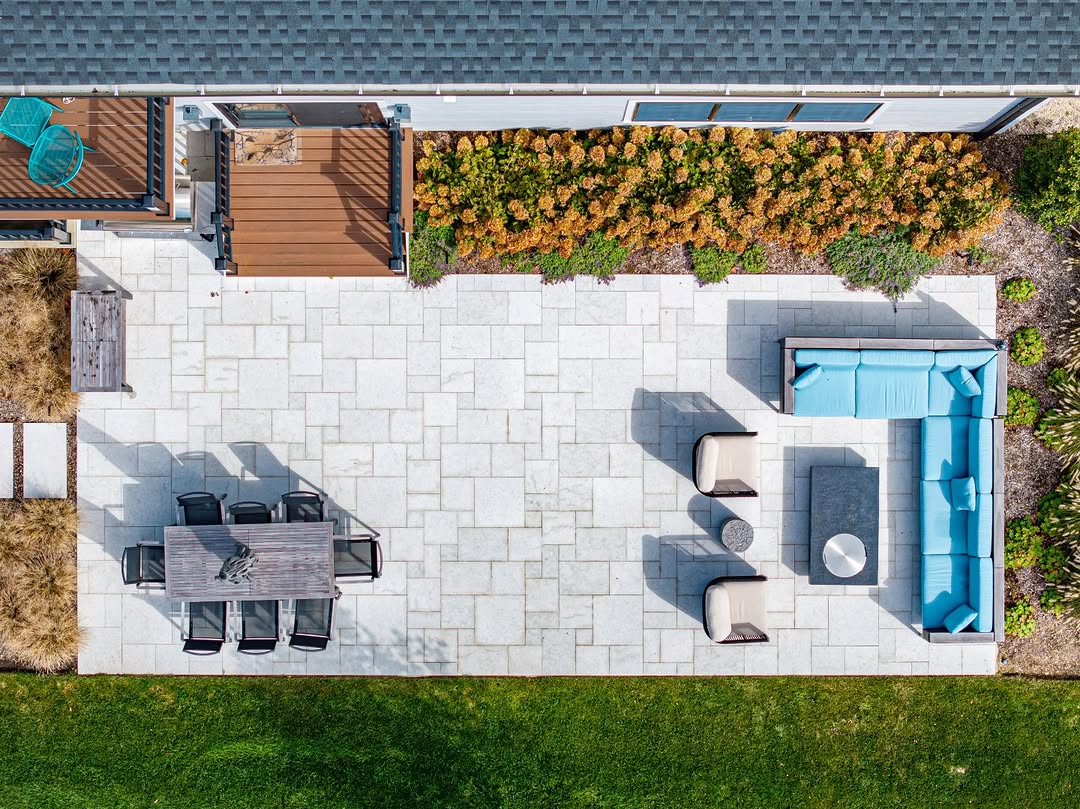
Color influences how you see the space size. Dark surfaces absorb light and make the edges appear closer. That affects the sense of space. On the other hand, light colored pavers reflect sunlight and brighten the patio. The boundaries appear softer and farther away. Popular tones for Small Patio Paver Ideas include soft olive limestone, light silver-gray, sandstone tones, and pale porcelain looks concrete. Limestone pavers often work well because their surface reflects light evenly without heavy texture shadows.
Design Tip For Light-Colored Pavers
In shaded patios, lighter colors become even more important. They prevent the space from feeling enclosed. However, homeowners should balance brightness with maintenance. Multi-tone blends often hide dust better than solid light colors.
4. Minimize Joint Width and Keep Lines Clean
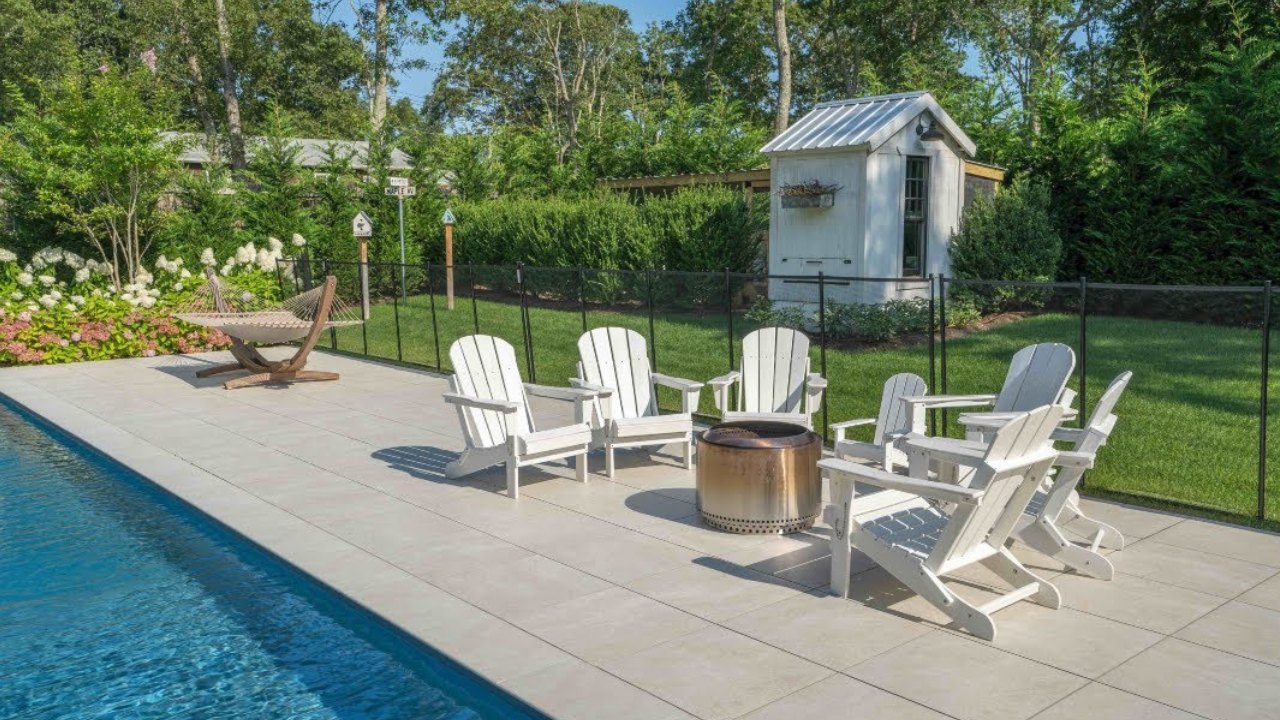
Joint space determines how large the patio feels. Wide joints create a grid, and that grid divides the space into many smaller shapes. The eye reads each shape separately. Narrow joints create continuity.
Porcelain pavers are usually installed with 3-4mm spacers, while the natural stone usually features a slightly wider joint. This accommodates dimensional variation. Either way, consistent spacing matters more than width.
Benefits Of Minimizing Joints
Among the most practical Small Patio Paver Ideas is simply keeping joint lines straight and uniform. Uneven joints break the visual rhythm and make the surface feel crowded. With proper joint material that blends with the paver color, the surface looks cohesive. Also, the pattern appears smoother. This simple choice expands the visual field.
5. Define the Paver Patio Edge with a Border
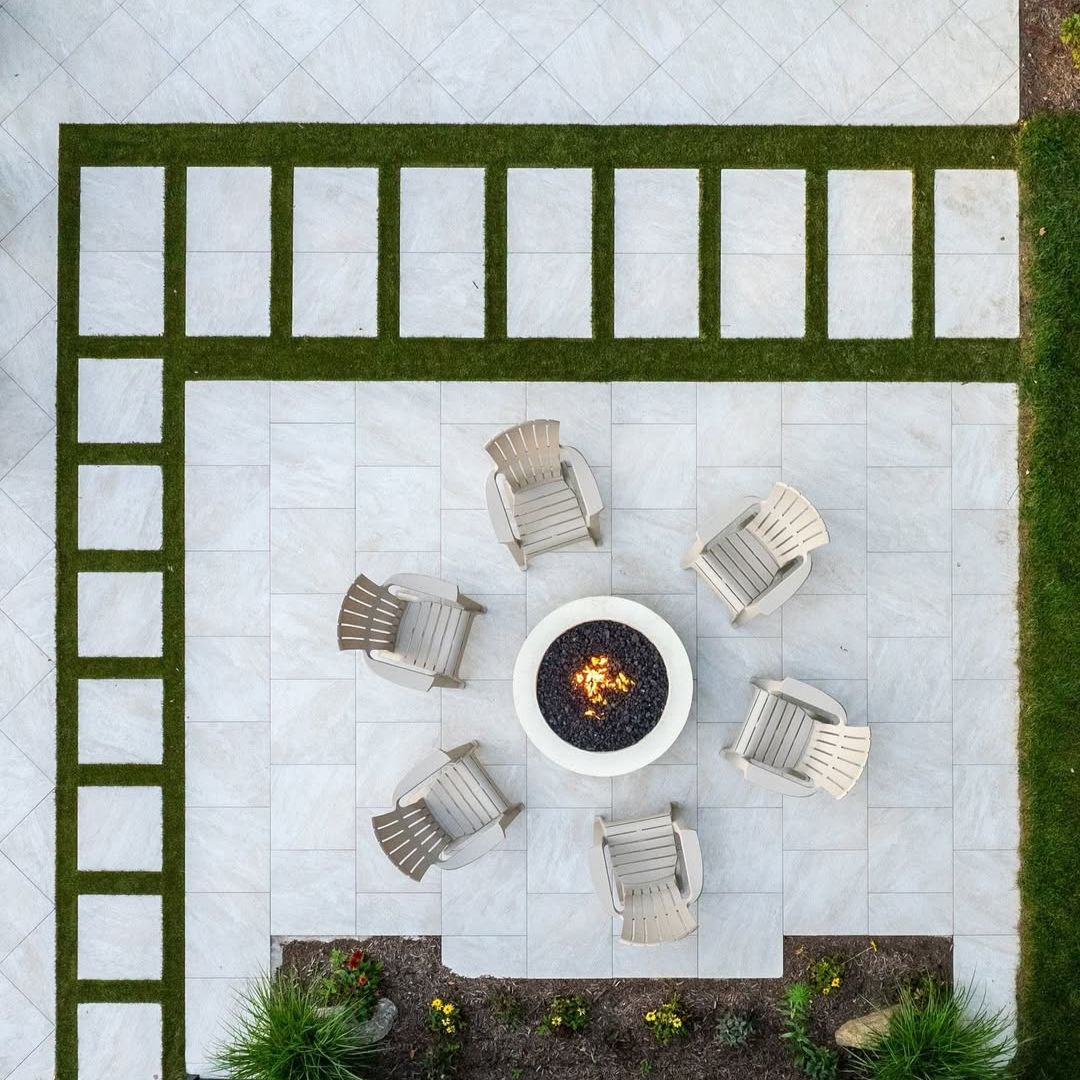
Though a border may first seem like it will shrink the patio, it does the opposite if done right. A clean border frame helps the brain understand where the space ends. Without the frame, edges blur into the surrounding yard. The patio may look irregular or cluttered.
One of the most overlooked Small Patio Paver Ideas involves using a thin contrasting border around the perimeter. Opt for a main field paver in a light tone and a darker border paver in a soldier course layout.
Why Patio Border Work?
This frame acts like a picture border. It defines the shape while keeping the interior simple. Designers usually keep the border width between 4 and 8 inches on small patios. Anything wider may overpower the surface.
6. Extend the Pattern Toward Adjacent Areas
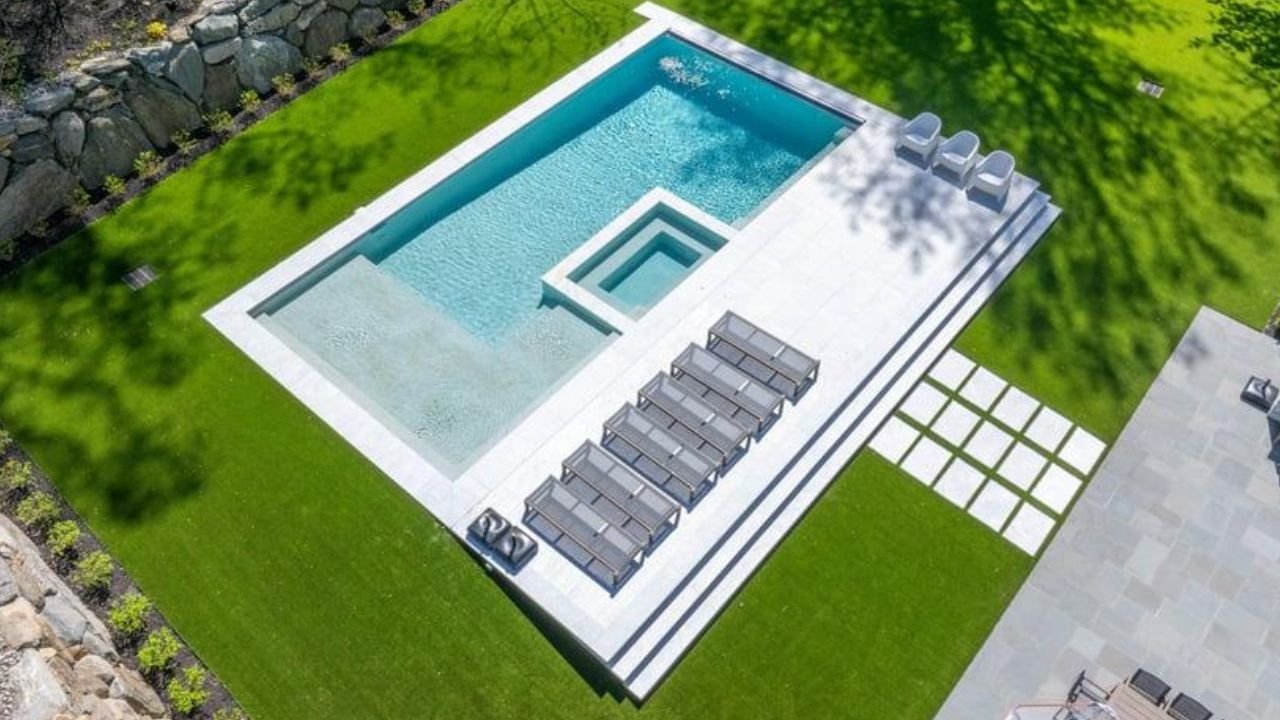
Often, patios are connected to walkways, steps pr garden pathways. When each area used a different material, the space feels out of place or exploded. Continuity makes a space feel larger. Many small patio pavers ideas recommend extending the same types of stone, blending with paths or stepping areas. For example, paver patio continue into a garden path, or the same material appears on steps. Border pavers repeated along a walkway are also a great example of this.
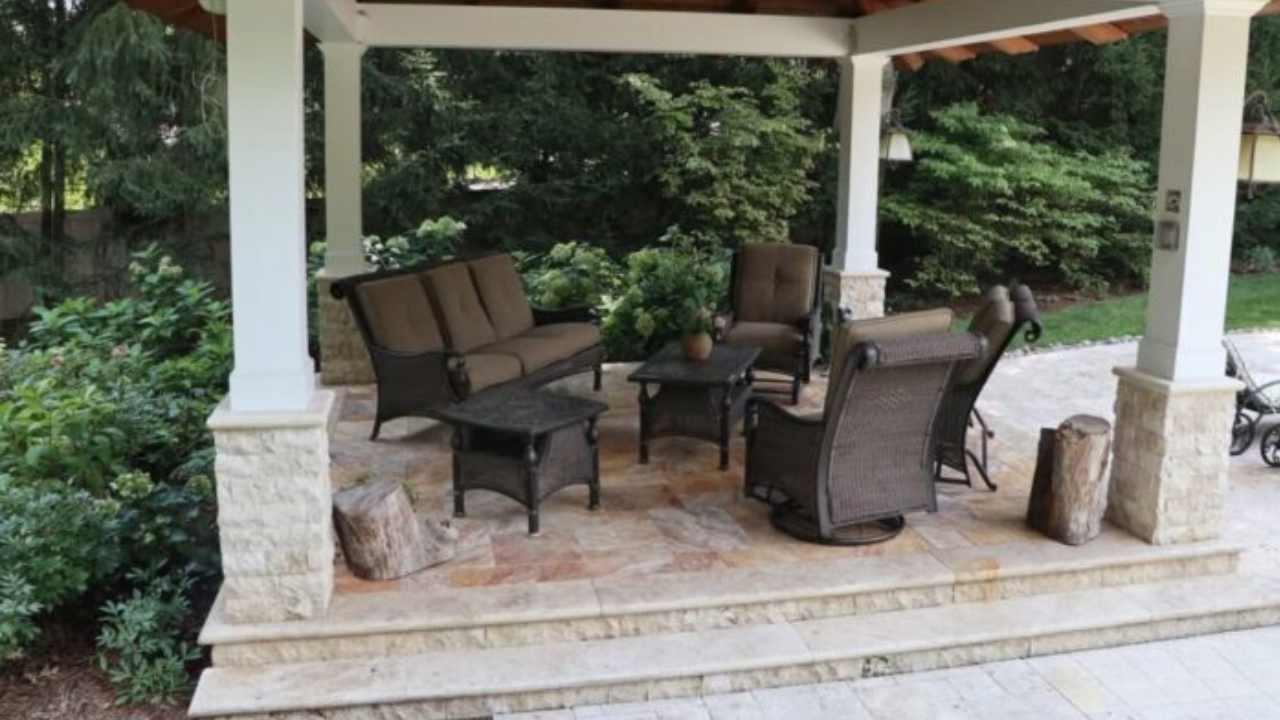
Benefits Of Pattern Extension
The eye reads all connected surfaces as one outdoor living area. The resulting surface looks larger even though the main patio material remains the same size.
7. Keep the Layout Simple and Balanced
Complex layouts are not well-suited for small patios. Use f multiple colors, textures, and patterns to create visual noise. That noise completely compresses the space with too much visual loudness. Simplicity creates clarity. Among the most reliable Small Patio Pavers Ideas is choosing a restrained palette and repeating it consistently.
A balanced layout might include a main paver color, a border color, and one directional pattern. That limited palette gives the patio structure without overwhelming the eye.
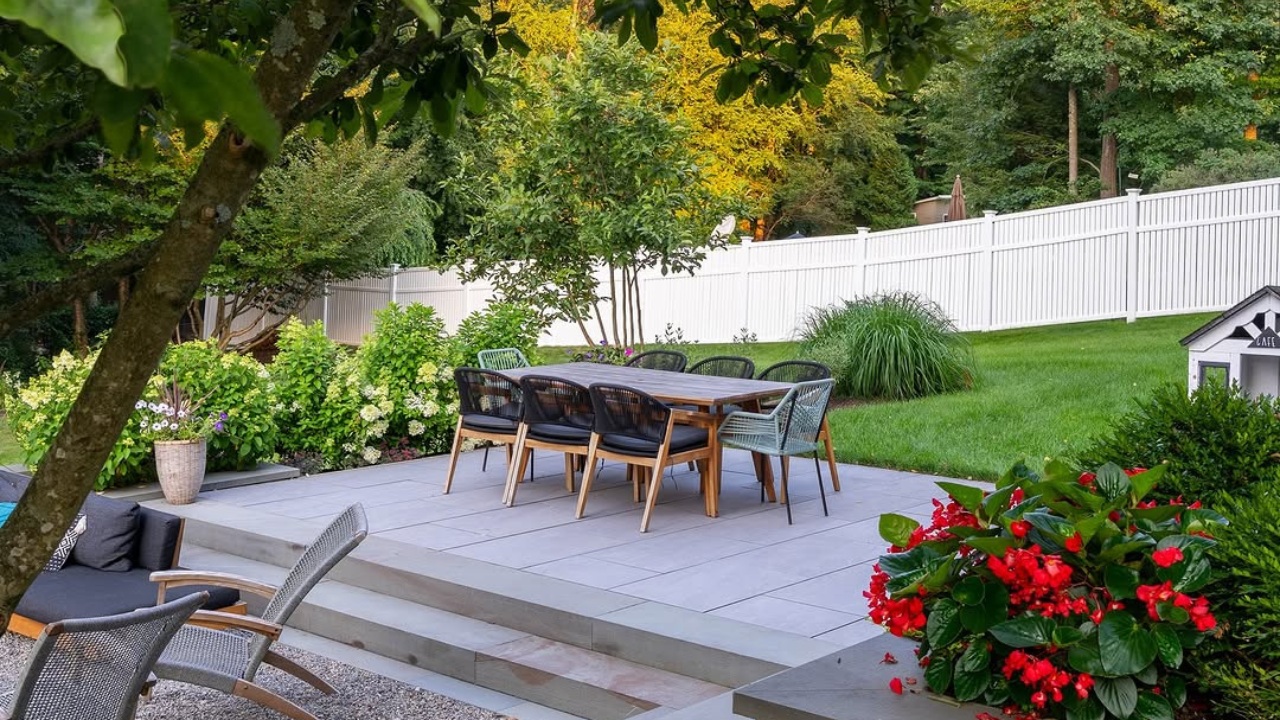
Design Tips For a Simple Patio Layout
Furniture placement also plays a role. A clear central area allows the paving pattern to remain visible. When the paver patterns stays visible, the patio feels more open. Many professional installers recommend planning furniture locations before finalizing the paver layout.
Additional Design Tips from Patio Installers
Experienced contractors usually combine several small patio paver ideas to enhance the result. Here are a few practical details that homeowners often overlook with patio design:
| Design Consideration | Why It Matters for Small Patios | Practical Guidance |
| Align paver joints with house architecture | Parallel lines create visual order and make the patio feel structured and intentional. | Lay pavers so joint lines run parallel to walls, doors, or major architectural lines of the house. |
| Avoid heavy textures in tight spaces | Deep textures cast shadows that break up the surface and visually shrink the space. | Choose smoother paver finishes or lightly textured surfaces to maintain a clean, continuous look. |
| Consider subtle color variation | Slight color blends hide dust, stains, and wear while keeping the patio visually calm. | Select multi-tone blends in neutral shades rather than a single flat color for the front yard. |
| Install a strong base system | A stable base prevents settling that can disrupt paver alignment and surface appearance. | Follow aggregate layering and compaction standards recommended by ASTM International during installation. |
Contact professionals like NT Pavers, who often help homeowners choose the right material size and pattern before working on their patio.
Small Patio Paver Ideas FAQs
Let’s answer your questions about small patio paver ideas.
What size pavers work best for small patios?
Large format pavers 24×24 inch or more, like 48×48, reduce joint lines and provide a more spacious visual feel.
What color pavers make a patio look bigger?
Lighter tones like beige, light gray, or sand reflect more light and make patio boundaries more evident.
Should small patios use complex paver patterns?
No. Small patios should use complex patterns as they make the surface look cluttered and cozy.
Do borders make a patio look smaller?
No. Narrow border helps define the space and makes the patio feel organized and spacious.
Are porcelain pavers good for small patios?
Yes. Large porcelain pavers offer tight joints, consistent sizing, and light-reflective surfaces. They work well in many small patio paver ideas.
Bottom Line
A small patio with a limited space can be a great addition despite its scale. It may not have more square footage, but it feels comfortable and open. Smart design choices shape how the space looks and functions. The most effective small patio pavers focus on visual continuity. Large patio pavers offer reduced joint lines while directional patterns guide the eye outward. Light colors reflect sunlight and soften boundaries. Clean joints and simple layouts remove clutter. Homeowners who plan carefully often discover that a compact patio can feel surprisingly spacious without expanding the footprint.