
While searching for the durable outdoor material, you will find the two most common material options, concrete and porcelain pavers. However, both have distinct features and suitability, especially on the pricing side. Compare the pricing for both, and you will realize how land and see the difference both have. You may wonder why porcelain pavers cost more than concrete while both serve the same purpose. In a way, they both are great choices for patios, pool decks, walkways, and outdoor living spaces. Both come in square and rectangular formats and support foot traffic, but the major difference lies under the surface.
From material composition, manufacturing processes, to performance under stress with low maintenance features, they result in price differences. Here is more to know about them.
Complete Comparison Between Porcelain Pavers and Concrete Pavers
Both concrete and porcelain pavers are widely used for patios and outdoor projects. But how are they different from each other? Take a look at this table to understand both materials and their differences.
| Feature | Porcelain Pavers | Concrete Pavers |
| What It Is | Kiln-fired ceramic material made from refined clay and minerals | Molded masonry unit made from cement, sand, aggregate, and pigments |
| Manufacturing Process | High-pressure forming and kiln firing at extreme temperatures | Cast into molds and air- or steam-cured |
| Density & Structure | Extremely dense, vitrified body with minimal internal voids | Porous structure with micro-air pockets |
| Water Absorption Rate | < 0.5% (nearly non-porous) | 5–10% depending on mix and finish |
| Freeze-Thaw Resistance | Excellent; water cannot penetrate the body | Moderate; absorbed water can cause surface spalling |
| Best Use Cases | Patios, pool decks, rooftops, balconies, and commercial courtyards | Driveways, walkways, patios, residential hardscapes |
| Load-Bearing Capacity | High compressive strength; suitable for pedestal systems | Adequate for ground-set residential loads |
| Slip Resistance | Textured finishes provide consistent wet and dry grip | Slip resistance varies by surface texture |
| Climate Suitability | Suitable for all climates, including cold and coastal regions | Best for mild climates with limited freeze-thaw cycles |
| UV & Color Stability | Excellent; color remains stable over decades | Moderate; surface pigments fade over time |
| Stain Resistance | High resistance to oil, food, chlorine, and organic stains | Prone to staining without regular sealing |
| Maintenance Requirements | Low; no sealing required, simple cleaning | Moderate; sealing recommended every 2–3 years |
| Efflorescence Risk | None | Common due to the cement content |
| Thickness Options | Commonly 20mm or 2cm | Varies by manufacturer |
| Installation Methods | Sand-set, mortar-set, pedestal systems | Sand-set or mortar-set |
| Design Consistency | Uniform size, thickness, and finish | Minor size and color variation |
| Expected Lifespan | 30+ years with minimal wear | 15–25 years, depending on maintenance |
| Repair & Replacement | Individual pavers are replaceable but require precise cutting | Individual paverscan be easily replaced |
| Cost Per Sq Ft (Material) | Higher upfront | Lower upfront |
| Long-Term Ownership Cost | Lower due to minimal maintenance | Higher due to sealing and upkeep |
What Porcelain Pavers Are Made Of?
Porcelain pavers are crafted with refined clay, feldspar, silica, and natural minerals. Manufacturers grind these materials into a fine powder. They then compress that powder under high pressure and fire it in kilns at temperatures exceeding 2,200°F. This process creates a dense and verified body. Water absorption is below 0.5, and color runs through its body or is locked into the surface glaze. The result behaves more like ceramic stone than concrete masonry.
Because porcelain uses precision machinery, strict firing schedules, and quality control, production costs get higher. These costs appear in the final price per square foot.
What Concrete Pavers Are Made Of?
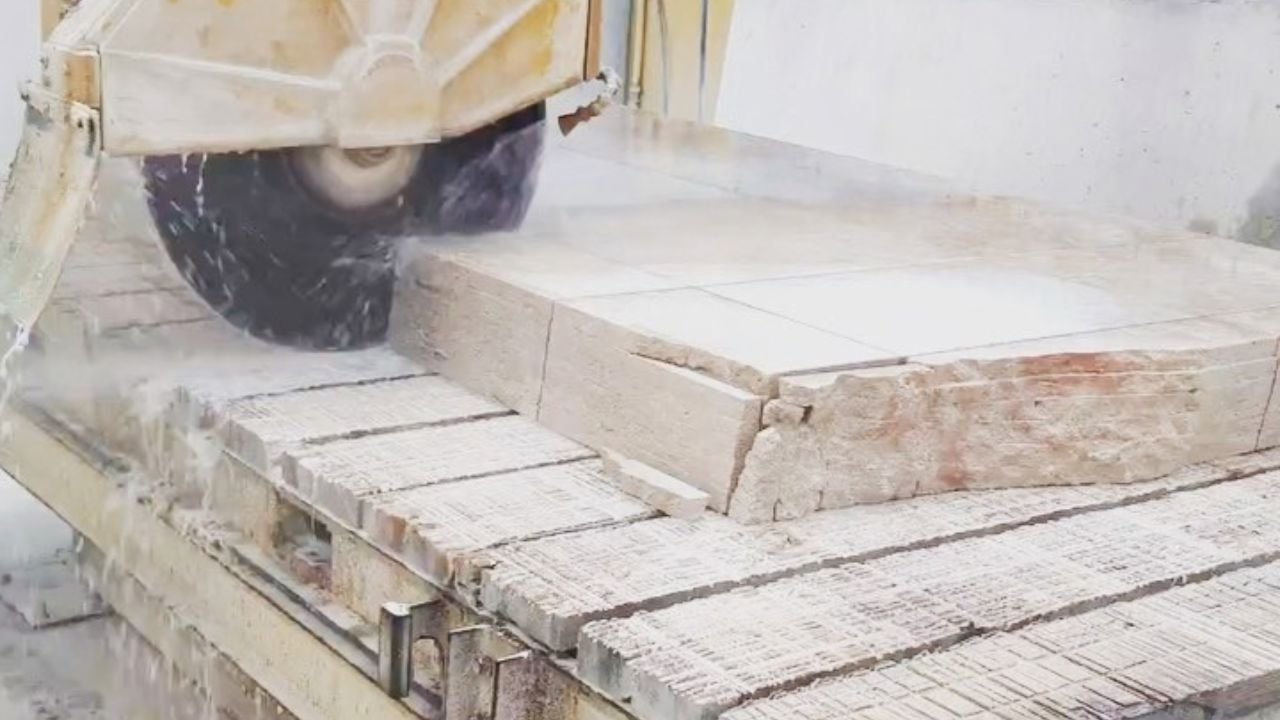
Concrete pavers use cement, sand, aggregate, water, and pigments. Manufacturers pour this mixture into molds, then vibrate it to remove air pockets. They cure it at room temperature. This process is perfect to generate mass production.
Concrete paving slabs cost less because of low-cost material and a manufacturing process that doesn’t require heavy energy. However, you will have to compromise in the long run. Concrete absorbs more water. Pigments sit near the surface. Freeze-thaw cycles stress the structure over time.
Concrete pavers perform well when installed correctly, but it does not match porcelain pavers’ density or stability.
How Do Manufacturing Differences Affect Porcelain Pavers Cost?
The major factor that affects the porcelain cost is its manufacturing process.
Porcelain Paver Manufacturing
Porcelain paver is manufactured at an extremely high temperature. The dimensions are controlled with precision, which results in a uniform surface with thickness and durability. Each step increases cost but reduces variation. The more delicate and high-end procedure will be the more pricier porcelain paver. For instance, Italian porcelain tile is considered the most premium porcelain with extreme durability, beauty, and reliable performance.
Concrete Paver Manufacturing
Concrete pavers are comparatively easier to create with the mold base production method. They are the most budget-friendly option for most outdoor methods due to this. Once they are molded, they are cured with steam or air. Pigments are then applied to the surface. However, there is a slight size difference between units. This method, though reduce the cost, results in inconsistency.
This is why porcelain pavers cost more than concrete pavers. The manufacturers control every unit. Concrete pavers cost less because they rely on faster, simpler processes.
How Strength and Load Performance Increase Porcelain Pavers Cost
The strength and load-bearing capabilities of these two materials are significantly different. Porcelain offers exceptional strength and load performance.
Porcelain pavers achieve compressive strength ratings above 8,000 PSI. Some exceed 10,000 PSI. On the other hand, concrete pavers typically range between 4,000 and 8,000 PSI. But it doesn’t all end here.
Porcelain pavers deliver evenly load-bearing because it doesn’t have any internal air pockets. On the other hand, concrete has micro-spaces that form during curing. Over time, the water enters those voids, which expand upon temperature changes and result in microcracks.
For residential paver patios, both materials work. For rooftop decks, commercial courtyards, and porcelain pedestal systems, performs better.
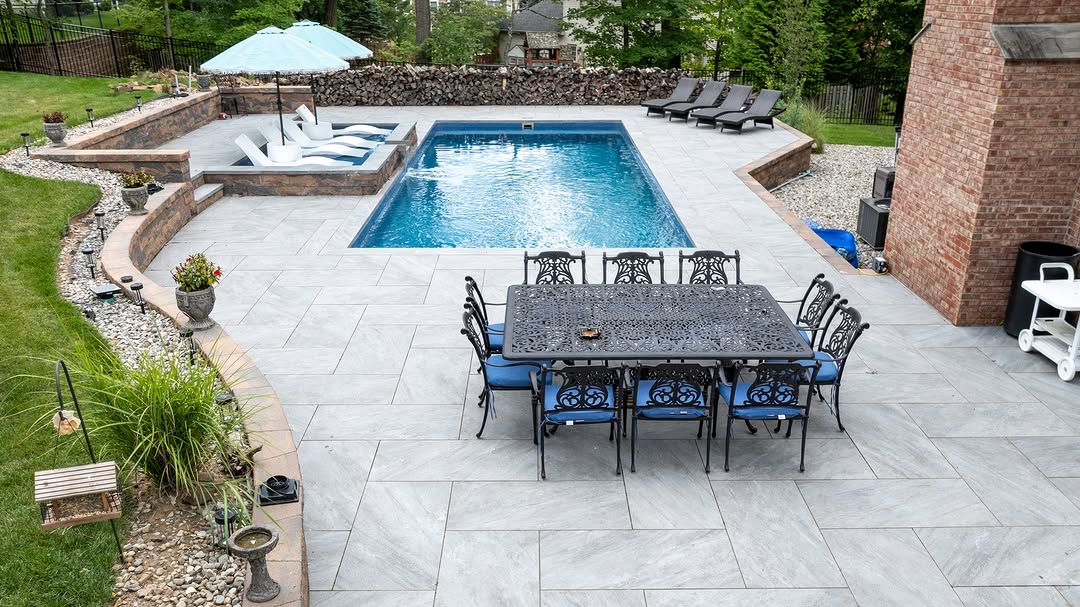
Water Absorption and Freeze-Thaw Resistance Role In Porcelain Pavers Cost
Water absorption is a major part of the high pricing of porcelain pavers. Water absorption drives long-term durability. Porcelain pavers have almost zero water absorption, whereas concrete pavers absorb several percent by volume. In cold climates, this absorbed water freezes, expands, and weakens the paver structure. Over the years, surface spalling appears. Edges chip. Color fades.
Porcelain pavers easily resist freeze-thaw damage because water cannot penetrate the body. This feature makes porcelain pavers well-suited for harsh winters, coastal regions, and rooftop installations. This cold-thaiw resistance is another reason why porcelain pavers have a higher upfront cost and long-term value.
Color Stability and Appearance Over Time
Concrete pavers cannot withstand fading under consistent UV exposure. The surface pigment breaks down, and efflorescence appears as a white haze. Sealer can secure the surface for a while, but it is not a permanent solution.
Porcelain pavers’ color remains stable. UV rays do not alter fired pigments. The surface resists staining from oil, wine, chlorine, and leaves.
Homeowners who prioritize appearance over decades, not seasons, usually manage the higher upfront cost.
How Maintenance Requirements Are a Major Cost Divider?
The maintenance requirements are a major factor that increases porcelain pavers’ cost more than concrete:
Concrete Paver Maintenance
- Regular sealing every 2–3 years
- Periodic pressure washing
- Weed and moss management
- Stain treatment
Maintenance costs accumulate.
Porcelain Paver Maintenance
- Occasional rinsing
- Mild detergent cleaning
- No sealing required
- No efflorescence
Over 20 years, porcelain pavers often cost less to maintain, even though the installation costs more.
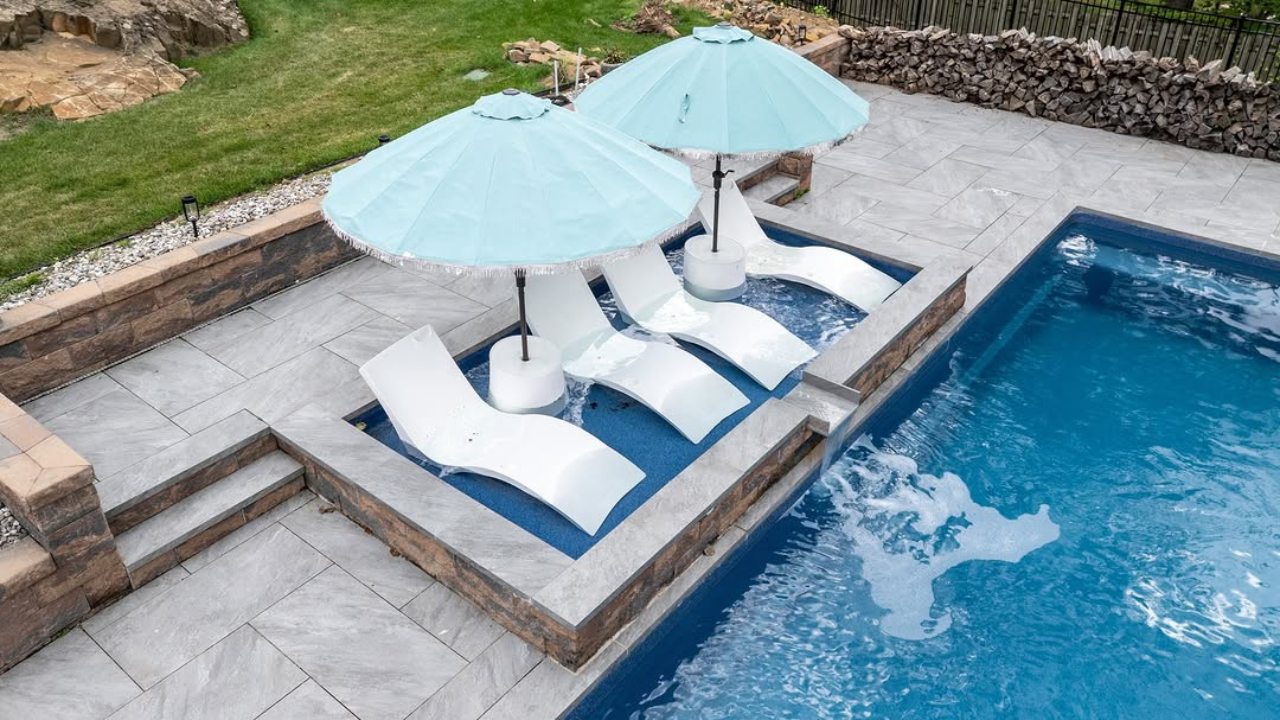
Climate Suitability: Where Each Material Works Best
Both concrete and porcelain pavers perform best in certain climate situations where one outperform other in each climate situation.
Porcelain Pavers Perform Best In:
- Freeze-thaw climates
- Coastal regions
- Rooftops and balconies
- Pool decks requiring slip resistance
Concrete Pavers Perform Best In:
- Mild climates
- Large surface areas with budget limits
- Traditional residential driveways
- Short-term installations
Climate influences cost-effectiveness more than material price alone.
Cost Per Square Foot
Prices vary by region, thickness, and finish. Currently, you can find the pavers costs within the following ranges:
Porcelain Pavers Cost Per Square Foot
- Paver cost: $8–$15 per sq ft
- Installed cost: $18–$30 per sq ft
Concrete Pavers Cost Per Square Foot
- Paver cost: $3–$6 per sq ft
- Installed cost: $10–$18 per sq ft
Porcelain pavers have a higher upfront cost compared to concrete. However, the long term saving and value are also higher than concrete pavers.
Best Use Cases- Choosing the Right Material
Apart from the pricing, both materials offer distinct use cases. While both are used for outdoor projects, they don’t withstand pressure and climate factors equally. Making choosing the right material is essential for long-term performance. Find the different between porcelain pavers vs concrete pavers, so you can choose the right one for your home.
| Choose Porcelain Pavers If You Need | Choose Concrete Pavers If You Need |
| Long-term color stability | Budget-friendly installation |
| Minimal maintenance over time | Traditional textures and finishes |
| High-performance outdoor spaces | Large surface coverage at a lower cost |
| Modern, clean-lined aesthetics | Easy replacement and repairs |
| Rooftop, balcony, or pedestal systems | Ground-level patios, walkways, and driveways |
| Strong resistance to stains and moisture | Familiar installation methods |
| Consistent sizing and uniform appearance | Flexible design changes over time |
Experienced Porcelain Pavers Suppliers in New Jersey, such as NT Pavers, help clients select materials based on climate exposure, usage demands, and lifecycle cost. They don’t offer materials based on an upfront price. This approach reduces long-term maintenance issues and improves project outcomes.
Porcelain Pavers Cost FAQs
Let’s answer your question about porcelain pavers cost.
Why are porcelain pavers more expensive than concrete?
Porcelain pavers are manufactured with refined materials, high-temperature firing, and strict quality control. The process increases the overall cost compared to concrete.
Do porcelain pavers last longer than concrete?
Yes. Porcelain resists water absorption, UV damage, and freeze-thaw cycles better than concrete.
Are porcelain pavers worth the extra cost?
Yes. With their low maintenance nature, long-term appearance, and harsh climate performance.
Can porcelain pavers crack?
No. They can resist cracking due to freeze-thaw, but not under heavy impact. However, generally they perform well when installed correctly. Improper installation can cause failure in any material.
Do porcelain pavers need sealing?
No. Porcelain does not require sealing due to its dense, non-porous structure.
Bottom Line
Porcelain pavers cost more than concrete for a variety of reasons, from the manufacturing process to performance. They last longer, resist outdoor damage, and require low maintenance. This is why pavers may cost more upfront but prove to be a better and long-term investment. Concrete pavers still serve a purpose, especially for cost-sensitive projects.
The right choice depends on climate, use, expectations, and timeline. Homeowners who plan to stay long-term often prefer porcelain. Project managers who balance budget and performance evaluate both. A knowledgeable supplier like NT Pavers helps align material choice with real-world conditions.