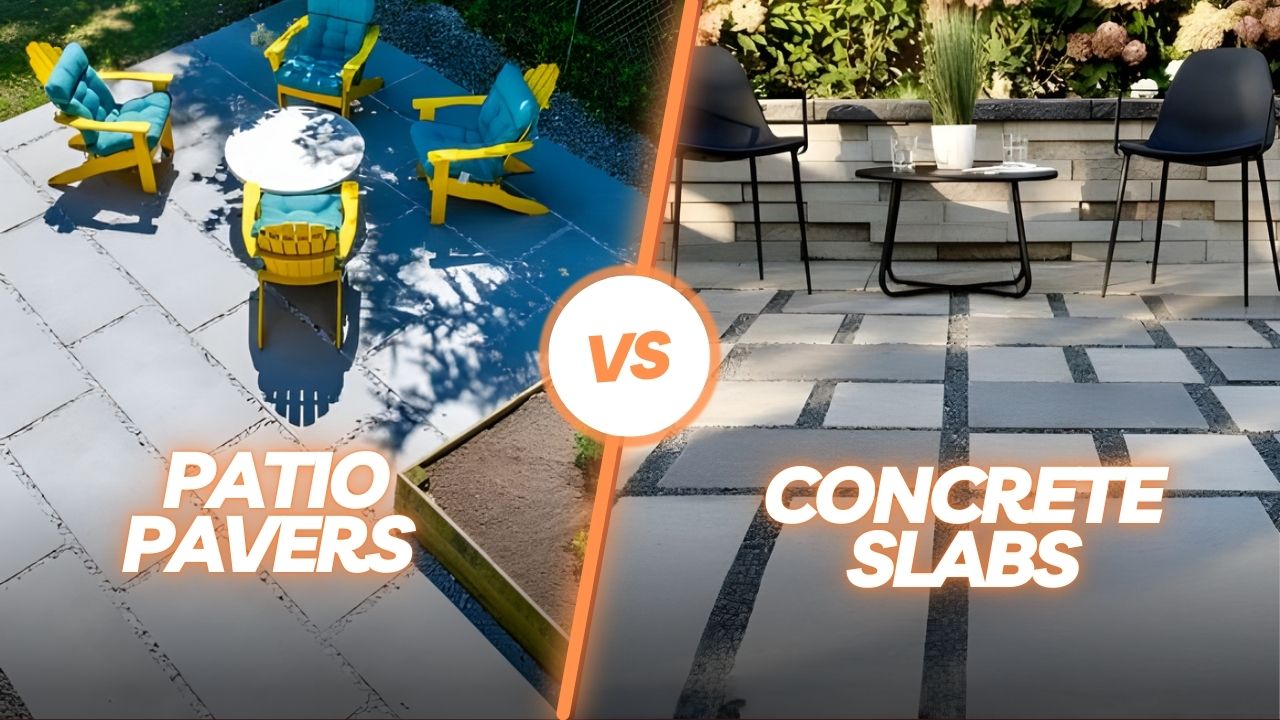
When it comes to outdoor landscape projects, such as patios, many homeowners wonder whether they should choose patio pavers or a concrete slab. Both are used to create usable outdoor space, and both support furniture, foot traffic, and gatherings. Both are used in residential and commercial projects, but there is a vast performance difference between them. This is hugely notable over time.
Concrete slabs have a more rigid surface, while the patio pavers offer a flexible system.
This single difference explains cracking, drainage, maintenance, repair, and lifespan. This guide will explain whether you should use patio pavers or a concrete slab.
Patio Pavers vs Concrete Slab: Side-by-Side Comparison Table
Both patio pavers, which include concrete pavers and concrete slabs, are popular choices for outdoor projects, but how are they different from each other? Take a look at the following table for more information.
| Feature | Patio Pavers | Concrete Slab |
| Structure | Individual modular units | Single continuous surface |
| Crack Resistance | High | Low |
| Drainage | Excellent through joints | Limited, surface runoff |
| Maintenance | Localized and predictable | Ongoing and cumulative |
| Repair | Easy, selective replacement | Difficult, visible patches |
| Climate Suitability | All climates | Best in mild climates |
| Design Flexibility | High | Limited |
| Lifespan | 30+ years | 15–25 years |
| Upfront Cost | Higher | Lower |
| Long-Term Cost | Lower | Higher |
What Are The Patio Pavers?
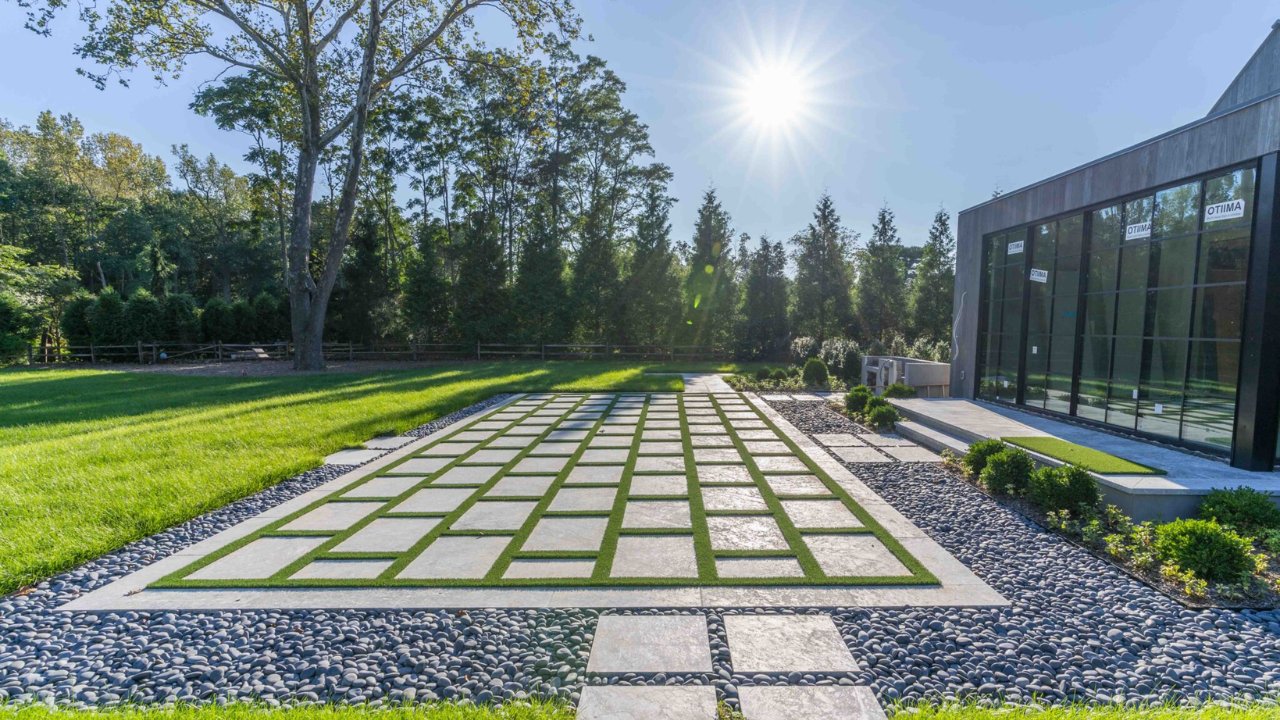
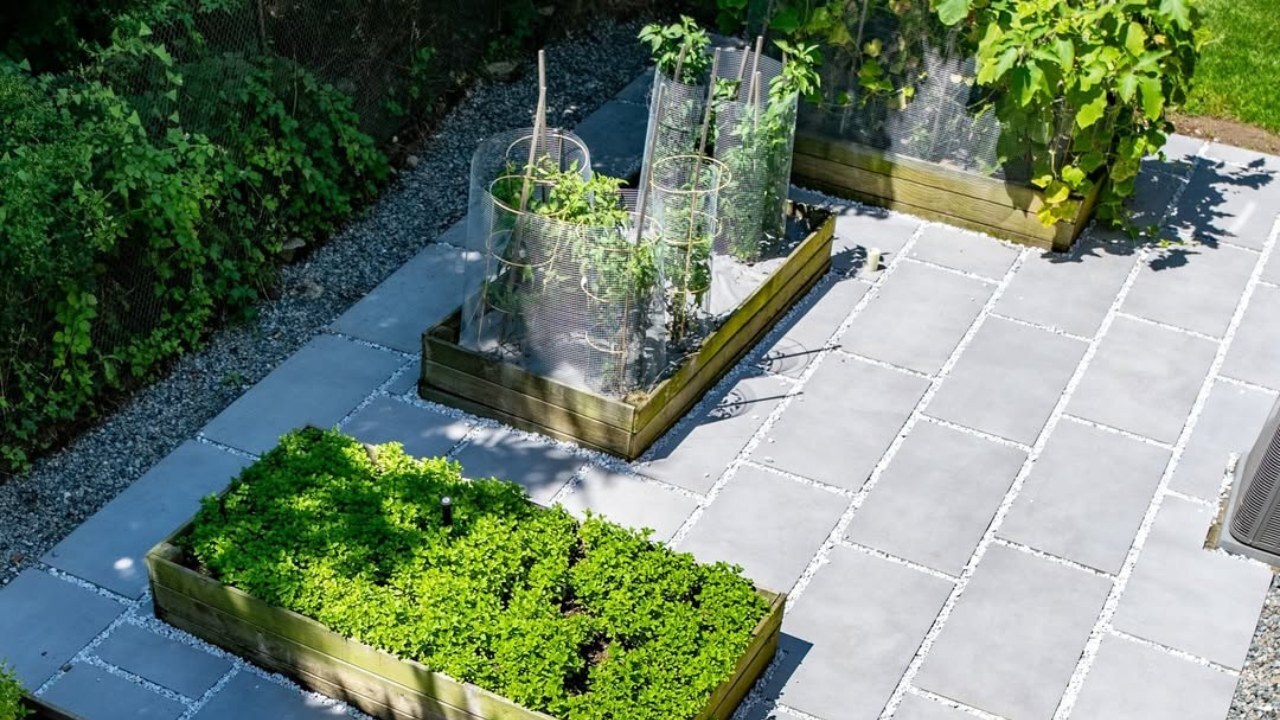
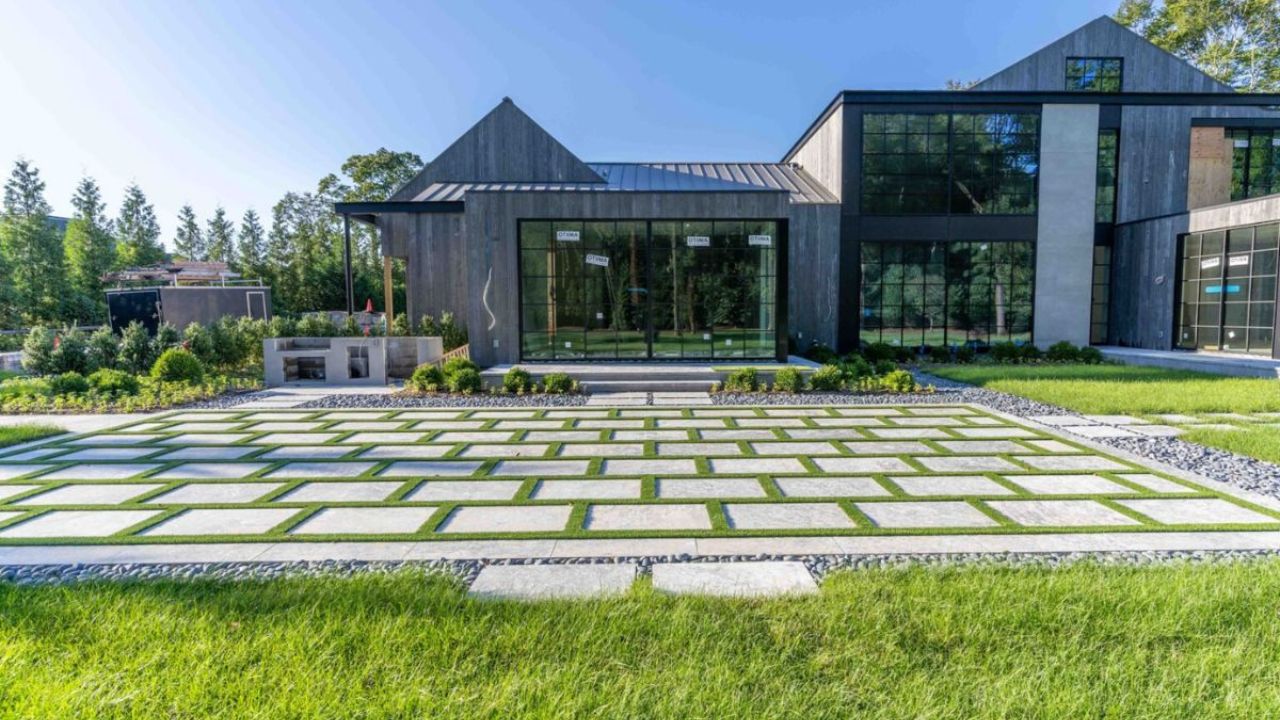
Patio pavers are individual units made of different material from porcelain pavers, concrete pavers, or natural stone pavers. They are installed over a compacted base with bedding sand or mortar, and they have flexible joints.
The system offers slight movement without letting the structure fail. Pavers adjust themselves upon ground shifting. If one paver is damaged, it can be replaced without having to damage the entire surface. This modular structure explains much of the performance difference.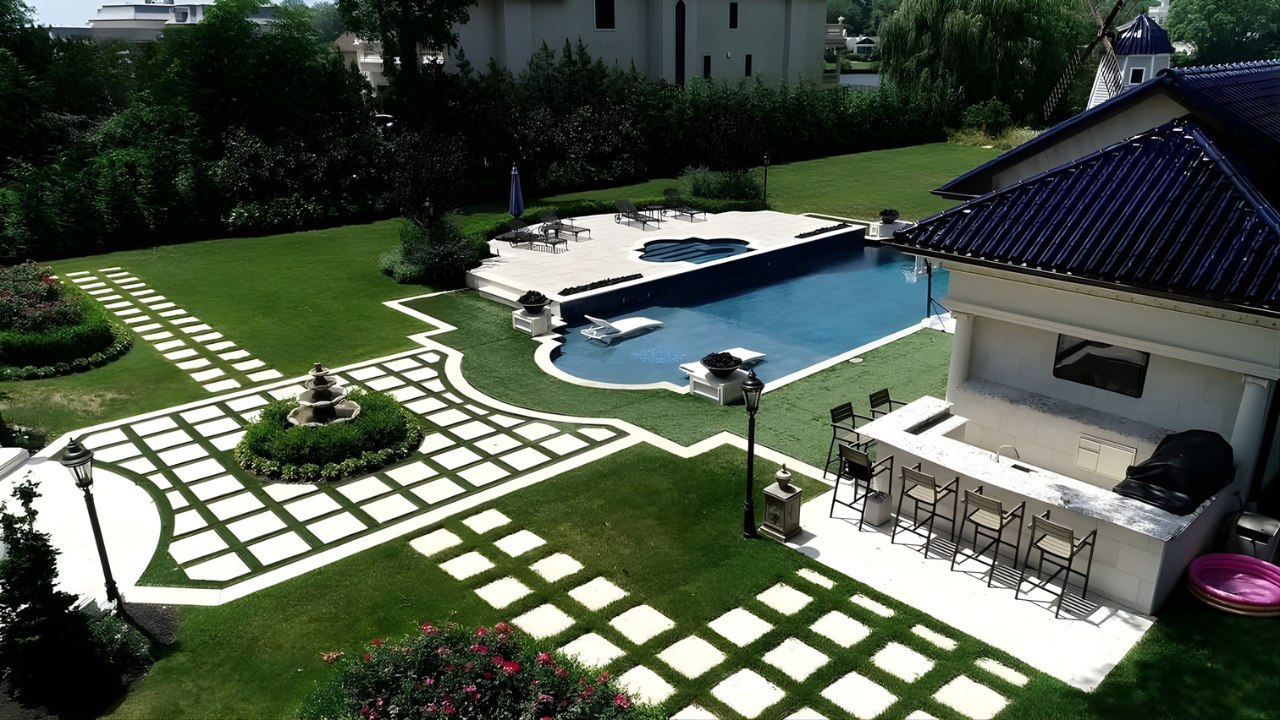
What Is a Concrete Slab?
A concrete slab is a single, continuous mix of poured concrete, sand, water, and aggregate. The contractor places it inside the targeted space and lets it cure into one rigid surface. It does offer joint expansion but often results inc racking. Concrete doesn’t go well with soil movement, the freeze-thaw cycle, and moisture change. Sealing solves the issue for a limited time, but not entirely. Once you start to notice the cracks from, repairs remain visible. The concrete slab performs as one piece, for better or worse.
Patio Pavers vs Concrete Slab: Installation & Long-Term Durability
Both patio pavers and concrete slabs are installed differently. However, this difference is another deciding factor between Patio Pavers vs Concrete Slab, which offer long-term performance.
Patio Paver Installation
The patio paver installation is installed by excavating and compacting the base. Then adding a bedding layer for leveling. After that placing individual pavers on the base. Finally, the joint sand or mortar is added to keep the paver on their place. This process takes longer and incurs higher upfront costs. However, this offers more efficient results in the long term.
Concrete Slab Installation
Concrete slab installation starts with excavation. Then the steps include,
- Formwork
- Reinforcement
- Single pour and finish
This process is faster and costs much less compared to patio paver installation. However, the speedy process is not translated to durability.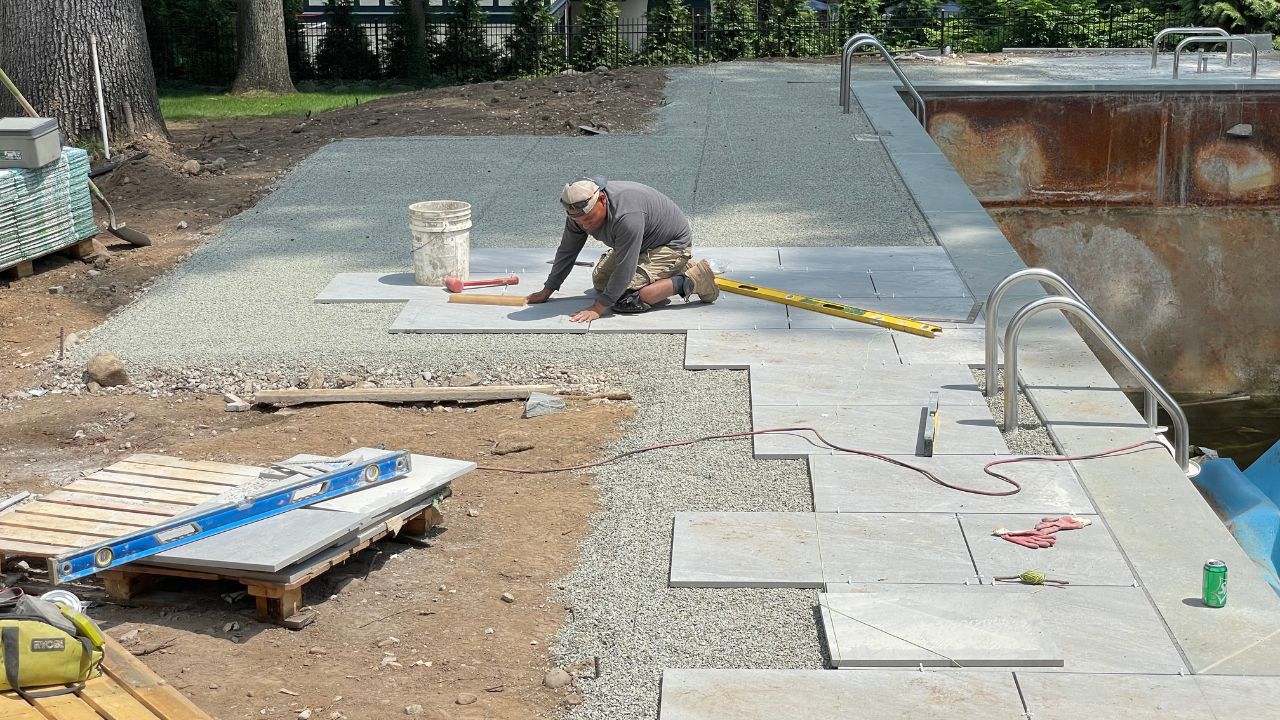
Patio Pavers vs Concrete Slab Cost per sq ft
Project managers often assess total ownership cost over time rather than cost per square foot to determine long-term value. When comparing options, the paver cost per square foot is typically higher upfront than concrete, but it often delivers better long-term value due to lower maintenance and repair needs.
| Concrete Slab Patio | Patio Pavers |
| Installed cost: $6–$12 per sq ft | Installed cost: $12–$30 per sq ft |
| Lower upfront installation cost | Higher upfront installation cost |
| Faster initial project completion | Longer installation timeline |
| Higher long-term repair risk | Lower long-term repair risk |
| Maintenance and repair costs increase over time | Lower lifecycle maintenance costs |
| Best evaluated by a short-term budget | Best evaluated by cost per year |
How Does Concrete Crack, But Pavers Don’t?
Concrete cracks even after professional installation. It isn’t about poor craftsmanship but how the material works.
Concrete doesn’t suit well with temperature changes due to the expansion and contraction of the soil. Moisture moves, but the concrete slab resists movement until stress exceeds tolerance. This is how cracks are formed.
Pavers do not crack as a system, though individual units may chip, but the surface remains intact. Paver joints absorb movement. This is the significant difference between patio pavers vs concrete slab, which shows why pavers are better than concrete. For homeowners who value long-term appearance, this distinction matters most.
Patio Pavers vs Concrete Slab: Drainage and Water Management
Water management determines how long the patio will sustain. Concrete slabs retain the water throughout the surface due to poor grading, which causes pooling. During the freeze-thaw cycle, the damage even get worsen. Surface sealing helps, but wears off. Patio pavers, on the other hand, offer better drainage through joints.
Proper base construction directs the water away from the surface. This is particularly beneficial for regions with heavy snow and heavy rain, as it reduces standing water and surface deterioration.
Patio Pavers vs Concrete Slab: Maintenance Requirements Over Time
Maintenance requirements are another major deciding factor that shows patio pavers are a better choice than a concrete slab.
| Concrete Slab Maintenance | Patio Paver Maintenance |
| Sealing every 2–3 years | Joint sand replenishment as needed |
| Crack repair and patching | Occasional cleaning |
| Stain management and treatment | Individual unit replacement |
| Surface resurfacing over time | No surface resurfacing required |
| Maintenance costs increase with age | Maintenance remains localized and predictable |
Maintenance remains predictable and localized. Over 20–30 years. Pavers often cost less to maintain despite a higher installation cost.
Patio Pavers vs Concrete Slab: Repair and Replacement Flexibility
Concrete slab repairs stay visible. Patching results in color varying, texture, and structural cracks spreading.
When damage becomes severe, replacement means demolition. Pavers offer selective repair. Crews remove damaged units. They reset new ones. The surrounding surface stays intact. This flexibility benefits both homeowners and property managers.
Climate Suitability: Patio Pavers vs Concrete Slabs
Climate pressure accelerates cracking and surface failure in concrete slabs more than in flexible patio paver systems. This adjusts to movement and moisture changes more effectively.
| Patio Pavers Perform Best In | Concrete Slabs Perform Best In |
| Freeze-thaw climates | Mild climates |
| Heavy rainfall regions | Low-moisture regions |
| Areas with soil movement | Stable soil conditions |
| Coastal environments with salt exposure | Short-term or temporary installations |
| Regions requiring effective drainage | Areas with minimal temperature variation |
Design Flexibility and Aesthetics
The design flexibility between patio pavers and concrete slabs is limited with concrete slabs. They offer limited design variation with few color and finish options, but crackings disrupts appearance.
Pavers offer modular patterns, textures, and material choices. You can choose from a wide range of variants to adjust layouts without complete replacement. Over time, pavers retain their visual appeal better.
Best Use Cases For Choosing the Right Option
While being used for outdoor applications, both have distinct use cases for outdoors. Patio pavers may offer you features that concrete slabs can’t. Here is what you need to know.
| Choose Patio Pavers If You Need | Choose a concrete slab if you need |
| Crack-resistant surfaces | Lowest upfront cost |
| Long-term durability | Fast installation |
| Good drainage performance | Simple, uniform layouts |
| Flexible and localized repairs | Temporary or short-term solutions |
| Higher-end outdoor living spaces | Basic functional surfaces |
Experienced premium patio pavers suppliers in New Jersey, like NT Pavers, help clients make material choices that align with climate, soil conditions, and expected use. Budget shouldn’t be the core focus.
Patio Pavers vs Concrete Slab FAQs
Let’s answer your questions about Patio pavers and concrete slabs
Are patio pavers better than a concrete slab?
Yes. For a long term use, paver reisst cracking, offer better drainage, and are easy to repair.
Does a concrete slab last as long as pavers?
No. Concrete slabs usually require major repair or replacement sooner due to cracking.
Are patio pavers harder to maintain?
No. Patio pavers are easier to maintain than concrete over time.
Can pavers sink or shift?
No. When they are correctly installed, they prevent settlement. Poor installation causes failure in any system.
Is a concrete slab cheaper than pavers?
Yes upfront. Over time, repairs and replacement can exceed paver costs.
Bottom Line
Patio pavers vs concrete slab has become a significant point of discussion among homeowners. These days, creating outdoors is not about aesthetics but functionality and longevity, too. Patio pavers, while costing more upfront, offer a durable and resistant surface. They are greater in the long run than a concrete slab for outdoors. Though a concrete slab is quick to install and cost-effective, it comes with compromised performance, too. Concrete paveing slab are prone to cracking. Paver patios are a much better option, even with high cost and time-consuming installation. The resulting surface is reliable, strong, and long-lasting throughout seasons and climate change. For durable and long-lasting outdoor surfaces, choose NT Pavers for quality patio installations.