
Patio pavers are a great choice for a useful and durable outdoor space. However, when they failed to perform, material is less of a problem, but what is happening underneath matters the most. Homeowners usually focus on texture, color, or layout, while the project managers focus on timeline and budget. However, what both overlook is the base. This oversight results in uneven pavers, pooling water, and costly repairs.
The patio pavers’ base is not decorative; it is structural that controls weight transfer. The base also controls drainage and movement during freeze and thaw cycles. When installed correctly, it allows pavers to perform for decades. Poor installation will even result in premium material failure.
This guide explains the patio pavers base in clear terms. It breaks down gravel, sand, and thickness.
What is the patio pavers base System?
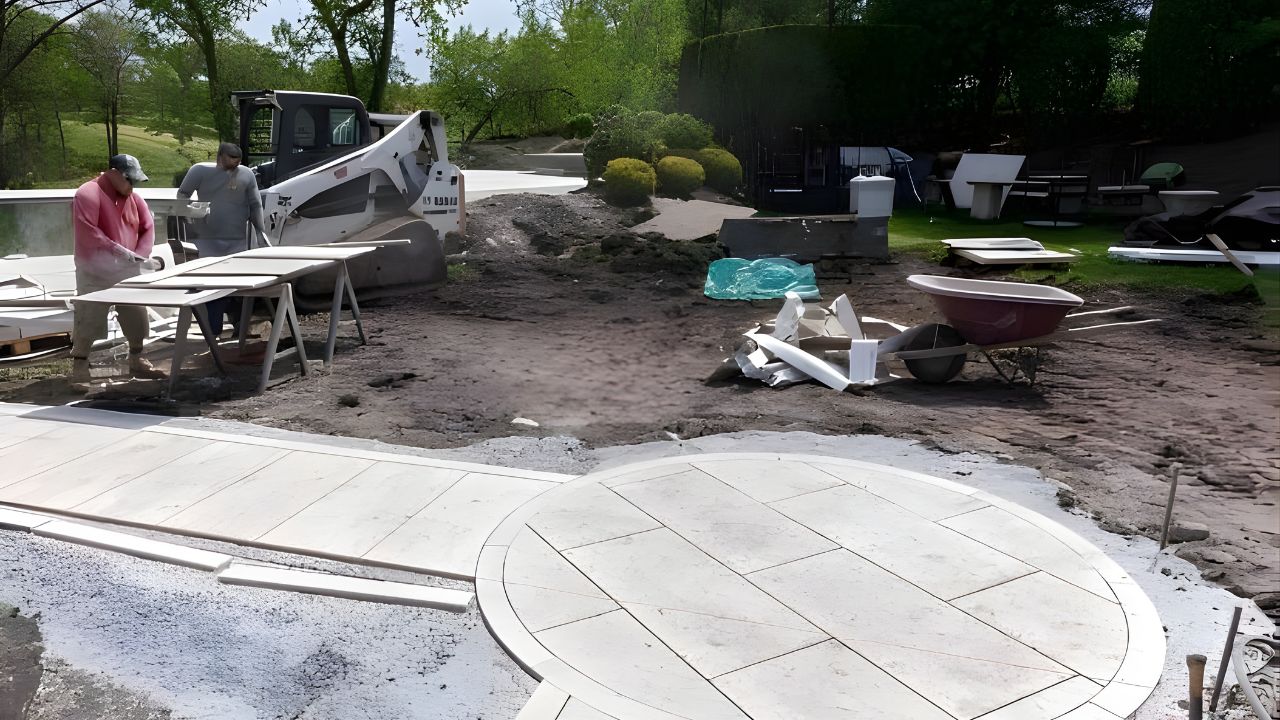
A patio paver base is a mix of a layered system. Each layer performs a single distinct job. When layers overlap in function, the problem arises. When layers perform their role well, the system keeps performing well. The standard patio base includes:
- Compacted subgrade soil
- Crushed stone base
- Bedding sand layer
- Paver surface
- Joint sand and edge restraint
What Is Gravel Base?
The gravel base acts as the load-bearing function of the patio pavers. It spreads weight throughout the soil and offers better water drainage from the surface. The best-suited material here is the crushed stone, which is usually labeled as ¾-inch minus, quarry process, or road base. The material contains angular stone pieces combined with stone dust. Round gravel is also available, but it does not lock together well. It often shifts under load and leads to sinking.
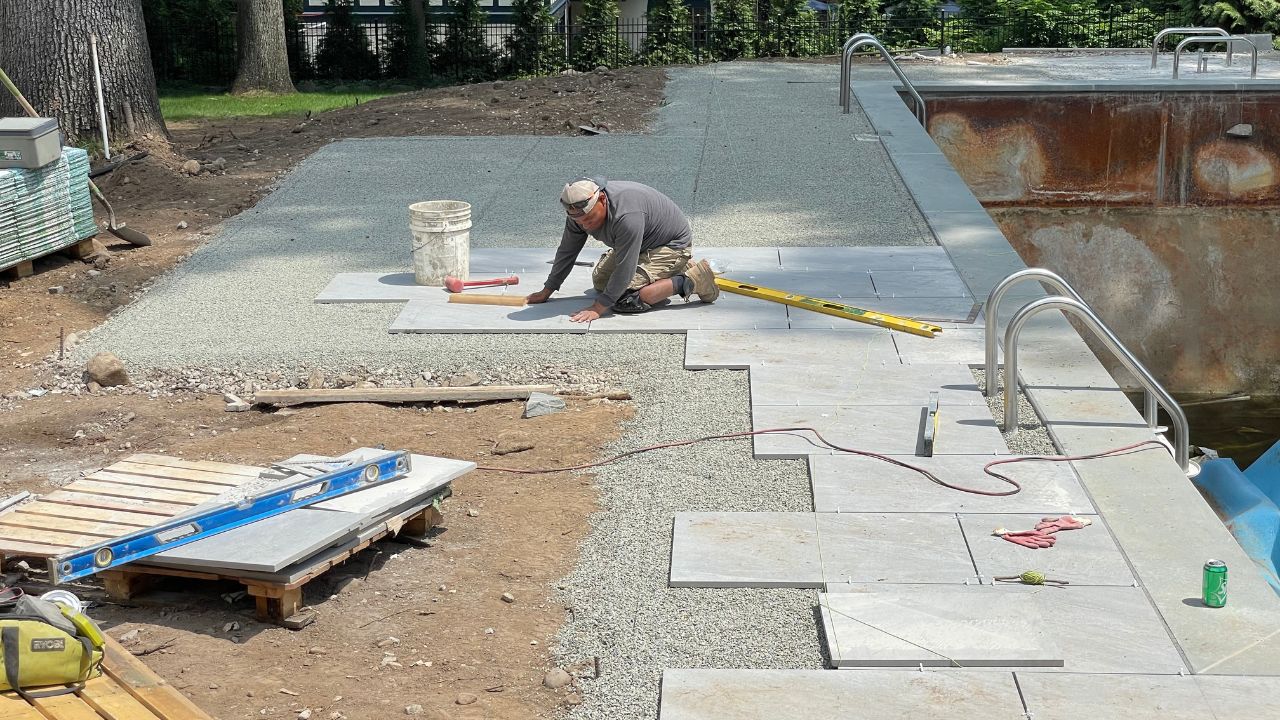
Best Use Cases Of Gravel Base
Crushed gravel is the best choice for:
- Residential patios
- Walkways and garden paths
- Pool decks
- Outdoor kitchens
- Driveways with concrete or porcelain pavers
Most paver surfaces that should stay level over time depend on a compacted gravel base.
Climate Suitability For Gravel Base
Gravel performs well in both warm and cold climates because it lets the water flow instead of trapping it. This matters the most in freeze-thaw cycle regions more than depth. When water stays under pavers expands when frozen and causes heaving. In regions with clay soil or heavy rain, a thicker gravel base improves stability.
Thickness Guidelines For Gravel Base
After compaction:
- Light-use patios: 4–6 inches
- High-traffic patios: 6–8 inches
- Driveways: 8–12 inches
Gravel installs in layers, called lifts. Each lift measures about 2–3 inches and gets compacted before the next layer goes in.
How to maintain the Gravel Base
The gravel base doesn’t require routine maintenance once installed. You only face a problem when compaction or drainage was skipped during construction.
Cost Per Square Foot
Installed gravel base costs typically range from $2.00 to $4.00 per square foot, depending on excavation depth, soil conditions, and access.
What Is Bedding Sand?
The sand layer is placed directly under the pavers. The only purpose of the sand layer is to create a smooth and even surface so each paver sits flat. However, this layer does not offer strength. The correct material is concrete sand or washed sharp sand, as they drain water and resist shifting.

Best Use Cases Of Sand Base
Bedding sand supports:
Play sand or masonry sand is not suitable because they hold moisture and compresses unevenly.
Climate Suitability Of The Sand Base
Proper sand choice matters a lot in wet or cold climates. Sand with high silt content stays wet longer. It increases frost movement. Concrete sand drains faster and supports stable joints.
Thickness Guidelines Of The Sand Base
- Target thickness: 1 inch
- Maximum thickness: 1 inch after screeding
The sand stays loose, but it doesn’t get compacted before laying pavers. Compaction happens after pavers are set.
Maintenance Requirements Of Sand Base
Sand itself doesn’t require any maintenance, but joint sand may need replacement over time. However, this occurs above the pavers, not in the bedding layer.
Cost Per Square Foot For Sand Base
Installed bedding sand usually costs $0.50 to $1.00 per square foot.
What Is Paver Thickness?
Paver thickness is the vertical depth of the paver unit. These pavers are the most resistant to bending and cracking under load. Thickness does not replace base strength. A thick paver on a weak base still fails.
Best Use Cases Of Paver Thickness
Common thickness standards:
- 60 mm (2⅜ inches): patios, walkways, pool decks
- 80 mm (3⅛ inches): driveways, commercial areas
- Porcelain pavers: 20 mm or 30 mm, depending on use
Project managers often recommend based on expected load rather than appearance.
Climate Suitability And Paver Thickness
In freeze-thaw regions, thickness helps resist surface cracking caused by minor movement. However, drainage and compaction matter more than paver size.
Maintenance Requirements Of Paver Thickness
Thicker pavers do not reduce maintenance needs. Joint care and cleaning remain the same regardless of thickness.
Cost Per Square Foot Of Thick Pavers
Material costs vary:
- Concrete pavers: $4.00–$8.00 per sq ft
- Natural stone: $8.00–$18.00 per sq ft
- Porcelain pavers: $6.00–$12.00 per sq ft
Installation costs remain similar across thicknesses. Thicker pavers cost more, but they have reduced replacement risk.
Why The Edge Restraints Matter Here?
While all of them are an important part of the patio pavers base system, an underrated part is the edge restraints. It holds the patio together. They prevent pavers from spreading outward under load. Options include:
- Plastic edging with spikes
- Aluminum edging
- Concrete perimeter restraints
Best Use Cases Of the Edge Restraints
They are crucial for every patio despite the paver type and size.
Climate Suitability Of Edge Restraints
Freeze-thaw cycles push pavers sideways over time. Without restraints, joints open and pavers shift.
Maintenance Requirements Of Edge Restraints
Edge restraints rarely need any ongoing maintenance when installed correctly.
Cost Per Square Foot Of Edge Restraints
Edge restraint costs average $1.00 to $2.50 per linear foot.
How Does Drainage and Slope Prevent Patio Pavers Failure?
A proper base features a slope. It manages water drainage effectively and prevents water pooling over the surface. The standard guideline is ¼ inch per foot away from structures. This slope starts at the gravel layer, not at the paver surface. Poor drainage causes:
- Base erosion
- Joint washout
- Frost heave
- Mold growth
Experienced installers plan drainage before excavation begins.
Common patio pavers base Mistakes To Avoid
These errors shorten patio life and increase repair costs.
| Common Patio Base Mistake | What Happens | Long-Term Impact |
| Using rounded gravel | Rounded stones do not interlock or compact properly | Base shifts over time, causing sinking and uneven pavers |
| Skipping mechanical compaction | Loose layers settle after installation | Pavers dip, joints open, and surfaces become uneven |
| Installing thick sand layers | Sand compresses and moves under load | Pavers rock, edges sink, and joints fail prematurely |
| Ignoring slope | Water collects beneath the pavers | Base erosion, frost heave, and long-term instability |
| Relying on thicker pavers to fix base issues | Surface strength masks weak support below | Cracking and movement occur despite the higher material cost |
Patio Pavers Base FAQs
Let’s answer your questions about the patio pavers story.
How deep should the patio pavers’ base be?
5-7 inches total is recommended for most patios, including gravel and sand. Driveways require more.
Can I use sand instead of gravel for the base?
No. Sand cannot support weight or prevent movement.
Does thicker gravel always mean better performance?
Only when compacted correctly and matched to soil conditions.
Do porcelain pavers need a different base?
They use the same gravel base but may require thicker pavers or pedestals.
How long does a properly built base last?
Decades, if drainage and compaction meet standards.
Bottom Line
The patio pavers’ base determines whether a project succeeds or fails. Gravel provides a durable, strong and durable surface while sand ensures level placement and paver thickness handles surface load. When the system work togather, patios stay flat, drain properly, and age well.
For homeowners, understanding the base prevents expansive mistake. For project managers, it will assure you of predictable outcomes. A well-built base does not draw attention, but it supports everything above it. That quiet reliability defines quality work. Contacting the professionals, like NT Pavers, can be largely helpful in learning about Patio Pavers Base before starting your project.