
Choosing between natural stone veneer and manufactured stone veneer isn’t simply a question of which looks better. Both offer distinct looks, features, and practical advantages for fireplaces, exterior walls, entryways, chimneys, and architectural accents. The difference comes from what each material is made of and how it performs as part of a wall system. From aesthetic differences to natural variations, durability, and many other factors, these stones are vastly different. This guide explains the key differences between natural stone veneer and manufactured stone veneer to help homeowners choose the right option for their project. Continue reading the following for a better idea.
Natural Stone Veneer vs Manufactured Stone Veneer: Key Differences
The right choice depends on more than appearance. Homeowners should compare the materials according to composition, weight, installation, moisture exposure, durability, maintenance, and design flexibility.
| Feature | Natural Stone Veneer | Manufactured Stone Veneer |
| Material | Real quarried stone | Cement-based manufactured masonry product |
| Authenticity | Genuine natural stone | Made to replicate natural stone |
| Appearance | Unique variation in color, texture, and pattern | More controlled color and texture |
| Color Consistency | Natural variation is expected | More consistent from piece to piece |
| Texture | Naturally formed | Molded from stone patterns and textures |
| Weight | Varies by stone and veneer thickness | Usually lighter than full-depth natural stone |
| Thickness | Available in thin and other veneer formats | Commonly produced as lightweight veneer units |
| Installation | Requires stone-specific cutting and fitting | Generally easier to handle and lay out |
| Cutting | Requires tools suited to the specific stone | Can often be cut with tools specified by the manufacturer |
| Corners | Natural stone corners can require more fitting | Manufactured corner units are commonly available |
| Pattern | Naturally irregular | More predictable shapes and profiles |
| Design Options | Depends on available stone species and finishes | Wide range of manufactured profiles and colors |
| Durability | Excellent when the stone suits the application | Very good when the product and installation are appropriate |
| Moisture Performance | Depends on stone, joints, and wall system | Depends heavily on product and wall-system detailing |
| Freeze-Thaw Performance | Varies by stone and exposure | Depends on tested product and installation |
| Water Management | Requires appropriate exterior wall detailing | Requires appropriate exterior wall detailing |
| Maintenance | Generally low | Generally low |
| Cleaning | Must suit the particular stone | Must follow manufacturer’s cleaning guidance |
| Sealing | May be recommended for some stones and applications | Product-specific; not automatically required |
| Repairs | Replacement pieces may be harder to match | Replacement pieces can be easier to source if the product remains available |
| Heat Applications | Suitable stone must be selected for the application | Product must specifically be suitable for the intended fireplace application |
| Fireplace Use | Commonly used when properly specified | Can be used when permitted by the product and fireplace requirements |
| Exterior Use | Excellent when properly detailed | Excellent when properly detailed |
| Interior Use | Excellent | Excellent |
| Environmental Footprint | Involves quarrying, cutting, and transportation | Involves cement production and manufacturing |
| Material Variation | High | Controlled |
| Visual Aging | Develops the characteristics of the natural stone | Appearance remains more consistent |
| Best Advantage | Authenticity and natural variation | Design control and predictable production |
| Best For | Homeowners prioritizing genuine stone | Homeowners prioritizing consistency, selection, and handling |
Natural Stone vs Manufactured Stone: What Is the Real Difference?
A simple and major distinction is material.
Natural stone is quarried from the earth. Manufacturers cut or split the stone into thinner veneer pieces that are lighter than full-depth masonry. Depending on the product, the stone may be sawn, split, gauged, or shaped for a specific installation. Common natural stones include:
- Limestone
- Granite
- Slate
- Sandstone
- Quartzite
- Fieldstone
- Marble
Each stone has its own mineral composition, texture, color, and performance characteristics. That variation is part of its appeal.
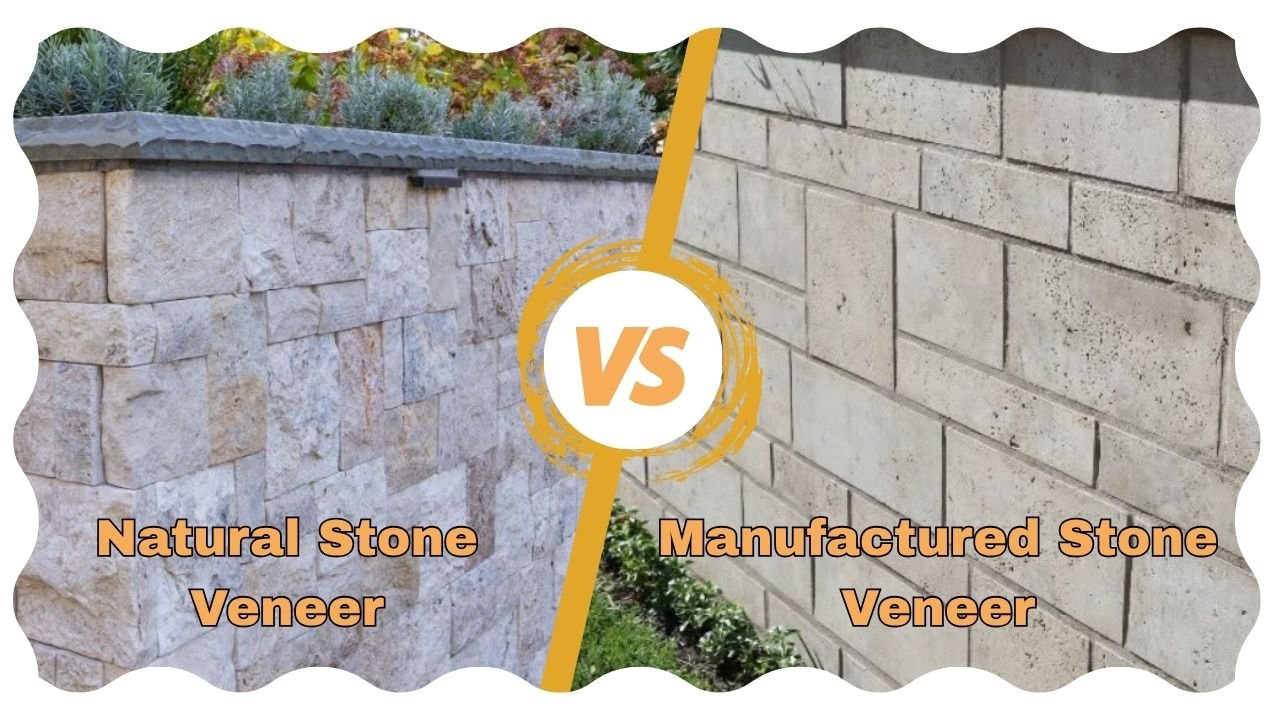
Manufactured Stone
Manufactured stone veneer is often called manufactured veneer or adhered manufactured stone masonry veneer. They are made from cementitious materials, aggregates, pigments, admixtures, and other components and is known for its versatility. Manufacturers cast these materials into molds that reproduce natural stone shapes and textures. ASTM C1670/C1670M establishes minimum product requirements for adhered manufactured stone masonry veneer units. Popular man-made stone includes:
- Cultured stone
- Faux stone
- Manufactured stone veneer
So, natural stone is stone shaped for use as veneer. Manufactured stone is a manufactured masonry product designed to look like stone. That difference affects almost every decision that follows.
Natural Stone Veneer vs Manufactured Stone Veneer: Which Is Heavier?
Natural stone veneer can be relatively heavy, depending on the type of stone, veneer thickness, dimensions, and installation system. Always check the manufacturer’s published weight and installation requirements for the specific product.
Manufactured stone veneer is generally designed for easier handling than full-depth natural stone, but its weight varies by product, thickness, dimensions, and installation system. Check the manufacturer’s specifications for the actual product weight.
Natural Stone Veneer vs Manufactured Stone Veneer: Color Appearance?
Natural stone has more color variation naturally because of its geological formation and quarry areas. Manufactured stone veneer typically offers more predictable colors and patterns because manufacturers control pigments and production processes.
However, manufactured stone veneer can be obtained in different color variations even when the stone doesn’t offer that. This offers better control over the final color palette. Natural variation is ideal for homeowners who prefer an organic appearance.
Natural Stone Veneer vs Manufactured Stone Veneer: Installation Complexity
Both veneer types have different installation requirements.
Manufactured stone veneer is generally easier to install. Natural stone veneer requires precision for cutting, sorting, and fitting by professionals.
However, neither should be treated as a simple DIY covering. Exterior veneer installation involves the substrate, mortar, joints, flashing, moisture management, and other details. Your installed cost can change with:
- Wall height
- Corners and returns
- Substrate condition
- Existing siding removal
- Flashing requirements
- Cutting and fitting
- Labor
- Access to the wall
- Veneer weight
- Installation method
So installation complexity depends on the homeowner’s personal technical experience and layout design.
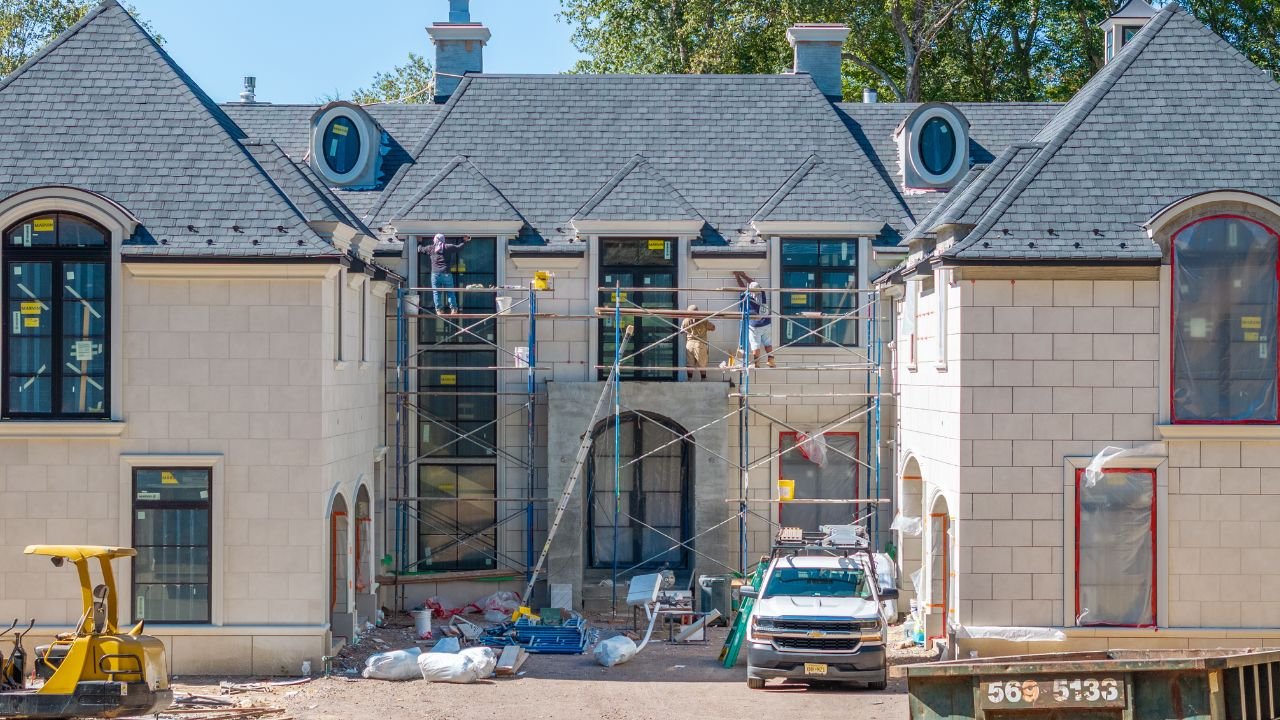
Natural Stone Veneer vs Manufactured Stone Veneer: Moisture Handling
Veneer can help the exterior walls to resist moisture exposure, but it shouldn’t be treated as a waterproofing layer.
Natural stone veneer has a dense structure and resists water absorption. Manufactured stone veneer features a concrete base, which makes it more porous and prone to absorbing water. This results in cracking or efflorescence. However, both depend on a properly designed wall assembly for moisture management.
A veneer can perform well while the wall behind it develops problems. These can be caused by flashing, drainage, or weather-resistive barriers being missing or incorrectly installed.
Natural Stone Veneer vs Manufactured Stone Veneer: Authenticity
If your priority is authentic material character, natural stone has the advantage. No two natural stones have actually the same mineral pattern. Even pieces from the same quarry can show different shades, grain, texture, and veining. This creates a wall with natural variation.
Manufactured stone takes a different approach. It uses molds, pigments, and controlled production to reproduce stone profiles. Good products can look convincing, but the appearance depends on the quality of the molds, color blending, texture, and installation.
A manufactured veneer wall may look artificial when the same shapes and colors repeat too often. A skilled installer should mix sizes, profiles, textures, and tones to avoid a predictable pattern. With natural stone, the installer also needs to manage variation. For authenticity, choose natural stone. But for a controlled appearance, manufactured stone has an advantage.
Natural Stone Veneer vs Manufactured Stone Veneer: Which Is More Durable?
Natural stone veneer delivers excellent durability, but performance varies with the stone type, physical properties, exposure, and installation. Granite, quartzite, and some slate products can provide excellent durability when you select them for the right application.
Manufactured stone also varies by product. ASTM C1670/C1670M covers physical properties, testing, finish, appearance, identification, and packaging for applicable adhered manufactured stone veneer units.
When it comes to durability, both can be considered durable in their own way, but generally natural stone veneer is considered more durable. However, durability depends on the material variation of stone and installation for the application.
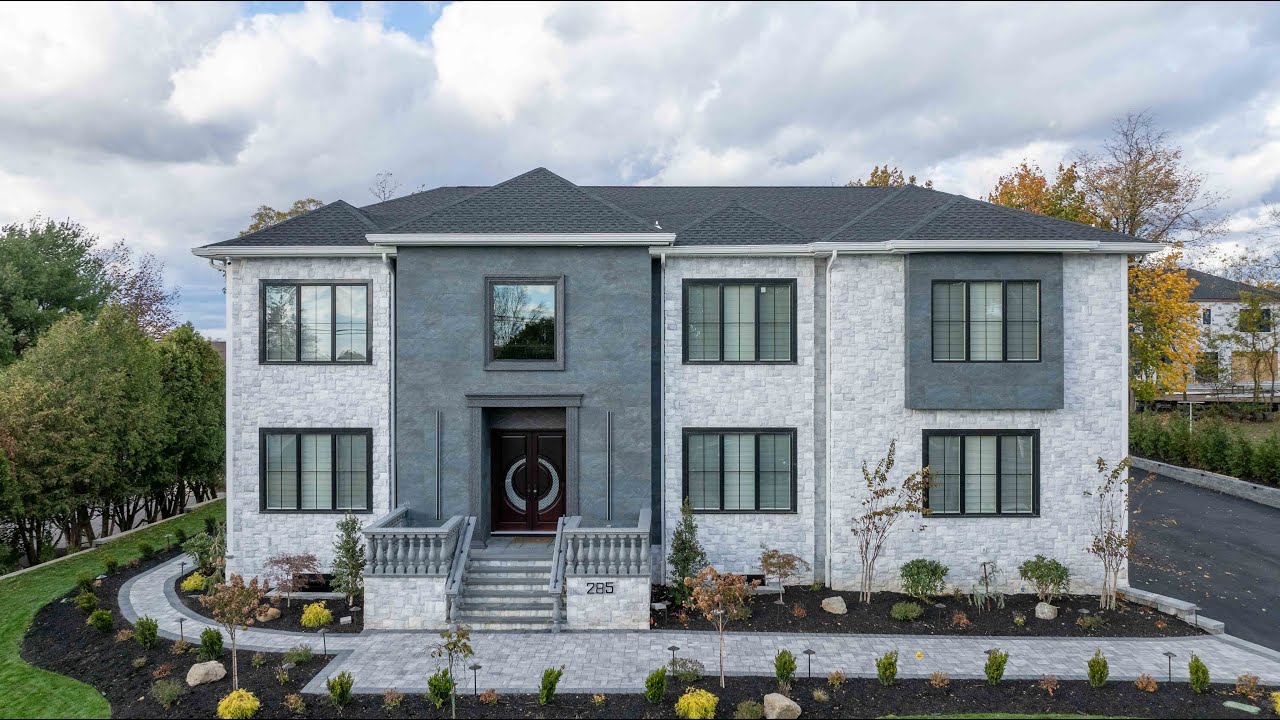
Installation Also Matters
The installation approach also determines whether either material performs well. For exterior walls, water management is crucial. Flashing, drainage, the weather-resistant barrier, substrate, mortar, joints, and transitions all work together. ASTM’s current C1780-26 practice for cement-based adhered masonry veneer states that installation requirements should be used with proper building codes and manufacturer instructions. The flashing and moisture-management requirements need separate consideration.
Natural Stone vs Manufactured Stone: Cost
Pricing is one of the major differences between natural stone and manufactured stone. Generally, manufactured stone is more budget-friendly compared to natural stone veneer. But the final price depends on:
- Material
- Thickness
- Stone profile
- Surface preparation
- Labor
- Wall height
- Corners and architectural details
- Flashing and drainage requirements
- Removal of existing materials
Natural stone generally costs more because of the material itself. In some scenarios, the additional labor is required to select, cut, shape, and install individual pieces.
Where Should You Use Each Type?
When considering the best between Natural Stone Veneer vs Manufactured Stone Veneer, you should also understand their distinct applications as well.
| Application | Natural Stone | Manufactured Stone |
| Exterior façade | Excellent | Excellent |
| Fireplace accent | Excellent | Excellent, if product is suitable |
| Interior accent wall | Excellent | Excellent |
| Chimney | Excellent | Good to excellent with proper detailing |
| Entry columns | Excellent | Excellent |
| Outdoor kitchen | Good to excellent | Good to excellent |
| High-end architectural feature | Excellent | Good |
| Budget-focused renovation | Good | Excellent |
For an exterior façade, focus on water management and compatibility with the wall assembly.
For a fireplace, follow both the fireplace manufacturer’s clearance requirements and the veneer manufacturer’s application instructions. Do not assume that because a material is stone-like, every installation is automatically suitable around heat.
Natural Stone Veneer vs Manufactured Stone Veneer: Maintenance?
Natural stone may require cleaning according to the particular stone. Some stones can also take advantage of sealing, depending on their porosity, location, and the manufacturer’s recommendations.
While manufactured stone can also collect dirt, algae, or other surface deposits outdoors, cleaning is relatively easier. It is better to avoid harsh cleaning products and follow the product manufacturer’s instructions. Do not use washing methods without confirming that they are suitable for the veneer and mortar.
Natural Stone Veneer vs Manufactured Stone Veneer FAQs
Let’s answer your questions about natural stone and manufactured veneers.
Is natural stone veneer better than manufactured stone veneer?
Not always. Natural stone veneer is a strong choice for homeowners who want authentic stone variation and natural character. Manufactured stone veneer may be better for projects that prioritize consistent colors, predictable shapes, design flexibility, and easier handling.
Does manufactured stone veneer look like real stone?
Yes. Quality manufactured veneer can reproduce natural stone textures, shapes, and colors. Installation has a major effect on how convincing the finished wall looks.
Is manufactured stone veneer cheaper than natural stone?
Manufactured stone typically costs less as a material. Total installed cost depends on labor, substrate preparation, corners, detailing, and the specific veneer system.
Which lasts longer, natural or manufactured stone veneer?
Both can last for decades when the product suits the application, and the wall is properly installed. Moisture management and workmanship can matter more than the material category alone.
Can natural and manufactured stone veneer be used on fireplaces?
They can be used for suitable fireplace applications, but homeowners must follow the fireplace manufacturer’s clearances and the veneer manufacturer’s installation requirements.
Does stone veneer keep water out?
Stone veneer should not be treated as the sole waterproofing layer. Exterior veneer assemblies require appropriate water-management details, including the applicable weather barrier, flashing, drainage, and substrate provisions.
Bottom Line
Natural stone veneer is the better choice when homeowners prefer authentic stone character. Manufactured stone veneer is generally the better choice when homeowners like consistency, design control, handling, and a low budget. Neither material wins every project. Some homeowners may like control over design and a consistent look and want everything under a sufficient budget. However, just keep in mind that each material has its own distinct features, benefits, and drawbacks. No material is perfect, as the perfect material is the one that suits your budget and application.