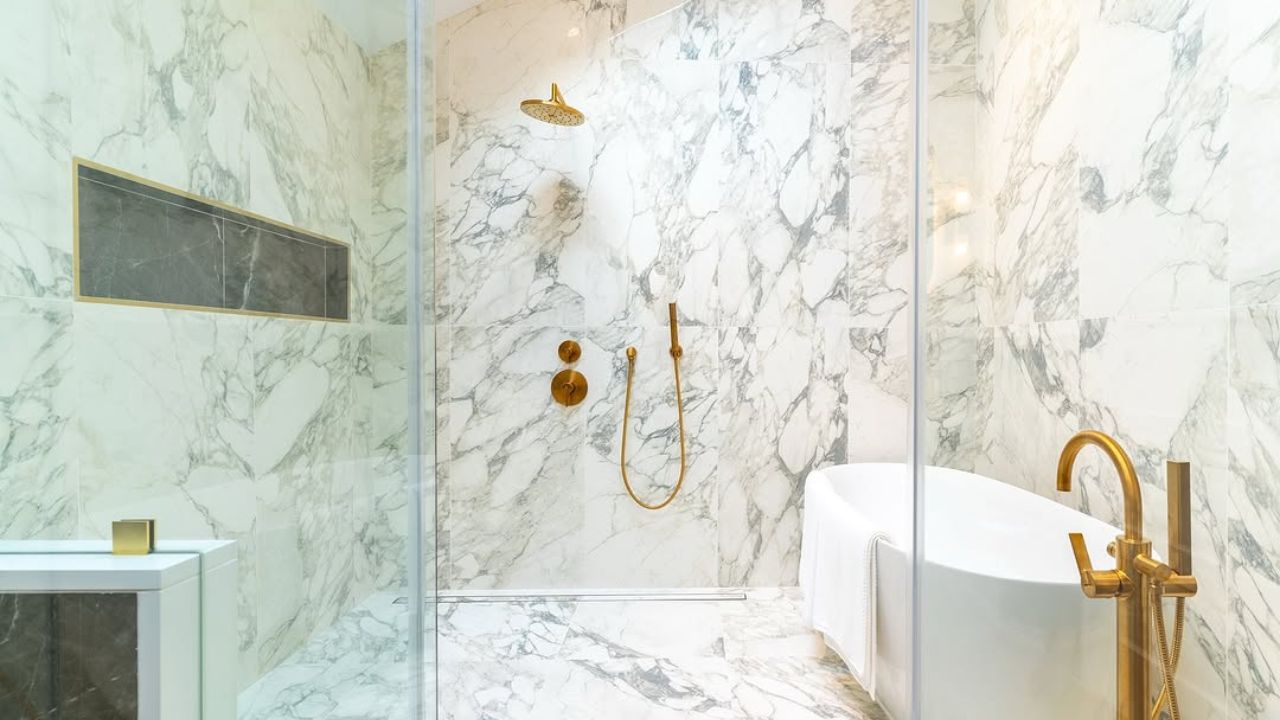
How to tile a shower wall is one of the most searched questions nowadays. It is because of the increasing trend of DIYs and the availability of better and easier-to-use tools with materials. This guide simplifies the process of installing shower wall tile. Continue reading the following to learn about:
How to tile a shower wall, the common mistakes to avoid, and tile maintenance.

Tools to Tile a Shower Wall
Before we start, here’s how to tile a shower wall: you will need to get your tools together. Here’s what you’ll need to tile a shower wall:
- Gloves
- Sponges
- Buckets
- Mixing drill
- Trowel
- Tile cutter
- Level
- Tile spacers
- Measuring tape
- Marking tool
- Drill
- Box knife
- Clean microfiber rags
- Hole saw
- Grout float
- Margin Trowel
Step-by-Step Guide On How to Tile a Shower Wall?
In this section, you will learn about installing shower wall tiles step by step. The process in general is straightforward. Here is the summary of the process which we will explain further below.
Prepare the Surface
Step 1 of how to tile a shower wall:
Remove Old Materials
- If you are tiling the new area, then clear the existing area first.
- If upgrading an existing shower area, then strip the shower wall down to the studs. Look for any drywall or moisture-damaged substrate. Make sure you don’t damage the wall. Don’t forget to remove the faucet trim, tub spout, and showerhead before you start.
Apply Waterproofing
Apply a waterproofing layer to avoid future mold or leaks. Using a cement board is a good idea instead of drywall, as it won’t degrade with moisture. Apply a liquid waterproofing membrane over all seams and surfaces, and use waterproof mesh tape at joints. Even if you are using porcelain or ceramic tile, make sure to add a full coverage before tiling to prevent moisture penetration and mold growth.
Mix and Apply Thin-Set Mortar
Step 2 of how to tile a shower wall:
Mix the Mortar Correctly
Follow the manufacturer’s instructions. Make sure the consistency looks like peanut butter, thick but can be separated. Mix enough that you can use it in 20-30 minutes to avoid creating waste. Use a notched trowel.
Spread Thin-Set on the Wall
Comb in straight lines by holding the trowel at a consistent angle. This will assure you that tiles are fully connected, and it will also reduce air pockets.
Cutting Tiles Correctly
Step 3 of how to tile a shower wall:
Cutting tiles precisely is a crucial part of a professional-looking shower tile installation. Start by measuring the area carefully, marking tiles where cuts are needed.

Use a manual tile cutter for straight cuts. Use a wet saw for curved or delicate shapes, as this provides the most accurate results.
Always cut slowly, especially the natural stone tiles, and steadily to avoid cracking the tile. When working around fixtures, outline the shape on the tile and use a tile nipper or wet saw to trim gradually.
Double-check all cuts before setting tiles to ensure a clean, seamless fit across the shower wall.
Place the Shower Wall Tiles
Step 4 of how to tile a shower wall:
Start From The Bottom
Start tiling the shower wall area from the second row upward by using a ledger board for support. This will also prevent any issues caused by uneven floors. Once you have tiled a wall, get back to the bottom row.
Tile Spacer For Consistency
You can use the tile spacers to keep the grout line uniform. Check alignment while tiling with a level.
Cut When Required
Cutting tile with a straight cutter or wet saw depends on the area of installation. Cut corners and edges with a wet saw. Don’t cut without measuring.
Mistakes To Avoid While Tiling A Shower Wall
When searching for how to tile a shower wall, keep an eye on the mistakes as well. Though it is a straightforward process, there can be some mistakes that you can avoid easily.
1. Using Drywall Instead of Cement Board:
Drywall can absorb moisture, and this can result in damaged walls over time.
2. Skipping Waterproofing:
Waterproofing is crucial; even the best tiles may lose their space if water seeps into the tile.
3. Uneven Layouts:
Make sure to plan the layout first for the shower wall tile, as an unplanned layout will look uneven.
4. Choosing the Wrong Grout:
If there are wide joints, then opt for unsanded grout. Sanded grout scratches in the soft tiles.
5. Rushing the Shower Wall Tile Installation:
Each step requires proper drying time, especially for mortar and grout.
Final Thoughts On How to Tile a Shower Wall?
Learning how to tile a shower is not just about following steps, but understanding why tiling matters. Opt for a focused and calm approach for maximum results. In this post, we have included the best and most convenient approach for homeowners. This post will help you install the tile in your shower.
We believe in making informed decisions at NT Pavers. We understand how important it is for homeowners to create the best results through DIY. Follow this post for the best information. However, if you find it overwhelming, then call the tiling expert to complete the project without any extra effort.
For better understanding check the following video where you can find all of the steps in a more elaborated way