
A fireplace is a unique, yet functional element of any home. They don’t just heat a room but often becomes the visual center of the space. This is why the slab around it becomes an important design decision. The right material can handle the heat conditions of a fireplace, it fits the required clearance, and be well suited to the home’s interior. Materials like Quartzite, Granite, Marble, and Porcelain are among the preferred choices for fireplaces. However, there isn’t a single material that works for every fireplace.
A wood-burning fireplace, gas fireplace, and electric unit create very different conditions. Choosing the right slab options for a fireplace helps you create a fireplace area that withstands the fireplace environment conditions effortlessly.
Quick Answer: What Is the Best Slab for a Fireplace?
For many fireplace applications, granite, quartzite, marble, and porcelain slabs are strong slab options when the specific product and installation meet the fireplace manufacturer’s requirements.
- Granite: Best for durability and traditional or modern designs
- Quartzite: Best for a premium natural-stone appearance
- Marble: Best for elegant and decorative fireplace surrounds
- Porcelain: Best for low-maintenance, modern designs
- Travertine: Best for warm, natural-looking surrounds
- Slate: Best for textured and rustic fireplace designs
The best choice depends on whether the slab will be installed on the hearth, surround, mantel area, or another surface, as well as the fireplace’s heat and clearance requirements.
Granite Slab: Best All-Around Slab for Many Fireplaces
Granite is one of the strongest choices for a fireplace surround or hearth when the specific installation allows it. It is hard, durable, and available in a wide range of patterns and colors. This makes granite useful for both traditional fireplaces and clean, contemporary designs. Dark granite can be used to create a dramatic frame around a light fireplace. Lighter varieties can soften a large stone surround.
Granite also handles everyday wear well. A hearth can collect dust, ash, dirt, and the occasional dropped object. A durable stone reduces concern about everyday scratches and impact. Its main limitation is not performance but design. Some granite types have strong veining or movement. If the room already has several visual elements, a quieter slab may create a better result. For homeowners who want one practical natural-stone option, an absolute black granite slab for a fireplace is often the safest starting point.
Quartzite Slab: Natural Stone With a Refined Look
Quartzite is a strong choice for homeowners who prefer the appearance of natural stone with high durability. Many quartzites have subtle veining that resembles marble, while others offer bold patterns that can turn a fireplace into a focal point. The material also performs well against scratches and everyday wear.
Quartzite works particularly well in modern fireplaces where a large-format slab can create a continuous surface with fewer visual interruptions. One important point: quartzite is not the same as engineered quartz. Engineered quartz contains resins, so homeowners should not assume that a quartz countertop product is suitable for direct fireplace exposure. For any fireplace application, use a material and installation method approved for that specific heat environment. That distinction matters more than the name printed on a showroom sample.
Quartzite vs Quartz: What’s the Difference?
Quartzite is a natural stone, while engineered quartz is a manufactured material made with stone aggregates and resins. Because their composition and heat limitations differ, they should not be treated as interchangeable fireplace materials.
If you are considering a quartz-looking fireplace slab, identify the actual product and review its manufacturer’s heat and installation requirements before purchasing it.
Marble Slab: An Elegant Fireplace Surround
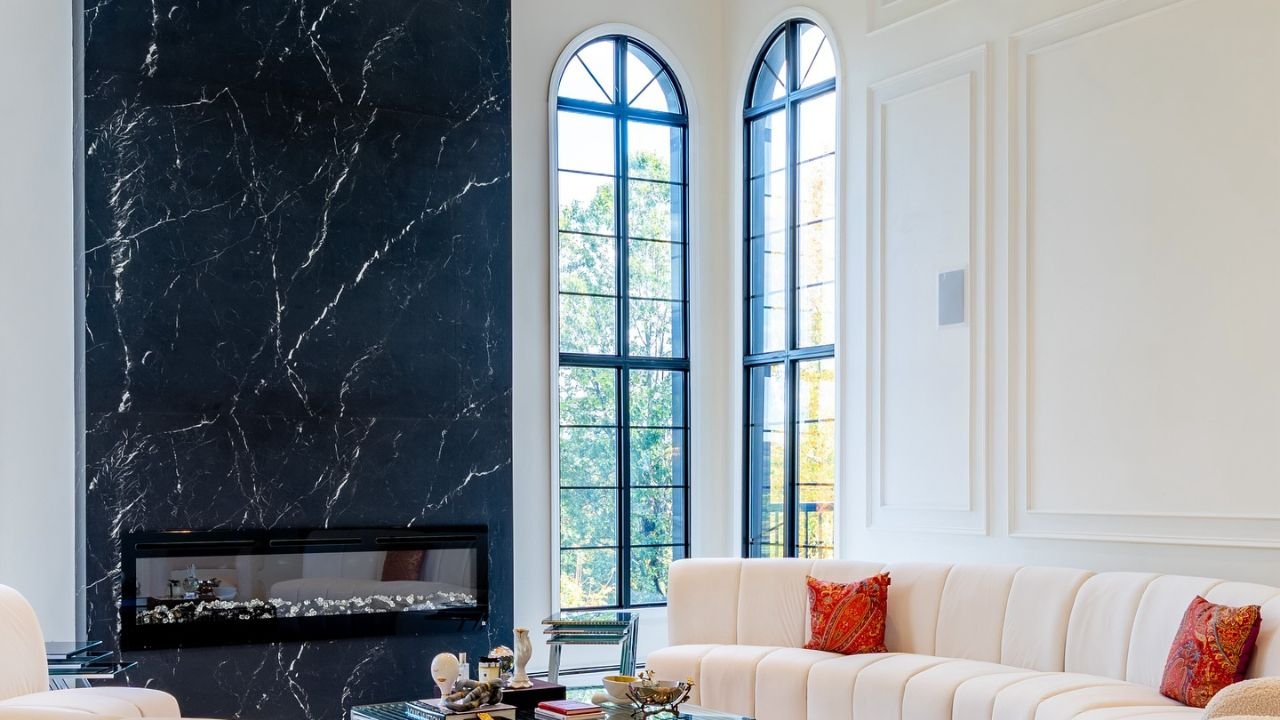
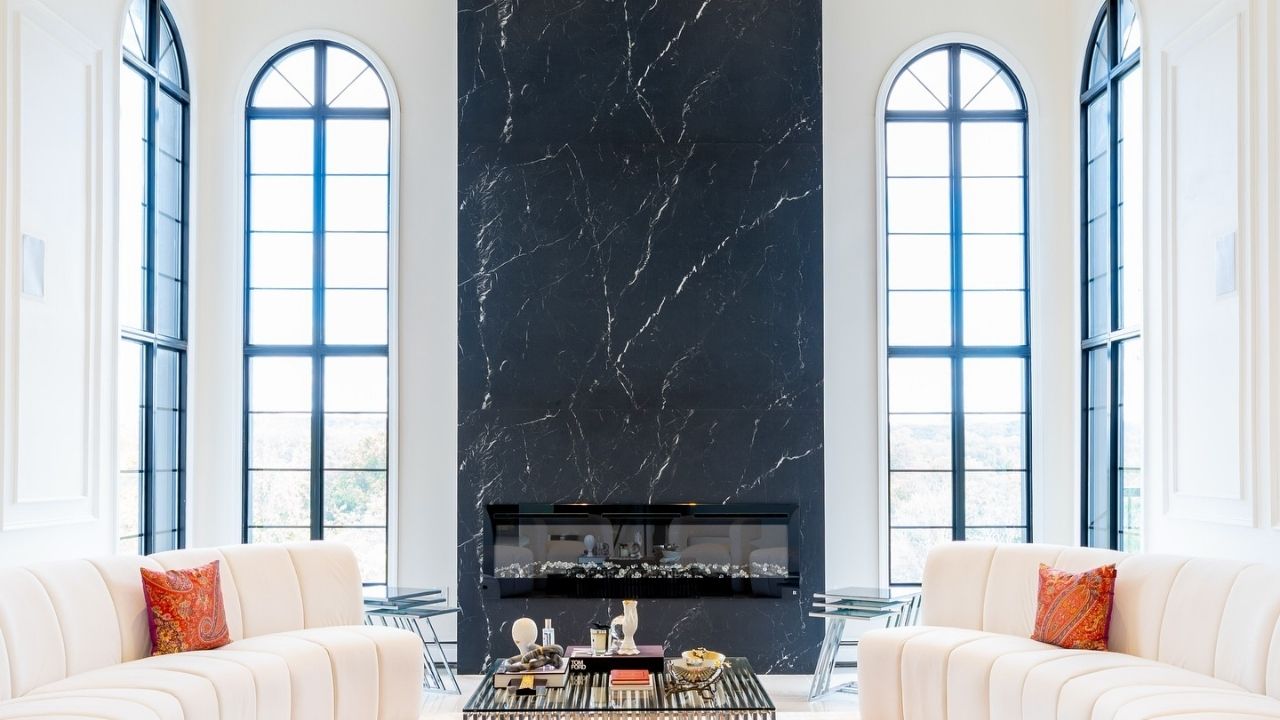
Marble is an excellent choice when appearance is the priority, especially for a vertical fireplace surround. The surface has natural veining that gives each slab a distinct character. White marble can create a bright, classic look, while darker marble can make a fireplace feel more formal.
Marble is also an established fireplace material. Fireplace manufacturers such as Heat & Glo offer marble as a natural-stone facing option, alongside granite and slate. The trade-off is maintenance. Marble is softer than granite and can scratch or stain more easily. Some varieties are also sensitive to acidic substances. This is why a marble fireplace slab often makes more sense as a decorative surround than as a heavily used hearth, unless the specific stone and installation are appropriate for that application.
Porcelain Slab: A Low-Maintenance Option
Porcelain is one of the best choices when homeowners want a clean, contemporary fireplace with minimal maintenance. Modern large porcelain slab for fireplace can mimic the appearance of marble, limestone, concrete, or other natural stones. Large-format porcelain can also reduce grout lines, creating a more continuous appearance.
Heat & Glo identifies porcelain among noncombustible tile options suitable for hearth and surround applications when the product is properly rated for the installation.
Still, homeowners should not treat every porcelain slab as automatically suitable for every fireplace. Product specifications, installation details, adhesives, backing materials, and the fireplace manufacturer’s requirements all matter. Porcelain is particularly useful for homeowners who want the stone look without the sealing and routine care associated with some natural stones.
Travertine Slab: A Warm, Natural Fireplace Look
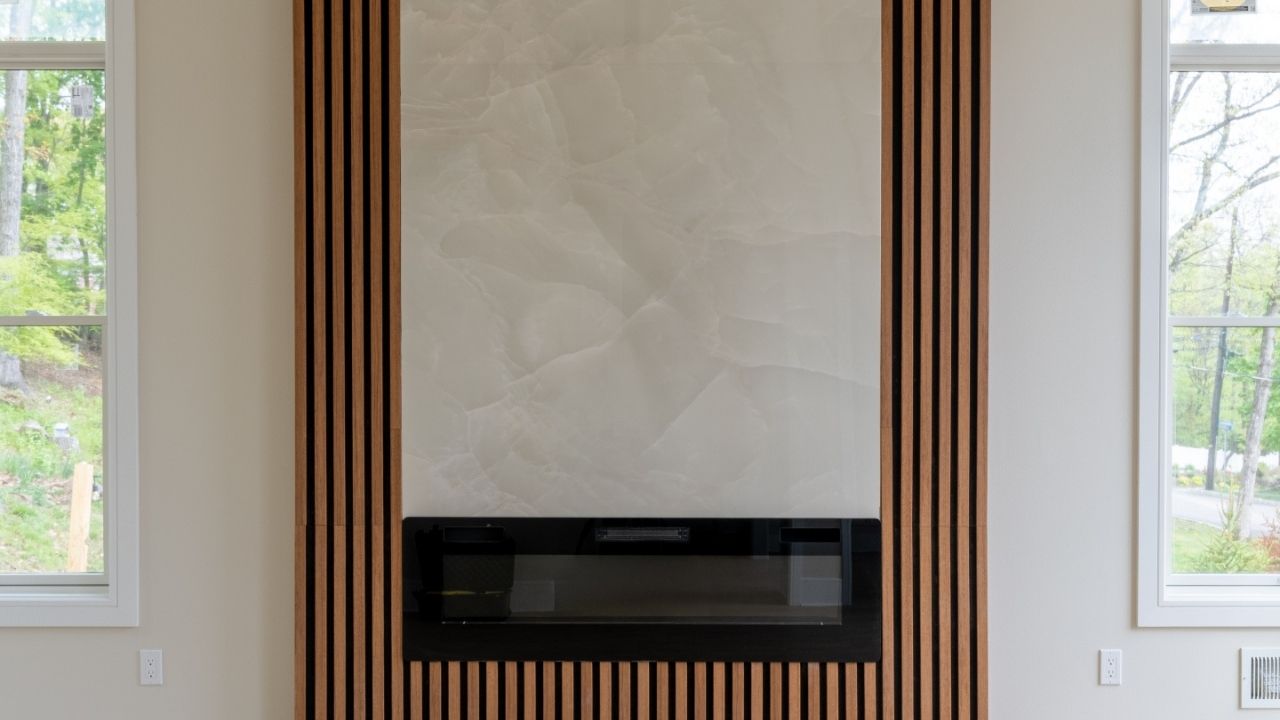
Travertine can be a good choice for fireplace surrounds when the specific product and installation are appropriate. Its natural variation and warm earthy colors work well with traditional, Mediterranean, rustic, and transitional interiors.
Because travertine is a porous natural stone, its finish and maintenance requirements should be considered before installation. A travertine surround may require more care than a low-maintenance porcelain surface.
Travertine should not automatically be assumed suitable for every part of a fireplace. Check the travertine fireplace slab manufacturer’s requirements and the stone supplier’s installation recommendations before using it near the fireplace opening or hearth.
Where Do Limestone and Slate Fit?
Limestone and slate can also work well in fireplace designs, especially when the goal is a natural, textured appearance. Slate creates a darker, more architectural look. Its cleft surface can add texture to rustic or contemporary spaces. A limestone fireplace slab offers softer colors and a more relaxed appearance.
However, natural stones are different from each other. Density, porosity, finish, thickness, and installation method all affect performance. A material that works well as a decorative surround should not automatically be assumed suitable for a high-heat hearth. This is why the fireplace manufacturer’s instructions should come before the material selection.

Best Slab for Different Fireplace Types
The fireplace type affects the heat exposure, clearance requirements, and suitable materials. Always check the fireplace manufacturer’s installation instructions before selecting a slab.
Wood-Burning Fireplaces
Wood-burning fireplaces can expose nearby surfaces to higher heat, sparks, and ash. Choose materials and installation systems specifically approved for the application, particularly when the slab will be used for a hearth or close to the fireplace opening.
Gas Fireplaces
Gas fireplaces can have different clearance and surface-temperature requirements depending on the model. The manufacturer’s installation manual should determine which materials, dimensions, and installation methods are acceptable.
Electric Fireplaces
Electric fireplaces generally have different heat and clearance conditions than wood-burning units. However, the manufacturer’s specifications still determine whether a particular slab or porcelain product is suitable for the intended installation.
The fireplace type alone does not determine the best slab. The location of the slab, product specifications, clearance requirements, and installation system must also be considered.
Fireplace Hearth vs Surround: Does the Location Matter?
Yes. A slab used for a fireplace hearth does not necessarily have the same requirements as a vertical surround. The location affects heat exposure, durability, dimensions, and installation requirements.
| Fireplace Area | Main Considerations | Suitable Material Options |
| Hearth | Heat exposure, impact, foot traffic, dimensions, and manufacturer requirements | Granite, porcelain, slate, and other approved materials |
| Surround | Heat exposure, appearance, clearance, and installation method | Marble, quartzite, granite, porcelain, slate, and other approved materials |
| Mantel & Wall Areas | Heat exposure, clearance, substrate, and manufacturer’s requirements | Material approved for the specific application |
Fireplace Hearth
A hearth is located at the base of the fireplace and can experience heat, ash, dirt, foot traffic, and impact. Durability, product suitability, dimensions, and the fireplace manufacturer’s requirements should all be considered.
Fireplace Surround
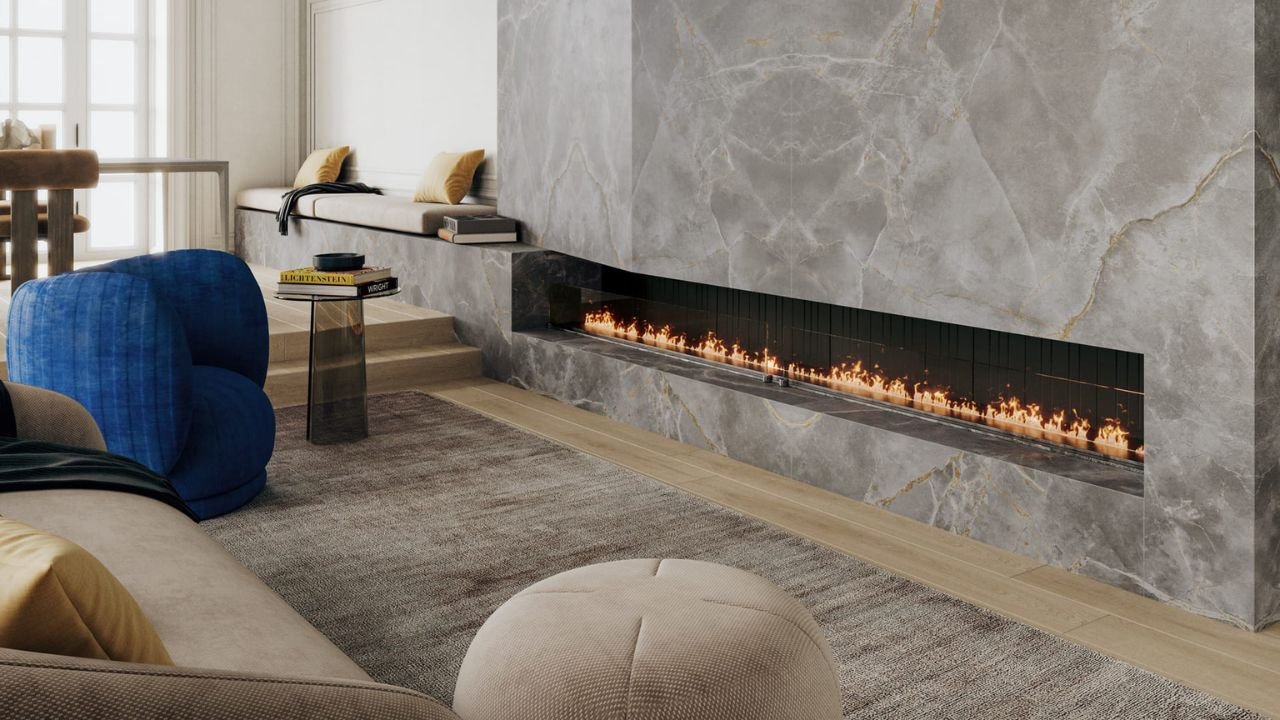
A fireplace surround frames the opening and is primarily a visual element. Marble, quartzite, granite, porcelain, slate, and other materials can create different design styles when the specific product and installation are suitable.
Mantel and Wall Areas
The area above or around a fireplace may have different heat exposure from the hearth or opening. Do not assume that a material approved for one part of a fireplace is automatically appropriate for another.
Always follow the fireplace manufacturer’s required clearances and installation specifications for the exact location.
Fireplace Slab Comparison
Which fireplace material would suit you? Take a look at the following comparison to understand the best material.
| Slab Material | Best For | Appearance | Maintenance | Main Consideration |
| Granite | Hearths & surrounds | Natural, varied | Low–moderate | Pattern can be visually strong |
| Quartzite | Premium surrounds | Marble-like/natural | Moderate | Must distinguish from engineered quartz |
| Marble | Elegant surrounds | Veined, classic | Moderate–high | Can scratch or stain more easily |
| Porcelain | Modern surrounds | Stone/concrete-inspired | Low | Verify product suitability |
| Travertine | Warm natural surrounds | Earthy, textured | Moderate | More porous |
| Slate | Rustic/contemporary designs | Dark, textured | Moderate | Surface may be uneven |
| Limestone | Soft natural interiors | Warm, subtle | Moderate | Softer and more porous |
The best choice depends on the fireplace type, location of the slab, heat exposure, and manufacturer’s requirements rather than appearance alone.
How to Choose the Right Slab for Your Fireplace?
Identify the fireplace type:
Not all fireplaces are the same. Wood-burning fireplaces can expose nearby surfaces to sparks and higher heat. Gas fireplaces have different clearance requirements, while electric fireplaces generally create different heat conditions.
Determine where the slab will be installed:
A hearth, surround, mantel area, and wall-facing surface do not experience the same conditions. So whether you choose a stone slab for your fireplace surround or porcelain for a sleek look, the material should sustain the high temperature.
Consider The Finish
Not all surface types look equally good with every fireplace type. Check if the design requires a polished look or a honed look. Make sure that the finished full slab should align with the overall design.
Check the installation manual:
Do this before purchasing the slab. Look for requirements covering noncombustible materials, clearances, hearth dimensions, substrate, and finishing materials. Manufacturer manuals can specify exact dimensions rather than relying on a general rule.
Select the stone or porcelain based on the room:
Consider the cabinet, flooring, paint, and furniture samples when comparing slabs. A fireplace should connect with the room rather than compete with every other surface.
For large-format seamless installations, NT Pavers recommends treating the slab as part of the room’s overall material palette. A minimal slab can make a dramatic fireplace design feel balanced. A heavily veined stone can become the main architectural feature.
What to Check Before Buying a Fireplace Slab
Before ordering a slab for a fireplace, review these factors:
- Fireplace type: Determine whether the unit is wood-burning, gas, or electric.
- Installation location: Identify whether the slab will be used for a hearth, surround, mantel area, or another surface.
- Manufacturer requirements: Check the fireplace installation manual for required clearances and approved materials.
- Product specifications: Review the slab manufacturer’s information for the intended application.
- Finish: Choose a polished, honed, textured, or other finish that suits the design and maintenance requirements.
- Thickness and dimensions: Confirm that the slab dimensions and thickness are appropriate for the installation.
- Installation system: Verify that the substrate, adhesives, and other installation materials are suitable for the application.
- Maintenance: Consider sealing, cleaning, staining, scratching, and other care requirements before choosing the material.
Expert Tip: Choose the Slab Based on the Entire Fireplace Design
At NT Pavers, we recommend evaluating the fireplace slab as part of the room’s complete material palette rather than choosing it in isolation.
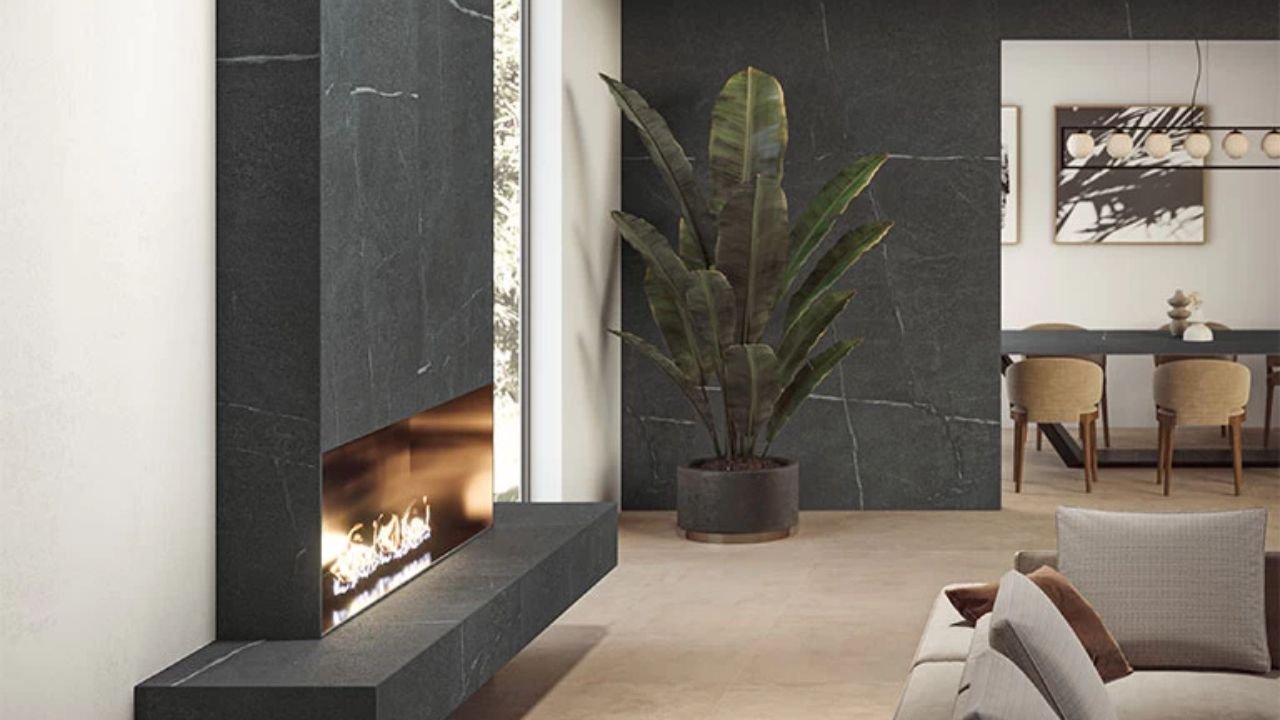
Compare the slab with the flooring, cabinetry, wall colors, furniture, and other natural stone surfaces. For a dramatic fireplace, a quieter slab can create balance. For a simple room, a strongly veined or patterned slab can become the main architectural feature.
Most importantly, confirm the fireplace manufacturer’s requirements before finalizing the material or slab installation method.
Fireplace Slabs FAQs
Let’s answer your questions about fireplace slabs.
What is the best stone for a fireplace surround?
Granite, quartzite, and marble are popular choices for fireplace surrounds. However, the best option depends on the fireplace manufacturer’s requirements, heat exposure, appearance, and maintenance needs.
Can you use porcelain slabs around a fireplace?
Yes. Porcelain can be used for some fireplace surrounds and hearth applications when the specific product is rated for the installation. Always follow the fireplace and porcelain manufacturer’s requirements.
Is granite good for a fireplace hearth?
Granite can be an excellent fireplace hearth material because it is durable and noncombustible. The slab and installation still need to meet the fireplace manufacturer’s specifications.
Can you use quartz around a fireplace?
Do not assume engineered quartz is suitable for direct fireplace heat. Check the quartz manufacturer’s heat limitations and the fireplace manufacturer’s requirements before using it near the opening.
Is travertine a good fireplace material?
Yes. Travertine is a good fireplace surround material for an existing fireplace, but it is not recommended for inside the fireplace firebox.
Is marble safe for a fireplace surround?
Marble is commonly used for fireplace surrounds and can be suitable when the installation meets the fireplace manufacturer’s requirements. Its softer surface requires more care than granite.
What is the easiest fireplace slab to maintain?
Porcelain generally offers low routine maintenance, while granite is also relatively easy to care for when properly sealed. Natural stones such as marble and limestone may need more attention depending on their porosity and finish.
Bottom Line
The best slab for a fireplace area is not simply the most heat-resistant material. It should match the fireplace, installation location, safety requirements, and design of the room. Before ordering any slab for fireplace, check the manufacturer’s installation manual and confirm the material, clearance, substrate, and installation method. That step matters more than choosing a particular stone name. It is the best way to create a fireplace that looks good and performs as intended.