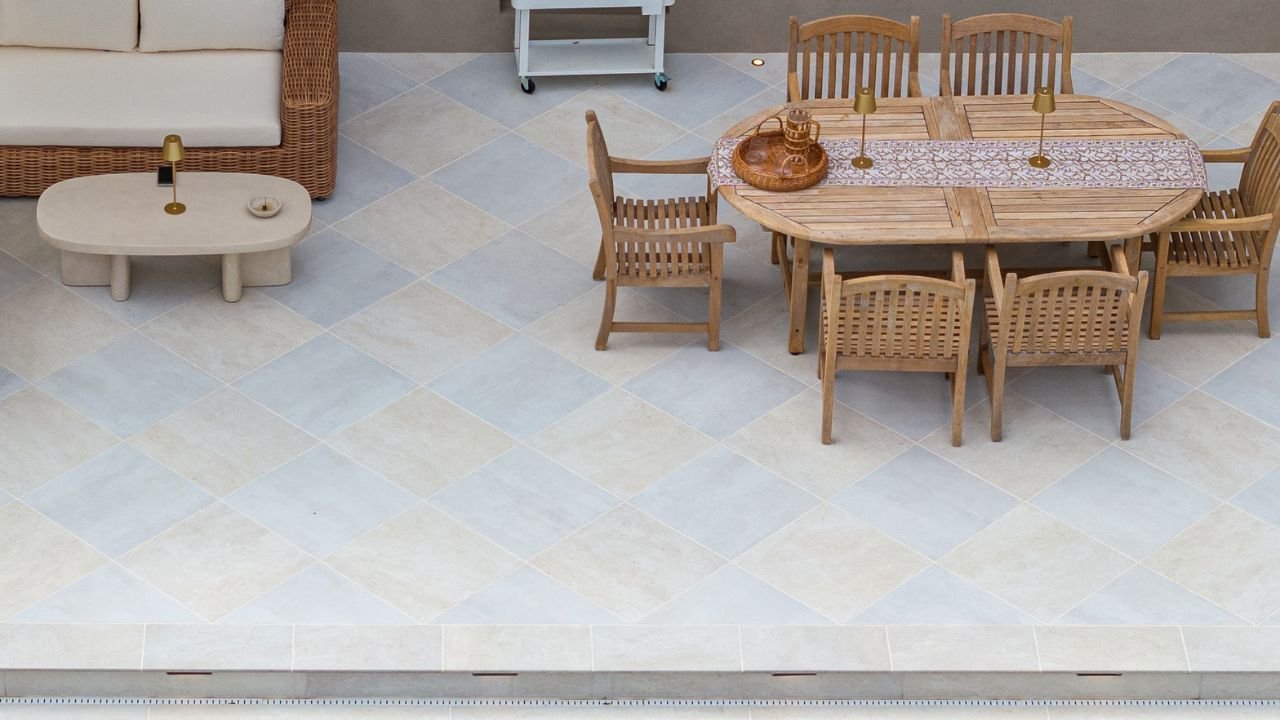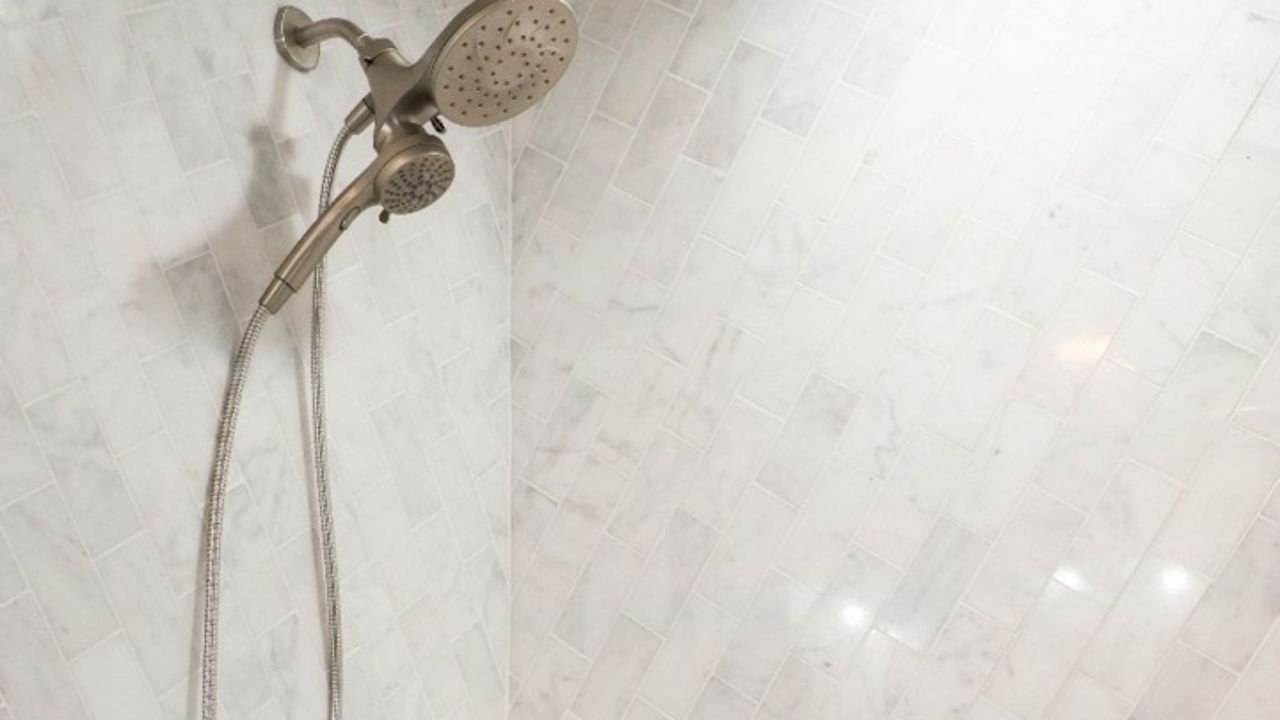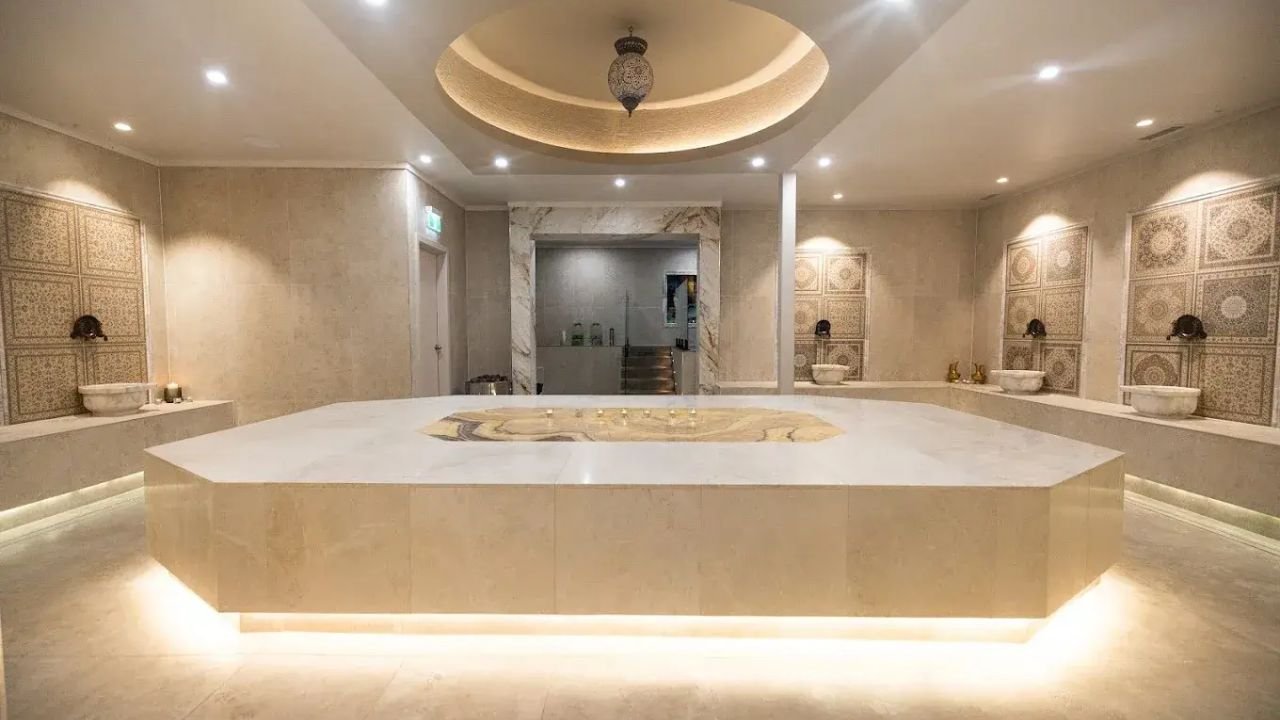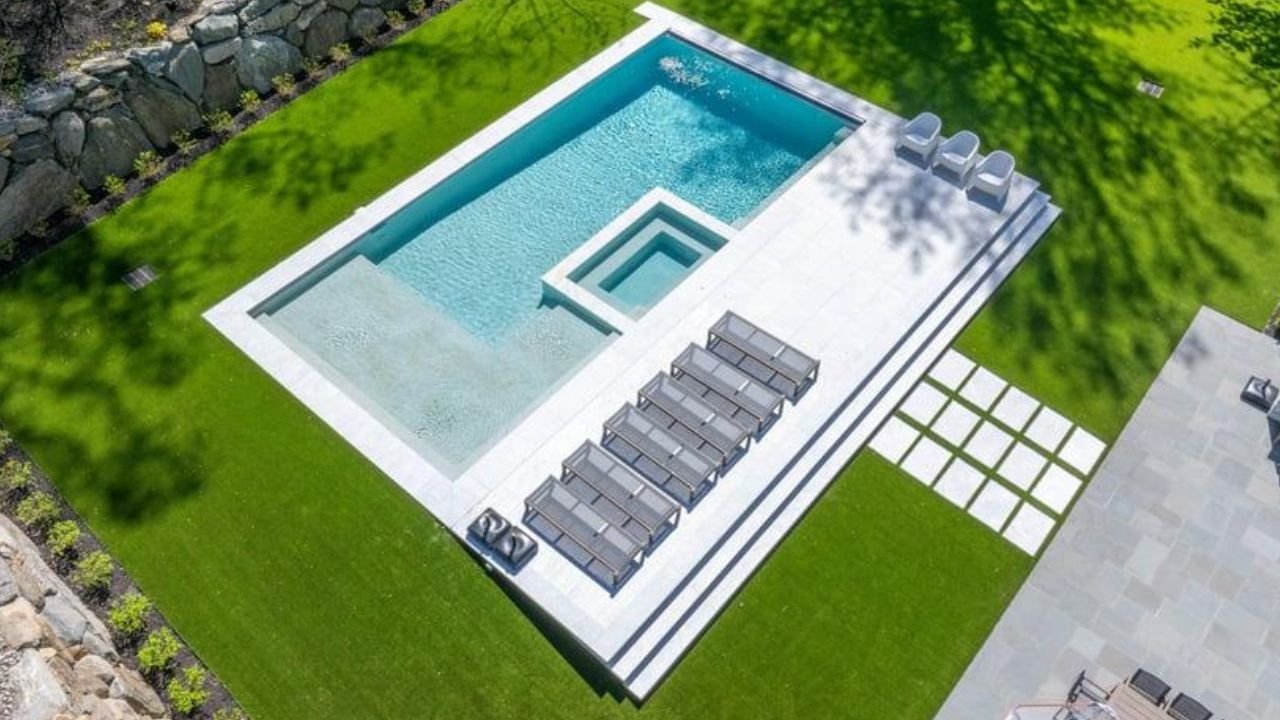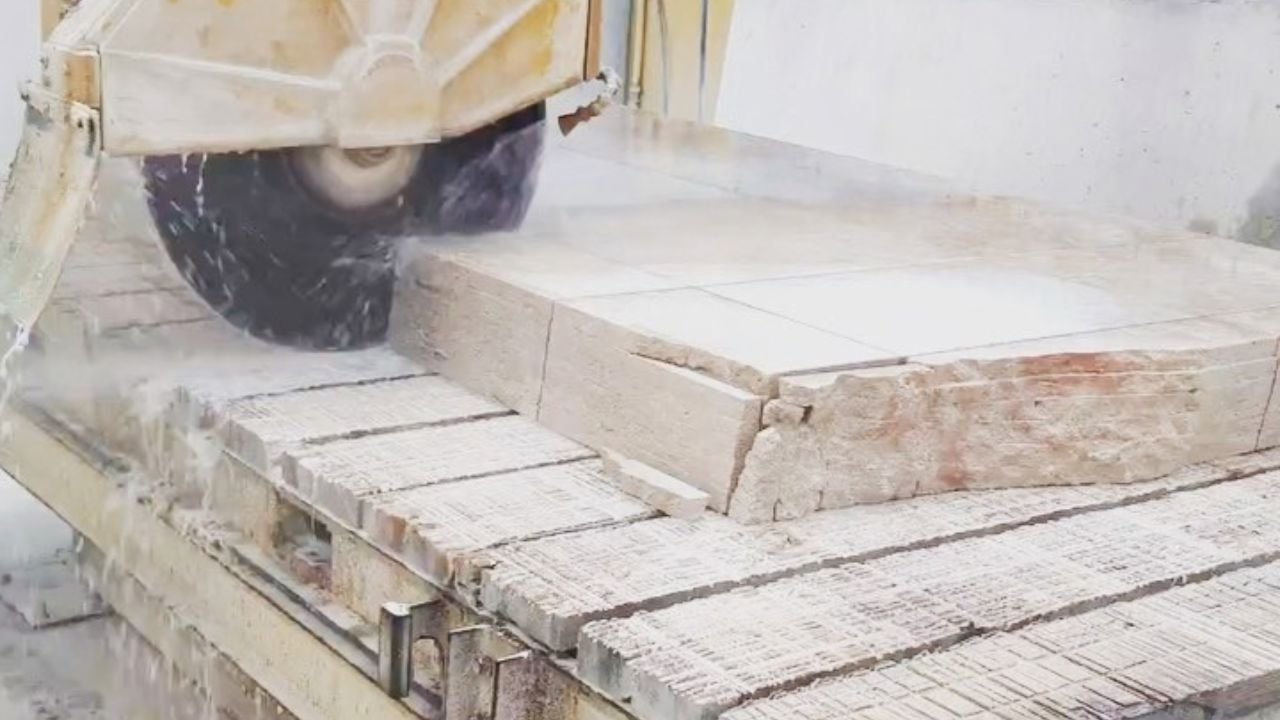

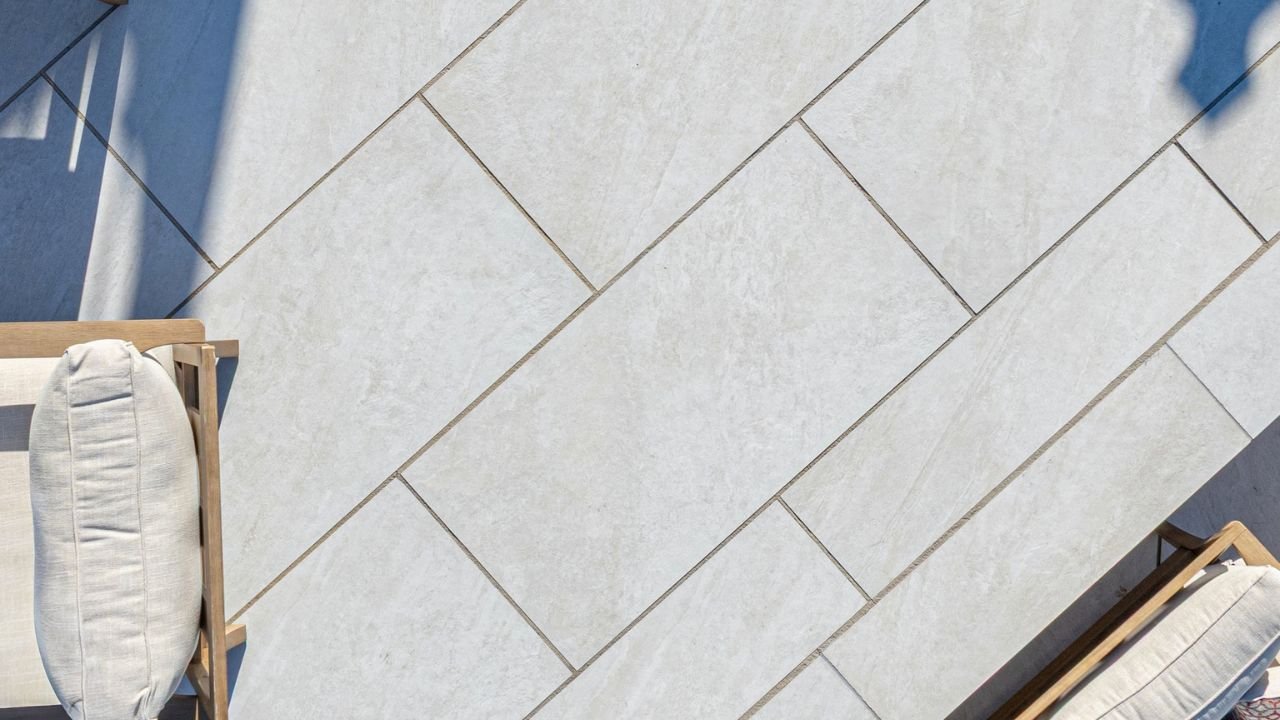
Base selection plays a crucial role in the successful implementation of porcelain paver installation projects. While porcelain pavers are durable and resistant, they require adequate support underneath to perform properly.
The base choice affects the pavers’ resistance to weight, moisture, ground movement, and temperature changes. Improper base preparation may cause settling, shifting, hollowness, or cracking in the pavers. So, what is the optimal base layer for porcelain pavers? It depends on several factors.
What Is the Best Base for Porcelain Pavers?
For a long-lasting, stable bonded installation, a properly prepared concrete slab is a strong foundation for porcelain pavers. Concrete creates a rigid base that keeps the pavers in place and provides proper support. Since porcelain is hard, non-porous, and rigid, it needs solid support beneath it to prevent cracking and shifting.
Consequently, concrete makes a great base for areas like pool decks, steps, landings, patios, and other areas. Before laying pavers, make sure the concrete is in good condition, properly prepared, and has a proper slope for proper water runoff.
When installing porcelain pavers over a concrete base, apply exterior-grade mortar, thinset, or a bonding system compatible with porcelain and exterior surfaces.
Can Porcelain Pavers Be Installed on a Gravel Base?
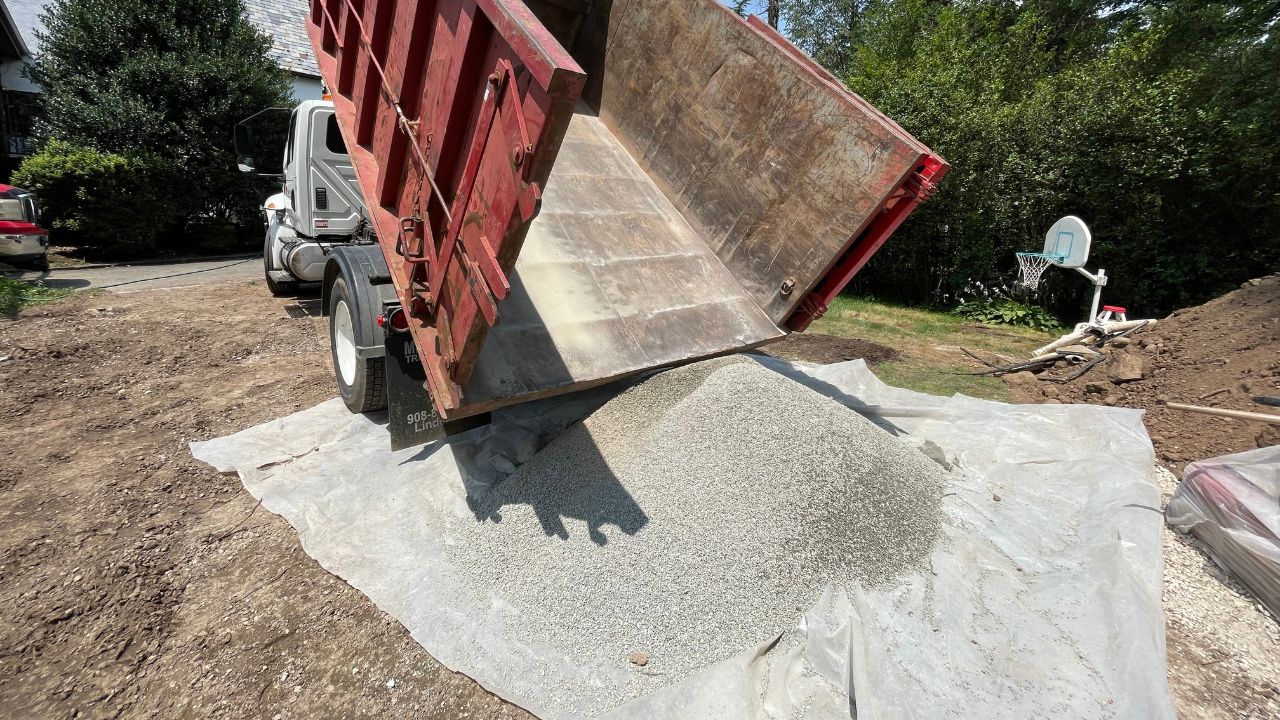
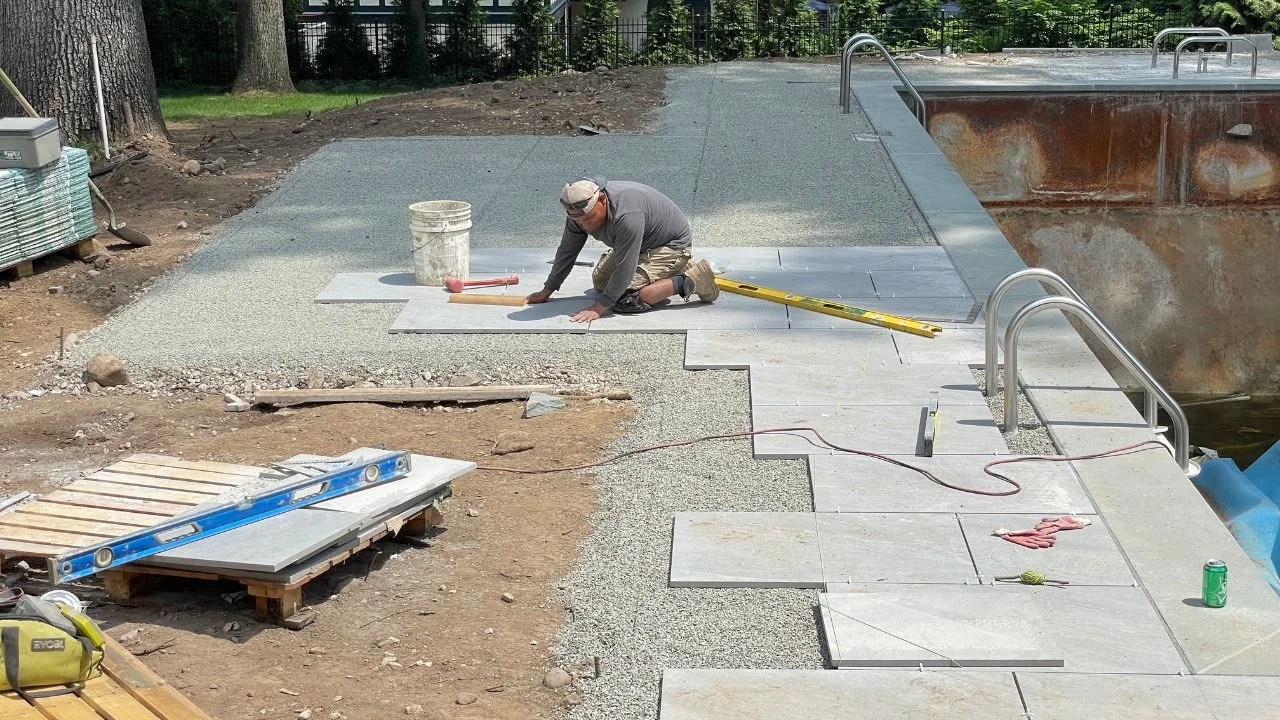
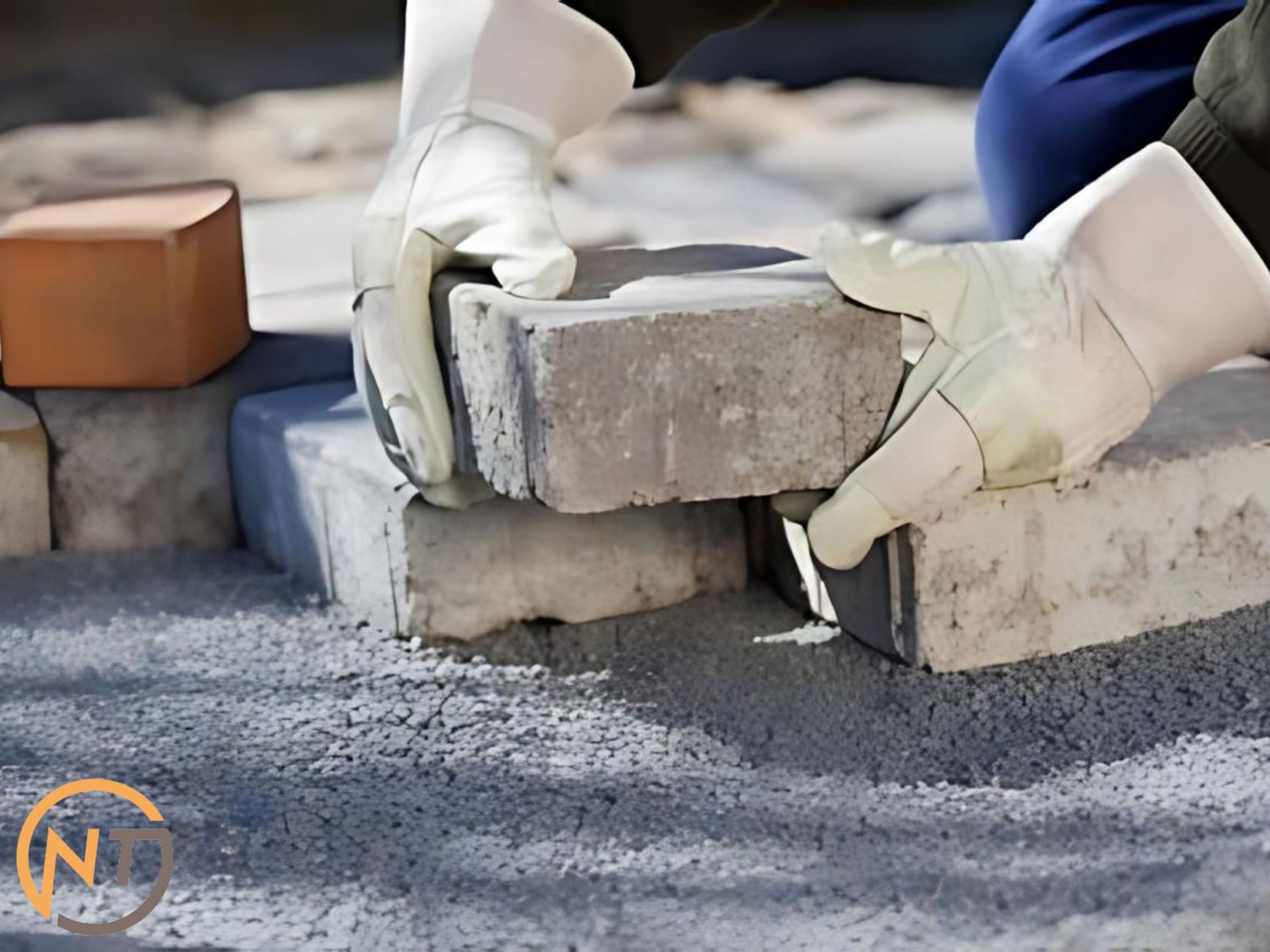
Yes, you can lay porcelain pavers on a properly prepared aggregate base. An aggregate base usually involves layering compacted crushed stone. It needs to be properly compacted to provide uniform support across the entire area. This approach offers another benefit. Drainage is possible because water flows freely through the aggregate rather than collecting underneath the pavers.
Nevertheless, preparation is extremely important when laying porcelain pavers because they are rigid and cannot be laid on anything less than evenly compacted aggregate. Soft spots, voids, or inadequate compaction can create unsupported areas and cause cracks. Thus, ensure the aggregate base is properly compacted and level before installing porcelain pavers.
Concrete vs Gravel vs Pedestals for Porcelain Pavers
The right base depends on the location, expected load, drainage needs, and the project’s finished height.
| Base Type | Best For | Main Benefit | Main Consideration |
| Concrete slab | Pool decks, steps, landings, covered patios | High rigidity and slope control | Requires proper drainage and expansion planning |
| Compacted aggregate | Patios, walkways, courtyards | Good drainage and some flexibility | Requires precise compaction |
| Pedestal system | Rooftops, balconies, terraces | Drainage and access underneath | Requires compatible pavers and accurate layout |
NT Pavers describes concrete, gravel, and pedestal systems as having different purposes rather than one base being suitable for every project.
When Should You Use a Concrete Base?
A concrete base is a good option when your project needs high rigidity and precise control over the finished surface.
It works especially well for:
- Pool decks
- Steps and landings
- Covered patios
- Areas with heavier use
- Projects where controlling the slope is important
A concrete slab also provides a stable surface for bonding porcelain pavers with an appropriate exterior installation system.
However, concrete does not eliminate the need for proper drainage. The slab should be designed with an appropriate slope, joints, and water-management details for the project.
When Is a Gravel Base Better?
A compacted aggregate base can be a practical choice when drainage and flexibility are priorities.
It is commonly suited to:
- Patios
- Walkways
- Courtyards
- Light-use seating areas
Gravel can allow minor ground movement without transferring it directly to the pavers. It can also make future repairs easier because you can remove and reset individual pavers.
The main concern is preparation. The aggregate must be compacted evenly, and the surface needs to provide continuous support. Poor compaction can eventually lead to settling or movement.
When Should You Use a Pedestal System?
Pedestal systems are different from traditional concrete and gravel bases.
Instead of placing the porcelain pavers directly on a continuous foundation, adjustable supports hold the pavers above the underlying surface. This creates an open space underneath for drainage and access.
Pedestal systems are especially useful for:
- Rooftop terraces
- Balconies
- Raised decks
- Waterproofed surfaces
- Areas where utilities need to remain accessible
NT Pavers notes that pedestal systems can provide drainage, access to waterproofing and utilities, and level surfaces over sloped substrates.
They are particularly useful when building directly on a waterproofed structure where drilling or permanently bonding the surface is not desirable.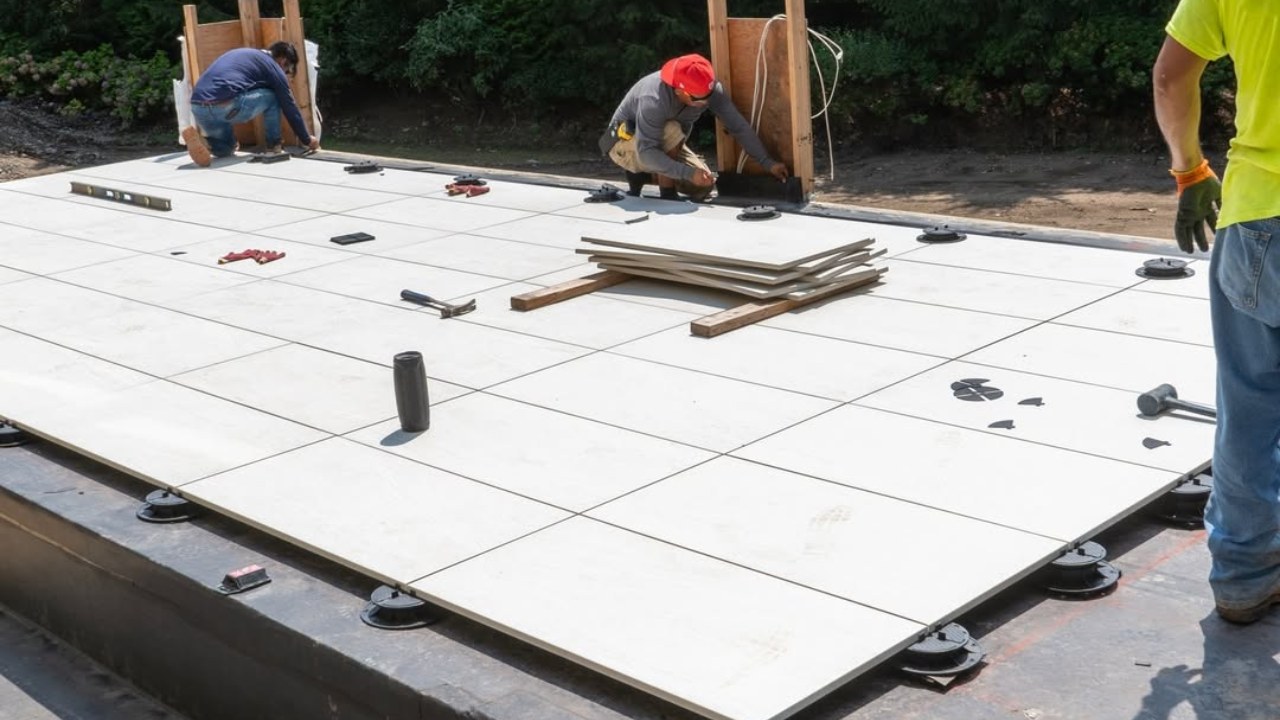
Which Base Should You Use for Porcelain Pavers?
The appropriate base depends on the location, installation method, drainage requirements, and the specific porcelain paver being used.
Concrete slab: Commonly used for bonded installations where a rigid foundation and precise grade control are required.
Compacted aggregate: Can be suitable for patios, walkways, and similar ground-level applications when the installation system allows it and the aggregate is properly prepared and compacted.
Pedestal system: Designed for raised applications such as rooftops, balconies, and terraces where drainage and access beneath the pavers are important.
Not every porcelain paver is approved for every installation method. Always verify the manufacturer’s installation requirements for the specific paver and application.
What Makes a Good Base for Porcelain Pavers?
Regardless of the base type, proper preparation is essential.
A good base should provide:
- Solid support: The pavers should not have unsupported or hollow areas underneath.
- A level surface: Uneven areas can place stress on porcelain pavers.
- Proper drainage: Water should have a clear path away from the installation.
- Correct slope: Outdoor surfaces should slope away from buildings and other structures where appropriate.
- Consistent preparation: The entire installation area should provide similar support.
- Proper bonding: When installing porcelain over concrete, use a compatible, exterior-rated bonding or setting system.
Porcelain pavers should not simply be placed over an unstable or poorly prepared surface and expected to remain level. The foundation beneath them plays a major role in long-term performance.
Can You Put Porcelain Pavers Directly on Sand?
It depends on the porcelain paver and installation system. A simple loose sand bed should not automatically be treated as suitable for porcelain.
Some installation systems use a carefully prepared bedding layer over a compacted base. However, porcelain pavers have specific installation requirements, and you should always follow the manufacturer’s instructions.
A sand-based installation can offer easier adjustments and flexibility, but it may also be more vulnerable to shifting or settling if the supporting layers are not properly prepared.
For a permanent porcelain installation where maximum rigidity is important, a properly designed concrete system is generally the more stable approach.
How Much Slope Should a Porcelain Paver Base Have?
A porcelain paver base should have a slight slope to move water away from buildings and other structures.
Outdoor porcelain paver installations should include adequate slope to direct water away from buildings and prevent water from collecting beneath or around the pavers. The required slope depends on the installation system, site conditions, drainage design, and applicable requirements.
The exact slope should account for the surrounding structure, drainage plan, paver system, and local conditions.
Do not allow water to collect beneath or around the porcelain pavers. Good drainage is especially important in areas exposed to heavy rainfall or freeze-thaw conditions.
Porcelain Paver Base Preparation Checklist
Before installing porcelain pavers, make sure:
- The foundation or substrate is structurally sound.
- Aggregate is properly compacted where an aggregate system is used.
- There are no soft spots, voids, or unstable areas.
- The surface has the required drainage slope.
- Water has a planned path away from the installation.
- The bonding or setting system is compatible with porcelain and exterior conditions.
- The installation method matches the manufacturer’s requirements.
What Happens If the Base Is Not Prepared Properly?
An unsuitable base can create several problems.
Porcelain pavers may:
- Shift out of alignment
- Settle unevenly
- Develop unsupported areas
- Hold standing water
- Crack under concentrated loads
- Become difficult to repair later
The paver itself may be strong, but strength does not compensate for poor support underneath.
Frequently Asked Questions
Here are answers to common questions about choosing a base for porcelain pavers.
Is concrete the best base for porcelain pavers?
Yes, for many permanent installations. A properly prepared concrete slab provides a rigid, stable foundation for porcelain pavers, especially where load support and slope control are important.
Can porcelain pavers go on a gravel base?
Yes. You can install porcelain pavers over a properly prepared and compacted aggregate base when the installation system allows it. This method is commonly suited to patios and walkways.
Can porcelain pavers be installed on sand?
Porcelain pavers should not be installed on a simple loose sand bed unless the specific paver and installation system are approved for that application. Some systems may use a bedding layer over a properly prepared and compacted base, but always follow the manufacturer’s installation requirements.
Are pedestal systems good for porcelain pavers?
Yes. Pedestal systems work well with compatible porcelain pavers on rooftops, balconies, terraces, and waterproofed surfaces. They also provide open drainage and access to the space underneath.
Does a porcelain paver base need to be perfectly level?
The base needs to be properly prepared and consistent, but outdoor installations should include the correct slope for drainage. A surface can be flat enough for the pavers while still being sloped to move water away from structures.
What is the most important part of a porcelain paver installation?
Proper base preparation is one of the most important parts. The foundation must provide stable, consistent support and allow proper drainage. The correct installation method should also match the porcelain paver manufacturer’s requirements.
Bottom Line
A properly designed concrete slab is a strong choice for bonded porcelain paver installations where rigidity and grade control are priorities. However, compacted aggregate and pedestal systems can be appropriate for different applications when the installation system and paver manufacturer allow them.