When homeowners design a pool area, they often focus on water features, seating, and lighting. However, they don’t understand that the pool’s surroundings are as important as the pool itself. Pool decks consistently stay wet, making bare feet and running children quickly. A poor choice of pool deck material will result in slip hazards, burns, and long-term maintenance issues. This is where porcelain pavers save space. They have become a preferred choice for modern pool decks, not because of aesthetics, but because they fulfill safety concerns.
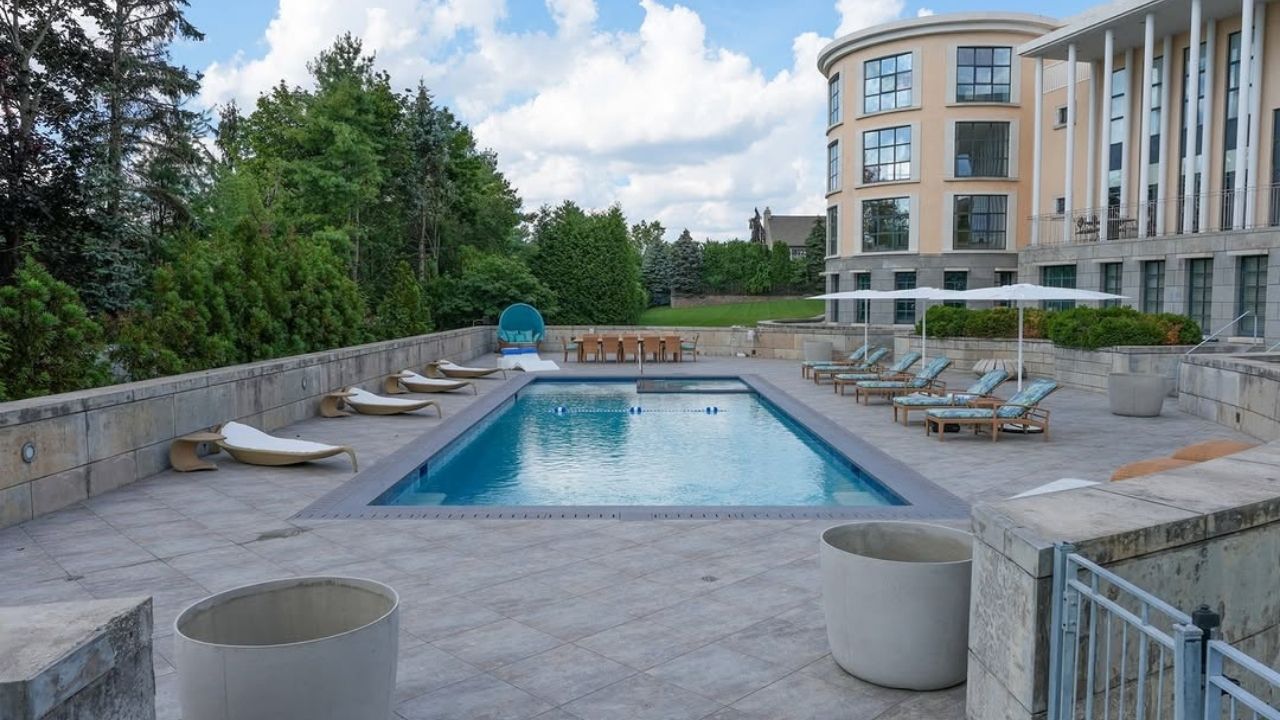
Concrete, stone, and brick cannot manage in those conditions for various reasons. Here is what you need to know about porcelain around pools.
What Are The Safety Challenges Around Pools?
Before we talk about porcelain around pool decks, we need to understand the safety challenges around pools. Swimming pool surfaces are mostly exposed to conditions that most outdoor surfaces never experience. Water splashes constantly, oils and sunscreen spread across the surface, and similar contaminants. Changing temperatures put stress on the material, and the pool chemical remains present throughout the year. A safe pool surface must:
- Provide grip when wet.
- Drain water instead of holding it.
- Stay flat and stable over time.
- Avoid overheating in direct sun.
- Resist chemical damage
Porcelain pavers handle these safety challenges around the pool efficiently through material density and controlled surface design.
1. Slip Resistance Is The Most Important Safety Factor
Slip resistance of pavers measures how well a surface will remain it’s traction when wet. This factor is crucial around pools more than appearance. High-quality porcelain pavers are manufactured with textured or structured finishes that are specifically designed for outdoor use. These finishes provide micro-grip without making the surface feel rough on bare feet.
Most outdoor porcelain pavers meet or exceed common slip-resistant ratings (often R11 or R12). This traction is important and consistent when the surface is wet. In comparison:
- Polished stone becomes slippery near water
- Sealed concrete loses grip over time
- Brushed finishes wear unevenly
Porcelain, on the other hand, retains its surface integrity because the texture is fired into the tile rather than added later.
2. Low Water Absorption and Why It Matters
Paving support material around the pool must be water-resistant to ensure durability and reliable performance. Porcelain pavers absorb very little water, which is less than 0.5 percent. This density limits the moisture penetration and prevents the surface cracks over time. Low absorption improves safety in several ways:
- Water doesn’t pool on the surface but drains quickly.
- Surface dries faster after use.
- Freeze–thaw cycles don’t damage the surface.
- Internal cracking does not create uneven edges.
Natural stone pavers, in contrast, absorb more water, which results in surface changes over time. Concrete pavers have a similar reaction against water, and you may observe hairline cracks over time. They get wider with seasonal movement.

Porcelain remains stable because moisture cannot move freely through the body of the paver.
3. Porcelain Pavers Resistance Against Algae, Mold, and Mildew
Algae growth increases slip risk and forces frequent cleaning. Pool decks create ideal conditions for algae due to constant moisture and shade.
Porcelain resists organic growth because it lacks open pores. Algae cannot readily root in the surface. When growth appears, it typically sits on top and is removed with routine cleaning.
Stone pavers and concrete allow moisture to penetrate below the surface. This trapped water encourages biological growth, which becomes difficult to remove without harsh chemicals.
For homeowners, porcelain means:
- Fewer slippery patches
- Less aggressive cleaning
- More predictable surface behavior
4. Surface Temperature and Barefoot Comfort Of Porcelain Pavers
Safety should also add comfort to the space. When the surface is extremely hot, it will be too uncomfortable to walk on the deck. Porcelain pavers stay cooler than many stone and concrete surfaces when they are poorly selected. Lighter and medium-colored tones reflect more heat, while textured finishes retain less heat.
Concrete gets hot to uncomfortably high levels, while dark stones absorb heat and make the surrounding air feel hotter. Porcelain offers control because the color, finish, and thickness remain consistent across the surface.
At NT Pavers, pool projects often prioritize lighter porcelain tones for this reason alone.
5. Porcelain Pavers Resisting Chemicals Near Pools
Pool water contains chlorine or salt. These chemicals damage the surface over time. Porcelain has a resistant surface to chemical exposure because it remains non-reactive. Chlorine does not etch it, salt does not penetrate it, and leaning products do not weaken it.
Stone reacts differently depending on mineral content. Some stones etch, discolor, or weaken near pools. Concrete absorbs chemicals, and its surface wears down sooner. Porcelain does not face these issues, which keeps the deck safer and more durable.
6. Edge Consistency and Trip Hazard Reduction Around Pools With Porcelain
Trip hazards are the major safety concern that causes many poolside injuries. Uneven pavers, shifting slabs, and chipped edges increase risk.

Porcelain pavers feature tight dimensional accuracy, and each piece matches the next. The surface retain it’s level when installed correctly. Porcelain edges remain intact because porcelain resists cracking and spalling for longer. On the other hand, natural stones can chip at corners, and concrete may crack and lift. A flat surface is perfect for pool decks to keep the deck safe for children, older adults, and pets.
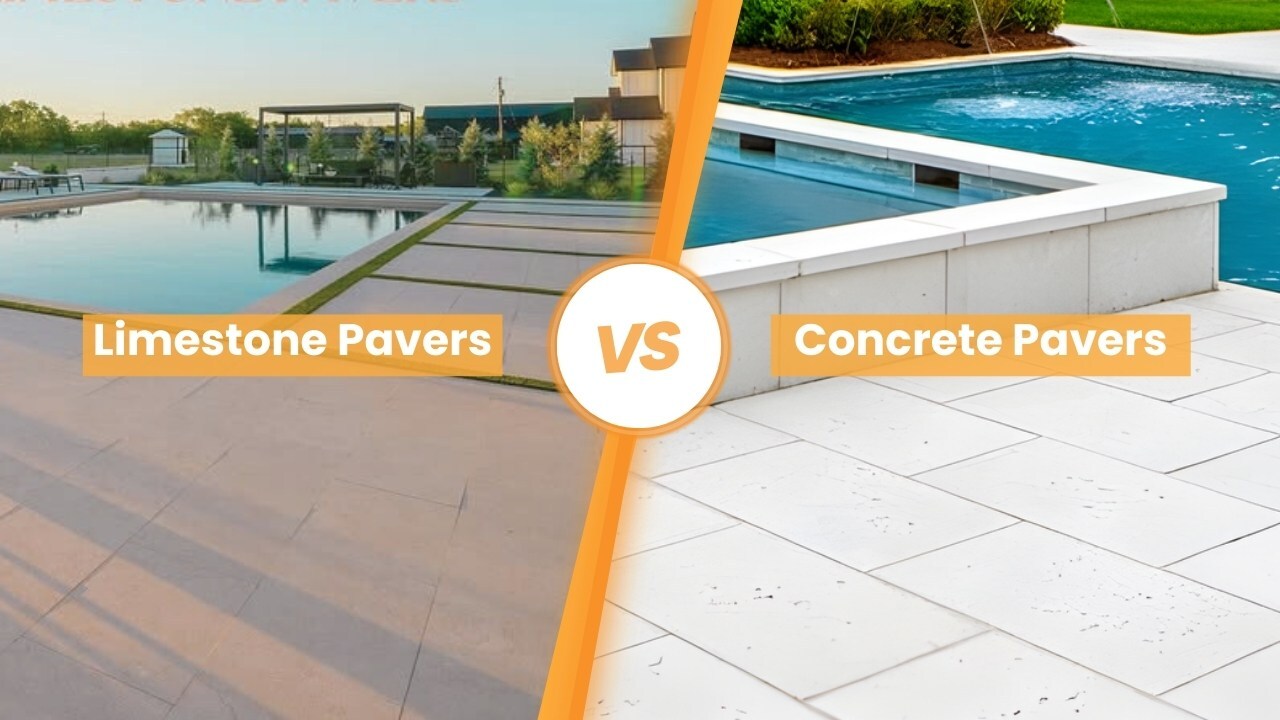
Porcelain vs Natural Stone Pavers vs Concrete Pavers vs Poured Concrete
When deciding between porcelain and alternatives such as stone or concrete pavers around the pool, the options can be overwhelming. Why you should use porcelain pavers around pool areas: take a look at this table comparing paver types.
| Feature | Porcelain Pavers | Natural Stone | Concrete Pavers | Poured Concrete |
| Slip Resistance (Wet) | High and consistent due to textured, fired-in surfaces | Varies by stone type and finish | Moderate; decreases as surface wears | Low to moderate, especially when smooth |
| Water Absorption | Very low; resists moisture penetration | Moderate to high; absorbs water over time | Moderate; absorbs moisture through pores | Highly absorbent; readily absorbs water |
| Algae & Mold Resistance | High, non-porous surface limits growth | Low to moderate; porous structure encourages growth | Moderate; surface pores trap moisture | Low; retains moisture and organic debris |
| Chemical Resistance | Excellent; unaffected by chlorine or salt | Variable; some stones etch or discolor | Moderate; chemicals degrade the surface | Low; chemicals accelerate wear |
| Surface Stability Over Time | Very stable; resists cracking and movement | Chips, flakes, and weathers | Shifts and settles with base movement | Cracks due to expansion and contraction |
| Barefoot Comfort | High, smooth yet grippy texture | Varies; some stones feel rough | Moderate; surface can be abrasive | Low, hard, and unforgiving |
| Heat Retention in the Sun | Low to moderate with proper color choice | Moderate to high, especially dark stone | High in darker colors | High, often uncomfortable |
| Freeze–Thaw Resistance | Excellent due to low absorption | Poor to moderate, depending on the stone | Moderate | Poor, cracking common |
| Maintenance Needs | Very low; no sealing required | High sealing and special cleaning | Moderate; periodic cleaning and repairs | Moderate to high; repairs are inevitable |
| Stain Resistance | High; resists oils, sunscreen, food | Low to moderate; stains easily | Moderate; stains over time | Low; stains penetrate quickly |
| Edge & Corner Durability | Strong; minimal chipping | Prone to chipping | Moderate; corners wear | Cracking at joints and edges |
| Drainage Compatibility | Excellent with sand-set or pedestal systems | Limited by material behavior | Good with a proper base | Poor; water pools on the surface |
| Design Consistency | Very consistent size and finish | Natural variation | Moderate variation | Limited design flexibility |
| Long-Term Safety | High; maintains grip and flatness | Decreases as surface weathers | Decreases as units shift | Decreases as cracks form |
| Best Poolside Use | Modern, low-maintenance, safety-focused decks | Natural aesthetics with higher upkeep | Budget-conscious installations | Basic installations with higher risk |
Porcelain pavers offer the most reliable balance of slip resistance, durability, comfort, and low maintenance around pools. Natural stone and concrete may work, but they require more maintenance. Additionally, they pose higher long-term safety risks, especially in wet or chemical-intensive environments.
What Pavers Installation Systems Improve Pool Safety?
While porcelain pavers are safer around pools, it is the installation methods that improve drainage and stability. These include:
- Sand-set systems for proper water flow
- Mortar-set systems for fixed pool decks
- Pedestal systems for elevated or rooftop pools
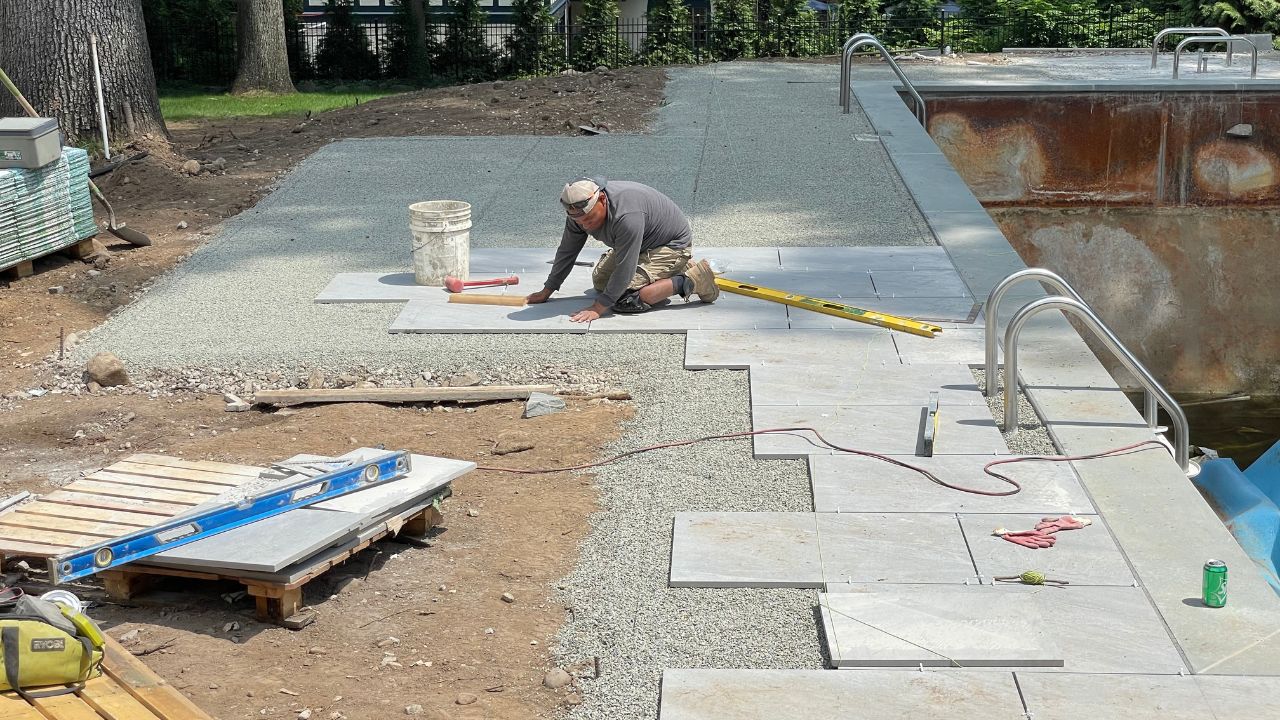
These systems channel water away from walking areas, preventing pooling on the surface. Proper drainage also reduces the slip risk and material wear.
NT Pavers often guides homeowners toward systems that balance safety, cost, and long-term performance.
Porcelain Pavers Around Pools FAQs
Let’s answer your questions about the use of porcelain pavers around pools.
Are porcelain pavers slippery when wet?
No. Outdoor-rated porcelain pavers are manufactured with slip-resistant textures that maintain grip when wet.
Are porcelain pavers safe for kids around pools?
Yes. They offer a grippy, stable surface and may resist algae growth, making them safer for kids.
Do porcelain pavers get hot around pools?
Yes. Depending on the surface finish and color, they may absorb more heat.
Are porcelain pavers better than concrete around pools?
Yes. In most scenarios, porcelain offers better traction, durability, and chemical resistance.
Can porcelain pavers be used around saltwater pools?
Yes. Porcelain resists salt damage better than stone or concrete.
Bottom Line
Porcelain pavers can enhance pool safety by providing grip, stability, and chemical- and water-resistance. They reduce slip risk, reduce maintenance requirements, and maintain a consistent surface over time. For homeowners who prefer safer, cleaner, and more durable pool decks, porcelain pavers are the best solution. Seek guidance from experienced porcelain paver suppliers like NT Pavers before selecting the right porcelain paver options. It will become a practical investment in long-term safety and comfort.