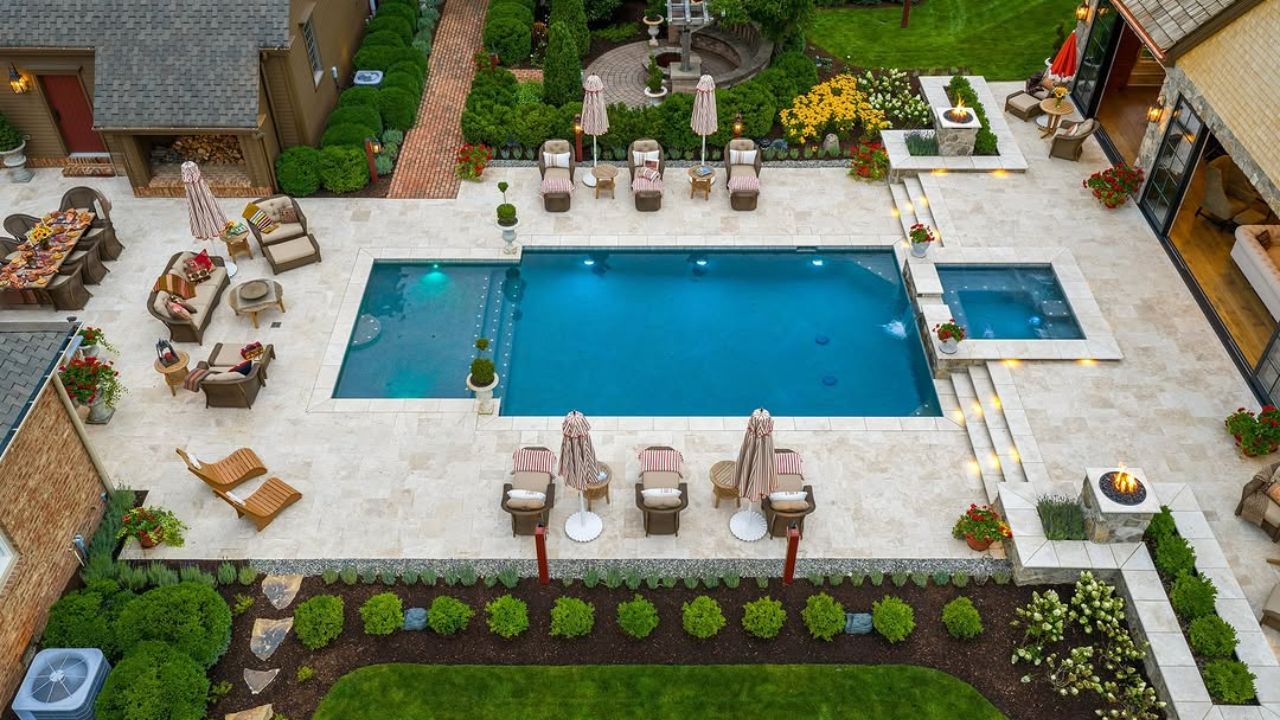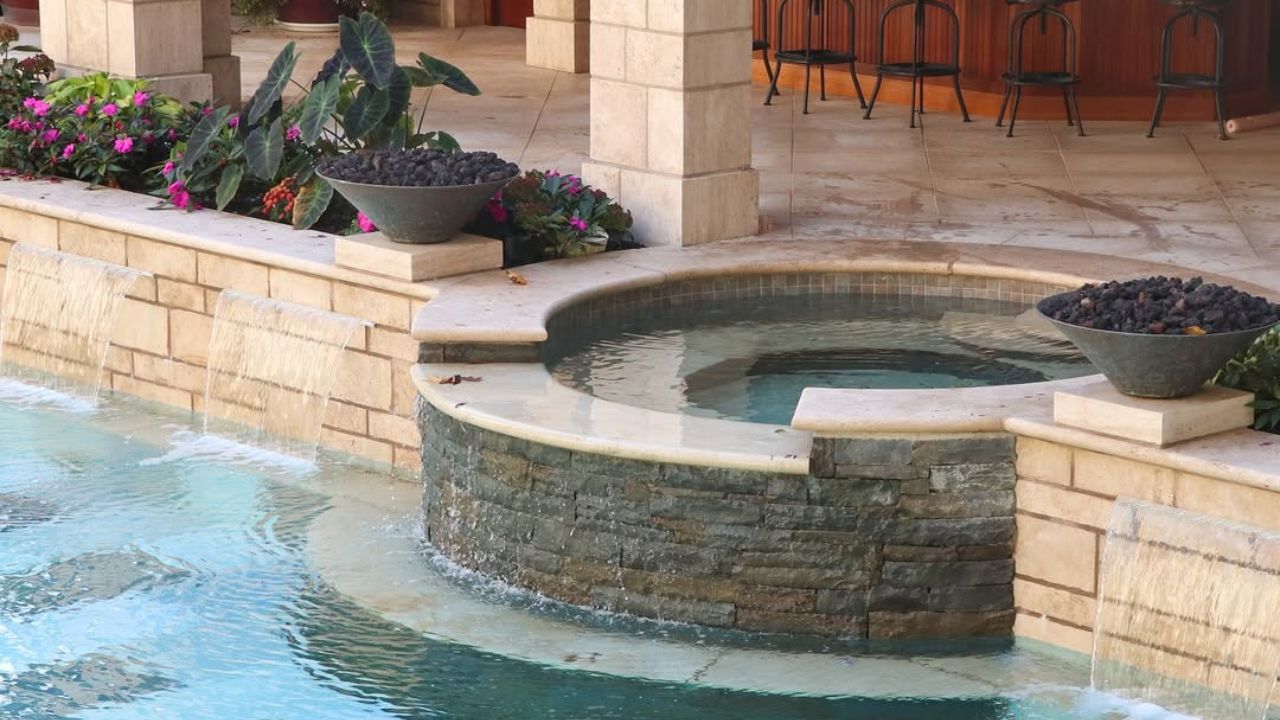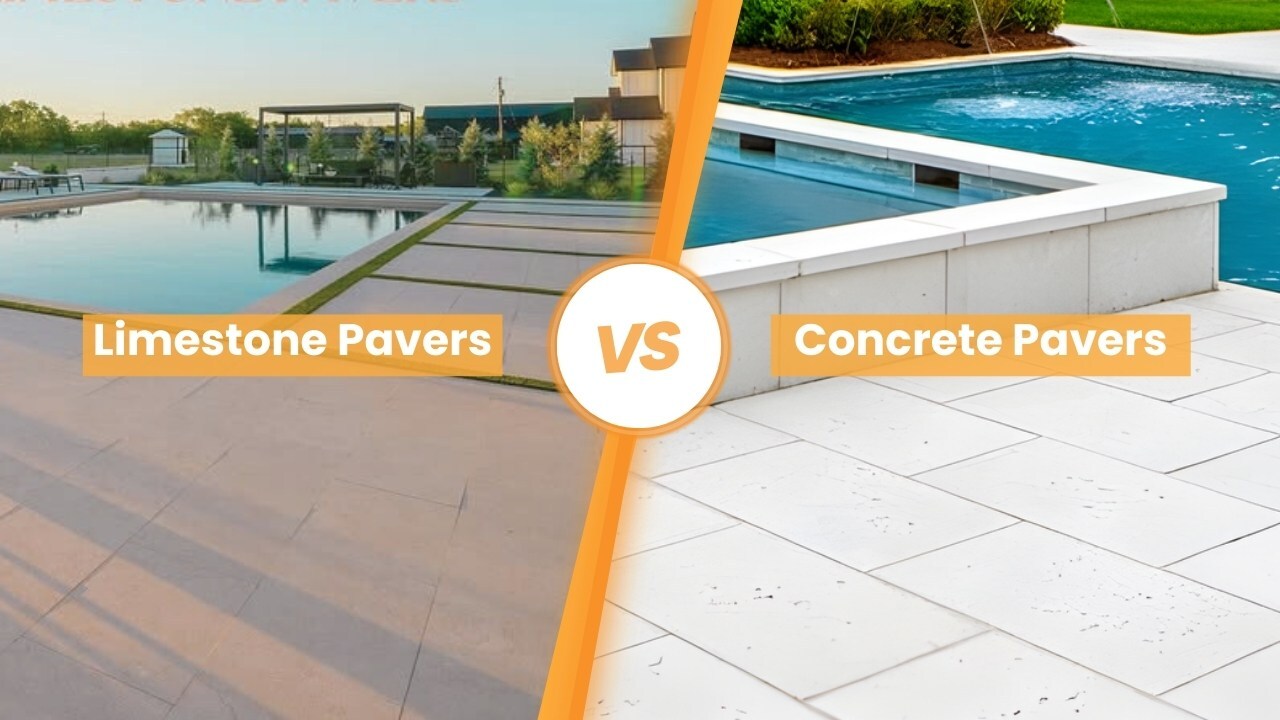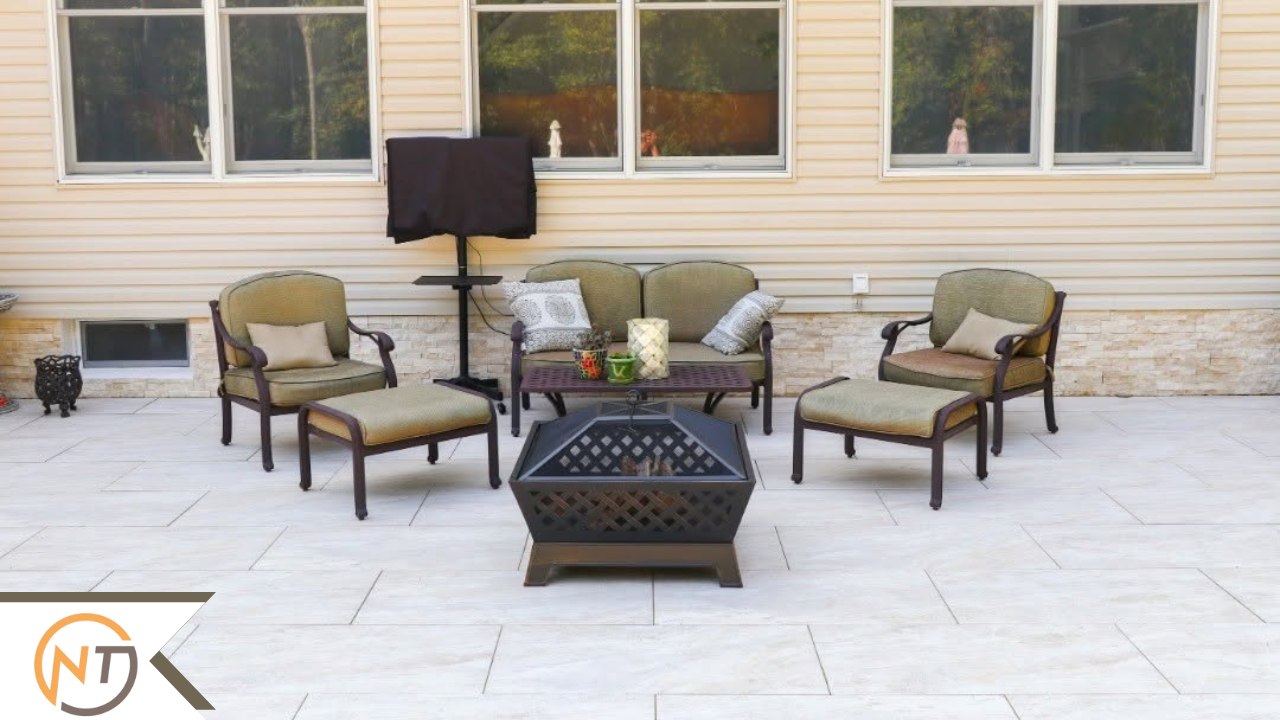

Travertine pavers are one of the most common options for landscaping. Homeowners prefer travertine not only because it is natural but also because of its durability. One of the major features of travertine is its versatile application and installation options. You can create intricate details with travertine installation pavers. Each paver pattern has its own look, feel, and benefits. Homeowners often wonder what pattern will suit their outdoors. Here are the most common travertine installation patterns that you can choose from.
Commonly Used Travertine Installation Patterns
These installation patterns are widely used to install travertine pavers and tiles.
French Pattern (Versailles Pattern)
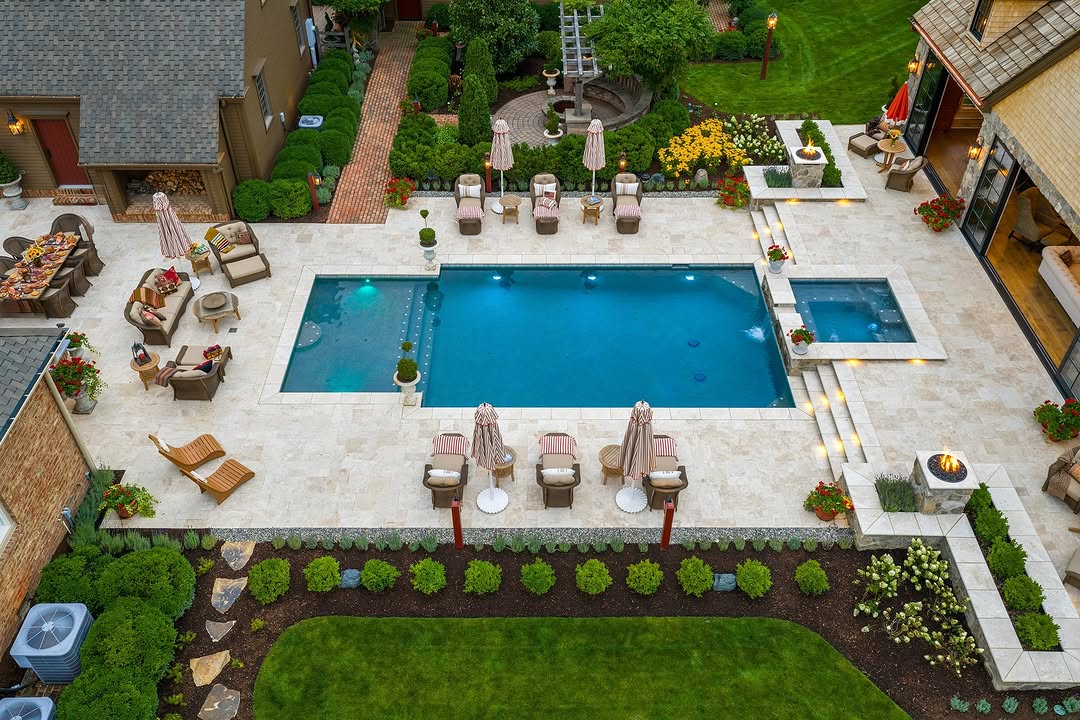
The French pattern or Versailles pattern is a widely used layout for travertine pavers. In this pattern design, you can use different sizes of tiles in a repeating, modular manner. They create a lasting European appearance. French cut travertine is perfect for patios, courtyards, and pool decks. You can use it for both medium to large spaces.
The variety of tile sizes softens visual lines and hides the minor surface irregularities. It can also add depth without overwhelming the design.
Straight Lay (Grid Pattern)
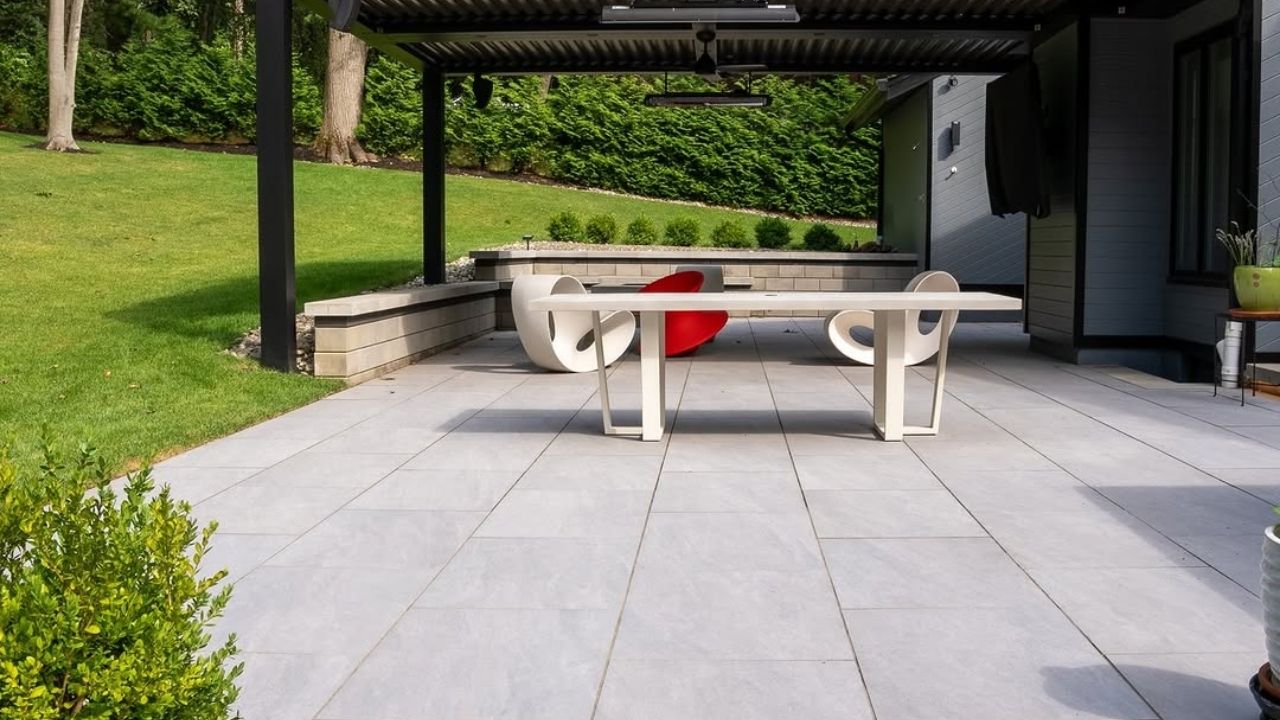
A straight lay pattern is a quick and easy way to create a pattern that aligns tiles in uniform rows. This is one of those common travertine installation patterns for square or rectangular travertine tiles. They create a clean and modern, and highly symmetrical. It is well-suited for contemporary outdoor and indoor spaces.
However, joints align continuously, so surface preparation must be precise to avoid visible imperfections.
Running Bond (Brick Pattern)
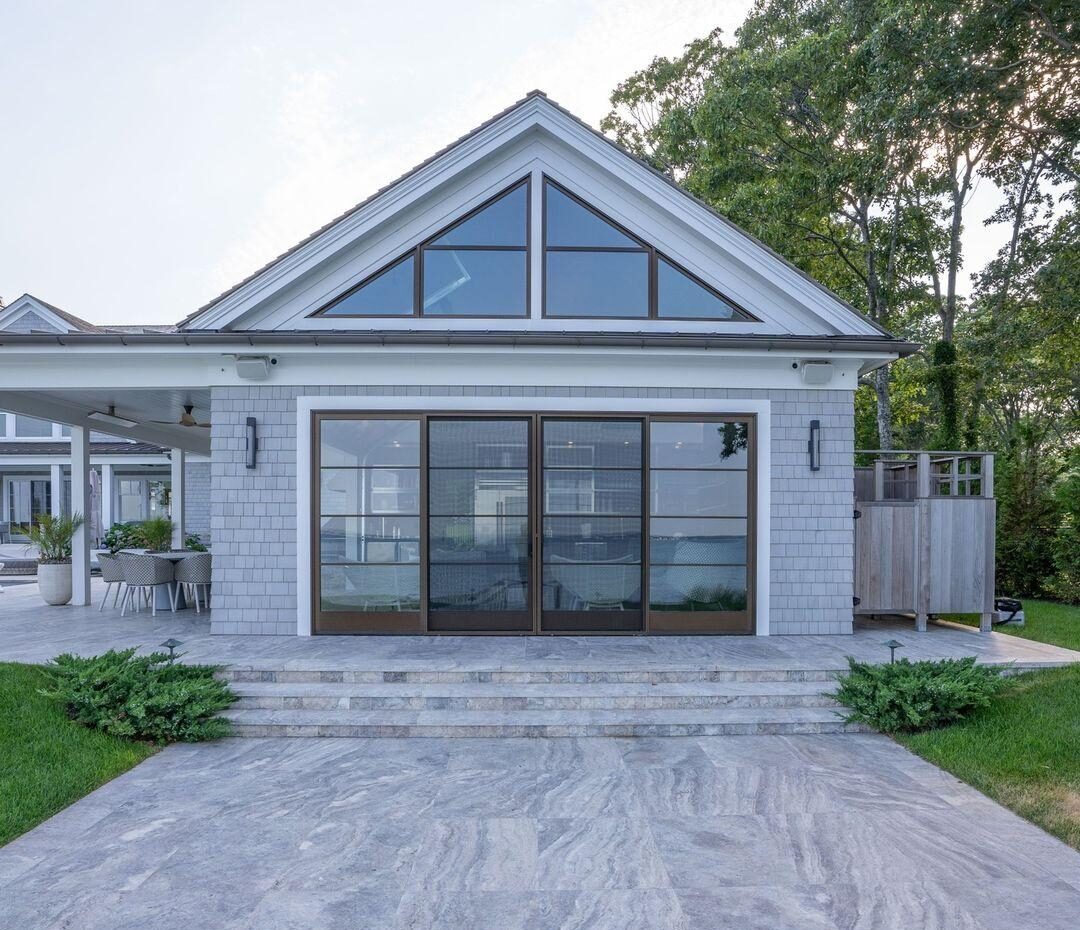
The running bond pattern balances each row, typically by 50% or 33%. The running bond pattern is popular for rectangular travertine pavers. This pattern is perfect for walkways and high-traffic areas. Reduces the visibility of size variation.
Offset joints help distribute loads and make alignment errors less noticeable.
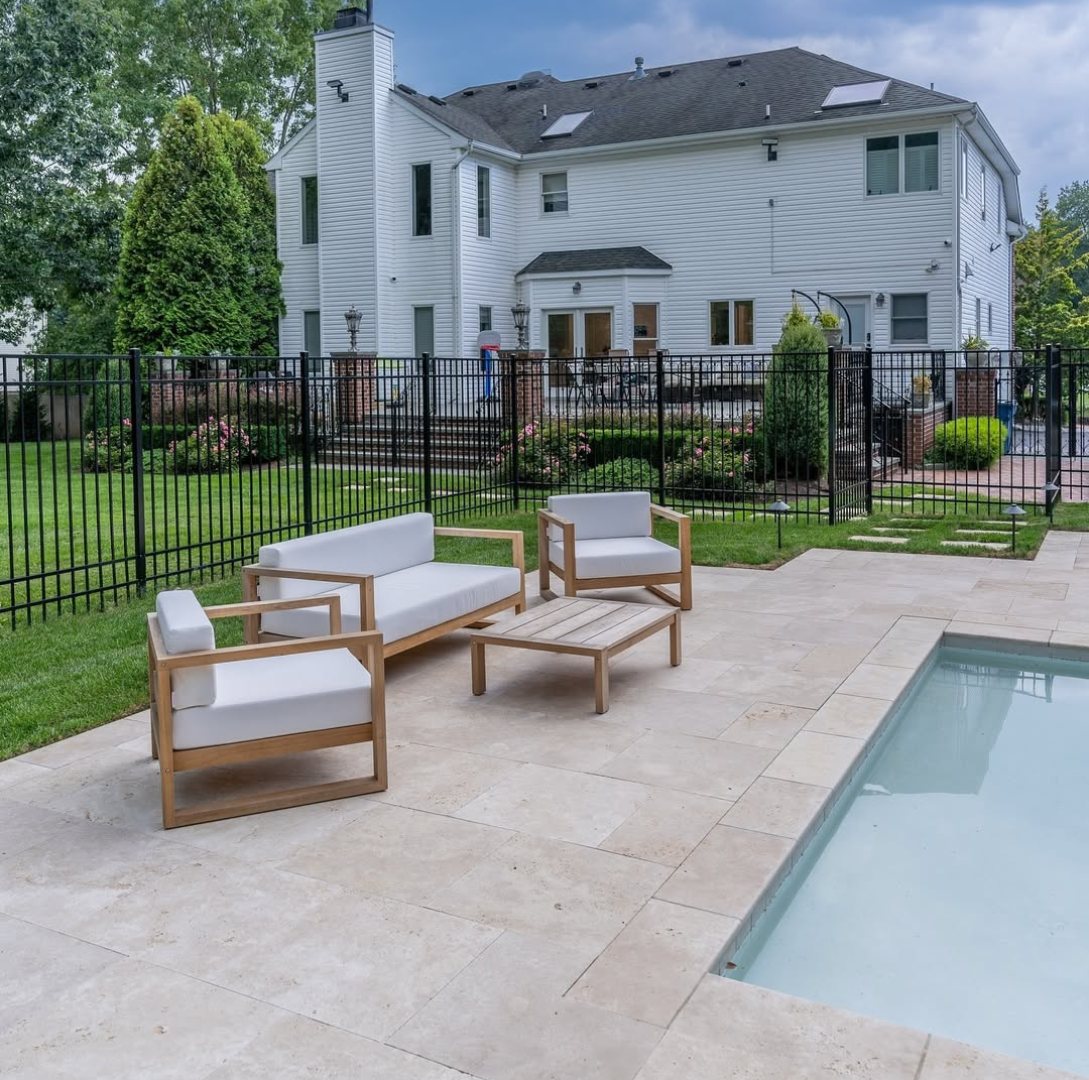
Herringbone Pattern
Herringbone uses rectangular travertine tiles arranged in a zigzag configuration. This pattern creates a dynamic and structurally strong look. They perform well in high-traffic areas. Often used as a feature pattern or in narrow spaces.
Just make sure to uninstall it with precision and experienced craftsmanship.
Modular Pattern (Non-French)
Modular travertine pattern uses multiple tile sizes arranged in a predictable repeating grid. This pattern is less random than the French pattern.
The pattern is an ideal travertine pattern choice for commercial or residential spaces. It offers visual interest with greater layout control.
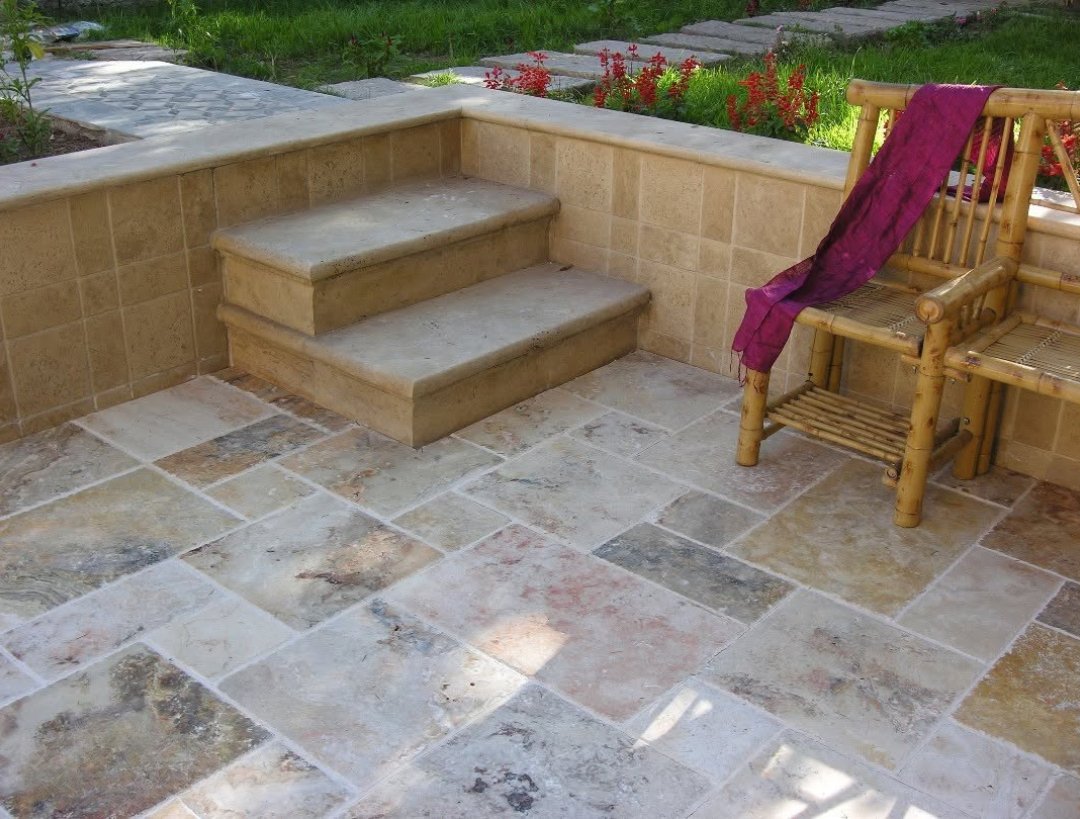
Chevron Pattern
Chevron, though, looks like herringbone; it organizes tiles cut at an angle to create a continuous V shape. This is one of the most common travertine patterns that looks extra sharp, symmetrical, and feels contemporary. This pattern is well-suited for upscale patios or accent zones. However, it also requires more cutting and planning.
This pattern is well-suited when design impact is a priority, and the budget allows for higher labor costs.
Diagonal Pattern
This is the travertine installation pattern where tiles are installed at a 45-degree angle according to the space. This makes the small areas appear larger. This installation pattern creates a visual movement anywhere installed, from walls to the floor.
Keep in mind that this pattern increases the cutting and material waste.
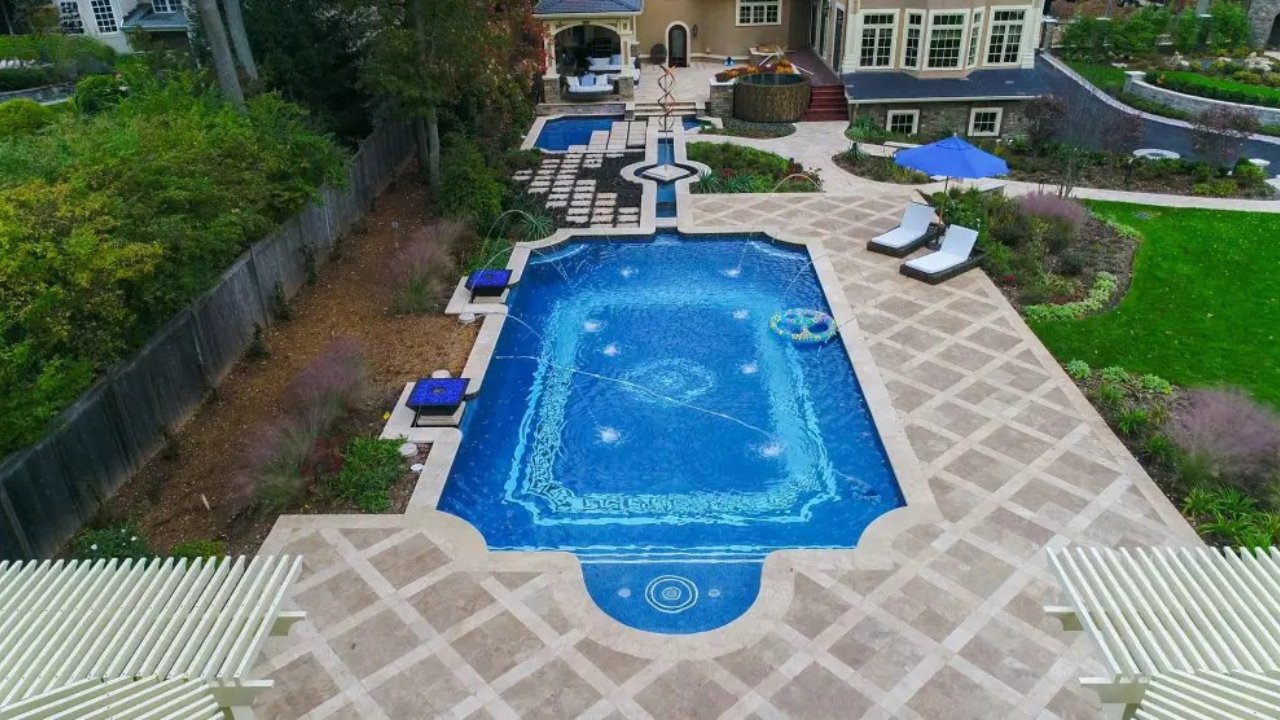
Advanced and Decorative Travertine Patterns
Apart from standard layouts, there are some common travertine installation patterns for decorative options and to add customization and architectural detail.
Basket Weave Pattern
- The pattern is traditional and symmetrical
- It is usually installed in courtyards and entryways
- This travertine pattern looks best with contrasting stone inserts
Diamond and Star Patterns
- It looks formal, clean, and sophisticated
- This pattern is widely used in luxury landscapes or focal areas
- You can pair it with the border designs
Rattan and Mosaic Layouts
- This is one of those common decorative travertine installation patterns that creates eye-catching designs.
- It is best suited for accent zones rather than full surfaces
These patterns are typically used selectively due to higher complexity and cost.
Travertine Border and Accent Pattern Options
Borders and accents improve the standard travertine installation experience.
Common border styles include:
- Soldier course borders
- Picture frame borders
- Double soldier courses
- Contrasting stone borders

Travertine Patterns for Accent applications include:
- Inlaid medallions
- Pool-edge framing
- Transition zones between spaces
Borders help define areas, control movement, and add visual structure.
Best Travertine Patterns by Application
While there are several common travertine installation patterns, not every pattern suits every outdoor space. Here are the best patterns according to applications.
| Application | Recommended Patterns | Key Performance Considerations |
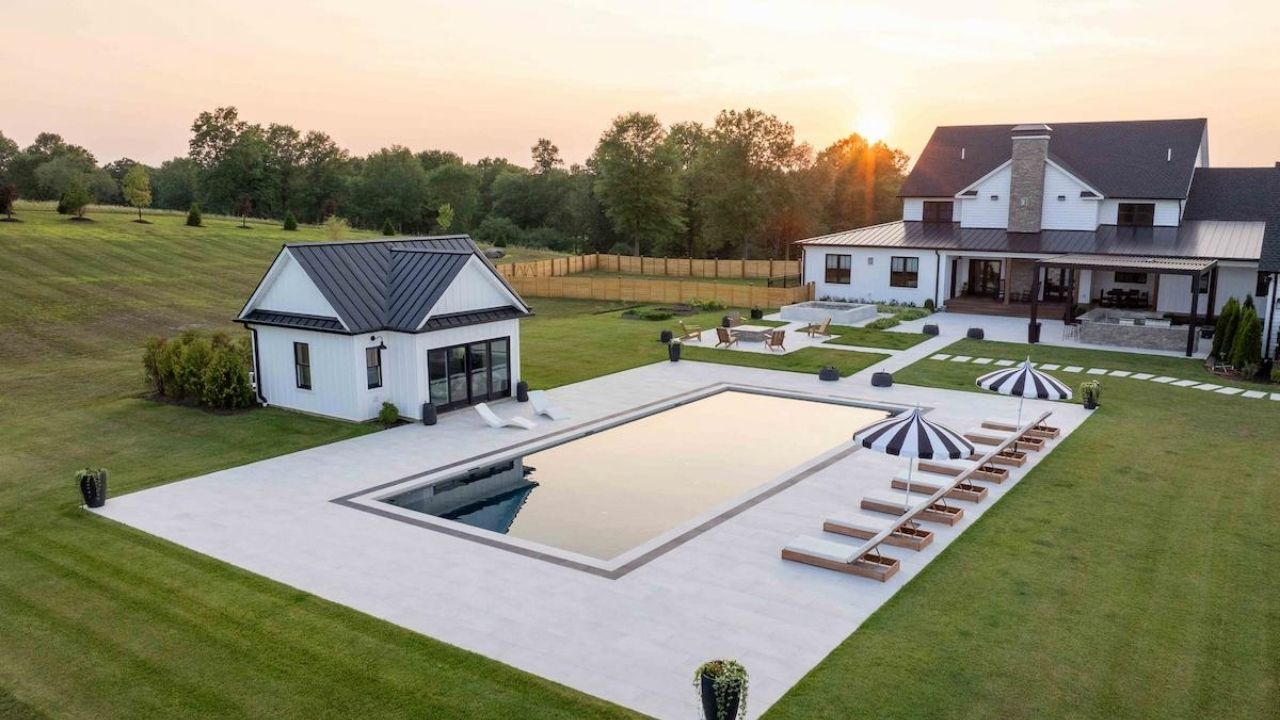
| Pool Decks | French (Versailles), Modular | Wider joints improve drainage; layouts should accommodate expansion joints and movement |
| Patios & Courtyards | French, Straight Lay, Modular | Pattern should support furniture placement, traffic flow, and balanced visual scale |
| Walkways | Running Bond, Herringbone | Offset and directional patterns improve structural stability and guide foot traffic |
| Indoor–Outdoor Transitions | Matching interior and exterior patterns | Pattern continuity enhances visual flow; joint alignment at thresholds is critical |
Understanding How Is Travertine Installed For Outdoor Patios helps homeowners select patterns that support furniture placement, traffic flow, and proper paver base preparation.
Pattern Selection Based on Travertine Finish
Apart from the application, some patterns work best according to the finish. Such as:
| Travertine Finish | Visual Characteristics | Recommended Installation Patterns | Performance Considerations |
| Tumbled Travertine | Soft, rounded edges with an aged, natural appearance | French (Versailles), Running Bond, Modular | Forgiving of minor size variation; wider joints enhance drainage and organic flow |
| Honed Travertine | Smooth surface with crisp, clean edges | Straight Lay, Chevron, Herringbone | Highlights precise alignment; requires accurate sub-base preparation |
| Filled Travertine | Surface voids filled for a more uniform look | Straight Lay, Modular | Allows tighter joints; creates a more consistent, contemporary appearance |
| Unfilled Travertine | Natural pits and texture remain visible | French, Running Bond | Wider joints recommended; texture softens geometric pattern lines |
Common Travertine Pattern Mistakes to Avoid
When selecting common travertine installation patterns, you should avoid making these mistakes for the best look.
- Using busy patterns in small spaces
- Ignoring traffic flow and direction
- Overloading designs with accents
- Misaligning borders and field tiles
Thoughtful planning prevents costly corrections.
FAQs Common Travertine Installation Patterns
Let’s answer your questions about travertine installation.
What is the most popular travertine installation pattern?
The French (Versailles) pattern is the most widely used for outdoor travertine.
Which travertine pattern is best for pool decks?
French and modular patterns are the best choice for pool decks due to drainage and visual balance.
Does pattern choice affect slip resistance?
Yes. Joint spacing and finish influence traction.
Which travertine installation pattern is easiest to install?
Straight lay and running bonds are the simplest layouts.
How much extra material is needed?
Any complex patterns typically require 10–15% additional material.
Conclusion
Travertine installation patterns create beautiful and functional outdoor spaces. From classic French layouts to modern chevron designs, the right installation patterns add durability, comfort, and visual appeal. By considering application, finish, and technical requirements, homeowners and professionals can create surfaces that last for decades. Choosing the right pattern is only part of the process working with experienced travertine installers near me ensures proper layout, longevity, and performance.
NT Pavers offers premium travertine products designed to perform throughout a wide range of installation patterns, ensuring both aesthetic excellence and long-term value.