Uneven patios are a common issue that homeowners and property managers often face. This happens due to soil settlement, water erosion, freeze-thaw cycles, and aging concrete. This results in patio sloping and cracking or becoming unsafe. A traditional solution usually involves demolition or breaking up the existing slab rather than managing the heavy debris after building the base from scratch.
This is where the pedestal paver systems come into the picture. While the traditional approach of demolition is practical, it is more expensive and time-consuming. The pedestal paver system is quick, effective, and budget-friendly. One can build a patio from scratch that is perfectly level above the existing one without demolishing it.
What Is a Pedestal System?
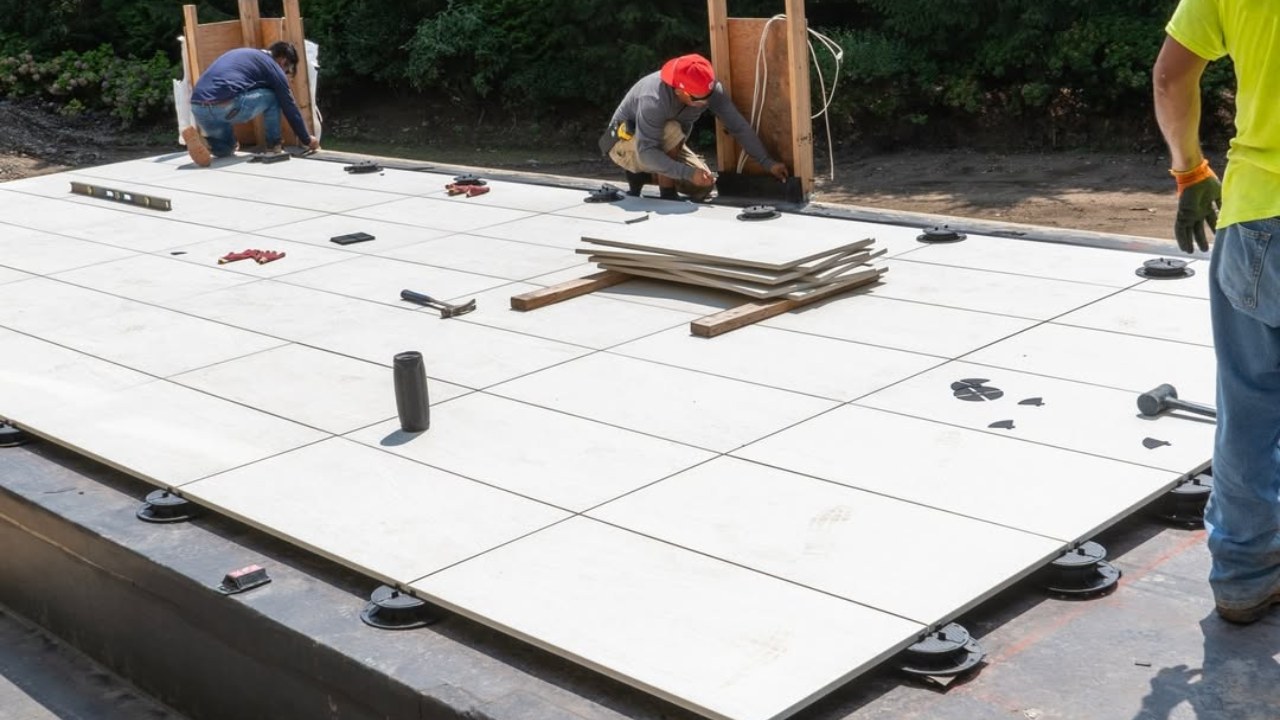
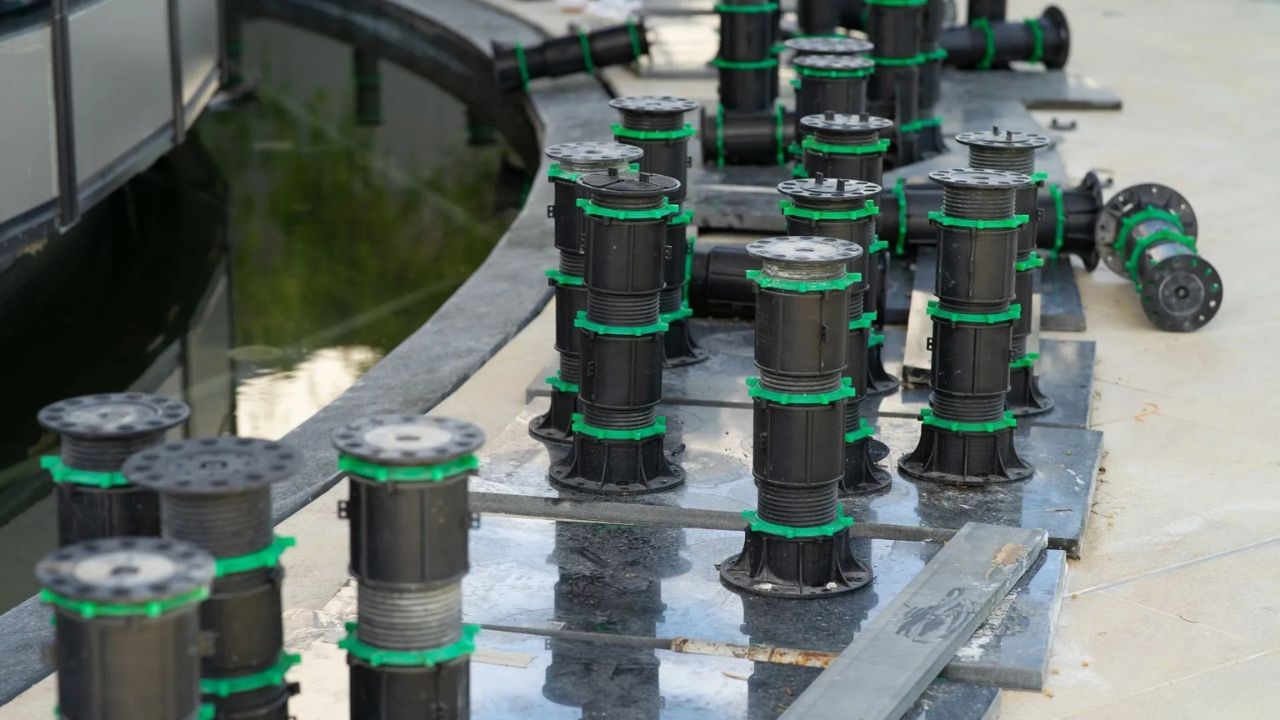
A pedestal paver system is an elevated patio support system that can either be adjustable or fixed. The system is designed to support the pavers or slabs without using adhesives or mortar. The pavers are placed directly on the top of an existing concrete paving slab, waterproof membrane, or prepared base.
Each pedestal system can be individually adjusted to precise heights, which helps the installers to work through slopes, dips, and uneven surfaces.
Pedestal systems are most commonly paired with:
- Porcelain pavers
- Concrete paving slabs
- Select natural stone pavers (with thickness requirements)
The pedestal paver system is adjustable and individually placed, which makes it better than traditional patio installation.
Pedestal Paver Systems vs Traditional Patio Installation
For those looking for an efficient paver system, the pedestal system is the perfect choice. However, many homeowners still lean towards the traditional patio installation. But how do they perform compared to each other? Here is a comparison of both systems for a better idea.
| Feature | Pedestal Paver Systems | Traditional Installation |
| Demolition Required | No | Yes |
| Installation Time | Fast | Slow |
| Drainage | Excellent | Limited |
| Maintenance | Easy | Difficult |
| Repairs | Simple | Disruptive |
| Flexibility | High | Low |
This comparison highlights why paver pedestal systems are increasingly preferred for modern patio projects. They are convenient, easy to install, and prevent expensive installation.
How Pedestal Paver Systems Work: Step-by-Step Guide
Pedestal paver systems are generally straightforward in working and installation. It doesn’t take much time and is not complicated to install. Understanding how the pedestal system works will help you understand why it is the fastest way to build a level patio.
1. Existing Surface Assessment
It starts with the existing surface assessment, typically concrete. The surface is assessed to make sure it is structurally sound. Any visible crack, stains, or slope will not be a problem as long as the surface is stable.
2. Pedestal Placement
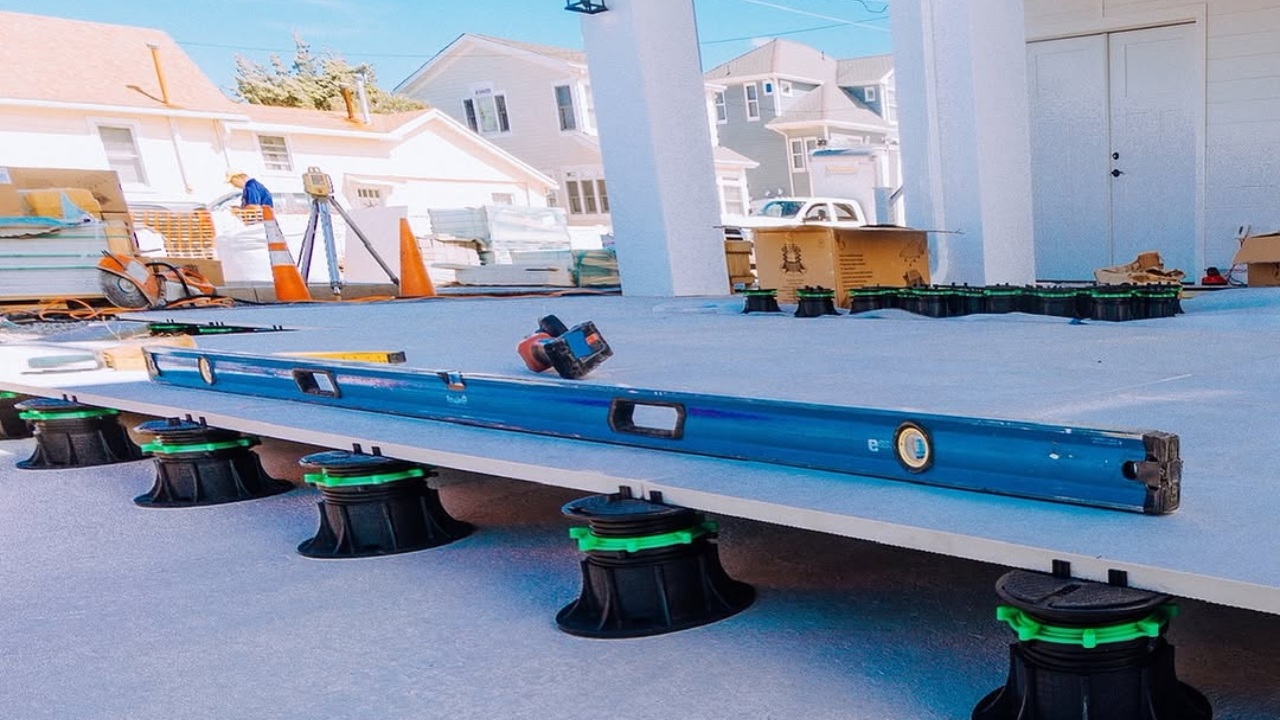
After assessing the surface, the adjustable pedestals are placed at an equal distance. Usually, the instructions come with the selected pedestals. The distance is also based on the size of pavers, thickness, and load requirements.
3. Height Adjustment
Each pedestal is adjusted individually to build a perfectly even surface, even if the slab beneath slopes for drainage.
4. Dry Installation of Pavers
Porcelain pavers or slabs are laid directly onto the pedestal heads without mortar, glue, or grout.

5. Edge Restraints and Finishing
This keeps the base stable and prevents moments. Perimeter containment or edging systems are installed to complete the patio.
A considerable benefit of the pedestal system is that you don’t have to wait for mortar or adhesive to cure. Once the pedestal system is installed, the surface is ready to use. For a detailed breakdown of spacing, height adjustment, and layout, see our guide on how to install paving pedestals.

Why Pedestal Paver Systems Eliminate the Need for Demolition?
The pedestal system doesn’t require any demolition, as you can use it over the existing structure. Traditional patio leveling requires:
- Jackhammering old concrete
- Removing debris
- Rebuilding the base
- Pouring or resetting materials
The pedestal system eliminates all of:
- The surface floats above the cracked or uneven slabs.
- Ignoring minor surface damage
- Preserving existing drainage slopes
- Prevents structural disruption
Eliminating the need for a paver base reduces labor, material costs, and installation time.
What Are The Benefits Of Pedestal Paver Systems?
The pedestal system is an efficient update over the traditional installation system. Here are the key benefits.
| Benefit | Practical Advantage | Why It Matters |
| Fast Installation | No excavation, curing, or drying time required | Patios can be completed and used much faster than demolition-based rebuilds |
| Cost Efficiency | Eliminates demolition, debris removal, and base reconstruction | Reduces labor and disposal costs while delivering a high-end finished surface |
| Perfect Leveling Precision | Individually adjustable pedestals provide millimeter-level accuracy | Ensures a perfectly flat patio, even over sloped or uneven substrates |
| Superior Drainage | Open space beneath pavers allows water to flow freely | Prevents pooling, mold growth, and water-related surface damage |
| Freeze-Thaw Resistance | Airflow and flexible system design accommodate expansion and contraction | Improves durability and performance in climates with temperature fluctuations |
| Easy Repairs and Access | Individual pavers can be lifted without disturbing the system | Simplifies maintenance and provides access to utilities beneath the patio |
| Cleaner Construction Process | Dry installation with no mortar or heavy demolition | Minimizes dust, noise, and job-site disruption during installation |
Best Materials to Use With Pedestal Paver Systems
While you can use a wide range of materials with the pedestal system, some materials perform way better compared to others. Here is a list of materials to use with the pedestal paver system.
| Material Type | Key Characteristics | Suitability for Pedestal Paver Systems |
| Porcelain Pavers and tile | High load-bearing strength; uniform thickness; slip resistance; low water absorption; resistance to stains, UV exposure, and chemicals | Ideal choice for paver pedestal systems due to consistent performance, durability, and precision leveling |
| Concrete Paving Slabs | Strong and durable when engineered for pedestal use; available in multiple thicknesses and finishes | Well-suited when proper thickness and structural requirements are met |
| Natural Stone | Requires minimum thickness; often reinforced; varies by stone type | Conditionally suitable for pedestal paver systems when correctly specified and supported |
When selecting material for the pedestal system, consider the load requirements, spacing, and environmental exposure for maximum results.
What Are The Common Misconceptions About Pedestal Paver Systems?
Pedestal paver systems are an excellent choice for an even patio surface, but many homeowners are worried about this, too. They have misconceptions about the pedestal paver systems due to a lack of knowledge and wrong information around. Such as:
“Pedestal patios are not stable.”
They are, in fact, when they are correctly installed, a pedestal system can support significant loads and meet commercial requirements.
“They are only for rooftops.”
Although they are commonly used for a roof, pedestal paver systems are also helpful for ground-level patios.
“They are more expensive.”
Adding the demolition and long-term maintenance costs in the traditional paver installation system, the paving pedestal systems are often more cost-effective.
“They shift over time.”
High-quality pedestals are engineered for stability and long-term performance. They keep the deck surface stable for years to come.
How to Choose the Right Pedestal Paver System?
You can find different types of paver pedestal systems that work well with pavers, but what should you choose for the best experience? Here is how to choose the right pedestal paver system.
| Selection Factor | What to Evaluate | Why It Matters |
| Project Application | Ground-level patio, rooftop terrace, balcony, pool deck, or commercial space | Determines load requirements, pedestal height range, and system type |
| Existing Substrate Condition | Concrete slab integrity, slope, cracks, and waterproofing membrane | Ensures that pedestals can be installed without demolition and perform long-term |
| Required Height Range | Minimum and maximum elevation needed to achieve the level | Confirms the pedestal system can accommodate surface irregularities and drainage slopes |
| Load-Bearing Requirements | Expected foot traffic, furniture weight, planters, or equipment | Prevents deflection and ensures structural safety |
| Paver Material Type | Porcelain pavers, concrete slabs, or natural stone | Affects pedestal spacing, head configuration, and support design |
| Drainage Needs | Water flow direction, pooling risk, freeze-thaw exposure | Ensures proper moisture management and surface longevity |
| Climate Conditions | Freeze-thaw cycles, heat exposure, UV intensity | Guides material selection and system durability |
| Edge and Perimeter Design | Edge restraints, fascia systems, or containment solutions | Provides stability and a clean finished appearance |
| Future Access Requirements | Utilities, waterproofing inspection, or maintenance access | Allows individual pavers to be lifted without disturbing the system |
| Code and Specification Compliance | Local building codes, commercial load standards | Ensures the system meets safety and regulatory requirements |

Frequently Asked Questions About Pedestal Paver Systems
Let’s answer your questions about pedestal pavers.
Can pedestal paver systems be installed over cracked concrete?
Yes. If the slab is structurally strong and sound. Minor cracks will not affect the pedestal’s performance.
Are pedestal paver systems suitable for freeze-thaw climates?
Yes. They offer improved drainage and airflow, which makes them an excellent choice for freeze-thaw conditions.
How long do pedestal paver systems last?
For more than a decade if the pedestal paver system has been high quality with minimal maintenance.
Do pedestal patios require grout?
No. Pedestal paver systems are dry-installed, eliminating grout-related cracking issues.
Bottom Line
The pedestal paver system is an effortless choice to create an even surface for patios. The installation is straightforward and doesn’t require any demolition. They are the modern and efficient approach to patio leveling that prevents huge labor costs and time consumption. By building above the existing surface, they deliver speed, precision, drainage, and long-term performance. They work exceptionally well with porcelain pavers due to their strength, durability, and appropriate thickness.
If you are looking for a fast and reliable patio solution, then the pedestal system is the best choice. They are not just an alternative but a recommendation.