Steps are a common part of most residential and commercial spaces. They are also the most functional part of the house that helps people move through outdoor spaces. Stairs control flow, comfort, and safety. However, many homeowners consider them just a random idea rather than a cohesive design element. This approach results in awkward proportions, slippery surfaces, or odd designs compared to the surrounding hardscape.
Porcelain tile and natural stone treads can change the entire design game for stairs if planned properly. Your stairs can even become an accent piece themselves. When selected and installed with care, they improve durability, simplify maintenance, and unify patios, walkways, and landscapes. So here are the 9 creative step designs using porcelain or stone stair tread.
1. Floating Steps with Shadow Gaps
Perhaps one of the most popular and creative step designs you can opt for. Floating steps look elevated above the ground without any supporting beam or base underneath, giving the space an instant modern look. A narrow shadow gap separates each tread from the riser or wall.

Porcelain stair tile works well as the slabs hold precise thickness. Their durability offers longevity, keeps the edges straight, and jointsclean. This precision creates the floating effect.
Where Elevated Stair Design Fits Best
- Modern homes
- Entry paths
- Courtyards with clean lines
This design works with marble treads too, but requires regular sealing to hide stains and wear and tear. Also, a hidden concrete or steel support that carries the load. Visual lightness does not reduce structural needs.
2. Monolithic Stone Block Steps
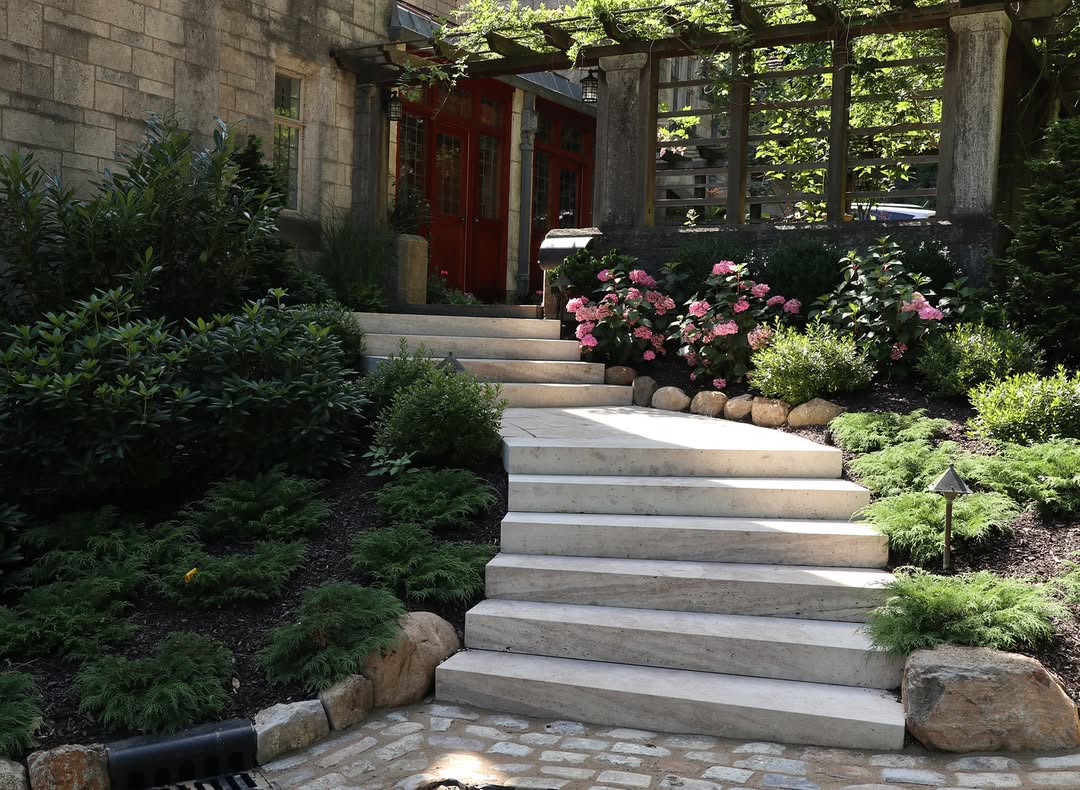
This design features a thick stone block for each step. Each tread looks and feels solid and grounded. Natural stone pavers, limestone, granite, or bluestone, show natural variation. That variation adds depth and character.
Best use cases for Monolithic Stone Block Steps
- Front entrances
- Garden staircases
- Homes with classic or regional architecture
To make it look more creative, step designs, opt for a slight variation in stone tone to make it look intentional. Avoid mixing finishes.
3. Wide Terrace Steps (Amphitheater Style)
This step design spans through the space, and they often used as seating. Large porcelain slabs are the best choice for this design approach. They can cover wide spans without joints breaking the visual line. Porcelain stone-effect tiles offer consistency across batches.
Ideal Settings for Wide Terrace Steps
- Sloped patios
- Outdoor gathering areas
- Courtyards
These stairway steps are wide enough that you may not have to look for railings because of shallow rises and generous depth.
4. Waterfall-Edge Step Design
This is one of the creative step designs where the tread wraps over the stair risers in one continuous surface. Porcelain is the best choice for this step design. Rectified porcelain offers precise miters, which result in a clean look but not a bulky one.

Best environments for Waterfall-Edge Step Design
- Contemporary patios
- Poolside steps
- Raised outdoor platforms
The edges of the steps should be slip-resistant, so avoid using the polished finishes outdoors.
5. Grass-Integrated Stone Steps
Stone treads stay within grass or ground covers while keeping the space between steps. Natural stone treads are ideal for this creative step design as they blend into landscape settings. Opt for a slight surface texture for an improved grip.
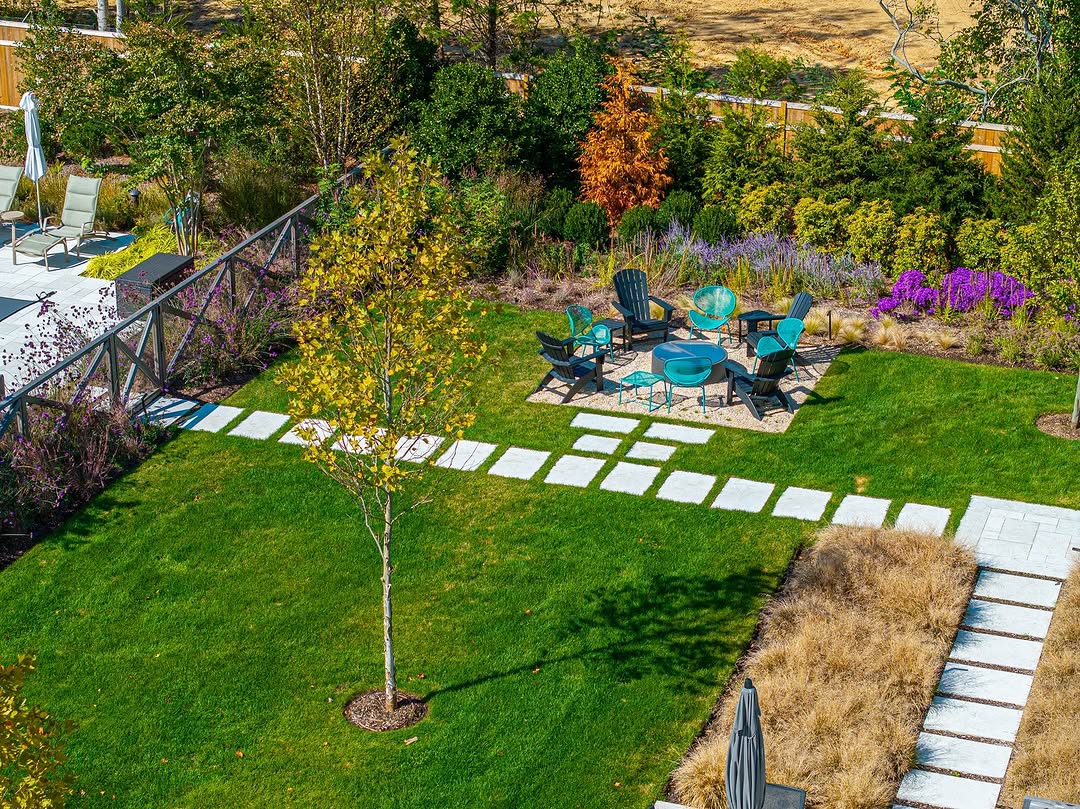
Common Locations for Grass-Integrated Stone Steps
- Garden paths
- Gentle slopes
- Transitional areas
Keep riser height consistent, even when the ground looks uneven. Comfort depends on rhythm.
6. Cantilevered Steps from Retaining Walls
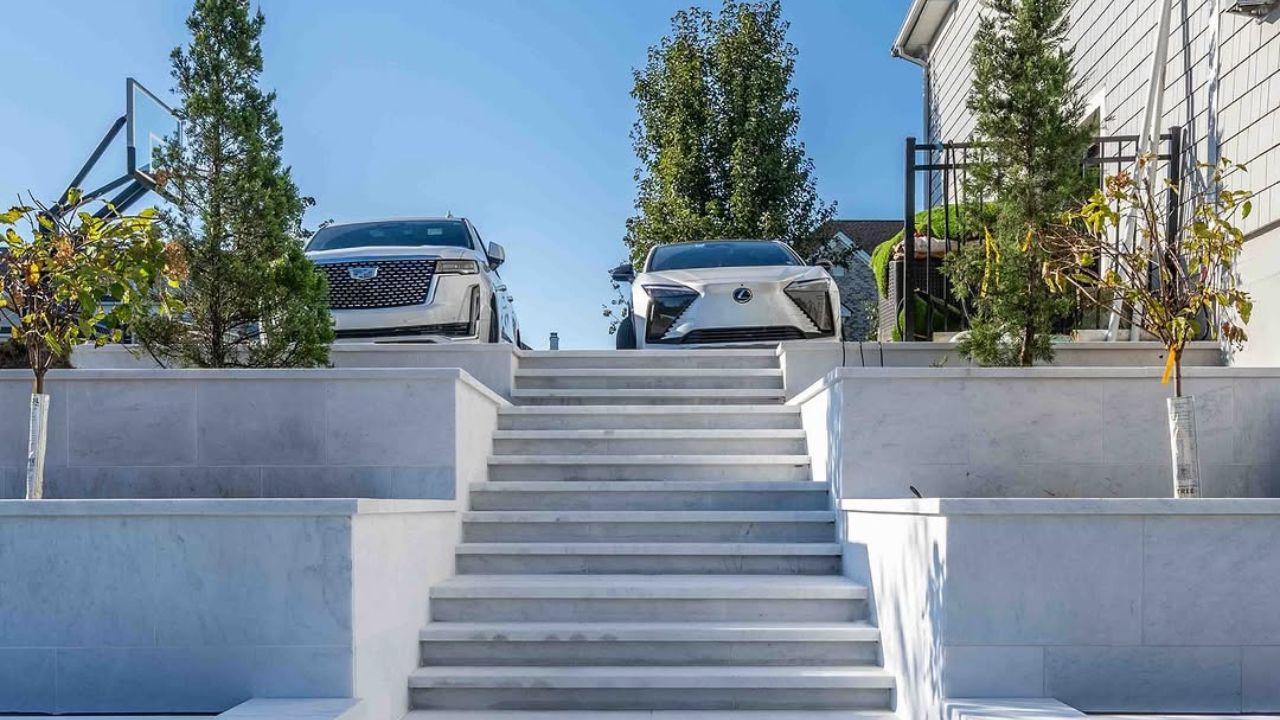
This is one of the most creative step designs using porcelain or natural stone treads. In this step design, the steps extend out from a wall which doesnt have a visible support below.
20×40 Silver Porcelain Pavers work well due to their strength relative to thickness. Also, a strong stone like granite also works when engineered correctly.
Where the Cantilevered Steps design fits
- Modern landscapes
- Terraced yards
- Architectural staircases
Consult with a professional engineer first for this design, as structural anchoring defines success.
7. Textured Stone Steps for Rustic Landscapes
This step design is perfect for outdoor settings. Rougher finishes suit , while the texture adds grip and warmth. Some of the most common stone choices are:
- Tumbled limestone
- Split-face stone
- Sandstone
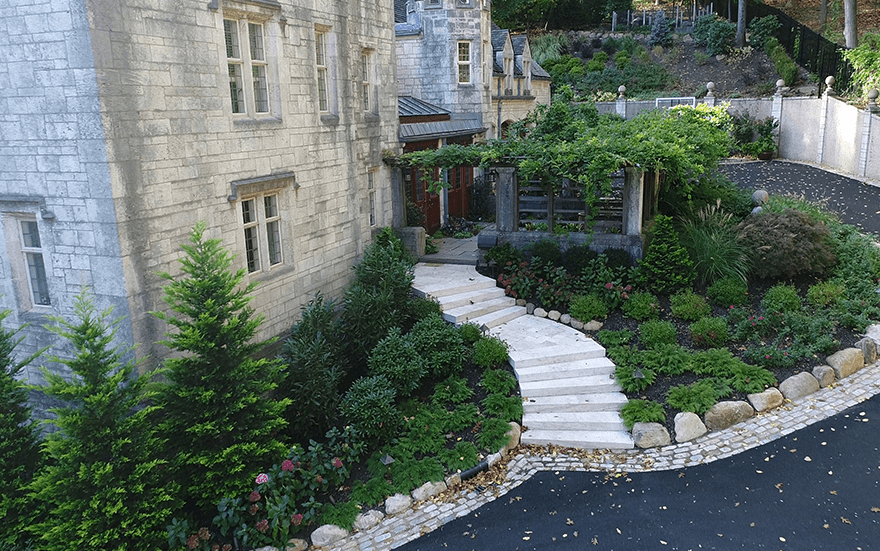
Best applications For Textred Stone Steps
The tile stair
- Hillside stairs
- Garden access routes
- Natural pool surrounds
To balance the design, keep the riser height consistent, as the natural textured surface will add its charm.
8. LED-Integrated Step Treads
This is an instant, modern, and functional step design for any residential setting. This is one of those creative step designs that also functions. Lighting improves safety and atmosphere. LEDs often sit beneath the tread nose or along risers.
Porcelain works best here because of its uniform thickness, which offers neat recesses for lighting channels.
Benefits of LED-integrated step treads:
- Safer night use
- Clear step definition
- Subtle visual emphasis
For the best experience, opt for the low-voltage and weather-rated lighting. Plan wiring before setting treads.
9. Continuous Material Staircases
This step design uses one material for treads, risers, and landings. Visual flow feels calm and intentional. Nothing interrupts the surface story from floor to raised space. Also, the best material options include:
- Stone-look porcelain
- Consistent-tone limestone
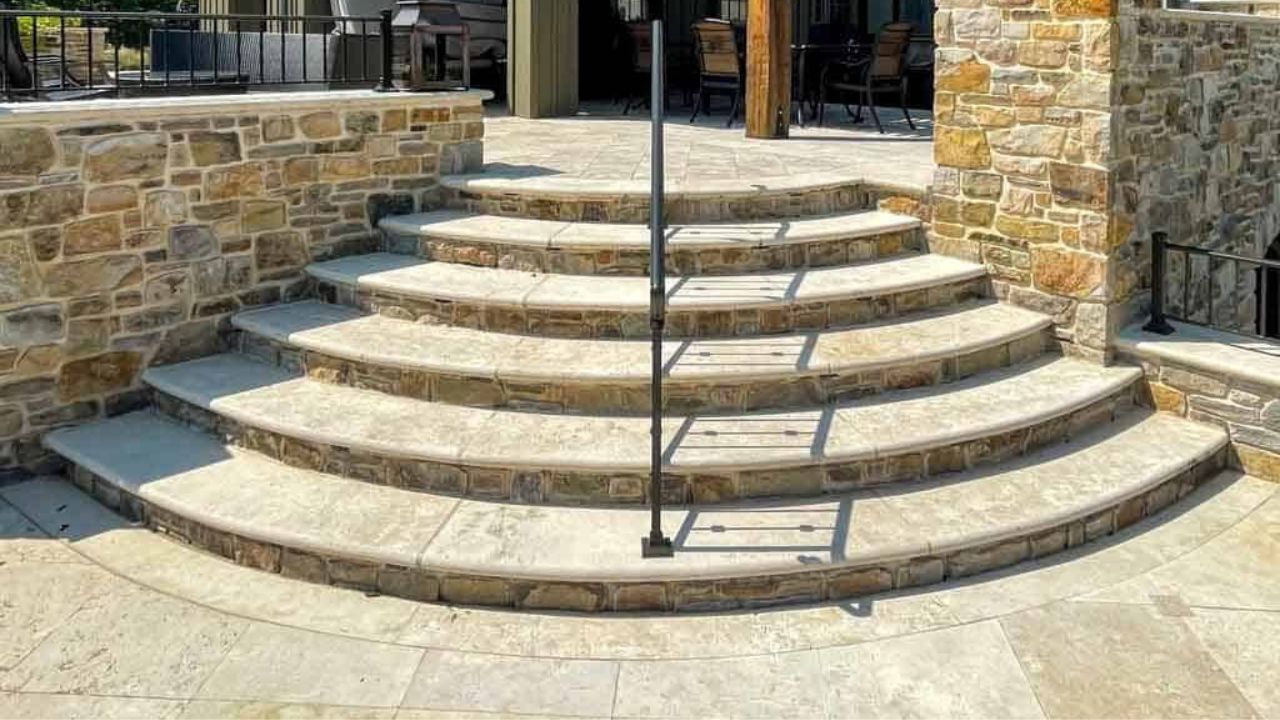
Where Continuous Material Staircases work best
- Indoor-outdoor transitions
- Raised patios
- Pool terraces
Brands like NT Pavers often prefer this design when homeowners want cohesion without complexity.
Porcelain vs Stone Treads: A Practical Comparison
Both porcelain and stone treads are widely used for creating beautiful steps, but how do they perform compared to each other? Take a look at the following table for more information.
| Feature | Porcelain Treads | Natural Stone Treads |
| Thickness consistency | High | Varies |
| Slip resistance options | Engineered textures | Natural textures |
| Color variation | Controlled | Organic |
| Maintenance | Low (easy to clean and maintain) | Moderate |
| Best for | Modern designs | Organic designs (interior design, especially) |
Both materials perform well outdoors when installed correctly. Design intent should guide choice.
Before You Choose a Step Design: A Simple Planning Guide
Good step design starts with structure, not style. Use this step-by-step approach before choosing a look.
| Planning Step | What to Do | Why It Matters for Step Design |
| Measure Rise and Run | Measure total height change and divide it into consistent riser heights, typically 6–7 inches, with tread depths of 12–14 inches. | Consistent proportions improve comfort, safety, and long-term usability of outdoor steps. |
| Confirm Structural Support | Install a compacted gravel base, reinforced concrete core, or engineered support system before setting treads. | Porcelain and stone treads depend on the structure below; thickness alone cannot prevent movement or cracking. |
| Choose Surface Finish | Select textured porcelain or stone finishes such as cleft, honed, or brushed for outdoor use. | Slip resistance becomes critical when steps are wet from rain, pool water, or frost. |
| Match Steps to Surroundings | Coordinate the tread material with patios, pool decks, or walkways for visual continuity. | Material consistency improves flow and creates a cohesive outdoor design rather than a patched look. |
With these basics in place, design becomes easier and safer.
What Are The Common Step Design Mistakes to Avoid?
When planning for some creative step designs for your outdoor spaces, avoid these mistakes, which can be more than aesthetic.
- Using thick treads to hide weak bases
- Ignoring drainage behind steps
- Mixing finishes without intent
- Skipping edge grip on modern designs
- Allowing riser height to vary
Correct planning prevents costly repairs.
Creative Step Designs FAQs
Let’s answer your questions about step design ideas.
Are porcelain step treads safe outdoors?
Yes. he texture surface of outdoor-rated porcelain treads resists slipping when wet.
How thick should outdoor step treads be?
20 to 30 mm compared to stone. Natural stone varies, but usually stays above 30 mm for steps.
Can porcelain treads handle freeze-thaw cycles?
Yes. Porcelain has little to no porous surface, which absorbs little water, reducing freeze-thaw damage.
Do stone steps need sealing?
Most natural stone benefits from sealing to reduce staining and moisture absorption.
Can I match steps with patio pavers?
Yes. Using the same or coordinated material improves visual flow and streamlinesdesign.
Bottom Line
Good step design has a balance of form, safety, and structure. Porcelain and stone treads offer homeowners control over that balance. These creative staircase design has practical and functional approach too, along with aesthetics.
However, when designing a stylish staircase, focus on riser height, drainage, surface grip, and structural support for longevity. When steps follow these rules, they stop feeling like an obstacle. They become part of the landscape that offers elegance and stays timeless.
.